
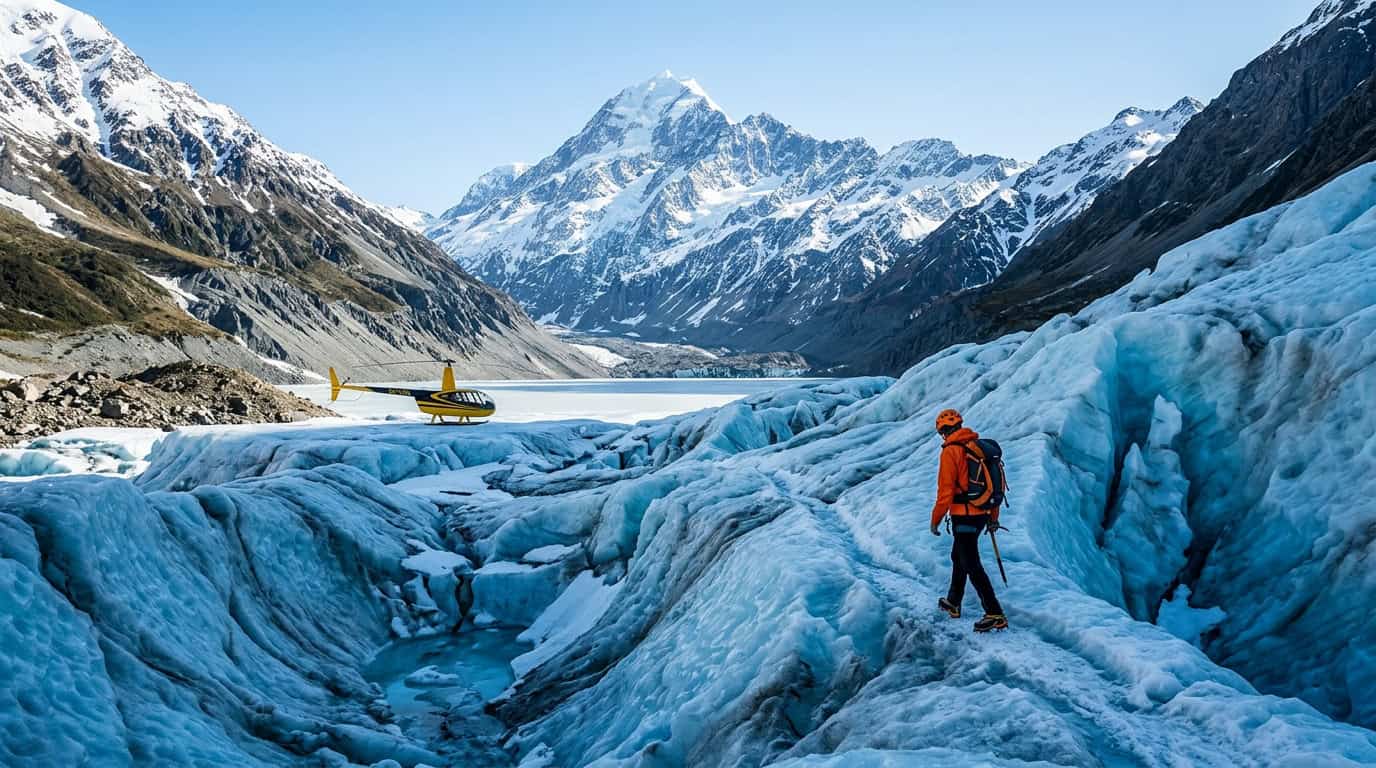
Standing at the base of Aoraki/Mount Cook, you realize that the scale of the Southern Alps is something no photograph can truly capture. To experience the heart of this frozen kingdom, Tasman glacier trekking has evolved into a breathtaking aerial adventure that whisks you away from the rocky moraine and onto the pristine, high-altitude ice. As the helicopter lifts off, the turquoise waters of the terminal lake shrink below, replaced by a sprawling expanse of white that feels like another planet entirely.
Once your boots hit the crunching surface, the world turns into a labyrinth of deep blue crevasses and sculpted ice formations waiting to be explored. For about NZ$995, you get a front-row seat to New Zealand’s changing environment, equipped with crampons and guided by experts who carve steps into the ancient frozen river. It is a surreal feeling to stand on the country’s longest glacier, surrounded by silent peaks, knowing you are treading on a part of the world that few ever get to touch.
Key Takeaways
- A heli-hiking adventure on the Tasman Glacier costs approximately NZ$995 and includes helicopter transfers, expert guiding, and all necessary technical gear like crampons and ice axes.
- Helicopter access is essential to reach the pristine upper glacier snowfields, as rapid glacial retreat has transformed the lower reaches into rugged rock debris and terminal lakes.
- Successful navigation of the high-altitude ice requires a strategic three-layer clothing system, sturdy hiking boots, and high-UV protection to combat intense sun reflection and shifting alpine weather.
- The trek offers a rare opportunity to explore a shifting labyrinth of deep blue crevasses, crystal ice caves, and sapphire moulins within New Zealand’s longest glacier.
Soaring To The Upper Tasman Glacier Ice Falls
The roar of the helicopter blades signaled the start of an adrenaline-fueled journey as we lifted off from the airport. Looking down, the scale of Aoraki/Mount Cook National Park is truly humbling, but the real transformation happens as you soar over the lower reaches of the Tasman Glacier. While the base of the glacier is currently a rugged area of grey rock debris and silty terminal lakes, the view quickly shifts into something otherworldly. Within minutes, the dark moraine gives way to a blindingly white expanse of ancient ice, carved into deep ridges and jagged falls. It is a breathtaking transition that makes you realize just how remote and majestic this alpine environment really is.
Stepping out of the helicopter onto the upper glacier felt like landing on a different planet where the air is crisp and the silence is profound. Our guide immediately helped us secure our crampons, a necessary tool for navigating the undulating frozen waves of the Tasman. Because the lower glacier has retreated so rapidly, this high-altitude landing is the only way to reach the pristine white ice that every traveler dreams of exploring. We spent our time weaving between deep blue crevasses and peering into shimmering ice caves that looked like they were sculpted from glass. It is a high-intent adventure that demands respect for the environment, but the reward is an intimate connection with New Zealand’s longest river of ice.
If you are planning this trek, I highly recommend booking the earliest flight possible to catch the morning light reflecting off the surrounding peaks. The cost is approximately NZ$995 per person, which covers the flight and all the technical gear like ice axes and boots, so you just need to bring your sense of wonder. Make sure to wear plenty of layers because even on a sunny day, the temperature on the ice remains chilly. Following the guide as they cut steps into the frozen surface provides a unique sense of accomplishment and safety. This experience is not just a hike, it is a front-row seat to the raw power of nature in one of the most spectacular corners of the world.
Navigating Blue Crevasses And Crystal Ice Caves
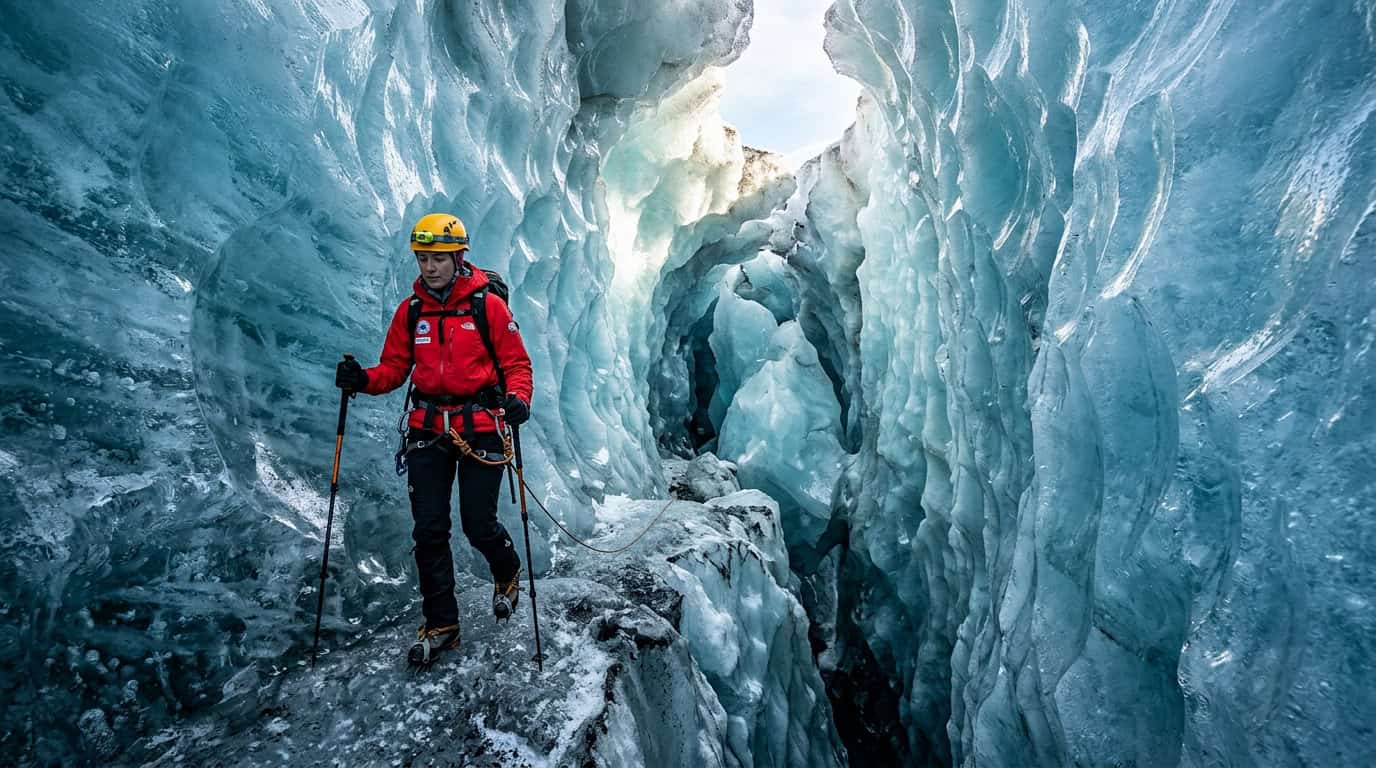
Stepping off the helicopter and onto the pristine white ice of the upper Tasman Glacier felt like landing on another planet. After a quick briefing, our guide helped us strap on heavy duty crampons, and the metallic crunch of spikes digging into the frozen surface was instantly satisfying. We each carried an ice axe, which served as both a balancing tool and a way to anchor ourselves as we navigated the undulating terrain. The air at this altitude in Aoraki Mount Cook National Park is incredibly crisp, making every breath feel like a reset for the senses. Our small group moved with purpose, following the guide as they used their axe to chip away fresh steps in the steeper sections of the glacier.
The landscape was a labyrinth of deep blue crevasses and swirling ice formations that seemed to defy gravity. We spent much of our two hour trek peering into bottomless moulins, which are vertical shafts carved by meltwater that glow with an intense, neon sapphire light. Entering a crystal ice cave was the highlight of the journey, as the translucent walls shimmered with a glass like quality that changed color depending on the angle of the sun. It is a humbling experience to stand inside the belly of New Zealand’s longest glacier, surrounded by ice that has been compacted over centuries. These formations are constantly shifting, meaning every trekker gets to see a version of the glacier that will never exist in exactly the same way again.
For those planning this adventure, remember that the technical gear is provided, but your focus should be on steady footwork and following the guide’s precise path. While the hike is physically engaging, the thrill of standing among the highest peaks in the Southern Alps far outweighs the effort. You will want to dress in layers, as the reflection of the sun off the white ice can make it surprisingly warm despite the frozen ground beneath your boots. At a cost of approximately nine hundred and ninety five dollars, this heli-hiking experience is a significant investment, but the perspective you gain on the environmental majesty of the region is absolutely priceless. Taking that final look at the jagged ice falls before the helicopter returns is a memory that stays with you long after you leave the mountain.
Essential Gear For A Tasman Glacier Trek
Preparing for a heli-hike on the Tasman Glacier requires a strategic approach to clothing, as the weather in Aoraki Mount Cook National Park can shift from radiant sunshine to biting alpine winds in minutes. I quickly learned that the secret to staying comfortable on the ice is a versatile three-layer clothing system. I started with a moisture wicking base layer to keep dry, followed by a warm fleece or wool mid layer to trap heat, and finished with a high quality waterproof jacket. Even if it looks like a warm day at the airport, the temperature drops significantly once the helicopter drops you onto the white ice. Don’t forget to pack a pair of sturdy hiking boots with good ankle support, though most guides will provide specialized footwear if your own gear isn’t quite up to the task.
The specialized equipment provided by your mountain guides is what truly transforms this from a standard walk into a high stakes glacier adventure. Once we touched down on the upper reaches of the glacier, our guides helped us fit crampons onto our boots, which are essential for gripping the slick, undulating surface of the ice. They also provided ice axes, which we used for balance while navigating around deep blue crevasses and intricate ice formations. I found that wearing thick, waterproof gloves was a lifesaver when I needed to steady myself against the cold walls of an ice cave. Having the right technical gear made me feel incredibly secure as we explored the raw, shifting landscape of New Zealand’s longest glacier.
Beyond the technical gear, there are a few personal items that will make your two hour trek much more enjoyable. High UV protection is non negotiable because the sun reflects intensely off the white ice, so be sure to bring polarized sunglasses and plenty of sunscreen. I also recommend bringing a small, lightweight backpack to store your camera and water bottle, though you should keep it as light as possible for the flight. Taking a few moments to double check your kit ensures you can focus entirely on the majestic scenery rather than being distracted by cold fingers or wet feet. This preparation is what allowed me to fully immerse myself in the thrill of standing amidst the towering peaks of the Southern Alps.
Witnessing The Power Of Glacial Retreat Firsthand
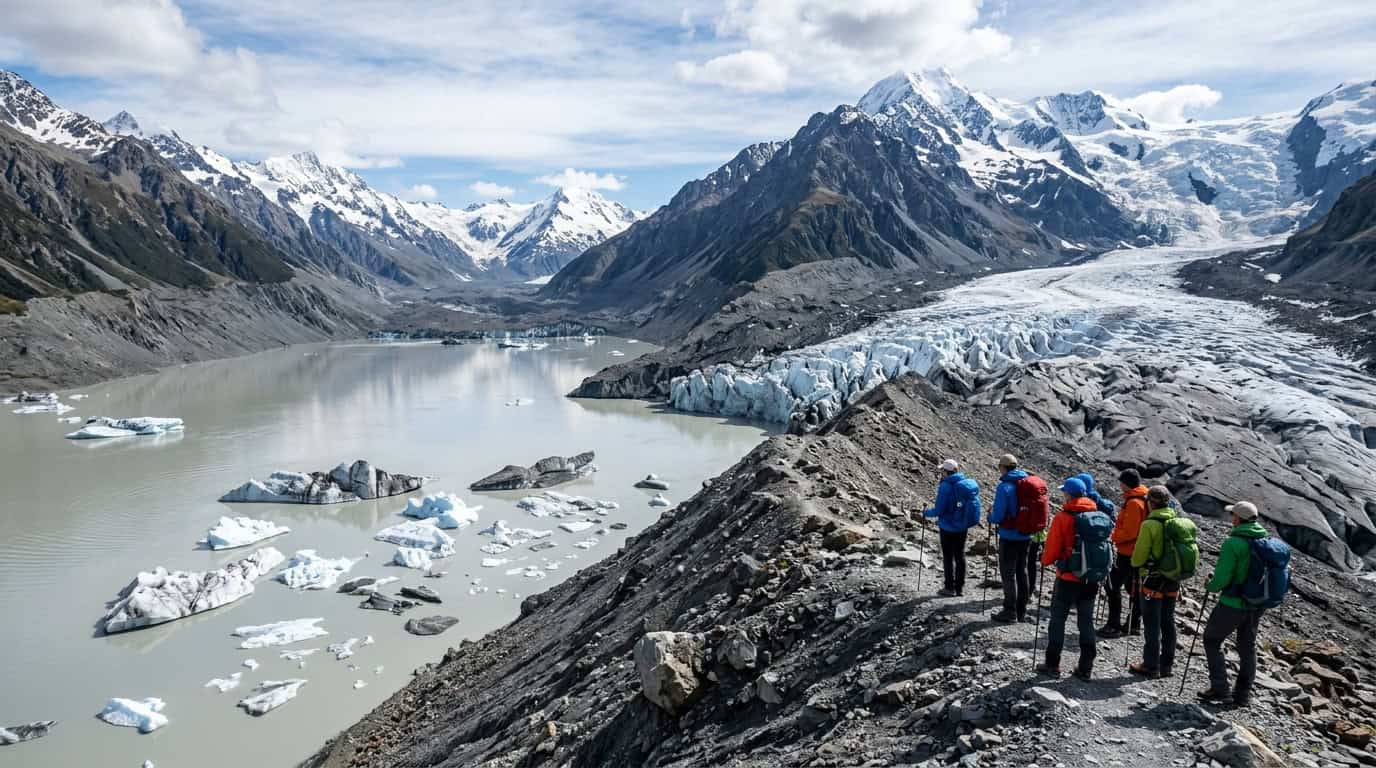
Stepping off the helicopter and onto the pristine white ice of the Tasman Glacier is a moment that immediately puts the scale of nature into perspective. At over 600 meters deep in some sections, this frozen giant feels like a living, breathing entity beneath your crampons. As I followed my guide across the undulating surface, I was struck by the deep sapphire hues glowing from within the crevasses and the sheer silence of the high alpine environment. Even for a seasoned adventurer, the sensation of standing on New Zealand’s longest glacier is an humbling experience that words can barely capture. It is a place where the raw power of geology is on full display, reminding you just how small we are in the face of such ancient ice.
While the beauty of the upper snowfields is undeniable, the physical evidence of the rapid glacial retreat serves as a sobering reminder of our changing climate. From my vantage point on the ice, I could see where the glacier once reached, marked by high lateral moraines that now tower far above the current ice level. The lower reaches have transformed into a debris-covered area that terminates in a growing terminal lake, making helicopter access a necessity rather than a luxury. Observing these dramatic shifts firsthand turned my hike from a simple thrill-seeking mission into a profound lesson on environmental fragility. Seeing the ice melt into the grey waters below is a powerful sight that stays with you long after the flight back to the airport.
For those planning this trek, it is essential to prepare for the dynamic and unpredictable nature of Aoraki/Mount Cook National Park. The weather can shift in an instant, turning a sunny morning into a misty alpine challenge, so layers and waterproof gear are non-negotiable. While the cost of a heli-hike is significant at nearly one thousand dollars, the opportunity to explore ice caves and navigate sapphire moulins is worth every cent for the memories alone. I recommend booking your flight for early in your stay to allow for weather delays, as these tours are highly dependent on clear skies. Standing on that ice is a fleeting privilege, and witnessing the power of the Tasman Glacier is an experience that every traveler should prioritize.
Standing on Ancient Ice: My Tasman Glacier Journey
Standing on the vast expanse of the Tasman Glacier is a transformative experience that words can barely capture. As I looked out over the jagged peaks of Aoraki/Mount Cook National Park, the silence of the upper ice field felt both humbing and electric. This is not just a simple walk in the woods, but a high stakes journey into a frozen world that is constantly shifting and changing. For any thrill seeker looking to push their boundaries, the sensation of crunching crampons against ancient blue ice is an absolute must. It is a rare opportunity to witness the raw power of nature from a perspective that very few people ever get to see.
While the price tag for a heli-hiking adventure is significant, the memories of navigating deep crevasses and hidden ice caves are worth every cent. You are not just paying for a flight, but for the expertise of guides who carve a path through a landscape that would otherwise be inaccessible. I found that the sheer scale of the glacier makes you feel small in the best way possible, reminding you of the majesty of the natural world. If you have been on the fence about booking this trip, take this as your sign to go for it before the environment shifts again. It is a quintessential New Zealand experience that defines what it means to seek out true adventure.
If you find yourself craving more high-altitude scenery after this trip, you might consider hiking the Austrian Alps or planning an unforgettable mountain adventure in other parts of the world. It is a quintessential New Zealand experience that defines what it means to seek out true adventure.
Frequently Asked Questions
1. How much does a Tasman Glacier heli-hike typically cost?
You can expect to pay around NZ$995 for this once in a lifetime aerial adventure. This price includes your helicopter transfers, expert guiding, and all the specialized gear like crampons needed to explore the ice safely.
2. Do I need previous ice climbing experience to join the trek?
No prior experience is necessary to enjoy this incredible journey. Expert guides will teach you everything you need to know, including how to secure your crampons and navigate the sculpted ice formations with confidence.
3. What will I see during the helicopter flight to the glacier?
The flight offers a breathtaking transition from the turquoise waters of the terminal lake to the rugged, grey moraine. As you ascend, the view transforms into a blindingly white expanse of jagged ice falls and deep ridges that feel like another planet.
4. How long do we spend exploring the ice?
Most adventures allow for a generous amount of time to wander through the labyrinth of deep blue crevasses and ancient frozen rivers. You will have plenty of opportunities to take photos and soak in the profound silence of the high-altitude alpine environment.
5. What gear is provided for the glacier trek?
Professional guides provide all the technical equipment required for your safety and comfort on the ice. This includes high-quality crampons and experts who use ice axes to carve stable steps into the glacier surface for you.
6. Is the Tasman Glacier different from other New Zealand glaciers?
The Tasman Glacier is New Zealand’s longest glacier, offering a scale and majesty that is truly humbling. While the lower reaches are covered in rock debris, the upper glacier where you land remains a pristine, white kingdom surrounded by the silent peaks of the Southern Alps.