
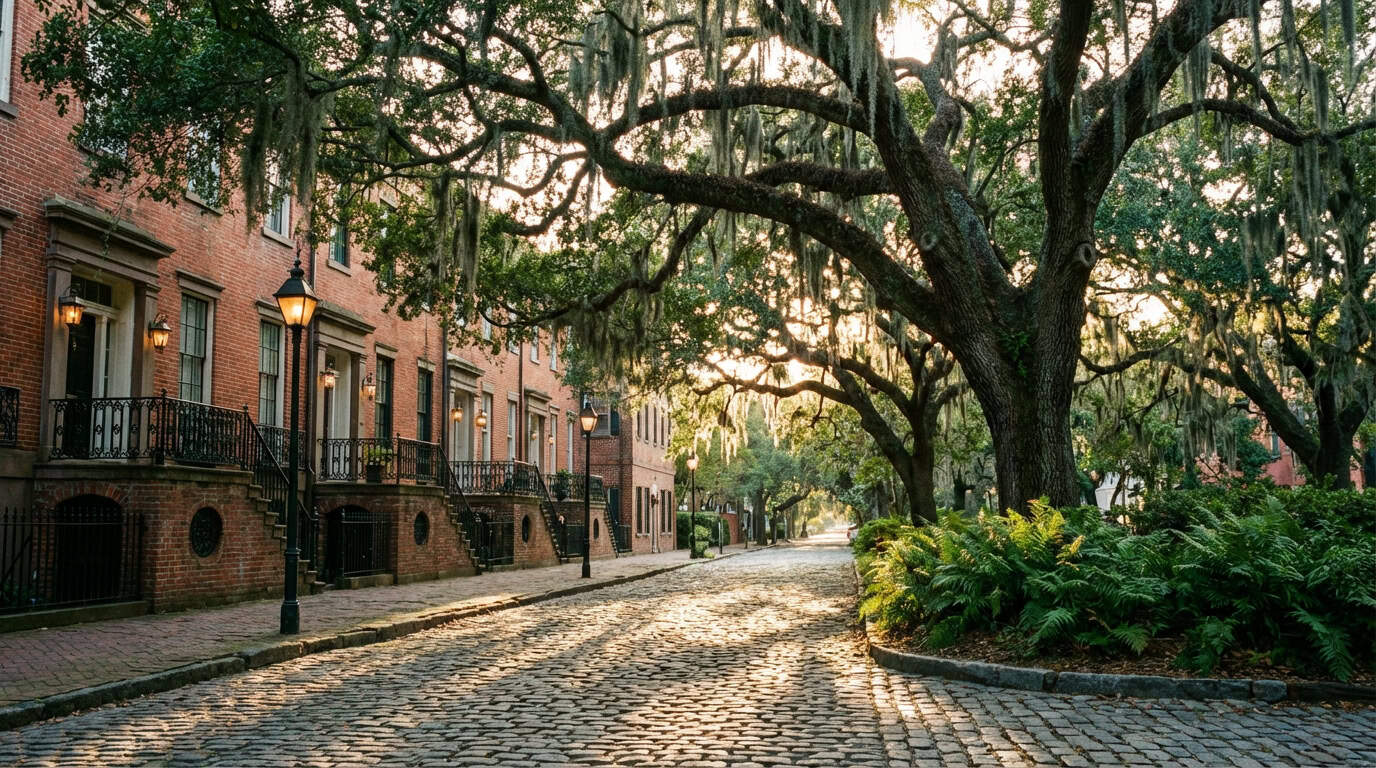
Walking through the Savannah historic district feels like stepping directly into a living watercolor painting where time moves a little slower. As I wandered beneath the heavy canopies of live oaks dripping with silvery Spanish moss, I finally understood why General James Oglethorpe’s 1733 vision remains the gold standard for urban beauty. Each cobblestone street leads you toward one of the twenty-two hidden garden squares, offering a peaceful sanctuary from the modern world.
You aren’t just visiting a city here; you are immersing yourself in a masterpiece of Southern Gothic charm and meticulous 18th-century design. Whether you are chasing the scent of blooming jasmine or hunting for the perfect photo op in front of a centuries-old mansion, this district serves as the ultimate backdrop for a soulful getaway. From the bustling riverfront to the quiet dignity of Forsyth Park, every ward tells a story of resilience and elegance that stays with you long after you leave.
Key Takeaways
- General James Oglethorpe’s 1733 grid design remains the gold standard for urban planning, centering the city around twenty-two unique, lush garden squares that act as outdoor living rooms.
- The district serves as a living museum of architectural evolution, showcasing a diverse range of styles from English Regency and Federal homes to monumental Gothic Revival structures.
- A walking itinerary from the bustling River Street southward to the iconic fountain at Forsyth Park offers the most immersive experience of the city’s Southern Gothic charm and historic resilience.
- The best way to experience Savannah’s atmosphere is to wander on foot during the golden hour, when sunlight filters through the Spanish moss and highlights the intricate ironwork of the historic mansions.
The Timeless Magic Of Oglethorpe’s Historic Squares
Stepping into Savannah’s Historic District feels like walking through a living, breathing painting where time has slowed to a graceful crawl. General James Oglethorpe’s ingenious 1733 grid design remains the soul of the city, organizing the streets into a series of elegant wards that each center around a lush public square. As you wander beneath the heavy canopies of live oaks draped in silvery Spanish moss, you realize these twenty-two remaining squares are more than just parks. They serve as the city’s outdoor living rooms, where the scent of blooming azaleas and the rhythmic clip-clop of horse-drawn carriages create an atmosphere of pure Southern Gothic romance.
My favorite way to experience this architectural marvel is by starting a walking itinerary at Johnson Square, the oldest and largest of the collection. From there, I recommend heading south toward Wright Square to admire the towering monuments before making your way to the breathtaking Chippewa Square. This particular spot is a dream for photography lovers, offering a perfect blend of historic bronze statues and vibrant greenery that captures the essence of Georgia’s coastal charm. If you continue your stroll toward the iconic fountain at Forsyth Park, you will pass through Monterey Square, which is widely considered one of the most beautiful due to its surrounding meticulously restored mansions.
To make the most of your journey through these historic gardens, try to schedule your walk during the golden hour when the sunlight filters through the moss in spectacular amber rays. Each square offers its own unique personality, ranging from the quiet and contemplative mood of Troup Square to the bustling, social energy found near the riverfront. I suggest packing a light picnic or a sketchbook to truly soak in the surroundings at Telfair Square, where the art and history of the city seem to converge. These public spaces are the heart of the Savannah experience, providing a peaceful sanctuary that invites every traveler to linger just a little bit longer.
Architectural Treasures From Federal To Gothic Revival
Walking through the Savannah Historic District feels like stepping into a living museum where every street corner tells a story of architectural evolution. As I wandered through the grid of lush squares, I found myself captivated by the Owens-Thomas House and Slave Quarters, which stands as a premier example of English Regency style. The home’s sophisticated columns and curved walls are breathtaking, but the real magic lies in the contrast between the grand facade and the intricate history preserved within its walls. I recommend taking a moment to admire the bridge that connects the house to the carriage house, as it offers a unique glimpse into the functional beauty of the early nineteenth century.
Moving toward the riverfront, the atmosphere shifts from residential elegance to the industrial grandeur of the Savannah Cotton Exchange. This iconic red brick building is a masterpiece of Romanesque Revival architecture, adorned with intricate terra cotta details and a striking fountain guarded by a stone lion. Standing before its ornate entrance, I could almost hear the echoes of the bustling trade that once defined this southern port. It is the perfect spot to pause your walking tour and appreciate how the city’s wealth was translated into such enduring, monumental design.
To make the most of your architectural pilgrimage, I suggest starting your morning at Oglethorpe Square before heading north toward the river. This route allows you to see the transition from the delicate Federal style homes to the more imposing Gothic Revival structures like the Cathedral Basilica of St. John the Baptist. Be sure to wear comfortable shoes, as the cobblestone streets near the Exchange can be uneven but are well worth the trek for the photos alone. Ending your walk with a view of the sunset over the Savannah River provides a golden glow that makes the historic brickwork truly shine.
A Perfect Walking Itinerary Through The Historic Heart
Our journey begins at the edge of the Savannah River on the iconic cobblestones of River Street, where the scent of saltwater and pralines fills the air. After watching the massive cargo ships glide past, climb the historic stone stairs to reach the bluff and make your way to Johnson Square, the oldest and largest of the city’s green spaces. This is the perfect spot to pause and admire the towering monuments and the rhythmic splashing of nearby fountains. From here, walk south through the grid of the Oglethorpe Plan, where every few blocks reveals a new square tucked away like a hidden garden. You will find yourself surrounded by the hauntingly beautiful Southern Gothic architecture that makes this district so famous.
As we continue our trek deeper into the historic heart, the canopy of live oaks becomes denser, their branches heavy with silver curtains of Spanish moss. Stop for a moment at Chippewa Square, perhaps the most recognizable spot in the city, to imagine the layers of history that have unfolded under these very trees. The surrounding streets are lined with impeccably preserved 18th century mansions that showcase the elegance of a bygone era. I always recommend taking a slight detour to peak at the wrought iron gates and secret courtyards that peek out from between the brick facades. These quiet residential stretches offer a peaceful glimpse into the daily rhythm of Savannah life away from the bustling waterfront.
The final stretch of our walk leads us toward the majestic white fountain of Forsyth Park, which serves as the grand finale of this southern stroll. This thirty acre park is a vibrant hub of activity where locals gather for picnics and artists set up their easels under the shade. Walking through the fragrant Garden for the Blind or along the wide paved pathways is the ultimate way to decompress after a day of exploration. You can grab a coffee at a nearby cafe and simply sit on a bench to watch the world go by. It is a breathtaking conclusion to a route that perfectly captures the charm, history, and natural beauty of Georgia’s first city.
Step Into Savannah’s Living Southern Masterpiece
Savannah is more than just a destination, it is a living breathing masterpiece of Southern history and elegance. Between the canopy of Spanish moss and the perfectly preserved 18th century architecture, this district offers an enchanting atmosphere that you simply cannot find anywhere else. Every step through the city’s iconic squares feels like a walk through a storybook, where the scent of jasmine lingers in the air and the cobblestone streets whisper secrets of the past. It truly stands as the ultimate destination for anyone seeking that authentic, slow paced charm that defines the heart of Georgia.
To make the most of your first visit, I recommend setting aside your map for at least one afternoon to simply wander. While the structured grid of the Oglethorpe Plan makes it easy to navigate, the real magic happens when you stumble upon a hidden courtyard or a quiet bench in a lesser known square. Start your journey at the northern edge by the river and work your way south toward the expansive beauty of Forsyth Park. Taking your time allows you to appreciate the intricate ironwork and the majestic oak trees that make this historic district a photographer’s dream and a traveler’s sanctuary.
Frequently Asked Questions
1. What is the best way to explore the Savannah Historic District?
I always recommend exploring the district on foot to truly soak in the intricate details of the 18th century architecture. Start your journey at Johnson Square and wander south through the wards, allowing the canopy of live oaks and Spanish moss to guide you toward the riverfront.
2. How many historic squares are there to visit?
There are twenty-two remaining garden squares that serve as the heart of General Oglethorpe’s original 1733 grid design. Each square offers its own unique monuments and lush greenery, providing a peaceful sanctuary and a perfect spot for a soulful rest during your walk.
3. What makes the design of the district so special?
The district is a masterpiece of urban planning because it uses a series of wards that center around public garden squares. This layout creates a rhythmic flow of beauty and history, making it feel like a living watercolor painting where nature and architecture exist in perfect harmony.
4. Is the Savannah Historic District a good spot for photography?
You will find endless inspiration for photos among the centuries old mansions and the dramatic Southern Gothic scenery. The silver Spanish moss hanging from heavy oak limbs and the blooming jasmine provide a romantic, timeless backdrop that captures the essence of the South.
5. Where should I go for a mix of activity and quiet dignity?
I suggest heading to the bustling riverfront for a lively atmosphere and then making your way to the quiet dignity of Forsyth Park. This balance allows you to experience the vibrant energy of the city alongside the serene, historic charm that defines Savannah.
6. What is the historical significance of the district’s layout?
General James Oglethorpe’s 1733 vision established a gold standard for urban beauty that has survived for centuries. Every street and square tells a story of resilience and elegance, inviting you to immerse yourself in a meticulously preserved piece of American history.