
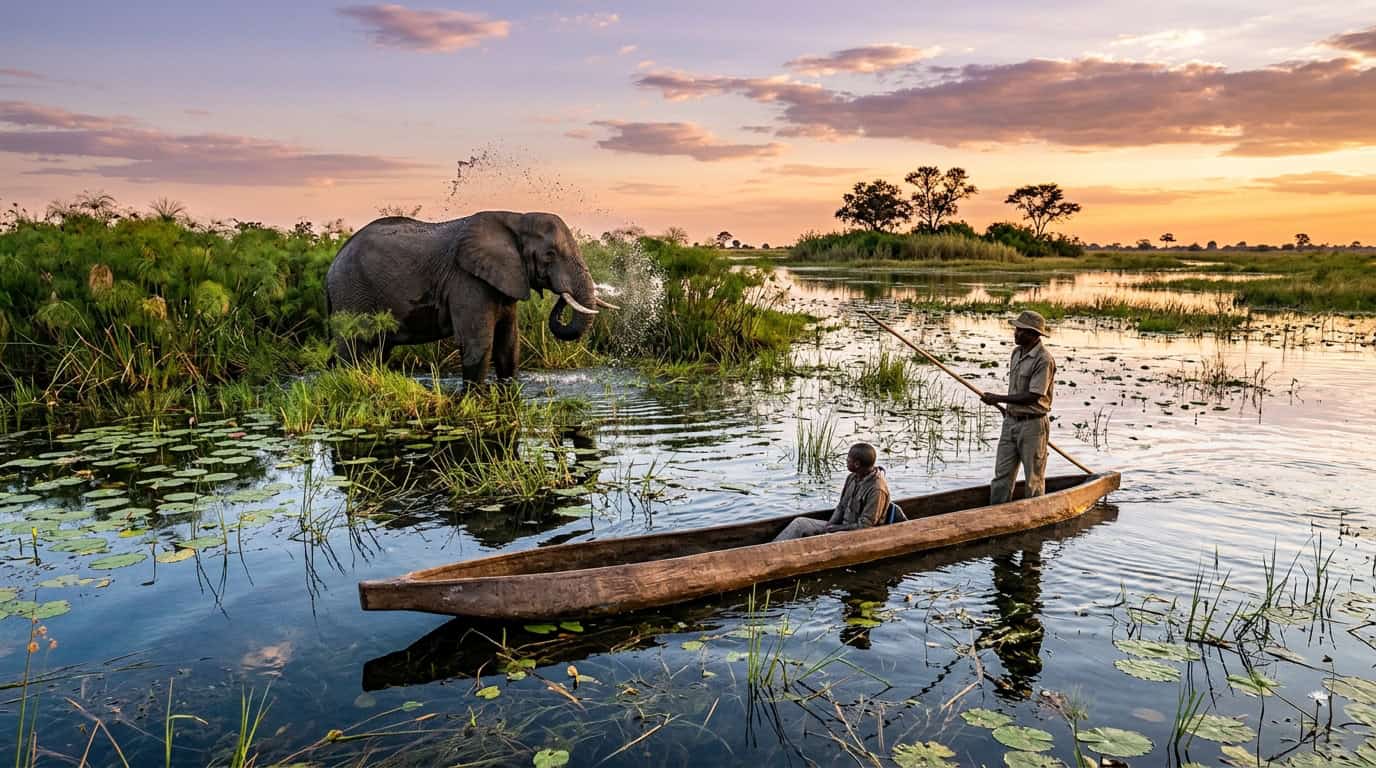
Imagine drifting through a labyrinth of crystal-clear channels where the air smells of crushed wild sage and the only sound is the rhythmic dip of a mokoro paddle. Right now, a botswana okavango delta safari offers a once-in-a-generation spectacle thanks to record-breaking rains in the Angolan Highlands that have transformed the region into a shimmering inland sea. I’ve watched the floodwaters reclaim ancient trails, turning dusty plains into lush, emerald lagoons teeming with hippos and vibrant birdlife. It is a rare ecological reset that makes the Delta feel more alive, wild, and unpredictable than I have ever seen it before.
Because the waters have arrived earlier and deeper than usual in 2026, planning your logistics is more important than ever to ensure you don’t miss the magic. With many land routes in the Moremi Game Reserve currently submerged, the true secret to navigating this season is embracing the fly-in experience to reach those remote, water-locked camps. Swapping dusty jeep tracks for a bird’s-eye view from a bush plane reveals the true scale of this liquid masterpiece. This is the year to trade the traditional game drive for a boat safari, weaving through papyrus reeds to find elephants swimming across channels that didn’t exist just a few months ago.
Key Takeaways
- The 2026 season marks a historic ecological reset for the Okavango Delta, with record-breaking floodwaters from the Angolan Highlands reaching their highest levels in nearly a decade.
- Fly-in access is a practical necessity rather than just a luxury this year, as many traditional land routes in the Moremi Game Reserve are submerged and inaccessible by vehicle.
- Prioritize water-based safaris, such as motorboats and traditional mokoros, to witness unique wildlife behaviors like elephants swimming across newly formed channels and predators adapting to island hunting.
- Remote fly-in camps offer the most exclusive and sustainable experience, providing direct access to deep-water channels and vibrant lagoons that have been dry for years.
Navigating The 2026 Record Flood Waters
The 2026 season has brought a truly breathtaking transformation to the Okavango Delta, as record-breaking rains from the Angolan Highlands have surged into the basin with unprecedented force. I recently watched from above as the parched earth turned into a shimmering tapestry of emerald islands and deep blue channels, marking the highest water levels we have seen in nearly a decade. Because the flood pulse arrived so much earlier than expected this year, the world feels entirely different, where the boundaries between land and water have completely blurred. Navigating this ecological reset requires a shift in perspective, as many traditional land routes are now submerged beneath the life-giving flow.
Fly-in access has become the gold standard for reaching these remote luxury camps, offering some of the most spectacular aerial views I have ever experienced. Soaring over the Delta in a small plane provides a front row seat to the massive scale of the inundation, allowing you to spot pods of hippos and herds of elephants crossing newly formed lagoons. Once on the ground, the traditional mokoro trip takes on a magical quality as your guide paddles through high-water trails that were inaccessible just a year ago. The silence of the water is only broken by the reed frogs and the gentle splash of the pole, creating an intimate connection with nature that feels both exclusive and deeply restorative.
Planning your safari during this record year means prioritizing water-based activities that showcase the Delta at its most vibrant. I recommend focusing your itinerary on the permanent wetlands and private concessions where the deep channels allow for motorboat safaris alongside the classic dugout canoes. While some roads in the Moremi Game Reserve are currently underwater, the trade-off is a lush, thriving wilderness teeming with birdlife and predators that have adapted to the rising tides. It is a rare opportunity to witness a pristine ecosystem operating at its peak hydraulic capacity, offering a premium experience that is as rare as it is beautiful.
Wildlife Encounters On The Rejuvenated Floodplains
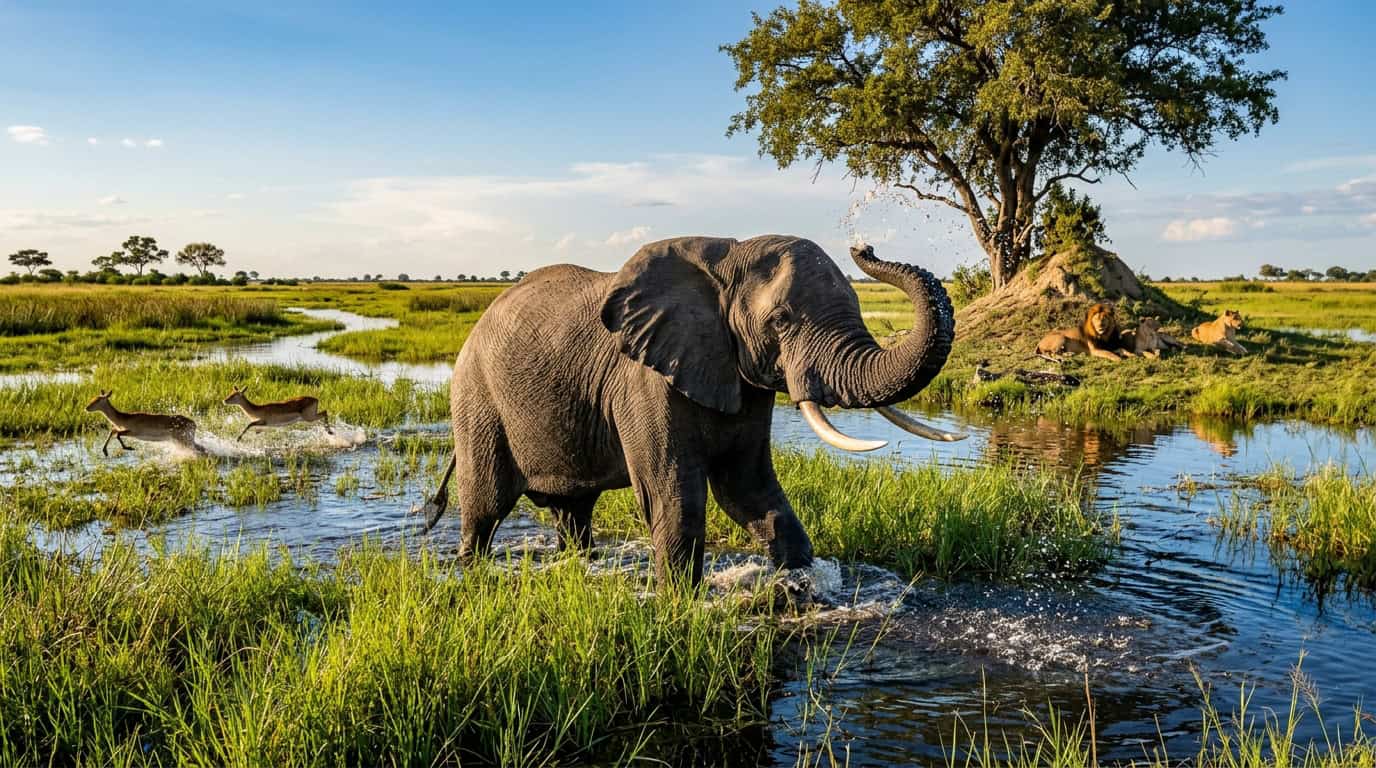
The sheer scale of life returning to the rejuvenated floodplains of the Okavango Delta this season is nothing short of breathtaking. As I glided through the newly expanded water edges, the massive congregations of elephants were the first to catch my eye, often numbering in the hundreds as they waded through the deep, crystal clear channels. These gentle giants seem energized by the record water levels, splashing alongside pods of hippos while red lechwe antelopes bound through the shallow marshes with incredible grace. The area has been completely transformed into a lush, emerald paradise where every turn of the waterway reveals a new, high end wildlife spectacle.
Navigating the Moremi Game Reserve during this ecological reset requires a bit of strategy, especially since many traditional land routes are currently submerged. I found that the best way to spot predators like lions and leopards is to focus on the elevated islands and the fringes of the permanent water where prey species are forced to gather. Because the flood arrived so early in 2026, the predators have had to adapt their hunting tactics, providing unique opportunities to witness them patrolling the shoreline from the safety of a boat or a mokoro. I highly recommend booking a fly-in experience to reach these remote areas, as the aerial views of the delta’s intricate water veins are just as spectacular as the ground level encounters.
For those planning a trip during this extraordinary period, my top tip is to arrive refreshed and prioritize water based activities during the golden hour to catch the predators emerging from the thickets. While the high water levels mean some roads are closed, it also means you can access hidden lagoons that have been dry for years, offering a truly exclusive experience away from any crowds. Keep your binoculars ready for the African fish eagles circling above, and do not be surprised if a curious leopard watches you from a low hanging branch overhanging the water. This season is a rare gift for any safari enthusiast, offering a glimpse into a wild, watery world that feels both ancient and brand new.
Luxury Eco-Tourism And Remote Fly-In Camps
Botswana has long been a pioneer in high value and low impact tourism, and the 2026 season represents the absolute pinnacle of this sustainable philosophy. As I stepped off the small aircraft, it was immediately clear that these remote camps are more than just places to stay, as they function as sophisticated island sanctuaries that blend seamlessly into the environment. The current record-breaking water levels have turned the Delta into a shimmering emerald labyrinth, making these eco-conscious lodges feel more exclusive and secluded than ever before. You can expect world-class hospitality that prioritizes the preservation of this delicate ecosystem, from solar-powered grids to state-of-the-art water filtration systems.
With the Angolan highlands sending down the most significant flood pulse in nearly a decade, traditional land routes into the Moremi Game Reserve are currently underwater. This makes a fly-in safari not just a luxury, but a practical necessity for reaching the most pristine corners of the Okavango. Gliding over the area in a private bush plane provides a breathtaking perspective of the expanded waterways and the massive herds of elephants migrating across the new floodplains. From the air, you can truly appreciate how the 2026 ecological reset has revitalized the region, turning once-dry plains into a vibrant network of deep channels and lagoons.
Choosing a remote fly-in camp allows you to bypass the busier land-based areas and immerse yourself directly in the heart of the action. During my recent visit, the high water levels meant that our mokoro excursions began right from the front deck of the lodge, offering an intimate look at rare reed frogs and colorful kingfishers. These secluded camps offer a sense of profound stillness that is hard to find anywhere else on earth, especially now that the navigable waterways have expanded so dramatically. It is the perfect time to plan a journey if you are seeking a water-based safari experience that defines the very best of Africa conservation and luxury.
A Seven Day Delta Water And Wilderness Itinerary
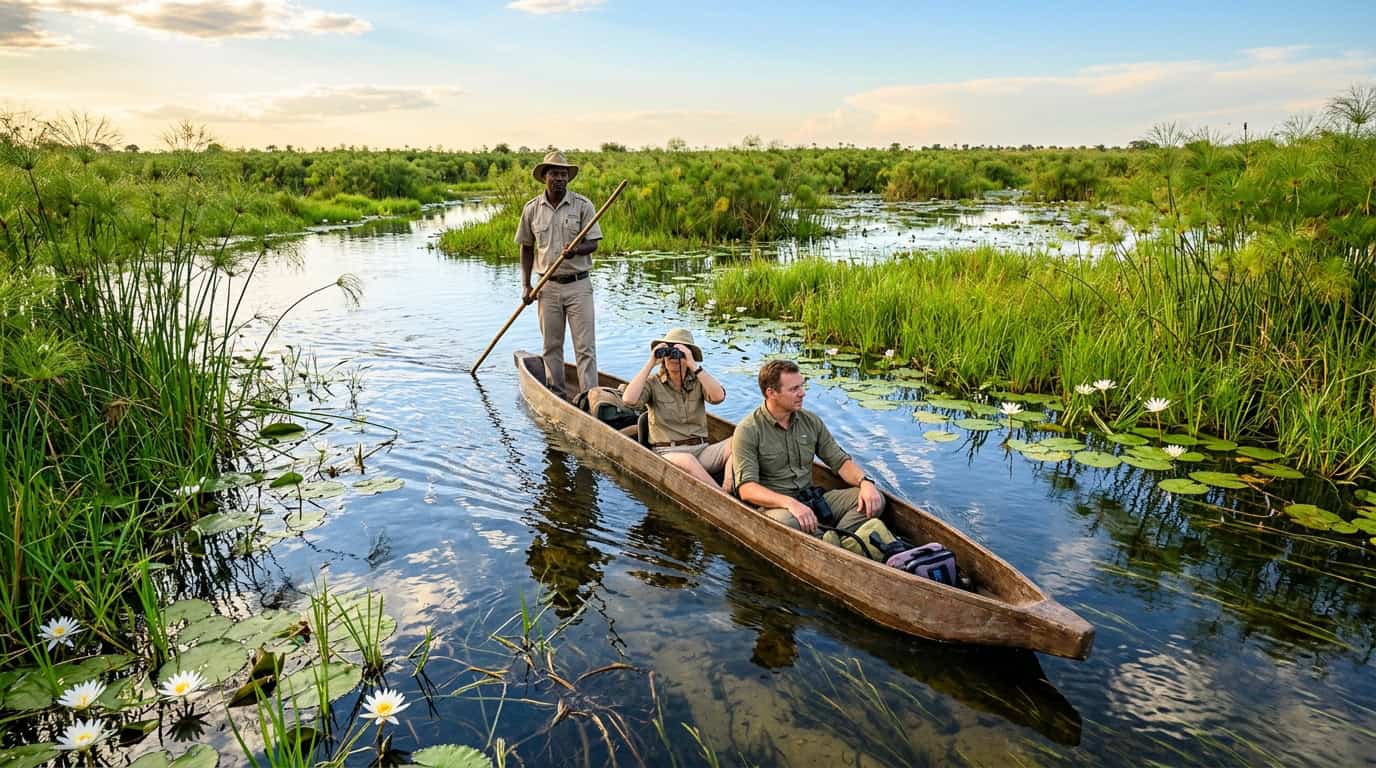
Your journey begins in the dusty gateway of Maun, where you will board a light aircraft for a breathtaking flight over the shimmering mosaic of the Okavango. From the air, the true scale of the 2026 record flood levels becomes clear as you spot pods of hippos and wandering elephant herds through the crystal clear water. For the first three days, you will settle into a remote camp within the permanent channels of the inner Delta to embrace the serenity of water based exploration. Glide through the reeds in a traditional mokoro canoe, listening to the chime of reed frogs while your guide points out rare sitatunga antelope hiding in the papyrus. This early season surge has opened up ancient waterways that were previously inaccessible, offering a truly exclusive perspective on this pristine wilderness.
On day four, you will transition toward the Khwai area, a vibrant region where the river meets the arid forest and creates a magnet for diverse wildlife. This land based portion of your itinerary focuses on high density game viewing, specifically targeting the apex predators that follow the migrating herds. Spend your mornings on rugged tracks tracking wild dogs and leopards, and your afternoons enjoying sundowners as elephants cross the river just meters from your vehicle. Because the 2026 floods have altered traditional routes, your expert guides will navigate the shifting terrain to find the most active hunting grounds. This blend of tranquil water safaris and intense land based encounters ensures you experience the full ecological reset currently transforming Botswana.
To make the most of this seven day adventure, I recommend packing high quality binoculars and a waterproof bag for your camera gear during boat excursions. Since many land routes are currently underwater due to the exceptional rainfall, flying between camps is the most efficient and scenic way to maximize your time in the bush. Plan your activities to include at least one night drive in the Khwai private concession, where you can spot nocturnal species like honey badgers and servals that are rarely seen during the day. This itinerary balances the peaceful rhythm of the delta waters with the raw energy of the African savannah, providing a comprehensive look at the world’s largest inland delta during a historic year.
Witnessing the Delta’s Great 2026 Rebirth
The 2026 season in the Okavango Delta is a rare gift that reminds us why this corner of Botswana is so precious. With the floodwaters reaching heights we haven’t seen in nearly a decade, the region has been completely reimagined into a shimmering world of endless lagoons and hidden channels. Gliding through the reeds in a traditional mokoro, I felt a profound sense of peace as the water lilies brushed against our hull. This year offers a unique chance to witness a true ecological reset where the wilderness feels more vibrant and alive than ever before.
If you have been dreaming of a high end safari that balances raw nature with refined comfort, now is the time to secure your spot. Because the high water levels have made land routes more challenging, the fly in experience has become the gold standard for reaching the most remote and pristine camps. These sustainable luxury lodges provide an intimate front row seat to the drama of the Delta while maintaining a light footprint on the earth. Booking your journey now ensures you can witness this ephemeral flood pulse before the waters eventually recede and the environment shifts once again. For those who love contrasting landscapes, combining this trip with a Namibia desert safari offers the ultimate Southern African adventure.
Reflecting on my time here, I am struck by how the Delta rewards those who seek out its quietest corners. From the thrill of spotting a leopard draped over a leadwood tree to the simple joy of an African sunset reflected in a glass like channel, every moment feels like a masterpiece. This 2026 season is a fleeting opportunity to experience Botswana at its most lush and expansive. I encourage you to pack your bags and embrace the magic of this water wilderness while it is at its absolute peak. For a different kind of thrill, you might later consider a Namibian coast drive to see where the dunes meet the sea.
Frequently Asked Questions
1. What makes the 2026 Okavango Delta season so unique compared to previous years?
This year is a once in a generation event because record breaking rains in the Angolan Highlands have created the highest water levels seen in nearly a decade. You will experience a rare ecological reset where dusty plains have transformed into lush, emerald lagoons teeming with life.
2. How should I plan my transport to reach the camps with the high water levels?
The secret to navigating this season is embracing the fly in experience because many traditional land routes are currently submerged. Taking a bush plane is the most practical way to reach remote, water locked camps while giving you a breathtaking bird’s eye view of the liquid masterpiece below.
3. What is the best way to see wildlife in the Delta right now?
I recommend trading traditional game drives for boat safaris and mokoro excursions to navigate the new waterways. You can find elephants swimming across channels that didn’t exist months ago and weave through papyrus reeds to spot hippos and vibrant birdlife.
4. Is the Moremi Game Reserve still accessible during these record floods?
While parts of Moremi are accessible, many of the dusty jeep tracks are now underwater due to the early and deep flood pulse. You should focus your itinerary on water based activities and fly in lodges to ensure you can safely navigate the submerged terrain.
5. What should I pack for a safari during this high water season?
Pack lightweight, quick drying clothing and a high quality waterproof bag for your camera gear since you will spend most of your time on the water. Do not forget a good pair of binoculars to spot the incredible influx of birdlife attracted by the emerald lagoons.
6. When is the best time to visit the Delta to see this specific flood event?
The floodwaters have arrived earlier than usual in 2026, so now is the time to book your journey to witness the peak transformation. This shimmering inland sea effect is at its most vibrant right now as the water reclaims ancient trails and creates a brand new world.