
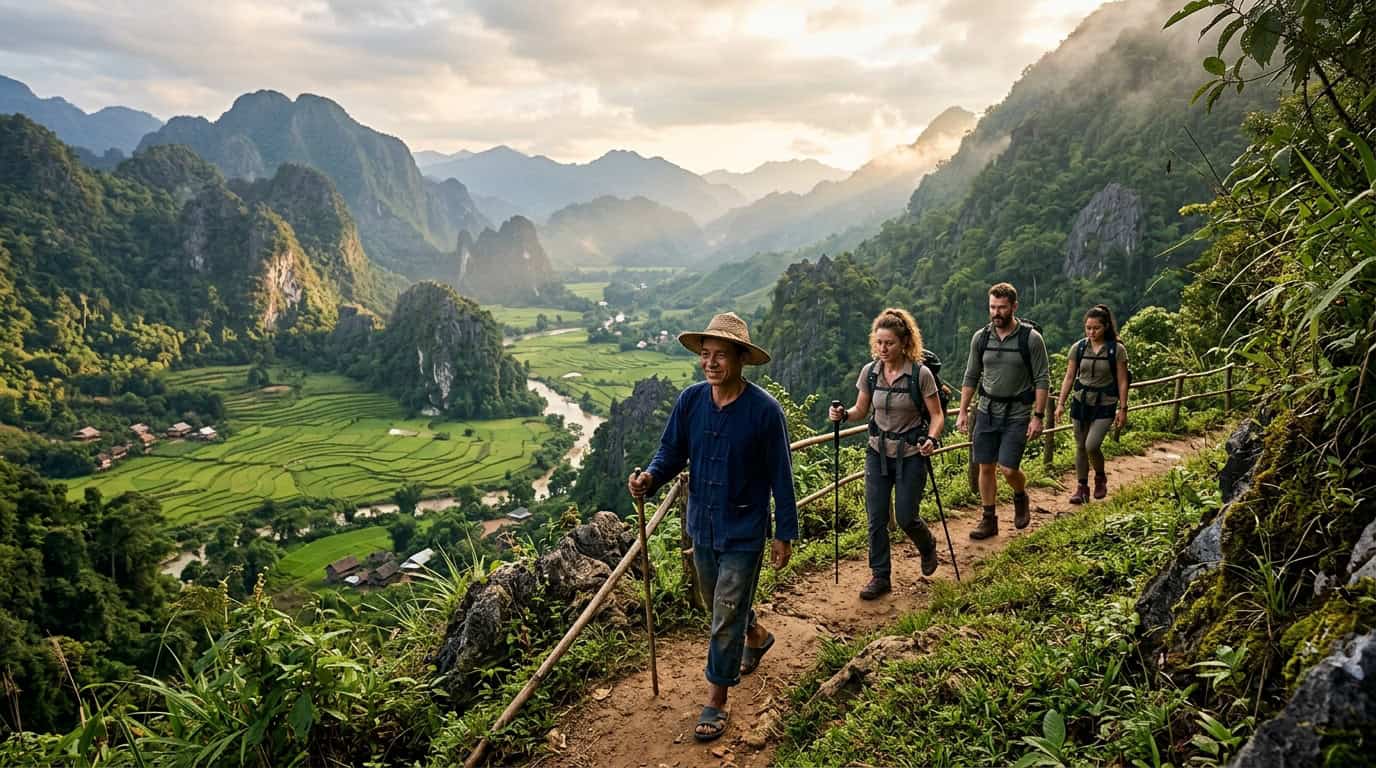
The mist clung to the limestone karsts of Nong Khiaw as I laced up my boots, the air thick with the scent of damp earth and woodsmoke. There is a raw, untouched magic to this corner of Southeast Asia that feels more accessible than ever, thanks to the new Laos-China Railway connecting the rugged north to the sleepy south. Whether you are chasing hidden cascades on the 100 Waterfalls trail or seeking a deep cultural connection in a remote village homestay, this laos trekking guide is designed to help you navigate the country’s shift toward slow, eco-conscious adventure.
I remember the quiet hum of the Nam Ha rainforest, where the only sounds were the crunch of leaves and the distant call of a gibbon. Trekking here isn’t just about the physical challenge, it’s about the privilege of sitting on a hand-carved stool in an Akha village, sharing a meal that was foraged just hours before. From the high-altitude tea plantations of Phongsali to the sun-drenched viewpoints of Vang Vieng, the trails are calling for those who want to trade the crowds for pristine wilderness and genuine human connection.
Key Takeaways
- The new Laos-China Railway has transformed northern Laos into an accessible hub for slow, eco-conscious adventure, significantly reducing travel time between Luang Prabang and remote trekking gateways like Luang Namtha.
- Authentic cultural immersion is best achieved through multi-day treks in the Nam Ha National Protected Area and Phongsali, where overnight stays in ethnic village homestays support local conservation and community economies.
- Northern Laos offers diverse physical challenges, ranging from scaling limestone karsts and waterfalls in Nong Khiaw to navigating high-altitude ancient tea plantations in the rugged frontier of Phongsali.
- Successful trekking requires hiring local guides to navigate unmarked jungle trails and packing specialized gear, including high-quality waterproof boots and layers for unpredictable mountain climates.
Navigating The Nam Ha National Protected Area
Luang Namtha serves as the ultimate gateway for anyone looking to ditch the crowds and explore the rugged northern highlands. Stepping into the Nam Ha National Protected Area felt like entering a different world where the dense canopy of primary rainforest replaces the hum of the city. During my three day trek, the trail challenged me with steep climbs and muddy descents, but the reward was an untouched landscape teeming with birdsong and giant bamboo groves. It is the perfect spot for travelers who want to balance physical exertion with genuine environmental stewardship. This region has perfected the eco-trekking model, ensuring that your presence supports conservation efforts rather than harming the delicate ecosystem.
The heart of this journey lies in the overnight stays within remote Akha and Khmu ethnic villages. I vividly remember sitting on a hand woven mat in a traditional stilt house, sharing a communal meal of sticky rice and forest herbs with my local hosts. These homestays are not just a place to sleep, they are an invitation to learn about ancient customs and the deep cultural connection these communities have with the land. We spent the evenings trading stories through a translator while the sounds of the jungle hummed just outside the wooden walls. It is a humbling experience that provides a level of cultural immersion you simply cannot find in the more tourist heavy southern hubs.
If you are planning your own expedition, I recommend arriving in Luang Namtha a day early to meet with a local guide and discuss your fitness level. You should pack light but prioritize high quality waterproof gear, as the tropical weather in the highlands can be unpredictable even in the dry season. For a truly rewarding itinerary, aim for a multi day loop that includes a river crossing by traditional dugout canoe. Most treks include locally sourced meals wrapped in banana leaves, which reduces waste and tastes incredible after a long day of hiking. This corner of Laos remains one of the most affordable and pristine adventure destinations in Southeast Asia, especially with the new railway making the north more accessible than ever.
Scaling Limestone Karsts In Nong Khiaw And Muang Ngoi
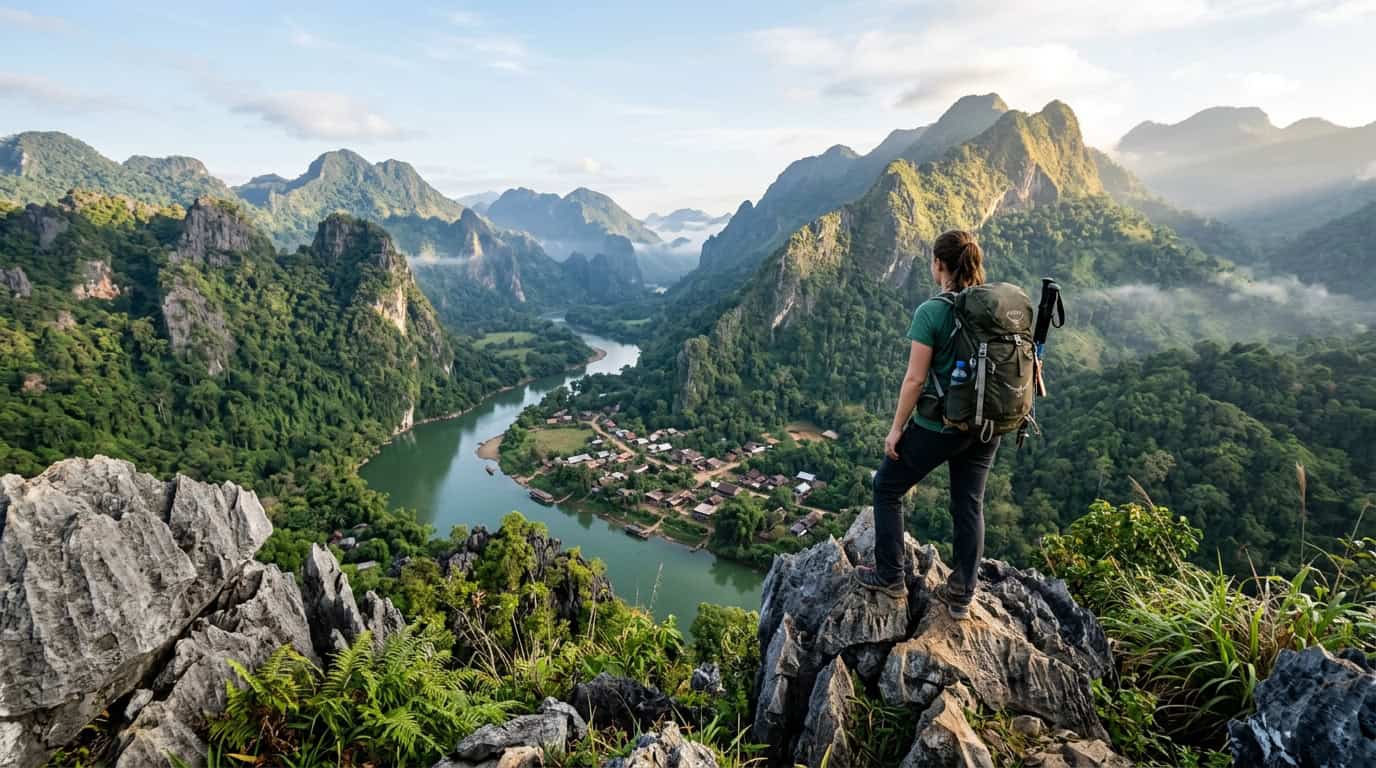
Stepping off the boat in Nong Khiaw feels like entering a world where limestone giants guard the emerald waters of the Nam Ou River. For those of us seeking a more rugged adventure after the relaxed pace of Luang Prabang, this northern highland hub is the ultimate playground for vertical exploration. The legendary 100 Waterfalls hike is an absolute must, as it literally takes you trekking up the center of a cascading stream through dense jungle. You will find yourself using ropes and natural footholds to scale small falls, surrounded by the refreshing spray of cool mountain water. It is a tactile, immersive experience that perfectly captures the raw beauty of the Lao wilderness.
If you are looking for that iconic “above the clouds” photo, the steep climbs to the local viewpoints offer some of the most rewarding vistas in all of Southeast Asia. I highly recommend waking up early to tackle the trail to Phadeng Peak, where a grueling hour of uphill hiking leads to a summit overlooking a sea of morning mist. For an even more remote experience, take a small boat further upriver to Muang Ngoi and hike to the Lattanavongsa viewpoint. The panoramic views of jagged karst peaks stretching toward the horizon are a powerful reminder of why this region remains a favorite for slow travelers. These trails are demanding on the legs, but standing atop those limestone ridges makes every drop of sweat worthwhile.
High Altitude Exploration In Remote Phongsali
If you are craving a true frontier experience, the high-altitude landscapes of Phongsali offer a refreshing escape from the tropical heat found elsewhere in Laos. This northernmost province feels like a world apart, where the mist clings to rugged peaks and the air carries the scent of ancient tea leaves. I found that the trekking here is uniquely challenging but incredibly rewarding, as you navigate steep trails that lead to isolated ethnic villages rarely visited by outsiders. Staying with an Akha or Phounoy family provides a rare glimpse into a traditional way of life that remains deeply connected to the rhythm of the mountains.
Reaching this remote corner of the country has become significantly easier thanks to the new Laos-China Railway, which cuts down travel time immensely. You can hop on a high-speed train from Luang Prabang to Muang Xai, then continue the journey north by local transport to reach the provincial capital. Once you arrive, I highly recommend spending a morning wandering through the tea plantations of Phongsali, where the trees are gnarled with age. These high-elevation gardens produce some of the most sought-after tea in the world, and sipping a fresh brew while overlooking the rolling green valleys is a highlight of any northern itinerary.
Planning your trek in Phongsali requires a bit more preparation than the well-trodden paths of the south, so be sure to pack layers for the chilly mountain nights. Most trails here are not well-marked, making it essential to hire a local guide who can navigate the dense forests and facilitate respectful interactions with tribal elders. I suggest dedicating at least four days to this region to account for the travel time and to allow your body to adjust to the elevation. This is the ultimate destination for slow travel enthusiasts who want to trade crowded viewpoints for the quiet serenity of the clouds.
Essential Gear And Sustainable Trekking Tips
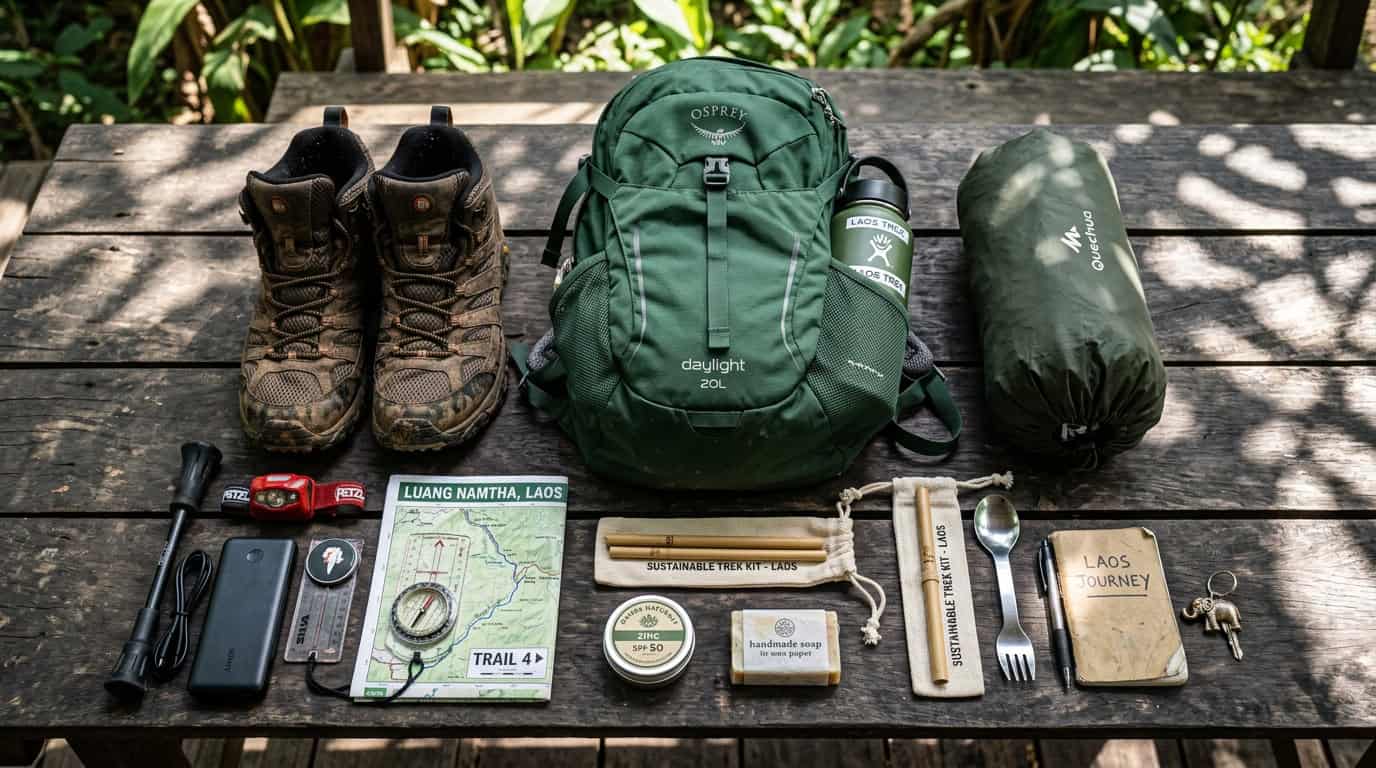
Packing for the humid northern highlands requires a balance between protection and breathability to handle the dense Lao jungle. I always recommend lightweight, moisture-wicking layers and long trousers to protect against leeches and brush, especially if you are venturing into the Nam Ha National Protected Area. Good quality hiking boots with deep lugs are essential for the steep, muddy limestone paths around Nong Khiaw and Muang Ngoi. Do not forget a reliable dry bag for your electronics, as tropical downpours can arrive without warning even during the dry season. Carrying a reusable water bottle and a personal filtration system helps reduce plastic waste in remote villages that lack recycling infrastructure.
Reaching these rugged northern hubs has become significantly easier thanks to the high speed Laos-China Railway. You can now hop on a train in Luang Prabang and arrive in Natuey, the gateway to Luang Namtha, in just a fraction of the time it used to take by bus. Once you arrive, remember that your presence in ethnic Khmu or Akha villages should be as low impact as possible. Always ask for permission before taking photographs of locals and try to learn a few basic phrases in Lao to show respect. Supporting the local economy by hiring local guides and staying in community-run homestays ensures your adventure directly benefits the people who call these mountains home.
The timing of your trek will drastically change your experience of the landscape and the difficulty of the trails. From November to February, the weather is cool and dry, making it the perfect window for high altitude hiking in Phongsali or climbing to limestone viewpoints. If you visit during the shoulder months, you will see the vibrant green rice terraces in full bloom, though you should be prepared for slippery conditions. Regardless of when you go, it is vital to pack out all your trash and stay on marked paths to preserve the pristine nature of the primary rainforest. Engaging with the land mindfully allows you to witness the true magic of the northern highlands while keeping them wild for future travelers. Much like finding the perfect voyage through Vietnam’s waters, choosing the right trail in Laos requires a commitment to sustainability and local heritage.
Embrace the Mist of the Northern Highlands
Stepping off the slow boat and away from the gilded temples of Luang Prabang opens up a side of the country that few travelers truly take the time to see. The northern highlands are a world of emerald peaks and limestone karsts where life moves to the steady rhythm of the seasons. I found that the true magic of Laos is not found in a souvenir shop, but in the mist rising over a remote village or the shared laughter during a traditional Khmu meal. By choosing to explore regions like Luang Namtha or the heights of Phongsali, you are doing more than just checking off a budget list. You are choosing a path that values depth over distance and authentic connection over a quick photo opportunity.
Every mile you trek through the Nam Ha National Protected Area or up the steep ridges of Nong Khiaw directly supports the preservation of these pristine landscapes. Choosing local eco-tourism initiatives ensures that your travel dollars stay within the ethnic communities that have called these mountains home for centuries. These sustainable adventures help protect primary rainforests and provide vital income for village homestays, making your journey a force for good. As the new railway makes the north more accessible than ever, now is the time to embrace a slower pace of travel. I encourage you to pack your boots, leave the crowds behind, and discover the best Laos trekking routes for yourself.
Frequently Asked Questions
1. When is the best time of year to go trekking in Laos?
The ideal window for hitting the trails is during the dry season from November to February when temperatures are cooler and the paths are firm. If you enjoy lush greenery and flowing waterfalls like the 100 Waterfalls trail, the shoulder months of October and March offer a beautiful balance before the heat peaks.
2. What should I pack for a multi-day trek in the Nam Ha rainforest?
Pack lightweight, moisture-wicking clothing and a sturdy pair of broken-in hiking boots to handle the muddy descents and steep climbs. Don’t forget a high-quality insect repellent, a reusable water bottle, and a warm layer for the surprisingly chilly nights in remote village homestays.
3. How do I get to the trekking hubs in Northern Laos?
The new Laos-China Railway has changed travel here, making it incredibly easy to reach northern hubs like Luang Namtha and Muang Xai from Luang Prabang or Vientiane. It is a scenic and efficient way to trade the city bustle for the rugged highlands in just a few hours.
4. Do I need a guide for trekking in areas like Nong Khiaw or Luang Namtha?
Yes, hiring a local guide is essential for navigating the dense jungle and ensuring your trek supports the local community through eco-tourism. Guides provide invaluable cultural context during village visits and possess the expert knowledge needed to safely traverse the primary rainforest.
5. What can I expect from a village homestay experience?
You will experience genuine hospitality, often sharing traditional foraged meals while sitting on hand-carved stools in stilt houses. It is a beautiful opportunity for deep cultural connection where you can learn about local traditions and the daily rhythms of life in the mountains.
6. Are the trekking trails in Laos physically demanding?
The terrain varies from gentle walks through tea plantations to challenging three-day treks with significant elevation changes in the Nam Ha Protected Area. I recommend a moderate level of fitness to fully enjoy the experience, as the tropical humidity and muddy paths add an extra layer of physical challenge.