
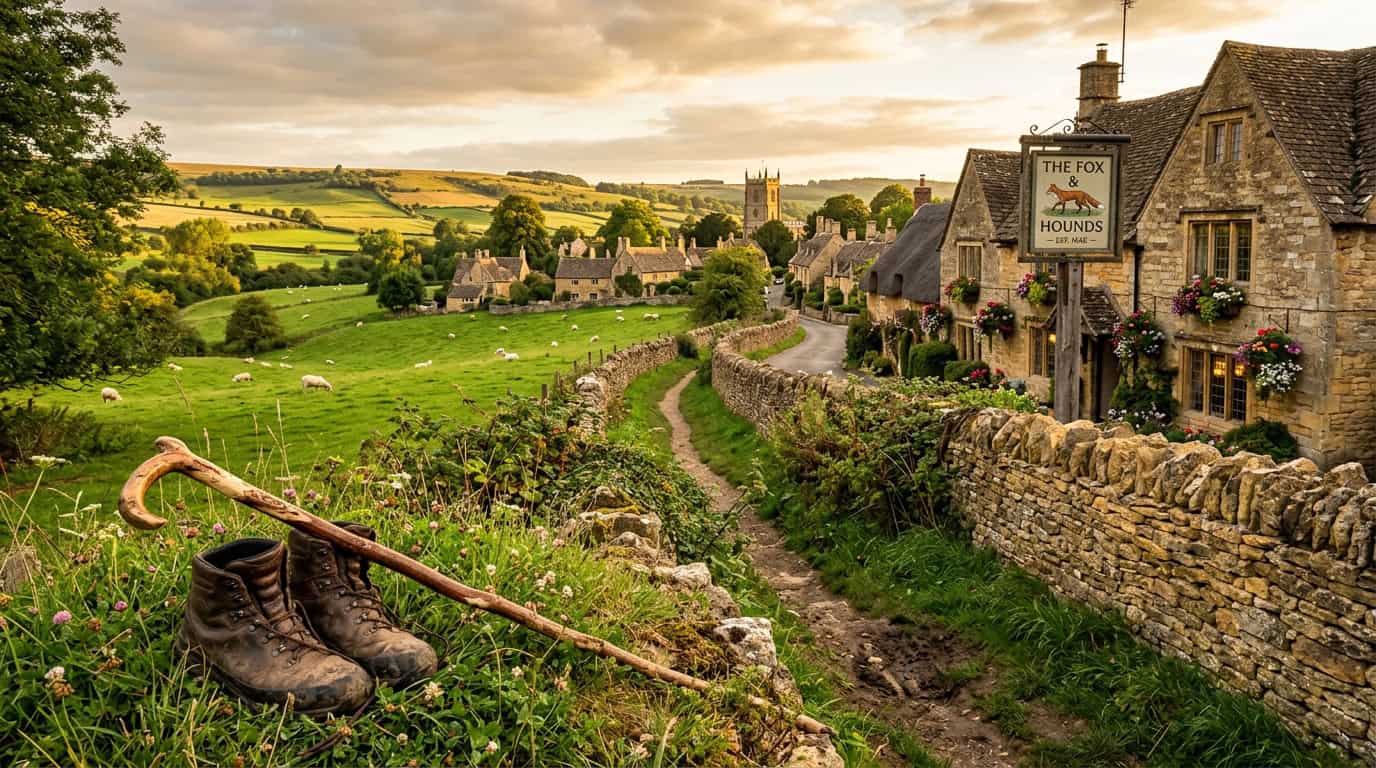
There is a specific magic in the way the morning mist clings to the honey-hued stone of a sleeping village before it burns off to reveal miles of rolling emerald hills. With over 3,000 miles of public footpaths crisscrossing this protected area, exploring the cotswolds walking trails is less about a simple hike and more about stepping into a living postcard. I still remember the burn in my calves as I reached the summit of Cleeve Hill, only to have my breath taken away by a panoramic view of the Severn Vale that made every step worth it.
Whether you are looking to conquer the iconic 102-mile Cotswold Way or simply want a gentle stroll between historic market towns, this region offers a perfect blend of rugged escarpments and ancient beech woodlands. Planning your journey is simple, especially with digital guides now helping you find the hidden gems between Painswick and Wotton-under-Edge. From the Roman grandeur of Bath to the charming streets of Chipping Campden, these paths connect you to the very soul of the English countryside.
Key Takeaways
- The Cotswolds offers a diverse 3,000-mile network of footpaths, ranging from the iconic 102-mile Cotswold Way to the intimate 65-mile Diamond Way circuit.
- Modern digital guides and regional discovery apps now provide real-time navigation and historical insights, making it easier to find hidden shortcuts and local tea rooms.
- Successful trekking requires specialized gear, specifically sturdy waterproof boots for limestone terrain and a packable waterproof jacket for unpredictable ridge weather.
- The region provides a premier ‘pub-to-pub’ experience, allowing hikers to balance physical exertion with historic stone inns and traditional local ales located just miles apart.
Trekking The Iconic Cotswold Way National Trail
Stepping onto the Cotswold Way feels like entering a living postcard, where the 102 mile journey from Chipping Campden to Bath unfolds across a tapestry of lime-green pastures and ancient beech hangers. I remember my first time standing atop Cleeve Hill, the highest point of the trail at 1,083 feet, where the panoramic views across the Severn Vale toward the Malvern Hills took my breath away. This escarpment route is perfect for hikers who want to balance physical challenge with the reward of a quiet, honey-hued village waiting at the bottom of the hill. It is the ultimate pub to pub experience, allowing you to spend your mornings traversing limestone ridges and your afternoons tucked away in a historic stone inn with a local ale in hand.
Planning your trek for the 2026 season has become remarkably intuitive thanks to the latest digital integration along the route. I found the new interactive features on regional discovery apps to be incredibly helpful, especially for the lush stretch between Painswick and Wotton-under-Edge. These digital guides offer real-time insights into the flora and fauna you encounter, ensuring you never miss a hidden historical marker or a scenic shortcut to a nearby tea room. Whether you are tackling the full twelve day thru-hike or just a weekend loop, these tools help bridge the gap between the rugged outdoors and modern convenience.
If you are looking for the quintessential English walking experience, I suggest focusing your itinerary on the segments that weave through the Cotswold Edge. The terrain varies beautifully, shifting from rolling sheep-filled meadows to dramatic woodland canopies that provide welcome shade in the summer months. I always recommend packing a sturdy pair of boots and a camera, as the descent into the Roman city of Bath provides a stunning architectural finale to an incredible journey. By following the well-marked public footpaths, you can immerse yourself in the quiet rhythms of the countryside while knowing a comfortable bed and a warm meal are never more than a few miles away.
Circular Routes And Hidden Diamond Way Gems
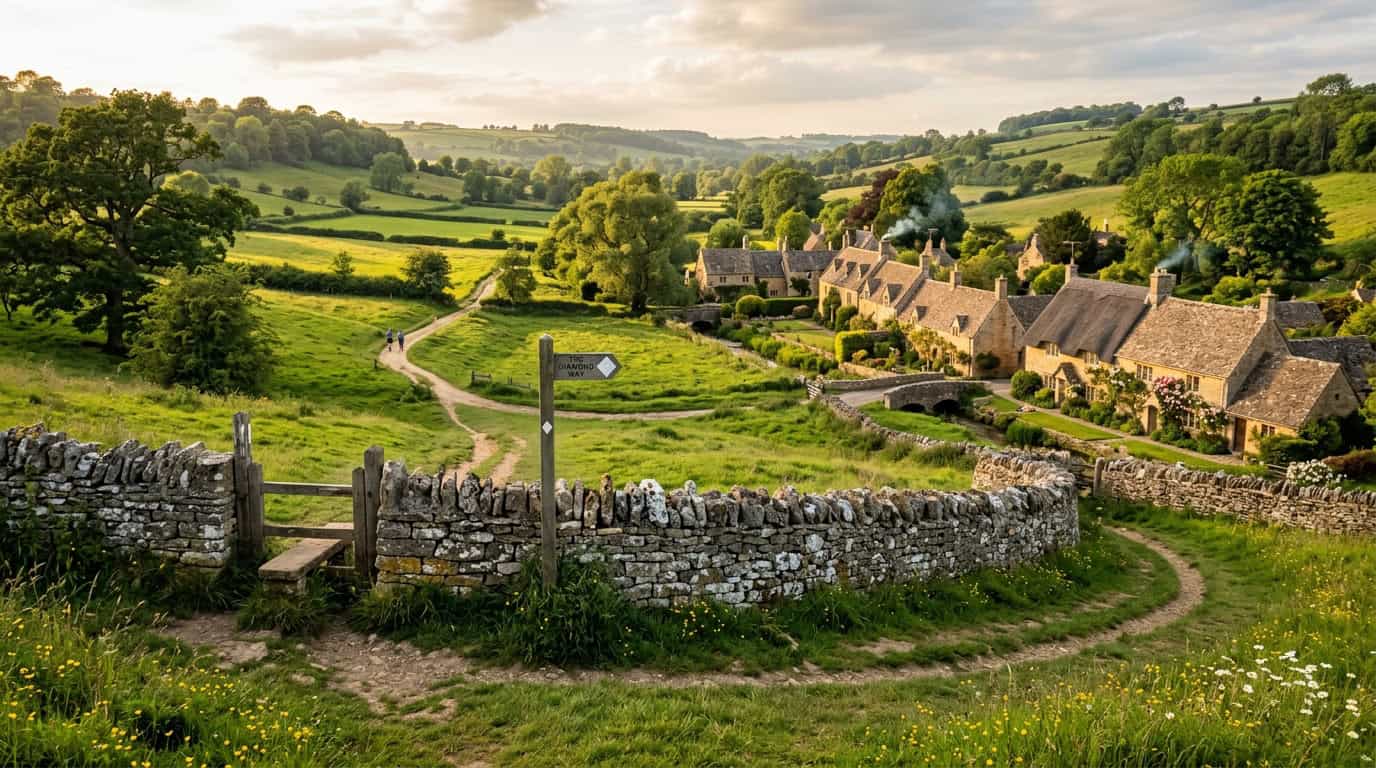
While the 102-mile Cotswold Way often steals the spotlight, I have always found that the true soul of the North Cotswolds resides along the Diamond Way. This 65-mile diamond-shaped circuit was created to celebrate the 60th anniversary of local walking enthusiasts, and it intentionally veers off the beaten track into quiet, wildflower-rich meadows and ancient woodlands. Walking this route feels like stepping into a private world where the rush of modern life disappears behind dry stone walls and rolling hills. It is the perfect choice if you are looking to trade the crowded tourist hotspots for a more intimate connection with the English countryside.
One of my favorite stretches connects the charming village of Blockley to the quiet beauty of Ebrington, offering a quintessential pub-to-pub experience. You can spend your morning navigating gentle footpaths through shaded groves before arriving at a traditional village inn for a well-deserved local ale and a hearty lunch. These paths are remarkably well-signposted, making them accessible even if you are not an expert navigator with a compass. I highly recommend packing a pair of sturdy waterproof boots, as the dew on the long meadow grass can be surprisingly heavy during those crisp, golden morning starts.
If you are short on time, you can easily break the Diamond Way into smaller circular loops that begin and end in honey-hued market towns. These shorter excursions allow you to explore hidden gems like the secluded valley of Ford or the quiet architectural wonders of Guiting Power without the logistical headache of a point-to-point hike. Many of these trails are designed to showcase the diverse flora of the region, from bluebell carpets in the spring to the fiery copper leaves of autumn. By focusing on these lesser-known footpaths, you gain a deeper appreciation for the rural rhythms that have defined this area for centuries.
Perfect Pub To Pub Day Hike Itineraries
For a quintessential taste of the English countryside, nothing beats the gentle three mile wandering path between the twin villages of Upper and Lower Slaughter and the bustling hub of Bourton-on-the-Water. I recommend starting your morning in Upper Slaughter, where the honey colored stone cottages reflect perfectly in the shallow waters of the River Eye. From here, you can follow the well marked Warden’s Way downstream toward Lower Slaughter, a route that feels like stepping directly into a landscape painting. The path is almost entirely flat and follows the river’s edge, making it accessible for hikers of all levels who want to enjoy the scenery without heavy exertion. Before you leave the Slaughters, be sure to stop at the historic Old Mill for a quick look at the waterwheel before heading toward the meadows.
As you transition onto the footpath toward Bourton-on-the-Water, the trail opens up into wide grazing pastures where sheep often wander right up to the wooden stiles. This stretch is remarkably peaceful, offering views of the rolling hills that define this region. Upon reaching Bourton, often called the Venice of the Cotswolds, the atmosphere shifts to a lively village charm with its iconic low stone bridges crossing the River Windrush. This is the perfect moment to reward your efforts with a pint of local amber ale at a traditional riverside pub. I love grabbing a seat outdoors to watch the water flow by while planning the short return walk back through the shaded woodland trails.
To make the most of this itinerary, try to set off mid morning so you arrive in Bourton just in time for a relaxed pub lunch. The footpaths are well maintained, but sturdy waterproof shoes are a must as the riverside grass can be quite dewy even on sunny afternoons. If you have extra time, explore the narrow alleyways of Bourton to find hidden tea rooms and independent shops before retracing your steps. This circular route captures the very best of the region’s walking culture, combining historic architecture with the simple joy of a country stroll. It is an approachable and rewarding way to experience the timeless beauty of the Gloucestershire countryside at your own pace.
Essential Gear For The Cotswold Edge Escarpment
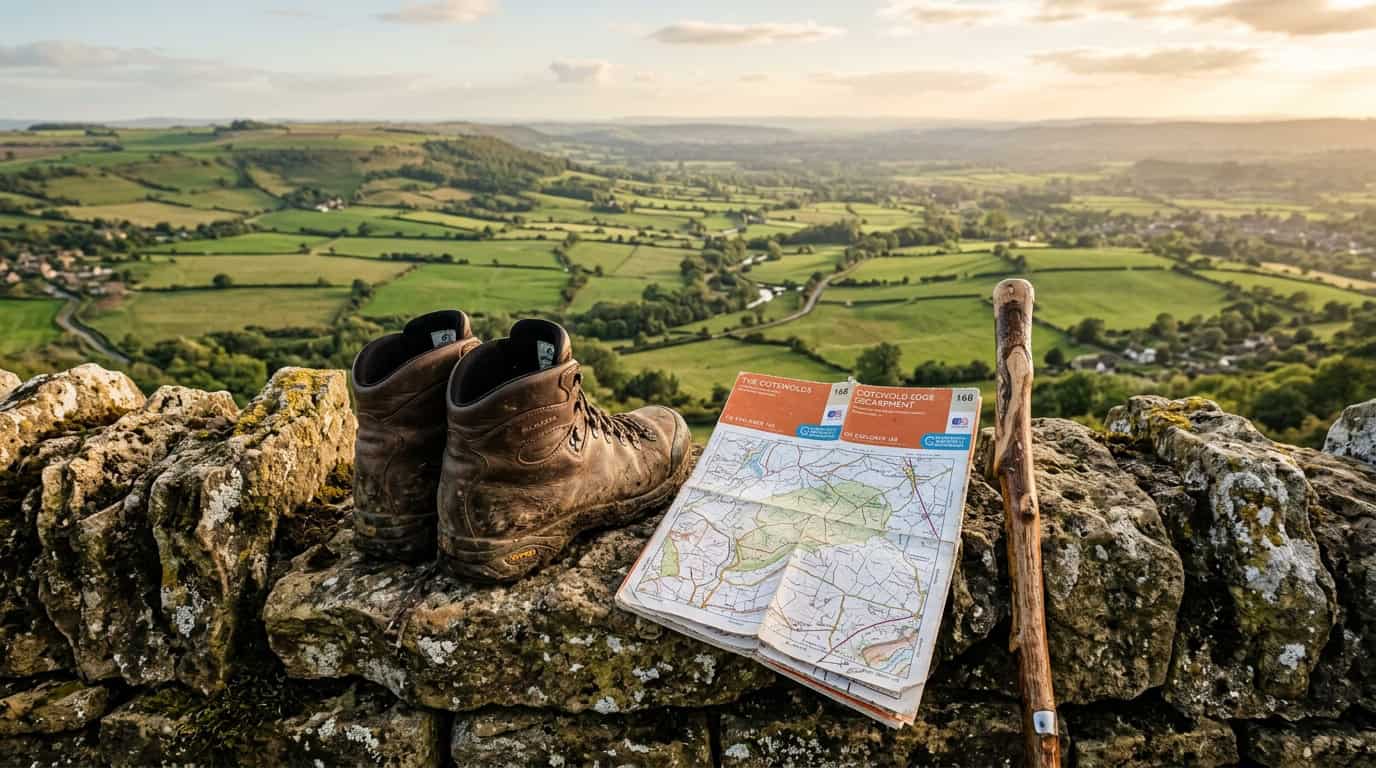
Tackling the Cotswold Edge escarpment requires more than just a sense of adventure, as the ancient limestone terrain can be surprisingly demanding on your feet. I always recommend a sturdy pair of waterproof hiking boots with excellent ankle support to navigate the steep climbs and occasional muddy patches near the woodland trails. While the paths between honey-hued villages look gentle on a map, the Jurassic limestone can become slippery after a typical English rain shower. Investing in quality wool-blend socks will also prevent blisters as you trek from one hilltop vista to the next. Do not forget that the weather along the ridge can change in an instant, so a lightweight, packable waterproof jacket is an absolute necessity for any day trip.
Navigating the 3,000 miles of public footpaths is much easier when you combine traditional tools with modern technology. I find that a physical map is invaluable for spotting those hidden pub-to-pub shortcuts that digital apps might overlook. That said, downloading the latest digital trail maps before you set off ensures you stay on track even when mobile signal dips in the deep valleys. Having a reliable GPS backup allows you to focus on the breathtaking views from Cleeve Hill rather than worrying about a missed turn. These tools are your best friends when trying to time your arrival at a cozy village inn just in time for a well-earned lunch.
Packing for a day on the escarpment is all about balancing comfort with preparedness for the unpredictable countryside. I like to carry a small daypack filled with high-energy snacks, a reusable water bottle, and a portable power bank for my phone. Since many of the best scenic routes involve crossing stiles and traversing open pastures, a pair of lightweight trekking poles can really save your knees on the descents. Bringing a compact sit-mat is another pro tip, allowing you to enjoy a picnic against a dry stone wall without getting damp. With the right gear in your pack, you can focus entirely on the rolling green hills and the timeless charm of the Cotswold Way. This region is a dream for history lovers and pub seekers alike, offering a unique blend of heritage and hospitality.
Discovering the Magic of Ancient Footpaths
There is a profound sense of restoration that comes from spending a day on the Cotswolds walking trails, where the only schedule you have to keep is the one set by your own pace. I have found that leaving the car behind and navigating the ancient footpaths between honey-hued villages allows you to connect with the countryside in a way that a simple Cotswolds village tour never could. Whether you are trekking a rugged section of the Cotswold Way or following a gentle stream through a hidden valley, the rhythmic crunch of gravel under your boots acts as a natural reset for the mind. These paths offer a rare chance to slow down, breathe in the scent of wild garlic, and appreciate the intricate details of the English countryside that most travelers miss.
The true magic of this region lies in those serendipitous moments found between the famous landmarks, like stumbling upon a quiet woodland glade or reaching a limestone escarpment just as the sun hits the valley floor. If you enjoy these rolling hills, you might also appreciate hiking the Austrian Alps for a more vertical challenge. I highly recommend planning your route around the local pub culture, as there is nothing quite like the reward of a cold pint and a hearty meal after a morning of exploring. You do not need to be an elite athlete to enjoy these routes, as the network of over 3,000 miles of public footpaths offers something for every fitness level and interest. From the dramatic heights of Cleeve Hill to the soft meadows near Chipping Campden, the variety of the terrain ensures that every mile feels like a fresh discovery.
Now is the perfect time to lace up your hiking boots and experience this timeless charm for yourself. I encourage you to download a digital trail map or grab a traditional paper guide to help you navigate the stiles and kissing gates that define this iconic area. If you find yourself craving a different landscape after these hills, you might enjoy exploring the Algarve coastal walks for a change of pace by the sea. For those who seek even more dramatic limestone peaks, you might consider Brenta Dolomites hiking as your next great adventure. There is a world of history and natural beauty waiting for you just beyond the village high streets, tucked away in the rolling pastures and ancient beech forests. Pack a waterproof jacket, choose a path that calls to your soul, and set off on an adventure that will leave you feeling completely refreshed. The trails are calling, and the stunning vistas of the Cotswolds are best enjoyed one step at a time.
Frequently Asked Questions
1. How long is the Cotswold Way and where does it begin?
The iconic Cotswold Way stretches for 102 miles, offering a magnificent journey through the heart of the English countryside. Your adventure begins in the charming market town of Chipping Campden and winds south until you reach the Roman grandeur of Bath.
2. What is the highest point I can reach while hiking the trails?
Cleeve Hill stands as the highest point in the region at 1,083 feet, providing a rewarding challenge for any hiker. When I reached the summit, the panoramic views across the Severn Vale toward the Malvern Hills were absolutely breathtaking and worth every bit of the climb.
3. Are the walking trails suitable for casual walkers or just experienced hikers?
There is a perfect path for everyone, ranging from gentle strolls between historic villages to the more rugged escarpments of the National Trail. Whether you want a short walk through ancient beech woodlands or a multi day trek, the 3,000 miles of footpaths offer endless variety.
4. What is the best way to plan a walking route for the upcoming season?
Planning your journey is now remarkably intuitive thanks to new digital guides that help you navigate hidden gems between spots like Painswick and Wotton-under-Edge. These tools allow you to easily map out your trek and find the most scenic limestone ridges and quiet valleys.
5. Can I find places to eat and stay along the walking routes?
The Cotswolds offers the ultimate pub to pub experience, where you can spend your mornings on the trail and your afternoons in a historic stone inn. You will find plenty of honey-hued villages tucked away at the bottom of the hills, perfect for enjoying a local ale and a warm meal.
6. What kind of scenery can I expect to see on my hike?
Expect to be immersed in a living postcard of emerald hills, misty mornings, and golden limestone architecture. The trails connect you to the soul of the countryside, featuring a stunning tapestry of lime-green pastures, ancient beech hangers, and historic market towns.