
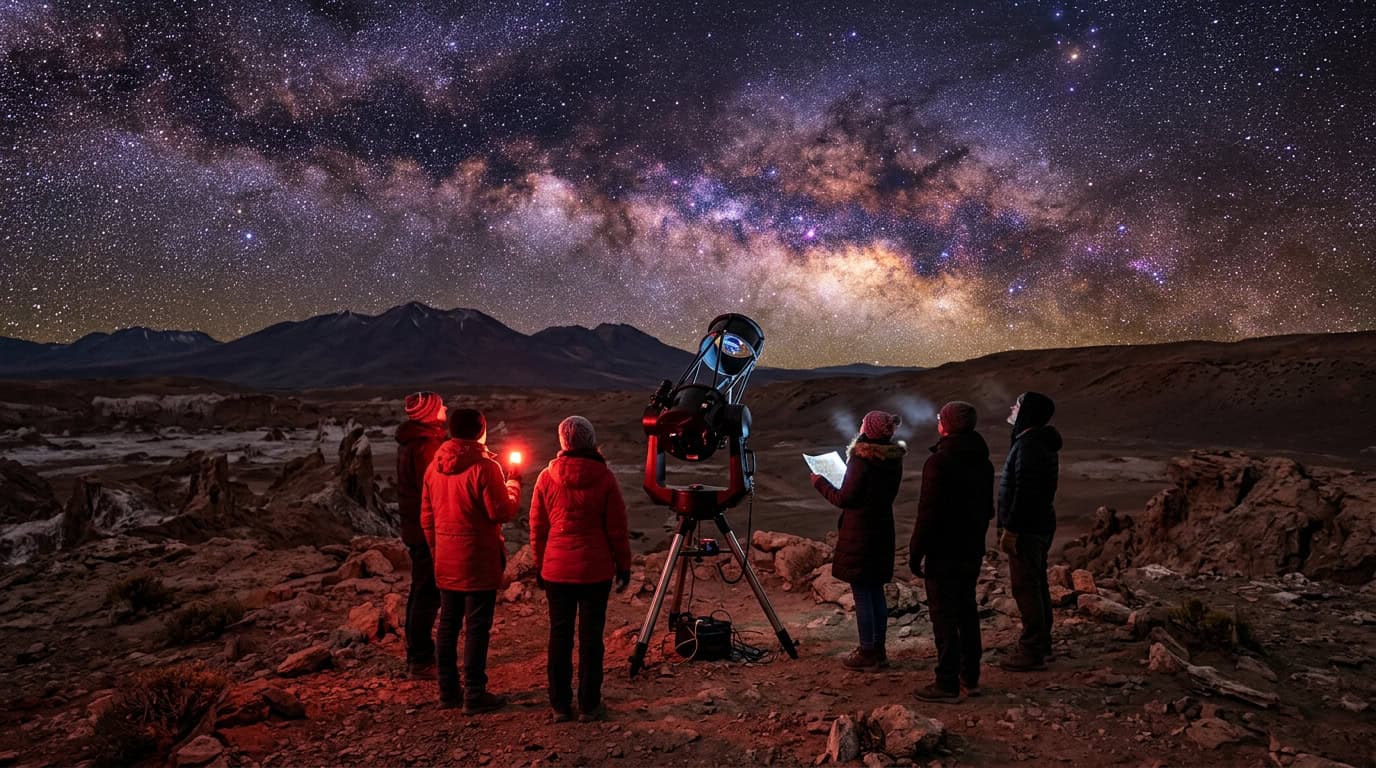
Standing on the salt-cracked earth of the High Andes, I watched the sun dip below the horizon, revealing a sky so dense with stars it felt like I could reach out and touch the Milky Way. As a premier destination for astrotourism in 2026, the Atacama Desert offers over 330 clear nights a year and a rare Bortle Class 1 darkness that simply doesn’t exist in our modern, light-polluted cities. Booking one of the many atacama stargazing tours is the only way to truly explore this celestial wilderness, where the silence of the desert meets the roaring brilliance of a billion distant suns.
Whether you are looking for a social group experience with hot cocoa and a telescope or a private session focused on high-end astrophotography, planning your trip to San Pedro de Atacama requires a bit of celestial strategy. Most excursions depart just minutes from the town center, whisking you away to hidden plateaus where professional-grade lenses reveal the rings of Saturn and swirling nebulae in vivid detail. It is a humbling, bucket-list experience that reminds you just how vast our universe really is, provided you know which tour fits your budget and curiosity.
Key Takeaways
- Prioritize visiting during the new moon phase to ensure the Bortle Class 1 darkness required to see the Milky Way and deep-space nebulae without lunar interference.
- Select a tour based on your specific goals, opting for standard group sessions for a social introduction or premium private tours for professional-grade telescope access and astrophotography.
- Prepare for extreme temperature drops in the high-altitude desert by using a three-layer clothing system, including a moisture-wicking base, insulating wool or fleece, and a windproof outer shell.
- Stay in San Pedro de Atacama for at least three to four nights to provide a buffer against potential tour cancellations caused by the ‘Altiplanic Winter’ or unexpected wind conditions.
Choosing Your Perfect Atacama Stargazing Experience
When you are standing under the world’s clearest skies in the Atacama Desert, the sheer volume of stars can feel overwhelming, making the choice of a tour provider your most important decision. Standard group sessions are a fantastic, budget friendly way to get your bearings, usually taking you just a short drive outside San Pedro de Atacama to escape the town lights. You can expect a cozy atmosphere with hot cocoa and a guided tour of the constellations using laser pointers and mid sized telescopes. These tours are perfect if you want a social experience and a solid introduction to the southern hemisphere’s celestial wonders without a massive price tag.
If you are looking for a more intimate connection with the cosmos, I highly recommend upgrading to a premium or private tour. These smaller groups often use professional grade telescopes that reveal the intricate textures of distant nebulae and the rings of Saturn with breathtaking clarity. The real magic of these high end experiences is the access to expert astrophotographers who help you capture the night sky on your own camera or provide high resolution portraits of you under the Milky Way. Investing a bit more ensures you have the time and space to ask deep questions while enjoying a truly serene, undisturbed view of the universe.
Timing your visit is just as crucial as picking the right tour, so try to plan your trip around the new moon phase for the darkest possible conditions. While the Atacama boasts over 330 clear nights a year, the clarity of the air during the shoulder seasons offers a crispness that is hard to beat. Always check what kind of equipment your guide uses, as a larger aperture telescope can be the difference between seeing a faint smudge and a brilliant galaxy. Whichever path you choose, remember to dress in warm layers, because even the world’s driest desert becomes biting cold once the sun disappears and the stars take center stage.
Navigating The Lunar Cycle And Desert Weather
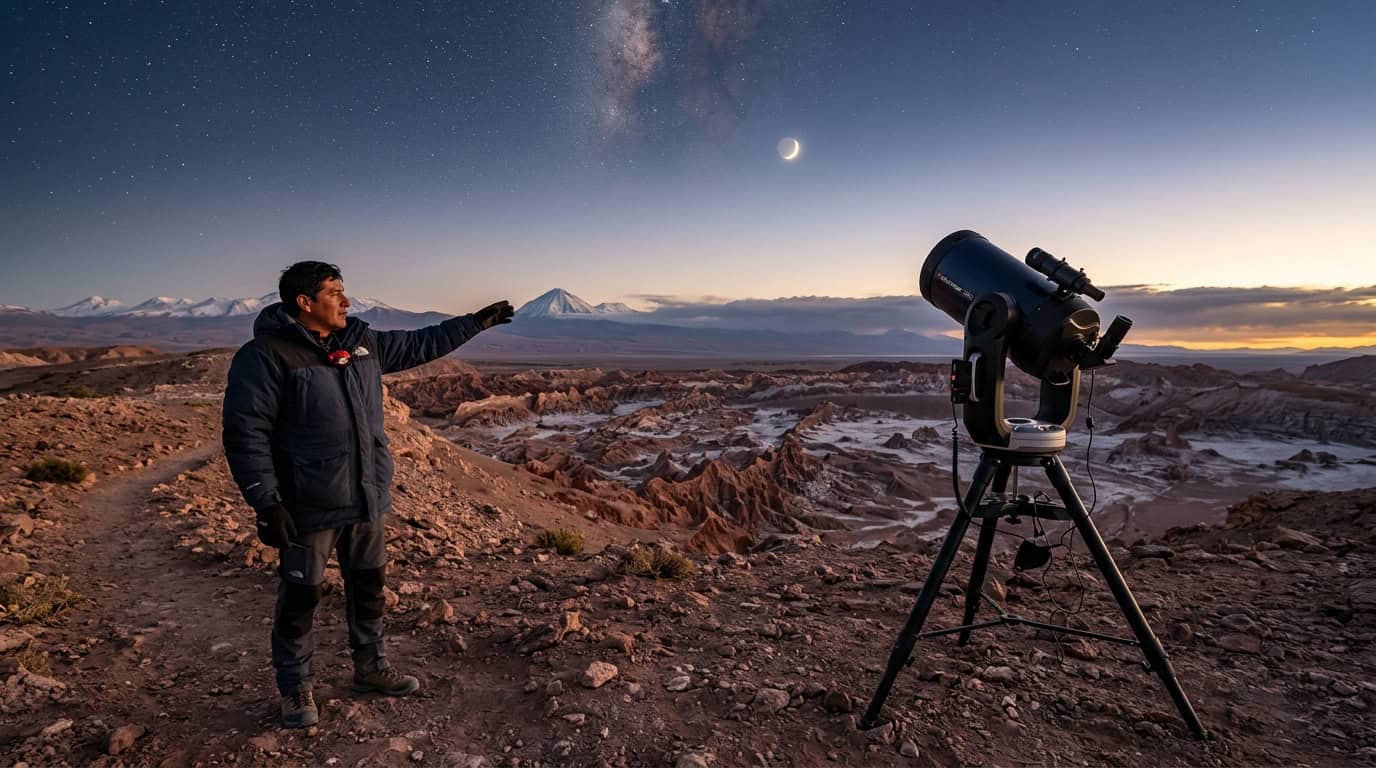
To experience the Atacama at its most magical, you must synchronize your visit with the lunar calendar. When I first stood under the desert sky during a New Moon, the darkness was so profound that the Milky Way cast a visible shadow across the sand. Planning your tour for the days immediately surrounding the New Moon ensures that the brilliance of the moon does not wash out the faint nebulae and distant galaxies you came to see. If you travel during a Full Moon, you will certainly enjoy the novelty of a desert landscape illuminated like midday, but the deep space treasures will remain hidden in the lunar glare. I always recommend checking a moon phase app before booking your flights to San Pedro de Atacama to ensure those deep sky objects are front and center.
The high altitude climate of the Chilean altiplano is the secret behind its world class clarity, but it requires some physical preparation. At over 2,400 meters above sea level, the air is incredibly thin and dry, which eliminates the atmospheric distortion found in coastal regions. This lack of humidity means the temperature drops rapidly the moment the sun dips below the horizon, often plummeting toward freezing even in the summer months. I found that layering is the only way to stay comfortable during a two hour session behind a telescope. Bringing a heavy thermal jacket, gloves, and a warm hat will allow you to focus on the rings of Saturn rather than the biting chill of the desert night.
While the Atacama boasts over 330 clear nights a year, the summer months from December to February can occasionally bring the Altiplanic Winter. This phenomenon introduces rare clouds and moisture to the region, which can sometimes lead to unexpected tour cancellations. I suggest staying in San Pedro for at least three or four nights to give yourself a buffer in case the weather or wind conditions shift. This flexibility ensures that you have multiple opportunities to head out into the salt flats for that perfect, crystalline view of the cosmos. Most premium tours will provide hot cocoa and blankets, but arriving with a spirit of adventure and a warm pair of socks makes the experience truly unforgettable.
Scientific Wonders From ALMA To Cerro Chajnantor
Standing beneath the crystalline canopy of the Atacama, you are not just looking at stars, you are witnessing the very frontier of human discovery. The high altitude plateaus near San Pedro de Atacama host the ALMA observatory, an incredible array of antennas that peer into the coldest corners of the universe to study the birth of planets. When you join a local stargazing tour, the guides often point toward the silhouettes of these massive facilities on the horizon, bridging the gap between the ancient constellations you see with your naked eye and the complex science happening just miles away. It is a humbling experience to realize that the same dark, Bortle Class 1 skies that take your breath away are providing the data that will redefine our understanding of physics.
The scientific allure of this region reaches new heights in 2026 with the inauguration of the Fred Young Submillimeter Telescope on the summit of Cerro Chajnantor. This groundbreaking facility sits at an staggering elevation of over 18,000 feet, making it one of the highest astronomical sites on the planet. During your evening tour, your guide can explain how this new telescope uses cutting edge technology to capture light that has traveled for billions of years across the cosmos. Adding this layer of scientific context transforms a beautiful photo opportunity into a profound journey through time and space. Knowing that you are standing in the world’s premier destination window to the universe adds a sense of awe that few other travel destinations can match.
To make the most of this scientific wonder, I recommend booking a premium tour that focuses on the intersection of astronomy and local geography. These smaller groups often provide more time with professional grade telescopes, allowing you to see deep sky objects with the same clarity that attracts global researchers to Chile. Always remember to dress in thick layers, as the desert temperatures drop rapidly once the sun sets over the Andes. Many tours now include specialized astrophotography tips, so you can bring home a high quality image of the Milky Way as a souvenir of your time in this celestial laboratory. Planning your visit during the new moon phase will ensure the darkest possible conditions for an unforgettable night of exploration.
Essential Gear For Chilly Atacama Nights
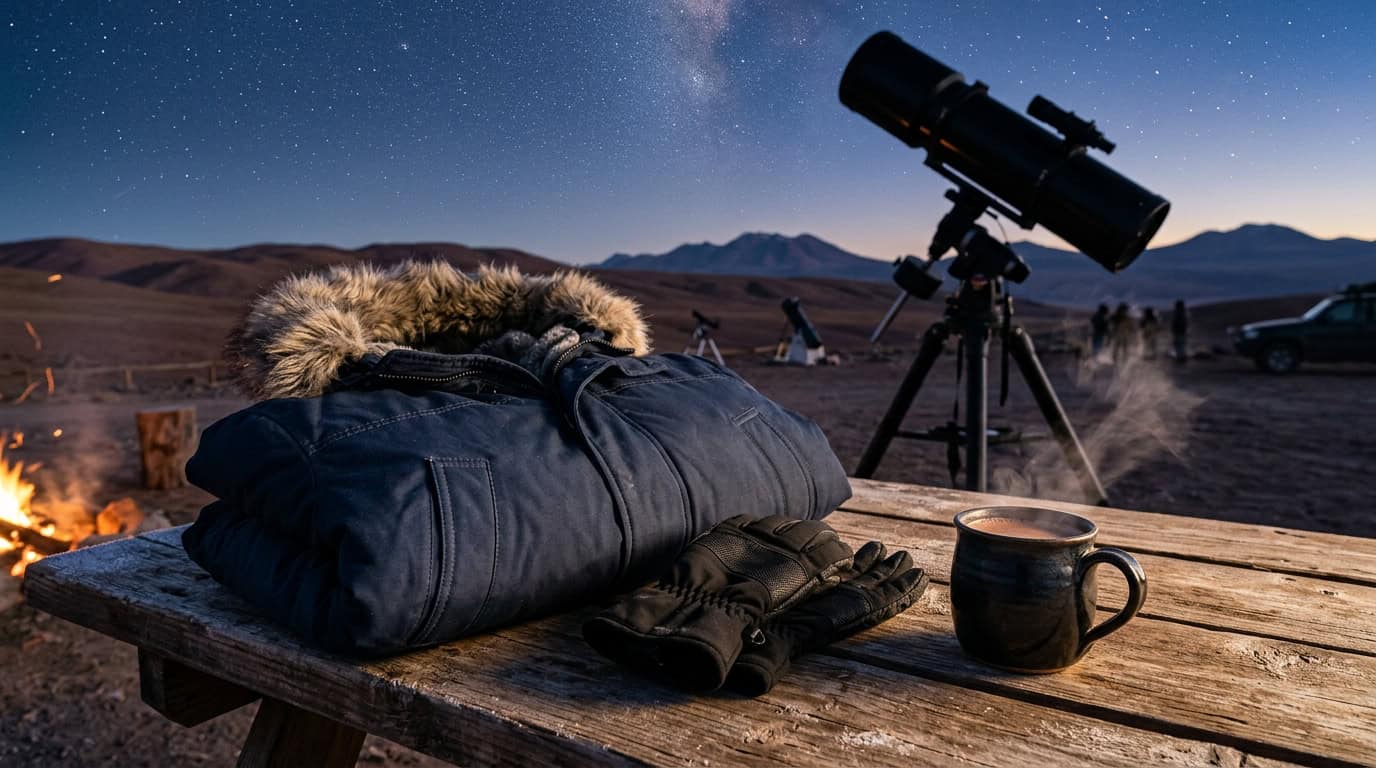
Standing under the world’s most pristine night sky is a transformative experience, but the high-altitude desert air becomes biting the moment the sun slips behind the Andes. Even if you spent your afternoon lounging in the heat of San Pedro de Atacama, the temperature during a midnight telescope session can plummet toward freezing. I always recommend the three-layer rule to my fellow travelers to ensure the cold doesn’t distract from the dazzling view of the Milky Way. Start with a moisture-wicking base layer, add a thick fleece or wool sweater for insulation, and finish with a windproof outer shell. This combination traps your body heat while allowing you to adjust as you move between the warm tour van and the open-air observation decks.
Beyond your clothing choices, small accessories make a massive difference when you are standing still to peer through an eyepiece for several hours. A pair of touchscreen-compatible gloves is a lifesaver, as they allow you to adjust your camera settings or use star-mapping apps without exposing your skin to the elements. I also suggest bringing a warm beanie that covers your ears and a thick scarf to protect your face from the dry desert wind. Many premium tours provide hot cocoa or tea, but having your own insulated reusable bottle ensures you stay hydrated and warm throughout the entire session. Don’t forget to wear thick wool socks, because the cold ground will quickly seep through thin sneakers while you are waiting for your turn at the telescope.
The clarity of a Bortle Class 1 sky is unparalleled, yet your comfort is what truly allows you to appreciate the celestial wonders above. I remember my first time seeing the Southern Cross and the Magellanic Clouds, and I was so glad I had packed a few chemical hand warmers in my pockets to keep my fingers limber for photography. If you plan on capturing the stars, a sturdy tripod is essential gear, but make sure it has foam grips so you aren’t handling freezing metal all night. Being prepared means you can focus entirely on the ancient light reaching your eyes rather than the shivering of your limbs. Taking these simple steps turns a potentially chilly ordeal into a cozy, awe-inspiring night spent among the constellations.
Connecting with the Cosmos Above Atacama
Standing under the Atacama sky feels less like a typical sightseeing excursion and more like a profound spiritual homecoming. As you look upward from the silent desert floor, the sheer density of the Milky Way creates a sense of depth that makes you feel as though you are floating within the cosmos rather than merely observing it from afar. I remember the humbling chill of the high altitude air being instantly forgotten the moment the first nebula came into focus through a high powered lens. These tours offer a rare chance to reconnect with the universe in its most raw and ancient form. It is a powerful reminder of our small but significant place in the grand design of the stars.
The window to experience this pristine level of darkness is becoming increasingly precious as industrial growth begins to cast a faint glow on the horizon. While the Atacama remains the premier destination for astrotourism in 2026, the rise of nearby infrastructure means that the Bortle Class 1 clarity we enjoy today is a treasure that should not be taken for granted. Much like finding the ultimate luxury guide to other South American wonders, I strongly encourage you to plan your perfect Atacama Desert itinerary sooner rather than later to witness the heavens in their purest state. For those who have already mastered the southern skies, you might consider chasing the Milky Way across the equally dark horizons of Namibia. Choosing a premium tour with a smaller group will give you the time and space needed to truly absorb the majesty of the southern hemisphere constellations. Do not wait to cross this transformative journey off your bucket list while the desert night remains so perfectly ink black.
Frequently Asked Questions
1. What makes the Atacama Desert the best place for stargazing?
The Atacama is a celestial wonderland with over 330 clear nights a year and a rare Bortle Class 1 darkness. Standing on the High Andes plateaus, you will experience a sky so dense with stars that the Milky Way feels close enough to touch.
2. What can I expect during a standard group stargazing tour?
These social excursions offer a cozy atmosphere where you can sip hot cocoa while a guide points out constellations with laser pointers. You will get a fantastic introduction to the southern hemisphere’s wonders using mid sized telescopes just a short drive from San Pedro de Atacama.
3. Are there private options for serious photographers?
Yes, you can book private sessions that focus specifically on high end astrophotography and intimate celestial connections. These specialized tours provide professional grade lenses and the quiet space needed to capture swirling nebulae and the rings of Saturn in vivid detail.
4. Where do most of the stargazing tours depart from?
Most tours whisk you away directly from the town center of San Pedro de Atacama. Within minutes, you will be transported to hidden plateaus far from any light pollution to enjoy the roaring brilliance of a billion distant suns.
5. Is it worth booking a tour if I am on a budget?
Absolutely, as standard group sessions are designed to be budget friendly while still providing a bucket list experience. You get expert guidance and telescope access without a massive price tag, making the universe’s vastness accessible to every traveler.
6. What should I bring along for my night under the stars?
Even in the desert, the nights at high altitude can be quite chilly, so I recommend dressing in warm layers. While many tours provide hot cocoa, bringing your own curiosity and a camera for the stunning views is always a great idea.