
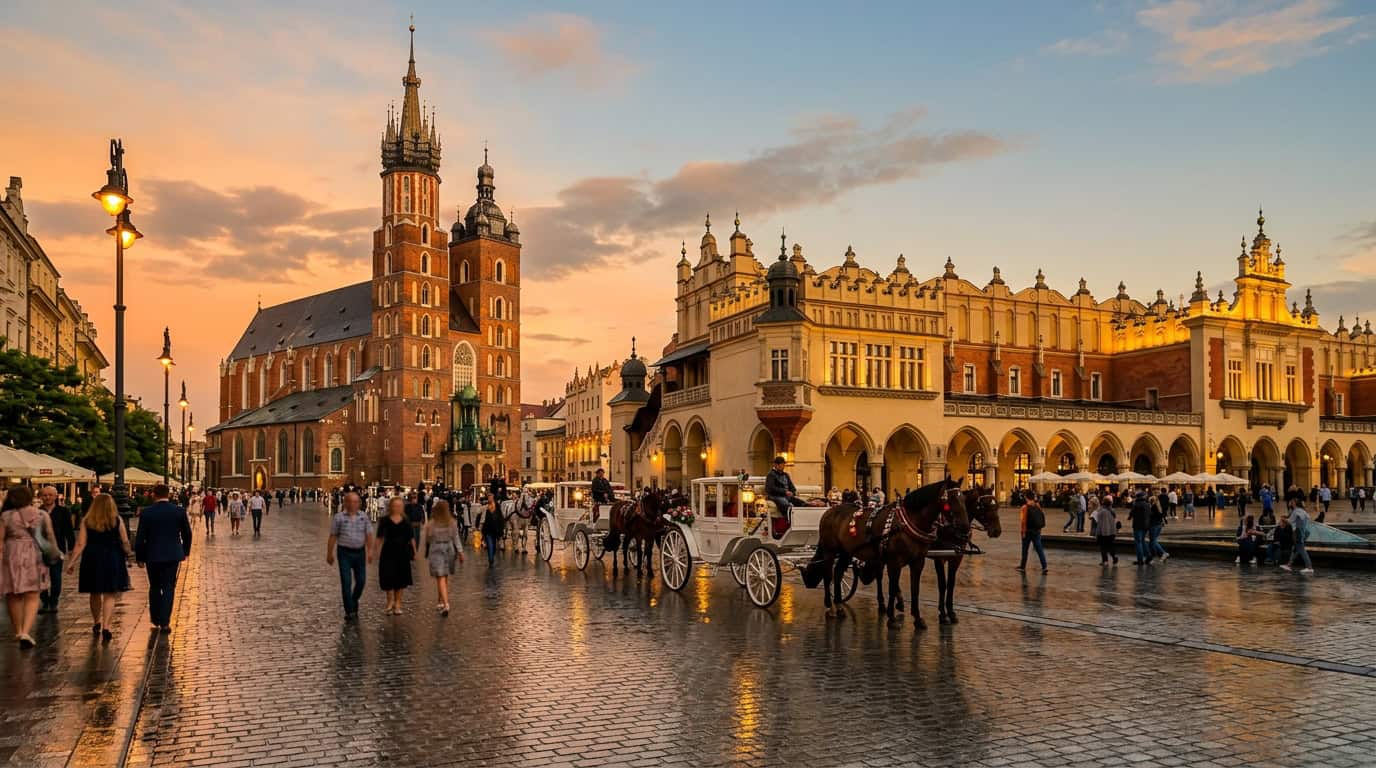
Stepping into the krakow old town feels like walking through the pages of a living fairy tale where medieval cobblestones meet a vibrant, modern energy. I still remember my first morning in the Rynek Główny, watching the sun hit the golden spires of St. Mary’s Basilica just as the hourly trumpet call echoed across the square. From the regal heights of Wawel Royal Castle to the hidden cafes tucked away in the Sukiennice, this UNESCO World Heritage site manages to preserve its ancient soul while embracing a new era of sustainable, slow-paced exploration.
Whether you are here to trace the footsteps of Polish kings or simply to wander the lush 4-kilometer green belt of Planty Park, every corner of this district tells a story. I’ve found that the best way to experience the city is to trade the frantic sightseeing lists for a leisurely afternoon of people-watching in one of Europe’s largest medieval squares. By focusing on the authentic local rhythms and the quiet charm of the side streets, you’ll discover why this historic heart remains the undisputed crown jewel of Poland.
Key Takeaways
- Kraków’s Old Town is best experienced through ‘slow tourism,’ prioritizing leisurely exploration of the Rynek Główny and the quiet side streets over a frantic sightseeing schedule.
- The city has transformed into a pedestrian-friendly sanctuary by implementing a Clean Transport Zone and a 4-kilometer green belt called the Planty, which replaced medieval walls with lush parkland.
- Wawel Hill serves as the soulful heart of Poland, offering a layered architectural history from Romanesque foundations to Renaissance courtyards and the legendary Dragon’s Den.
- Witnessing the hourly Hejnał Mariacki trumpet call from St. Mary’s Basilica and visiting the Main Market Square at dawn provide the most intimate connections to the city’s medieval spirit.
Landmarks Of The Main Market Square
Stepping into the Rynek Główny feels like walking directly into a living postcard where history breathes through every cobblestone. As one of the largest medieval squares in Europe, this vibrant space is anchored by the magnificent Sukiennice, or Cloth Hall, which sits proudly in the center. I love wandering through its central arcade to browse local amber jewelry and handcrafted lace, much like merchants did centuries ago. The building serves as a perfect starting point for your exploration, offering a blend of Renaissance architecture and a bustling market atmosphere that defines the city’s spirit.
Just a few steps away, the brick towers of St. Mary’s Basilica dominate the skyline with their striking, asymmetrical design. I highly recommend timing your visit to the top of the hour so you can witness one of Kraków’s most cherished traditions. You will hear the Hejnał Mariacki, a haunting trumpet signal that stops abruptly to honor a legendary watchman from the Middle Ages. Looking up at the open window of the taller tower while the notes drift over the crowd is a magical moment that connects you instantly to the city’s resilient past.
Beyond the major monuments, the square is a masterclass in slow tourism and atmospheric charm. You can grab a seat at a perimeter cafe to watch the horse drawn carriages trot by, or descend beneath the surface to explore the high tech archaeological museum hidden under the paving stones. The blend of 14th century grandeur with the modern energy of street performers and flower sellers makes it easy to spend an entire afternoon here. It is the kind of place where you don’t need a strict map, as every corner reveals a new story or a hidden architectural gem.
Royal Grandeur Atop Wawel Hill
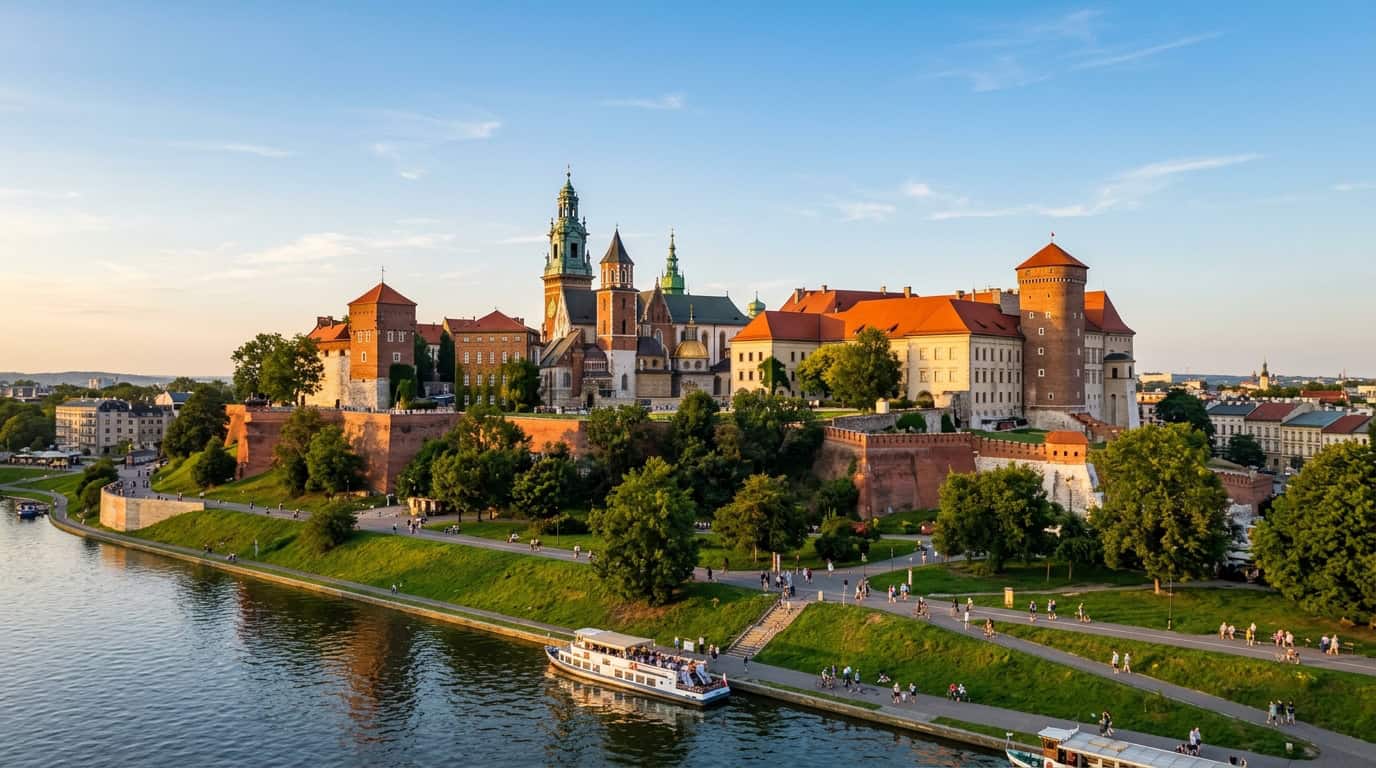
Standing atop Wawel Hill, I felt the weight of centuries as the limestone cliffs offered a panoramic view of the Vistula River winding through Kraków. This site is the soulful heart of Poland, where the architectural landscape shifts beautifully from the sturdy stone of the Romanesque period to the elegant, light-filled arches of the Renaissance. Walking through the Royal Castle courtyards, I was struck by how the Italian-inspired arcades perfectly complement the more austere medieval foundations. It is a place where history feels layered, as if every king who resided here left a unique thumbprint on the skyline. I highly recommend booking your tickets for the Royal Private Apartments in advance, as they offer an intimate look at the intricate tapestries and coffered ceilings that defined European luxury.
The neighboring Wawel Cathedral is equally breathtaking, acting as a majestic sanctuary where Polish monarchs were crowned and eventually laid to rest. I found myself wandering through a maze of ornate chapels, each representing a different artistic era, from the golden-domed Sigismund Chapel to the somber, haunting beauty of the royal crypts. The energy inside is palpable, blending deep religious devotion with a fierce sense of national identity that has survived through countless partitions and wars. Be sure to climb the Sigismund Bell Tower for a close-up look at the massive bronze bell and an incredible perspective of the Old Town rooftops. The narrow wooden stairs are steep, but the rhythmic chime of history and the breathtaking views make every step worth the effort.
Before leaving the hill, I took a whimsical turn toward the legendary Dragon’s Den, a limestone cave tucked beneath the castle walls. According to local folklore, this was once the home of the terrifying Wawel Dragon, and today, a fire-breathing bronze statue stands guard at the exit to delight visitors of all ages. Descending into the cool, damp cavern provides a refreshing break from the sun and adds a touch of mythic adventure to the historical tour. It is the perfect way to transition from the formal grandeur of the palace to a leisurely stroll along the riverbanks. As you exit near the water, take a moment to watch the statue breathe real fire, which happens every few minutes to the cheers of the gathered crowd.
Strolling The Planty And Green Corridors
One of my favorite ways to experience the soul of Kraków is by wandering through the Planty Park, a lush four kilometer garden ring that encircles the entire Old Town. This emerald belt sits exactly where the citys massive medieval walls once stood, replacing cold stone fortifications with chestnut trees and vibrant flower beds. As you walk the winding paths, you can still spot remnants of the past, like the imposing Floriańska Gate and the circular Barbican fortress. It is the perfect place to slow down and watch the city move at a gentler pace, especially during the quiet morning hours when the mist still hangs over the grass.
The park acts as a natural bridge between the bustling energy of the Main Market Square and the serene banks of the Vistula River. Following the southern curve of the Planty leads you directly toward the base of Wawel Hill, where the Royal Castle stands guard over the water. I always recommend taking this route if you want to escape the midday crowds, as the canopy of trees provides a refreshing canopy of shade. You will find plenty of benches along the way to sit and listen to the distant echo of the trumpet call from St. Marys Basilica.
For travelers looking to embrace the slow tourism movement, this green corridor is a masterclass in urban design and historical preservation. Much like stepping into a fairytale in other Baltic or Central European cities, it offers a seamless transition from the medieval architecture of the center to the modern, sustainable pathways that now line the riverfront. You can easily spend an hour looping the district, stopping for a coffee at a small kiosk or simply admiring the statues of Polish poets tucked away in quiet corners. It is a peaceful reminder that even in a city as storied as Kraków, nature and history can live in perfect, quiet harmony.
Navigating The Clean Transport Zone
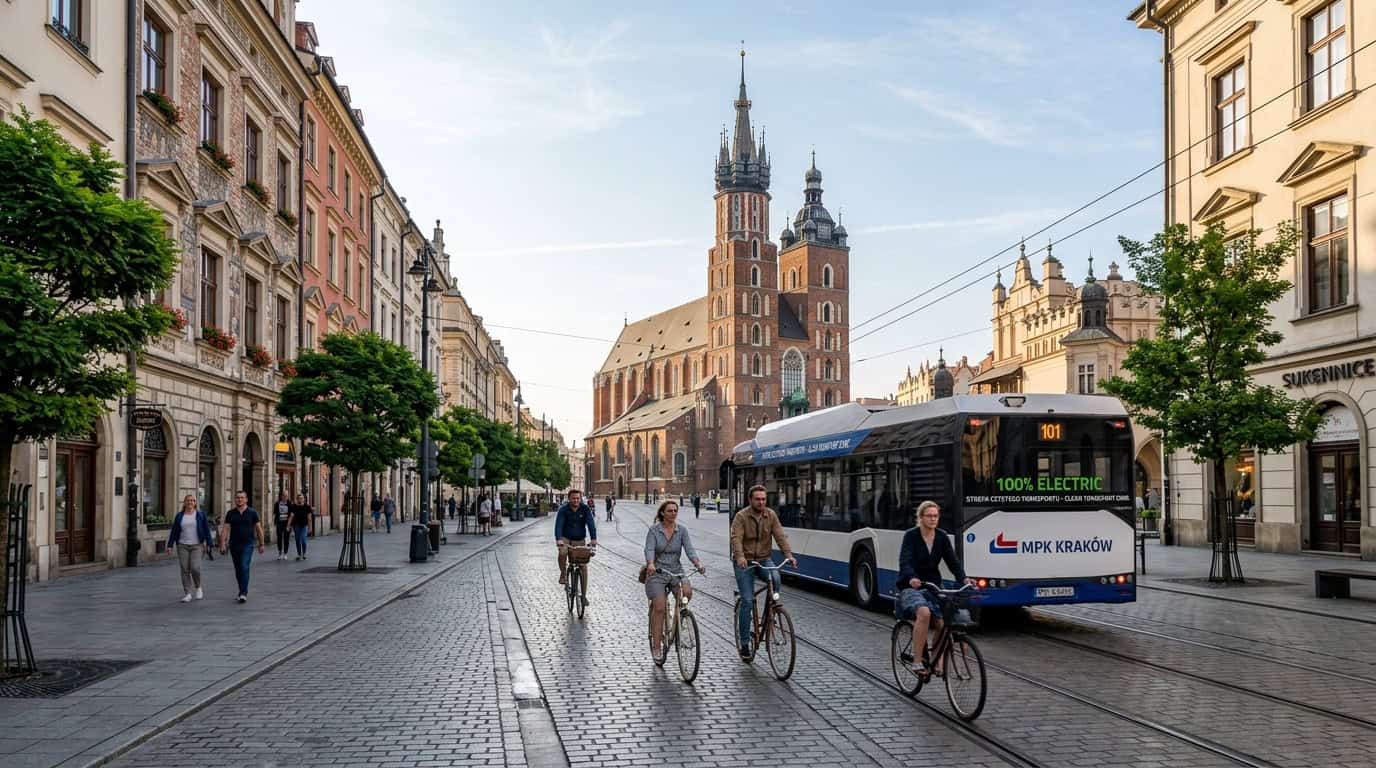
Navigating the heart of Kraków has become a breath of fresh air thanks to the city’s commitment to the new Clean Transport Zone. As you wander through the medieval streets of the Old Town, you will notice a significant reduction in vehicle noise and exhaust, making the atmosphere around the Main Market Square feel more serene than ever. This initiative prioritizes pedestrians and cyclists, ensuring that the historic charm of the Sukiennice and St. Mary’s Basilica remains the star of the show. I found that the best way to embrace this shift is to simply lace up your walking shoes and let the cobblestone paths lead the way. By limiting older, high-emission vehicles, the city has transformed the Stare Miasto into a true sanctuary for slow tourism and peaceful exploration.
To cover more ground while staying eco-friendly, I highly recommend utilizing the city’s modernized electric tram network or the various bike-sharing stations scattered along the Planty Park. These green transit options are incredibly intuitive to use and allow you to zip between the Wawel Royal Castle and the vibrant Kazimierz district in just a few minutes. If you are planning a perfect weekend itinerary, consider purchasing a multi-day transit pass that works seamlessly across all electric buses and trams. This approach not only saves you money but also aligns with the local effort to preserve the delicate limestone architecture of the royal hill. It is a rewarding feeling to know that your travel choices are helping to protect one of the world’s first UNESCO World Heritage sites for future generations.
For those who prefer a guided experience, several eco-conscious walking tours now offer deep dives into the city’s history without the distraction of heavy traffic. Walking through the rhythmic 4-kilometer loop of the Planty provides a lush, shaded canopy that feels entirely disconnected from the bustle of a typical European metropolis. I spent an afternoon sitting on a park bench watching the electric trams glide silently by, realizing how much more I could hear the hourly trumpet call from the tower. Planning your trip around these sustainable zones means you can enjoy the outdoor cafes and street performances with newfound clarity. Embracing this pedestrian-forward lifestyle is the ultimate way to connect with the authentic, medieval spirit of this magnificent Polish gem.
The Timeless Magic of Krakow’s Medieval Heart
Krakow is a city that wears its history with an effortless grace, proving that even a medieval heart can beat with modern vitality. Walking through the Rynek Glowny or beneath the shadows of Wawel Castle, you can feel the enduring spirit of a place that has survived centuries of upheaval to remain one of the world’s most preserved treasures. The shift toward slow tourism in recent years has only enhanced this feeling, allowing the Old Town to breathe while inviting us to linger longer over a coffee in the Cloth Hall. It is a destination that balances its royal past with a vibrant, welcoming present, ensuring that every traveler leaves with a piece of Poland in their soul.
To truly capture the magic of the Stare Miasto, my best piece of advice is to set your alarm for just before dawn. As the first light of day hits the brickwork of St. Mary’s Basilica, the usual crowds are replaced by a profound, golden silence that feels like stepping back in time. During the winter, this square transforms into a winter fairytale, but even in the warmer months, you can watch the mist rise off the Vistula River near Wawel Hill without the distraction of modern bustle, hearing only the rhythmic echo of your own footsteps on the cobblestones. This quiet window offers a rare, intimate connection to the city’s ancient architecture before the daily life of the twenty-first century begins.
Standing in the center of the square as the sun crests the horizon is an experience that no photograph can fully translate. You will hear the first trumpet call of the day drifting from the tower, a haunting melody that serves as a bridge between the medieval era and the current moment. This early morning ritual allows you to see the intricate details of the Sukiennice and the surrounding townhomes in their purest form. It is in these fleeting, quiet moments that the true essence of Krakow reveals itself, reminding us why this historic center remains the cultural heartbeat of the nation. For those looking to extend their journey, this region is the perfect starting point for a magical Central European escape that explores the shared heritage of neighboring capitals.
Frequently Asked Questions
1. What is the best way to experience Krakow Old Town?
The magic of this district is best found by slowing down and trading a frantic checklist for a leisurely afternoon of people-watching in the Rynek Główny. I always recommend wandering the quiet side streets and the lush Planty Park to truly feel the authentic local rhythm of the city.
2. What should I look for inside the Sukiennice Cloth Hall?
The central arcade is a treasure trove of Polish craftsmanship where you can browse for stunning local amber jewelry and intricate handcrafted lace. It is the perfect place to experience the same bustling market atmosphere that merchants have enjoyed since the Renaissance.
3. When is the best time to see St. Mary’s Basilica?
You should time your visit to the top of any hour to hear the famous trumpet call echo across the square from the taller of the two brick towers. Watching the sun hit the golden spires in the morning light is a breathtaking experience that feels like stepping into a fairy tale.
4. Is Krakow Old Town easy to explore on foot?
Yes, the historic heart is incredibly walkable and best explored by trading cars for comfy shoes to navigate the medieval cobblestones. You can easily stroll from the main square to the regal Wawel Royal Castle or enjoy a peaceful walk through the 4-kilometer green belt of Planty Park.
5. What makes the Main Market Square special?
As one of the largest medieval squares in Europe, the Rynek Główny is a vibrant hub where history breathes through every stone and landmark. It manages to preserve its ancient soul while serving as a modern meeting point filled with hidden cafes and a wonderful energy.
6. What should I do if I only have a short time in the Old Town?
Focus your visit on the Main Market Square to see the Cloth Hall and St. Mary’s Basilica before walking toward the heights of Wawel Royal Castle. These landmarks offer a comprehensive look at the city’s history as the home of Polish kings and the crown jewel of Poland.