
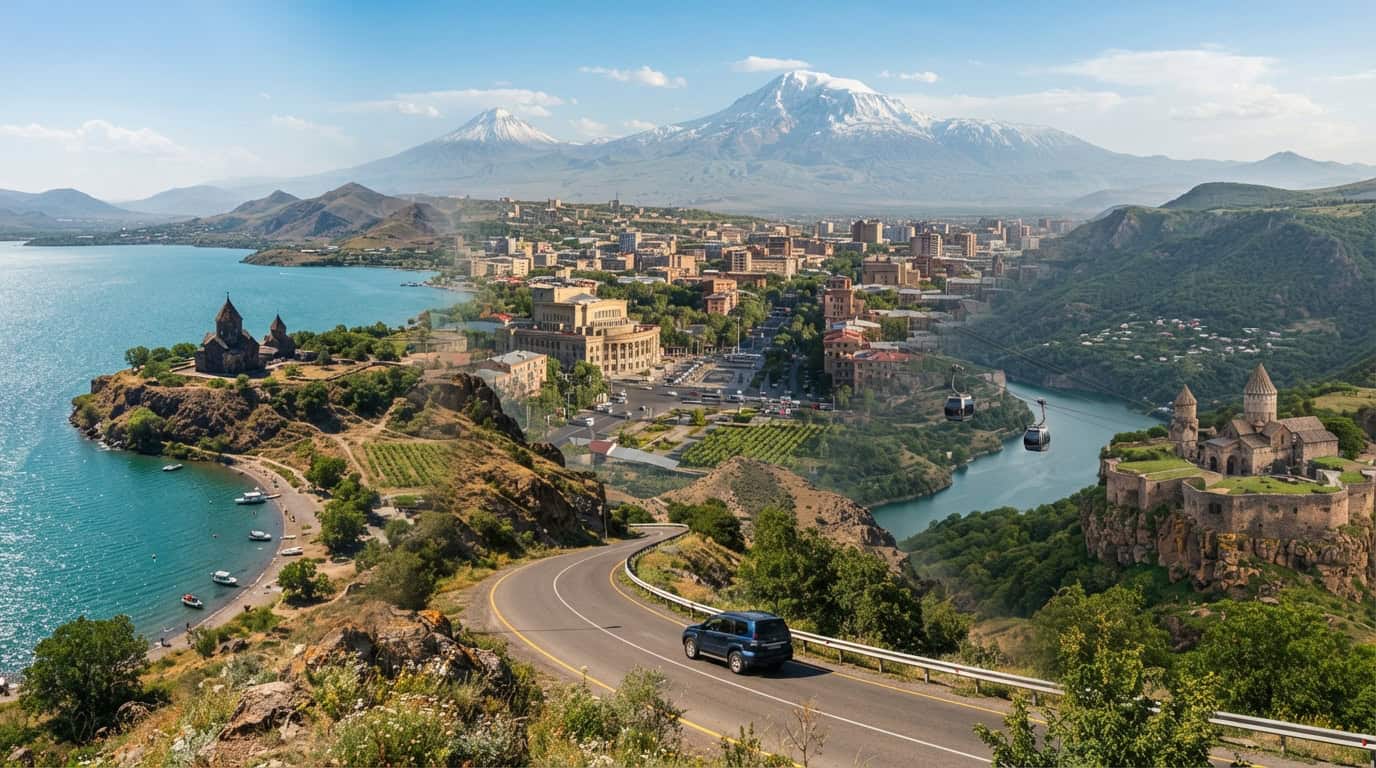
An Armenia travel itinerary can take me from Yerevan’s lively cafés and ancient manuscripts to misty monasteries, vineyard-covered hills, and the dramatic cliffs of Tatev. I would allow 7 to 12 days to experience the country at an unrushed pace, with a 10-day route offering an ideal balance of culture, scenery, food, and history. I begin with three nights in Yerevan, where I love wandering around Republic Square, exploring the Cascade, and lingering over dinner on Saryan Street or in Kond.
From the capital, I follow the road to Lake Sevan and forested Dilijan, then continue south through Areni’s wine country to Goris and Tatev. Along the way, I encounter medieval monasteries perched above sweeping valleys, welcoming villages, smoky grilled flavors, and landscapes that change dramatically within a few hours. This route makes it easy to combine essential landmarks with memorable detours while keeping travel days manageable.
Key Takeaways
- Plan 10 days for the ideal balance of Yerevan’s culture, Lake Sevan and Dilijan’s landscapes, Vayots Dzor’s wine country, and southern Armenia’s Tatev and Goris. A 7-day trip can cover the highlights, while 11–12 days allows for a more relaxed pace and extra time in the south.
- Use Yerevan as a three-night base for Republic Square, the Cascade, Matenadaran, Vernissage, the Genocide Memorial, and a day trip to Garni, the Symphony of Stones, and Geghard.
- Travel through the countryside by rental car or private driver to reach scattered monasteries and scenic stops efficiently, while relying on walking, the metro, and app-based taxis within Yerevan. Build in extra time for winding mountain roads, weather, photo stops, and seasonal schedules.
- Prioritize Sevanavank, Dilijan, Areni and Noravank, Tatev’s aerial tramway, and Khndzoresk, while leaving room for local wineries, village meals, spontaneous viewpoints, and slower evenings that capture Armenia’s character.
Days 1–3 Yerevan Garni
I begin my Armenia travel itinerary in Yerevan, where the rose-colored city center is easy to explore on foot. On day one, I walk through Republic Square, visit the History Museum of Armenia, and continue along Northern Avenue to the Opera House and Cascade Complex. I pause at the art center beside the Cascade to admire its striking sculptures and city views. The Matenadaran offers a quieter look at Armenia’s manuscript tradition, while Vernissage is ideal for browsing carved wood, textiles, jewelry, and other local crafts. In the evening, I settle into a relaxed dinner around Saryan Street or in the atmospheric Kond neighborhood, both lively places to sample Armenian food and wine.
On day two, I visit Tsitsernakaberd and its museum, allowing time to reflect on Armenia’s modern history before returning to central Yerevan. I find the city especially manageable without a car because the metro connects several central areas, and most major sights are within comfortable walking distance of one another. When my feet need a break, I use an app-based taxi, which is generally a practical and affordable option for longer cross-town rides. I also leave space for an unplanned coffee or a second visit to a favorite square because Yerevan’s energy often comes from its outdoor cafés, fountains, and evening promenades.
Day three offers my first taste of Armenia’s mountain landscapes with a day trip to Garni Temple, the Symphony of Stones, and Geghard Monastery. I aim to leave early because the gorge is most atmospheric in the morning, and the popular sites become busier later in the day. Garni’s classical columns create a memorable contrast with the rugged basalt cliffs, while the Symphony of Stones feels almost otherworldly on the walk below. Geghard’s rock-cut chambers reward a slower visit. I arrange an app-based taxi for the round trip or confirm the return journey in advance, then return to Yerevan for a final dinner, already understanding why the capital makes such a welcoming base for a longer 7 to 12-day Armenia itinerary.
Days 4–5 Sevan Dilijan
On day four, I leave Yerevan early for Echmiadzin, Armenia’s spiritual center, where the cathedral complex and surrounding churches offer a graceful introduction to the country’s Christian heritage. I continue to Zvartnots, the atmospheric ruins of a seventh-century cathedral, whose circular columns frame the distant outline of Mount Ararat on a clear day. From there, I travel south to Khor Virap for one of the most memorable monastery views in Armenia, with the church rising against the broad Ararat plain. The route requires planning because Khor Virap lies south of Yerevan before I turn north toward Lake Sevan, but combining these stops creates a rewarding culture-and-landscape day.
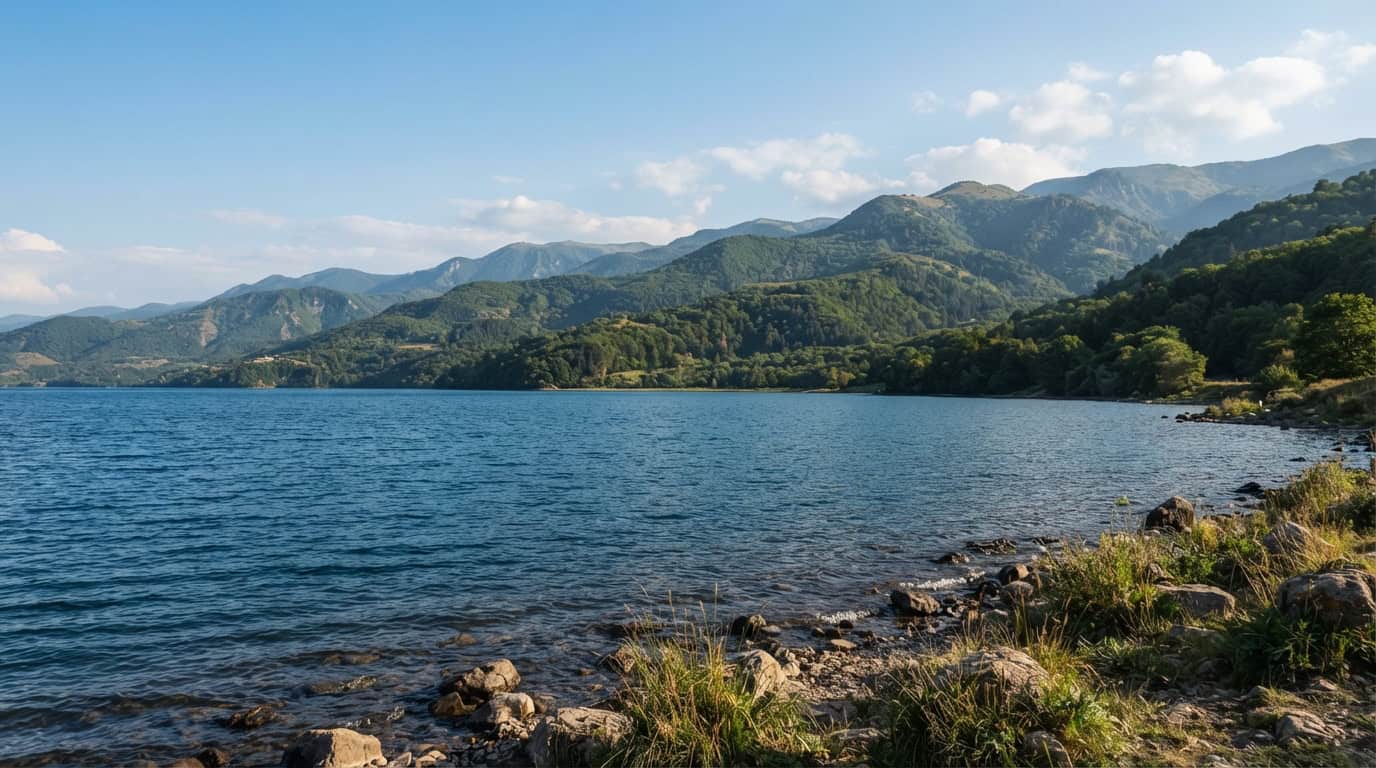
By late afternoon, I continue toward Lake Sevan and settle near the water, ideally with time to visit Sevanavank as the light softens over the blue, wind-brushed lake. I like climbing the short steps to the monastery for the sweeping viewpoint, then stopping at a lakeside restaurant for grilled fish or other simple Armenian dishes. On day five, I drive to forested Dilijan, wander along Sharambeyan Street in the Old Town, and browse its craft shops before visiting Haghartsin Monastery, tucked among wooded hills outside the town. Dilijan feels wonderfully different from the open, high-altitude scenery around Sevan, with cool air, dense forests, and stone buildings softened by moss and greenery.
A rental car offers the most flexibility for this section, especially when I want to pause at viewpoints or adjust my pace around Sevan and Dilijan. A private driver is a comfortable choice for travelers who prefer local guidance and do not want to manage mountain roads. An organized excursion can work well for a shorter schedule, although it usually leaves less time in Dilijan. I allow extra time for traffic, photo stops, and winding roads, and I check the weather before setting out because Lake Sevan can feel much colder than Yerevan. This two-day stretch adds exactly the contrast that makes an Armenia travel itinerary memorable, moving from ancient religious landmarks to open alpine water and quiet forest trails.
Days 6–7 Vayots Dzor Areni
Days 6 and 7 take me into Vayots Dzor, Armenia’s most inviting wine region, where dry mountain air, red volcanic slopes, and vineyard-covered valleys create a striking change of scenery. I begin in Areni village with a relaxed tasting at a family-run winery, sampling local reds and sparkling wines made from indigenous grapes while learning about Armenia’s ancient winemaking traditions. I always recommend tasting slowly, accepting small pours, asking before photographing producers, and arranging a designated driver or private transfer before the first glass. I leave time for a traditional lunch, a stroll through the village, and, if my schedule allows, a visit to the nearby Areni-1 cave, where archaeological discoveries point to some of the world’s earliest known winemaking.
The next morning, I follow the winding road toward Noravank Monastery, one of Armenia’s most memorable historic sites, tucked against rust-colored cliffs at the end of the dramatic Amaghu Gorge. The monastery is especially beautiful in soft morning light, and I like to pause along the approach for photographs before exploring its finely carved stone façades and quiet courtyard. Mountain roads make this a day for unhurried travel, so I plan one substantial winery visit rather than trying to fit in several rushed tastings. In warmer months, I carry water, sun protection, and comfortable shoes. Spring and autumn bring cooler temperatures, vivid landscapes, and ideal conditions for walking.
For a balanced two-day itinerary, I spend the first afternoon and evening around Areni, then combine Noravank, scenic gorge stops, and a leisurely return through the vineyards on day seven. Winter can be atmospheric and wonderfully quiet, but snow or icy roads may require extra flexibility and an earlier departure. In summer, I reserve the hottest afternoons for shaded courtyards and indoor tastings. I prefer staying locally for at least one night because the valley feels entirely different after the tour groups leave, with dark skies above the vineyards and a slower rhythm at dinner. From Vayots Dzor, I continue south toward Goris and Tatev, carrying the memory of a region where monasteries, mountain roads, and wine fit naturally into the same adventure.
Days 8–10 Tatev Goris
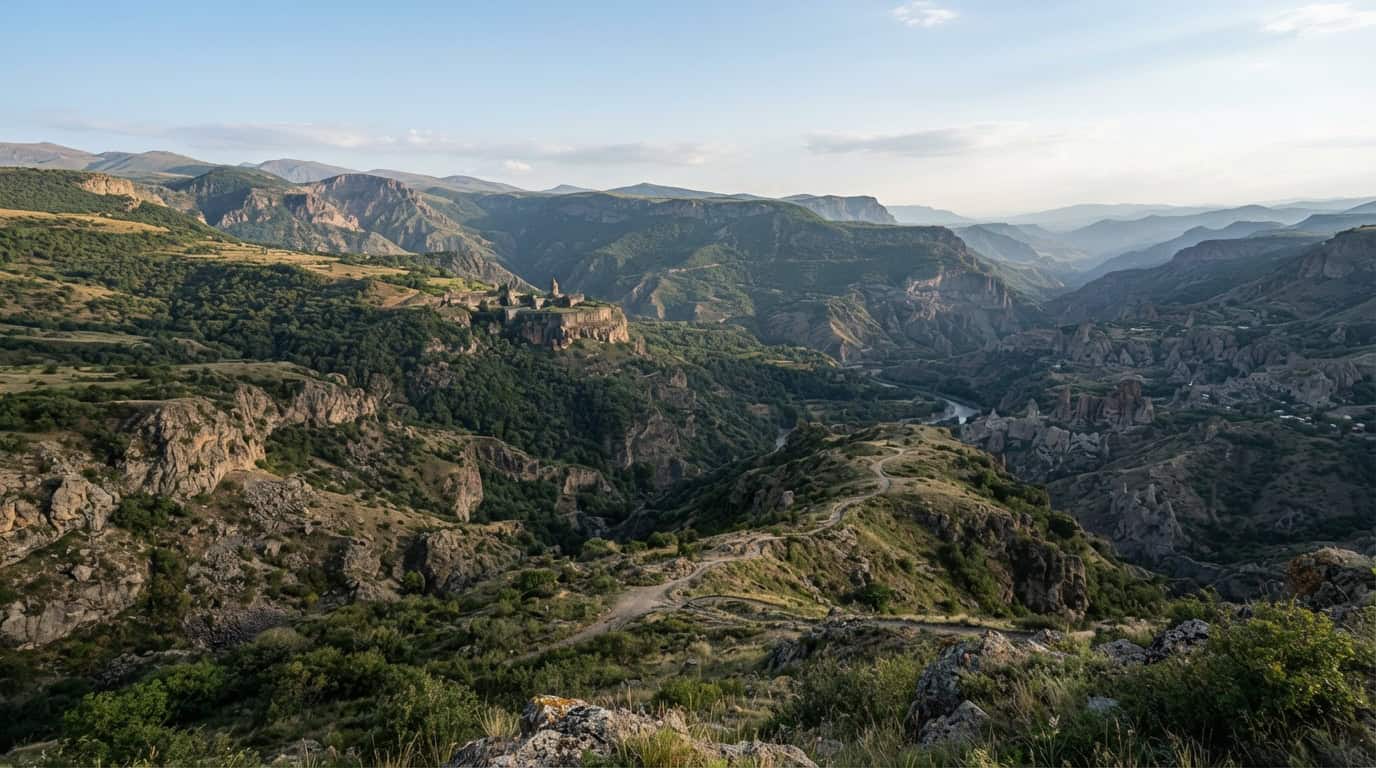
On day eight, I break up the long drive south by exploring the Areni and Vayots Dzor landscapes in the morning before continuing toward Goris. The road becomes increasingly dramatic, with deep valleys, rugged cliffs, and villages tucked between the mountains, so I allow extra time for photo stops rather than treating the journey as a simple transfer. Goris makes a convenient base, offering atmospheric stone houses, quiet streets, and easy access to Tatev. Staying two nights here gives me a calmer finish than trying to reach Tatev, sightsee, and return to Yerevan in one stretch.
Day nine is reserved for the aerial tramway to Tatev Monastery, one of the most memorable experiences on this Armenia travel itinerary. I take the tramway early, when mountain views are clearest, then spend time inside the monastery and walking around its dramatic cliffside setting. On the return route, I stop at Devil’s Bridge, a natural stone formation above the Vorotan River, if road and weather conditions allow. Since the tramway schedule can change seasonally, I check current operating times before leaving Goris and keep some flexibility in the plan.
For day 10, I explore Goris more slowly and add the nearby cave settlement of Khndzoresk, where footbridges and excavated homes reveal how people once lived among the red-rock formations. If I have only ten days, I return to Yerevan after lunch and expect a long driving day, ideally with a planned overnight stop if I am not comfortable finishing late. With 11 or 12 days, I add a full morning in Khndzoresk, linger in Goris, or spend an extra night in the south before making the return journey. That extra time transforms the final leg from a rushed departure into a spacious farewell to Armenia’s wildest scenery.
My Ideal 10-Day Armenia Loop
For a first Armenia travel itinerary, I would allow 10 days and follow a loop from Yerevan to Lake Sevan, Dilijan, Vayots Dzor, and southern Armenia before returning to the capital. I would spend three nights in Yerevan exploring Republic Square, the Cascade, Matenadaran, Vernissage, and the Genocide Memorial. I would then travel north for Sevanavank, lakeside views, and two nights among Dilijan’s pine-covered hills. From there, the route continues south through Noravank, Areni’s vineyards, and the dramatic landscapes of Vayots Dzor, ending with Tatev Monastery and Goris. This balance brings together Armenia’s museums, medieval monasteries, mountain scenery, local food, and village life without making every day feel rushed.
I find Yerevan easiest to explore on foot, by metro, or with app-based taxis, while a private driver or rental car becomes especially useful for the countryside and scattered monasteries. Shared minibuses can keep costs low between major towns, but flexible transportation makes it much easier to stop at viewpoints, roadside fruit stands, and small family-run restaurants. Seven days works for a focused introduction, while 10 to 12 days gives Lake Sevan, Dilijan, Areni, Tatev, and Goris the time they deserve. The most rewarding moments may not appear on any map, so I always leave room for a spontaneous mountain view, an unexpected conversation, or a long meal that becomes one of my favorite memories of the journey.