
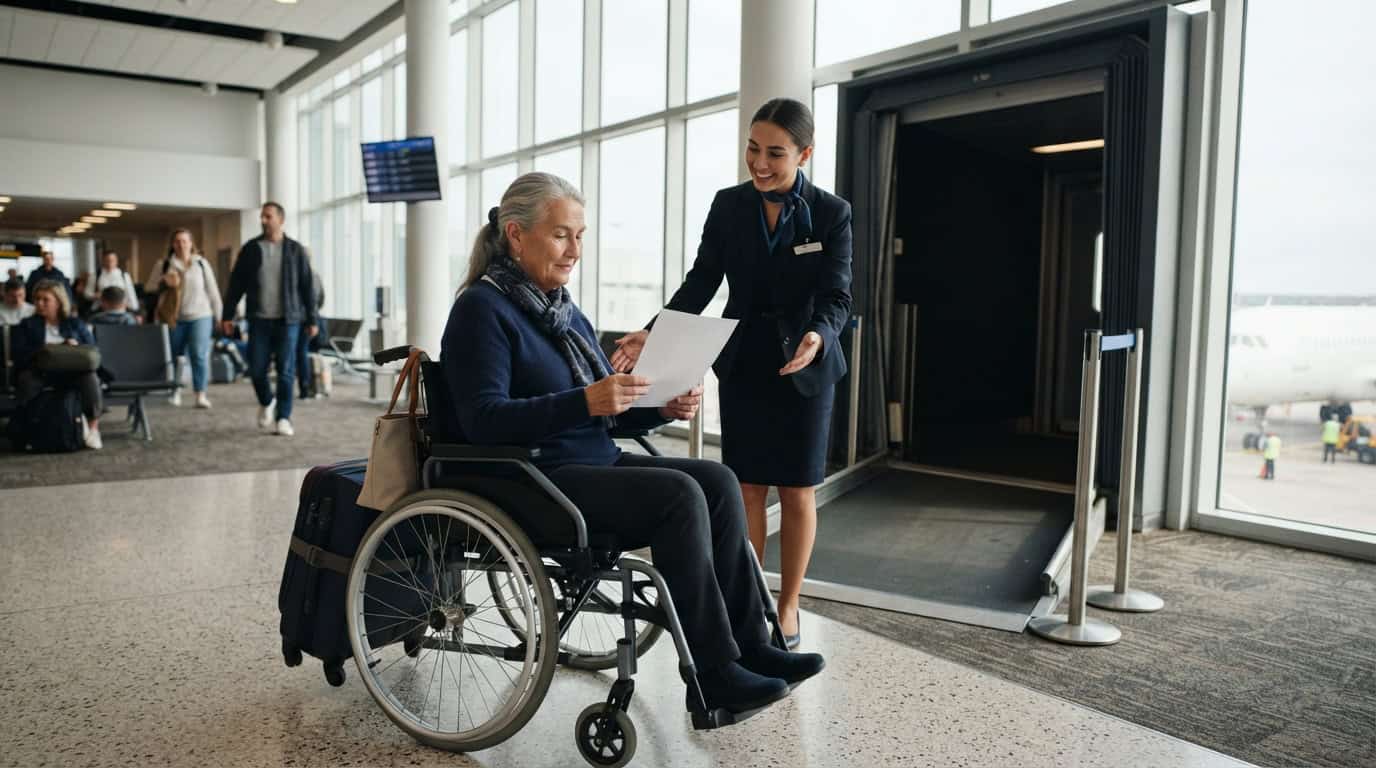
Accessible air travel means planning the assistance, information, and accommodations a traveler needs from airport arrival through boarding and arrival. For U.S. flights, airline duties for travelers with disabilities are set by the Air Carrier Access Act (ACAA) and the Department of Transportation’s 14 CFR Part 382. These rules apply to flights by U.S. airlines and flights to or from the United States by foreign airlines. The DOT’s passenger disability guidance explains the protections behind these arrangements.
A smoother trip starts with a clear request. Explain what support would help, whether that means navigating a connection, reaching the gate, or having more time to board. We recommend arranging support with the airline ahead of time when possible. When you arrive, identify yourself to staff and confirm the plan at the gate. Travelers who need extra time or help boarding should also tell the gate agent so they can receive the preboarding opportunity. DOT guidance on disability rights explains these airport check-ins.
Key Takeaways
- We recommend describing the specific assistance needed, where support should begin and end, and each gate transfer, then asking the airline to record the plan on the reservation; although DOT generally does not require advance notice, some services may require up to 48 hours’ notice and check-in at least one hour early.
- Travelers should identify themselves to airline staff on arrival and confirm the plan with the gate agent; travelers who need extra time or help boarding should tell the gate agent to receive the preboarding opportunity, and travelers seeking checkpoint support can contact TSA Cares 72 hours before travel to request a Passenger Support Specialist.
- Required wheelchair assistance is free, and travelers with unresolved airline accommodation concerns can ask for a Complaints Resolution Official, who must be available at no cost in person at the airport or by telephone while the airline is operating.
- Travelers using battery-powered wheelchairs should arrive one hour before their normal check-in time, share device handling instructions with airline staff, and confirm how boarding assistance will work for their aircraft.
What Is Accessible Air Travel?
Accessible air travel involves planning and coordinating the assistance, information, and accommodations a traveler needs from airport arrival through boarding and arrival at the destination airport. For U.S. flights, the Air Carrier Access Act (ACAA) and 14 CFR Part 382 apply to U.S. airlines and to foreign airlines’ flights to or from the United States, as explained in U.S. Department of Transportation guidance.
Accessibility also depends on the airport environment and its operators. Airlines, meanwhile, must provide required disability-related assistance, so planning often involves more than one organization.
This guide follows the journey in practical steps: request the assistance you need, navigate the terminal and security, prepare for boarding, and learn where to raise concerns. At the checkpoint, the Transportation Security Administration (TSA) is the agency to know. Travelers can request a Passenger Support Specialist through TSA Cares.
If you have an unresolved concern about an airline’s disability accommodations, ask for a Complaints Resolution Official (CRO). The CRO is the airline’s disability-accommodation expert and must be available at no cost, in person at the airport or by telephone while the airline is operating, according to DOT guidance on wheelchair and guided assistance.
How Should You Request Airline Assistance?

Request airline assistance by describing the specific support you need, arranging it with the airline ahead of time when possible, and confirming the plan with staff at the airport. Your needs may differ from one part of the trip to another. You might need help navigating the terminal, making a connection, or boarding, rather than the same assistance throughout. The U.S. Department of Transportation (DOT) generally does not require advance notice for disability-related accommodations. Some services may require up to 48 hours’ notice and check-in at least one hour early, so check the requirements for the support you need in DOT’s travel guidance. Use this three-step plan to make your request specific:
- Describe the task, not just the assistance label. Tell the airline whether you need wheelchair assistance, guide assistance, help getting between connecting gates, or extra time to board. Travelers who are blind or have low vision and need help finding their way should request guide assistance rather than wheelchair service, according to DOT guidance on assistance types.
- Explain where support should begin and end. Required wheelchair assistance is free and can cover the route from a terminal entrance or vehicle drop-off, through security, to the gate and seat; between connecting gates; and from the arrival seat to baggage claim or pickup. Naming the parts of the route where you need help can make your request clearer. DOT’s wheelchair and guided assistance guidance describes the support airlines must provide.
- Confirm the arrangement in person. Identify yourself to airline staff when you arrive, then check with the gate agent about the assistance you requested. If you need extra time or help boarding, tell the gate agent. Travelers using battery-powered wheelchairs should arrive one hour before their normal check-in time, as DOT advises.
How Can You Navigate The Airport?
You can navigate the airport more smoothly by making each handoff clear, from arrival and check-in through security, the gate, and any connections. Keep your itinerary and a concise description of the assistance you need easy to access so you can share the same details when staff change.
After arriving, identify yourself to airline staff, even if you arranged assistance in advance. At the gate, confirm what help you need, where it should begin, and whether anything has changed. If you need extra time or help boarding, identify yourself to the gate agent to receive the preboarding opportunity, as explained in the DOT’s disability-rights guidance.
Contact TSA Cares 72 hours before travel to request a Passenger Support Specialist (PSS) at the checkpoint. If a PSS is unavailable, ask for a Supervisory TSA Officer. The TSA notification card outlines this checkpoint-support option.
For a connection, confirm who will assist you between gates and where the next handoff will happen. If a gate changes or a new staff member takes over, share your itinerary and assistance needs again. Confirm that the next person understands where you are going and what support you need. Clear details can help keep the transfer coordinated, especially when there is little time between flights.
What Should You Prepare Before Boarding?
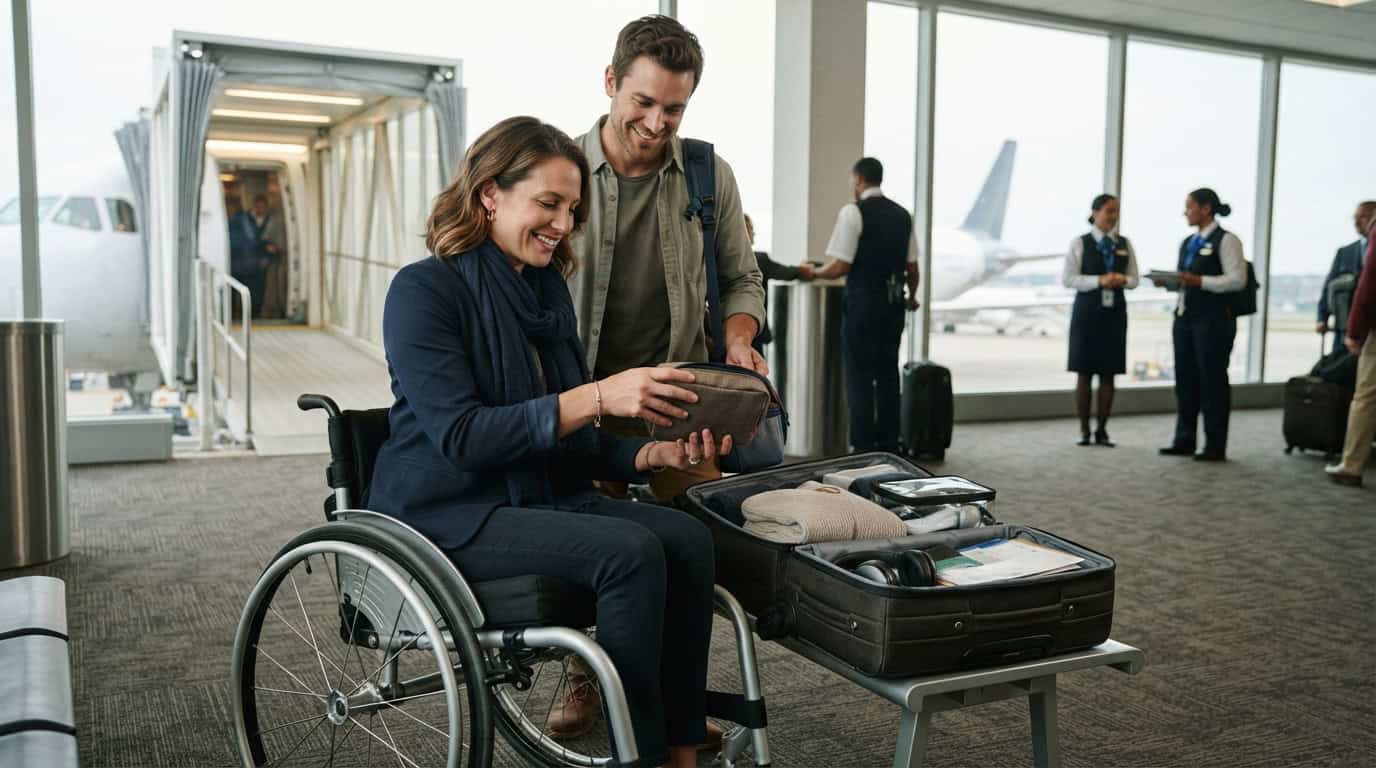
Before boarding, confirm the help you need, ask how your mobility device will be handled, and find out how the aircraft boarding arrangement differs from terminal assistance. If you need more time or help getting aboard, identify yourself to the gate agent to request preboarding, as explained in the DOT’s disability-rights guidance. Before traveling, make a short note of your device’s type and any handling instructions airline staff may need. Ask the airline how your particular mobility device will be stored or transported and whether any parts or operating details need special attention. Devices carried in the cabin are free and do not count toward your carry-on limit. On aircraft with 100 or more seats, airlines must provide priority cabin stowage for at least one normal-sized collapsible manual wheelchair, according to DOT guidance on disability rights.
- Keep your device’s handling instructions easy to share.
- Tell the gate agent what boarding help or extra time you need.
- Confirm where and how the aircraft boarding process will take place.
Terminal assistance and getting onto the aircraft are separate arrangements. Wheelchair or guide assistance can help you move through the airport, while boarding depends on the aircraft and airport setup. At most U.S. airports, airlines must provide a lifting device when level boarding is unavailable. An exception applies to aircraft with fewer than 19 seats. Airline personnel may not hand-carry a passenger on or off an aircraft except in an emergency, as set out in DOT’s disability-rights guidance. When you reach the gate, confirm the plan with staff, including how your device will be handled and what assistance will be available at the aircraft. A clear check-in can help you understand the handoff before boarding begins.
What Rights Apply To Accessible Air Travel?
For U.S. air travel, the Air Carrier Access Act (ACAA) and its implementing regulation, 14 CFR Part 382, establish airlines’ responsibilities toward travelers with disabilities. They apply to flights operated by U.S. airlines and to flights to or from the United States operated by foreign airlines. These protections help set expectations for access and disability-related accommodations, while airport accessibility also involves airport operators. The DOT overview of passengers with disabilities explains the federal framework. Required wheelchair assistance is free, and an airline may not leave a passenger who is not independently mobile unattended in a wheelchair or other device for more than 30 minutes unless the passenger explicitly accepts a longer wait. If assistance is delayed, tell airline staff where you are and what support you need, then ask them to address the delay. The DOT’s wheelchair and guided assistance guidance describes the rule. If staff cannot resolve a problem with a disability-related arrangement, ask to speak with the airline’s Complaints Resolution Official (CRO). A CRO is the airline’s disability-accommodation expert and must be available at no cost, in person at the airport or by telephone while the airline is operating. Explain what accommodation was arranged, what went wrong, and what help you need now. DOT’s wheelchair and guided assistance guidance covers CRO availability. Travelers with disabilities may also request information in accessible formats. Ask the airline for the information you need in a format you can use, and specify which materials need to be accessible. Written details can help you review travel arrangements and communicate them consistently with staff. Knowing your rights provides a useful foundation, and sharing your needs and following up at the airport can help staff act on the arrangements. The DOT guidance on wheelchair and guided assistance explains the accessible-format option.
What If Wheelchair Assistance Goes Wrong?
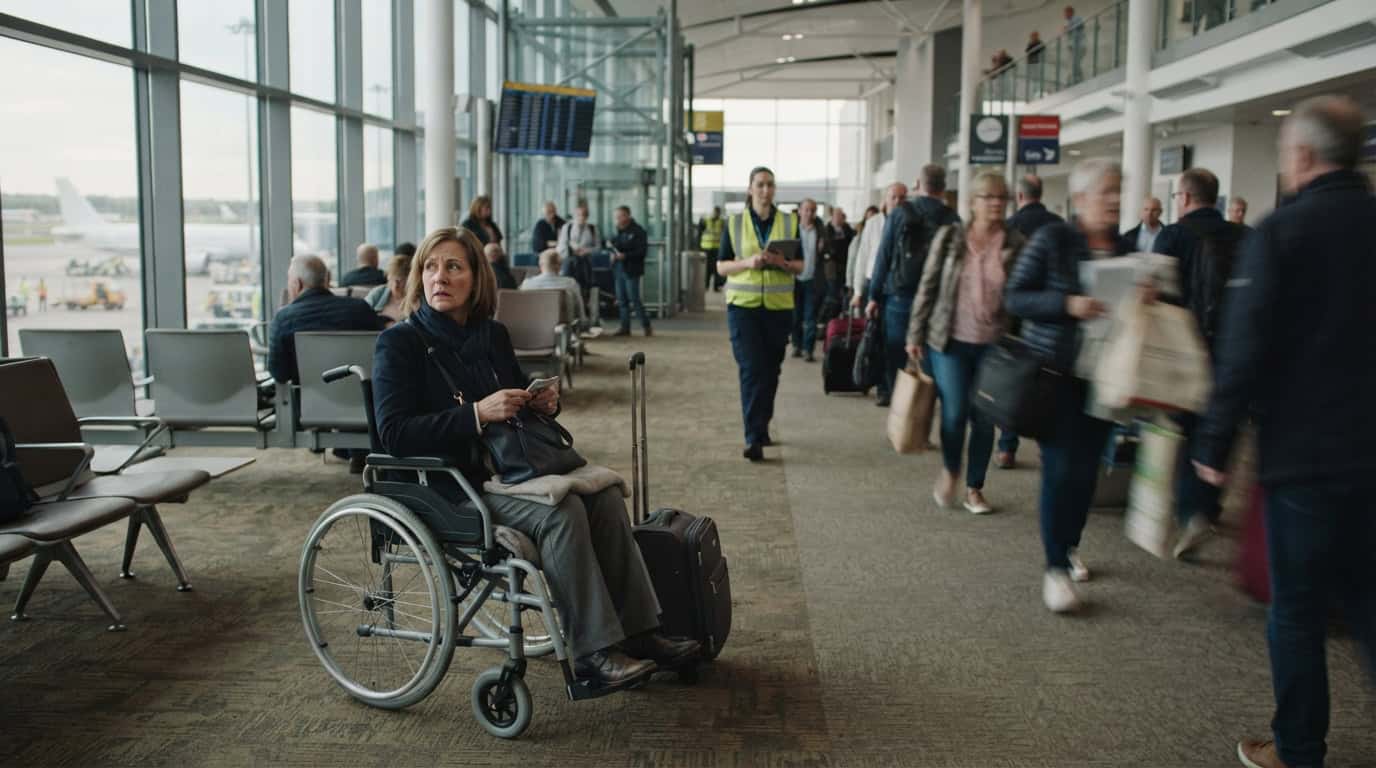
If wheelchair assistance misses a handoff or a mobility device arrives damaged or does not work properly, tell airline staff promptly and explain what help you need. For a missed handoff, say where you are and where you need to go. For a device problem, describe what is wrong and how it affects your mobility. Ask staff to confirm the next step and who will follow up. At the gate, confirm the assistance plan again and ask whom to contact if it changes.
If airline staff cannot resolve the problem, ask to speak with the airline’s Complaints Resolution Official (CRO), the airline’s expert on disability accommodations. DOT guidance on wheelchair and guided assistance explains CRO availability. Explain what went wrong and what support would address the situation.
The September 2026 Air Travel Consumer Report recorded 974 mishandled wheelchairs and scooters among 83,277 enplaned in July 2026, or 1.17 per 100 enplaned. This monthly, systemwide figure offers context, but it does not mean every trip carries the same risk. A clear gate check-in and knowing how to reach airline staff or the CRO can help you respond if plans change.
Build Your Airport Assistance Plan
Open your itinerary and write a one-page assistance plan for each flight segment. List where support should begin and end, such as vehicle drop-off to gate, gate to gate during a connection, or arrival seat to pickup. Add the type of assistance you need, such as wheelchair service, guide assistance, or extra time to board.
Contact the airline with your plan and ask it to record the specific assistance on your reservation. For a connection, name each airport and gate transfer. For a mobility device, include its type and any handling instructions. DOT guidance describes the airport assistance airlines must provide and the route it can cover.
Save the airline’s confirmation with your itinerary, then keep both easy to access on travel day. At the airport, identify yourself to airline staff and confirm the plan at the gate. If you need more time or help boarding, tell the gate agent so you can receive the preboarding opportunity, as explained in the DOT’s disability-rights guidance.
If checkpoint support would help, call TSA Cares 72 hours before travel to request a Passenger Support Specialist. If you use a battery-powered wheelchair, plan to arrive one hour before your normal check-in time. Add both timing reminders to your itinerary so they are visible alongside your flight details.