

Flight delay compensation depends on your route, operating airline, the cause of the disruption, and the applicable law. Under EU rules, qualifying claims may range from €250 to €600, subject to eligibility requirements and possible reductions.
Compensation is separate from a ticket refund. In the United States, an arrival at least 3 hours late on a domestic itinerary or 6 hours late on an international itinerary may qualify for a refund if you decline the changed flight, according to the U.S. Department of Transportation. Save booking and disruption notices, record your actual arrival time, keep itemized receipts, and check the regulator’s guidance and claim deadline for your route.
Key Takeaways
- Your route and operating airline determine whether EU Regulation (EC) No 261/2004, UK261, Canada’s Air Passenger Protection Regulations, or U.S. refund rules apply, so check the relevant regulator’s guidance before filing.
- Qualifying EU and UK claims may provide compensation, subject to the rules and eligibility requirements that apply to each route.
- U.S. federal rules generally do not require additional compensation for delayed or canceled domestic flights; delay amenities and other compensation depend largely on airline commitments, as explained by the U.S. Department of Transportation.
- Keep your booking confirmation, boarding pass, disruption notices, actual arrival times, and itemized receipts, then check the claim deadline for your route because deadlines vary by jurisdiction.
Will You Get Flight Delay Compensation?
It depends on the route, operating airline, cause of the delay, and applicable law. Flight delay compensation is not a universal entitlement. In the United States, federal rules generally do not require airlines to pay additional compensation for delayed or canceled domestic flights. Amenities during delays and other compensation largely depend on the airline’s stated policies and commitments, as the U.S. Department of Transportation’s Fly Rights guidance explains.
Compensation and a ticket refund are different remedies. For a qualifying significant delay in the United States, a traveler who declines the changed itinerary may be eligible for a refund. A traveler who accepts and takes the flight is not entitled to a ticket refund under DOT rules. The DOT’s refund guidance explains when a delayed itinerary qualifies. A refund is for a ticket the traveler chooses not to use. Compensation is an additional payment governed by applicable rules or airline commitments.
Which Rules Cover Your Route?

Your route and operating airline, not simply the airline’s home country, determine whether Regulation (EC) No 261/2004, UK261, or Canada’s Air Passenger Protection Regulations may apply.
Under EU passenger rights, Regulation (EC) No 261/2004 covers flights within the EU on EU or non-EU airlines, departures from the EU on any airline, and arrivals in the EU from outside it when operated by an EU airline, according to Your Europe’s flight-rights guidance. UK itineraries may be covered by UK261. Travelers with Canadian itineraries should consult the Canadian Transportation Agency’s guidance on the Air Passenger Protection Regulations.
Check the regulator’s current rules for your specific itinerary and operating airline before assessing a claim. Eligibility requirements and exceptions differ among these protections, so an airline’s name alone does not determine which rules apply.
How Much Could You Claim?
The amount depends on distance, arrival delay, and eligibility, so no amount is automatic.
Under Regulation (EC) No 261/2004, the standard EU amounts are €250 for flights up to 1,500 km, €400 for qualifying flights over 1,500 km up to 3,500 km, and €600 for other flights. Eligibility requirements apply, and reductions may be possible.
Under UK261, qualifying claims may be £220 for flights under 1,500 km, £350 for flights from 1,500 to 3,500 km, or £260 or £520 for flights over 3,500 km, depending on how late the arrival is, according to the UK Civil Aviation Authority.
What Should You Save?
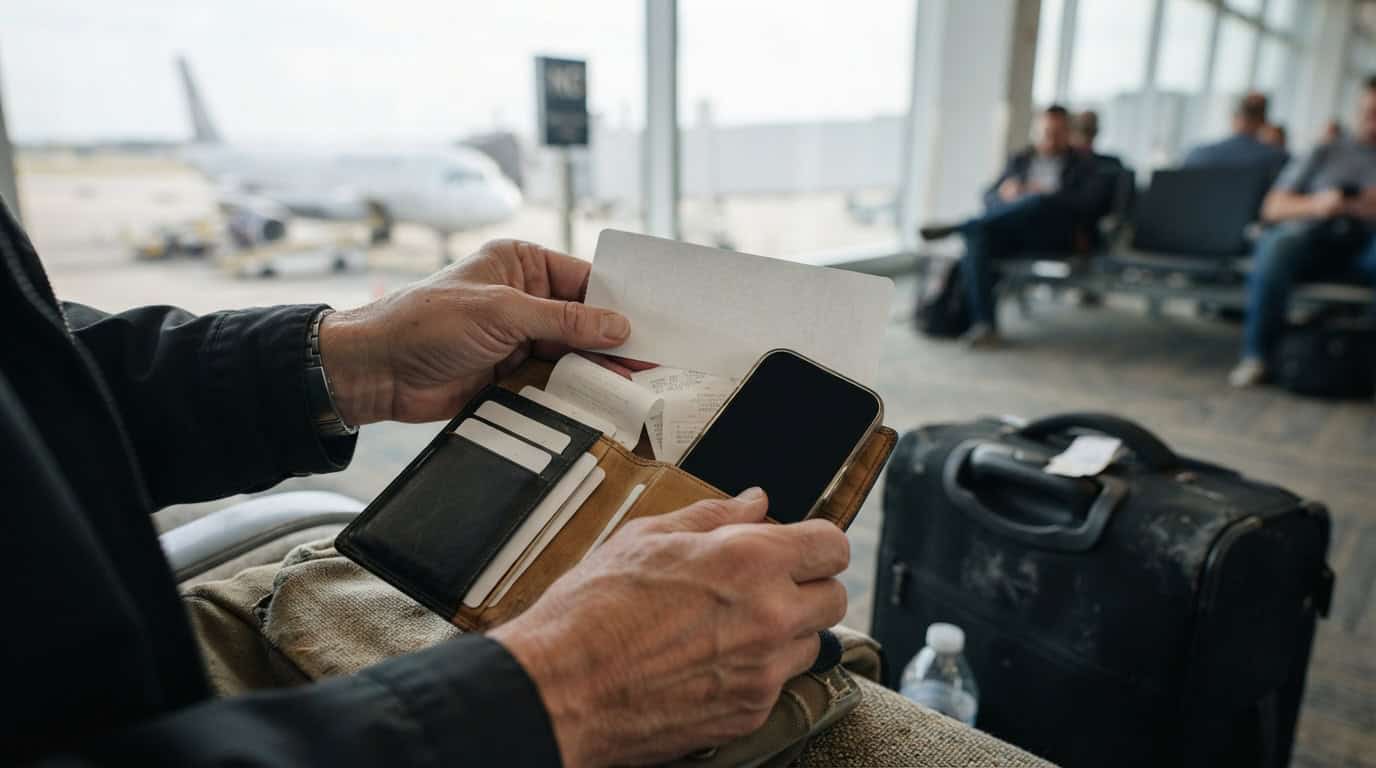
Save documents and timestamps showing what you booked, what the airline changed, and when you arrived.
- Booking confirmation and boarding pass for each affected flight.
- Airline disruption notices and messages confirming rebooking or cancellation.
- Itemized receipts for necessary expenses, including meals or refreshments.
Record the scheduled and actual arrival times for each flight. For a connecting itinerary, also note the actual arrival time at your final destination. Under EU rules, necessary, reasonable, and appropriate meal or refreshment costs may be reimbursed when assistance was not offered. Keep those receipts. Your Europe’s advice on keeping receipts explains what to retain.
How Do You File a Claim?
First, identify whether you’re seeking compensation under passenger-rights rules or a U.S. ticket refund. Then follow the process for your request.
- Check the claim deadline for the applicable country before filing. Deadlines vary by jurisdiction.
- Submit your claim to the airline with your booking details, evidence of the disruption, actual arrival information, and receipts relevant to your request.
- Keep copies of your claim, attachments, and any response from the airline.
- For an eligible U.S. refund, the DOT says payment is due within 7 business days for credit-card purchases or 20 business days for other payment methods. The DOT’s refund timing guidance explains the rules.
- In the UK, if the airline’s final response is unsatisfactory or it has taken more than 8 weeks to respond, escalate to an applicable ADR provider or the CAA’s Passenger Advice and Complaints Team.
What Help Can You Expect During a Delay?
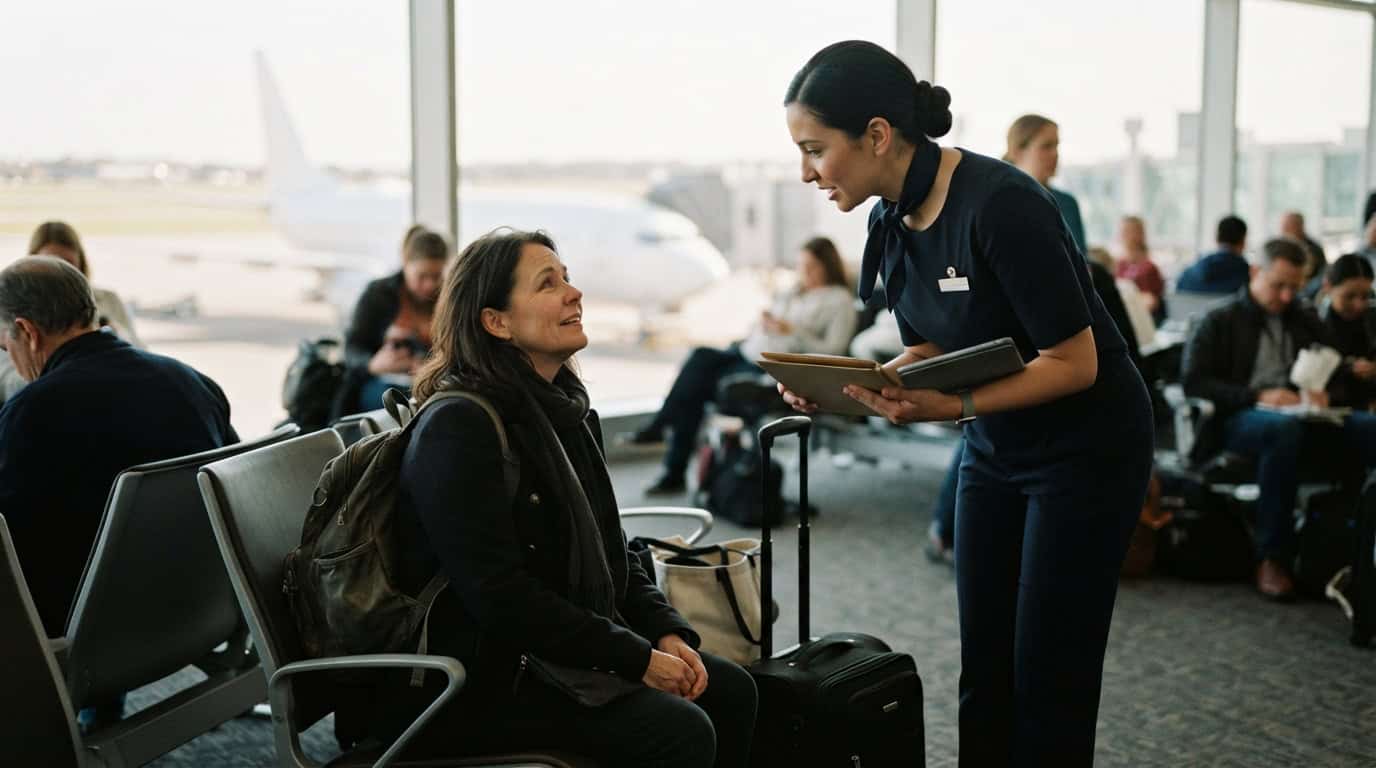
Assistance while you wait at the airport is separate from compensation claimed after travel. The assistance available depends on your route and the applicable rules.
Under EU rules, meals and refreshments are due after a qualifying departure delay of 2, 3, or 4 hours, depending on distance. Hotel accommodation and transport between the airport and hotel apply if the expected new departure is at least the following day, according to Your Europe.
In the United States, amenities during delays and other compensation largely depend on airline commitments, not a general federal requirement. Ask airline staff about rebooking and available assistance, and keep receipts for necessary items you buy.
Check Your Route Before You Claim
Review your booking confirmation and list each leg’s origin, destination, connection point, and operating airline. The airline named on the ticket may not operate the flight. Check route coverage using Your Europe’s passenger-rights guidance, then consult the UK Civil Aviation Authority for UK261, the Canadian Transportation Agency for Canada’s Air Passenger Protection Regulations, or the U.S. Department of Transportation for U.S. refund rules.
Compare your route and operating airline with the regulator’s eligibility rules, then confirm the claim deadline before filing with the airline. If you’re considering a U.S. refund, check the DOT’s rule on accepting a changed itinerary before deciding what to request. Keep the route details and relevant rule page with your claim.