
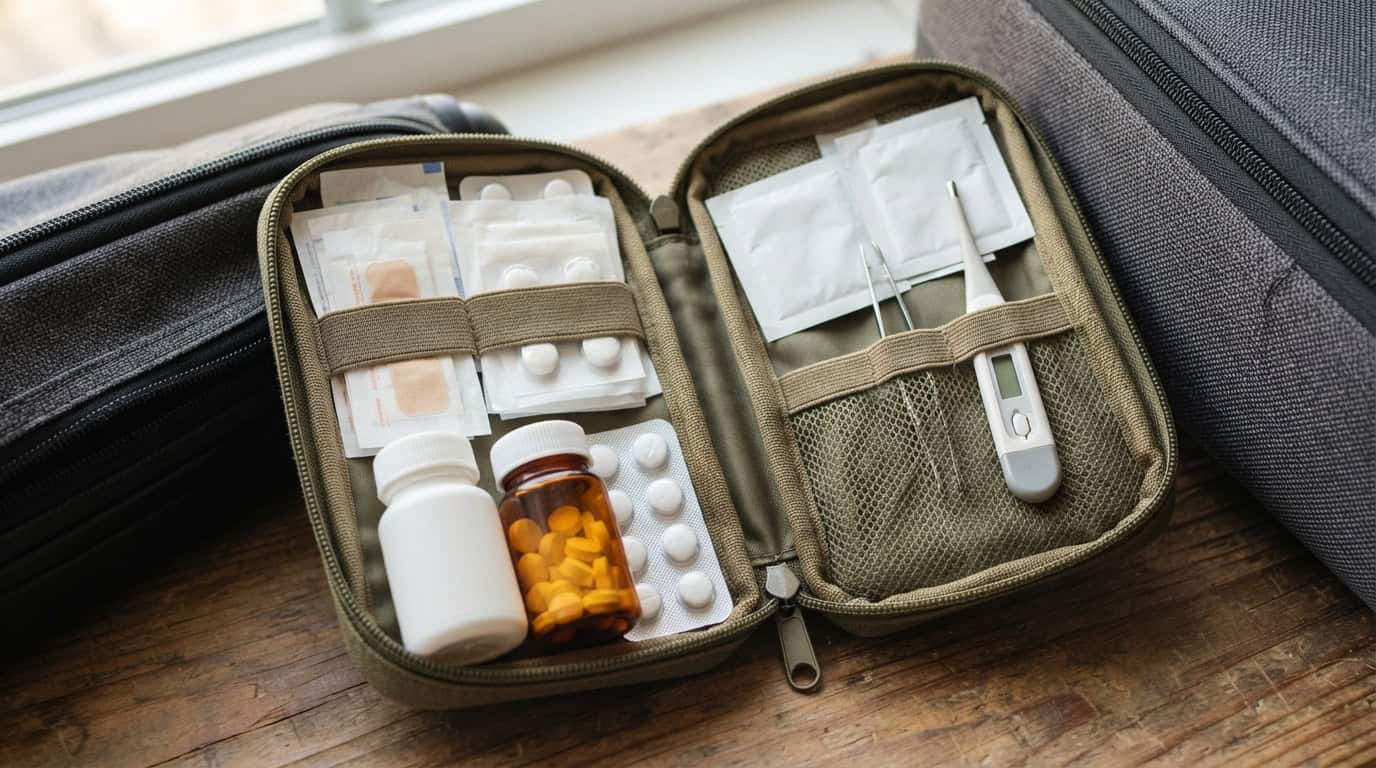
A travel medical kit should include personal prescriptions, a few useful over-the-counter medicines, basic wound-care supplies, and prevention items suited to your itinerary. The CDC describes it as a flexible, trip-specific set, not a checklist every traveler needs to complete. Its suggestions include oral electrolyte solution, tweezers, and sunscreen with SPF 30 or greater. The CDC also reports that travelers’ diarrhea affects 30%–70% of travelers during a two-week period, depending on destination and season. Use the CDC travel health kit guidance to choose what fits your plans.
For U.S. flights, the TSA allows medically necessary liquids over 3.4 ounces in carry-on bags, subject to separate screening. The TSA travel tips explain what to expect at security, helping you keep essential supplies within reach as your trip unfolds.
Key Takeaways
- A travel medical kit should match your health needs, itinerary, activities, trip length, group size, and available space, with prescriptions, useful over-the-counter medicines, wound-care basics, and prevention supplies suited to the trip. CDC guidance on travel health kits outlines these factors.
- International travelers should keep medicines in their original labeled containers, carry prescription copies, and check the rules in destination and transit countries, as the CDC advises.
- International travelers should check medicine rules for every destination and transit country and speak with a travel-medicine-informed health professional at least one month before departure about vaccines and medicines, as the CDC recommends.
- A compact kit can include oral electrolyte solution for rehydration and loperamide for appropriate cases of non-bloody diarrhea, while sunscreen should have SPF 30 or greater and insect repellent or water-purification supplies should reflect the itinerary, according to CDC kit guidance.
What Should Go in a Travel Medical Kit?
A useful travel medical kit pairs personal prescriptions with a few over-the-counter medicines, basic wound-care supplies, and prevention items suited to the trip. Treat the contents as a flexible starting point, not a checklist every traveler must complete. The CDC’s personal-kit suggestions include:
- Personal prescriptions, a pain reliever, and an antihistamine, as listed in the CDC’s personal-kit suggestions
- Loperamide for non-bloody diarrhea and oral electrolyte solution powder, as listed in the CDC’s personal-kit suggestions
- A digital thermometer, tweezers, and basic wound-care supplies, as listed in the CDC’s personal-kit suggestions
- Insect repellent, hand sanitizer, or water-purification supplies when relevant to the trip, as listed in the CDC’s kit recommendations
Keep the kit focused on minor illnesses and injuries, recurring problems, and ongoing health conditions, rather than trying to prepare for every emergency. Store supplies in a durable, water-resistant container that stays accessible during the trip, so essentials are close at hand if a small problem interrupts the day, following CDC guidance.
Tailor Supplies to Your Itinerary
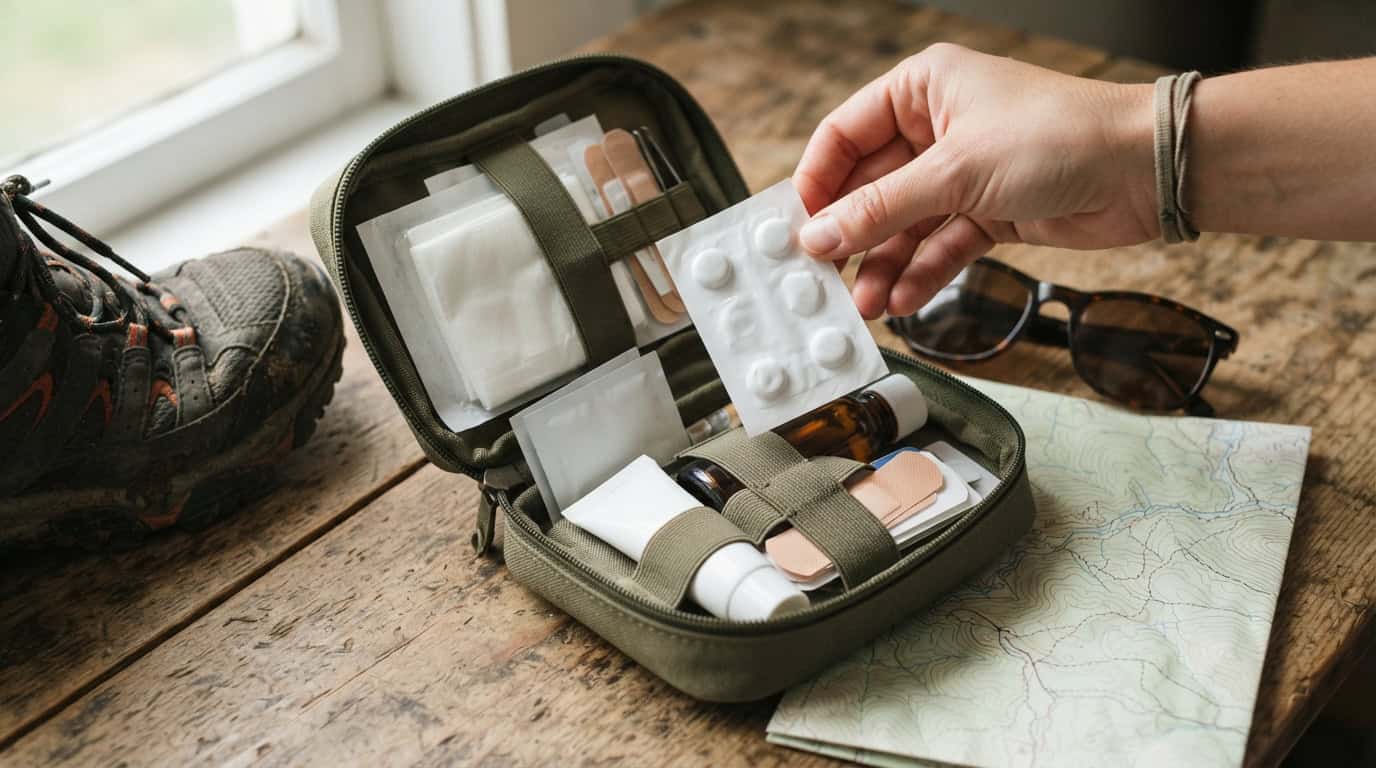
We’d shape a travel medical kit around health history, itinerary, activities, trip duration, group size, first-aid expertise, and available space, rather than packing every possible item. A short city stay with easy access to shops may call for less than a long trip through remote areas, especially when traveling with a group or managing ongoing health needs. The CDC’s travel health kit guidance outlines these factors to help personalize your supplies.
Match prevention supplies to your route: include sunscreen with SPF 30 or greater, and add insect repellent, hand sanitizer, or water-purification supplies when your destination and activities call for them. The CDC’s kit recommendations treat these items as trip-dependent.
For an international trip, plan a conversation with a travel-medicine-informed health professional at least one month before departure to discuss vaccines and medicines. The CDC guidance recommends planning ahead.
How Should You Pack Travel Medicines?
Pack enough prescription and over-the-counter medicine for the entire trip, plus extra for delays, and keep it in your carry-on, following CDC guidance for traveling with medicine. For international itineraries, check airport screening requirements separately from medication rules in each country.
- Keep medicines in their original labeled containers, and carry copies of prescriptions, as the CDC advises international travelers.
- Check whether each medicine is permitted in your destination and transit countries. Restrictions can differ from U.S. rules; the CDC advises checking the rules for your itinerary.
- For flights departing from the United States, pack medically necessary liquids, medications, and creams over 3.4 ounces or 100 milliliters in your carry-on, and expect separate screening under TSA rules.
Plan for Common Travel Ailments
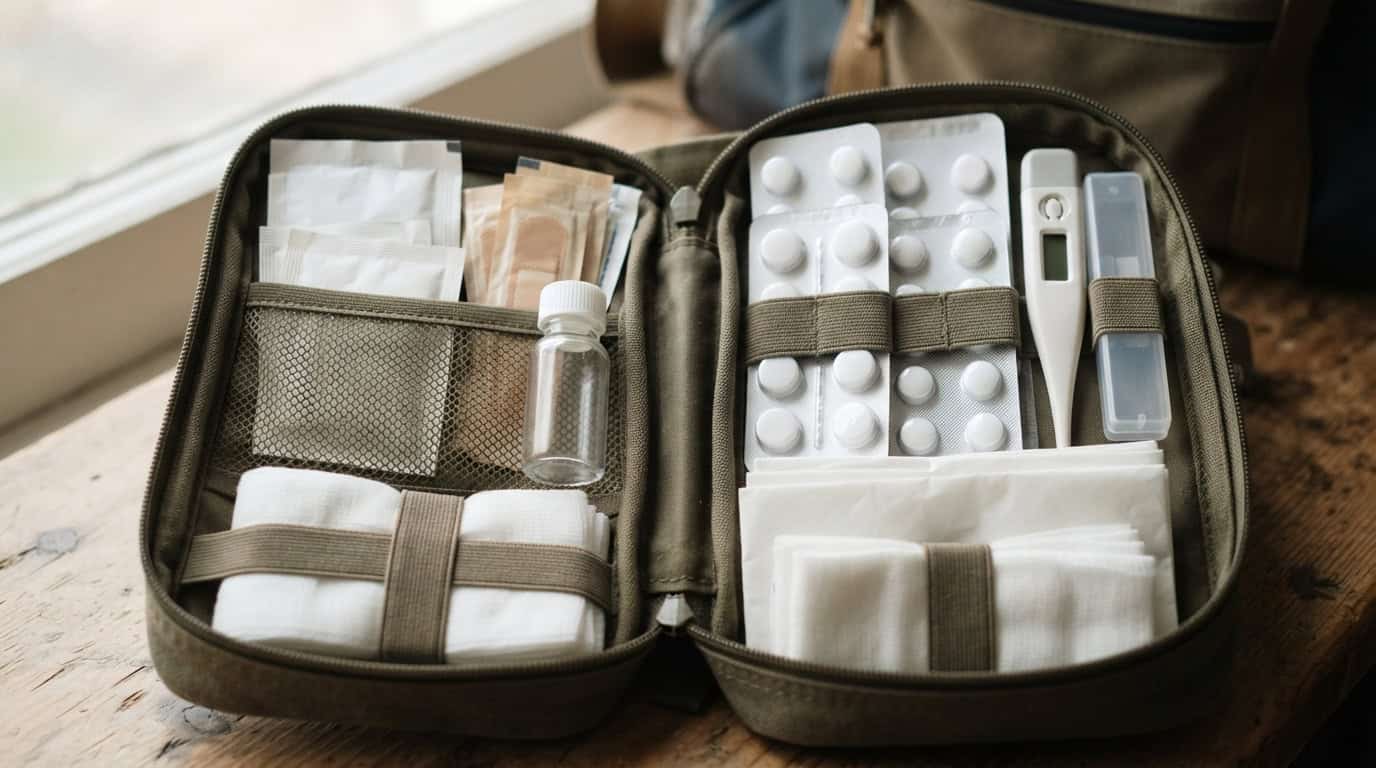
Travelers’ diarrhea is one reason a small, considered kit can be useful. The CDC Yellow Book estimates that it affects 30%–70% of travelers during a two-week period, depending on destination and season. That variation makes a few targeted supplies more useful than a bulky collection of unlikely remedies.
Pack oral electrolyte solution powder to support rehydration if diarrhea causes fluid loss. Include loperamide for appropriate cases of non-bloody diarrhea, but don’t rely on it instead of hydration or use it as a universal response to every stomach illness, consistent with CDC guidance on travelers’ diarrhea.
Symptoms don’t follow one timetable: toxin-mediated foodborne illness usually resolves within 12–24 hours, while untreated bacterial travelers’ diarrhea usually lasts 3–7 days and viral diarrhea 2–3 days, according to the CDC Yellow Book. These differences are a reminder that one medicine won’t suit every cause.
Keep the Kit Compact and Ready
Keep the container easy to reach, check medicine expiration dates, and adjust the contents to match your current itinerary. Replenish anything used or out of date. A basic 12-piece travel first-aid kit can cost about $2.29, while a 24-count kids’ bandage kit can be about $7.99. A small ready-made kit is a useful starting point, not a substitute for personal prescriptions or trip-specific supplies.
Review Your Kit Before Departure
Before departure, set your kit beside your itinerary and check each item against your destinations, activities, and trip length. Flag any medicine whose use or legality is unclear, along with supplies that don’t fit your planned activities. On international trips, check medication rules for every destination and transit country using the CDC’s guidance on restricted medicines, and ask a travel-medicine-informed health professional about any unresolved questions.
If a health condition or prescription has changed since you packed, update the kit and confirm the new medicine is allowed along your route. Tell a travel companion where the kit is, and keep a note of medicine names and instructions with your travel documents. Make this final check part of departure day, then keep the kit accessible in your carry-on.