
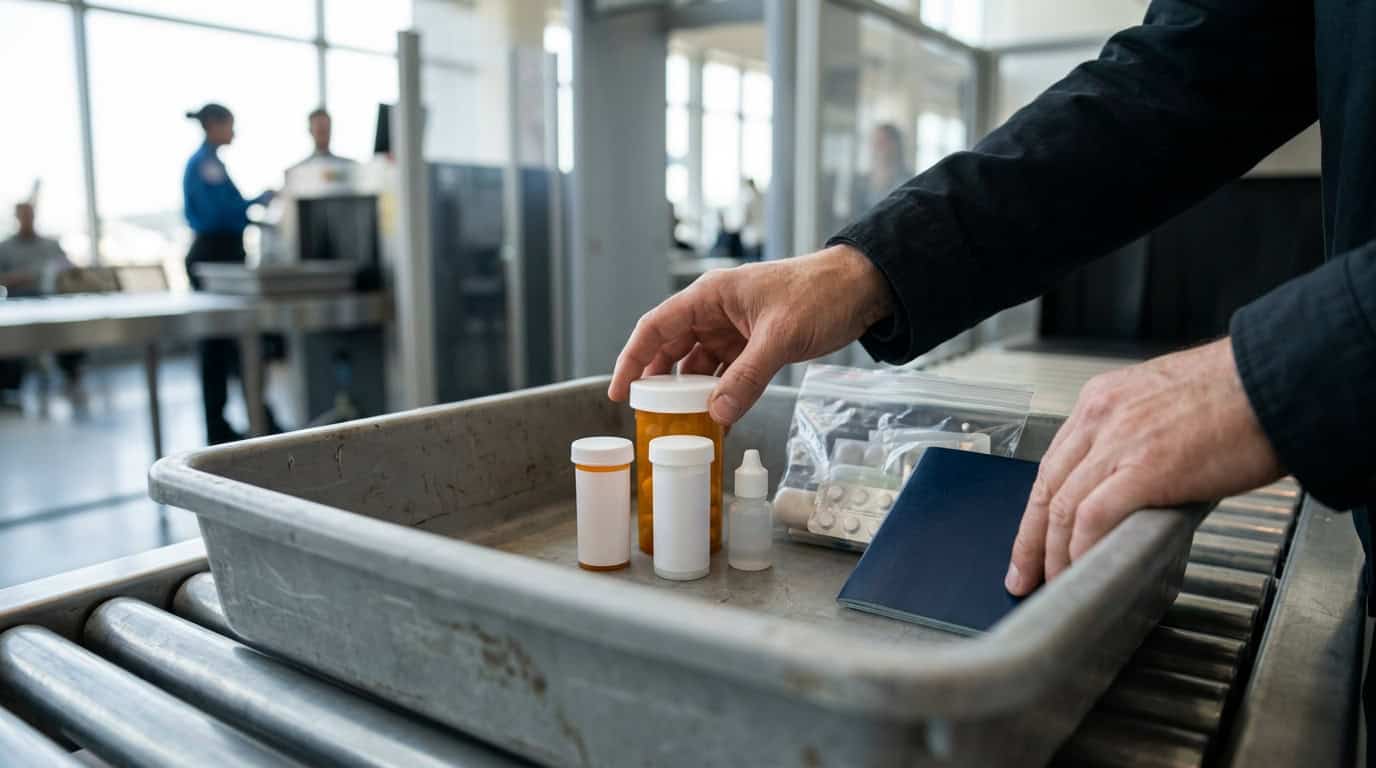
Medication travel rules generally allow you to fly with prescriptions. At U.S. airport checkpoints, the TSA permits medically necessary liquids over 3.4 ounces (100 milliliters) in carry-on bags, with separate screening. TSA guidance
Airport security rules differ from customs requirements and a foreign country’s medication laws. The ordinary 3-1-1 liquids rule does not determine what you may bring across a border. Before departure, check the rules for your destination and every transit country. The CDC recommends carrying medicines in their original labeled containers, copies of prescriptions listing generic drug names, and enough medicine for your trip plus possible delays.
Key Takeaways
- We recommend checking official medication rules for your destination and every transit country, because TSA screening approval does not guarantee that a medicine is legal to carry across a border.
- Travelers entering the United States must declare medication, and CBP says a supply of up to 90 days should be in its original packaging with a prescription in the traveler’s name.
- For international trips, keep medicines in their original labeled containers with prescription copies listing generic names, pack enough for the trip plus possible delays, and carry essential medicine in hand luggage.
- CBP says medicines entering the United States in supplies of up to 90 days must be declared and should be in their original packaging with a prescription in the traveler’s name. U.S. Customs and Border Protection guidance.
Can You Fly With Prescription Medication?
Yes, travelers can generally fly with prescription medication, but airport screening rules and border-entry requirements are separate. A medicine accepted at a security checkpoint is not automatically legal to carry across an international border.
We recommend checking three parts of your route: the airport, your destination, and every transit country. At the airport, follow the screening rules for your departure point. At your destination and in transit, check each country’s medication laws before traveling. Some medicines that are legal in the United States may be prohibited abroad, so review the U.S. Department of State’s medication guidance along with local rules.
For medicines entering the United States, declaration and packaging requirements are separate from the rules for carrying medication in your carry-on bag.
Controlled medicines may have additional requirements, and rules can differ between countries on the same itinerary. The UK, for example, has specific conditions for qualifying controlled medicines brought across its border. Check the rules for each medicine and each leg of your journey instead of relying on a single airport’s screening decision.
Does Medication Need Its Original Bottle?
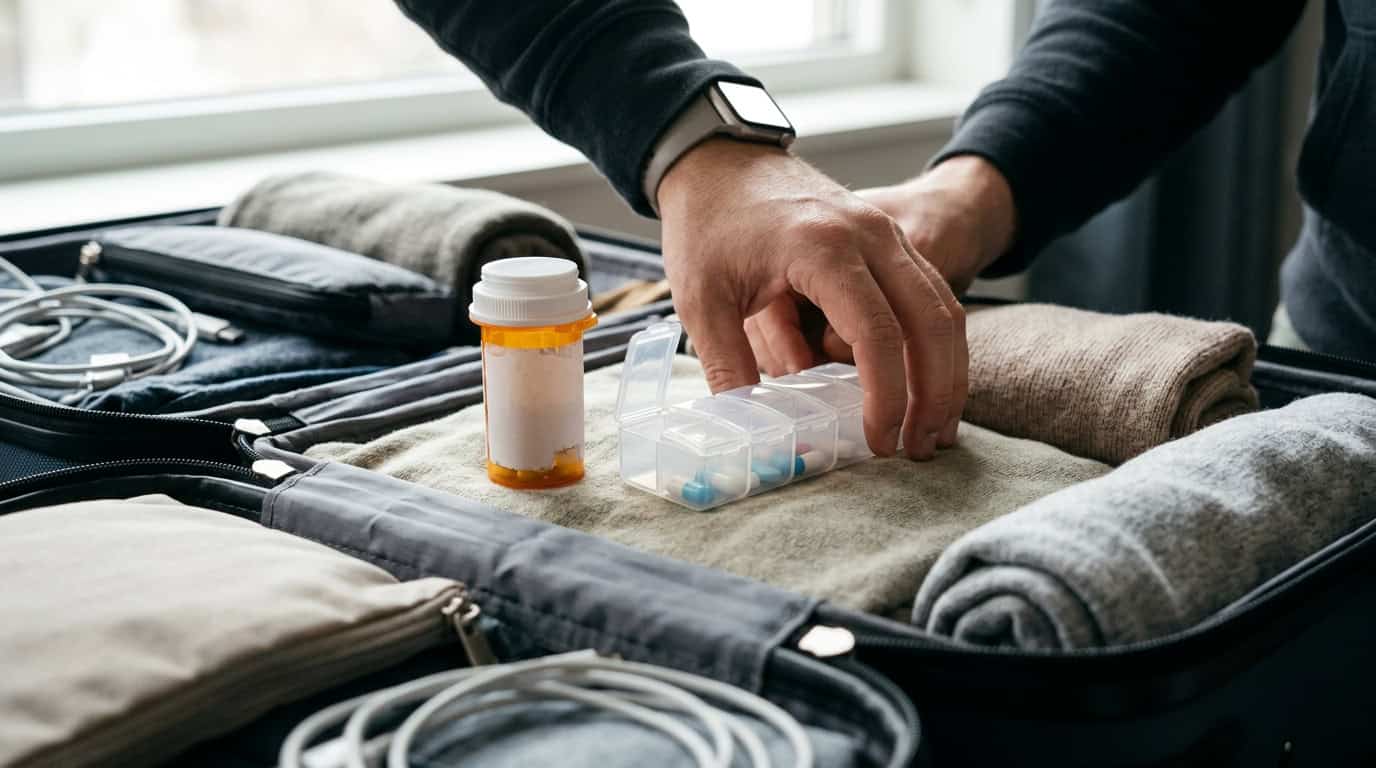
No. The TSA does not require prescription medication to be in its original bottle for airport screening, but travelers must still follow individual U.S. state prescription-labeling laws. The checkpoint rule applies to screening, not to the separate rules for carrying medication across a border. For international travel, keep medication in its original labeled container and carry a copy of the prescription. Some medicines that are legal in the United States may be illegal abroad, so check your destination’s guidance and bring both labeled bottles and prescription copies. Ask the prescriber for a copy listing each medicine’s generic name as well as its brand name. Generic names can help officials or clinicians identify a drug if its brand name is unfamiliar. Keep the copy easy to reach, and carry medicine in your hand luggage rather than relying only on checked baggage. A paper copy can be useful if you cannot access a digital file during your journey.
How Do TSA Rules Treat Liquid Medicine?
At U.S. checkpoints, medically necessary liquid medication may exceed 3.4 ounces (100 milliliters) in carry-on baggage, but it must be removed for separate screening. This exception is different from the ordinary 3-1-1 liquids rule and does not automatically cover every cream, gel, or other product. Follow these steps to make screening easier:
- Before reaching the screening area, place medically necessary liquid medication somewhere easy to remove from your carry-on.
- Tell the security officer that you are carrying medically necessary liquid medication.
- Remove the medication from your bag when requested so it can be screened separately.
For a particular cream, gel, or other formulation, check how that product is handled instead of assuming it qualifies under the medically necessary liquid-medication rule.
What Changes When You Cross Borders?
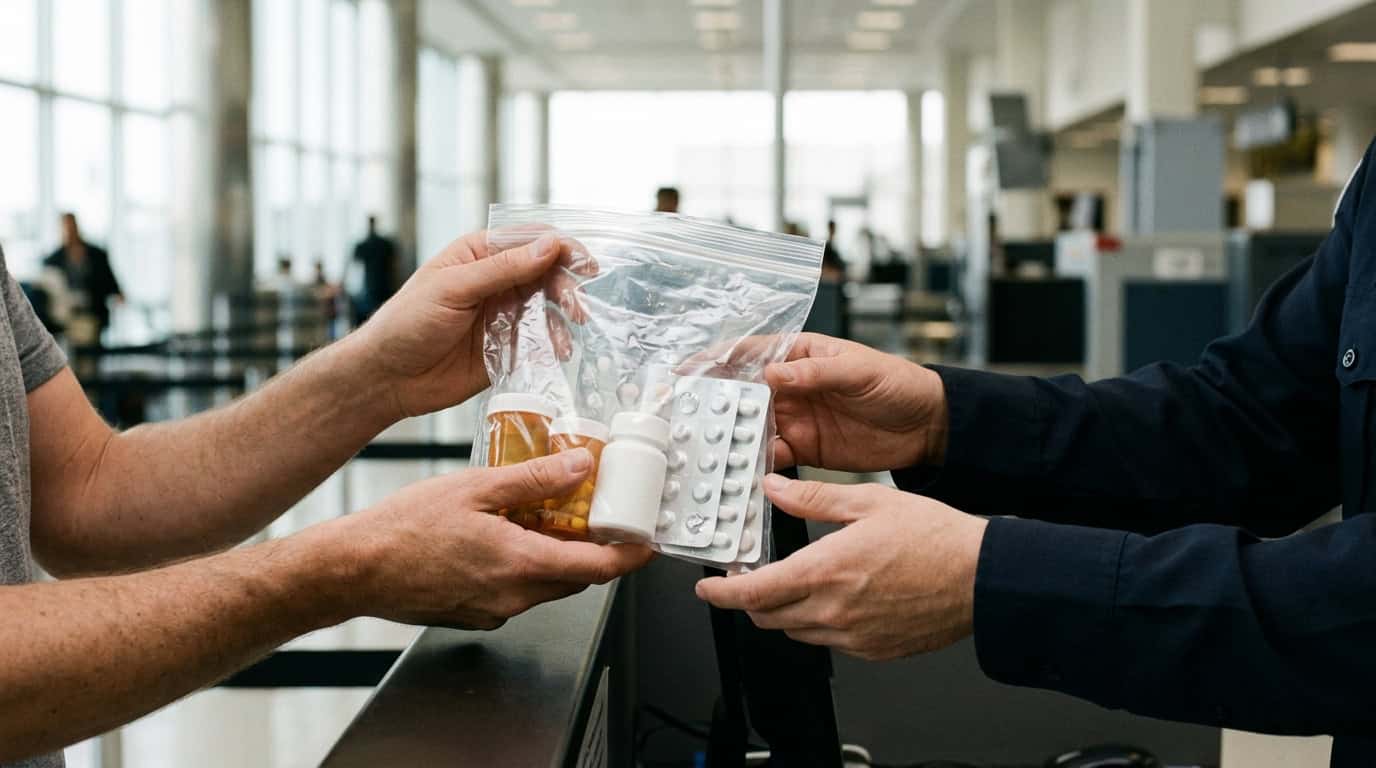
Each country can set its own limits, paperwork requirements, and restrictions for medicines. Permission to carry a drug through airport security does not guarantee permission to bring it across a border. Check the rules for both your destination and any country where you have a layover, even if you do not plan to leave the airport. Controlled medicines need particular attention because rules depend on the specific drug and route. For qualifying medicines carried into or out of the UK, the Home Office permits up to a three-month supply of Schedule 2–4 Part I medicines lawfully prescribed in the traveler’s country of habitual residence. The supporting clinician’s letter should identify the traveler, list each medicine’s dose, strength, and frequency, and include the prescriber’s signature and professional registration details. The UK Home Office guidance also says travelers seeking an exceptional licence for a larger supply should contact the Home Office one month before travel. For medicines containing controlled narcotic or psychotropic substances, a Schengen certificate is valid for a maximum of 30 days. The European Parliament document on Schengen certificates describes this limit. It should not be treated as a universal certificate for every country or route. The International Narcotics Control Board’s 2025 annual report describes the complexity of carrying controlled medicines internationally and encourages countries to establish and share clear rules. This complexity makes it important to verify the exact medicine, not just its general category, before departure. These examples are not universal rules. Check official guidance for every country on your itinerary, including layover countries, and confirm whether your medicine and quantity require advance paperwork or a licence.
How Should You Pack and Plan Doses?
Pack enough medication for your full trip, plus extra for delays, and keep essential medicines in your hand luggage. Before packing, check your supply against your itinerary and prepare a simple medication list with each medicine’s generic name, dose, and prescriber’s contact details. Keep the list with your prescription copies and medicines in their labeled containers.
For medication brought into the United States, CBP describes a supply of no more than 90 days as a rule of thumb. Visitors staying longer may need documentation if additional medication is sent by mail or courier. See CBP’s guidance on medication supplies before arranging a shipment.
Dose schedules can become less straightforward when a flight crosses time zones. Before departure, ask your clinician or pharmacist whether to follow your home-time schedule or adjust doses to local time, and what to do if a delay makes a dose late. For medicines that need specific temperatures, ask about the acceptable temperature range and how to store the medicine during your journey. A clear plan can help you avoid guessing while in transit.
Check Your Route Before You Go
Before you zip your bag, review your itinerary and write down every country where your plane lands, including connection stops. Beside each one, note whether you will pass through border control or remain in the airport. Then make a medicine list with each drug’s generic name, strength, form, and the amount you plan to carry.
Check the official customs or health-authority guidance for each country using the generic name, not just the brand. For a controlled medicine, look for the specific drug category, permitted quantity, required certificate or licence, and whether you must arrange paperwork before departure. If an official page does not answer your question, contact that country’s embassy or customs authority with your itinerary and medicine details. Save the response with your travel documents.
Next, compare any required paperwork with the documents you already have. If you need a clinician’s letter, ask the prescriber to prepare it with the medicine details and their credentials, and allow time to correct any missing information. If your route or medication changes, repeat the check for the new countries and supply. Keep a digital copy of the relevant official guidance and a paper copy with your prescriptions, so you can explain your plan at a checkpoint or border without relying on an internet connection.