
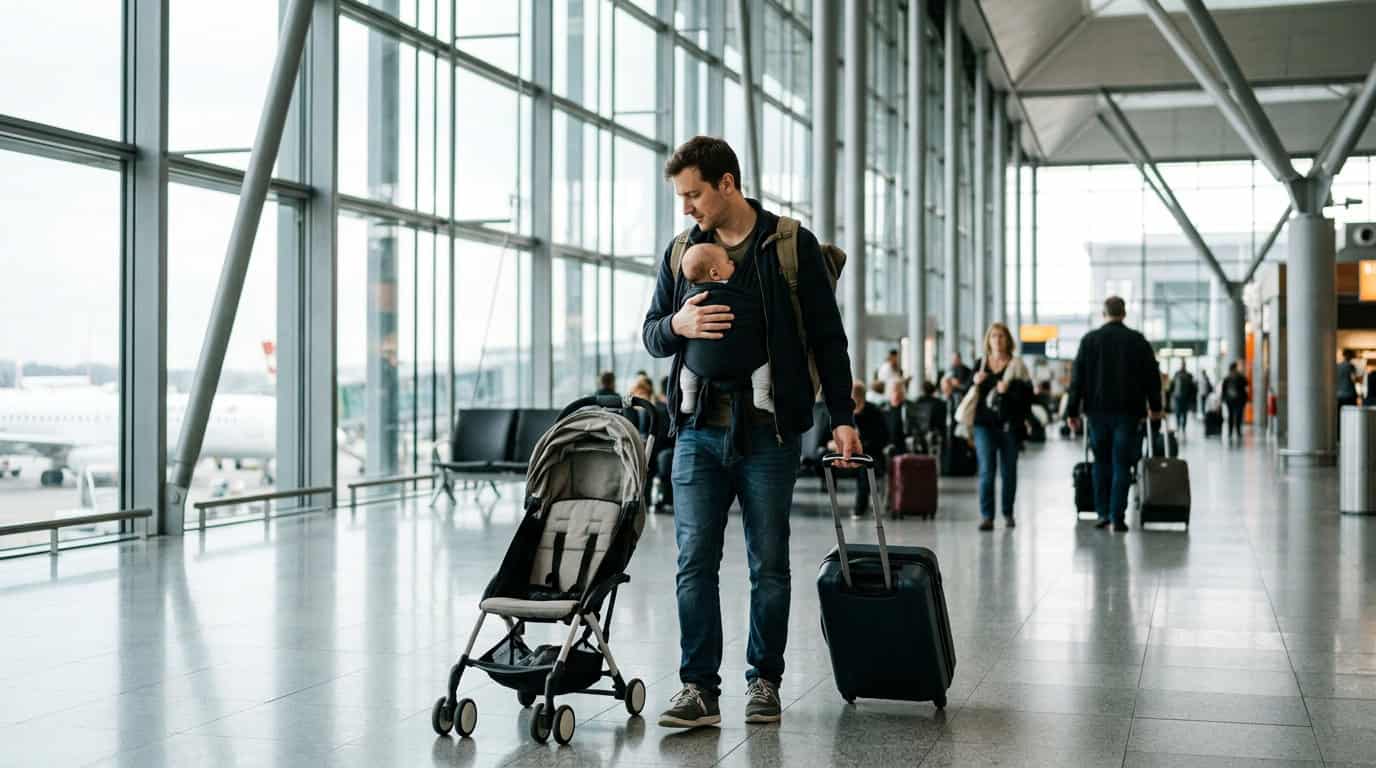
Travel with a baby is easier when you plan for a safe sleep space, an appropriate restraint for each type of transport, and feeds that can flex with the day. Children under 2 may fly on an adult’s lap, though the FAA strongly recommends an approved child restraint in the baby’s own seat. At airport security, breast milk, formula, and baby food can go in carry-on bags in quantities over 3.4 ounces (100 milliliters).
Start with your baby’s usual sleep and feeding rhythm, then leave room for pauses. For daytime road trips, the American Academy of Pediatrics recommends breaks every 2 to 3 hours. A gentler pace, fewer transitions, and breathing room can make those first days away feel like a change of scenery, not an endurance test.
Key Takeaways
- We recommend planning around a safe, firm, flat sleep surface, an appropriate restraint for each type of transport, and a feeding plan that can flex with your baby’s usual rhythm.
- For U.S. flights, children under 2 may travel on an adult’s lap, but the FAA strongly recommends a separate seat with an approved child restraint; breast milk, formula, toddler drinks, and baby or toddler food may pass through security in carry-on quantities over 3.4 ounces (100 milliliters) and are screened separately.
- For daytime road trips, plan stops every 2 to 3 hours to feed or change your baby, use an appropriate rear-facing car seat, and move a sleeping baby to a firm, flat sleep surface after arrival.
- For international travel, arrange a child’s pre-travel health appointment at least one month before departure, and ask about destination-specific needs; infants aged 6 through 11 months should receive one early MMR dose before travel and still need two more doses at routine ages after their first birthday.
What Should You Plan First?
Travel with a baby is easiest to plan around three essentials: a safe place to sleep, an appropriate restraint for each type of transport, and a feeding plan that can flex with the day. Start with those needs before filling the calendar with destinations or activities.
Work backward from your baby’s usual rhythm. Note typical wake-ups, naps, feeds, and changes, then choose travel times and daily plans that leave space for them. A schedule with one main outing and time to return to your room is more realistic than a packed adult itinerary.
The first days away often go more smoothly with fewer transitions. Staying in one place, or keeping outings close by, gives your baby time to settle into an unfamiliar sleep space and gives you room to pause when a feed, change, or delay shifts the plan. Build in breathing room instead of treating every open hour as an opportunity to go somewhere.
For international travel, arrange a child’s pre-travel health appointment at least one month before departure, as advised by CDC Travelers’ Health guidance. An early appointment leaves time to discuss destination-specific health needs.
Infants aged 6 through 11 months should receive one early MMR dose before international travel. They still need two more doses at routine ages after their first birthday, according to CDC’s measles travel guidance.
How Do Babies Fly Safely?
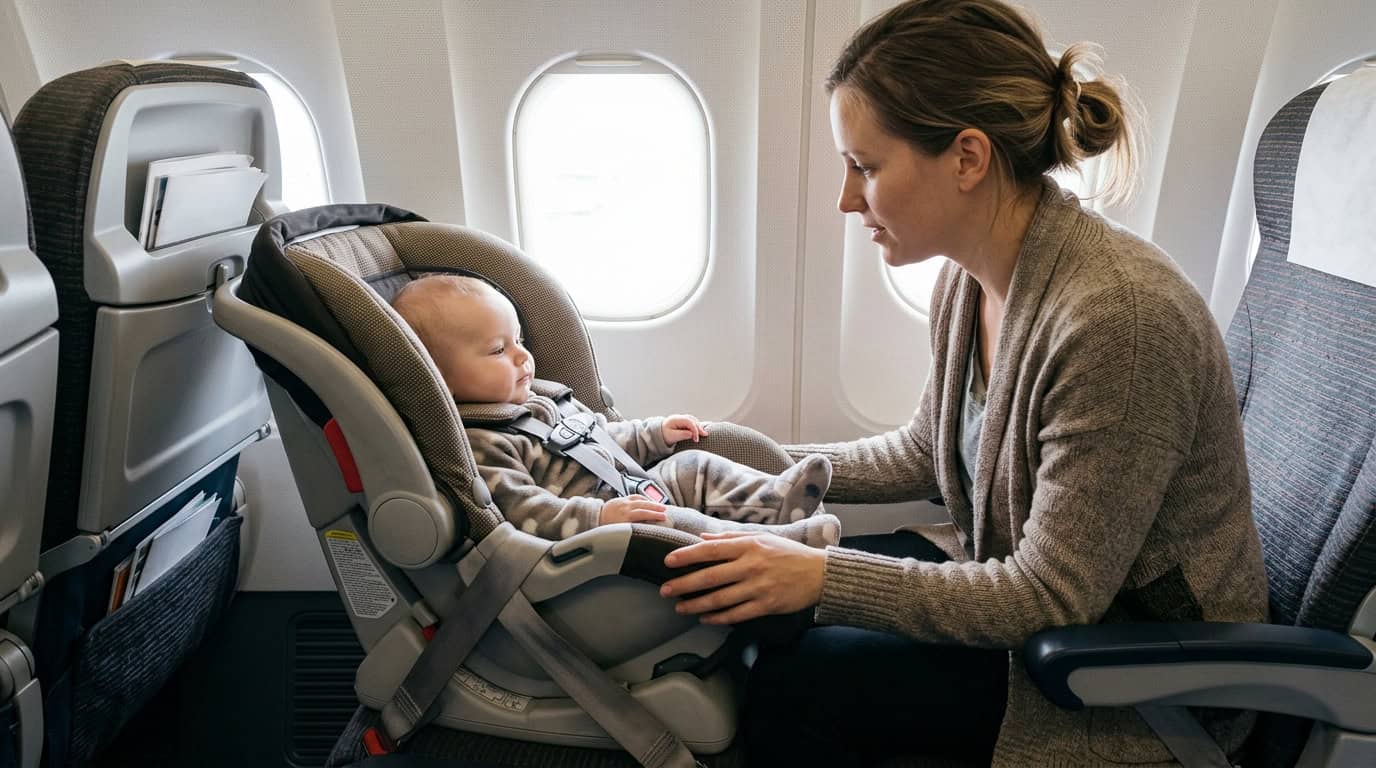
On U.S. flights, children under 2 may travel on an adult’s lap, but federal aviation guidance strongly recommends reserving a separate seat and securing the baby in an approved child restraint or device. A lap may simplify the booking, while a separate seat gives the baby a dedicated place to ride.
Before booking, check that your airline accepts the restraint and that it can be used in your selected seat. An aircraft restraint must carry a label certifying it for use in motor vehicles and aircraft, or an approval marking from a foreign government. Lap-infant rules and fees vary by airline and route, so confirm the details with your carrier before booking.
Breast milk, formula, toddler drinks, and baby or toddler food can go in carry-on baggage in quantities greater than 3.4 ounces (100 milliliters), outside the quart-size liquids bag. The TSA’s screening guidance says these items are screened separately. Keep them easy to reach so you can present them at the checkpoint without unpacking the whole bag.
For a calmer airport stretch, keep travel documents and feeding supplies accessible, and agree on who will handle bags while the other holds or settles the baby. Leave room in your plan for a feed, a diaper change, or a slower security line. A little slack can make the trip to the gate feel less hurried.
How Can You Keep Feeding Flexible?
Plan around your baby’s usual feeding approach and keep what you need for the next stretch of travel easy to reach. Whether that means breast milk, formula, toddler drinks, or food for a baby or toddler, avoid burying the next feed beneath luggage.
At U.S. airport security, breast milk, formula, toddler drinks, and baby or toddler food can pass through in quantities above the usual liquids limit. They are screened separately, so keep them accessible for inspection. A delay can shift a feed, so treat the day’s plan as a guide rather than a timetable.
On a road trip, plan feeds around rest stops rather than a precise departure-time calculation. A stop may come later than expected, or your baby may be ready to eat before the planned break. Leave room to pause, feed, and adjust the plan without trying to make every feed happen at its original time.
Young infants still need their usual milk feeds; water is not a substitute. The CDC says exclusively breastfed infants younger than 6 months do not need water or other liquids, even in hot weather. Don’t replace a young infant’s milk feed with water to compensate for a delay.
What Changes On A Road Trip?
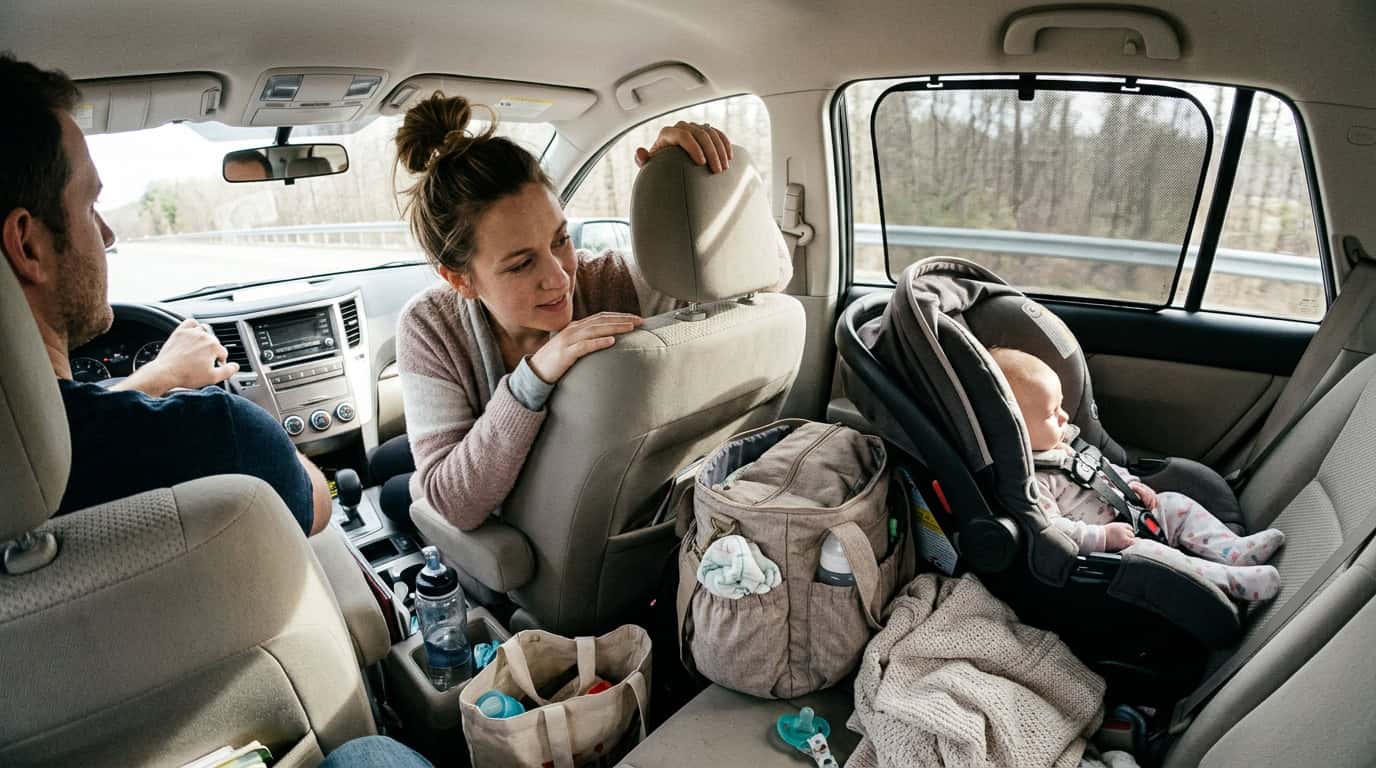
A calmer road trip uses an appropriate rear-facing car seat and includes regular stops for feeding and changes instead of treating the drive as uninterrupted mileage. Build the route around baby care, not just the estimated driving time. The AAP’s road-trip guidance suggests breaks every 2 to 3 hours during daytime travel and every 4 to 6 hours at night to feed or change the baby.
- Before departure, check that the rear-facing seat suits your baby and is set up securely according to its instructions.
- Gather the essentials for the drive, including feeding supplies, diapers, wipes, and a change of clothes, and keep them easy to reach.
- Choose rest stops along the route and allow time to feed and change your baby. Be ready to stop earlier if needed.
- At your destination, move a sleeping baby from the car seat to a firm, flat sleep surface. Don’t let the baby continue sleeping in the seat outside the car.
What Should You Pack For Baby Travel?
Organize baby travel supplies around feeding, diaper and clothing changes, sleep, and travel documents or essentials. Keep the items you’ll need next in an accessible day bag. Let your baby’s routine and the trip shape what goes in each category; there’s no single checklist that fits every family. Sort supplies into these groups:
- Feeding: Pack what suits your baby’s usual feeding routine, such as breast milk, formula, bottles, or baby food, plus familiar feeding accessories.
- Diaper and clothing changes: Keep diapers, wipes, a changing layer, and a clean outfit together for quick stops or spills.
- Sleep: Plan for a safe, firm, flat sleep surface at your destination, along with sleepwear your baby already uses.
- Travel documents and essentials: Keep tickets, identification, booking details, and other trip-critical items easy to find.
During a flight or car stop, the day bag should hold the next feed, a change kit, and a spare outfit, not every supply you packed. Store less-used backup items separately in a compact kit with extra diapers, wipes, and clothing. This keeps essentials within reach without requiring you to unpack the rest of your luggage. A car seat is a restraint for transport, not a sleep space at your destination. If your baby falls asleep in the car, move them to a safe sleep surface after arrival. If you bring a travel play yard, choose one that meets the applicable standard: CPSC rules in 16 CFR part 1221 incorporate ASTM F406 with CPSC modifications.
Which Trips Suit Babies Best?
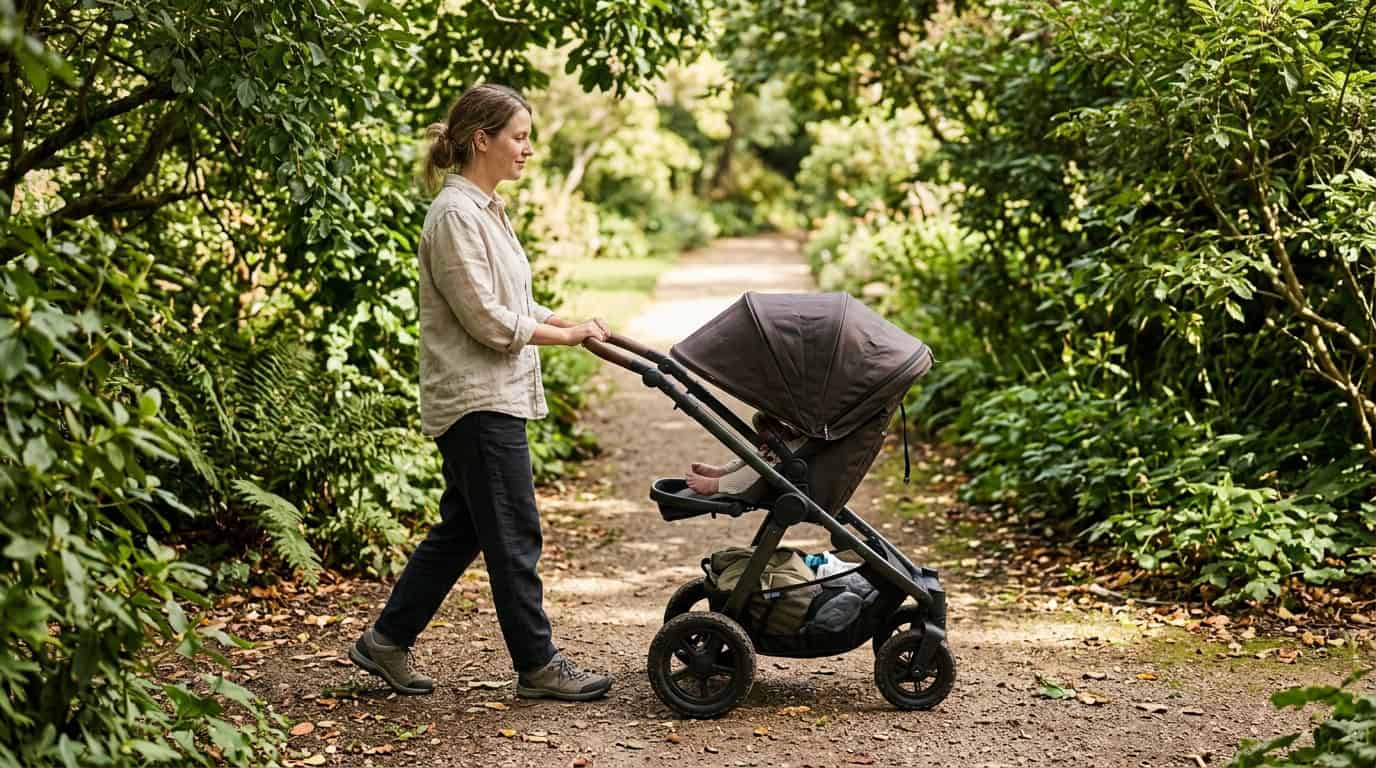
The best first trips are short, simple journeys to a destination where you can return easily to a suitable sleep space and pause without losing the day.
Compare a direct route with one that adds a connection. A transfer may break up a long journey, but it also adds another boarding, wait, and change of pace. Choose the option that best fits your baby’s likely feed and sleep windows and your family’s comfort handling luggage.
Look for lodging close enough to return for a feed, nap, or quieter stretch. Before booking, confirm what sleep space is available and whether it suits your baby. A room near a park or waterfront can make a reset easier than a remote stay.
Plan one main outing, such as a museum visit or beach walk, and keep a nearby café, park, or indoor stop in reserve if timing shifts. For international travel, plan health care early and ask a clinician about destination-specific advice, including vaccines and local health considerations.
Make The First Days Away Easier
Before you finalize the booking, open the airline’s infant-travel page and check the fare and seat rules for every leg. As a general fare example, lap infants under age 2 may travel without charge on domestic flights, while international lap-infant travel requires a ticket and may involve taxes and a percentage of the adult fare. If the itinerary includes a connection or a codeshare flight, confirm the policy for each segment with the carrier and save the response with your booking.
Next, make a short arrival-day note with your planned arrival time, the next likely feed, and where your baby can settle once you reach the room. Ask the lodging host to confirm what sleep surface will be ready and where it will be placed. Request a room arrangement that lets one adult unpack while the other stays with the baby.
If you expect to arrive late, pack pajamas and the next feed in the day bag so the first change does not depend on opening the main luggage. Keep the first outing close enough to return easily if your baby needs a quieter stretch.