
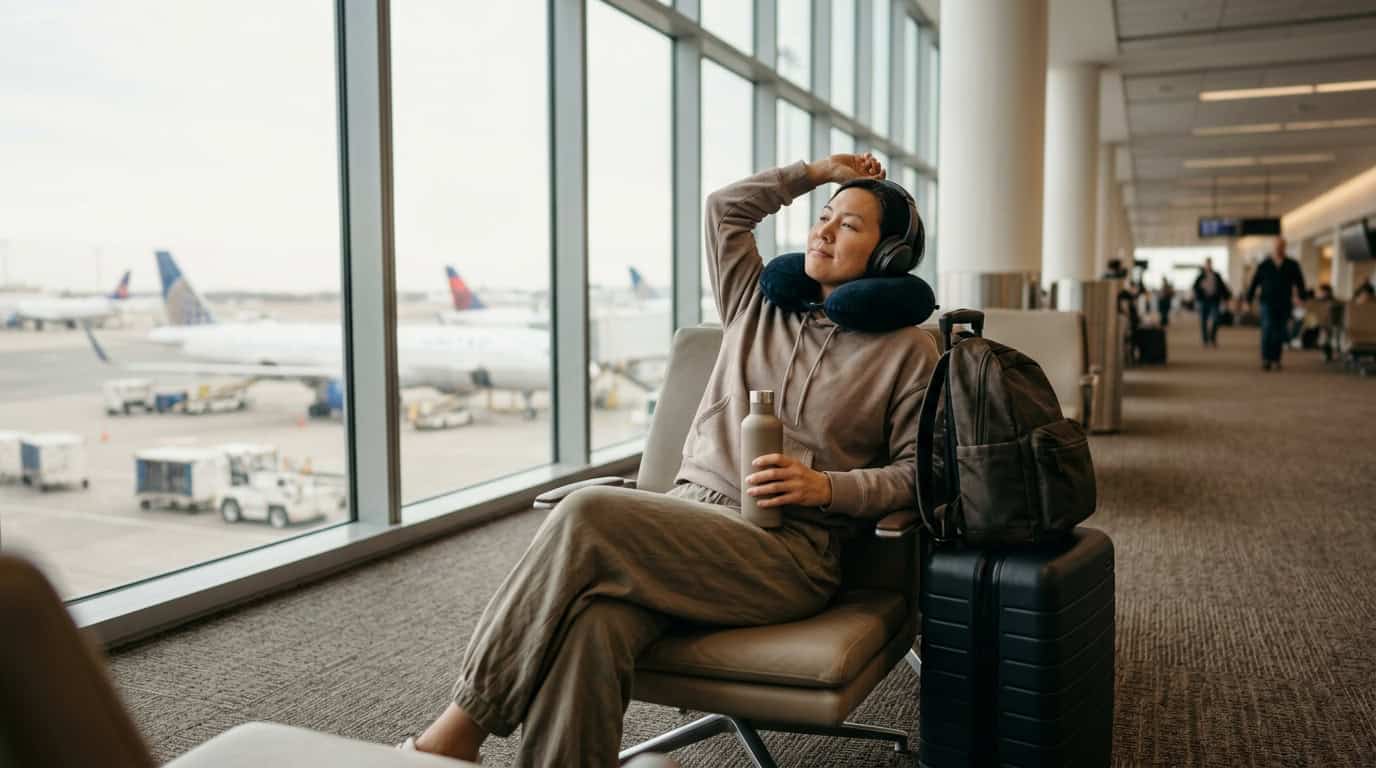
Airport layover tips start with checking your next flight’s departure, boarding, and gate details, then building a plan around the time left after transfers and the return to your gate. A scheduled connection can look generous on paper and shrink quickly when you cross terminals, clear security or immigration, collect bags, or wait for transport. Before deciding to leave the airport, check whether your documents allow entry and whether there’s enough time for the trip out and back. If your connection may involve another security screening, keep liquids easy to repack: the TSA 3-1-1 rule allows containers of 3.4 ounces (100 milliliters) or less in one quart-size clear bag per passenger, as explained in TSA’s carry-on guidance.
A worthwhile layover doesn’t have to become a city excursion. A meal, a shower, a quiet corner, or a short stretch can make the next flight feel easier, especially when usable time is limited. Airport facilities can shape your plan: Chicago O’Hare’s Terminal 3 Yoga Room is open daily from 6 a.m. to 10 p.m. and provides exercise mats, according to the Chicago Department of Aviation. Check an amenity’s location, hours, and access rules before building your connection around it. The key is to plan around the time you can actually use, not the full layover printed on your itinerary.
Key Takeaways
- We recommend treating the scheduled gap between flights as a starting point, then subtracting terminal transfers, required security or immigration checks, baggage steps, and time to return to the gate; U.S. passport-control wait estimates do not include baggage retrieval or airport navigation.
- We recommend leaving the airport only when your travel documents allow entry and enough usable time remains for the round trip, airport procedures, and a safe return; airside transit and entering a country can have different requirements.
- We suggest choosing one accessible activity that fits your connection, such as O’Hare’s Terminal 3 Yoga Room, open daily from 6 a.m. to 10 p.m., or SFO’s aviation museum and library, open daily from 10 a.m. to 4:30 p.m., after checking locations, hours, and access rules.
- We advise confirming whether your international connection requires immigration, another security screening, or baggage collection and recheck; for a U.S. rescreening, the TSA 3-1-1 rule allows liquids in containers of 3.4 ounces (100 milliliters) or less in one quart-size clear bag per passenger.
How Do You Make A Layover Count?
Make a layover count by confirming your next flight’s terminal, gate, and boarding time, checking airline messages, allowing time for transfers and the return to your gate, then choosing a plan that fits the time left. Keep your plan flexible: a gate change or updated boarding time can quickly alter what’s realistic. For U.S. arrivals, CBP’s airport wait-time estimates cover passport control, but not baggage retrieval or navigating the airport, so don’t treat the scheduled connection as time you can freely spend.
Make the decision in order: protect the connection first, confirm whether your documents allow you to enter the country second, and decide how to spend the remaining time third. The distinction matters because staying airside and passing through border control can involve different requirements. For example, GOV.UK distinguishes airside from landside transit and says requirements can depend on your nationality and itinerary. Check the rules for your route before making plans beyond the terminal.
Then choose what would make the next leg easier: food if you’re hungry, a shower or quiet rest if you’re worn out, a walk if you’ve been sitting, or a place to work if you need to focus. Exploring can be worthwhile, but it isn’t the measure of a successful layover. A calm meal and time to reset may be a better fit than squeezing in a city visit.
Before traveling, preview the airport’s facilities, locations, and opening hours. An amenity only helps if it’s accessible during your connection. At San Francisco International Airport, the aviation museum and library is open daily from 10 a.m. to 4:30 p.m.; SFO’s museum information can help you see whether its hours match your schedule. At Singapore Changi Airport, transit hotels are listed as open 24 hours, and airside guests do not clear immigration, as described in Changi’s transit hotel details. A scheduled layover is the full interval between flights; genuinely usable time is what remains after the steps needed to make the connection safely.
How Much Layover Time Is Actually Usable?
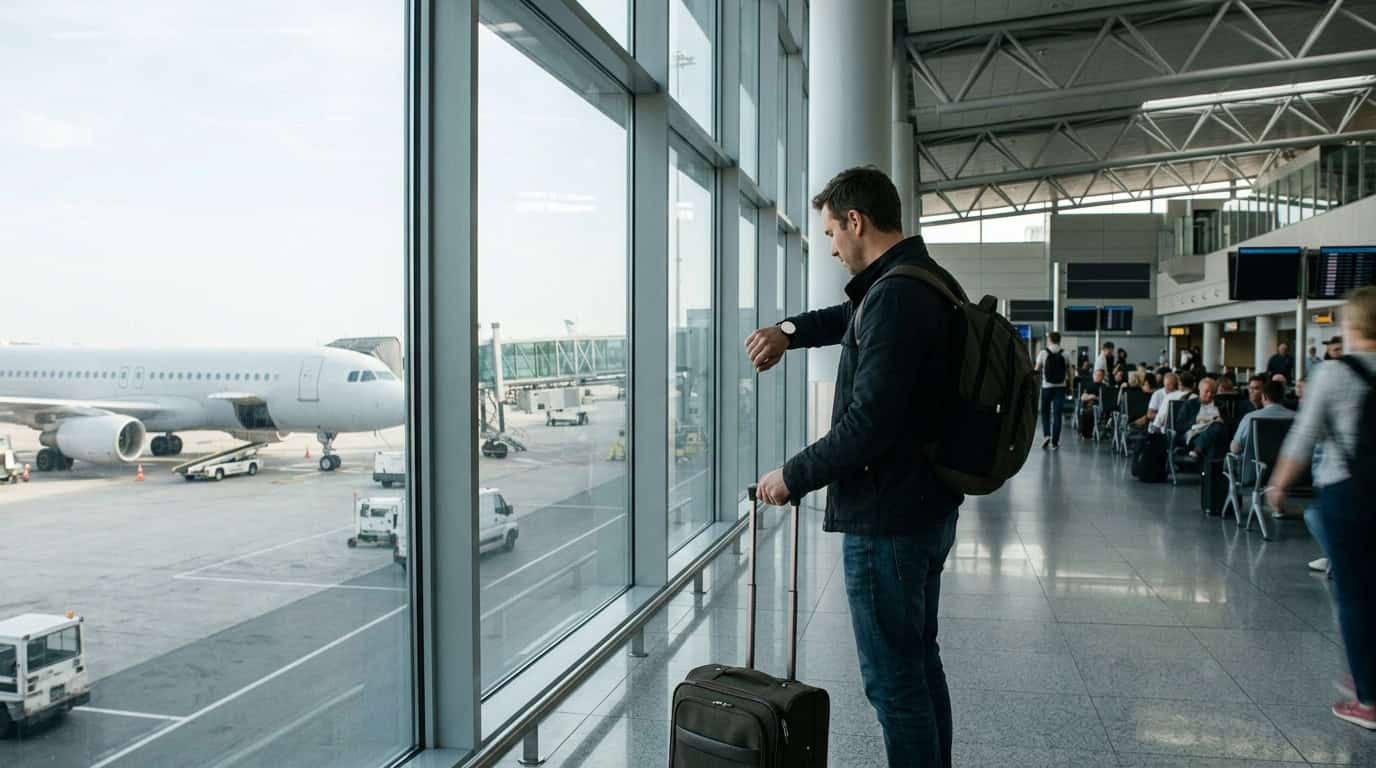
Usable layover time is the scheduled gap between flights minus the time needed to transfer, clear any required checks, handle bags, and return to the departure gate. Treat the gap as a starting point, not leisure time. How much time remains for a break or other plans depends on the airport and itinerary.
Before deciding what fits, work through the connection in order:
- Use the scheduled arrival and departure times as a baseline, then account for the possibility that the inbound flight arrives late. Flight punctuality affects how much time you actually have, so avoid building a plan that depends on every part of the journey running exactly on schedule.
- Estimate the walk or ride between gates, including any terminal change. A short-looking connection can involve a long walk, a shuttle, or a different level of the airport. Check the airport’s map and your gate details rather than assuming the next flight leaves nearby.
- Verify which transfer steps apply to your specific route. Depending on the airport and itinerary, you may need another security screening, border control, or to collect and recheck baggage. Don’t assume that an onward boarding pass or checked-through bag removes every step.
- For a U.S. arrival, allow time beyond passport control: airport wait-time estimates don’t include baggage retrieval or navigating the airport. International travelers generally clear U.S. Customs and Border Protection at their first U.S. port of entry, even when connecting onward to another U.S. city, so confirm how that process affects your transfer.
- Set aside time to reach the departure gate before boarding, allowing for the airport’s layout and any final checks. Ask your airline what connection requirements apply to your exact itinerary, including whether the flights are on a protected itinerary.
A tight connection carries more uncertainty when it involves an international arrival because immigration, baggage handling, and additional screening may add steps before you can reach the next gate. The process varies by airport, route, and itinerary, so there’s no single connection time that’s safe for every traveler. A large airport with distant terminals can make the same scheduled gap feel very different from a transfer within one compact terminal.
For a practical estimate, subtract each required transfer step and a return-to-gate buffer from the scheduled gap before making plans. If the result leaves little room for delays, treat the connection as tight rather than counting on spare time. Confirm the specific transfer process and connection requirements with your airline before departure. The airline can advise how your itinerary is handled and what options apply if a delay disrupts the connection.
Can You Leave The Airport During A Layover?
Yes, you can leave the airport during a layover if you’re permitted to enter the country, have enough usable time for the trip out and back, and can rely on a route that gets you back with time to clear airport procedures. If any one of those conditions is uncertain, staying in the terminal is the safer plan. A brief landside visit means passing through border control and entering the country, even if you only go to a nearby café or take a short walk. Changing terminals is different: you may stay within the airport’s transit area, although the route could still involve a shuttle or another security check. Check whether your terminal change remains airside, rather than assuming that every transfer requires entry permission or that every terminal is connected without leaving the secure area. For a U.S. stop, the U.S. Department of State’s transit guidance distinguishes transit from sightseeing: foreign citizens generally need a C transit visa to transit, while sightseeing requires qualifying for a visitor visa or an applicable Visa Waiver Program option. Don’t treat permission to transit as permission to leave the airport and visit the city. The UK also distinguishes airside transit, which does not pass UK border control, from landside transit, which does. Requirements depend on nationality and itinerary, so check whether you need a visa or electronic travel authorisation before making plans. When a visa is required for UK transit, a Visitor in Transit visa covers a stated transit stay of no more than 48 hours; a longer stay requires a Standard Visitor visa under UK transit visa guidance. Before leaving, check the entry rules for the passport you’ll travel on, the airport’s location, and the available transport options. Estimate the time for the journey in both directions, then allow for returning to the airport, clearing any required security screening, and completing border procedures. A route that depends on a single tight connection or an uncertain service can make a city visit risky, even when the outward journey looks quick. Confirm how your checked bags are handled, too. If they aren’t checked through to your final destination, you may need to collect them before leaving and check them again when you return. Ask your airline about the process for your itinerary instead of assuming your bags will remain checked through. A long layover may allow a short outing in some circumstances, but the time on the itinerary isn’t free time. Entry permission, transfer time, airport procedures, and the return journey determine whether leaving is sensible. If those steps leave too little room for a delay, keep the visit airside or stay at the airport.
What Can You Do Inside The Airport?
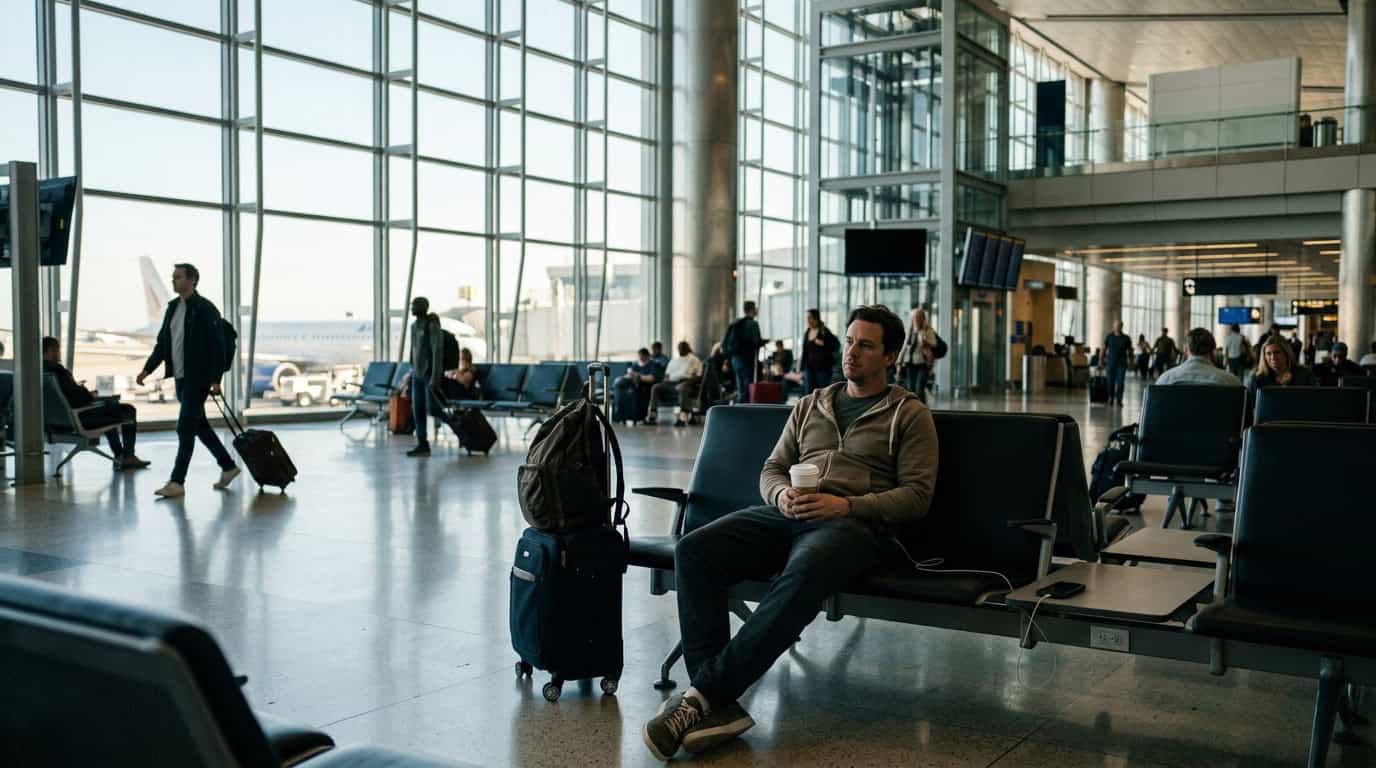
Inside the airport, you can use a layover to stretch, eat, browse, work, read, or rest, as long as the amenity is accessible from your terminal and open during your connection. We recommend choosing one activity that fits the time you have, rather than trying to cross the airport for several stops. Stretch: Chicago O’Hare’s Terminal 3 Yoga Room is open daily from 6 a.m. to 10 p.m. and provides exercise mats. Browse: San Francisco International Airport’s aviation museum and library is open daily from 10 a.m. to 4:30 p.m. The museum became the first airport museum accredited by the American Alliance of Museums in 1999. Eat and hydrate: Make time for a meal and water before settling into an activity, especially if your next flight is a long one. Work or read: A quiet seat can turn part of the wait into focused time or a chance to enjoy a book. Check the airport map for seating near your gate or in your terminal. Rest: At Singapore Changi Airport, the Ambassador Transit Lounge lists adult access at S$55 for 3 hours, S$97 for 5 hours, or S$195 for 10 hours, before local taxes and service charges, as shown in the lounge details. A simple airside rhythm keeps the connection manageable: find the next gate, eat and hydrate, choose one restorative or enjoyable activity, then return to the gate area with time to spare. The order matters because it anchors the layover around the flight rather than letting an appealing stop pull you too far from your departure area. Check whether a facility is in the correct terminal or transit area before setting off. An attraction or lounge elsewhere in the airport may require a terminal transfer or may not be accessible without leaving the secure area. Confirm its hours against your actual layover, too: the SFO museum, for example, won’t suit a visit outside its daily opening window. Think of each amenity as a possible mini-plan, not a guaranteed option. A short stretch in O’Hare’s Yoga Room could suit a daytime connection through Terminal 3; the SFO museum offers a browse during its open hours; and a Changi lounge stay has a listed duration and price to weigh against your available time. If your connection is late or the walk takes longer than expected, keep the activity close to your gate.
How Should You Handle An International Connection?
Handle an international connection by confirming whether your route requires immigration, another security check, or baggage collection, and whether your travel documents cover each step. Procedures vary by airport and itinerary, so a transfer that stays airside may work differently from one that requires you to pass through border control. Check requirements for your nationality and full route before departure, including whether you need permission to enter the country even if you plan to remain at the airport.
The distinction between airside transit and entering a country matters: a visa or other travel authorisation that permits transit may not permit you to cross the border. If your connection involves a terminal change, find out whether the transfer route stays within the transit area. If you plan to leave the airport, check the entry rules that apply to your passport and itinerary, rather than assuming transit permission is enough.
A security rescreening can also affect what you carry and how quickly you can repack. Keep liquids easy to reach: under the U.S. 3-1-1 rule, liquids, gels, aerosols, creams, and pastes in carry-on baggage must be in containers of 3.4 ounces (100 milliliters) or less, fitting in one quart-size clear bag per passenger. Keep that bag near the top of your carry-on so you can take it out and put it away without unpacking everything.
Ask the airline whether your checked bags are tagged through to the final destination or whether you must collect and recheck them during the connection. A recent U.S. development may change the process for some travelers: CBP’s International Remote Baggage Screening trial with American Airlines began on April 9, 2025, for the daily Sydney–Los Angeles flight. The trial may let eligible passengers continue to connecting flights without reclaiming and rechecking bags, as described in CBP’s trial information. That arrangement isn’t a guarantee for other flights or itineraries, so confirm your baggage instructions with the airline and again at check-in.
Pack as though a transfer could take longer than expected. Keep your passport and other essential travel documents, medication, chargers, and a change of basic clothing in your carry-on, rather than relying on access to checked luggage. An unexpected wait or baggage handoff is easier to manage when the items you need most stay within reach.
How Do You Build A Low-Stress Layover Plan?
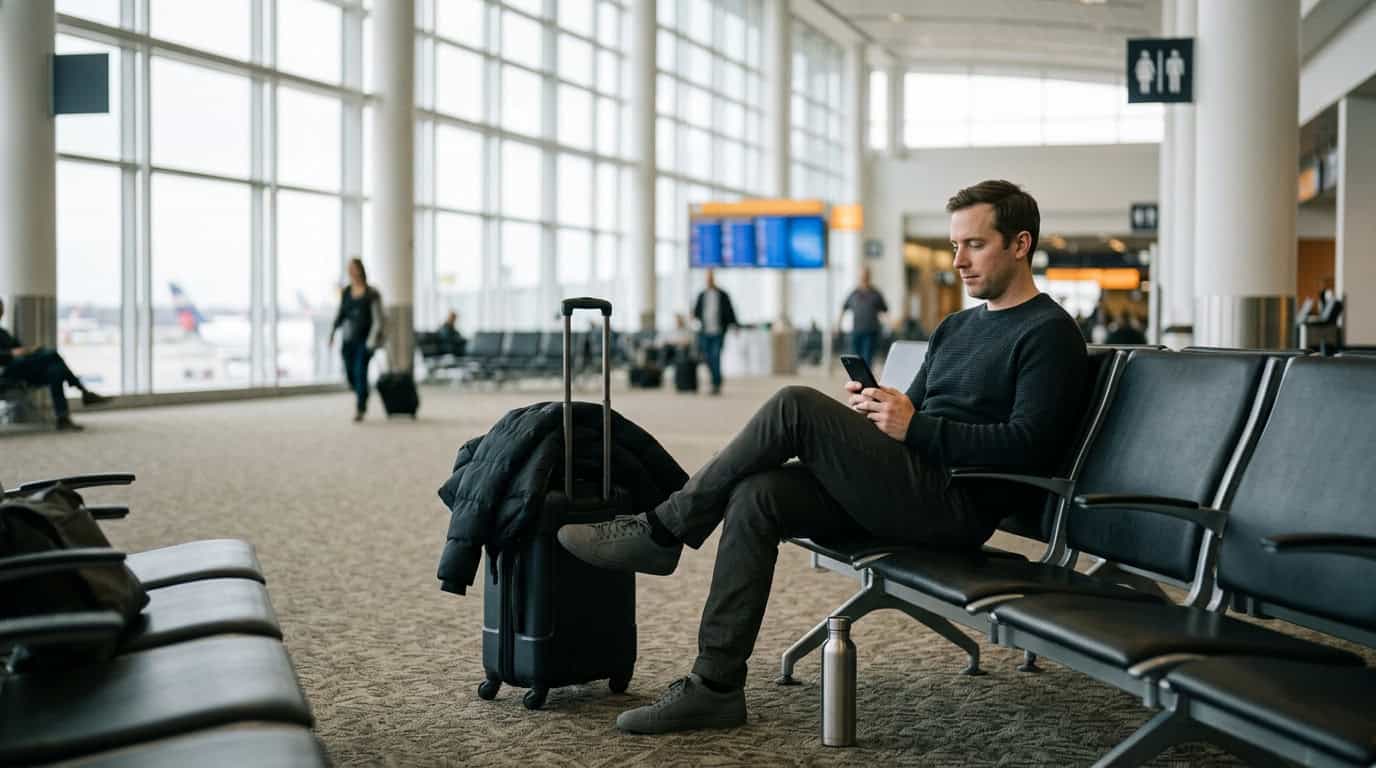
Build a low-stress layover plan by checking the connection details before departure, reassessing the situation after landing, and keeping a simple airside backup ready if time or plans change. A short sequence makes room for a worthwhile break without treating every scheduled minute as free time.
- Confirm the route before you leave. Check the arrival and departure terminals, the airport’s connection instructions, and whether your transfer involves another security check, border control, or a terminal change. Ask your airline what steps apply to your itinerary.
- Sort out bags and travel documents. Confirm whether checked bags are tagged through or must be collected and rechecked. Check that your documents cover the transfer, including any permission you would need to enter the country if you plan to leave the airport.
- Choose useful facilities and verify access. Look for the food, quiet space, shower, or rest option that would make your stop easier, then check its location, hours, and whether it’s accessible from your transit area. For an overnight or especially tiring stop, confirm that a rest option is airside and open during your layover. Singapore Changi lists its transit hotels as open 24 hours; airside guests should not clear immigration.
- Recheck the flight after landing. Look at the departure board and airline updates, locate the next gate, and note any change to the departure or boarding details. Then reassess how much time remains, allowing for the transfer still ahead, before choosing an activity.
- Set a return-to-gate time before you settle in. Base it on the airport’s layout and the procedures you still need to complete, rather than using the whole layover as discretionary time. Choose one activity close enough to fit that window, whether it’s a meal near the gate or a brief rest in an accessible lounge.
- Switch to the fallback when the plan gets squeezed. A delayed inbound flight, a gate change, a closed facility, or a longer-than-expected transfer is a reason to simplify, not rush. Stay airside, pick up food or find a quiet place nearby, and skip any outing or amenity that would make getting to the gate feel tight.
The best plan is flexible enough to shrink without becoming stressful: if the connection changes, keep the part that helps you feel rested and drop the rest.
Plan Around The Time You Can Use
Before you commit to an outing or paid rest stop, make a timeline for your exact connection. Write down the scheduled arrival, terminal transfer, any immigration, security, or baggage steps, the time you need to get back to your departure area, and the window left over. Ask your airline to clarify any uncertain transfer or baggage step. Use the remaining window to decide whether a facility or excursion is realistic.
If your international flight connects onward in the United States, account for border control at your first U.S. airport. International travelers generally clear U.S. Customs and Border Protection there, even when their final destination is another U.S. city. Check the first-port-of-entry guidance for the process, then include that step in your timeline before deciding to leave the airport.
For an overnight connection at Singapore Changi, compare your usable rest window with the JetQuay Sleeping Suite’s listed rate: S$120 for the first 6 hours, then S$20 for each extension hour, subject to 9% GST. If the time or cost doesn’t fit, choose an airside option near your gate instead. Save your timeline with your flight details, and revise it after landing if the gate, arrival time, or transfer instructions change.