
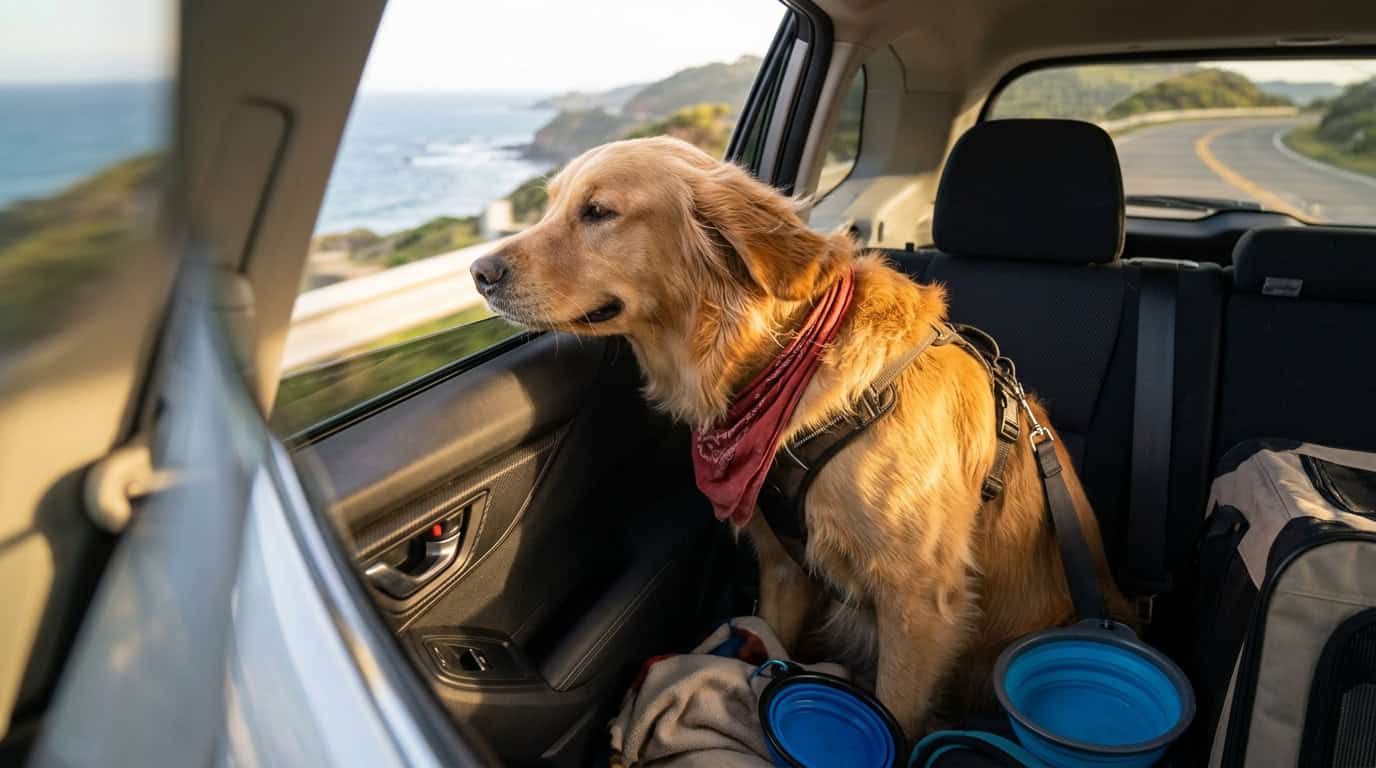
Traveling with pets is much easier when you check three things early: the airline’s rules, the destination’s entry requirements, and the lodging’s pet policy. Some airlines want a certified health record issued within 10 days of travel, and many require a pet to fit in a carrier under the seat, so carrier size matters as much as the route. Dogs entering the United States also need a microchip, must be at least 6 months old, and need a CDC Dog Import Form receipt.
Once you know the basics, weigh your pet’s temperament, health, and age against the length of the journey. Hotel pet fees at some U.S. properties run around $150 per stay, which adds up quickly. If the trip looks too demanding, a pet sitter may be the kinder choice for everyone.
Key Takeaways
- Before you book anything, check three things early: the airline’s pet rules, the destination’s entry requirements, and the lodging’s pet policy.
- Some airlines require a certified health record issued within 10 days of travel, so a vet visit booked months ahead may be too early.
- Dogs entering the United States must be at least 6 months old, carry a universally scannable microchip, and have a CDC Dog Import Form receipt.
- Many airlines require your pet’s carrier to fit under the seat in front of you, so measure it with the handle and wheels in place before you fly.
- Some U.S. hotels charge pet fees of around $150 per stay, so you should budget for those costs before you commit to a trip.
Is Traveling With Your Pet Worth It?
Yes, traveling with your pet is worth it when your animal copes well with the journey and you have planned each stage. The route is only one part of the decision. Transport, lodging, and your pet’s health all need checking before you commit.
Start with your pet’s habits. Does your dog settle in the car without whining? Does your cat tolerate a crate, or does it panic? Does your pet stay calm around crowds, loud stations, or unfamiliar houses? A pet that handles these things well is far more likely to enjoy the trip.
Trip length changes the planning. A weekend drive to a relative’s home in the next state needs far less preparation than a flight abroad, where entry rules can take weeks or months to meet. Short trips call for regular comfort stops and familiar bedding. Long international trips call for paperwork, vaccination timing, and a plan for your pet’s care if something goes wrong.
Before you book anything, schedule a visit with your veterinarian. Ask whether your pet is fit for the dates, the heat or altitude of your destination, and long hours in a carrier, and whether any calming medication is appropriate. Your vet can spot problems you would never notice at home.
Plenty of owners already make this journey. In its 2025 Dog & Cat Report, the American Pet Products Association found that 87% of owners who traveled with their dogs had gone by car in the previous year, and 74% had gone by plane.
If your honest answer is no, a pet sitter is a sensible choice, not a failure. Deciding early gives you time to book the right option with confidence.
What Rules Apply Where You Are Going?
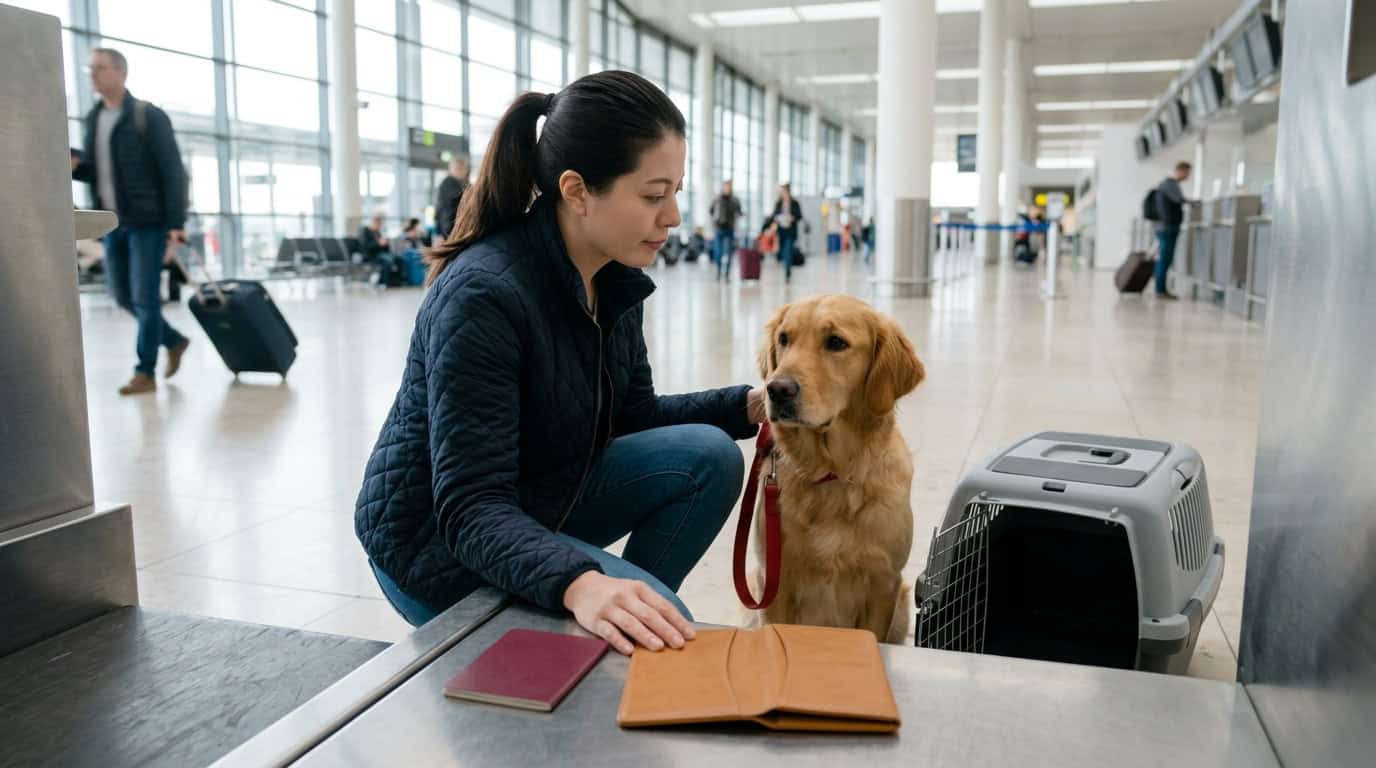
The state or territory you are heading to sets the animal-health rules for your pet, not the federal government. Within the United States, the receiving jurisdiction decides which health certificates, vaccinations, tests, or treatments an animal needs. The USDA’s Animal and Plant Health Inspection Service explains that it does not regulate interstate movement by pet owners, so your answers come from the destination itself.
International travel is a different challenge. Each country sets its own entry requirements, and meeting them can take weeks or months, so your planning window is much longer than for a domestic trip. Vaccinations, blood work, and official paperwork often need to be scheduled well in advance.
Dogs entering the United States follow their own system. If a dog has been only in dog-rabies-free or low-risk countries during the prior six months, its CDC Dog Import Form receipt can cover multiple U.S. entries from the same country for six months from issuance.
Europe is also changing. New EU health certificates took effect in October 2026, so check that any forms you gathered earlier match the current version.
Work through these steps before you pay for any flights or lodging:
- Identify the state or territory where you will arrive, and find its official animal-health requirements.
- Write down each certificate, vaccination, test, or treatment it asks for, along with any deadline.
- Count backward from your travel date to see whether every item can be completed in time.
- For an international trip, look up the destination country’s entry forms and confirm they are the current versions.
- Hold off on non-refundable tickets or lodging until you are sure every requirement can be met.
What Paperwork Does a Dog Need to Enter the United States?
Dogs entering or returning to the United States need to appear healthy on arrival, be at least 6 months old, carry a universally scannable microchip, and have a CDC Dog Import Form receipt. The Centers for Disease Control and Prevention sets these conditions, and its guidance on rabies-free and low-risk countries explains how they apply to travelers.
Age and microchip checks are easy to overlook, so handle them early. A puppy that is only five months old will not meet the minimum age, no matter how complete the rest of the paperwork is. Before you pack, go through these points with your veterinarian:
- Ask for an exam confirming your dog is fit to travel and looks well enough to arrive in good health.
- Confirm the microchip is universally scannable, and write down the chip number for your records.
- Count your dog’s age on the day you plan to arrive, not the day you book.
- Keep your CDC Dog Import Form receipt with your dog’s other documents, where you can reach it at the border.
The six-month rule can make repeat trips simpler. If your dog has been only in dog-rabies-free or low-risk countries during the prior six months, the receipt can cover multiple U.S. entries from the same country for six months from issuance. A dog that crosses back and forth from one country does not need a fresh receipt at every border.
Think of the receipt as the document that travels with your dog, not a formality to handle at the last minute. Store a photo of it on your phone and a paper copy in your carry-on, so a missing folder does not derail your plans.
Can My Dog Fly in the Cabin With Me?
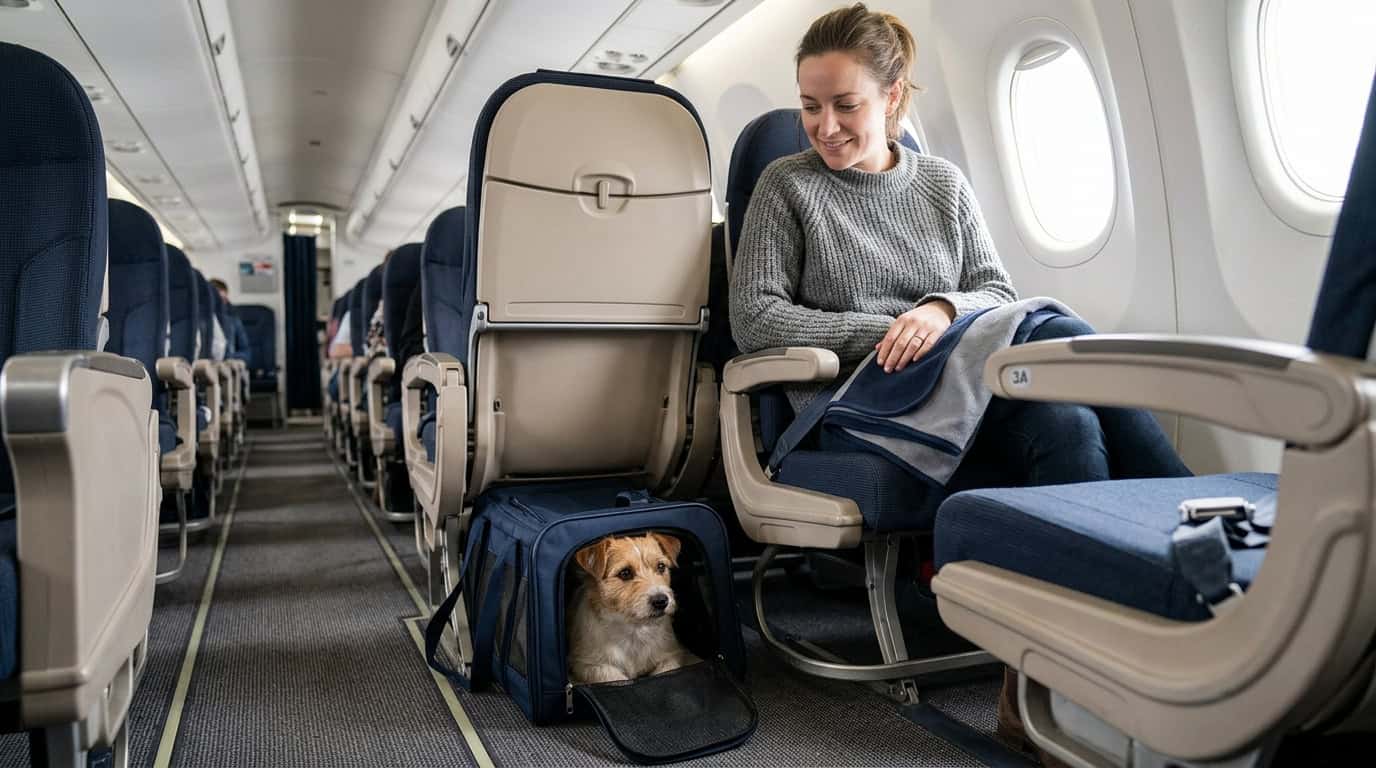
Many dogs can fly in the cabin, but only if the airline you choose allows it and your dog meets that airline’s rules. Each carrier sets its own pet policy and fees, which vary by airline, so compare carriers before you book.
Start by reading each airline’s pet page and writing down the cabin fee, the number of pets allowed per flight, the carrier size limit, and the health paperwork it requires. Some airlines want a certified health record issued within 10 days of travel, so a vet visit booked months ahead may be too early. Weight limits for cabin pets are also set by each airline, and a dog that qualifies on one carrier may be over the limit on another.
Most cabin pets must fit in a carrier that stays under the seat in front of you. Measure the carrier with its handle and wheels in place, then measure the floor space under the seat on the specific aircraft you are booked on, since seat layouts differ between planes. A carrier that feels roomy at home can still be too tall to slide under a seat. Before the trip, let your dog stand, turn around, and lie down inside it.
Service dogs are treated differently. Under the Air Carrier Access Act, a service animal is a dog individually trained to perform work or tasks for a person with a disability. Emotional-support and comfort animals do not meet that air-travel definition. If your dog offers comfort but was not trained for a task tied to a disability, plan to travel under the airline’s regular pet rules.
What Happens at the Airport Security Checkpoint?
At the security checkpoint, you take your pet out of its carrier, send the empty carrier through the X-ray machine, and carry your animal through the metal detector yourself. The Transportation Security Administration sets these steps for U.S. airports, so they apply at every checkpoint you pass through.
Knowing the order in advance makes the line far less stressful, so keep these steps in mind as you approach the front:
- Before you reach the belt, lift your pet out of its carrier and hold it securely.
- Place the empty carrier on the X-ray belt.
- Remove the leash from your pet’s collar while you hold it.
- Carry your pet through the metal detector yourself, with the leash in your pocket.
Rehearse these moves at home before the trip. Lift your dog out of its carrier, set the carrier down, and take the leash off and put it back on while your dog stays calm. A pet that is used to being lifted and handled in a quiet living room is far less likely to panic in a crowded terminal.
Give yourself more time than you think you need. Every step takes longer when you are juggling an animal, a carrier, and your boarding pass, and lines can move slowly at busy hours. Arriving early means you can handle each step without rushing, and your pet will feel the difference.
How Much Does Traveling With a Pet Cost?
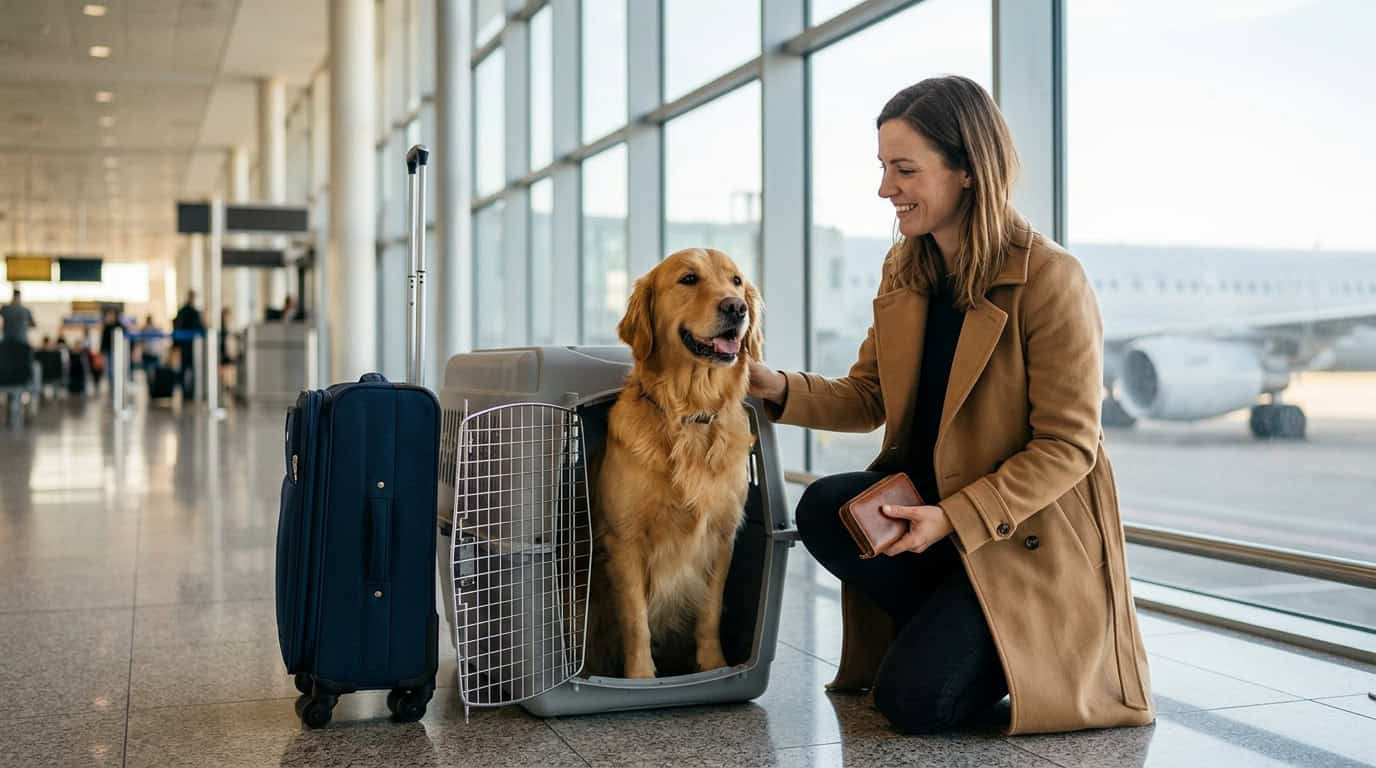
Traveling with a pet costs whatever your transport, health preparation, and lodging add up to, and no single price fits every trip. Three areas drive most of the spending.
Airline fees usually come first. Each carrier sets its own charge for a pet, and pet policies and fees vary by airline. Fares can also differ by route, so compare the exact flights you plan to book instead of relying on a general fee you read somewhere else.
Vet costs start before you leave home. A pre-travel exam, required vaccinations, blood tests, and the health certificate itself each carry a fee, and some tests must be scheduled weeks ahead, which can mean a second visit. Ask your clinic for an itemized estimate so you can see which charges apply to your pet and which are optional.
Lodging adds its own line. Many hotels and rental properties charge a pet fee, and some make it nonrefundable, so read the policy before paying a deposit. Terms differ from one property to the next, so check each place you book rather than assuming a fee you saw elsewhere will apply.
Driving can remove airline charges entirely for many domestic trips. You still pay for fuel, tolls, and overnight stays, and you need pet-friendly rest stops along the way, but the cabin fee and carrier rules no longer apply. For a trip covering a few states, that tradeoff often favors the car.
Budget for surprises, too. A sudden vet visit on the road, extra boarding if a stop falls through, or a replacement crate can cost more than all your planned line items combined. Keep a reserve for these situations, and save every receipt so you can see where the money went.
How Do You Find Pet-Friendly Lodging That Works?
You find pet-friendly lodging that works by confirming the property’s exact rules with the property itself before you pay a deposit. Hotel companies commonly advise guests that pet policies and fees vary by property, so a rule you read on a travel forum or in a friend’s booking may not apply to the hotel you choose. Call or message the front desk and ask a few specific questions, then write down the answers and the name of the person who gave them.
Start with size. Ask whether the property sets a weight limit or restricts certain breeds, because some hotels accept small pets but turn away a large dog even when the booking site shows no restriction. Ask too whether it has designated pet rooms, which are often on the ground floor and close to an exit, so your dog can get outside quickly.
Next, ask what happens when you leave your pet alone. Some properties forbid unattended pets in the room, while others allow it only in a crate or with a note left at the front desk. Find out where your pet may go in shared spaces such as lobbies, breakfast rooms, pools, and elevators, and whether it must stay leashed or carried at all times.
Ask about fees in plain terms. Find out whether the charge is per stay or per night, whether it is refundable, and whether a cleaning deposit is also due. Some pet fees are nonrefundable, so a cancellation can cost you money even if you never bring your pet.
Finally, pack your pet’s vaccination certificates and health record in your bag for the whole stay, not only for check-in. Hotels sometimes request them, and a veterinary clinic or emergency hospital near your destination will need them quickly if your pet becomes ill.
Your Pet Travel Readiness Checklist
Pick one trip you are seriously considering and write its checklist tonight. Start with the destination’s entry requirements, then the airline’s pet policy, then the lodging’s answers. Next to each item, write the date it must be finished by.
Print the list and keep it in a folder with your pet’s vaccination records, microchip number, and, for a dog, the CDC Dog Import Form receipt. Store a photo of everything on your phone too, so a lost folder does not derail the trip.
This weekend, run a practice session at home. Set your pet’s carrier on the floor and see whether your cat or dog can stand, turn, and lie down inside it. Then slide the carrier under a chair of about the same height as an airplane seat, and check that the carrier still fits with the handle and wheels in place. Practice lifting your pet out and back in, and take its leash off and on while it stays calm. A pet that handles these steps in a quiet living room will cope far better in a crowded airport.
If any item on your list cannot be finished before your travel date, that is useful information. Move the dates, or hire a pet sitter for this trip and save the adventure for a season when your animal can truly enjoy it.