

Traveling abroad with pets is possible when you confirm the entry rules for every country on your route, complete veterinary steps in the right order, and check transport policies before booking. For example, European Union rules require a pet’s microchip to be implanted before its rabies vaccination. A pet must be at least 12 weeks old for its first rabies shot, then wait 21 days before traveling, according to the EU pet-travel guidance. That sequence can affect your departure date and connecting plans.
Start by listing your pet’s species, departure country, destination, transit stops, and return country. Then check official government guidance for each. Requirements may include identification, vaccinations, tests, treatments, health certificates, permits, inspections, or quarantine, and they can vary by route and animal. For flights, the IATA Live Animals Regulations provide a worldwide standard for commercial-air transport, but your chosen airline’s rules still determine whether and how your pet can travel. Planning ahead can make the journey calmer and more enjoyable for both of you.
Key Takeaways
- Map your pet’s full route, including departure, every transit stop, destination, and return, then verify the current official entry rules for each country before booking.
- Build a veterinary and paperwork timeline around required steps: EU rules require a microchip before rabies vaccination, a pet’s first rabies shot at 12 weeks or older, and a 21-day wait before travel.
- Confirm that every operating airline accepts your pet on each flight, which transport option is available, and whether your pet’s space and carrier meet airline requirements, since IATA standards do not replace airline policies.
- Plan for inspections, permits, quarantine, and return-entry rules as well as your pet’s health and temperament; Australia advises allowing at least six months for preparations, and permit assessment can take up to 123 business days.
How Do You Start Planning?
Start with a route map and official guidance for every country your pet will cross. Then plan veterinary steps and documents around those rules, and check transport policies before paying for a booking. Requirements can vary based on your pet’s species, travel history, and itinerary.
Use this sequence to turn your route into a set of checks, rather than treating the destination as the only border that matters:
- Write down the full journey. Record your pet’s species, departure country, destination, transit countries, and intended return destination.
- Check the destination’s government guidance. Look for rules that apply to your pet’s species, including identification, vaccinations, tests, treatments, health certificates, permits, and possible quarantine.
- Check every transit country separately. A connection can have its own entry conditions, so verify the rules even if you do not plan to leave the airport.
- Check departure and return rules with your home-country authority. Export steps and re-entry conditions may differ from destination requirements. For dogs returning to the United States, the CDC’s dog-entry guidance says requirements depend partly on where the dog was vaccinated and whether it has been in a high-risk country for dog rabies during the previous six months.
- Compare the conditions across the whole route. Note where veterinary procedures, documents, permits, or quarantine apply, and confirm each country’s rules before paying for transport.
Which Entry Rules Apply?
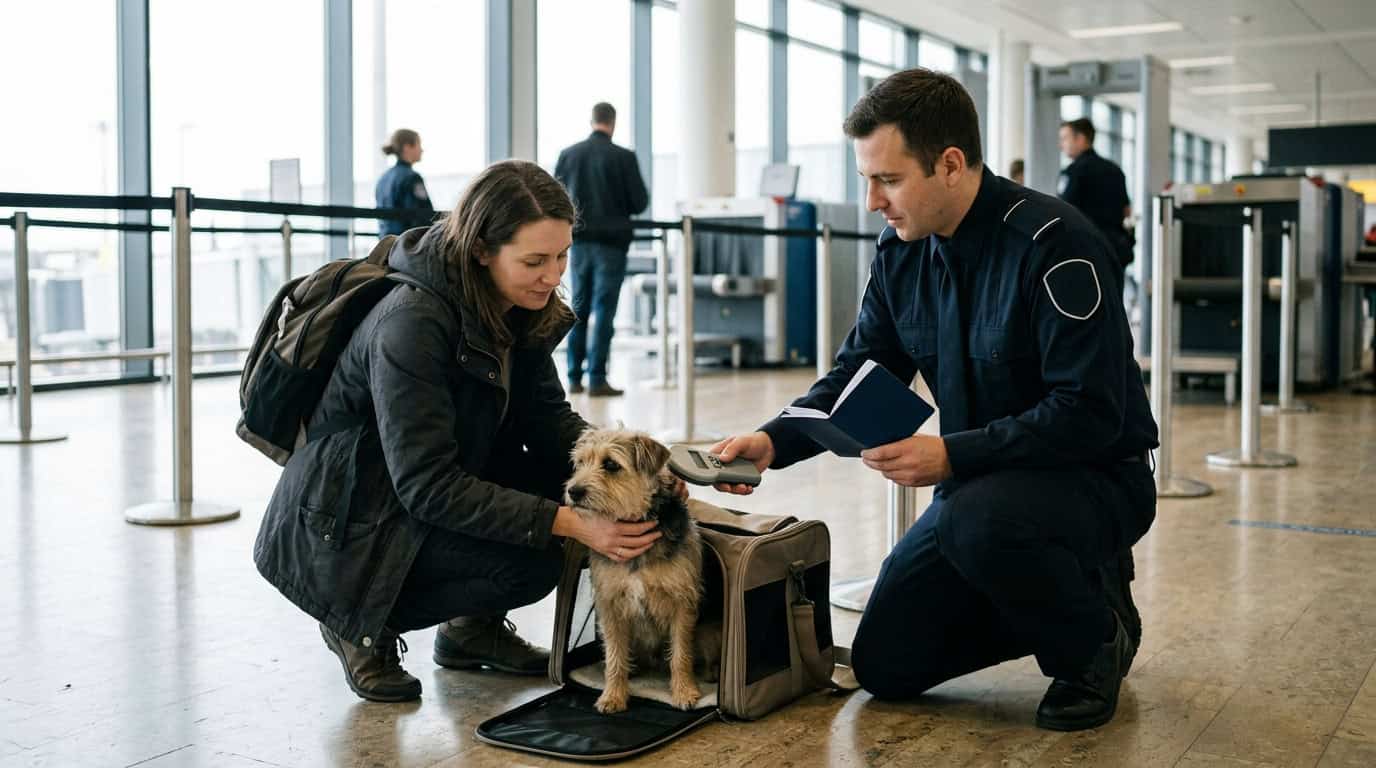
The requirements of every country on your route apply. They may depend on where your pet is traveling from, its vaccination history, and the order and timing of veterinary steps. We recommend organizing the requirements by route segment so a rule at one border is not mistaken for one that covers the whole journey.
For each segment, note the responsible authority, the condition that triggers a requirement, the veterinary step and its timing, and the proof you will need. Keep four distinct entries: Departure: requirements for leaving the starting country; Transit: rules for each country your pet may enter or pass through, including during a connection; Destination: requirements for your pet’s arrival and stay; and Return: rules for bringing your pet back to the starting country, based on its travel and vaccination history.
The European Union shows why sequence belongs on the checklist: its pet-travel rules require the microchip to be implanted before rabies vaccination for that vaccination to count. A pet must be at least 12 weeks old for its first rabies vaccination, then wait at least 21 days before travel, according to the European Union’s pet-travel guidance. Record the chip and vaccination dates in order, then calculate the earliest travel date allowed by that sequence.
U.S. dog-entry rules also show why the route and vaccination history matter. The CDC dog-importation guidance says requirements depend partly on where the dog was vaccinated and whether it has been in a high-risk dog-rabies country during the six months before entering the United States. A return trip may therefore require a different checklist from the outbound journey, even when the pet and traveler are the same.
Keep the checklist tied to the exact route and your pet’s records. If a route, stop, or vaccination detail changes, verify the affected country’s current requirements and update that segment instead of assuming the original plan still fits.
What Documents Does Your Pet Need?
Your pet may need vaccination records, test results, an official health certificate, an import permit, or other paperwork, depending on the route and destination. Requirements vary, so check whether a pet passport is accepted for your route and what additional documents are needed. Check which authority issues each item and whether a veterinarian or government official must sign or endorse it.
For departures from the United States, check the USDA Animal and Plant Health Inspection Service (APHIS) destination-specific export requirements, then compare them with the destination authority’s instructions. Confirm which veterinarian or government official must complete or endorse each document, as the required role can vary by destination and form.
Travel to the European Union from a non-EU country shows why the issuing authority and timing matter. An official state veterinarian must issue the EU animal health certificate no more than 10 days before arrival. The certificate is valid for travel within the EU for six months from its issue date or until the rabies vaccination expires, whichever comes first, according to the European Union’s pet-travel guidance. Arrange the required official appointment within that window.
Make a document checklist with one entry for every required item. Record the issuing authority, required format, signature or endorsement needs, and deadline. Note whether the destination asks for a certificate, test result, vaccination record, permit, or other proof, and confirm who can provide it. Keep the destination authority’s instructions alongside APHIS guidance so the paperwork meets both export and entry requirements.
Build A Timeline Before Booking

A useful timeline starts with the planned arrival and departure dates, then works backward through each required step. The order and timing depend on the country, route, and pet, so follow the relevant authorities’ rules rather than relying on one universal checklist.
- Mark the planned arrival and departure dates, including any transit stops, as fixed points on the calendar.
- Identify each required vaccination and check the destination’s rules for when it must be given and how long your pet must wait afterward.
- Schedule required laboratory tests far enough ahead to allow for sample processing and any required waiting period before travel.
- Place required treatments and examinations in the order specified by the destination, leaving time to book veterinary appointments.
- Set permit and certificate milestones using the issuing authority’s processing times and document windows. Australia advises allowing at least six months for pet preparations, and its import-permit assessment can take up to 123 business days.
- Reserve health certificate and government-endorsement appointments within the destination’s required time windows, then check that every step fits before choosing transport.
Veterinary availability and government processing can become the critical path. A delayed appointment, test result, permit, or endorsement may push back the earliest feasible travel date. Confirm permit processing, veterinary availability, required tests, and certificate-endorsement timing before booking transport that cannot be changed.
Can Pets Travel In Cabin On International Flights?
Sometimes, but your pet’s size or another airline’s policy cannot guarantee cabin travel. The airline operating your exact route must confirm whether it accepts your animal, which transport options are available, what carrier it permits, and whether space can be booked. Some animals may be approved to travel in the cabin; others may need an airline-approved arrangement elsewhere, such as in the hold or as cargo. IATA describes its Live Animals Regulations (LAR) as the worldwide standard for transporting live animals by commercial airline, and the 2026 edition took effect on January 1, 2026. The standard offers a useful transport reference, but it does not replace the chosen airline’s current requirements for your route and animal. IATA Live Animals Regulations Carrier fit matters for animals traveling in any approved arrangement. Measure your pet and compare the result with the airline’s carrier specifications; the airline may have additional requirements. Before booking, verify pet acceptance for the exact route and aircraft, including any restrictions for your animal; whether cabin travel is available or another approved transport option is required; carrier dimensions, construction, ventilation, and other specifications; how to reserve your pet’s space and whether the booking is confirmed; and which travel documents the airline checks and when they must be presented. Airline conditions are separate from government entry rules. Your pet may meet a country’s import requirements but still not meet the airline’s transport conditions, so check both before finalizing travel plans.
Plan For Quarantine And Arrival
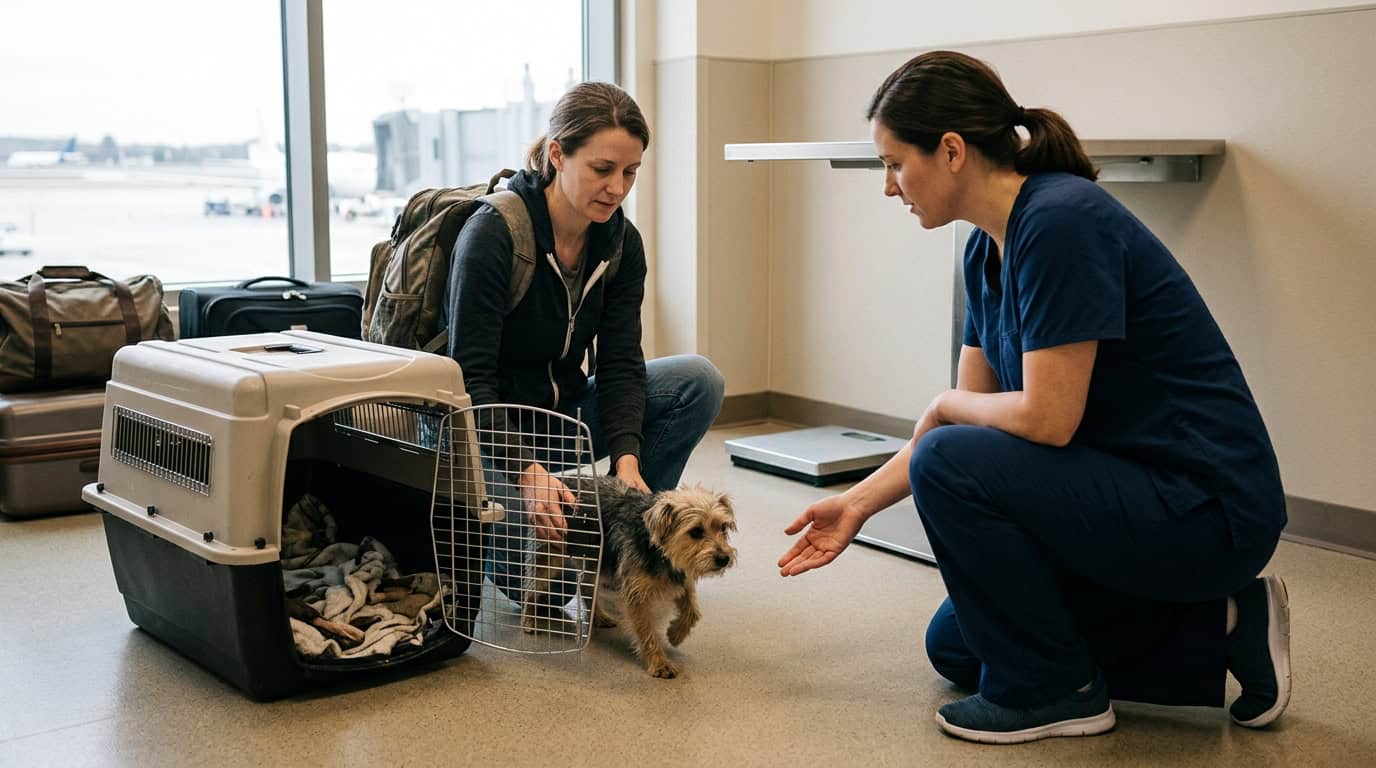
Arrival rules can shape the first hours of a trip as much as the flight itself. Depending on the destination and route, authorities may require an inspection, import-permit checks, or quarantine, so verify the exact process in official destination guidance. Confirm whether checks happen at the arrival airport or port, where and when officials will review documents, and how your pet will be handled after landing.
Some destinations require pets to stay at an approved quarantine facility. For New Zealand, consult the Ministry for Primary Industries (MPI) guidance to confirm facility requirements and whether you need to arrange a place in advance. Ask the relevant authority what must be booked, when your pet can be released, and whether you can accompany your pet during any checks or transfer.
Quarantine or inspection may affect onward transport, accommodation, and the trip’s total cost. Include permit, inspection, and quarantine charges in your budget alongside veterinary and airline costs. Check that your pickup plan allows for possible delays, and confirm that your accommodation can accept your pet at the expected arrival time.
For a calmer landing, plan access to water, a familiar carrier or bedding, and a quiet place for your pet to settle. Keep essentials easy to reach, and identify a suitable bathroom break or rest stop if officials release your pet to you. If your pet must go to a facility, ask what supplies and instructions staff need before arrival.
Plan The Return Journey Too
Treat the return as its own border crossing, not a reverse version of the outbound trip. We recommend checking your home country’s current entry requirements and every transit country’s rules before departure, then checking again if your route or plans change. A new stop or a vaccination given abroad can affect the documents and conditions that apply when your pet comes home.
For dogs entering the United States, the baseline conditions have applied since August 1, 2024: a dog must appear healthy, be at least six months old, be microchipped, and have a CDC Dog Import Form receipt. Read CDC’s dog-importation announcement when planning the return.
Those baseline conditions may not be the whole checklist. CDC requirements also depend on where a dog was vaccinated and whether it has been in a high-risk country for dog rabies during the six months before U.S. entry. Check CDC’s dog-importation guidance against your dog’s vaccination records and the countries visited.
Keep vaccination certificates, health certificates, test results, permits, and other travel records together throughout the trip. Before leaving the destination, confirm which documents must be obtained or renewed abroad, who must issue or endorse them, and when they must be completed. A certificate that needs an official appointment or endorsement may be difficult to arrange once you have started the journey home.
Is International Travel Right For Your Pet?

International travel may suit your pet when its health and temperament fit the full route and the transport and arrival demands are manageable.
Before deciding, weigh your animal’s health, temperament, route length, transport conditions, and arrival logistics, including any waiting or quarantine. Consider whether your pet can cope with long periods in a carrier or separation during transport.
Ask your veterinarian whether your pet is suited to the planned itinerary, duration, and transport method. Official travel approval does not replace an individual welfare decision. An anxious animal, a health condition, or a demanding route may make suitable care at home the kinder choice.
Compare home care with travel, allowing realistic time for your pet to adjust before departure and after arrival. Keep a backup plan for delayed documents, changed transport, or a veterinary decision that your pet should not travel. That plan should include a caregiver and workable alternatives.
Confirm The Route Before You Book
Before paying for a ticket, write the exact itinerary on one page: departure airport, destination, every connection, operating airline for each leg, and return route. Send that itinerary, your pet’s species and size, and the intended travel dates to each operating airline. Ask whether your pet can travel on every segment, which transport option is available, and whether your pet’s space is confirmed.
Then compare the airline’s answer with the official entry rules for every country on the route. For a connection through the European Union from a non-EU country, check whether the arrival timing fits the EU animal health certificate window in the European Commission’s pet-travel guidance.
Keep the booking flexible until permits, veterinary appointments, certificates, and airline acceptance fit the same travel dates. If an airline cannot accept your pet or a connection creates a rules problem, revise the route before buying rather than hoping to resolve it at the airport. Once the exact route works for your pet, save the authorities’ instructions and airline confirmation with the travel records, and use the confirmed itinerary as the basis for any later changes.