
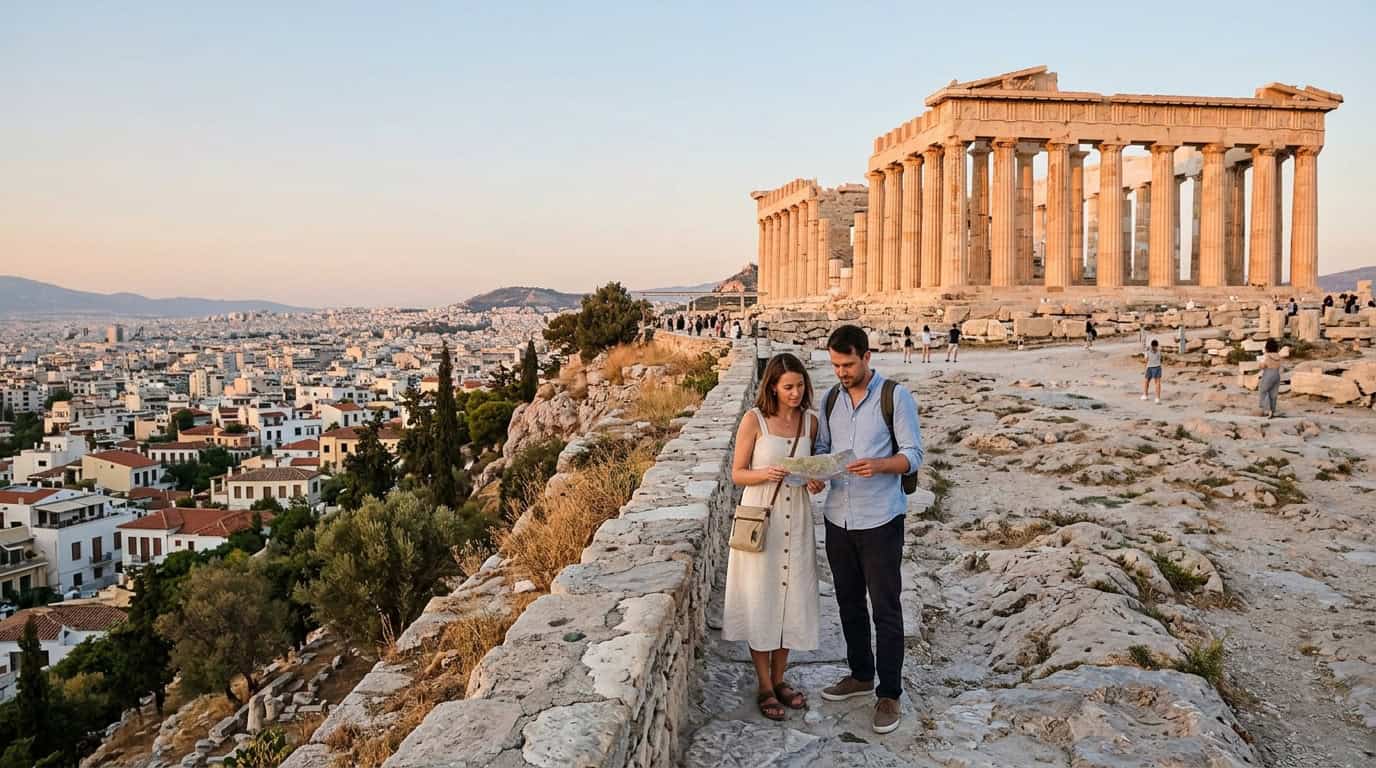
A two- or three-day Athens weekend built around the Acropolis, the Acropolis Museum, and the neighborhoods of Plaka and Koukaki gives you ancient ruins, lively streets, and unhurried dinners without the rush. Start early at the Acropolis, where full admission costs €30 and reduced admission is €15. You’ll need to enter during a time slot you select in advance. The Acropolis Museum is a separate ticket at €20 for general admission, so budget for both. Finish the first day with dinner in Plaka and a slow wander through Koukaki, when the streets are quieter and the lights on the Acropolis are easy to admire.
Day two belongs to the Ancient Agora, which has been open from 08:00 to 19:30 since April 1, 2026, and which now has a new entrance from Adrianou Street. From there, the route continues on foot through Monastiraki and Psirri, where flea-market stalls and tavernas fill the lanes, and on to Thissio, where the promenade near the Acropolis is the perfect place to end the day at sunset. A third day gives you room to revisit a museum or explore another neighborhood at your own pace. If your arrival and departure dates fit, OASA’s €20 three-day tourist ticket can cover your city travel and the airport round trip in one purchase.
Key Takeaways
- Book your Acropolis time slot first on the official ticketing site, because the Acropolis requires you to enter during the window the system assigns, with full admission at €30 and reduced admission at €15.
- Budget separately for the Acropolis Museum, since its general admission ticket costs €20 and is not included with the archaeological site ticket.
- Spend day two at the Ancient Agora, which is open from 08:00 to 19:30 and entered from Adrianou Street, then walk through Monastiraki and Psirri to Thissio for sunset above the Acropolis promenade.
- Choose the €20 three-day tourist ticket if you plan to ride the metro between the airport and the city several times a day, since it covers the airport round trip along with your city rides.
- Check the Line 3 closures before a late dinner, because six stations close at 21:40 Sunday through Thursday starting October 11, 2026, during rail-replacement works.
How Many Days Do You Need for an Athens Weekend?
A two- or three-day Athens weekend works well when it’s built around the Acropolis, its museum, and the streets that surround them. Two days cover the essentials at a brisk pace, while three days let you slow down and enjoy the city.
With two days, the first morning goes to the Acropolis and the afternoon to the Acropolis Museum, followed by dinner and a stroll in the neighborhoods below the hill. The second day belongs to the Ancient Agora and the walk west. You’ll cover a lot of ground on foot, but you won’t have much time to linger over a long lunch or a second cup of coffee in the shade.
A third day changes the feel of the trip. It gives you room to revisit a favorite room in the museum or to spend a relaxed afternoon in one neighborhood. The Official Athens Guide describes Plaka, Koukaki, Monastiraki, Psirri, and Thissio as distinct central neighborhoods, each with its own rhythm. One unhurried afternoon in each of two areas can feel like discovering two different cities.
The Acropolis should come first in your planning. Entry is tied to the time slot you select in advance, and in late October the site is open 08:00 to 18:00, with last admission 20 minutes before closing. Book that slot before you settle on anything else, and build the rest of the day around it.
Getting around is simple. Metro Line 3 runs from the airport every 36 minutes, and the STASY timetable lists 40 minutes to Syntagma and 42 minutes to Monastiraki. A single 90-minute ticket costs €1.20 and covers most short hops in the center.
For readers with limited time, the two-day version gives you ancient ruins, walkable streets, and good meals in one trip. Add the third day if you want those meals to stretch into the evenings.
Day One: Acropolis, Museum, and Plaka in the Evening
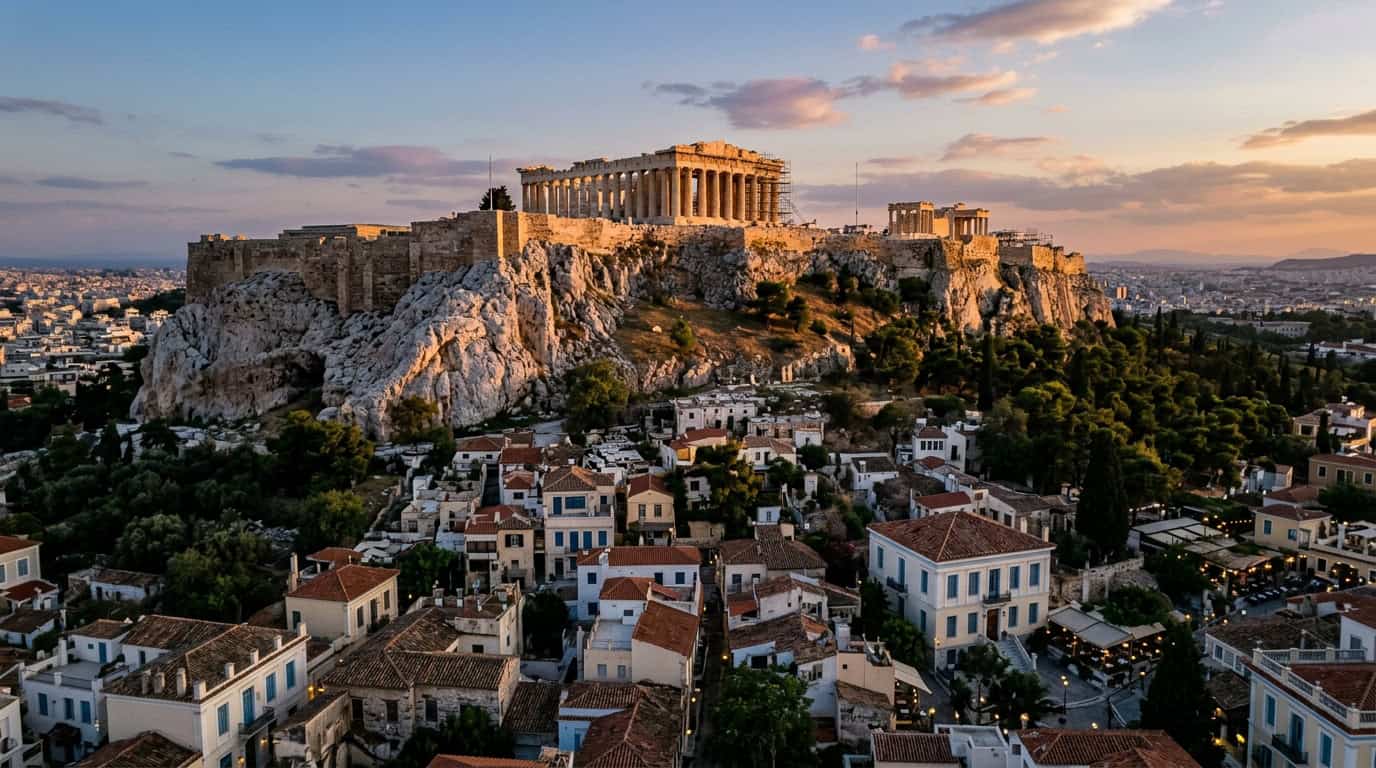
Start your first morning at the Acropolis while the marble is still cool and the gates have not yet filled. Before you leave your hotel, choose your date and time slot on the official ticketing site, because the Hellenic Heritage visitor terms expect you to enter during the slot the system assigns. Arriving a few minutes early gives you time to get through security and climb the Propylaia steps without rushing.
Plan about two hours on the hill. The Parthenon glows in the morning light, and the Erechtheion, with its famous Caryatid porch, rewards a slow look from several angles. If you want more context, the Hellenic Heritage Digital Guide offers tours in eight languages, so you can hear the stories behind the columns as you walk.
The sequence below keeps the morning moving smoothly:
- Enter the Acropolis at your assigned time and climb the Propylaia while the light is still low and soft.
- Spend the first hour among the Parthenon and the Erechtheion, then take a few minutes at the southern rim to look over the city.
- Leave by the main gate and walk down the hill toward the Acropolis Museum.
The Acropolis Museum sits at the foot of the hill, and its ticket is separate from the archaeological site, so budget for both. Check the opening hours on the museum’s plan-your-visit page before you set out, since they can change with the season. Give yourself a couple of hours inside. The glass-walled galleries let sunlight reach the sculptures from above, and the Parthenon frieze is displayed on a floor that matches the temple’s own dimensions.
After the museum, have lunch at a café with a terrace view toward the rock. Then take the scenic route. The promenade that rings the Acropolis runs through shaded paths and small parks, offering changing views of the monuments above you. Follow it south and west, and the walk drifts gently into the quieter streets of Koukaki, where apartment balconies and small bakeries make a pleasant contrast to the ruins.
Plaka is your evening destination, and its lanes are best explored without a map. Whitewashed houses, bougainvillea spilling over garden walls, and narrow stairways lead toward the Anafiotika quarter under the hill. For dinner, look for a tavern with tables in a courtyard. Order grilled octopus, a bowl of fava, a Greek salad, and something slow-cooked like moussaka or lamb with lemon potatoes. Ask the staff what the kitchen made that day, because the best dishes often come from the simplest menus.
After dinner, wander without a fixed plan. The streets are lit warmly, musicians sometimes play near the squares, and the floodlit Acropolis hangs above the rooftops. When you’re ready to head home, take the metro from Syntagma or walk back through Koukaki, and enjoy the cool night air on the way.
How Do You Spend Day Two Between the Agora and Thissio?
Day two runs from the Ancient Agora on foot through Monastiraki and Psirri to Thissio, and it ends with the Acropolis catching the last light above the promenade. The walk is short enough to feel easy, so give yourself a full morning and afternoon rather than treating it as a checklist.
The Agora now has its own entrance, so begin on the Adrianou side. The Hellenic Heritage notice on the new entry point confirms that since July 30, 2026, visitors enter from Adrianou Street 24. Starting there means you meet the ruins first, not the crowds at the far end.
Give the site about two hours. The Stoa of Attalos, a colonnaded hall, houses the site museum, and its shaded arcades are a good place to pause. Walk slowly across the open ground, where the shape of the old marketplace is easy to picture, and look up toward the Temple of Hephaestus on its hill. The Agora’s opening hours were set by an announcement that remains in force until further notice, so check it again before you set out.
When you leave, the streets change quickly. Monastiraki Square opens in front of you with the metro station, the old mosque, and a view of the Acropolis framed by rooftops. Then follow the lanes into the flea market, where stalls sell old records, brass lamps, worry beads, and woven rugs. Bargaining is part of the fun, so keep it friendly and unhurried.
The route to Thissio is simplest on foot, and the lanes of Psirri are where the afternoon slows down. Former workshops now hold cafés, small galleries, and walls covered in murals. Sit at a table with an iced coffee or a spoon sweet, and let the afternoon stretch.
The most rewarding stretch is the promenade below the Acropolis. It runs through Thissio past cafés and small shaded parks, and the view of the hill grows more beautiful as the sun drops. Check the sunset time for your dates and arrive well before it, so you can find a bench or a railing without hurrying.
The sequence below keeps the day moving at a relaxed pace:
- Enter the Ancient Agora from Adrianou Street 24 and spend about two hours among the Stoa of Attalos and the open ruins.
- Leave the site and walk down to Monastiraki Square to see the metro station and the mosque.
- Browse the flea-market lanes for an hour, then stop for a late lunch at a tavern with grilled meats.
- Cross into Psirri for coffee and street art, wandering without a set destination.
- Follow the streets west to Thissio and join the promenade below the Acropolis.
- Watch the sunset from the promenade, then settle into a long dinner nearby.
Dinner is where the day should slow down. Choose a taverna in Psirri or Thissio with outdoor tables, order a few small plates to share, and let the meal run long. Since the Acropolis lights come on after dark, you can linger on the promenade a little longer before you head home.
Keep the ending open. The metro at Thissio and Monastiraki can take you back to your hotel, or you can walk if the evening is pleasant. If your weekend falls in October 2026, note that six outer Line 3 stations close at 21:40 Sunday through Thursday during rail works, so check the timetable if your return route uses them.
Is a Third Day Worth Adding to an Athens Weekend?
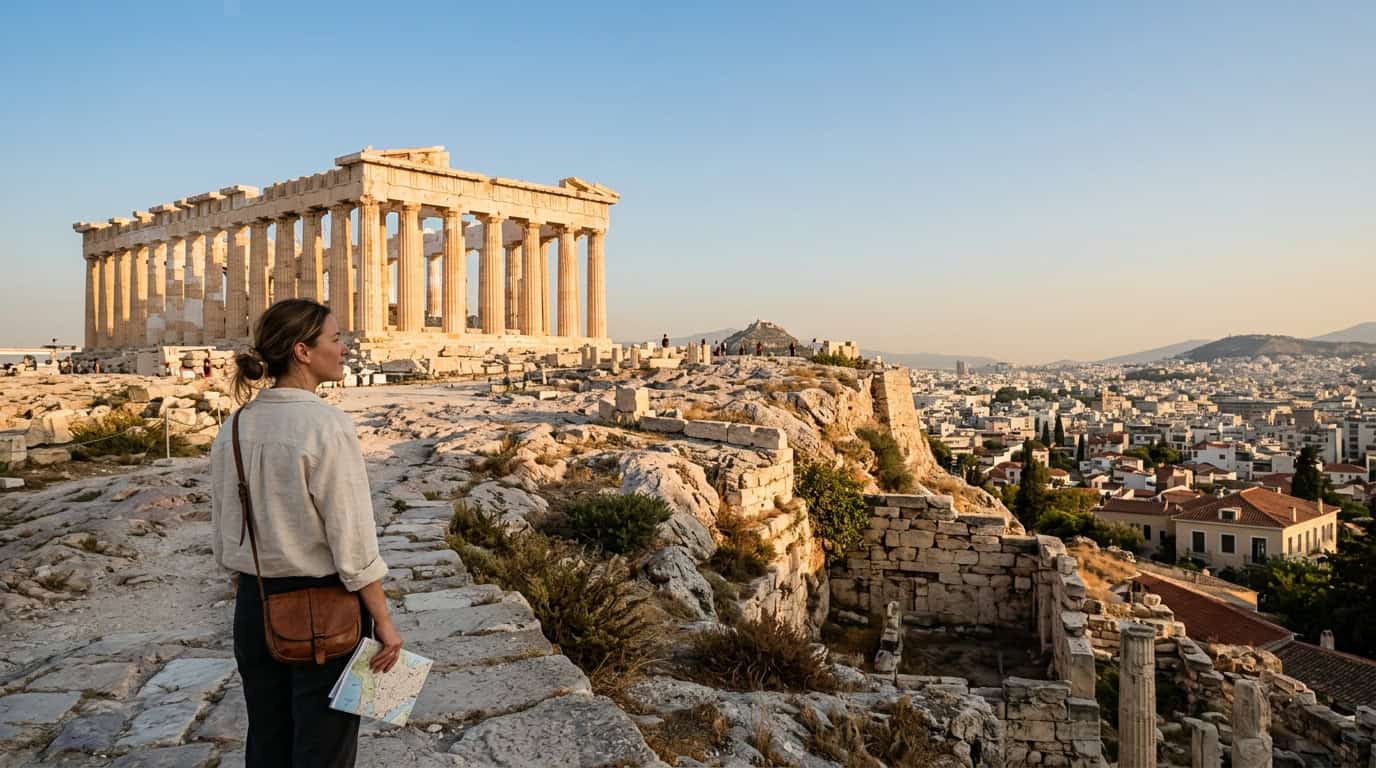
Yes, a third day is worth adding if you want to slow down instead of ticking off sites. Two days cover the Acropolis, the Ancient Agora, and the walk between them, but a third day lets you go back to something you loved or give a neighborhood the afternoon it deserves.
The easiest way to use that extra time is to choose one theme based on what caught your attention during the first two days. Pick the one that sounds most like you:
- A slow morning in Koukaki: Start with a coffee and a pastry from a neighborhood bakery, then wander the quiet streets below the Acropolis. Balconies overflow with geraniums, and small squares are full of locals reading newspapers. Without a schedule, you can linger wherever the views are best.
- A food-focused walk through Monastiraki: Go back to the market area in the morning, when the stalls are just opening. Taste olives, a warm koulouri from a street cart, and a spoon sweet at a small shop. Then head to a café for a long lunch of grilled meats and a glass of local wine.
- A museum you skipped: If the Acropolis Museum felt too short, return for a second visit to the rooms you rushed through. Or choose a different collection altogether. The Hellenic Heritage Digital Guide lists 40 archaeological sites and museums, with tours offered in eight languages, so it’s a good place to check what fits your interests and opening hours.
Whichever theme you choose, protect one afternoon with nothing scheduled. This is the time for a nap in your room, a rooftop coffee with a view over the rooftops toward the hill, or a long lunch that stretches past three o’clock. A good meal in Athens rarely hurries, and an open afternoon gives you permission to let it run.
The third day is also the most flexible part of your plan, which is exactly why it’s worth having. If rain rolls in or a heatwave makes the midday streets unpleasant, swap your outdoor walk for an indoor museum visit and save the neighborhood stroll for the cooler evening. If your flight is late or you’re tired from the first two days, you can drop the morning activity entirely and spend the day at a café near your hotel.
Keep your evenings loose, too. The metro and the tram make it easy to hop between neighborhoods, and a single 90-minute ticket covers most of those short trips. Plan one meal you’d like to return to, and leave the rest of the night open for whatever the city offers you.
Which Transit Ticket Suits a Short Athens Stay?
For a short Athens stay, the three-day tourist ticket is the better choice when you plan to use the airport and take several metro or tram rides a day. Single tickets suit a trip where you walk most of the way and ride only occasionally.
OASA’s full-price 90-minute single ticket costs €1.20 and is valid on urban buses, trolleybuses, trams, and metro lines 1, 2, and 3 to Koropi. Within that window you can ride from Plaka toward Monastiraki, change lines, and keep going. The single ticket does not cover airport express buses, and it does not cover the metro between Koropi and the airport, so it can’t be your airport ticket.
Athens International Airport identifies Metro Line 3 as the link to the city center, and it lists four express bus routes: X95 to Syntagma, X96 to Piraeus, X93 to the intercity bus stations, and X97 to Elliniko Metro station. Athens International Airport’s transport guide sets out those options. If your hotel is near Syntagma, the X95 or the train may be the simplest choice. If you’re staying in Koukaki or Thissio, the metro is usually easier, because you can change to the central lines without carrying bags up and down stairs.
The €20 three-day tourist ticket covers three 24-hour periods counted from the first validation, and it includes a round trip to the airport by metro or airport express bus. That round trip is the main reason to buy it. Each single ride costs €1.20, so if your plan includes the airport both ways and several metro rides each day, the tourist ticket pays for itself quickly.
Timing the first validation matters. The periods start when you first validate, so an arrival-day validation at the airport starts the clock before you reach your hotel. Validating on the morning you’d like to start exploring can leave you with a shorter stretch of coverage on the day you leave. Plan the first trip into the city so the three periods line up with your flight times.
Choose single tickets if one of these describes your stay:
– You’re staying in the center and walking to most sites, with only a few rides a day. – You’re arriving and departing by a route that doesn’t use the airport metro or express bus. – You expect to use the bus or tram rarely and don’t want to pay for days you won’t ride.
Choose the tourist ticket if you’re arriving at the airport, plan to ride the metro to the Acropolis and back, and expect to hop between Plaka, Monastiraki, and Thissio more than once a day. For a weekend with a full schedule, the €20 covers both the airport trip and the frequent city rides that a walking itinerary still needs.
What Should You Check Before Locking in Your Schedule?
Before you lock in your Athens schedule, confirm three things: your Acropolis time slot, the hours that apply to your exact dates, and any Line 3 closures on the evenings you plan to stay out late. These details set the order of your day more than any other choice, so settle them first and build everything else around them.
Start with the Acropolis ticket. When you buy, choose a visit date and a time slot on the official ticketing site. The terms also require you to enter during the slot the system assigns, so treat that window as fixed. If you arrive late, you may lose your place in the morning plan, and the rest of the day will slide with it.
Next, check seasonal hours, because opening times change between periods. From October 16 through October 31, the Acropolis is open 08:00 to 18:00, with last admission 20 minutes before closing. If your dates fall in another period, the closing time and last entry will shift. Confirm the hours for your specific days when you book, not weeks earlier.
Then look at the Line 3 notices. Starting October 11, 2026, six stations close at 21:40 Sunday through Thursday during rail-replacement works: Panormou, Katehaki, Ethniki Amyna, Holargos, Nomismatokopio, and Aghia Paraskevi. Temporary bus X20 serves those closed stations, so a late dinner followed by an assumed train ride home could leave you waiting on a platform that no longer runs.
A few checks before you go will keep your evenings relaxed:
- Acropolis: choose your date and time slot at purchase, and plan to arrive a little early.
- Hours: confirm opening and last-admission times for your exact days, not just the season.
- Line 3: see whether your home station is one of the six that close at 21:40 on weekdays.
- Late returns: if you stay near a closed stretch, identify a taxi or X20 bus option before you head out.
If your hotel sits near one of those closed stations, make the backup plan before the first late dinner. Note where the X20 stop is, save a local taxi number, and check how long the ride will take from the restaurants you’re considering. In practice, the Acropolis goes first in the morning, the Agora and museum fill the middle of the day, and the dinner plan leaves enough time to reach a station before the 21:40 closure or to book a ride back.
Planning Your Own Athens Weekend Escape
Start by deciding how much time you have and how fast you like to travel. Two days suit a traveler who wants the essentials and doesn’t mind a brisk walk from the Acropolis to Thissio. Three days suit someone who wants long lunches, a second museum visit, or a neighborhood to call their own.
Lock in the Acropolis first, because its time slot is the one piece you cannot move. Choose your date and entry window on the official ticketing site, then arrange the Acropolis Museum around it. The museum’s reduced ticket is €10, so check whether it applies to your group. Plan the Ancient Agora for day two, when it’s open from 08:00 to 19:30.
Your transit choice depends on how you arrive. If you land at the airport and plan to ride the metro several times a day, the €20 three-day tourist ticket covers the airport round trip along with your city rides. If you’re staying near Syntagma and mostly walking, single €1.20 tickets may be enough. Either way, check the Line 3 timetable before you book a late flight, since the trains run every 36 minutes and the schedule can shift.
Then leave at least one afternoon completely empty. Let it be the afternoon you follow a side street in Psirri because the music is good, or sit under a pergola in Koukaki until the light changes. Those unplanned hours often become the stories you tell long after you get home.
What is your favorite Athens moment so far? It might be sunrise on the marble, a plate of grilled octopus in Plaka, or a quiet corner nobody else seemed to know. Share it with us in the comments.
Setting Off on Your Own Athens Weekend
Your next step is to choose your dates and open the official ticketing site. Pick the Acropolis time slot first, because every other part of the weekend depends on it. Once you have that window, you can plan the Acropolis Museum around it and buy its separate €20 ticket.
If you want more context before you go, read the announcement that launched the hh.gr cultural-heritage portal. It describes a single official guide covering more than 350 sites, monuments, and museums under Greece’s Ministry of Culture, which is useful if you want to add a site to a third day.
Then sketch your plan on paper. Write the Acropolis at the top of the first morning, the Ancient Agora at the top of the second, and a question mark beside the third day. Fill in the question mark only after you’ve seen how tired you feel on the first evening.
Finally, send the plan to whoever is traveling with you. Ask them which dish in Plaka they want to order first, and which bench on the Thissio promenade they’d like to claim for sunset. Those small decisions turn a route into a weekend you’ll actually remember.