
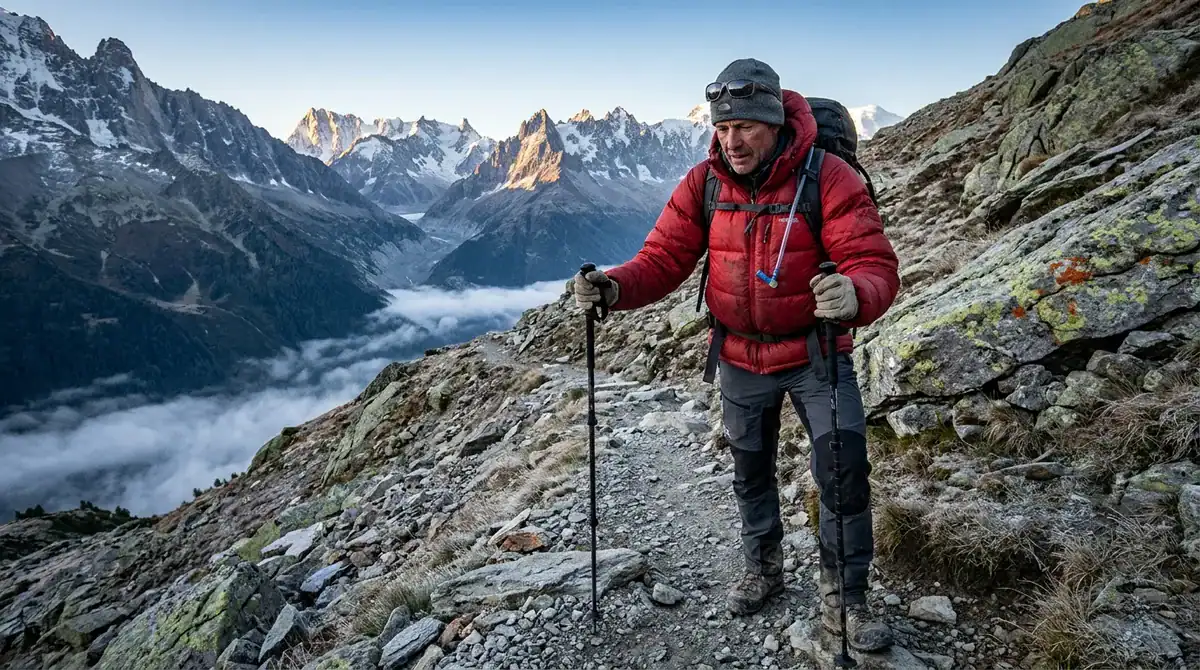
Altitude sickness prevention starts with climbing slowly. The CDC’s clearest limit is to avoid gaining a sleeping altitude of 2,750 m (9,000 ft) or more in a single day. Your risk depends on three things: the altitude where you sleep, how quickly you gain it, and how your body responded to height on past trips. Gradual ascent is the foundation that the CDC Yellow Book and the Wilderness Medical Society both stress. No pill, gadget, or fitness level can replace it.
Symptoms of acute mountain sickness often appear within hours of arrival, and the illness typically develops and resolves over one to three days. Once you are above 3,000 m (9,800 ft), limit sleeping-altitude gains to 500 m (1,650 ft) per day, and add an extra acclimatization night for every 1,000 m (3,300 ft) you climb. Think of these rules as a route planner: a short, steady schedule beats a dramatic arrival. Map your ascent before you book, and you will spend your trip enjoying the views instead of nursing a headache.
Key Takeaways
- Keep your sleeping altitude below 2,750 m (9,000 ft) on day one, because the CDC advises avoiding a sleeping-altitude gain of that height or more in a single day.
- Above 3,000 m (9,800 ft), limit sleeping-altitude gains to 500 m (1,650 ft) per day and add an extra acclimatization night for every 1,000 m (3,300 ft) climbed.
- Travelers planning a high-altitude trip should sleep above 2,750 m (9,000 ft) for at least two nights within the 14 days before departure to start acclimatizing early.
- Anyone experiencing confusion, loss of coordination, shortness of breath, weakness, or cough at altitude should descend immediately rather than pushing on to the planned camp.
- The Wilderness Medical Society’s 2024 guidelines advise against acetaminophen, inhaled budesonide, and hypoxic tents for preventing acute mountain sickness.
Why Ascent Speed Matters More Than Anything
Gradual ascent is the foundation of prevention. The Wilderness Medical Society’s 2024 clinical practice guidelines on acute altitude illness reinforce the same point. Acclimatization is the process by which your body adjusts to thinner air, and it takes time. That means how fast you climb matters as much as how high you go.
Your sleeping altitude matters more than the highest point you reach during the day. Many travelers fixate on a dramatic viewpoint or summit, but your body recovers overnight at the elevation where you sleep. An afternoon hike to a high pass followed by a descent to a lower bed is far easier on your system than settling in higher up for the night.
Ascent rate is the second factor. Flying straight from sea level into a high-altitude city and heading up the same day gives your body almost no time to adjust. Stepping up in smaller increments, with rest nights along the way, lets your system catch up. On a trekking route in the Andes or the Himalayas, a traveler who spends a couple of nights at one camp before pushing on will usually feel far better than someone who covers the same height gain in a single push.
Your own history counts too. Someone who felt fine on a past high-altitude trip may still struggle at a higher sleeping altitude, and someone who had a rough time before may need a slower schedule. Your previous response is one of the few factors you can read before you leave, so think back to whether headaches, poor sleep, or a racing pulse lingered after earlier high days.
Colorado offers a useful reality check. About one in four visitors who sleep above 2,450 m (8,000 ft) there develop acute mountain sickness. That is a common outcome at heights many people consider moderate, not just on expedition peaks.
Plan your route around the sleeping number, not the summit photo. Every night you spend at the same elevation gives your body another chance to adapt, so build rest nights into the schedule instead of treating them as lost time.
How High Can You Sleep on Day One?
On day one, keep your sleeping altitude below 2,750 m (9,000 ft), because the guidance is to avoid gaining that height or more in a single day. Check every night of your route against the limits below, and apply the row that matches where you sleep.
| Sleeping altitude | Daily gain limit | Rest-night guidance |
|---|---|---|
| Below 3,000 m (9,800 ft) | Avoid gaining a sleeping altitude of 2,750 m (9,000 ft) or more in one day | Add an extra acclimatization night for every 1,000 m (3,300 ft) gained |
| Above 3,000 m (9,800 ft) | No more than 500 m (1,650 ft) of sleeping-altitude gain per day | Apply the same rest-night check to every 1,000 m (3,300 ft) of sleeping-altitude gain |
The table is easiest to use with a real example. Suppose you sleep at 1,000 m and want to reach a lodge at 3,000 m. That single-night jump breaks the 2,750 m rule, so you would need to split it. Even when you spread the climb across more nights, a 2,000 m gain still calls for two extra acclimatization nights.
Daytime hikes are a different matter. Walking to a viewpoint or pass higher than your bed is a useful way to prepare your body for thinner air, and you can enjoy the height without changing your schedule. The rule only applies to where you sleep. Plan to walk up during the day, then return to a lower bed at night whenever your route allows it.
Keep a written list of your nightly sleeping altitudes before you leave. Seeing each jump on paper makes it obvious when a bus transfer or flight would push you past a limit. It also gives you a chance to add a rest night before the problem starts.
Should You Acclimatize Before Your Trip?
Yes, a pre-trip stay at altitude can help, as long as you sleep above 2,750 m (9,000 ft) for at least two nights within the 14 days before you travel. Those nights give your body a head start, so arriving at your high destination feels less like a shock.
Timing matters too. Exposure closer to departure is preferred, so a high stay that ends a few days before your flight is more useful than one you finish weeks earlier. Plan the nights backward from your departure date, and check that the high nights fall inside that two-week window.
A single short visit is not the same as sleeping there. A morning drive to a high viewpoint, followed by lunch and a return to a warm hotel, may be a memorable day, but it does not count as an overnight stay. Your body adjusts during the night, so the bed matters more than the photo.
The most practical approach is to build a stopover into your itinerary. Choose a mid-altitude town that keeps you below the 2,750 m line, and book a rest night there before the climb. Place it between your arrival city and your high destination, so the trip becomes two manageable legs instead of one long push.
Write the travel times into your plan before you book. Look up the drive or bus ride from the airport to the stopover, then decide whether it fits the day you land. If the journey is long, arrive at the stopover early in the afternoon so you have time to unpack, eat, and sleep without rushing.
Give the stopover at least one full rest day. Use it for slow walks, a good meal, and an early night, and skip any excursion that takes you well above your sleeping altitude. A rest day in a comfortable town costs you little time, and it can be the difference between a strong first high day and a miserable one.
What Are the Early Signs of Altitude Sickness?
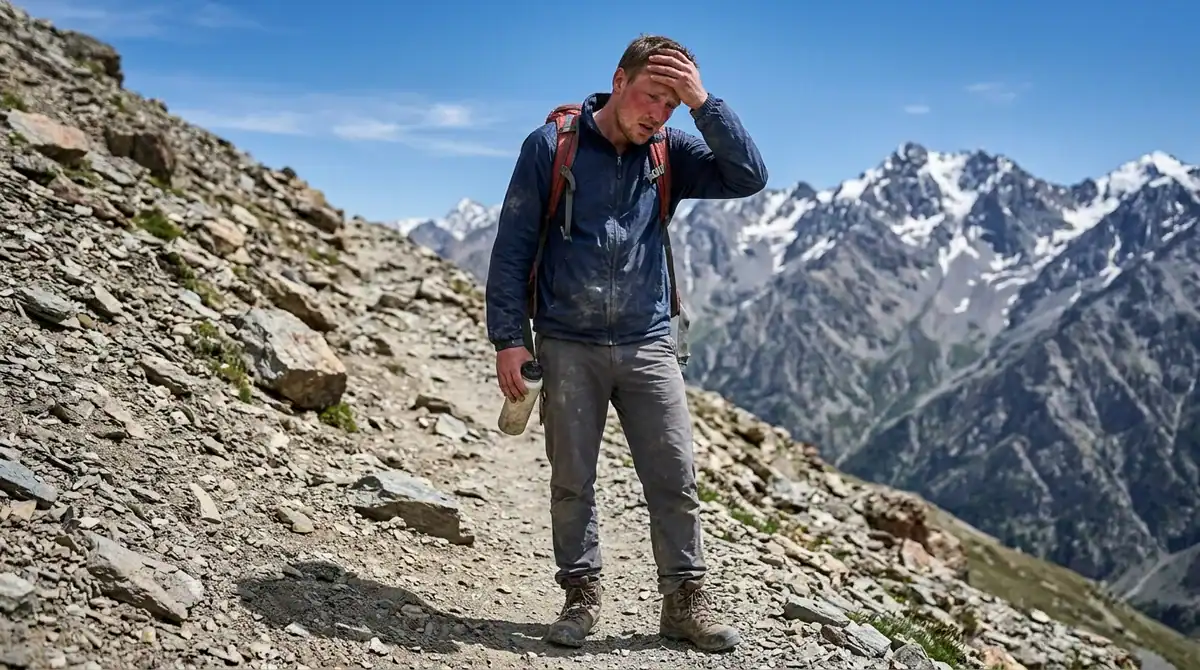
Early altitude sickness usually shows up as a headache, nausea, tiredness, dizziness, or poor sleep, and it often begins within hours of reaching a higher bed. These mild signs are your body’s normal response to thinner air. Acute mountain sickness typically develops and resolves over one to three days, so a mild case often eases with a rest day at the same elevation.
Timing is a useful clue. If symptoms begin only after you have spent more than three days at altitude without gaining any further height, they should not be attributed to acute mountain sickness. Look for another cause and have a clinician check it, rather than assuming the usual pattern applies.
Some warning signs are more serious and need a different response. The CDC Travelers’ Health guidance separates them by the body system involved:
- Confusion or loss of coordination, which point to high-altitude cerebral edema (HACE), swelling of the brain
- Shortness of breath, weakness, or cough, which point to high-altitude pulmonary edema (HAPE), fluid in the lungs
For either suspected condition, the advice is immediate descent. Do not wait to see whether symptoms improve, and do not push on to the planned camp for the night. Descent is the step that matters most, and it should happen before anything else on the schedule. If you suspect HAPE, expect that supplemental oxygen will likely be needed, so get medical help as soon as you can reach it.
Because confusion can be hard to notice in yourself, ask your travel companions or guide to watch for changes in your speech, judgment, or balance. A friend who says you are acting strangely deserves the same respect as a symptom you feel yourself. Agree on the plan before the trip: who makes the call to descend, and how quickly the group can move a person to a lower bed.
Can Acetazolamide Help Prevent Altitude Sickness?
Acetazolamide is the medication most often discussed for altitude sickness prevention, and it can be considered when a rapid ascent cannot be avoided. It works alongside a slow schedule rather than replacing one. It is FDA-approved for this use, which is one reason it comes up so often in pre-trip conversations.
For adults, the standard prophylaxis dose is 125 mg every 12 hours. You start the day before you climb, continue through the first two days at altitude, and keep going longer if you are still gaining height. Because the first dose comes before you arrive, your ascent schedule needs to be fixed before you pack.
Acetazolamide is a prescription conversation, not a self-prescribed fix. Before you travel, ask a clinician three things: whether the timing fits your specific route, whether your health history and current medications make it suitable for you, and which side effects to expect and how to manage them. Tingling in the fingers and toes and needing to urinate more often are among the common side effects, so it helps to know them before you are on a trail.
Supplemental oxygen is a separate question. In the United States, a prescription is required to obtain it, so if oxygen might be part of your plan, raise that with a clinician at the same appointment. Do not assume you can pick it up when you arrive, and do not count on buying it as a backup on the way up.
A medication does not cancel the need for a slower schedule. If you start acetazolamide, you still need the sleeping-altitude limits, the rest nights, and a plan for descent. Keep the medication in your pack as one part of the plan, and keep the warning signs in view as the part that tells you when to stop climbing.
Which Prevention Myths Don’t Hold Up?
Acetaminophen, inhaled budesonide, and hypoxic tents are popular altitude remedies, but the latest clinical guidance does not recommend any of them for prevention. The Wilderness Medical Society’s 2024 guidelines advise against acetaminophen for acute mountain sickness (AMS) prevention, and they also recommend against inhaled budesonide for altitude-related prophylaxis.
Hypoxic tents are sleep systems that lower the oxygen in the air around you to mimic a higher elevation, and they sound like a sensible shortcut. A 2025 review of the WMS 2024 guidelines notes that they are not recommended for altitude-illness prevention. The two placebo-controlled studies it examined did not show a statistically significant benefit. A tent can also create a false sense of security about a schedule that still needs rest nights.
Acetaminophen is a common pain reliever, sold in many countries as paracetamol, and many travelers pack it for headaches. Taking it before a climb to head off symptoms is a different matter, and the guidelines advise against that use for AMS prevention. Budesonide is an inhaled steroid usually prescribed for asthma, and it is not recommended for altitude-related prophylaxis either.
Why do these three remedies keep showing up? They are easy to buy or toss into a daypack. Popularity does not make a remedy effective, so talk with a clinician before you rely on any of them. Bring your planned sleeping altitudes to that appointment, and ask whether any medication you already take could interact with your altitude plan.
Treating a mild headache on a rest day is a separate question from prevention, and it is one to settle with your clinician too. Whatever you decide, a headache that comes with confusion, poor balance, or breathlessness is a signal to descend, not a reason to take a tablet and keep climbing.
Daily Habits for Your First Two Days
The first two days at altitude are when your body does most of its early adjusting, so simple daily habits matter. Keep them consistent, and treat them as part of your ascent plan rather than optional extras. During the first 48 hours, avoid alcohol and keep physical activity to mild exercise, such as an easy stroll around town, until your body has had time to settle.
Follow this routine on each of the first two days:
- Sip water steadily through the day instead of drinking large amounts all at once, and keep a bottle within reach on every walk.
- Eat regular meals, even when your appetite is low. Choose easy foods such as soup, rice, bread, fruit, and yogurt, which are gentle on a stomach that may already feel unsettled.
- Build a rest period into each afternoon, and go to bed at a reasonable hour rather than staying out late.
- Check your pulse oximeter after a few quiet minutes in the morning, then write down the reading along with your sleeping altitude and how you feel.
A pulse oximeter is a small clip that rests on a fingertip and estimates the oxygen saturation in your blood. It may cost under $30, which makes it one of the few altitude tools that is easy to pack and easy to afford. Use it to see how your body responds from one morning to the next.
Read the numbers with altitude in mind. Oxygen saturation should be interpreted in relation to where you are, so a reading that looks healthy at sea level is not the target at height. The air holds less oxygen the higher you climb, and your numbers will reflect that. Look for the pattern across both days rather than chasing one figure.
Never use a reading in place of how you feel. A device can show a number that looks acceptable while a headache worsens, your balance feels off, or you become short of breath. In that case, your symptoms take priority, and you stop climbing. Let the oximeter add information to your daily check, not replace it.
Putting Your Ascent Plan Into Action
Start tonight by writing your route as a list of sleeping altitudes, one line per night. Add your departure date at the bottom, then count back two weeks. If none of your high nights fall inside that window, or if you have fewer than two nights above 2,750 m (9,000 ft), look for a mid-altitude town to add before the climb.
Next, book a clinician appointment before you buy flights. Bring your sleeping-altitude list and a full list of the medicines you already take. Ask whether acetazolamide fits your route, how its side effects would affect your daily plans, and whether supplemental oxygen should be part of the conversation, since in the United States it requires a prescription.
Then sit down with the people you will travel with. Decide who makes the call to descend, which symptoms will trigger that call, and which lower town the group will head for. Write the plan on paper and keep a copy in every daypack, so nobody has to remember it at 3,000 m.
Finally, pack a pulse oximeter and a small notebook, and set a phone reminder for your first morning at altitude. Record the reading, your sleeping altitude, and how you feel. Those entries will show you how your body is responding, and they give a clinician a clear record if anything changes.