

Ramadan travel tips start with the daily fasting rhythm. The month lasts about 29 or 30 days, and Muslims fast from dawn until sunset. Lunch is no longer a given during daylight, opening hours shift, and the liveliest part of the day moves into the evening. Iftar, the meal that breaks the fast at sunset, becomes the anchor of each day, while suhoor, the pre-dawn meal, is the last chance to eat before the next fast begins. Exact dates also change from year to year, because Ramadan follows the lunar calendar and starts with the sighting of the crescent moon.
Plan around that rhythm, and the month becomes a joy to explore. In Doha, Souq Waqif listed its stores for Ramadan 2026 as open from 8:00 a.m. to noon and again from iftar to midnight, so a morning browse and an evening stroll fit neatly into one day. Rules differ from one destination to the next, however. The UK government advises visitors in Saudi Arabia not to eat, drink, smoke or chew gum in public during daytime fasting hours, even inside a car. Check local guidance before you assume anything, and confirm opening times before you set out.
Key Takeaways
- Plan every Ramadan trip around the daily fasting rhythm, using mornings for big sights, afternoons for rest, and evenings for iftar, shopping and dinner.
- Book your iftar table early in Dubai, since the Asateer Tent at Atlantis, The Palm listed iftar at AED 295 per person on weekdays and AED 325 per person on weekends for the 2026 season.
- Check the public eating rules for every country on your route. UK government advice says visitors in Saudi Arabia should not eat, drink, smoke or chew gum in public during daytime fasting hours, even inside a car.
- Travelers in Brunei can buy takeout from restaurants and cafés before dusk during Ramadan, but should avoid eating, drinking or using tobacco in public during fasting hours under the Sharia Penal Code.
How Does Ramadan’s Calendar Shape Your Trip?
Ramadan’s lunar calendar means your travel dates decide how each day feels, so check the exact month for your destination before you book. Saudi Arabia’s Ramadan began on February 18, 2026, and lasted 30 days, but the start moves with the moon, so the same trip can land on very different days in another year.
The daylight hours feel slower. Fasting can leave you tired, especially in the late afternoon and early evening, so plan the big museum or hilltop walk for the morning, when you have the most energy. Many shops and attractions also run shorter daytime hours, which means your mornings are often your best window for sightseeing.
Evenings are when the city wakes up. In Doha, Souq Waqif scheduled its Asian Nuts and Dried Fruits Exhibition daily from 6:00 p.m. to midnight in February 2026, with 40 companies from seven countries taking part. Expect crowds, bright lights and long queues for dinner after sunset.
Iftar becomes your daily anchor. Plan the rest of your day around the sunset meal, since the time shifts slightly each evening. In Dubai, the Asateer Tent at Atlantis, The Palm listed iftar at AED 295 per person on weekdays and AED 325 on weekends for the 2026 season. Book those tables early, because popular iftar spots fill quickly.
Build your schedule in three blocks: a slow morning, a rest in the early afternoon and an evening that begins with iftar. Leave room for the quiet hours between sunset and suhoor, when restaurants and markets are at their liveliest.
What Are the Rules for Eating in Public?
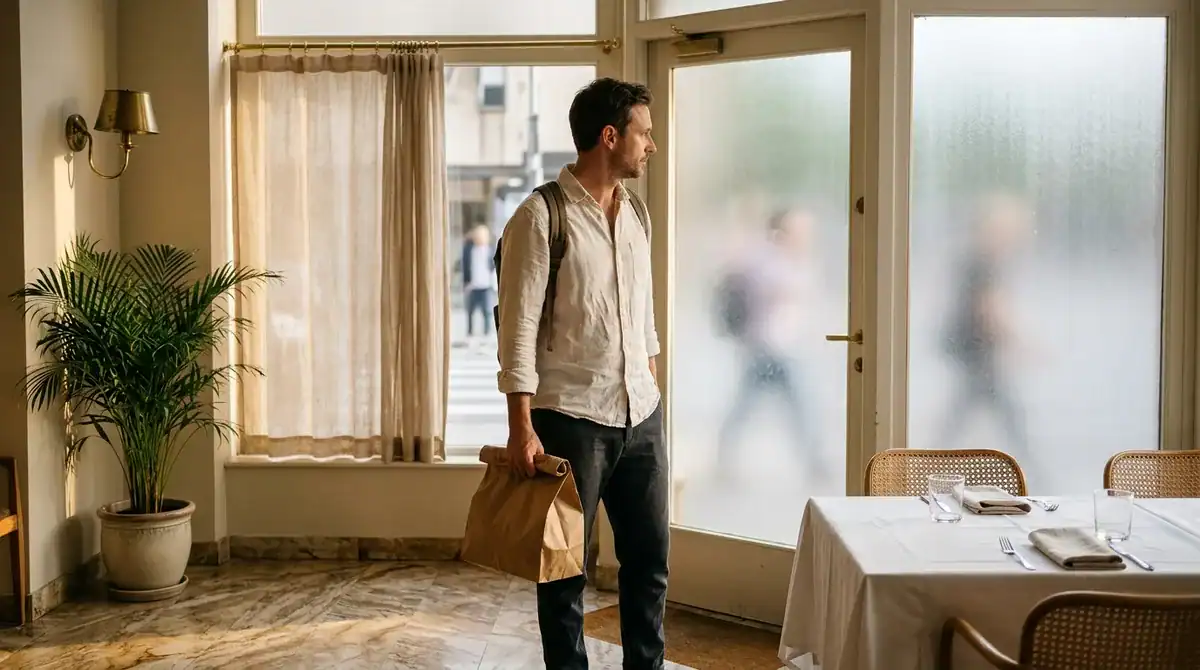
Eating in public during Ramadan is governed by local law and custom, and the rule that applies in one country may not apply in the next. Most destinations ask visitors to refrain from eating, drinking, smoking or chewing gum in public during daylight fasting hours, but the details vary, so check each country’s guidance before you travel.
In Qatar, the tourism authority asks visitors to avoid eating, drinking or smoking in public during daylight fasting hours. Many hotels, restaurants and designated dining areas still serve food through the day, though their hours vary, so ask before you assume a café is open.
Oman’s UK government travel advice recommends no eating, drinking, smoking or gum chewing in public during the daytime. Saudi Arabia calls for the same daytime caution, and the advice extends to the inside of a car, so a snack on the road is best saved until sunset.
Brunei requires the closest reading. The U.S. Department of State says the Sharia Penal Code makes it illegal to eat, drink or use tobacco in public during fasting hours. The code applies regardless of religion or nationality, although some of its provisions apply only to Muslims, so visitors who are not Muslim are not exempt from the public ban.
There is good news for hungry travelers in Brunei. Brunei Tourism says restaurants and cafés allow takeout before dusk during Ramadan, so you can grab lunch to take away and plan your meal around that window. Attraction hours can differ from the usual schedule, so confirm them before you set out.
A few habits will keep you out of trouble on any route:
- Read the official travel advice for every country on your itinerary, not just the first one.
- Ask your hotel whether its restaurant serves food during daylight, and at what time.
- Carry water and snacks in your bag, and wait until you reach a designated dining area to eat.
- In Brunei, ask for takeout before dusk and plan your lunch around that cutoff.
When you are unsure, ask a staff member at your hotel or tour office. Locals are usually happy to point you in the right direction, and a quick question is far better than an awkward moment in the middle of the souq.
Booking Suhoor and Iftar Tables Ahead
Iftar tables are among the hardest seats to get during Ramadan, and popular tents and restaurants fill quickly once their evening schedules are published. Book as soon as your dates are firm, and be prepared to choose a different venue if your first choice is full.
Prices are worth budgeting for early. For 2026, the Asateer Tent at Atlantis, The Palm listed iftar at AED 295 per person on weekdays and AED 325 per person on weekends. Those figures come from one venue in one year, so treat them as a guide rather than a promise for your visit.
Suhoor is sold differently, and the terms can catch travelers off guard. The same 2026 listings showed suhoor options with a minimum spend of AED 180 per person, or a AED 250 set menu. Ask which option applies before you sit down, because a minimum spend is easy to overlook when you are hungry after a long evening.
When you reserve, ask three questions. Will the menu change during the month? Will serving hours shift as the fasting day changes length? And what time exactly is my seating? Ramadan timetables are not fixed, so a table booked for one evening may not match the sunset time a few days later. Confirm the seating time in writing, and arrive a few minutes early so you are not rushing when the call to prayer sounds.
Your choices at the table also shape how you feel the next day. Very salty, very sugary or very heavy dishes at iftar can leave you sluggish later, so many travelers build the meal around protein, vegetables, whole grains and water. At suhoor, look for foods that digest slowly, such as eggs, yogurt, oats, or dates with nuts. This is general travel advice, not medical guidance, so speak with your doctor if you have a health condition or take medication that depends on meal timing.
Where Can You Eat and Shop During Daytime?
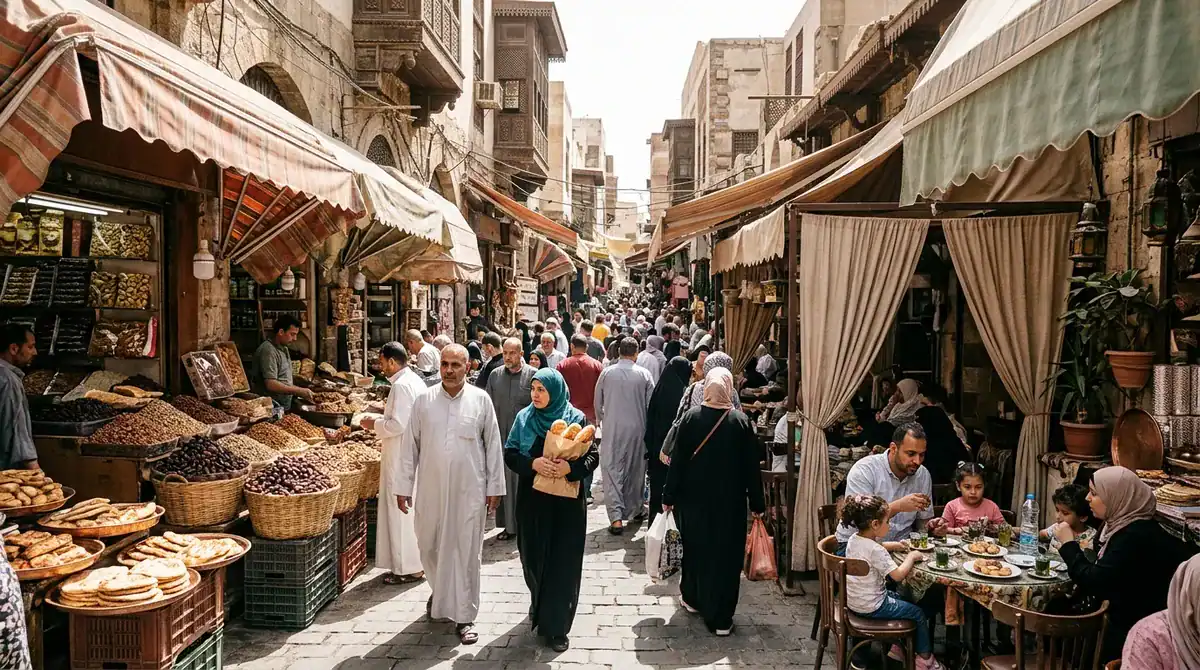
In Qatar, you can still eat during the day if you know where to look. Many hotels, restaurants and designated dining areas serve food through Ramadan, but their hours vary, so check before you set out. Visit Qatar’s Ramadan guidance also asks travelers to check restaurant and shop hours and to keep eating and drinking out of public view during daylight fasting hours.
In Doha, Souq Waqif is a good example of how the day divides. Its stores were listed as open from 8:00 a.m. to noon and again from iftar to midnight, so you can browse the lanes in the cool of the morning and return after sunset. Its restaurants run from iftar until suhoor, which makes the evening the natural time for a proper meal there.
The souq comes alive after dark. A nuts and dried fruits exhibition ran every evening from 6:00 p.m. to midnight, with 40 companies from seven countries taking part, so the aisles stay busy long after the sun goes down. Arrive early if you want room to move between the stalls.
Daytime hunger needs a plan of its own. Before you leave your room, pack a few simple supplies:
- Fruit, nuts and bread stored in your room, so you can eat privately rather than in the lobby.
- A refillable water bottle kept in your bag, to be used where drinking is permitted.
- A note of your lunch restaurant’s opening time, since some open only after sunset.
Ask reception which areas of the hotel allow eating during the day, and whether the in-house restaurant serves food before iftar. Staff can also point you to a nearby designated dining area, which saves time when you are tired and short on options.
How Do You Pace Sightseeing Through the Day?
Plan each day in three blocks: a strong morning for walking and museums, a quiet late afternoon for rest, and an evening that starts with iftar and runs late. Front-load the energy-heavy visits, because fasting can leave you flagging later in the day.
Mornings suit the big sights. Schedule the long walk through an old quarter, a fort or the largest museum before the midday heat builds, and keep the first hour gentle so you are not rushing from the start. Pack a light bag with a bottle of water for the walk.
Late afternoon is for slowing down. Use it to nap in your room or visit an indoor sight such as a gallery or a covered market. Treat the gap as a long, lunch-free stretch with no timed tours, so a late start does not spoil your evening.
A simple daily shape works well in most cities:
- Start at opening time with the walking tour or museum you most want to see.
- Return to your hotel around midday and rest in the shade or in your room.
- Choose one indoor sight for the late afternoon and leave the rest of the time free.
- Head to your photo spot before sunset, while the streets are still quiet.
- Book your iftar table and any evening market visit before you leave home.
- Leave the late evening loose for a stroll, and keep the next morning’s start time in mind.
After iftar, the city wakes up. Markets fill, restaurants grow busy, and families and friends gather in squares and along waterfronts. Popular sights and dinners need booking ahead, so reserve them before you travel rather than hoping for a table on the night.
The sunset window around iftar brings warm, low light that flatters old stone, lanterns and painted doors. Crowds gather at the same moment, so arrive early and claim your spot before the light turns golden. A lightweight tripod helps on busy promenades, and patience pays off when a gap opens in the crowd.
Opening hours can change from one week to the next, so check each day’s schedule before you leave and keep one slot free for a sight that closes early or moves. Rest is part of the plan, not a reward for finishing it.
What Should You Wear to Show Respect?
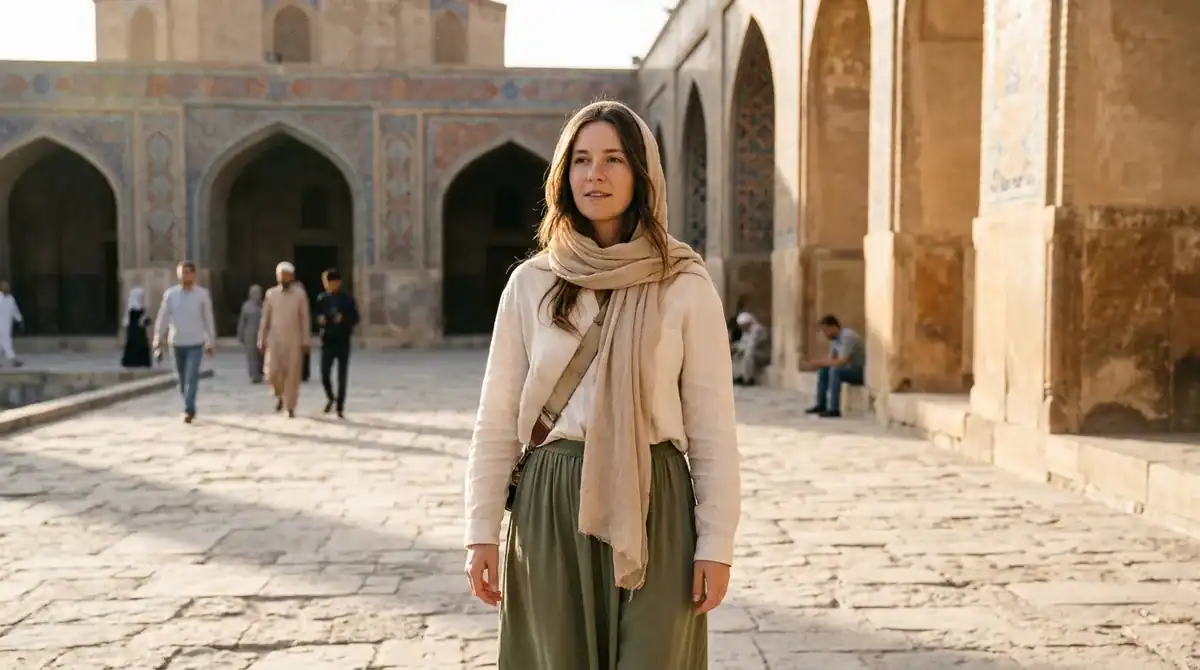
Modest dress during Ramadan means loose, covered clothing, and the exact standard depends on where you are. In Saudi Arabia, men and women should both wear loose-fitting clothing that covers the elbows and falls below the knees, as the UK government advice for Saudi Arabia sets out.
Women are not required to wear an abaya or cover their hair there, so you can pack a long shirt and a midi skirt rather than a full local outfit. In Qatar, shoulders and knees should generally be covered, a simple rule that works in the souq and in the hotel lobby alike.
Packing for both destinations comes down to a few versatile pieces:
- Light layers with sleeves, such as a breathable linen shirt that covers the shoulders.
- Knee-length or longer skirts and loose trousers that move easily in the heat.
- One lightweight scarf for mosques and religious sites, which can also drape over your shoulders at an iftar table.
Dressing modestly is an easy way to show respect in daily life and at iftar. The evening crowds in markets and restaurants are where you will be most visible, so covered shoulders and knees help you blend in as the city fills after sunset.
You do not need a large suitcase to dress well. Two or three outfits you can rotate, plus a little laundry on the road, will cover most of a trip. Rules can differ from one stop to the next on a multi-country route, so check the dress guidance for each destination before you pack.
Joining Iftar With Locals and Sharing Meals
Being invited to an iftar table is one of the warmest experiences the month offers, and most hosts are delighted to share their meal with a guest. Say yes when you can. If you must decline, do so politely and thank the host for thinking of you. Arrive a few minutes before sunset, and wait quietly for the call that signals the fast has ended before you take your first date or sip of water.
When you visit a home, bring a small gift. A box of sweets from a local bakery, a packet of dates or a bouquet of flowers is a kind gesture, and it is often handed over at the door rather than opened during the meal. Ask your hotel concierge which gifts suit the household, since customs vary from one family to the next.
At the table, follow the host’s lead. In many places, eating with your right hand is the custom, so use it for food even if you are left-handed. Shared dishes are usually placed in the middle, so take a modest portion first, wait for the host to offer seconds, and take food from the part of the dish nearest you.
Public iftar tents and community meals are easy places to meet people. Organizers set long tables, and seating is often shared, so you may find yourself beside a family, a student or a shopkeeper who is happy to explain the dishes on offer. Solo travelers can join group meals in designated venues, where arriving alone is normal and a seat is usually easy to find.
Your Ramadan Travel Checklist Before You Book
Before you book anything, make a one-page sheet. List every city on your route, the dates you will be there, and the opening hours you have confirmed for the sights and restaurants you care about most. Seeing the whole route at once shows where a late arrival or an early departure could leave you with no lunch options.
Next, contact your accommodation. Ask whether the hotel restaurant serves food during daylight hours, whether room service runs through the day, and whether a designated dining area is nearby. Get the answers in writing, so you can show them at reception if plans change.
Then reserve your iftar tables. If you want a popular tent or restaurant, book the seating time and ask which suhoor option applies before you arrive. Keep one evening free in each city, so a sold-out table does not derail the rest of your plans.
Finally, read the travel advice for every country on your route, not only the first stop, and check it again shortly before you leave. Ramadan timings can shift from one year to the next, so a fresh look at the schedule is the simplest way to travel with confidence. Pack a small kit of water, fruit and nuts, and you will be ready for your first morning on the road.