
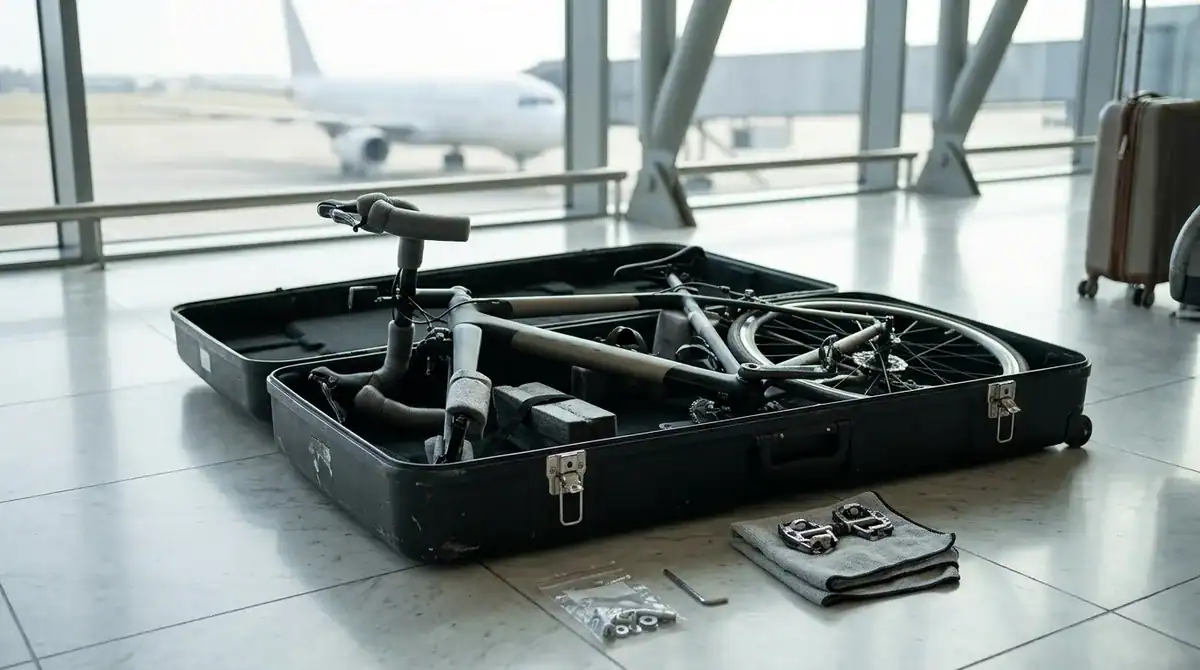
Flying with a bicycle is usually a checked-baggage matter, and each airline sets its own rules for acceptance, packing, size limits and fees. Delta accepts non-motorized touring and single-seat racing bikes on most flights, but it rejects bikes longer than 115 linear inches (292 cm) or weighing 100 lb or more, and it charges excess-weight fees above 50 lb. Frontier uses a flat bicycle fee of $75 per bag per direction for bookings made on or before May 28, 2026, rising to $100 for bookings made on or after May 29, 2026, and it does not allow bikes in the cabin. Because fees change, a U.S. Department of Transportation final rule announced on June 30, 2026 is worth knowing about. It requires airlines to alert you that baggage fees may apply and to show where those fees are listed.
Packing rules matter just as much as fees. Qatar Airways recommends a strong bike box or case, foam protection around bike parts, deflated tires, removed pedals and handlebars turned and fixed lengthways. It does not permit motorized or battery-powered bicycles. E-bikes raise a separate question. Under Federal Aviation Administration rules for lithium batteries, batteries rated up to 100 Wh are allowed on passenger aircraft, 101 to 160 Wh need airline approval, and anything above 160 Wh is forbidden. Spare batteries must stay in the cabin, so confirm e-bike battery acceptance with your operating airline before you book.
Key Takeaways
- Delta rejects bikes longer than 115 linear inches (292 cm) or weighing 100 lb or more, so measure and weigh your packed box before you book.
- Frontier charges $75 per bag per direction for bookings made on or before May 28, 2026, and $100 for bookings made on or after May 29, 2026, so booking earlier can keep your bike fee lower.
- Qatar Airways does not permit motorized or battery-powered bicycles, so e-bike riders should check each carrier’s policy on their route before they plan a trip.
- Under FAA lithium battery rules, e-bike batteries rated up to 100 Wh are allowed on passenger aircraft, batteries rated 101 to 160 Wh need airline approval, and batteries above 160 Wh are forbidden.
- Your bike is more likely to arrive in one piece when you deflate the tires, remove the pedals and fix the handlebars lengthways, as Qatar Airways recommends.
How Airlines Differ on Bike Acceptance and Fees
Every airline writes its own bike rules, so the same bicycle can be accepted easily on one carrier and turned away on another. Before you compare fares, read each carrier’s bicycle policy. The size limit, the packing rules and the fee can all differ from one airline to the next.
Start by measuring the packed box, not the bike alone. Airlines measure the item as it arrives at check-in, so the length, width and height of your case or box are what count toward a size limit. Linear inches are simply those three dimensions added together, and that total is the number to compare against each airline’s ceiling. Weigh the packed box too, since the box adds weight that can push you past a limit.
Delta asks for a durable protective container designed for bicycles. A hard-shell case built for bikes meets that requirement without extra paperwork. A soft-sided bag or any other non-hard-shell packing requires a limited-liability release, a form that limits the airline’s responsibility if the bike is damaged in transit. Many cyclists choose the hard case for that reason alone, because it spares them the form at the counter.
American Airlines publishes its own requirements for bike cases, handlebars, pedals, weight and dimensions, and those details do not match Delta’s. A box that passes on one carrier can still be refused on another if the handlebar position or the case dimensions fall outside the rules. Check both airlines’ pages before you buy packaging, and save a copy of the policy you relied on in case a gate agent asks.
Frontier takes a different approach. It says bicycles cannot be carried on board, so your bike will always travel as checked baggage. Frontier’s fee also depends on the date you book, not the date you fly. If your dates are firm, booking earlier can keep you on the lower fee. A flexible traveler should compare the total cost of a flight with and without the bike before paying.
Qatar Airways has the clearest rule on powered bikes. It does not permit motorized or battery-powered bicycles at all. If your plans include an e-bike, you will need to fly with a different carrier or rent a bike at your destination. Keep that in mind when you plan your route, since an otherwise convenient connection may not be a workable option.
To make the comparison easier, write down the answers to a few questions for every airline on your shortlist:
– What is the maximum linear inch total and weight for a bicycle? – Does the airline require a bicycle-specific container, and does a soft bag need a release? – Which parts must be removed or fixed in place, such as pedals or handlebars? – What is the bicycle fee, and does it change with the booking date? – Does the airline accept motorized or battery-powered bicycles?
Keep your notes in one place so you can compare the answers side by side. A carrier with a cheap fare can become the more expensive choice once you add a larger case, an excess-weight charge or a second flight that refuses your bike. Spending a little time reading the policies before you book is often the most useful planning step you will take for a cycling trip.
Bike Box, Hard Case, or Soft Bag: Which Should You Use?
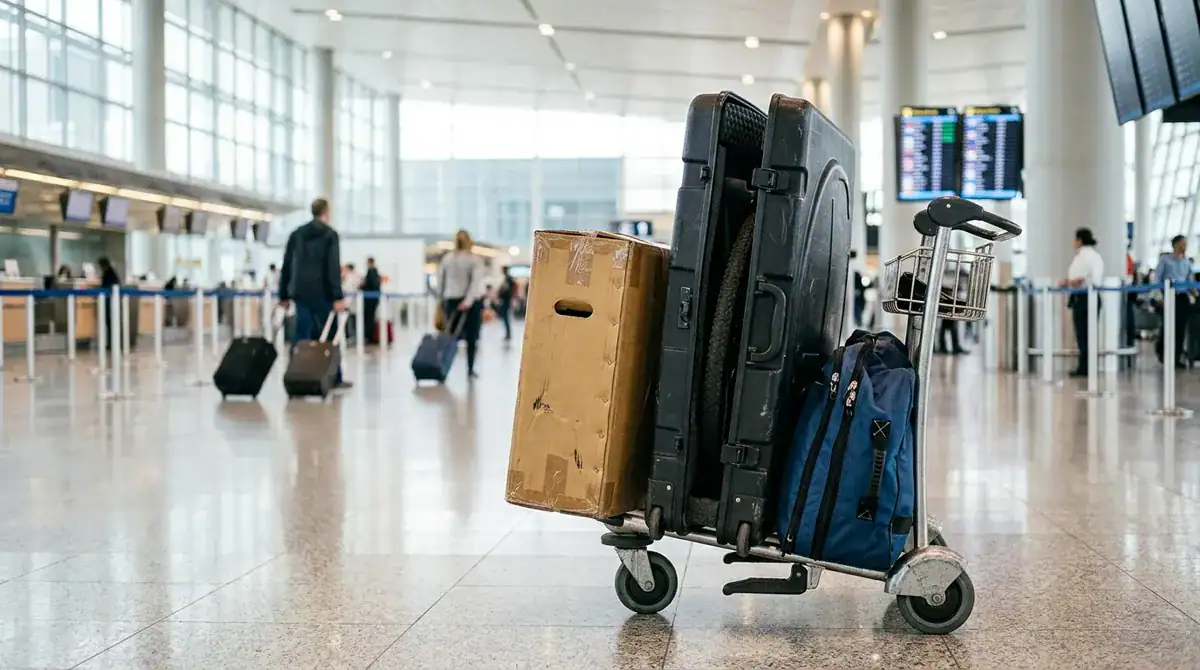
Choose a bicycle-specific hard-shell case if you want the strongest protection and plan to reuse it. Pick a sturdy cardboard box if you want the lowest cost and can find a good one, and reach for a soft bag only if your airline accepts it and you are comfortable carrying more of the risk yourself. Each option trades protection, weight, reuse and cost against the others, so the right choice depends on how often you fly and how much damage you can live with.
Each packaging choice has its own strengths and weak points:
- Hard-shell case: the best defense against crushing and impact and reusable for many trips, but heavier than the other two once its own shell and wheels are counted.
- Cardboard box: cheap or free when a shop hands you a used one and easy to recycle at the end of the trip, but only as strong as its condition and usually discarded after one flight.
- Soft bag: the lightest and easiest to store, with padding that absorbs a few knocks, but it offers the least protection against crushing and leaves more of the risk with you.
Weight deserves more attention than most cyclists give it. The empty container counts toward your total checked weight, so a heavy hard case can use up the room you have under an airline’s limit before the bike even goes in. Weigh the empty case or box on a bathroom scale at home, then add the bike and its parts to get a realistic total. Do this before you buy. A case that adds even a few extra pounds to a bike already near the limit can turn a simple flight into an excess-weight charge.
Cost works differently. A hard case carries a higher purchase price than cardboard, but if you fly several times a year, spreading that price across many trips can make it cheaper per flight than buying a new box every time. A cardboard box makes sense for a single trip, especially when you can find one for little or nothing.
Qatar Airways recommends a strong custom cardboard box or bike case, and the word “custom” matters. A box sized to your bike leaves less empty space for the frame to shift around in transit, and that movement is where most damage happens. When you box a bike, add foam tubes around the frame tubes and handlebars, and tape the seams and corners so the box keeps its shape under the weight of other bags.
Finding a sturdy cardboard box is easier than many people expect. Local bike shops often receive new bicycles in large boxes and may have spares they are glad to hand out. Ask early in the week, when stock is fullest, and tell them your flight date so they can set one aside. Look for double-walled board, dry corners and firm sides. Reject any box with crushed edges, water stains or soft spots, since those are signs it has already lost strength. Choose a box that fits the bike with a few centimeters of room, not one that lets the bike slide around. Loose movement wears on the frame and cracks the box.
Before you tape the box shut, press each corner and push on each side to test its strength. Reinforce any weak spot with extra cardboard or tape, and mark the box clearly with your name and contact details.
How Much Does It Cost to Fly With a Bike?
A bicycle flight usually costs the airline’s bicycle or checked-bag fee plus whatever you spend on packaging. The total shifts with the airline, the route, the date you book and how much the packed bike weighs. The airline charge is only part of the bill, because the case, padding and tape you buy are separate expenses that the airline does not collect.
Some airlines charge a flat fee for a bicycle. Frontier charges $75 per bag per direction for bookings made on or before May 28, 2026, and $100 per bag per direction for bookings made on or after May 29, 2026. A round trip means paying the fee on each leg, so the booking date you choose can change the total more than the fare difference you were comparing.
Other airlines focus on weight. Delta charges excess-weight fees on bikes above 50 lb. A bike that sits just under that line may look safe on its own, but once you add a hard case, a cardboard box and a few foam tubes, the packed total can cross the line. Weigh everything together on a bathroom scale before you leave home.
Packaging costs are the part many cyclists forget to budget. A hard-shell case, a sturdy cardboard box, foam tubes, packing tape, zip ties and a few basic tools each add to the cost of the trip. The price of each item depends on the material you choose and how many flights you expect to use it for. Small supplies like tape and foam add up quickly, so list them alongside the airline fee rather than treating them as afterthoughts.
Route matters just as much as the airline. If your itinerary includes connecting flights, each segment can have its own bicycle rule, size limit and fee. A trip with two airlines may mean two sets of charges, and a bike accepted on the first flight can still be refused on the second. If that happens, you may face a rebooking or a shipping cost at the last minute. That is why a route that looks cheap on paper can become expensive once every leg is priced.
Booking date deserves its own check. Frontier’s fee rises for bookings made on or after May 29, 2026, so a traveler with firm plans who waits a few weeks may pay more for the same seat and bike. Flexible travelers should price the flight with the bike and without it, then decide whether the difference is worth it. Also remember that a fare you book months ahead can still change its baggage rules before departure, so reread the policy page before you pay for anything.
Fee information itself keeps moving. A federal rule finalized on June 30, 2026 requires airlines and ticket agents to alert you that baggage fees may apply and to tell you where those fees are listed. That notice points you toward the fee, but it does not replace reading the fee itself. Frontier’s bicycle policy help page was last updated on October 26, 2026, so open the current version on the day you book rather than relying on a screenshot from an earlier search.
To keep your budget honest, write down each cost before you commit:
– The bicycle or checked-bag fee for every flight on your route – Any excess-weight charge, based on the weight of the packed bike – The price of your case or box, plus foam, tape and ties – Tools and spare parts you will carry in your checked bag – A backup amount for a rebooking or a fee you did not expect
Those numbers give you a realistic total and make it easy to compare one route against another. A slightly higher fare on an airline with a clear bicycle policy can be the better deal once you account for the fees and the packaging you would need anyway.
Step-by-Step: How to Take Your Bike Apart for a Flight
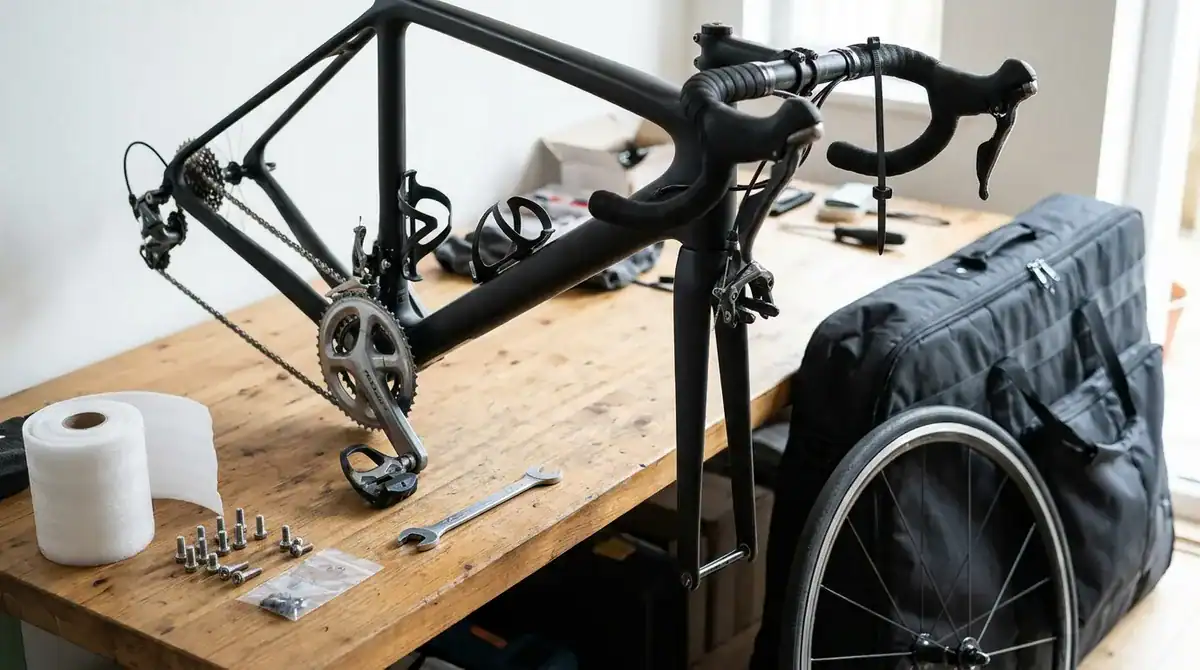
Taking the bike apart is the step that decides whether it arrives in one piece. Work on a clean floor with a towel or mat underneath, and lay out your tools and labeled bags before you touch a bolt. The order below starts with the easy parts and works inward, so each piece comes off before the part it protects.
- Photograph the bike from both sides, along with the drivetrain and the handlebar and brake setup, before you remove anything. These pictures become your reassembly guide at the destination, so keep a copy on your phone and another in your bag.
- Deflate both tires. Qatar Airways recommends deflated tires for bike packing, and letting the air out slowly keeps the valve and tube from being damaged as the pressure drops.
- Remove the pedals with the correct pedal wrench. The left pedal has a reverse thread, so it unscrews in the opposite direction from the right one, and it is easy to strip if you turn it the wrong way.
- Place both pedals in a small labeled bag, and tape the bag to the bike case or put it in your tool kit. Keeping the pedals with their own hardware prevents a lost bolt at the other end.
- Loosen the stem bolts, turn the handlebars until they run parallel with the frame, and tighten them again so they stay fixed lengthways. Qatar Airways specifically recommends this position, and it keeps the bars from swinging inside the box.
- Lower or remove the seatpost, and tape the saddle to the frame so it does not rub against the box walls.
- Shift the chain onto the smallest rear cog and the smallest front chainring. This takes tension off the chain and drivetrain while the bike is in transit.
- Fit a derailleur hanger guard, or wrap the rear derailleur in thick foam and tape it securely. The hanger is the small piece that holds the derailleur to the frame, and a bend there can ruin your shifting.
- Slide brake spacers between the pads on each brake before you remove either wheel. Without spacers, the pads can press together once the wheel is out, and a pad that closes on nothing can be hard to pull apart again.
- Remove the rear wheel, and set it on its side with a rotor guard or a folded piece of thick cardboard protecting the disc. Keep the rotor flat and away from anything that could bend it.
- Remove the front wheel the same way, protecting its rotor and keeping the quick-release skewer or thru-axle with the wheel rather than loose in the box.
- Place each wheel beside the frame with foam between the rotor and the frame tubes, so the rotor cannot be pressed against the metal during handling.
- Bag the bolts, spacers, skewers and small hardware, and label each bag with its part name. Tape those bags to the frame or place them in a pocket of the case.
Tubeless tires need a gentler approach. Leave a tubeless tire seated on its rim rather than pulling it off, because sealant inside the tire can spatter when the bead releases and make a mess in the case. Deflate it slowly through the valve, and keep a small bottle of sealant in your tool kit so you can top up the tire when you reach your destination.
When you pack the wheels, check the tire walls against the box floor and sides. A wheel squeezed between the frame and the box can deform the rim or the tire bead, so use foam or a folded towel as a buffer. Once everything is packed, give the box one more push test on each side. The frame should not move when you shake the case gently.
What Tools and Spare Parts Should You Pack?
A basic tool kit, a small set of spare parts and enough foam to stop the frame from moving will cover most problems. Move the tools and spares into a separate bag so the bike box stays within your airline’s weight limit.
Start with the tools you need to reassemble the bike at your destination and fix a flat on the road. A kit for most road and gravel bikes usually includes:
- Hex keys sized to every bolt on the bike, including the stem, seatpost and axle fittings
- The pedal wrench you used to remove the pedals, so you can reinstall them without hunting for a tool
- Tire levers, at least two, for getting a tire off the rim
- A pump or inflator that matches your valve type
- A multitool with a chain tool, which can shorten or repair a chain in a pinch
Spare parts should match the problems you are most likely to meet on your route. Carry a spare tube or a bottle of tire sealant, depending on whether your wheels are tubed or tubeless. Pack a spare set of brake pads for the brake type on your bike, since pads wear down on long descents and are hard to find in some towns. Add a couple of quick links for the chain, which give you a fast repair if a link is damaged.
A derailleur hanger deserves special attention. It is the small piece that connects the rear derailleur to the frame, and a bent hanger can make shifting impossible for the rest of a trip. Check with your bike’s manufacturer to see whether your model uses a replaceable hanger. If it does, pack the correct spare in your checked bag, wrapped in foam so it cannot scratch the frame.
Airlines count checked items as pieces, and each bag or box typically counts as one piece under a piece-based system. The bike case is one piece, so a separate duffel of tools and spares is another. Some carriers charge by weight instead of by piece, so read the policy for each flight before you decide how many bags to bring. If you fly Frontier, its bicycle fee applies per bag in each direction, which means an extra checked bag may add its own charge. Ask how a second bag is billed before you pack.
Weight is the other factor that shapes your plan. Delta charges excess-weight fees on bikes above 50 lb. Once the bike, its box and the foam are on the scale, anything you can move out of the box helps. Put the tools, spare tube, pads and hangers in a soft duffel, weigh that bag separately, and keep it under whatever limit applies to your flight.
Foam protects the parts most likely to be scraped or dented. Qatar Airways recommends foam tubes around bike parts when the bike is boxed, so slip tubes over the top tube, down tube and seat stays, and place foam blocks where the fork and chainstays touch the case walls. Use the foam tubes you already have on the frame, and add blocks in any empty corner that could let the bike slide.
Securing the frame keeps the foam and the box working together. Zip-tie the frame to the internal brace or mounting points of your case, or to a stiff cardboard brace fitted inside the box. Fill any remaining gaps with clothing or towels so the frame cannot shift when the box is lifted or dropped. Once everything is tied down, lift the box gently and set it down again to confirm nothing rattles.
Keep high-value and irreplaceable items with you in the cabin when your airline allows it. A bike computer loaded with your saved routes, a handlebar camera, a favorite saddle or prescription eyewear all fit in a carry-on, and you will not want to wait at baggage claim for them. Check the security rules at your departure airport before you pack any metal tool in a carry-on, because blades and some multitools can be restricted at the checkpoint.
Can You Fly With an E-Bike or Lithium Batteries?
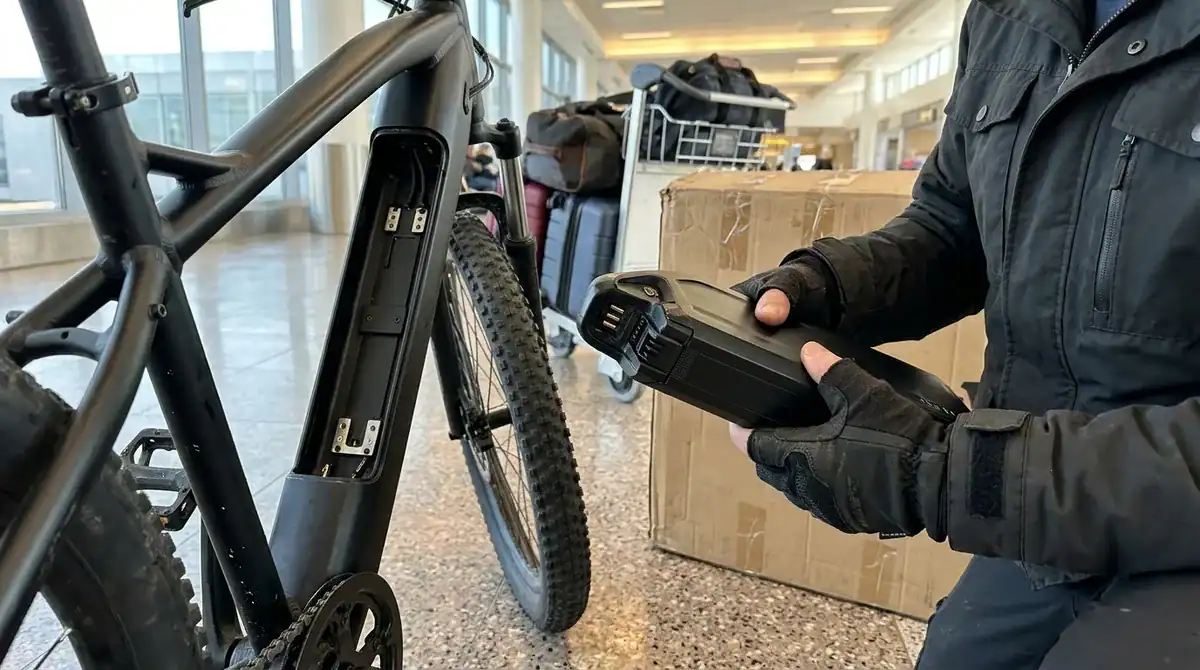
Yes, you can often fly with an e-bike or other lithium-powered gear, but the battery rating decides whether it travels, and some airlines will not carry a motorized bicycle at all. Qatar Airways does not permit motorized or battery-powered bicycles, so an e-bike on one of its flights is not an option. Another carrier may accept the same bike with its battery in place.
Start with the watt-hour rating, which is usually printed on the battery label. If the label lists volts and amp-hours instead, multiply them together. A 12-volt battery rated at 8 amp-hours works out to 96 Wh (12 x 8 = 96). Under U.S. rules, rechargeable lithium batteries rated 0 to 100 Wh are allowed on passenger aircraft. Batteries rated 101 to 160 Wh require airline approval before you fly, and batteries above 160 Wh are forbidden.
Some e-bike packs are rated above 160 Wh, and those cannot fly on a passenger aircraft no matter how carefully you pack them. In that case, the practical plan is to ship nothing and rent a bike at your destination, or to choose a different bike for the trip. Check the rating before you reserve a flight, not after you have already built a case around the frame.
Spare batteries follow stricter rules than batteries installed on a bike. U.S. guidance requires spare lithium batteries to travel in the cabin, not in checked baggage. Passengers may carry no more than two spare lithium-ion batteries rated 101 to 160 Wh each, and only with airline approval. The International Air Transport Association states the same principle in its dangerous goods guidance, saying spare batteries are not allowed in checked baggage.
That means the battery comes off the bike and goes into your carry-on, while the frame goes into the box. Remove the battery before you box the bike, and keep it in its own protective pouch or case so the terminals cannot touch metal. Tape over the battery contacts with electrical tape, and keep the battery away from other items in your bag where it could be crushed or knocked. Pack it where you can reach it during the flight in case the crew asks to see it.
Do not assume that a battery accepted on one leg will be accepted on the next. Each airline on your route can apply its own approval process, and a connecting carrier may refuse a battery that the first airline allowed. Ask the operating airline for each segment whether it accepts the battery, whether the battery needs its own approval, and whether the removed battery must be carried in the cabin. Write down the watt-hour rating, the approval reference and the name of the agent you spoke with.
A battery that meets the rules still needs a few minutes of attention at the airport. Keep the original battery label readable, and bring the charger if you plan to top up the battery during the trip, since the charger is a separate item from the battery. If you are carrying more than one battery, count them against the two-spare limit before you reach the security checkpoint so you are not sorting packs at the gate.
Getting Your Bike Through the Airport and Baggage Claim
Your bike is packed, weighed and tagged, and now the airport is where the plan meets the real world. A bike box is bulky and awkward, so move it on a luggage cart or trolley rather than dragging it across the terminal floor. Strap the box to the cart with a bungee or ratchet strap, and keep the side with the label facing up so staff can read it at the counter.
Give yourself extra time at check-in. Oversized bags take longer to weigh, measure and tag than a standard suitcase, and some airports send them to a separate oversize counter. Arrive earlier than you would for an ordinary flight, and bring a printed copy of the bicycle policy you relied on, along with your receipt for any bicycle fee. That paperwork lets the agent match your case to the rules you read before booking.
Frontier says bicycles cannot be carried on board, so if you fly with that airline, your bike will go into the hold no matter how small or light the case is. Plan for that from the start. Expect to hand the box over at the counter and to collect it later, rather than counting on it to travel beside you.
A bike can arrive hours after you do, so pack a small backup kit in your carry-on. With it, you can still ride, repair a flat or set up a loaner bike if the case is late. Include:
– A spare pair of pedals, plus the pedal wrench that fits them – A multitool with a chain tool and a few hex keys – A spare tube or a compact inflator that matches your valve type – A set of riding clothes, including padded shorts, a jersey and gloves
Keep your important documents and medications in your carry-on as well. Your passport, travel insurance details, printed bookings and any prescriptions you need each day should never be in the checked bag. If the bike is delayed, you may still need to show identification at the hotel or the rental counter, and you cannot replace a daily medication in the middle of a trip. Store everything in a single pouch so you can find it quickly at security and at the gate.
When the bike finally reaches the baggage claim area, do not wheel it straight out the door. Look over the box for crushed corners, tears, wet patches or soft spots, and listen for any rattling when you lift it. Open the case right there if the airport allows it, then check the frame, wheels, brakes, handlebars and rear derailleur hanger before you leave.
Photograph the box and any damage before you move anything. Take a wide shot of the whole case and close-ups of each dent or crack. Report the problem to the airline’s baggage office while you are still in the terminal, and ask for a written report with a reference number. Reporting before you leave the airport makes it far easier to connect any damage to the flight, and it gives you the paperwork you will need if the frame needs repair.
Your Bike Flight Checklist Before You Book
Start by pinning down your flight dates and your booking date, since they decide which Frontier bicycle fee applies. Bookings made on or before May 28, 2026 pay $75 per bag per direction, and bookings made on or after May 29, 2026 pay $100. Compare the total with and without the bike before you commit.
Next, weigh the bike as it will actually fly. Put the bike, its case or box, the foam and the tape on a bathroom scale, then compare the total with the 50 lb line where Delta’s excess-weight fees begin. If the number is close, move the pump, tools and spare tube into a separate duffel and weigh that bag on its own.
Then open the bicycle policy page for every airline on your shortlist and copy the answers into one note. Check your box’s linear inch total against each ceiling, confirm whether a soft bag needs a release, and list which parts must be removed or fixed in place. Save a screenshot of each page, and print the one you rely on for the check-in counter.
If your bike has a battery, look for the watt-hour rating printed on its label before you pick a flight. Use the volts times amp-hours method if the label lists only those numbers. Then contact the operating airline on each leg, ask whether a battery in the 101 to 160 Wh range needs approval, and write down the name of the agent you spoke with.
Once those four checks are done, book the flight that fits your route and your budget, and get ready for the ride waiting on the other side.