
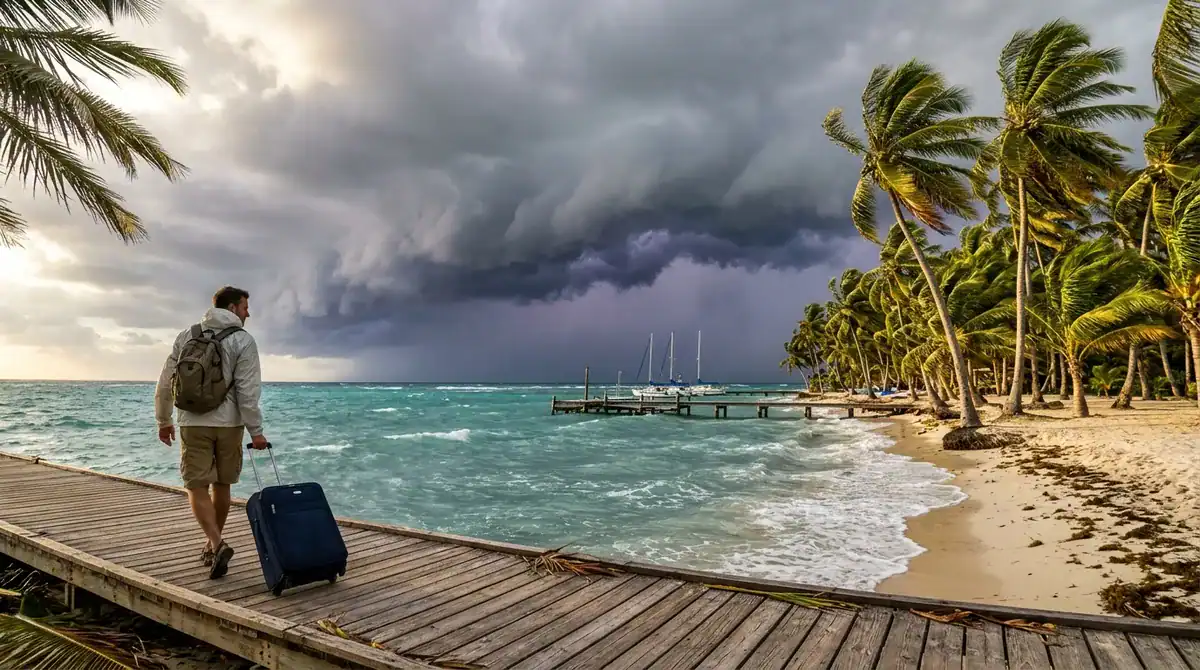
Hurricane season travel in the Atlantic basin runs from June 1 through November 30, and the risk is concentrated between mid-August and mid-October, with activity typically peaking around September 10. Long-term figures from the National Hurricane Center describe an average season with 14 named storms, 7 hurricanes and 3 major hurricanes. That is a pattern rather than a promise, because storms can form outside the official dates and any single year can run well above average. The eastern Pacific follows its own calendar, from May 15 through November 30, so Pacific-side itineraries need their own check. Treat these averages as a starting point for choosing dates, not a forecast for the week you land.
Recent seasons show how quickly conditions can change. The 2024 Atlantic season produced 18 named storms and 11 hurricanes, and Hurricane Beryl reached Category 5 on July 2, the earliest on record for the basin. Once a system is developing, the official vocabulary matters. A hurricane watch means wind impacts are possible within 48 hours, while a warning means hurricane-force winds are expected within 36 hours. Insurance with hurricane coverage typically costs 4% to 10% of the trip cost, and it generally has to be bought before a storm receives a name. Keep these details in mind before you pay a deposit, and your plans will hold up far better when the forecast shifts.
Key Takeaways
- Plan your Atlantic hurricane season trip with the June 1 through November 30 season in mind, and give extra care to the mid-August to mid-October window when the most storms are typically on the map.
- Travelers should know that hurricane coverage on insurance typically costs 4% to 10% of the trip cost, and a standard policy generally will not cover a hurricane bought after the storm has been named, so book your coverage while the sky is still clear.
- A hurricane watch means wind impacts are possible within 48 hours, while a hurricane warning means hurricane-force winds are expected within 36 hours, so treat a watch as your signal to prepare and a warning as your signal to act.
- Off-season months like September through November can bring lower lodging, activity and rental car prices in destinations such as Aruba, but airfare is not guaranteed to drop, so compare fares before you commit.
- Follow the National Hurricane Center and your destination’s local emergency management office, because their instructions matter most on the ground and should take priority over viral clips or group chats.
Hurricane Season Dates and the Months That Matter Most
Atlantic hurricanes need warm ocean water and weak wind shear to build, and both conditions tend to peak in late summer. That is why the basin’s activity ramps up through August, reaches its high point around September 10, and tapers off by late autumn. Travelers planning Caribbean trips should look closely at the stretch between mid-August and mid-October, when the most storms are typically on the map.
Averages are useful, but they are only a midpoint. A typical season produces 14 named storms, 7 hurricanes and 3 major hurricanes, while 2024 brought 18 named storms, 11 hurricanes and 5 major hurricanes. Five of those hurricanes made landfall in the continental United States. A busy year can pass mostly offshore, and a quiet one can still send a damaging storm onto a single island, so the season total tells you about the basin, not your beach.
Storm categories also help you read the news. A tropical storm has sustained winds of at least 39 mph, and a hurricane has winds of at least 74 mph. The hurricane hazards explainer from NOAA notes that storm surge, the rise in sea level tied to a hurricane, caused 49% of U.S. hurricane deaths from 1963 through 2012. The Saffir-Simpson Hurricane Wind Scale ranks hurricanes from Category 1 to Category 5 by wind speed, but a lower category does not mean low flood risk.
Storms also form outside the official calendar. Beryl’s rapid strengthening to Category 5 on July 2 showed that early-season systems can intensify quickly over warm water. Seasonal forecasts describe how many storms are expected across the whole basin. They cannot tell you what will happen on your island during the week you travel.
If your dates are flexible, consider June or late November, when the basin is usually calmer, and avoid booking nonrefundable stays squarely in the peak weeks.
Watches, Warnings and Forecast Cones Explained

Official products give you the clearest picture of a developing storm, and each has a specific job. A hurricane watch means wind impacts are possible within 48 hours, while a hurricane warning means hurricane-force winds are expected within 36 hours. A watch is your signal to prepare, and a warning is your signal to act.
The forecast cone is the most misread graphic in storm coverage. It shows the probable track of the storm’s center, not the full reach of its hazards. Its circles are sized so that two-thirds of official forecast errors in a five-year sample fall inside them. For 2026, the Atlantic 120-hour circle radius is 200 nautical miles, so a destination that sits outside the cone can still feel the storm.
Storm surge is the rise in sea level tied to a hurricane, and it can flood low coastal areas well before the wind arrives. It accounted for 49% of U.S. hurricane deaths from 1963 through 2012. Heavy rain can also spread far from the center, which is why a sunny forecast for your resort may not reflect what is happening offshore.
For the latest official information, start with the National Hurricane Center, then check the national or island weather service for your destination. Local emergency management offices issue the instructions that matter most on the ground. If a viral clip or a group chat contradicts those instructions, follow the local officials.
When a system forms near your destination, work through these steps in order:
- Confirm your flights directly with the airline as soon as the storm receives a name.
- Check your hotel’s alert channels and ask how it handles storm-related cancellations.
- Plan an alternate route, such as a different departure airport or a town farther inland.
- Pack passports, insurance documents, and prescriptions, along with several days of medication, in your carry-on bag.
Insurance, Refunds and Flexible Bookings for Storm Season
Comprehensive travel insurance with hurricane coverage typically costs 4% to 10% of your trip cost. Across the market, plans with hurricane coverage averaged about $38 per day in 2025, so a week-long trip can add a clear but manageable line to your budget. Compare a few policies before you book, and read how each one defines a named storm.
Timing matters more than most travelers expect. A standard policy generally will not cover a hurricane if you buy it after the storm has been named. Check your policy terms and buy while the sky is still clear.
Cancel For Any Reason coverage is the more flexible option. It typically costs about 40% more than standard travel insurance and is usually available only within 14 to 21 days of your initial trip deposit. It lets you cancel for reasons a standard policy would not cover, but the reimbursement terms vary, so read them closely before you pay.
If a carrier cancels or significantly changes your flight and you decline the alternative, the U.S. Department of Transportation refund rule requires refunds within 7 business days for credit-card payments or 20 calendar days for other forms of payment. Under the department’s refund guidance, a change is significant when a domestic flight departs 3 or more hours earlier or arrives 3 or more hours later, or when an international flight departs 6 or more hours earlier or arrives 6 or more hours later.
Ask each hotel for its hurricane and cancellation policies in writing, including whether it waives fees if a storm closes the airport or the main road. Cruise travelers should review how the ship handles storms, whether it changes ports, and what rebooking options it offers if the itinerary shifts.
Financial protection is only part of readiness. Before you leave, put three plans in place:
- A disaster kit with water, medication, flashlights and copies of your passport and insurance documents
- An evacuation plan with a driving route, a backup airport and a meeting point for your group
- A pet plan that covers boarding or transport, vaccination records and a list of pet-friendly lodging inland
Pack your pet’s carrier, medications and records together so you can leave on short notice.
Aruba: Dutch Charm Outside the Storm Track
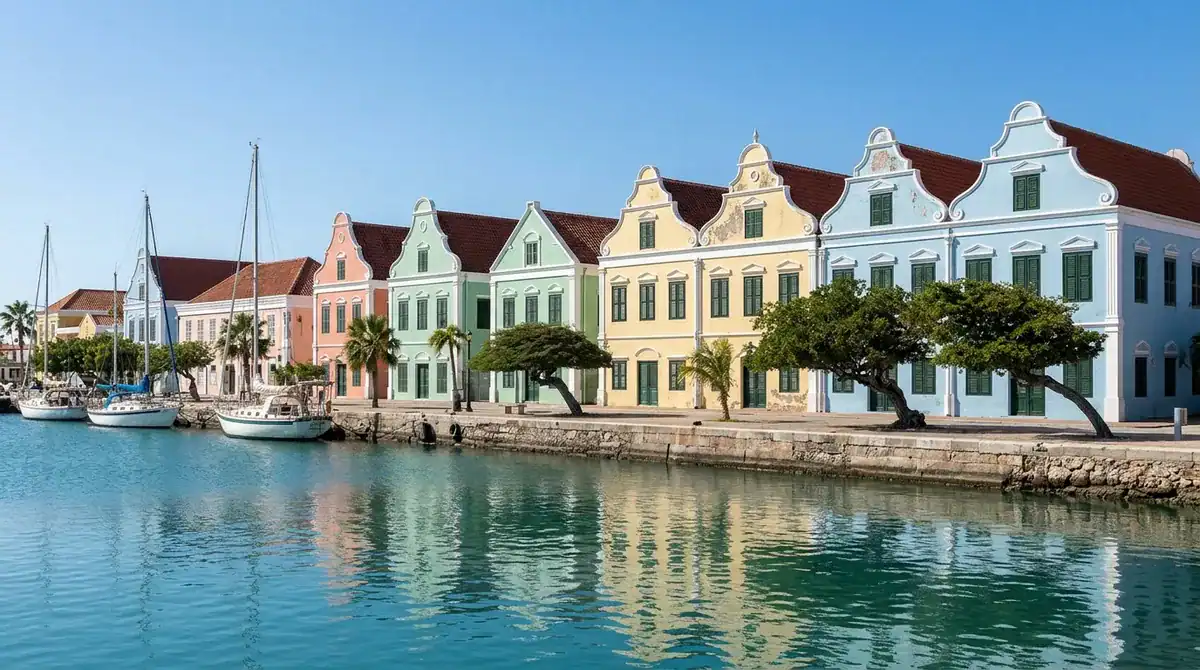
Aruba is a southern Caribbean island where the beaches come first. More than 20 public beaches and coves give you plenty of room to swim, snorkel or dive, and Arikok National Park adds a quieter side of the island. In the historic towns, Dutch heritage shows up around Fort Zoutman, while artisan markets and local festivals keep the calendar busy.
Aruba sits just off the coast of Venezuela, south of where most hurricanes form, so the U.S. State Department says direct hits are rare. That is not the same as storm-proof. Storms passing to the north can bring stronger winds, rough waves and heavy showers from June through November, especially August through October.
Quieter months can mean lower prices. Aruba.com identifies September through November as low season, with savings on lodging, flights, rental cars and activities. Airfare is not guaranteed to fall, though, so compare fares rather than assuming a discount. Travel insurance that covers trip cancellation, medical care and evacuation is worth buying before you book.
Aruba suits travelers who want a low-risk tropical trip and can stay flexible. May and June offer a shoulder-season option that falls before the main storm months, and Lonely Planet describes the lower season as running from after Easter through November. If you travel in the autumn, choose refundable stays where you can, watch official alerts, and be ready for a passing storm to reshape a day or two of plans.
At a glance
- Best for: travelers who want a low-risk tropical trip and can accept flexible plans
- Hurricane Exposure: lower direct-hit risk because it sits south of where most hurricanes form, but passing storms can bring wind, rain and rough seas
- Best Months to Visit: May and June as a shoulder season, or September to November for fewer crowds during the hurricane season
- Off-Season Prices: September to November is low season with savings on lodging, flights, rental cars and activities, though airfare is not guaranteed to drop
- Storm Preparedness and Plans: the Government of Aruba advises people to prepare for possible storm impacts and to follow official channels such as Meteo Aruba
Curaçao: Willemstad’s Colors and Shore Diving
Curaçao is an autonomous country within the Kingdom of the Netherlands, about 90 miles north of Venezuela, and it has a character all its own. Willemstad’s historic districts of Punda, Pietermaai, Otrobanda and Scharloo carry Dutch, Spanish and Portuguese influences in their architecture. Spend the morning wandering those colorful streets, then head for the water.
The island has more than 70 dive sites, several of them reachable from the shore, along with snorkeling up and down its coast. The driest months run from February through June. The Curaçao Tourist Board describes May to June and September to November as off-season, when hotel rates may be lower and flights may be more affordable, depending on route and dates. July and August tend to be busier.
Curaçao’s position is its main advantage. It lies south of the main hurricane belt, where direct hits are rare, but indirect effects still arrive, including stronger winds, rough seas and heavy rainfall, particularly from August through October. When a system threatens the island or comes within 500 kilometers, the Meteorological Department Curaçao issues tropical-cyclone bulletins, so watch those closely. This is a lower-exposure choice, not a risk-free one.
Curaçao suits travelers who want a flexible tropical trip and will stay alert to advisories. Choose refundable rooms where you can, and build a spare day into your schedule so a rough-sea morning can become an afternoon at a museum.
At a glance
- Best for: travelers wanting beaches, shore diving and historic Willemstad with lower storm exposure
- Hurricane Exposure: south of the main hurricane belt, so direct hits are rare, though winds, seas and rain can still arrive, especially August through October
- Best Months to Visit: February through June, the island’s driest period
- Off-Season Prices: May to June and September to November, when hotel rates may be lower and flights may be more affordable
- Storm Preparedness and Plans: the Meteorological Department Curaçao issues bulletins when a system threatens the island or is within 500 kilometers
Bonaire: Reefs and Quiet Dry Landscapes
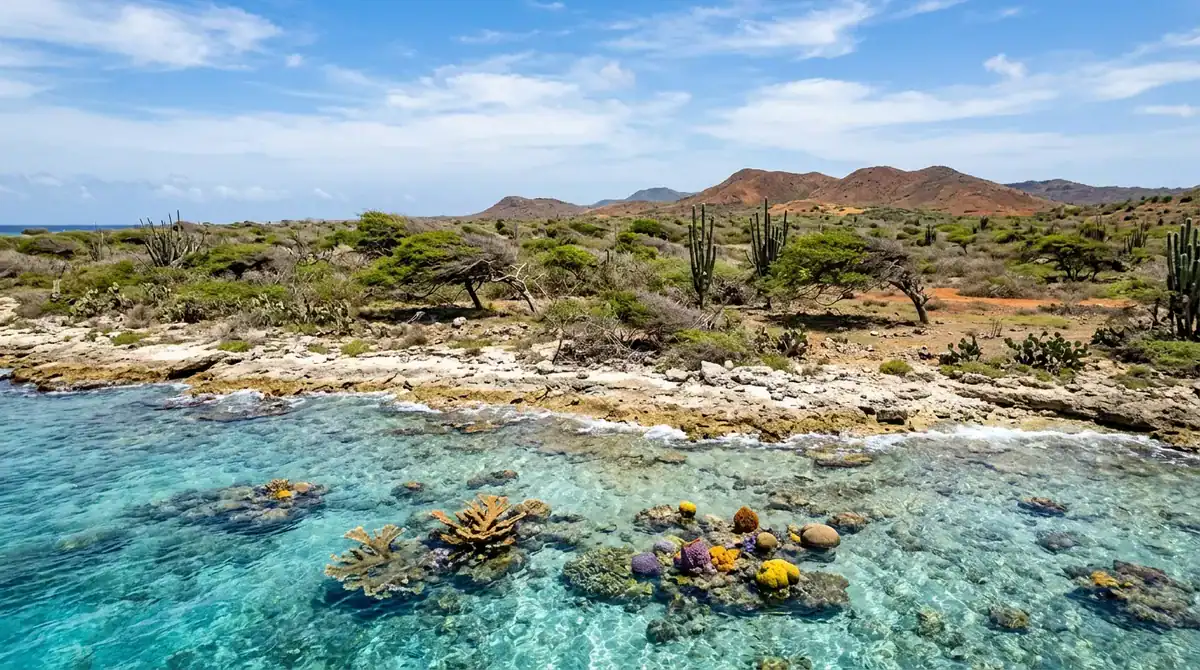
Bonaire is a Dutch Caribbean island about 80 km off Venezuela, and it is built for people who come for the water. Shore diving and snorkeling start right off the beach, and the protected marine park keeps the reefs at the center of island life. Between dives, you can hike the dry interior, kayak the coastline or bike the flat roads, with a warm, windy climate that stays much the same year-round.
The island sits south of the main Atlantic hurricane tracks, so direct hits are rare. Tropical storms passing to its north can still reach it, mostly from June through November, with peak activity from August through October. The U.S. Department of State warns of rough seas, stronger winds and rain, and the short rainy season from October through January can bring showers that briefly flood the streets.
Quieter months have real appeal. Bonaire.com’s September guide reports accommodation rates about 20 to 30 percent below December to March high-season rates, along with less crowded dive sites and beaches. Autumn is the low season on the island, with fewer tourists and lower prices but more rain. Check current rates and availability on the official Bonaire tourism site.
Bonaire suits nature lovers who can handle some weather variability. Flexible airline tickets and weather-related travel insurance, both recommended for hurricane-season trips, help protect a plan that depends on calm seas for diving.
At a glance
- Best for: Divers, snorkelers and nature lovers who accept some weather variability
- Hurricane Exposure: Outside the main hurricane belt, though tropical storms passing to the north can affect the island mostly from June through November
- Best Months to Visit: May through August for a shoulder season with fewer crowds
- Off-Season Prices: Accommodation about 20 to 30 percent below December to March high-season rates in September
- Storm Preparedness and Plans: The Public Entity of Bonaire’s disaster-response team alerts the public during storms and arranges shelters for people whose homes are unsafe
Trinidad and Tobago: Carnival Rhythms and Rainforest Calm
Trinidad and Tobago pairs two very different islands. Trinidad is the place for food, music and festivals, from steelpan bands to the street stalls serving doubles and roti, with Carnival setting the rhythm of the year. Tobago is quieter. Its beaches, reefs for diving, rainforest trails and birdwatching make it the better choice for a slow, unhurried stay. The dry season runs from January to May, but many travelers choose the wetter months for the calmer crowds.
The islands sit on the southern edge of the Atlantic hurricane basin, so direct hurricane hits are rare. Trinidad is less often directly affected than Tobago, though tropical systems can bring wind and rain to both. The U.S. State Department warns that tropical storms, nearby hurricanes, heavy rain, flooding, landslides and rough seas can still disrupt travel, especially during the rainy season from June to December. The Trinidad and Tobago Meteorological Service lists the hurricane season from June to November, with its peak from August to October.
Lower prices are the main draw of the off-season. Rough Guides reports that many Tobago properties use a summer low-season rate from mid-April to mid-December, while Trinidad hotel rates tend to shift mainly around Carnival. That does not mean airfare drops as well, so price flights separately. For current rates and availability, check the official tourism site.
Trinidad and Tobago suits travelers who are comfortable planning around the rainy season and can keep their dates flexible. It is less suited to anyone who wants a guaranteed-weather beach holiday.
At a glance
- Best for: Flexible travelers who want food, music and festivals on Trinidad and a slower beach and rainforest pace on Tobago
- Hurricane Exposure: Direct hurricane hits are rare, but tropical storms, heavy rain, flooding and landslides can disrupt travel
- Best Months to Visit: The dry season runs from January to May
- Off-Season Prices: Many Tobago properties use a low-season rate from mid-April to mid-December, though airfare may not follow the same pattern
Grenada: The Spice Isle Beyond the Dry Season

Grenada, the Spice Isle, is made up of Grenada itself plus Carriacou and Petite Martinique, and there is plenty to do beyond the peak weeks. Spend a day on Grand Anse Beach, then book a reef dive or a wreck dive in the warm water. Inland, rainforest trails lead to waterfalls, and spice and cocoa experiences show you how the island’s famous crops are grown and processed. The annual Spicemas celebration fills the island with music and color.
Grenada sits near the southern edge of the hurricane belt, about 100 miles north of Venezuela, and that position lowers its exposure without removing it. The Grenada Tourism Authority describes June through December as the rainy season, and AFAR notes that mid-December to mid-April is the island’s busiest period.
Lower costs are a real draw. May and June form a shoulder season with fewer crowds and lower prices, according to Royal Caribbean, and July through November is the low season. Those months suit travelers who can move a beach day or a hike when the weather turns.
Grenada suits travelers who want a southern Caribbean trip with flexible plans. One independent Grenada travel guide advises that hurricane-season visitors should be able to shift activities, allow extra time for transport changes and accept uncertainty. The National Disaster Management Agency coordinates emergency activities across all three islands, and its hotline is +1 (473) 440-0838.
At a glance
- Best for: travelers who want a southern Caribbean beach, diving and rainforest trip with a flexible schedule
- Hurricane Exposure: near the southern edge of the hurricane belt, but not storm-proof
- Best Months to Visit: January through May, the dry season described by the Grenada Tourism Authority
- Off-Season Prices: May and June shoulder season with fewer crowds and lower prices; July through November low season
- Storm Preparedness and Plans: the National Disaster Management Agency coordinates across Grenada, Carriacou and Petite Martinique, with an emergency hotline at +1 (473) 440-0838
Barbados: Surf, Rum and Heritage in Wetter Months
Barbados is built for beach days, and the months outside the peak storm weeks give you plenty of time to enjoy them. The island has more than 60 beaches. The west and south coasts have calmer waters for swimming and snorkeling, while the other shores offer stronger surf and windsurfing. Between swims, you can explore Barbadian history and cuisine, and Crop Over fills the calendar from late June to early August with music, food and culture.
Barbados sits at the southern edge of typical tropical-storm tracks and outside the direct path of many systems, so its exposure is lower than that of some Caribbean destinations in certain years. It is not storm-free, though. Historical records count 64 tropical storms or hurricanes passing within 100 kilometres from 1851 to 2019, and those storms can bring damaging wind, surge and flooding. The government advises visitors to follow Department of Emergency Management alerts, keep devices charged, and know their storm plan and shelter arrangements. The Tourism Emergency Operations Centre coordinates the tourism sector’s response to disasters that could affect visitors.
The off-season offers real savings. July through October is the low season, when airfares and accommodation can be discounted and beaches are less crowded. Mid-April to June and November are shoulder options with somewhat lower prices. For current rates, visit the official Visit Barbados site.
Barbados suits travelers who want culture and surf and can accept a lower-cost, wetter season. Those who want the lowest possible weather risk should choose the drier months outside hurricane season.
At a glance
- Best for: travelers who want beaches, surf, rum, heritage and festivals at lower off-season prices, and who can adjust plans if a storm passes nearby
- Hurricane Exposure: sits at the southern edge of typical storm tracks, but storms passing within 100 kilometres have occurred and can bring damaging wind, surge and flooding
- Off-Season Prices: July through October is the low season, with discounted airfares and accommodation and thinner crowds
- Storm Preparedness and Plans: follow Department of Emergency Management alerts, keep devices charged and emergency contacts available, and know your storm plan and shelter arrangements
Antigua: Nelson’s Dockyard in the Shoulder Season

Antigua comes into its own once the summer crowds thin. The Caribbean island, part of the country of Antigua and Barbuda, is known for its beaches, sailing, local food and cultural heritage. The Antigua and Barbuda Tourism Authority highlights Nelson’s Dockyard, a restored Georgian naval dockyard. Between visits, swim and snorkel off the coast, and plan your dates around Carnival if music and street parades are the reason you are going.
Antigua is exposed to Atlantic storms, so the calendar matters. The U.S. State Department gives the hurricane season as June through November, with the highest risk in August, September and October, and warns of destructive winds, heavy rain and flooding. Storm-season visitors should follow local forecasts, radio and television warnings, and instructions from local authorities, keep emergency supplies ready, and consider insurance that covers evacuation, medical care and trip cancellation.
Lower visitor numbers are a real draw. Antigua and Barbuda’s National Adaptation Plan lists July through November as the low season with the fewest visitors, and May and June as shoulder months. Lower demand is not a guaranteed bargain, though, since a travel-planning guide advises comparing live prices, which vary by route, dates, events, room type and booking lead time.
Antigua suits travelers who accept storm risk and can stay flexible. Book refundable rooms where you can, leave slack in each day so boat trips and transfers can shift, and keep an eye on official advisories from the moment you book.
At a glance
- Best for: travelers who want beaches, sailing and history and can accept storm risk with flexible plans
- Hurricane Exposure: exposed to Atlantic storms, with the highest risk from August through October
- Best Months to Visit: May and June as the shoulder season
- Off-Season Prices: July through November is the low season with the fewest visitors, though lower prices are not guaranteed
- Storm Preparedness and Plans: follow local forecasts, radio and television warnings and local authorities, and consider insurance that covers evacuation, medical care and trip cancellation
Panama: Canal, Rainforest and Two Coasts
Panama packs a lot into one small country. Beaches and islands line both the Caribbean and Pacific coasts, while rainforest trails, birdwatching and Indigenous communities offer a slower side of the country. In Panama City, the historic Casco Antiguo district, the ruins of Panama Viejo and the Panama Canal anchor a trip, and the restaurant scene gives foodies plenty to explore. The official tourism site highlights these same experiences.
Panama lies outside the typical tropical-cyclone paths, so direct hurricane exposure is relatively low. Rain is the bigger concern. The rainy season runs from about May through November, with October and November the wettest months, and the Caribbean coast stays rainy much of the year. The World Bank notes that Hurricanes Otto and Iota caused flooding and landslides, particularly in the western provinces, and those conditions can close roads and disrupt tours.
The quieter season has its rewards. Hotel rates can run 10% to 30% below high-season prices from May through November, and international flights are usually cheapest from September to November. Those savings come with a trade-off. Keep a museum day in Casco Antiguo ready as a backup for rainy afternoons.
Panama suits travelers who prefer rainforest and culture and are willing to plan around the rain. If the driest weather matters most, December through April is the better window.
At a glance
- Best for: travelers who prefer rainforest, culture and wildlife and are willing to plan for rain
- Hurricane Exposure: relatively low, because the country lies outside typical tropical-cyclone paths, though flooding and landslides can still disrupt travel
- Best Months to Visit: December through April for the driest weather
- Off-Season Prices: hotel rates 10% to 30% below high-season levels from May through November, with the cheapest international flights from September to November
Costa Rica: Pura Vida Through the Green Season

Costa Rica is a tropical Central American destination between the Pacific Ocean and the Caribbean Sea, known for its volcanoes, rainforests and easygoing “pura vida” spirit. Green-season plans include rafting on the Pacuare River, turtle watching in Tortuguero and whale and dolphin watching in Ballena National Marine Park. Surfers, hikers and chocolate-farm fans find plenty to do as well, and the official tourism board recommends scheduling national-park visits in the morning during the green season.
Costa Rica and Panama lie outside most historical hurricane tracks. A historical study of tropical-cyclone tracks found that both countries are more often affected indirectly than by storm landfalls. Direct landfalls are rare, but tropical cyclones can still bring heavy rain, flooding and landslides, and the damaging rain tends to fall hardest on the Pacific slope.
Rainfall depends on the coast. The Pacific side has a dry season from December to March and a rainy season from May to October, while the Caribbean side is relatively drier in February and March and again in September and October. Choose lodging and routes to match, and see Costa Rica’s official tourism site for current details. Flexible travelers may also find fewer crowds and lower costs in the off-season.
Costa Rica suits travelers who accept some rain and want a low-risk tropical trip full of wildlife and rainforest. It is less suited to visitors who need reliably dry weather or a tightly fixed itinerary.
At a glance
- Best for: flexible travelers who want volcanoes, rainforests, surf and wildlife and can plan around rain
- Hurricane Exposure: outside most historical hurricane tracks, with direct landfalls rare, though heavy rain, flooding and landslides can still arrive
- Best Months to Visit: December to March for the dry Pacific coast, and February, March, September and October for the drier Caribbean coast
- Off-Season Prices: fewer crowds and lower costs for travelers who can adapt plans to the weather
Mexico’s Caribbean Coast: Cenotes and Maya Ruins with Storm Watch
Mexico’s Caribbean Coast, also called the Mexican Caribbean, stretches across Quintana Roo from Isla Holbox to Bacalar. The official Caribe Mexicano guide highlights swimming in cenotes, island boat trips, dining by the sea and exploring the jungle, with Maya heritage and traditions woven through the region. Cancún and Cozumel offer beaches, reef trips and island outings, while Tulum and Bacalar lean toward cenotes, jungle trails and Maya archaeological sites.
The region sits within the storm-affected Atlantic basin rather than far from its tracks. The official hurricane season runs from June 1 through November 30, with activity generally highest from mid-August to mid-October. March through May is the drier window with the least rain, while the rainy season runs from May through November and September and October are usually the wettest months.
Travel guides to Cancún describe May to June and September to November as quieter, lower-cost periods, with deals on hotels, excursions and airfares. The trade-off is that September and October bring heavier rain and greater tropical-storm risk, so the cheapest weeks are also the ones that demand the most flexibility.
This coast suits travelers who can keep plans flexible, monitor updates daily and insure their trip. It is a poor fit for anyone who needs a fixed-date beach holiday during the peak storm months.
At a glance
- Best for: travelers who can keep plans flexible, monitor updates daily and insure their trip, with cenotes, Maya ruins and reef trips on the itinerary
- Hurricane Exposure: inside the storm-affected Atlantic basin, with activity generally highest from mid-August to mid-October
- Best Months to Visit: March through May, the drier window with the least rain
- Off-Season Prices: May to June and September to November are quieter, lower-cost periods in Cancún, with hotel, excursion and airfare deals
Cayman Islands: Seven Mile Beach With Storm Preparedness
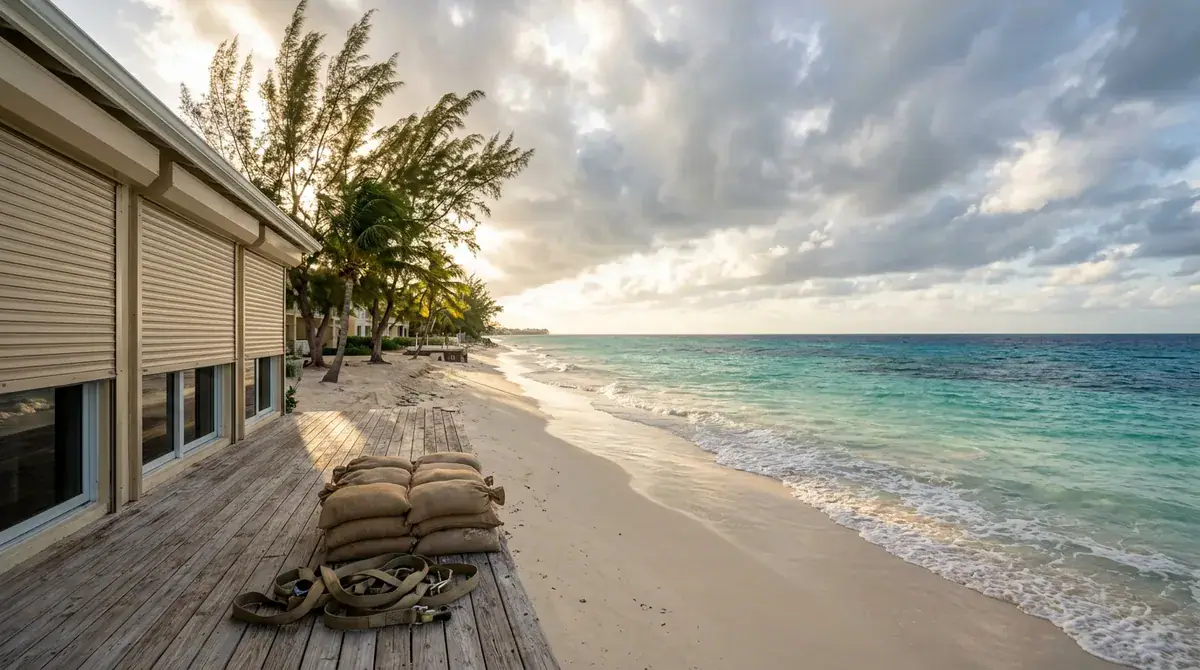
The Cayman Islands are three islands in the Caribbean: Grand Cayman, Cayman Brac and Little Cayman. Outside the peak months, you can spend long days on Seven Mile Beach or the public beaches, take a boat out to Stingray City, and explore reefs and historic wrecks across the Cayman Islands Department of Tourism‘s 365 dive sites. Caymanian culture and dining round out the trip.
The official hurricane season runs from June 1 through November 30, with activity generally peaking from August through October. The islands are low-lying, which leaves them vulnerable to storm surge, dangerous waves and flooding, and waterfront properties are especially exposed. The government directs visitors to its hurricane-season guide and asks them to monitor official channels for warnings, shelter information and service disruptions.
Off-season hotels can be cheaper and beaches less crowded, according to Frommer’s, though some restaurants close and hotels may offer fewer facilities or carry out renovations. Airfare is less predictable. The rainy season from late May to November brings short, intense showers that can interrupt a beach day.
The Cayman Islands suit travelers who want reliable services and can accept storm-season disruption. If predictable weather and flights matter more, mid-December to mid-April is the peak winter window.
At a glance
- Best for: travelers who want reliable services, beaches and diving, and who accept storm-season disruption
- Hurricane Exposure: low-lying islands vulnerable to storm surge, dangerous waves and flooding, with waterfront properties especially exposed
- Best Months to Visit: mid-December to mid-April, with April a particularly good weather month
- Off-Season Prices: off-season hotel rates can be lower, but airfare is not guaranteed to drop, since KAYAK’s fare data lists January as the cheapest month to fly and October among the most expensive
- Storm Preparedness and Plans: the government directs visitors to its hurricane-season guide and to official channels for warnings, shelter information and service disruptions
Choosing Your Storm-Season Destination With Confidence
Start with your dates before you fall for a destination. If you can travel in June or late November, you will be booking during a calmer part of the Atlantic season. If you must travel in the peak weeks, shortlist islands south of the main hurricane belt, such as Aruba, Curaçao or Bonaire, and compare their low-season rates against the cost of your flights.
Once you have a shortlist, request insurance quotes before you pay any deposit. Plans with hurricane coverage typically cost 4% to 10% of your trip, and a policy bought after a storm has been named generally will not cover that storm. Ask whether each plan offers Cancel For Any Reason coverage, and remember that it is usually available only within 14 to 21 days of your initial deposit.
If your itinerary includes Pacific Mexico or Costa Rica’s Pacific coast, check the eastern Pacific calendar separately. That season opens on May 15, so a Caribbean-season plan does not cover your Pacific stops.
Finally, before you leave, save the booking confirmations for your flights and hotels in one folder, along with your insurance policy number and your destination’s official alerts page. If a storm forms, those three items will tell you exactly what to change and whom to call.