
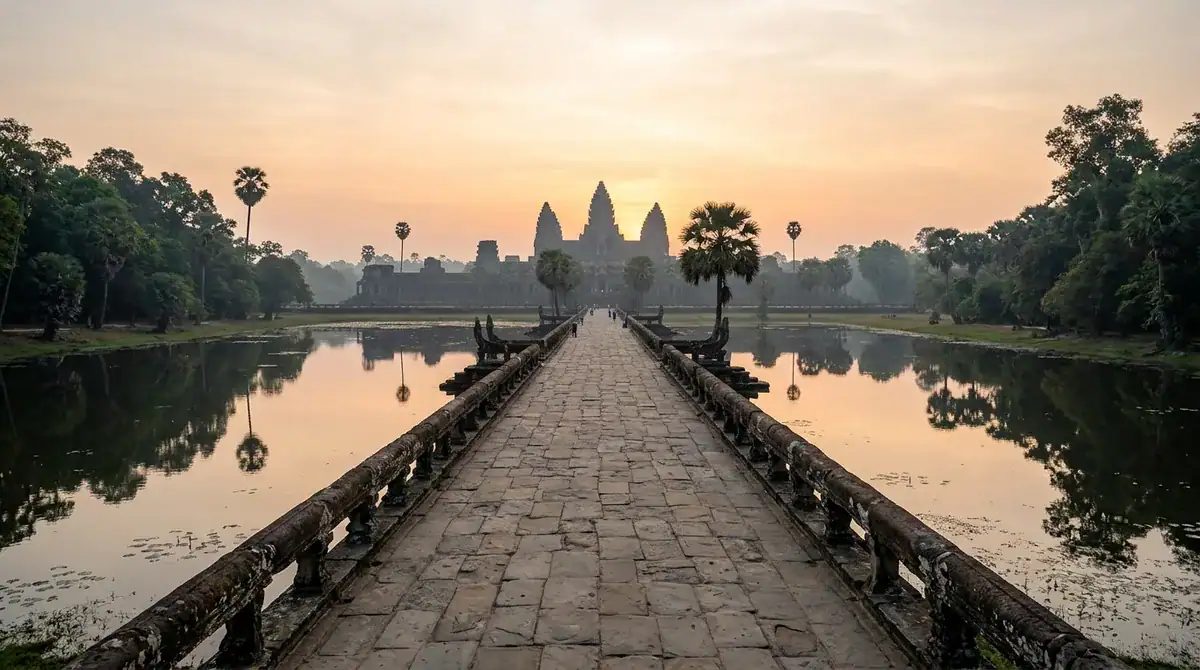
A first-time Angkor Wat itinerary is best built around the Small Circuit, a route that takes in Angkor Wat, Bayon, Ta Prohm and Phnom Bakheng and can be covered on a one-day pass priced at US$37. Angkor is far bigger than any single temple. UNESCO describes the archaeological park as roughly 400 square kilometres, holding the remains of Khmer Empire capitals from the 9th to the 15th century. The real skill in planning is choosing what to see rather than trying to see everything. Picture sunrise over Angkor Wat’s reflecting pools, carved faces gazing down at Bayon, tree roots threading through the stones at Ta Prohm, and a golden-hour climb up Phnom Bakheng.
Give Angkor Wat itself two to three hours, and a focused morning there leaves room for the other Small Circuit stops. If you want more time, the three-day and seven-day passes, priced at US$62 and US$72, open the Grand Circuit, a longer loop that includes Angkor Thom and quieter temples. Park entry generally runs from 5:00 a.m. to 6:30 p.m., so an early start is easy to fit in. Dress modestly, keep your distance from the carvings, and enjoy the stillness that comes before the day’s first tour groups arrive.
Key Takeaways
- Plan three days for a relaxed first trip, because a single day can only cover the seven Small Circuit stops.
- Check your pass activation date before buying, since the three-day pass expires seven days after activation.
- Skip Ta Keo if you tire early, because the sunset view from Phnom Bakheng is the day’s true highlight.
- Plan your timetable around Angkor Wat’s 5:30 p.m. closing time, which arrives an hour before the park gates shut.
- Choose East Mebon or Banteay Srei for calmer visits, since the headline temples draw large groups at midday.
How Many Days Do You Need for Angkor Wat?
One day is enough for a highlights visit, but three days gives a first-time visitor a more relaxed and balanced trip. A one-day pass covers the Small Circuit, which includes Angkor Wat, Bayon, Ta Prohm, Phnom Bakheng, Ta Keo, Banteay Kdei and Srah Srang. Those seven stops are the temples most first-time visitors come to see, so a single day can still deliver the postcard views.
Angkor is not one temple you can tick off in an afternoon. It is a sprawling archaeological landscape with dozens of monuments spread across forest, rice fields and dusty tracks between temples. That scale is the main reason a one-day plan needs clear priorities. You will not see everything, so the question becomes which temples matter most to you and how long you want to linger at each one.
The Small Circuit works well as a single day because its stops sit close enough together to visit in order. Starting early at Angkor Wat lets you see the main temple before the heat and the crowds build, and the rest of the circuit fills the remaining hours. Expect a full day with little slack, especially if you stop often for photos or to rest in the shade.
Three- and seven-day passes open the Grand Circuit, which covers the Small Circuit and extends further into the park. The longer passes also have longer validity windows. Angkor Enterprise’s ticket page lists the three-day pass as expiring seven days after purchase or activation, and the seven-day pass as expiring after 30 days, so check those dates before you buy if your trip is flexible.
The Grand Circuit is reserved for those longer passes, so a one-day visitor should not expect to reach its quieter corners. If you know you want to see more of the park than the Small Circuit allows, it is worth buying a three-day pass from the start rather than planning to upgrade partway through your trip.
Choosing between one day and several comes down to three things: how much history you want to absorb, how much time you want for photography, and how fast you like to travel. If you want a quick highlights visit with a few iconic views, one day is a satisfying choice. Visit Angkor Wat at sunrise, move through the Small Circuit in the morning and early afternoon, and finish with a sunset climb up Phnom Bakheng.
Three days suits most first trips. It gives you room for the Small Circuit on one day, a slower return to favorite temples on another, and a chance to explore the Grand Circuit on a third. You can read the carvings at Bayon for longer, sit with the tree roots at Ta Prohm without checking your watch, and avoid feeling that you must rush through each site.
Longer stays suit slow travelers and photographers best. Light changes dramatically across the day, and a temple looks different at dawn, under midday haze and in the warm hour before dusk. Returning to the same spot on several mornings lets you wait for the right moment without feeling pressured. A longer pass also makes it easier to skip the busiest hours and move at your own pace.
Crowds are part of the planning equation too. Angkor Enterprise reported that the park received 955,131 foreign visitors in 2025, a decline of 6.7 percent from the year before, according to a report carried by Agence Kampuchea Presse. Even with fewer visitors than the previous year, the most famous temples still draw large groups in the middle of the day. Spreading your visit over more days gives you more chances to see them when they feel calmer.
A simple test can help you decide. Count your must-see temples, then ask whether you would enjoy seeing them all in one long day or would prefer to spread them out. If you find yourself wanting to skip the Small Circuit’s rest stops, a single day is probably enough. If you keep adding names to the list, that is a good sign that three days will feel more rewarding.
Which Angkor Pass Should You Buy?
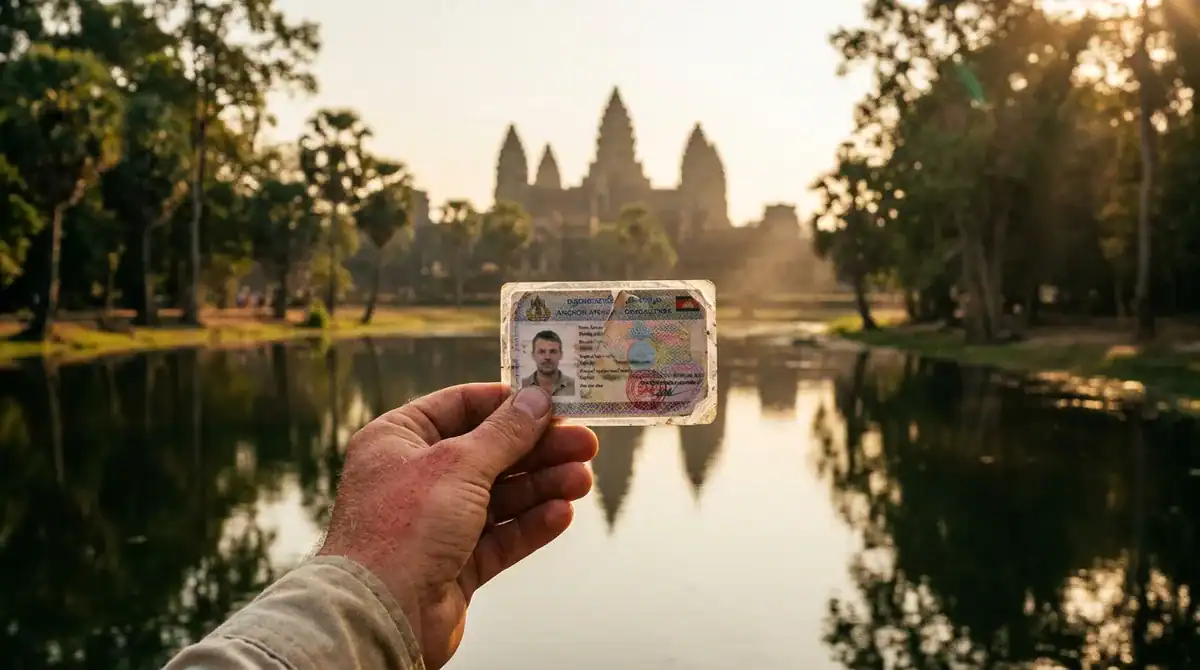
Pick the pass that matches the route you want. The one-day pass at US$37 covers the Small Circuit, while the three-day pass at US$62 is the better choice if you want the Grand Circuit or a slower pace.
The one-day pass is the simplest option. It is built for a single, focused morning and afternoon among the Small Circuit stops, so it suits visitors with limited time or those who want the classic views. Keep in mind that it does not stretch to the Grand Circuit, so there is no point buying it if you hope to reach the quieter temples on the park’s outer roads.
The three-day pass, priced at US$62, is the most flexible choice for most first-time visitors. It gives you enough days to cover the Small Circuit on one day, then return to favorite temples or explore the Grand Circuit on the others. Its validity window is seven days after purchase or activation, so you have a week to fit those three days into your schedule. If you plan to spend a rainy afternoon in your hotel or a slow morning at a temple you loved, that buffer helps.
The seven-day pass costs US$72 and remains valid for 30 days. It is the right choice for photographers who want to return to the same spot at different hours, or for travelers building Cambodia into a longer trip who do not want a tight deadline. Because the window is so generous, it also suits anyone unsure how many days the park will take to enjoy.
Check the validity window before you buy, not after. A three-day pass that you activate on your first morning will expire a week later, so if you plan to arrive in Siem Reap, rest for two days, and then start exploring, the clock may run out sooner than you expect. Write down your first and last planned temple days, then count forward from the date you will activate the ticket.
Matching the pass to the route is the most useful decision you can make. Sketch your route on paper with the days you have. If every day is a Small Circuit visit, the one-day pass will do the job. If you want to see the Grand Circuit or prefer a relaxed pace, choose the three-day pass. Buying a pass that is slightly larger than you think you need costs less stress than running short halfway through your visit.
One-Day Angkor Wat Itinerary on the Small Circuit
Our itinerary guides include travel times, fares and tips where relevant, so this route shows how the day fits together. It starts in the dark at Angkor Wat, moves through the carved towers of Bayon and the tree-wrapped ruins of Ta Prohm, and ends on a hill at sunset.
Plan the transport before you leave your hotel. Most visitors hire a tuk-tuk for the whole day rather than booking each ride separately, because the Small Circuit stops are spread across the park and the roads between them are dusty and uneven. Agree on a day rate in US dollars before you set off, and confirm exactly what it covers, including whether the driver waits while you explore each temple. The price will depend on how many stops you add and how far the driver must travel between them, so a shorter list of temples usually means a lower rate.
Travel times between stops are short, but they add up. Expect the ride from Angkor Wat to Bayon and Ta Prohm to take a good part of the morning once you factor in the road and the dust, and expect the hops between Ta Keo, Banteay Kdei and Srah Srang to be quicker because those temples sit near each other. Ask your driver to take the most direct route between temples and to drop you close to each entrance rather than at the car park, which saves walking in the heat.
Some stops are close enough to walk. Once you reach the Bayon area, the temple and the Angkor Thom gates are close together, so you can wander between them without the tuk-tuk. Banteay Kdei and Srah Srang are also within a short stroll of each other, which makes them a natural pair for the afternoon. Wear shoes you can walk in on uneven stone and bring a refillable water bottle, because the walking adds up quickly.
Here is the route in order:
- Be at Angkor Wat as the park opens at 5:00 a.m., and walk straight to the reflecting pool to find a spot for sunrise before the tour groups gather.
- Spend two to three hours at Angkor Wat, walking the outer galleries first and saving the central towers for when the light is strong enough to show the carvings clearly.
- Ride to Bayon, walk through the Angkor Thom gates on the way, then take your time with the rows of carved faces, which are best seen in the softer morning light.
- Continue to Ta Prohm, where the tree roots thread through the galleries, and give it a relaxed visit so you can see the stones without rushing.
- Take a midday rest in the shade, eating lunch and drinking plenty of water, because the heat can make the afternoon feel much longer than the morning.
- Visit Ta Keo, climbing carefully, since its steep steps are better taken slowly.
- Head to Banteay Kdei, a smaller and less visited temple, and then walk to Srah Srang, where the large stone reservoir makes a calm place to sit.
- Return to Phnom Bakheng in the late afternoon, arriving early to claim a spot on the hill for sunset.
The midday rest is the step most first-time visitors skip, and it is the one that matters most. A long lunch in the shade lets you return to the afternoon with energy for the last temples. If you feel tired by early afternoon, you can cut Ta Keo from the list without losing the high point of the day, which is the sunset view from the hill.
Banteay Kdei and Srah Srang are the best choice if you want a break from the main crowds. Banteay Kdei is quieter than many of the headline temples, and its walls and galleries reward slow looking. Srah Srang’s reservoir is a peaceful place to watch the light change, and it works well as a pause before the final climb.
Phnom Bakheng is the finale, and the timing matters. Arrive early, because the hill fills up as sunset approaches, and bring a light layer since the air cools quickly once the sun drops. Angkor Wat itself closes at 5:30 p.m., so if your sunrise visit ran long, you will want to finish there well before the end of the day.
Good behavior matters at every stop. APSARA’s visitor code asks visitors to wear appropriate clothing, avoid touching or climbing on temples where that is not allowed, take their litter with them, and not give money to children. Keep a small bag for your rubbish, and ask your driver to hold it if you need both hands for the steps.
Three-Day Angkor Wat Itinerary with the Grand Circuit
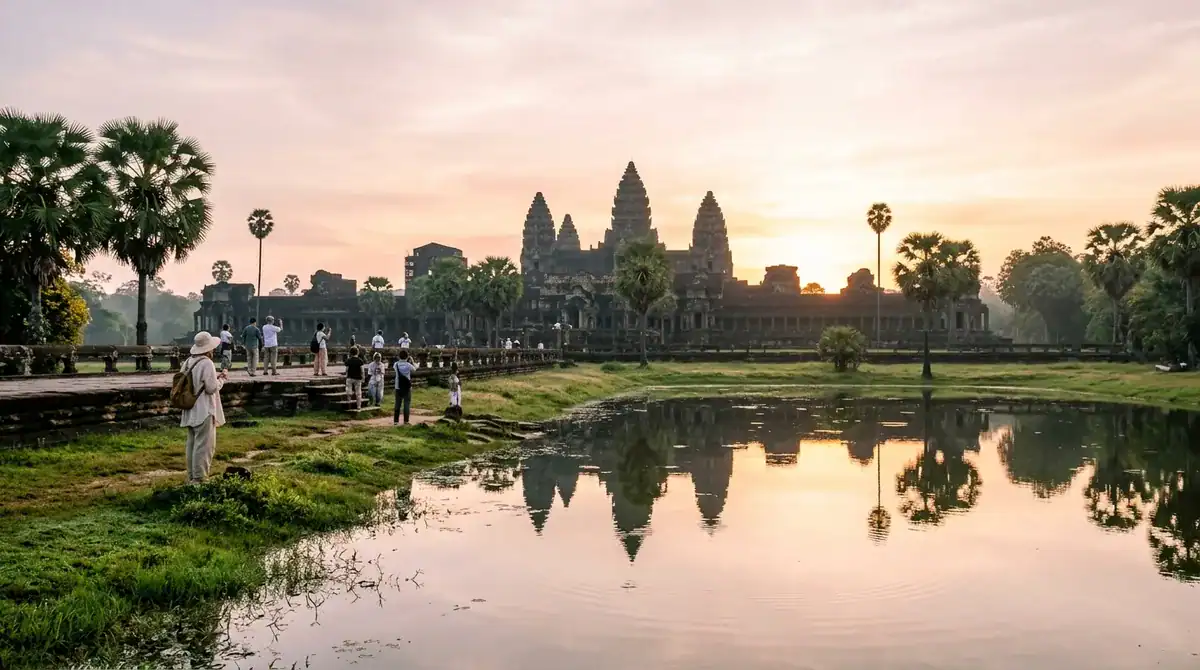
Day two is where the three-day plan really opens up. Angkor Thom, the walled royal city that holds Bayon, is far larger than its famous gates suggest, and the Grand Circuit leads you past temples that most one-day visitors never reach. Begin early, while the walkways are still cool, and head first to the Terrace of the Elephants, a long stone platform where the carved animals and figures run for a considerable stretch. Next comes the Terrace of the Leper King, whose worn sculptures are some of the most atmospheric carvings in the park. Give yourself time at Phimeanakas, the small temple in the royal enclosure, and walk slowly around the grassy space that once held the palace.
After the walled city, the Grand Circuit carries you out to the wider park. Preah Khan is a sprawling temple where trees and collapsed galleries create a quieter, more wandering atmosphere than the headline sites. Neak Pean sits on an island in a square pool, reached by a causeway, and it is one of the most unusual monuments in the whole park. Ta Som, with its enormous tree roots wrapping around a gateway, makes a good final stop before you return to town.
Pacing matters more on this day than any other. The distances are longer, the roads are dusty, and the midday heat is at its strongest. Plan a proper break in the early afternoon, and choose a shaded spot with cold drinks, a meal and a bench where you can sit without a schedule. Many first-time visitors find that the Grand Circuit feels rewarding precisely because they slowed down rather than tried to cover every stop.
You also have a built-in way to lighten the load. If your energy fades after the first two temples, drop Neak Pean or Ta Som from the list and keep the rest of the day for the walled city. Skipping a site is not a failure. It is often the difference between a memorable day and one that leaves you too tired to enjoy the last temple. Tell your driver the new plan before you leave the shade, so the rest of the day runs smoothly.
Day three is for slowing down. Angkor was inscribed on the World Heritage List in 1992, and the property covers 40,100 hectares, so there is always more to see than any itinerary can hold. Use this final day to visit smaller temples on the quieter roads, or to explore the older Roluos group of temples farther east, where the brickwork and carvings feel less worn by footsteps. Those visits are slower by nature. You can sit on a low wall, study a single doorway, or let a few minutes pass without checking the time.
This is also the day to return to a favorite site. If Bayon or Ta Prohm made the strongest impression on you during the first day, go back in the morning, when the light is soft and the crowds are still thin, and look for details you missed the first time. A second visit to Angkor Wat at sunrise is a rewarding choice too, because the reflection in the pool looks different once you know the walk from the gate. Keep the afternoon loose, so you can rest or wander at your own pace.
Plan the evening around the hill. Phnom Bakheng remains a popular place to watch the sun go down, but the Bakan, the sanctuary at the top, is open from 7:40 a.m. to 5:00 p.m. and is closed on Buddhist holy days. Arrive in time to find a place on the hillside before the sun drops, and do not count on a visit to the sanctuary itself at sunset. If the climb feels like too much after a long week of walking, Srah Srang is a calm alternative, where the stone reservoir reflects the sky and the light softens across the water.
Three days give you room to choose. The first day covers the highlights, the second opens the walled city and the Grand Circuit, and the third lets you linger where the stones speak most clearly to you. Build in one shaded break each day, along with one site you are willing to skip, and the trip will feel generous rather than rushed.
Can You Visit Angkor Wat Without the Crowds?
Yes, you can see Angkor Wat with fewer people around you by trading a few of the busiest stops for quieter temples. East Mebon, Pre Rup, Neak Pean, Preah Khan and Banteay Srei give you carved stone, grand architecture and room to breathe, away from the main crowds.
The crowds are easy to understand. The park drew 955,131 foreign visitors in 2025, which was still a large number even though it was down 6.7 percent from the year before. Those visitors tend to converge on the same handful of headline temples at the same hours, so the most photographed corners fill quickly. A route built only around those stops means sharing every view with a tour group.
East Mebon is a good place to start. It stands on an island in the Eastern Baray, the large reservoir that once fed the surrounding lands, and its brick towers rise above a lawn of quiet courtyards. Walking the causeway toward the island gives you a sense of how the ancient builders planned the landscape around water, and it is rarely as busy as the headline sites.
Pre Rup is a short distance away and is built as a temple mountain, with tiered terraces climbing toward a cluster of towers. Its brick and laterite walls glow in low light, which makes it a strong alternative for late-day photos. Many visitors find it calmer than Phnom Bakheng, so it works well if you want a sunset view without the hill’s crush of people.
Banteay Srei is the outlier in this group, and it is worth the detour if you enjoy fine detail. Its pink sandstone carvings are unusually intricate, with figures and foliage cut so deeply that they seem to hold shadows of their own. The temple is smaller than the grand complexes, so a slow look at each doorway can fill an hour without any sense of hurry.
Preah Khan and Neak Pean both sit on the Grand Circuit, so they fit best into a three-day plan. Preah Khan’s galleries feel like a forest walk, with trees growing through the stone and open corridors that frame the light. Neak Pean’s square pool and central island create a calm, symmetrical scene that photographers often find easier to shoot without other visitors in the frame.
Quieter stops help for three reasons. They offer a slower pace, so you can sit, look and take in the carvings without checking your watch. They also give you better photo opportunities, because you can wait for a clean angle without someone walking through the shot. And they break up the rush of the main sites, which keeps the day from feeling like a checklist.
Timing is the simplest way to reduce crowds at any temple. Tour groups usually arrive in the middle of the morning and again in the early afternoon, so move between sites earlier or later in the day when you can. A short stop at East Mebon before the first big group reaches the main temples can set a relaxed tone for the morning, and a late visit to Banteay Srei can end the day quietly.
Before you buy a pass, check which circuit each temple belongs to. Preah Khan and Neak Pean are part of the Grand Circuit, so a one-day plan will not reach them. If you swap in East Mebon, Pre Rup or Banteay Srei, plan the route so each stop fits between the temples you have already chosen, rather than adding a long detour that eats into your midday break.
Start with one or two quiet temples and see how they change the feel of your day. You may find that the best moments of your visit happen not at the most famous corners, but in the places where you can hear the wind move through the trees.
What Time Should You Start Each Day?
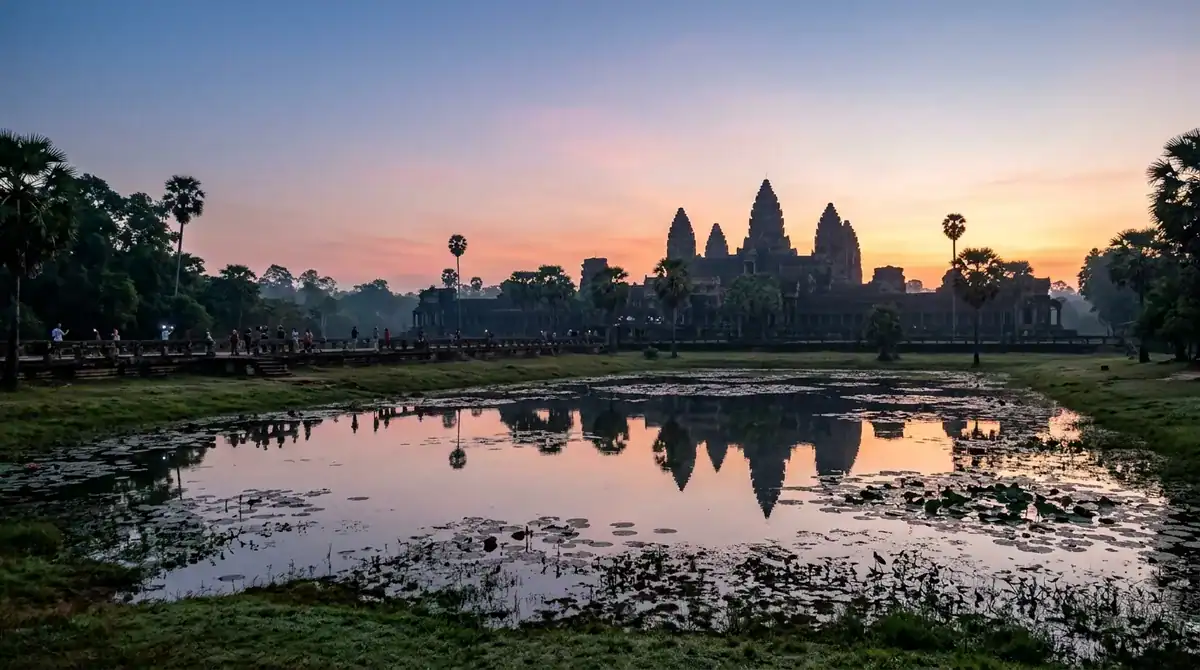
Start at Angkor Wat before dawn, when the park opens at 5:00 a.m., and then take a long midday break at your hotel before returning for sunset at Phnom Bakheng. That rhythm lets you catch the softest light of the day without running out of energy by late afternoon.
Park entry generally runs from 5:00 a.m. to 6:30 p.m., which gives you a wide window. The individual monuments keep shorter hours, though. Angkor Wat opens at 5:00 a.m. and closes at 5:30 p.m., so the temple’s day ends an hour before the park’s gates do. If you plan to linger at the end of the day, build your timetable around the earlier cutoff rather than assuming you can stay until dusk.
The reason to be early is light. Before sunrise, the galleries are quiet, and the sky over the reflecting pool slowly shifts from grey to pale gold. Bring a small torch or a phone light for the walk along the causeway, because the path is dark until the sky brightens. Arriving in the dark also means you claim a good spot before the first tour groups gather, which is often the difference between a clear photo and a crowd of heads.
Phnom Bakheng needs a different kind of timing. The sanctuary on top of the hill is open from 7:40 a.m. to 5:00 p.m. and is closed on Buddhist holy days, so you cannot count on climbing to the top once the sun is setting. Plan to watch sunset from the hillside instead, and check the holy-day calendar before you travel so you are not caught out by a closure. Arriving early in the late afternoon helps you find a place on the slope before the hill fills up.
Here is how a day with this rhythm can run:
- Before 5:00 a.m.: Eat a light breakfast, confirm your driver for the morning, and set off so you reach the gate as it opens.
- Early morning: Watch the sunrise at Angkor Wat, then spend the next two to three hours moving slowly through the temple.
- Late morning: Return to your hotel for a shower, a meal and a rest while the heat builds.
- Mid-afternoon: Head back out, with enough time to reach the hill before the crowds gather.
- Late afternoon: Find your spot on Phnom Bakheng’s hillside and wait for the sun to drop, then take the walk down while there is still light.
The midday break is what makes an early start sustainable. Many visitors feel the urge to push on through the heat, but a few hours in an air-conditioned room or a shaded terrace let you return with fresh legs and a clearer head. You will notice the difference when you climb the hill, since the steps are steep and the late light is best enjoyed without fatigue.
Starting early does not have to mean rushing. Set the alarm the night before, lay out your clothes and water bottle, and agree on the first stop with your driver so there are no decisions to make in the dark. Once you are inside the temple, let the early hours unfold at their own pace. A slow morning at Angkor Wat is worth more than a hurried tour of the whole park, and the rest of the day will feel calmer for it.
What Should You Wear and How Should You Behave?
Dress modestly, move gently, and take everything you bring back out with you. Those habits are the core of what APSARA’s visitor code asks of every visitor, and they make the day more enjoyable for you and everyone else who wants a quiet moment among the stones.
Start with clothing. Angkor is a sacred site as well as an archaeological park, so comfortable, breathable clothes that cover your shoulders and knees will suit both the heat and the setting. Pack a light long-sleeved layer for the cool, dim walk to the reflecting pool before sunrise, since you will be standing still in the early air while you wait for the light to change. Loose cotton or linen is easier to wear for a full day than tight fabric that clings in the humidity.
Climbing and touching are the habits that do the most lasting damage. The sandstone carvings have survived for centuries, and every hand that rests on a relief wears it down a little more. Keep your hands to yourself, do not lean on walls or pillars for a photo, and stay on the marked paths and steps. Where a handrail is fitted, use it. If a carving is blocked by a crowd, wait your turn rather than squeezing past or reaching in. A patient visitor usually gets a clearer view without having to push for it.
Litter is another habit that is easy to get right with a little preparation. Carry a small zip bag for wrappers, tissues, sunscreen packets and empty bottles, and empty it back at your hotel or at a bin you pass on the way. Refill a reusable bottle rather than buying a new plastic one at every stop. Check the steps, the grass and the shade under the trees before you leave a spot, because it is easy to forget a crumpled wrapper tucked into a corner of a gallery.
Giving money to children needs more thought. Some children approach visitors near the temples, often asking for money, books or souvenirs. The visitor code asks travelers not to hand out money to children, and that request is easy to follow. A warm smile and a polite “no thank you” is enough. If you want to help, ask your hotel or guide which local schools, community groups or family-run programmes they trust, and put your support there. Buying a meal or a handmade item from an adult vendor you choose freely is another way to contribute directly to the local economy.
Good conduct also means paying attention to the people who use these places every day. Some visitors come to pray, and monks are often present at the temples. Speak quietly, dress with the same care you would in a place of worship at home, and ask before you photograph someone up close. Sit down when you rest, and avoid climbing onto a platform just to get a higher angle.
These habits do more than keep the temples in good condition. They change the feel of the day. When you move slowly, keep your distance from the carvings and carry your rubbish with you, you notice more of the details that make Angkor memorable, from the faint colour in a doorway to the sound of wind moving through the trees.
Planning Your Angkor Wat Route Before You Go

Pulling the choices together is straightforward. A one-day visit suits travelers who want the highlights of the Small Circuit, from sunrise at Angkor Wat to sunset on Phnom Bakheng. Three days suits most first-time visitors, because it leaves room for the Grand Circuit and a slower return to the temples you loved most. Either way, build one quieter swap into each day, whether that is Banteay Kdei in the afternoon or East Mebon before the first tour groups arrive.
Your next step is to make three decisions. First, choose the number of days that fits your schedule. Second, buy the pass that covers that plan, and decide whether the Small Circuit alone will do or whether you want the Grand Circuit too. Third, set your alarm for a sunrise start at Angkor Wat, since that early light is the moment many first-time visitors remember longest.
Sketch the route on paper before you book flights. Write each day’s temples in order, mark your midday break, and note where your quiet swap fits. If the plan fills every hour, cut one stop rather than rushing through all of them.
Prices, validity windows and opening hours can change, so check them close to your travel date. The official ticket page is the place to confirm current pass prices, expiry rules and general park hours. Look again in the week before you fly, because details you read months earlier may no longer match what the ticket office and gates are doing.
A few minutes of checking now saves you a rushed decision at the gate. Then, on the morning itself, you can walk the causeway in the dark, find a clear spot by the reflecting pool, and wait for the sky to turn from grey to gold.
Building Your Angkor Wat Route Step by Step
Start by choosing your arrival date and counting the days you can give Angkor. Write down your first planned temple day and your last, then decide which pass fits that window. If you are travelling with children or moving slowly, add a rest day before your first sunrise start, so the big morning does not begin with tired legs.
Next, pick one quiet swap for each day. On a one-day plan, East Mebon fits neatly into the early morning before the first tour groups reach the headline temples. On a three-day plan, Banteay Srei’s pink sandstone carvings reward a slow late afternoon, and the Roluos group makes a calm morning stop when you want space to look closely.
Then sort out the practical details with your driver or hotel. Share the day’s route, the time you plan to reach the gate, and the spot where you want your midday break. Agree on the day rate in US dollars before you set off, and confirm in writing whether it includes waiting time at each temple. Clear arrangements mean you can spend the morning looking at the stones rather than negotiating at the roadside.
Finally, keep a small list of questions to check with the official ticket page and your hotel a few days before you fly. Bring a printed copy of your route, a refillable bottle and a light layer for the cool air at Phnom Bakheng, and you will be ready to step through the gate with a plan you trust.