
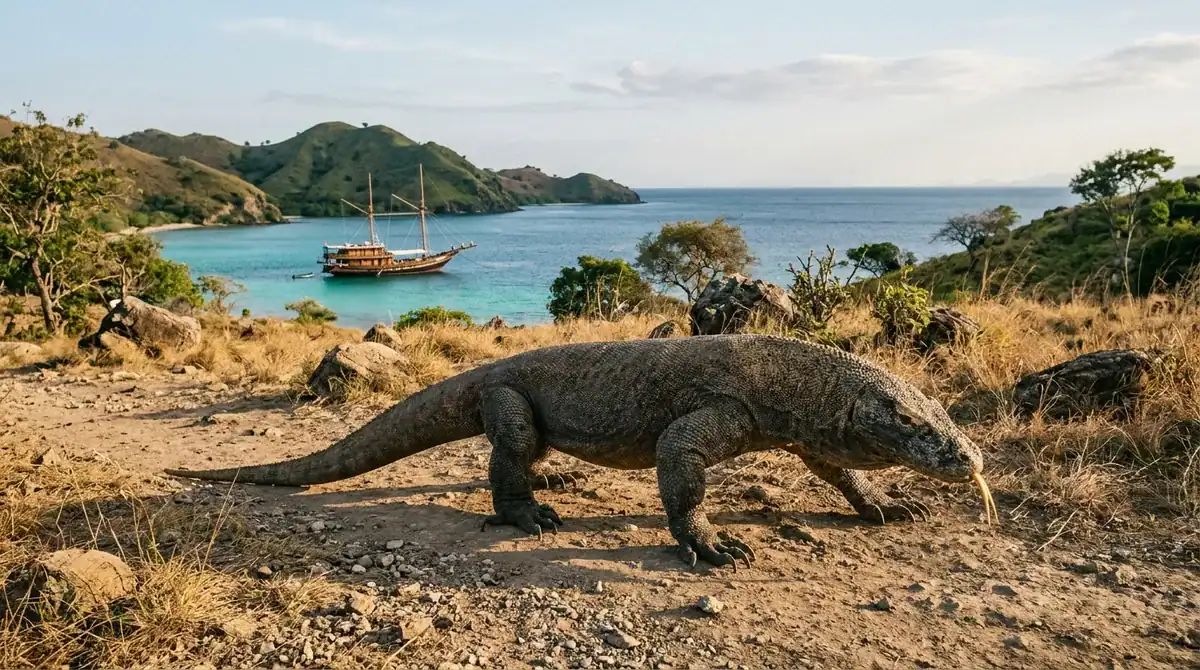
A practical Komodo Island itinerary starts in Labuan Bajo on Flores, the main gateway into Komodo National Park, where boat trips to park destinations take about three to four hours depending on the vessel and sea conditions. A three-day plan can pair dragon trekking and Pink Beach on day two with Kelor, Padar and Kalong islands on day three, adding snorkeling along the way and a dusk stop as the boats head back. Komodo Airport is only a few minutes’ drive from town, so most trips begin with a short transfer to the harbor and an early start on the water.
Timing now shapes the whole route. From April 1, 2026, the national park’s visitor quota is 1,000 people per day, or about 365,000 per year, according to the Ministry of Forestry. Visits must be reserved through the SiOra app no later than the day before entry, subject to availability. Padar Selatan is divided into timed sessions from 05:00 to 08:00, 08:00 to 11:00 and 15:00 to 18:00 WITA, with a maximum of 330 visitors in each, so the sunrise hike needs to be built around a booked session. Park-entry fees under Government Regulation No. 36 of 2024 are Rp250,000 per day for foreign visitors, but boats, accommodation and tour services are extra, so budget for them separately.
Key Takeaways
- The three-day Komodo route is a sample, so travelers should shift each stop around tides and wind.
- Komodo Island dragon treks are best scheduled in the morning, before visitor groups overlap around 9 to 10 a.m.
- Pink Beach on Komodo Island is calmer from an early or late stop, when fewer tour groups arrive near midday.
- Manta Point is best for confident snorkelers, with December to February offering better odds of spotting manta rays.
- Liveaboard trips suit serious divers, since their extra nights reach distant reefs before day-trip boats arrive.
A Three-Day Komodo Island Itinerary, Day by Day
A three-day route through the park is a sample, not a fixed schedule. Most travelers will shift stops around tides, wind and the sessions they manage to book, so treat the order below as a starting point.
Day one is for arriving and getting organized. Komodo Airport is a short drive from Labuan Bajo, and the afternoon is a good time to walk the harbor and find your boat. Before you settle in for the night, work through these steps with your operator:
- Confirm the departure time and the harbor meeting point for the morning.
- Ask exactly what the price covers, including park entry, lunch, water and snorkel gear.
- Book your park visit in the SiOra app, since reservations must be made by the day before entry.
- Pack a dry bag with sun protection, a towel and cash for small costs on the water.
Day two starts early. The boat ride from Labuan Bajo to park destinations takes about three to four hours, so you will reach Komodo Island mid-morning. A ranger leads the dragon trek, and the rules are strict: stay on the marked route, keep your distance from the animals and never touch them. Park entry for foreign visitors is Rp250,000 per day under Government Regulation No. 36 of 2024, and Indonesian visitors pay less on weekdays and more on holidays.
After the trek, the boat carries you to Pink Beach. The sand takes on its rosy tint from reddish material linked to foraminifera and coral fragments mixed into white sand, and the shallow reef just offshore is ideal for swimming and snorkeling. Stay out of the water at dive sites unless you hold a diving certification, which the park requires.
Day three is built around Padar Island. Reaching the 05:00 session means leaving town in the dark, so many readers take the 08:00 session instead. The steep climb rewards you with views over three bays. Padar’s timed sessions are capped at 330 visitors each, so a booked slot matters more than a perfect sunrise. The 15:00 session is the afternoon alternative.
From Padar, the sample route moves to Kelor Island for snorkeling or a beach break, then finishes at Kalong Island as the sun drops. Kalong is the dusk stop where large fruit bats leave their roosts, and the boat heads back to Labuan Bajo in the last light.
Fares are not fixed across operators. Boat prices depend on the vessel, the route and what is included, so compare the inclusions as carefully as the headline price. Because the crossings depend on wind and sea state, build a spare half-day into your plans if you can.
Komodo Island: Ranger-Guided Dragon Treks
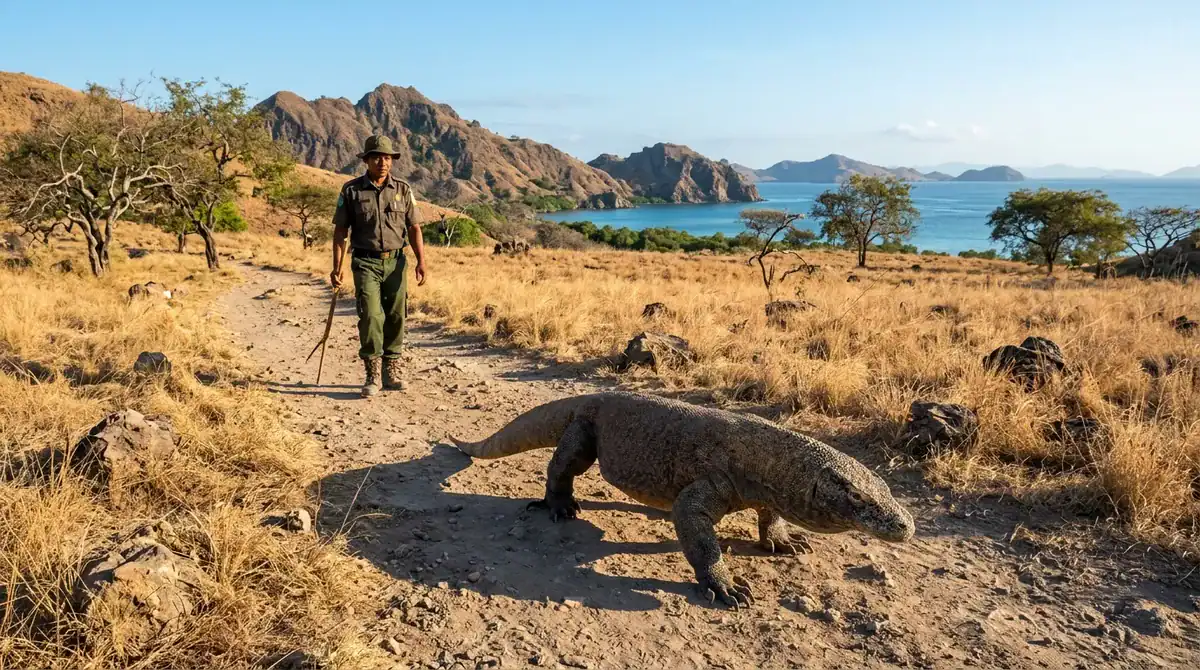
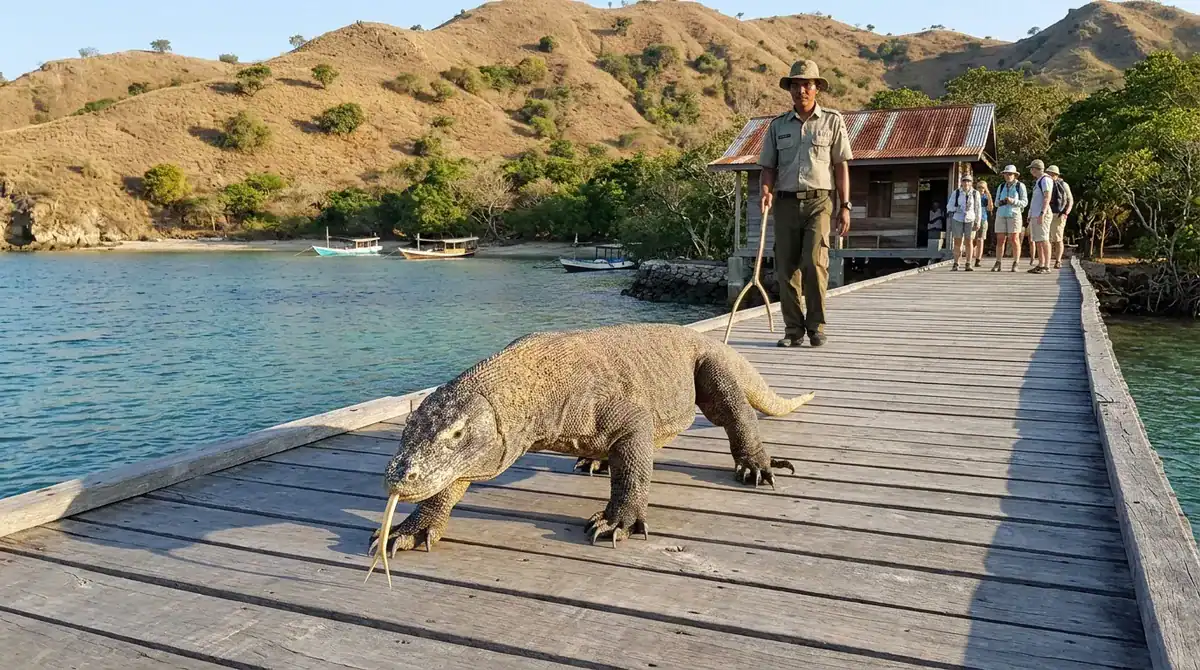
Komodo Island is the reason most readers plan this trip. Boats land at Loh Liang, the designated visitor trekking site, where a park ranger leads you on foot to look for Komodo dragons in their natural habitat. You can’t wander off on your own. Follow the guide, keep your distance and never feed the animals, as the park’s official site sets out.
The trek routes vary a lot in effort. The short route takes about an hour, the medium about 1.5 hours and the long about two. The adventure route runs four to seven hours, so match the route to your fitness and to the slowest person in your group. Plan the trek for the morning, because day-trip boats commonly reach popular stops around 9 to 10 a.m., when visitor groups overlap. The walk can be hot and exposed, so bring water and a hat, and trekking is only allowed within timed-entry hours.
Komodo Island is usually paired with a separate stop for a beach or snorkeling, so the dragons are one part of a wider day on the water. The park was designated a national park on March 6, 1980, and this island remains its best-known land stop.
At a glance
- Best for: wildlife lovers, photographers and families with older children who can follow ranger instructions
- Best Season: April to June and September to November, since rainy-season conditions can affect seas and boat schedules
- Time Needed: about one hour for the short trek, up to seven hours for the adventure route
- Fitness Level: ranges from an easy one-hour walk to a long, demanding day on the adventure route
Padar Island: Sunrise Hike Over Three Bays
Padar Selatan is the park’s best-known viewpoint, and many readers rank the climb as the highlight of a three-day trip. The trail is steep and exposed, taking roughly 30 to 45 minutes each way to the higher viewpoint. Lower lookouts let you stop early and still see the land below. From the top, three sweeping bays and folded savannah hills spread out beneath you. Komodo dragons may be seen at Padar Selatan, but sightings are not guaranteed, so pair the hike with a ranger-guided trek on Komodo or Rinca, where itineraries usually plan more dependable encounters.
Rangers brief trekkers on what is and is not allowed before the climb, and staff posts and signs line the visitor area. Bring plenty of water and sun protection, because the slope offers little shade. Early morning is cooler and more comfortable, but the viewpoint gets busy, especially on popular early visits. Set aside 1.5 to 2.5 hours on the island for landing, the climb, photographs, rests and the walk back to the boat.
The colors are the real draw. After the rains the hills turn green, and in the dry months they fade to tawny and gold, so the same three bays look different from one season to the next. Padar is a landscape and hiking stop first, and snorkeling is usually planned at other stops on the route.
Hikers who enjoy a summit reward and landscape photographers chasing first light over the bays will get the most from Padar. Snorkelers and anyone hoping for close dragon sightings will do better to save their energy for the other stops.
At a glance
- Best for: hikers and landscape photographers
- Time Needed: about 1.5 to 2.5 hours on the island
- Fitness Level: steep, exposed climb, with lower viewpoints for shorter walks
- Access by Boat: about three hours from Labuan Bajo by phinisi, plus a roughly ten-minute tender transfer to the jetty, according to a 2023 government field report
Pink Beach: Blush Sand and Reef Snorkeling
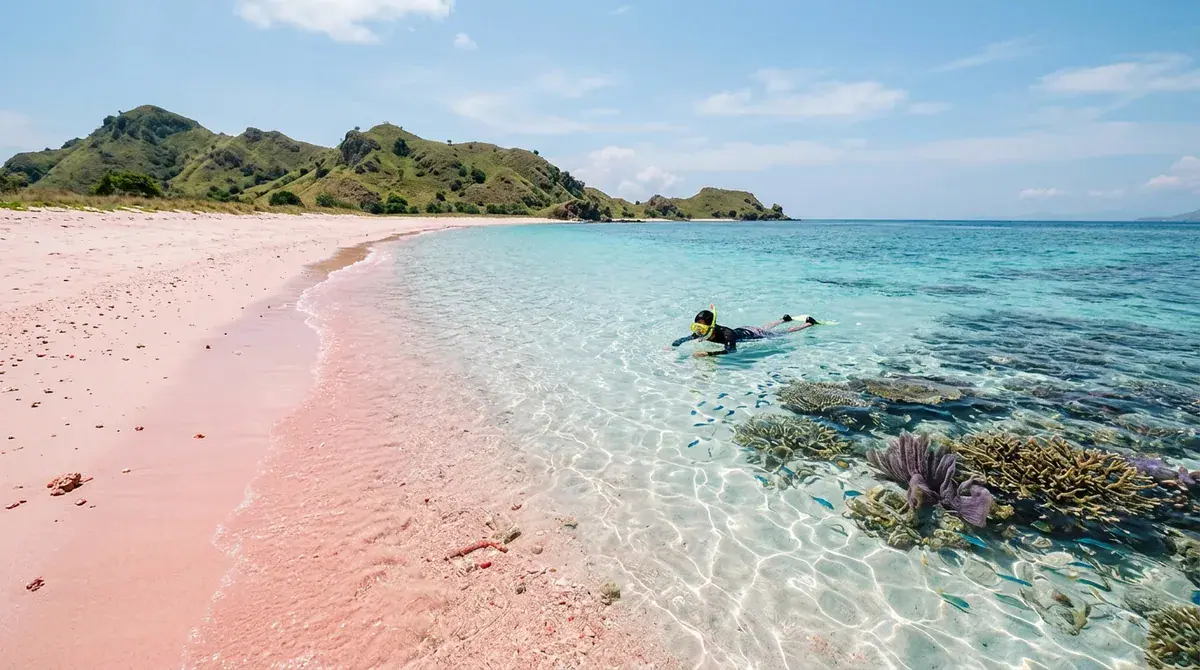
Pink Beach, also called Pantai Merah, sits on Komodo Island inside the national park, and its color is the first thing you notice. The tint comes from reddish material linked to foraminifera and coral fragments mixed into white sand, so the shoreline looks blush-pink in the right light. Most visitors reach it by boat, then either transfer by tender or wade ashore from the anchored boat.
Once you are on sand, you can swim, snorkel, photograph the shoreline or take a short walk to higher ground for coastal views. Snorkeling depends on visibility, tide, wind and current, so enter the water only where your guide or crew points, and avoid standing on coral. Reef fish often gather close to shore, which makes the shallows a good first look at the reef.
Several tour groups can arrive around the same time, especially near midday, so an early or late stop can feel much calmer. Dragon viewing is a separate activity. The ranger-led visit at Loh Liang is its own stop, and the official tourism page also describes a four-hour walk from another side of the island to reach the beach. Plan the trek and the beach as two distinct outings rather than one.
At a glance
- Best for: snorkelers, beachgoers and photographers
- Best Season: April through November, the preferred dry season, with calmer seas and usually clearer underwater visibility
- Time Needed: a typical beach stop of about one to two hours
- Access by Boat: about 30–45 minutes from Labuan Bajo by speedboat or 1.5–2 hours by local boat, per the official tourism page, depending on the vessel and conditions
Rinca Island: Rugged Dragon Walks Near Labuan Bajo
Rinca Island is the dragon stop for travelers who want a rougher walk. Boats from Labuan Bajo land at Loh Buaya Pier, where a ticket checkpoint marks the start of the trail, and a ranger leads you out in search of wild Komodo dragons. Treks run from easy to challenging and take about one to three hours, climbing through savanna toward hilltop panoramas that feel quite different from the Komodo Island route.
Dragon sightings are never guaranteed, even with an experienced ranger, so treat the walk as a search rather than a show. Rinca is also home to wild pigs, water buffalo, deer, monkeys, wild horses and snakes, so keep your eyes open along the way. You cannot wander off on your own, because the park’s official site notes that dragons range across the park’s main islands, so stay close to your ranger.
Rinca is often described as the closest dragon island to Labuan Bajo, which makes it a useful option when a Komodo Island visit is not possible. Indonesia Travel recommends early morning visits during the dry season, which it gives as April through October. Snorkeling and diving are listed at other park stops, so pack gear only if your boat plans to stop there.
Rinca suits wildlife lovers and hikers who want a walk with more edge than a gentle nature stroll.
At a glance
- Best for: wildlife lovers and hikers who want a more rugged walk
- Best Season: April through October, with early morning visits recommended
- Time Needed: about 1 to 3 hours on foot
- Fitness Level: easy to challenging routes
- Access by Boat: from Labuan Bajo to Loh Buaya Pier
Labuan Bajo: The Gateway Town on Flores
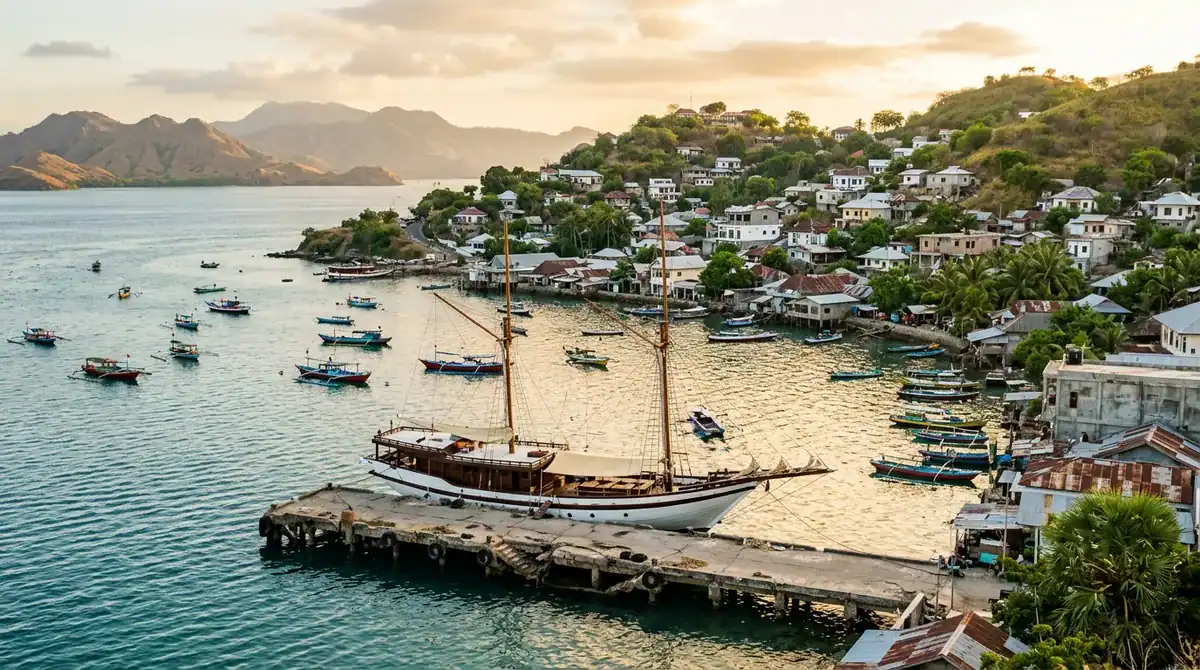
Labuan Bajo is a port town on Flores, not one of the park’s islands, and it is where almost every Komodo trip begins. Tour operators and boat departures are based here, along with the flights that bring most visitors in. Komodo Airport is only a few minutes’ drive from town, so the last leg to the harbor is short.
Every route leaves from the harbor, so plan an early start. Boat journeys to park destinations take about three to four hours, depending on the vessel and sea conditions, and the water can turn rough when the wind picks up or the rains arrive. Before you book, compare boat types, meals and crew. A sturdy pinisi and a fast speedboat feel very different after a long morning at sea.
From the harbor, the trip opens into the wider park. Day trips can include ranger-guided Komodo dragon walks, the hilltop views from Padar, and snorkeling or diving over coral reefs and marine life. Whatever the stop, follow your ranger, keep a safe distance from the dragons, and never feed, chase or provoke them.
Few places combine wild dragons, dry savanna scenery and rich underwater habitats in one itinerary, and Labuan Bajo is the easiest way to reach all three. Trekking routes range from mild to challenging, and the crossings can be demanding, so the trip suits wildlife lovers, photographers, snorkelers, divers and hikers who don’t mind a long day on the water.
At a glance
- Best for: wildlife lovers, photographers, snorkelers, divers and hikers
- Time Needed: a full day to several days aboard a boat
- Access by Boat: about 3 to 4 hours from Labuan Bajo by tourist boat, speedboat or pinisi, depending on vessel and sea conditions
- Fitness Level: boat travel and some hikes can be demanding
Day Trips or Liveaboard: Choosing Your Route
Choosing between a day-trip plan and a liveaboard comes down to how much time you have and how you like to spend it. A three-day itinerary can combine dragon trekking, Pink Beach, snorkeling, the Padar viewpoint and a dusk stop at Kalong, which gives you the highlights without spending a night at sea.
A four-day, three-night liveaboard stretches the route. Day one adds Kelor and Rinca, day two covers Padar, Komodo and Pink Beach, and day three reaches Taka Makassar, Manta Point and Gili Lawa. On a liveaboard the boat becomes your bedroom and your base, so you wake up already in the marine parks.
Longer trips add more marine stops, so a liveaboard makes the most sense if you dive or snorkel seriously. The extra nights let you reach distant reefs at dawn, before the day-trip boats fill the water and head back to port.
Cost is where quotes can vary widely. The price depends on the boat type and size, the number of cabins, whether meals are included, fuel, the guide and crew, and how many days you book. Each extra night adds to every one of those lines, so compare the total for the full trip rather than the nightly rate.
Park entry fees and boat or tour services are separate costs. The entry fee is charged per day, so a longer trip pays it on every day you are in the park, while boat and crew charges are set by each operator. Read each quote line by line and check whether it covers park entry, meals, drinks and snorkel gear.
Day trips suit short visits and families who want to be back in town by evening, with fewer nights to pay for. Liveaboards suit divers, slow travelers and photographers who want early light over the bays and time to linger at each stop. Think about which rhythm you enjoy most, and let that decide the route.
Entry Fees, Visitor Quotas and Advance Booking
Entry to Komodo National Park is charged per day, and the rate depends on who you are. Under Government Regulation No. 36 of 2024, foreign visitors pay Rp250,000 per day. Indonesian visitors pay Rp50,000 on weekdays and Rp75,000 on holidays.
Those figures cover park entry and nothing else. Boats, meals, accommodation and tour services are billed separately, so build them into your budget from the start. A trip that spans three days in the park pays the entry fee on each of those days, which is worth remembering when you compare quotes.
The bigger change is the cap on visitors. The park authority’s 2026 trial notice asked visitors and tourism businesses to reserve through the SiOra app no later than one day before entry, subject to availability. Do not assume you can arrange a visit on the day you arrive. Book before you leave home.
Padar needs the earliest attention. Its timed sessions fill first, so secure your slot before you lock in the rest of your dates. Once the Padar session is confirmed, shape the dragon trek and the beach stops around it, rather than the other way round.
The policy followed visitor numbers of 429,509 in 2025 and is meant to protect the park’s ecosystem and keep tourism sustainable. For travelers, that means the daily ceiling is real, and the sooner you reserve, the more choice you keep on the days you want most.
Manta Point: Snorkel or Dive With Manta Rays
Manta Point, also known as Karang Makassar, is an open-water reef site in the northeastern corner of Komodo Island, and it is not a land stop. You won’t climb a trail or join a dragon walk here. Everything happens on and under the water, reached by boat as part of a snorkeling or diving day. A Komodo National Park marine guide identifies it as a place to see manta rays.
On a guided visit, the boat drops snorkelers up-current so they can drift along the reef, and a tender picks them up later. The in-water stop typically lasts 30 to 60 minutes, according to a guide from Vinca Deluxe Phinisi. The current is strong, so the operator recommends confident swimmers or a life jacket, and weaker swimmers can stay in the tender. Stay at the surface, don’t touch or chase the rays, and keep with your group.
Sightings are never guaranteed, because the rays are wild, so treat them as a bonus. The same operator suggests December to February and July to September for better odds, though several boats may drop snorkelers into the same drift in July, August and September. Divers can visit on a boat-entry drift dive, where manta rays are among the common sightings at a maximum depth of 12 meters, as listed by PADI.
Unlike the beaches and ranger walks elsewhere in the park, Manta Point is about the marine life itself. It suits confident snorkelers, divers and underwater photographers who are comfortable with strong currents.
At a glance
- Best for: confident snorkelers, divers and underwater photographers
- Best Season: December to February and July to September, for better manta odds
- Time Needed: an in-water stop typically lasting 30 to 60 minutes
- Access by Boat: a boat-accessed open-water site on a snorkel or dive itinerary
Gili Lawa: Savanna Hills and a Sunset Viewpoint
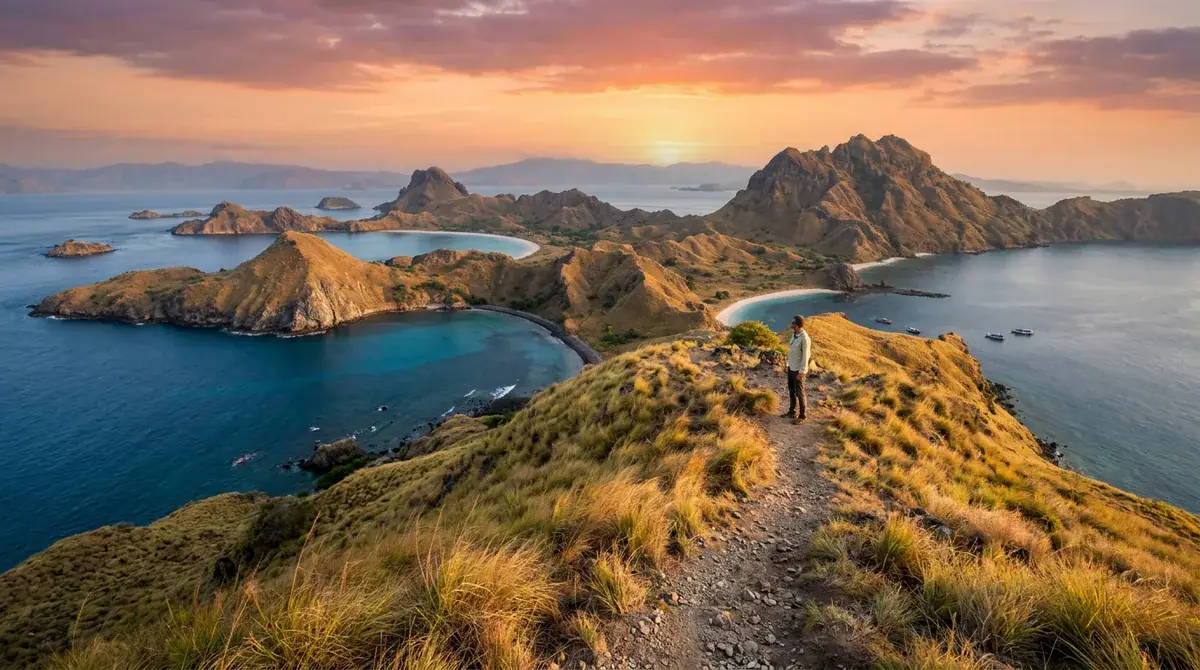
Gili Lawa is made up of two islands in the northern part of Komodo National Park: Gili Lawa Darat, the land island, and Gili Lawa Laut, the marine island beside it. On Gili Lawa Darat, a savannah landscape of hills rises to a peak you can trek to for wide views over the surrounding sea. The park’s official page notes that Gili Lawa Darat has no Komodo dragons. Instead, the wildlife you may spot is Timor deer and white-bellied sea eagles.
After the hilltop walk, the route turns to the water. Snorkeling and diving depend on sea conditions and your boat’s itinerary, and a park dive-site guide describes Gililawa Laut as fish-rich, with current and tide shaping when a dive works best. Gili Lawa Resort was temporarily closed to visitors after a savannah fire on August 21, 2022. The Labuan Bajo Flores Tourism Authority later reported that 54 visitors reached Gili Lawa on August 16, 2026, after sailing access reopened following the Flores earthquake.
Gili Lawa fits neatly beside a dragon walk on Komodo or Rinca. Where those stops are about spotting wildlife on foot, this one is about hills, sea and light. Sunset views are a common feature of multi-day island-hopping trips, so the hilltop is a natural place to end a day. It suits hikers who enjoy a walk to a view, sunset photographers and snorkelers.
At a glance
- Best for: hikers, sunset photographers and snorkelers
- Best Season: April through November, the dry season, when seas are typically calmer
- Entry Cost: Rp250,000 per day for foreign visitors under Government Regulation No. 36 of 2024, with boats billed separately
Long Beach: Pink-Tinged Shore on Padar
Long Beach, also called Pantai Panjang or Long Pink Beach, sits on Padar Island. It is a separate place from Pink Beach on Komodo Island, despite the similar name. Boats from Labuan Bajo bring you there, and many itineraries fit it in as one stop among several on the water.
The park lists sunbathing and snorkeling as the activities here, so this is a shoreline and water stop rather than a dragon trek. Ranger-guided dragon walks take place at other sites. Because Long Beach is a water-based visitor site, you follow your operator’s guidance and code of conduct, and aquatic activities require guided supervision. Stay close to your guide when you head into the sea.
Most visitors pair Long Beach with the Padar hike. Climb to the viewpoint first, then return to the boat and spend a slower hour on the sand, letting the pink-tinged shore set the pace. If the climb feels like too much, or you are traveling with small children, you can make the beach the main event of the stop instead.
Long Beach suits beachgoers, families and slow travelers who want the Padar scenery without the steep ridge. Snorkelers and photographers will also find plenty to enjoy along its long shoreline. Bring a towel, sun protection and plenty of water for the day.
At a glance
- Best for: beachgoers, families, slow travelers, snorkelers and photographers
- Time Needed: a slower hour on the beach after the Padar viewpoint
- Access by Boat: reached by boat from Labuan Bajo, often combined with other park stops
Kanawa Island: Calm Reef Stop Near Labuan Bajo
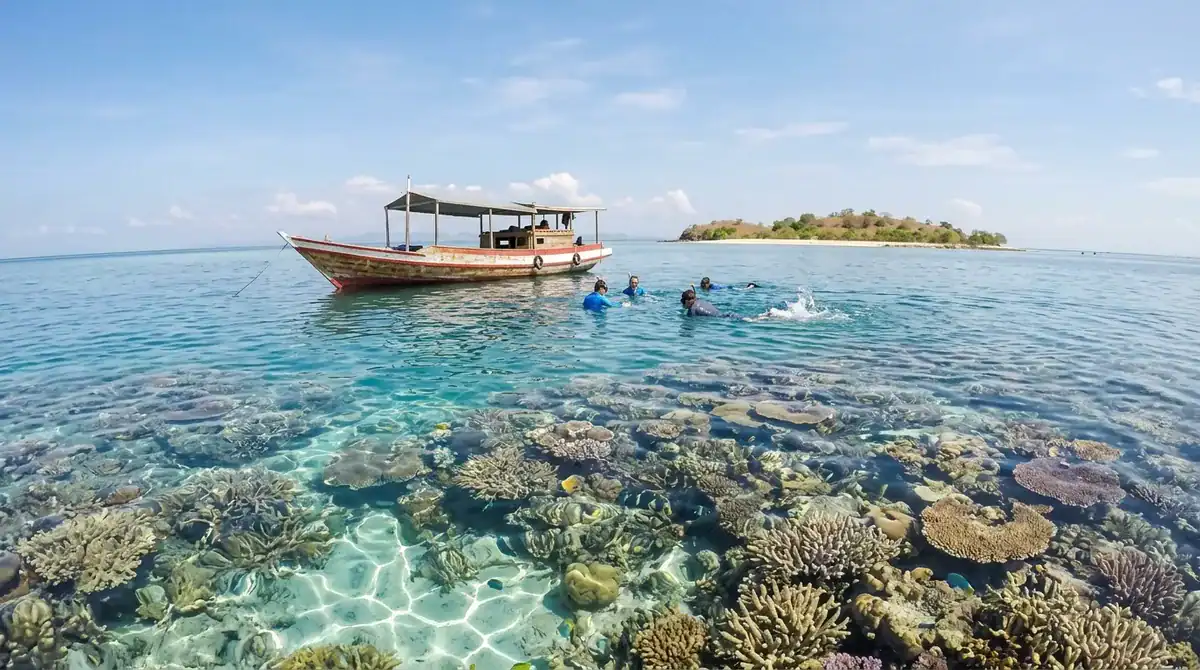
Kanawa Island sits about 15 km from Labuan Bajo, and its official tourism page describes pale sand, clear water and coral reef close to shore. Most people spend the day swimming and snorkeling over the reef, with colorful fish never far away. Two hills with viewpoints rise behind the beach, but the hill walk is optional, and its path can be steep or exposed, so ask the boat crew before you set off.
Kanawa is reached only by boat from Labuan Bajo, because there is no regular public ferry. The crossing takes about 1 to 1.5 hours each way. Visits usually allow a few hours for swimming, snorkeling and resting, depending on the boat schedule and sea conditions. Payment is in cash, and the Sisparnas listing records booking at the location without showing an admission price.
Kanawa is not a Komodo dragon trekking site. Ranger-led dragon walks are separate stops on Komodo or Rinca, so keep Kanawa for the water. It is also quieter and far less demanding than the headline hikes. The beach is no longer guaranteed to be empty, though, and wildlife sightings are never promised.
Kanawa suits relaxed snorkelers, families who want a gentle swim and anyone craving a lighter day between the bigger stops.
At a glance
- Best for: relaxed snorkelers, families and anyone wanting a lighter day
- Time Needed: a few hours for swimming, snorkeling and resting
- Access by Boat: about 1 to 1.5 hours from Labuan Bajo each way, with no regular public ferry
- Fitness Level: an easy beach day, with an optional hill path that can be steep or exposed
Siaba Island: Sheltered Bay and Sea Turtles
Siaba Besar is a sheltered bay in central Komodo National Park, where seagrass beds, coral gardens and sandy slopes have earned it the nickname “Turtle City.” Most visitors reach it by boat, and SEA KOMODO estimates the speedboat trip from Labuan Bajo at about 1.5 hours. Tour packages and private boats are the usual ways in.
Here you snorkel or scuba dive from the boat, staying in the calm, shallow areas where the coral and seagrass sit close to the surface. A Komodo National Parks Travel guide says snorkel stops typically last 45 minutes to 1.5 hours, and some boats anchor in the bay overnight. Boat operators decide the exact stop and how long it lasts, so ask about the spot when you compare tours.
Compared with the park’s current-exposed dive sites, Siaba Besar feels gentle. Its mild currents, average depth of 10 meters and maximum depth of 25 meters keep the water easy to read. In the dry season, from April to October, visibility reaches 16 to 24 meters, and sea turtles are frequently seen in the bay.
Snorkelers, beginner divers with Open Water training and underwater photographers will find it suits them well. Under a September 2022 park visitor protocol, only five boats per day are allowed at Siaba Besar, and visitors must be accompanied by their operator’s guide and follow the operator’s code of conduct. Park admission and activity tickets are also required.
At a glance
- Best for: calm-water snorkelers and Open Water divers who want an easier dive
- Best Season: April to October, the dry season with clearer water
- Time Needed: typically 45 minutes to 1.5 hours for the stop
- Access by Boat: about 1.5 hours by speedboat from Labuan Bajo
Batu Bolong: Coral Pinnacle for Experienced Divers
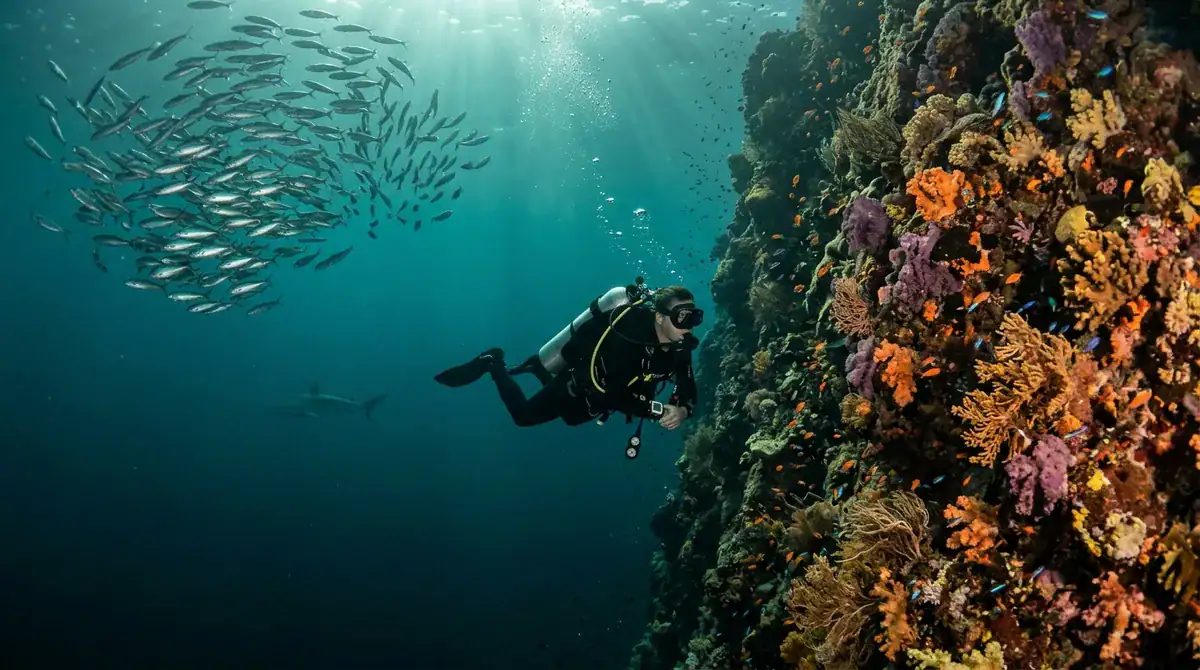
Batu Bolong is a small rocky pinnacle between Tatawa Kecil and Komodo Island, and it is best known as a dive site rich in marine life, not a dragon trek or sunrise hike. The park’s dive-sites page describes colorful corals, invertebrates and reef fish clustered along its steep walls. The site is also known as “Current City.”
Boats from Labuan Bajo take about one to two hours to reach it, and a typical visit is a single dive of 40 to 60 minutes. Drop down the coral-covered reef and wall, and you may see reef fish and larger fish along the steep walls. Currents here are strong and variable, so each dive is timed for slack tide, when the water moves more gently. Boats sharing that tide window may have to wait their turn at the site, so build a little patience into your morning.
This is a challenging dive that suits experienced divers far more than beginners. Guides describe it as best for certified divers with good buoyancy and comfort in moving water. Park dive sites require a diving certification, so bring proof of yours on the boat. Snorkeling is less clear-cut. One tourism page lists Batu Bolong as a snorkeling spot, but operator guidance differs, so ask your operator before assuming you can snorkel here.
At a glance
- Best for: certified divers with good buoyancy and experience in moving water
- Best Season: the dry months, with each dive timed for slack tide
- Time Needed: one dive of about 40 to 60 minutes, timed for slack tide
- Access by Boat: about one to two hours from Labuan Bajo
Castle Rock: Current-Swept Seamount for Big Fish
Castle Rock is a submerged seamount in the north of Komodo National Park, and it is a dive site, not a land stop. Its pinnacle rises to about 3 to 4 meters below the surface. Visitors reach it by dive boat, either on a day trip from Labuan Bajo or on a liveaboard, and a day boat needs two hours or more to reach the northern sites, so plan a full day.
The dive begins in blue water about 50 meters up-current, then drifts toward a sheltered area near the top of the pinnacle. There you can explore soft corals and sea fans while schools of barracuda, trevally and mackerel move past. Sharks may appear too. The skipper and guide check the current before going in and may change or skip the dive if conditions are unsuitable.
Castle Rock is not a routine snorkeling stop, because the pinnacle and fast surface currents leave little protected water. The Komodo National Park dive-sites guide describes excellent visibility here, but the current is the defining factor. One Komodo dive operator, Dive Komodo, lists April through October as the best season.
Castle Rock suits experienced divers who are comfortable with drift diving and strong currents, along with underwater photographers who want big marine life. Unlike the gentler reef stops on the route, it asks for skill and rewards it with schooling fish and open blue water.
At a glance
- Best for: experienced divers and underwater photographers who want big marine life
- Best Season: April through October, according to a Komodo dive operator
- Time Needed: a full day, as the boat journey from Labuan Bajo takes two hours or more
- Access by Boat: dive boat from Labuan Bajo or a liveaboard
Plataran Komodo Beach Resort: Where to Stay Near Labuan Bajo
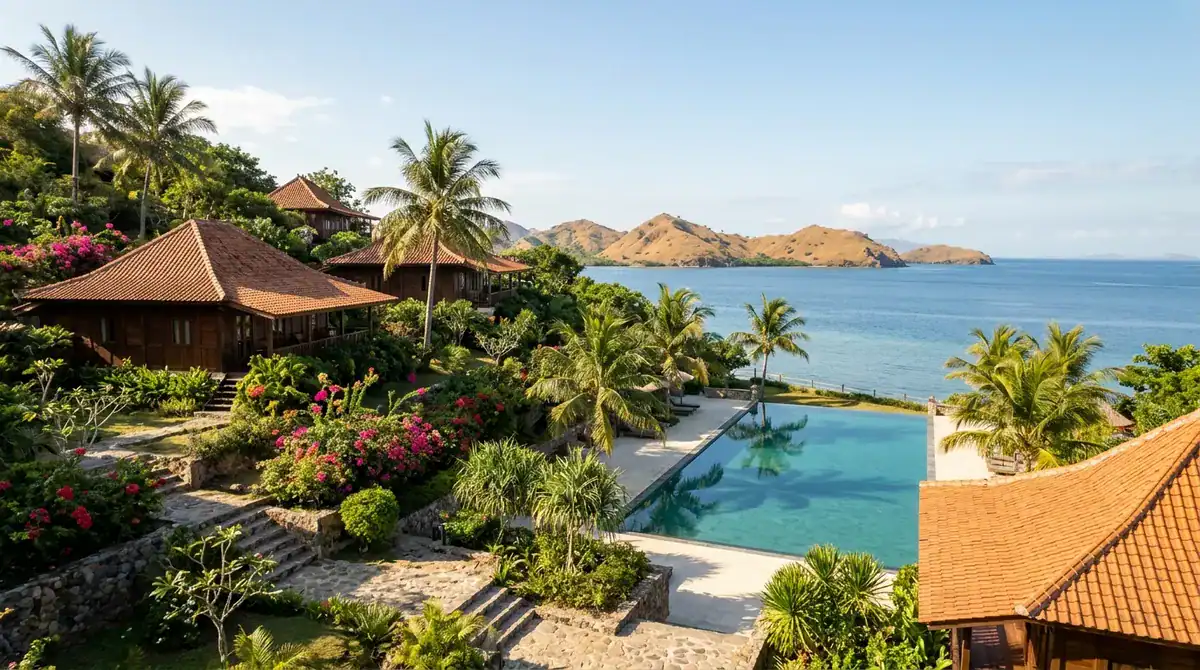
Plataran Komodo Beach Resort, now presented as Plataran Komodo Resort & Spa, sits on secluded Waecicu Beach on Flores, about a ten-minute boat ride from Labuan Bajo. It is a beachfront resort rather than a park attraction, so it works best as a quiet base you return to after each day on the water.
From the resort you can arrange boat excursions for island-hopping and snorkeling at secluded spots with coral gardens and marine life. Dragon viewing on Rinca and Komodo, Padar hikes and Pink Beach visits are offered as day trips that take roughly one to two hours from the resort. The advertised Menjangan boat trip includes a guide, snorkel gear, lunch, snacks, refreshments and transfers to the airport and resort jetty. The national park entrance fee is not included, so you will need to buy that separately.
For a sunrise without a boat, the resort runs a pre-dawn guided hill hike that starts at 5 a.m. and continues to a second spot for breakfast. On any park day, the rules stay the same. Follow park staff and naturalist guides, stay on designated trails within your timed entry, keep your distance from wildlife and never feed the animals.
The resort suits travelers who want an upscale, peaceful base with easy access to the park. Snorkelers, wildlife and landscape photographers, and anyone who would rather take a guided hike and return to comfortable rooms will get the most from it.
At a glance
- Best for: snorkelers, wildlife and landscape photographers, and guided hikers who want comfortable accommodation
- Time Needed: day trips to park islands take roughly one to two hours from the resort
- Access by Boat: about ten minutes from Labuan Bajo, with transfers to the resort jetty
- Booking Requirement: park visits need a separate national park ticket, and resort excursions are arranged on inquiry
Packing and Booking Your Komodo Island Trip
Start with your dates, then check the Padar sessions. Padar’s timed slots are the most limited part of the plan, so look at the 05:00, 08:00 and 15:00 options before you settle on a boat or a hotel. Once you have a session that works, reserve your park visit in the SiOra app before you confirm anything else.
Next, message your operator with a short list of questions. Ask for the departure time and the harbor meeting point, and confirm whether park entry, lunch, water and snorkel gear are included. Ask whether the boat is a pinisi or a speedboat, since that changes how the crossing feels. If you plan to dive, bring your diving certification on board, because the park requires it at dive sites.
For packing, keep it simple and practical:
– A dry bag for phones, cameras and cash – A wide-brimmed hat, sunscreen and a long-sleeve rash guard – A towel, a refillable water bottle and a light rain layer, since weather can shift the seas – Snorkel gear only if your operator doesn’t provide it
If you are a weaker swimmer, ask whether a life jacket is provided before you book a Manta Point stop, because the current there is strong.
Then open the SiOra app tonight and look at availability for your dates.