
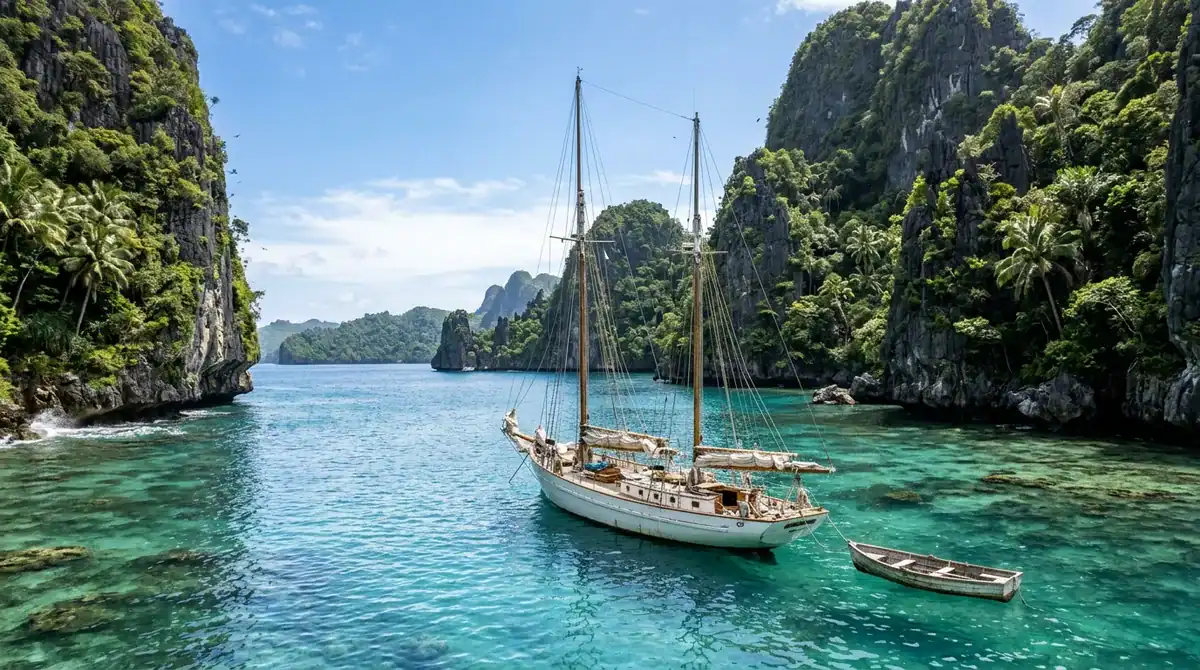
A practical Tonga travel itinerary pairs two island groups: Tongatapu, the main island and home of the capital Nukuʻalofa, and Vavaʻu, a northern group of 61 islands reached by a short domestic flight. Tonga’s 2024 visitor survey found an average stay of nine nights, with Tongatapu and Vavaʻu the most visited island groups, which makes this pairing a sensible base for a relaxed trip that doesn’t try to cover every group. Start on Tongatapu for royal history, heritage sites and coastal scenery, then fly north for lagoon time, sailing and marine days. Lulutai Airlines runs the domestic flights between the two.
Timing shapes the route more than anything else. Humpback whales visit Vavaʻu’s waters from June to November, and whale-watching tours typically run from July to October. Swimming or kayaking with whales is illegal unless you are on a licensed boat with a certified guide, and the maximum penalty is TOP 5,000, 18 months’ imprisonment, or both, according to the UK Foreign, Commonwealth & Development Office. Book with a licensed operator and leave a spare day in case weather or schedules shift. Tonga’s usual cyclone season runs from November through May, so plan around it if you can. Sundays are a day of rest, so keep transfers and errands for other days of the week.
Key Takeaways
- Schedule your marine day mid-way through the Vavaʻu stay so a weather delay cannot cost you the whole trip.
- Compare the TOP 650 day trip with the TOP 1,850 three-day package, since cheaper options may leave less time in the water.
- Tongatapu’s best loop runs from Nukuʻalofa’s morning market to Anahulu Cave’s freshwater pools, ending at Ha’atafu Beach for sunset.
- Visit Talamahu Market on a Saturday morning, when it opens at 6 a.m. and offers the liveliest selection of produce and crafts.
- Visit Mapuʻa ʻa Vaea on a windy day with a strong swell at high tide, when the blowholes throw their biggest sprays.
Building a Two-Island Tonga Route
Most trips on this route follow a simple rhythm: several days on Tongatapu, then a flight north to Vavaʻu. Tongatapu is where you start, with Nukuʻalofa as your base for heritage sites and coastal scenery at an unhurried pace. Vavaʻu is where the pace changes to lagoon time, sailing and marine days. Together, the two island groups give you a wide range of experiences without long journeys in between.
Domestic flights are the quickest way to switch island groups. From Tongatapu they reach Vavaʻu, Haʻapai, ʻEua, Niuafoʻou and Niuatoputapu, so if your trip later stretches to Haʻapai or ʻEua, a flight is the simplest link. Boats and ferries take longer and run to their own timetables, so treat them as a slower option and check schedules before you commit a day to one.
Sunday needs special care. Sunday is a day of rest by law, and as Haʻapai Tourism explains, no flights or ferries run and shops close. Keep airport transfers, errands and supply runs for other days, and arrive with what you need for the weekend.
Build a spare day or two into the plan. Flight times can shift, boat departures can move, and weather can cancel a sea outing. Schedule your marine day in the middle of the Vavaʻu stay rather than on the last morning, so a delay doesn’t cost you the trip. Our itinerary guides, such as the Uruguay route that pairs Montevideo with Colonia del Sacramento, list travel times and fares where they matter, and this route follows the same approach.
Whale Season Rules Before You Book
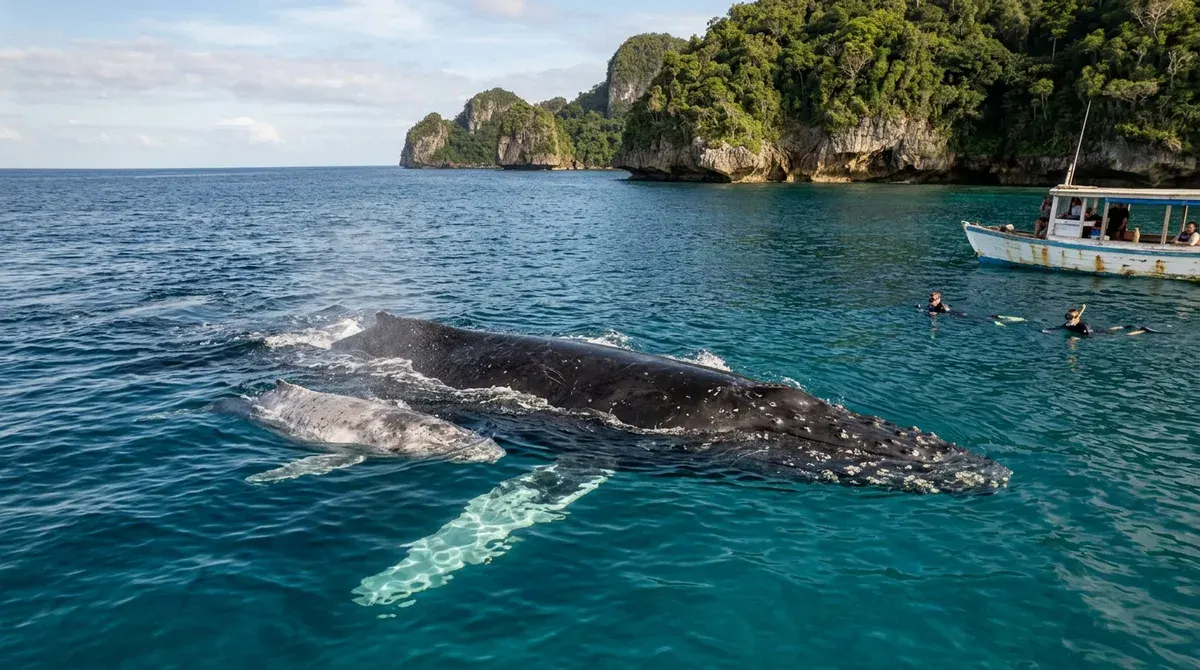
Whale rules deserve your attention before you pay a deposit. Swimming or kayaking with whales is only allowed from a licensed boat with a certified guide, and the maximum penalty is TOP 5,000, 18 months’ imprisonment, or both. Before you board, confirm the operator’s licence and ask to see the guide’s certification. If an operator can’t answer either question clearly, choose another one.
Prices help you judge what a legitimate trip involves. For 2026, a seven-hour whale-watch-and-swim day trip in the area has been priced around TOP 650 per person, and a three-day package around TOP 1,850 per person. Compare what each option includes, because a cheaper day trip may leave less time in the water.
The regulations are also being updated. Tonga’s Ministry of Tourism plans to finalize amendments to the Whale Watching and Swimming Regulations 2013, part of a corporate plan aimed at tightening licensing and regulatory oversight. Ask your operator how their licence and guide certification apply under the rules in force when you travel.
Build flexibility around the sea. Whale encounters depend on sea and weather conditions, so a trip can be moved or cancelled on the day. Book your whale outing for a day with no fixed commitments, and avoid pairing it with an inter-island flight. Ask each operator what happens if conditions cancel the trip, and keep your Vavaʻu schedule loose enough to absorb a rescheduled outing.
Tongatapu: The Main Island Packed With Heritage
Tongatapu is Tonga’s main island and includes the capital, Nukuʻalofa. The Tonga Tourism Authority lists the 11th-century Haʻamonga ʻa Maui trilithon, the ancient royal langi tombs, ʻAnahulu Caves and the Mapuʻa ʻa Vaea blowholes among its attractions. You can trace royal history and dramatic coastline within a few days.
The best way to see it is as a loop. Start in Nukuʻalofa in the morning, when the market is busy with fresh produce and local crafts. In the afternoon, visit the heritage sites, then swim in the freshwater pools of ʻAnahulu Caves, where limestone formations surround the water. Finish at Haʻatafu Beach, popular for snorkeling, swimming and sunset views. The blowholes along more than five kilometres of rugged coastline make a striking stop on the way.
Getting around is straightforward. A rental car, taxi or local bus will take you between sights, and hiring a car or scooter lets you set your own pace. Many sights are free to visit, though some guided tours and individual attractions charge separately. Guided island circuits usually last five to seven hours. The dry season runs from May to October, and the wet season from November to April, so keep outdoor plans flexible.
Tongatapu suits history lovers, photographers, families and slow travelers. Photographers will find striking material in the trilithon and the blowholes, and families will enjoy the swimming. Tonga Pocket Guide recommends at least three days on the island, which gives you time to explore at an unhurried pace.
At a glance
- Best for: history lovers, photographers, families and slow travelers
- Hours or Season: dry season May to October; wet season November to April
- Cost: many sights are free, while some guided tours and individual attractions charge separately
- Time Needed: at least three days; guided island circuits take five to seven hours
- Getting There: Fuaʻamotu International Airport, about a 30-minute drive from Nukuʻalofa
Nuku’alofa: Where Royal History Meets Everyday Life
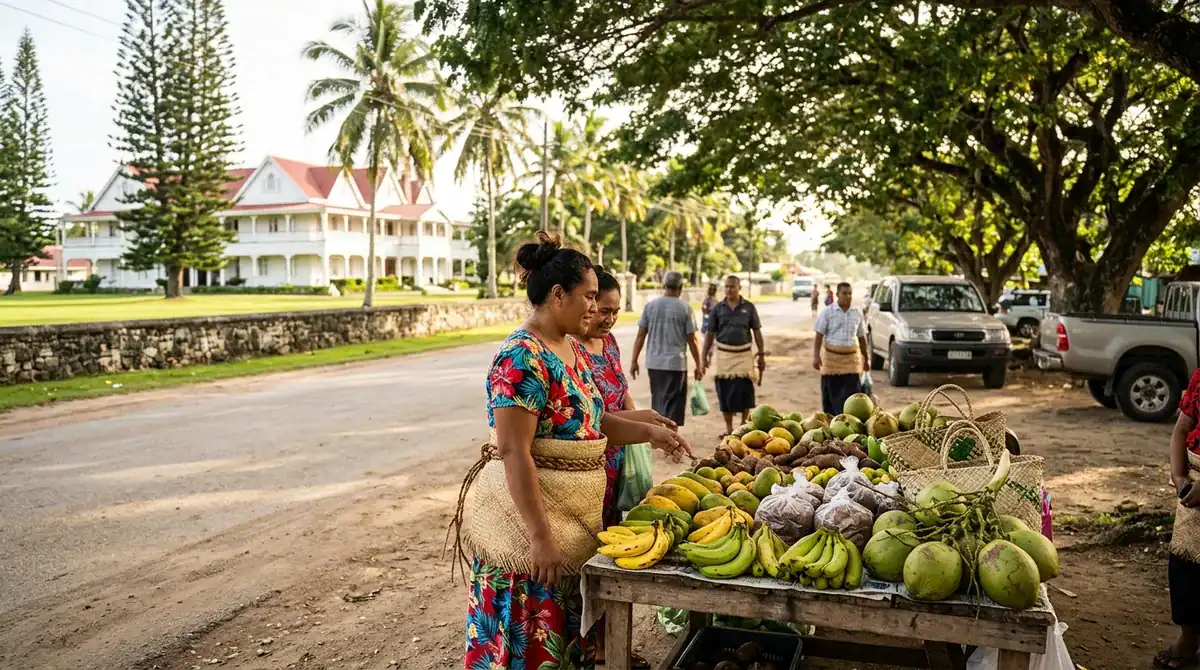
Nuku’alofa is a compact capital rather than a single ticketed attraction, so you can explore most of it on foot. Start at Talamahu Market, where fresh tropical produce sits alongside tapa cloth and woven goods. The market is busiest in the morning, so arrive early, before the stalls thin out.
From the market, walk the waterfront to the Royal Palace. The palace itself is not open to the public, so you admire it from outside, and the view across the water is worth the stroll. Nearby churches and royal tombs fill out the walk, and together they show how faith and royal tradition shaped the city.
What sets Nuku’alofa apart is how easily everyday Tongan life sits beside that history. You might pass a family buying vegetables before a Sunday-free week begins, then turn a corner to a church or a royal tomb. Visitors can choose a guided tour of Tongatapu or a self-guided driving tour, depending on how much ground they want to cover.
Most visitors need only one or two days for the city itself. Nearby boat trips, however, add swimming, snorkeling and whale-watching to a stay based here, and a longer trip of five to seven days can include excursions that leave from the capital.
This is a good base for history lovers, market browsers, photographers and slow travelers who want an unhurried first stop.
At a glance
- Best for: history lovers, market browsers, photographers and slow travelers
- Time Needed: one to two days to explore the city on foot
- Getting There: rental cars, taxis and local buses are available on Tongatapu for independent sightseeing
- Hours: Talamahu Market was listed at roughly 8 a.m. to 5 p.m. Monday through Saturday, and closed on Sundays; see the official Tonga Tourism site for current details
Ha’amonga’a Maui Trilithon: Tonga’s Stonehenge Gateway
The coral-limestone trilithon of Ha’amonga ‘a Maui stands on Tongatapu’s eastern tip and is one of the island’s historic highlights. Three massive stones form a gateway that dates to the 11th century. It sits in the Historic Park at Heketā, near Niutoua, on the grounds of an ancient Tongan royal compound.
Three cleared walkways lead from the gateway to other historic features. A large stone slab called Maka Fa’akinanga, associated with the king, lies about 100 metres from the trilithon, so it’s an easy detour. Visitors describe the grounds as peaceful and green, with local souvenir stalls and free entry, according to visitor reviews.
Its purpose is still debated. UNESCO notes competing explanations for the structure, which keeps history lovers and photographers returning to it. Go in the morning or late afternoon for softer light and fewer visitors, and give yourself time to walk the paths rather than only the gateway.
At a glance
- Best for: History lovers, culture enthusiasts and photographers
- Cost: Free entry, according to visitor reviews
- Getting There: About 30 km from Nuku’alofa, roughly 37 minutes by road, with bus and taxi options
Talamahu Market: Tonga’s Lively Morning Marketplace
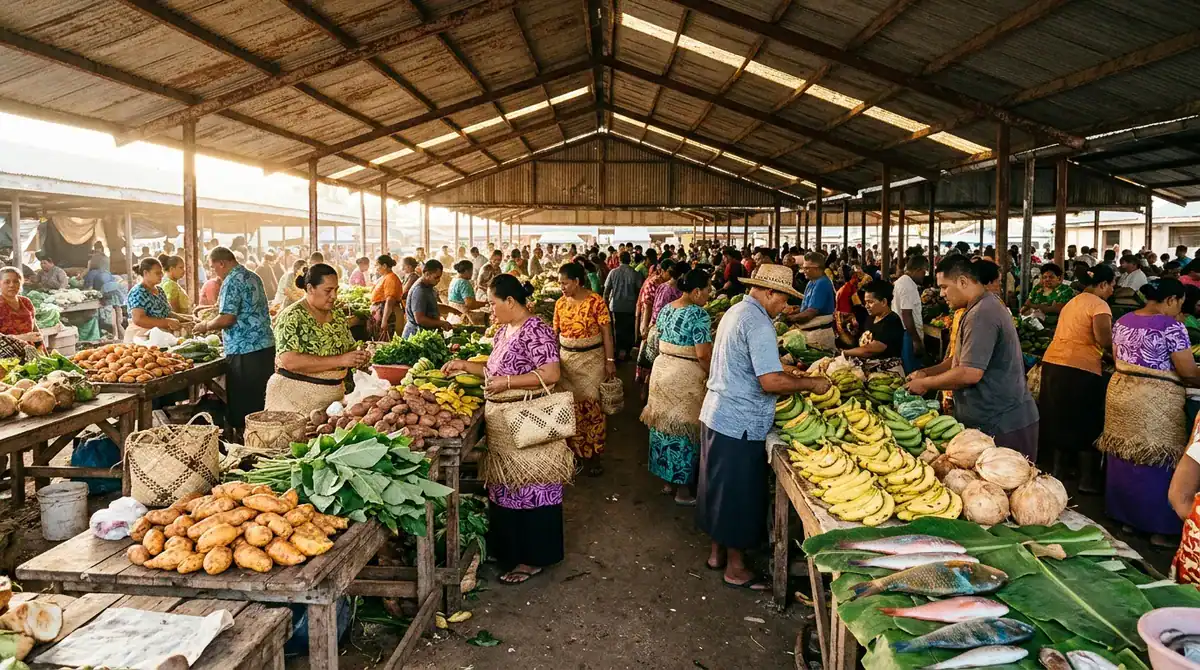
Talamahu Market is Tonga’s largest market, set in central Nuku’alofa, and it’s one of the best places to see everyday island life up close. Tables piled with tropical fruit and vegetables sit alongside stalls of Tongan arts and crafts, so you can pick up a papaya for breakfast and a keepsake for home on the same stroll.
The craft stalls are where to slow down. Look for woven baskets, traditional clothing, tapa-cloth paintings and carved jewelry and ornaments. Tapa making, mat weaving, bone and wood carving and basket making are the traditional crafts you’ll find here, so ask stallholders about the materials and the process before you choose a piece.
Plan your visit around the week. Guides suggest Saturday morning for the liveliest selection, and the market opens at 6 a.m. that day. Entry is free, and you can browse at your own pace. Visitors typically spend 10 to 45 minutes there, but you’ll likely want longer. To reach it, follow Salote Road past the police station to the market on the second block. For current opening times, see the official Talamahu Market page.
This market suits food lovers, shoppers and slow travelers who enjoy an unhurried morning wandering on their own.
At a glance
- Best for: Food lovers, shoppers and travelers who want a self-guided visit
- Hours or Season: Monday–Thursday 8 a.m.–6 p.m., Friday 8 a.m.–9 p.m., Saturday 6 a.m.–5 p.m.; closed Sunday
- Cost: Free entry
- Time Needed: Typically 10–45 minutes
- Getting There: Walk along Salote Road in Nuku’alofa, past the police station, to the second block
Royal Palace: A Glimpse of the Living Monarchy
Tonga’s Royal Palace stands on the Nukuʻalofa waterfront and is one of the most striking historic buildings in the capital. It was built in 1867 for King George Tupou I, and its wooden exterior stands out against the tropical sky. Walk along the public road or the waterfront side to get the full view of the facade.
The grounds and interior are closed to visitors, and there are no tours of the palace, so your visit is an outside one. Bring your camera and take your time with the building’s lines and details from the road. Because the stop is brief, pair it with a walk along the waterfront and the market, so the palace becomes one part of a longer morning rather than a destination on its own.
What makes the palace special is how it links the past and the present. It is a landmark of Tonga’s royal history, and it offers a glimpse of a monarchy that still has a working role in the country. Standing on the waterfront, you can picture the city’s royal story unfolding around you.
History lovers, photographers and slow travelers who enjoy cultural sightseeing will get the most from this stop. Families and anyone with an hour to spare will also find it an easy, rewarding part of a day in central Nukuʻalofa.
At a glance
- Best for: history lovers, photographers and cultural sightseeing
- Hours or Season: exterior viewing only; the grounds and interior are closed and there are no palace tours
- Getting There: on Vuna Road in central Nukuʻalofa, viewable from the road and the waterfront side
Ancient Tombs of Lapaha: Royal Langi on a Village Walk
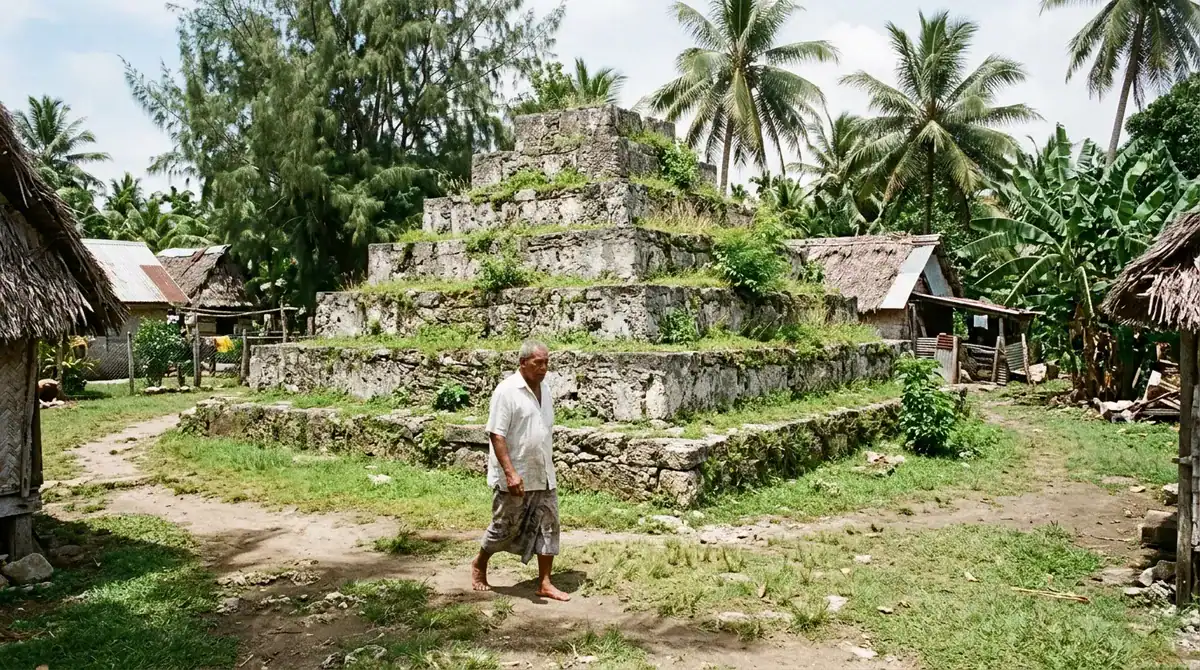
The langi of Lapaha are stepped royal burial platforms in Lapaha village, part of the ancient capital of Muʻa. The tombs are stepped earth platforms supported by stone slabs, and an estimated 22 royal tombs are spread across the area, about 12 kilometres from Nukuʻalofa. You reach them by walking through a living village, where families go about their day, so dress modestly and move quietly.
Lapaha is the burial place of the Tuʻi Tonga dynasty, and Tonga Tourism’s heritage guide describes the tombs as sources of living cultural traditions. The weathered stonework carries that history quietly, and it still belongs to everyday Tongan life. Take your time with the terraces and the stone slabs rather than rushing past them for a photo.
The tombs are open daily for 24 hours, and Frommer’s notes that they can be reached by bus or taxi. Self-led visits work well if you already know the history and want to wander at your own pace. Keep to the paths and show respect at every turn, since this is a place of royal burial.
A guided visit adds context. Jones Travel & Tours includes the tombs in a 2.5-hour Lapaha Royal Palace and Scenic Drive excursion and advises using a guide to avoid stepping on sacred ground. This is a heritage stop for history lovers and slow travelers, not a swimming or shopping visit.
At a glance
- Best for: history lovers and slow travelers seeking a quiet, respectful heritage stop
- Hours or Season: Open daily, 24 hours
- Time Needed: About 2.5 hours on a guided excursion that includes the tombs
- Getting There: By bus or taxi
Mapu’a ‘a Vaea Blowholes: Tonga’s Whistling Coastline
Mapuʻa ʻa Vaea sits along a rugged stretch of coast near Houma, where nearly 100 blowholes break into a five-kilometre bed of volcanic rock. You don’t swim or wander through caves here. You stand on the shore and watch the sea do the work. Waves force seawater up through the openings, sending sprays into the air and, now and then, a geyser-like jet. When rough seas drive waves into the natural channels, the water can reach 30 metres high.
The viewing area is set up for watching. A large parking area has platforms and seats, and from there you can see water shoot through the blowholes and fall onto the tiered reef below. The rock is slippery and the waves are unpredictable, so stay well back from the edge. Local guides recommend a windy day with a strong swell at high tide, when bigger swells mean bigger blasts. The dry season, May to October, brings the best conditions, but the display depends on the sea, so leave room in your schedule to return on a better day.
The name tells a story. Mapuʻa ʻa Vaea means “Whistle of Vaea,” a reference to the whistle-like sound the blowholes make as air and water rush through them. Vaea was a noble of Houma, and the name ties this rugged coastline to local Tongan tradition. It gives the sprays a meaning beyond the spectacle.
Photographers will find the sprays endlessly changeable, and history lovers will appreciate the legend behind the name. Families and slow travelers can settle onto a bench and let the waves set the rhythm of the visit.
At a glance
- Best for: photographers, history lovers, families and slow travelers
- Hours or Season: best conditions May to October, on windy days with a strong swell at high tide
- Cost: free entry, with on-site parking; see the official attraction listing for current details
- Getting There: near Houma on Tongatapu, about 30 minutes from Nukuʻalofa
Anahulu Cave: A Freshwater Swim Underground
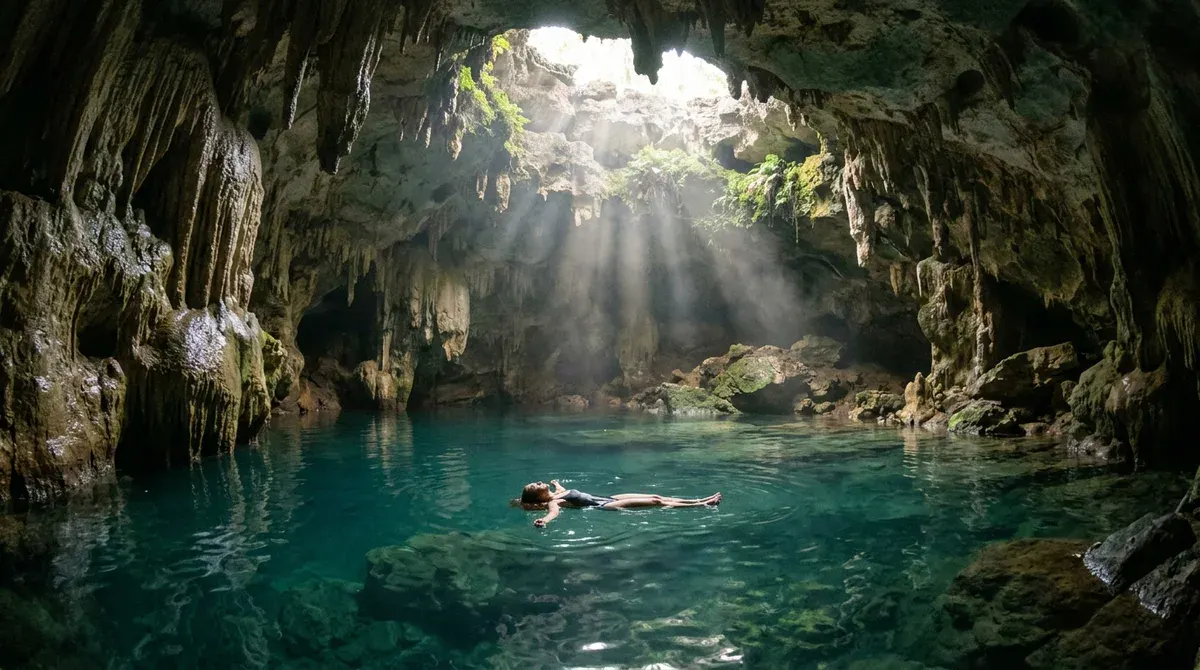
Anahulu Cave is a limestone cave in Haveluliku on eastern Tongatapu, where a network of roughly 400 metres of caverns holds freshwater pools beneath limestone formations. You can explore the passages at your own pace, then slip into one of the pools for a swim.
Park at the signposted car park off Hala Liku Road. The cave-and-beach walk is about 800 metres return and takes roughly an hour. The path can be slippery, so choose shoes with good grip. Water clarity shifts with the weather, and one visitor found the pool less clear after rain, so a dry day suits a swim best. Aim for a weekday morning to avoid crowds.
A local legend links the nearby Tuʻalikutapu coast and its caves with Hina, who lived in the caves and bathed in their freshwater pools. Floating in the same water gives the swim a story to go with it. The cave operator also offers cultural tours that can include Tongan song and dance, a kava ceremony, island food, and demonstrations of mat weaving and barkcloth making.
Anahulu Beach lies about 50 metres from the cave entrance and is suitable for snorkeling and swimming. Pack a picnic and make a relaxed morning of it: swim in the cave, then eat by the water. This stop suits slow travelers, history lovers and photographers who want a short nature outing with a cultural layer.
At a glance
- Best for: slow travelers, history lovers and photographers seeking a short nature outing and cave swim
- Hours or Season: listed as 10 a.m. to 6 p.m. Monday through Saturday, closed Sunday; see the official site for current hours
- Cost: entrance listed at 20 Tongan paʻanga
- Time Needed: about one hour for the cave-and-beach walk
- Getting There: about a 30-minute drive from Nukuʻalofa, with a signposted car park off Hala Liku Road
Hufangalupe Natural Land Bridge: Coastal Arch Above the Pacific
Hufangalupe sits on the southeastern coast of Tongatapu, where the roof of a sea cave collapsed and left a natural arch above the Pacific. Lonely Planet describes it as a natural land bridge formed this way. You can walk across the arch, look down into the pit it leaves behind, and take in the craggy coast on either side. There are no fences, so the drop-offs are yours to keep a careful distance from.
A dirt trail leads to a lookout over Hufangalupe Beach, and a fainter path continues down to the sand. The approach takes some effort. A 2023 visitor review found it unmarked and overgrown, and recommended a four-wheel-drive vehicle or a guide. A 2012 tourism study also flagged crumbling cliff edges and strong trade winds as safety concerns, so watch your footing on loose ground and stay well back from the edge.
Local tradition adds another layer. A University of Waikato tourism study records a belief that Hufangalupe means a place where injured doves take refuge, a gentle name for such a rugged stretch of coast. Together with the geology, that story makes the arch more than a photo stop.
Photographers will find plenty to work with in the bold arch and the rough shoreline, and nature lovers will enjoy watching the Pacific break against the rock. Plan a calm morning, wear shoes with good grip, and read the official Hufangalupe page before you set out.
At a glance
- Best for: photographers, nature-focused travelers and anyone interested in local tradition
- Getting There: a dirt trail leads to a beach lookout, with a fainter trail down to the beach; a 2023 visitor review recommended a four-wheel-drive vehicle or a guide for the unmarked, overgrown approach
Three-Headed Coconut: A Roadside Natural Curiosity
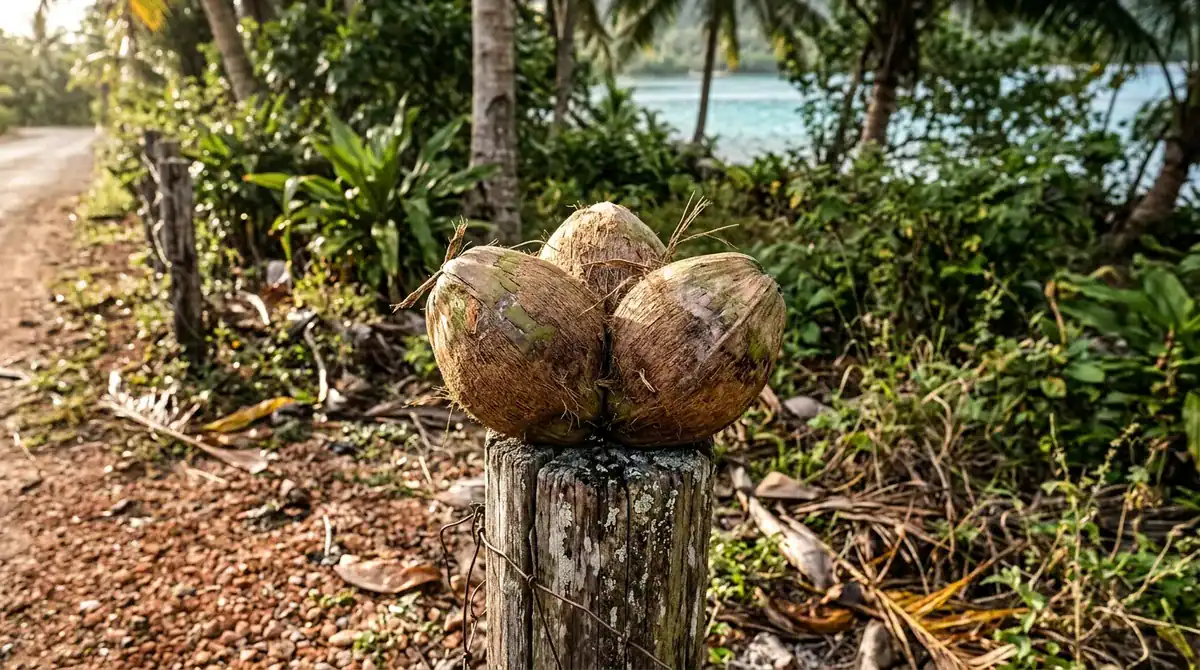
Three crowns growing from one coconut palm is the whole story at this roadside stop in Liahona, a village on Tongatapu. The tree is a natural curiosity, not a cave, beach or staffed attraction, so there is no entry desk and no guide waiting by the trunk. Visitors usually stop briefly to look up at the crowns and take photos, and the visit typically takes about 10 minutes.
Parking is the practical detail to plan around. The tree stands on Loto Road at the western end of Liahona, where roadside space is limited, so pull in carefully and keep the stop short. It works as a self-drive detour or as part of an island tour, and Tonga Pocket Guide says tours to the tree run through Echoes of Tonga, Teta Tours and Fresh Niumata Tonga.
Read recent traveler reports before you add this detour, because the tree’s condition has changed. Visitors posting on Tripadvisor in July and August 2026 reported that the tree was dead, though its trunk and stems remained visible. The official listing still describes it as an attraction, so expect a bare, weathered trunk rather than a living palm.
The Tonga Tourism Authority includes the tree among the natural wonders of the Polynesian world, which gives a short roadside stop more meaning than its size suggests. It suits photographers looking for something unusual, families on a self-drive day, and slow travelers who enjoy quirky sights.
At a glance
- Best for: photographers, families on a self-drive day and slow travelers who enjoy quirky sights
- Hours or Season: listed by Tonga Pocket Guide as available all day, every day
- Cost: listed by Tonga Pocket Guide as free
- Time Needed: about 10 minutes
- Getting There: Loto Road at the western end of Liahona village, with limited roadside parking
Ha’atafu Beach: Calm Lagoon Snorkeling at Sunset
Ha’atafu Beach sits at the western tip of Tongatapu, where white sand meets a calm lagoon inside a marine reserve. Swim and snorkel in the lagoon, especially around high tide, when the water is at its most inviting. Then stay on the sand for the sunset, when the lagoon takes on warm colours and the day slows down.
Access is simple, since the road makes it an easy self-led stop. Turn off Hihifo Road at the southern end of Ha’atafu village, about 21 km west of Nuku’alofa on the Hihifo Peninsula. Tide and swell shape what you can do in the water, so let the conditions of the day guide your plans. The reef break is for experienced surfers only, not beginners. The Ha’atafu Beach Resort on site is temporarily closed after tsunami damage, and rebuilding plans are underway with no reopening date given, so check its official site for current details before you go.
The setting is the main reward. A quiet lagoon, a marine reserve and an unhurried afternoon make this a good stop for slow travelers who would rather float and watch the light than rush between sights. Snorkelers and photographers will find plenty to enjoy, and experienced surfers who can read the reef will find a challenge here.
At a glance
- Best for: snorkelers, photographers, slow travelers and experienced surfers
- Getting There: self-led drive off Hihifo Road at the southern end of Ha’atafu village, about 21 km west of Nuku’alofa
Atata Island: A Reef Day Trip From Tongatapu
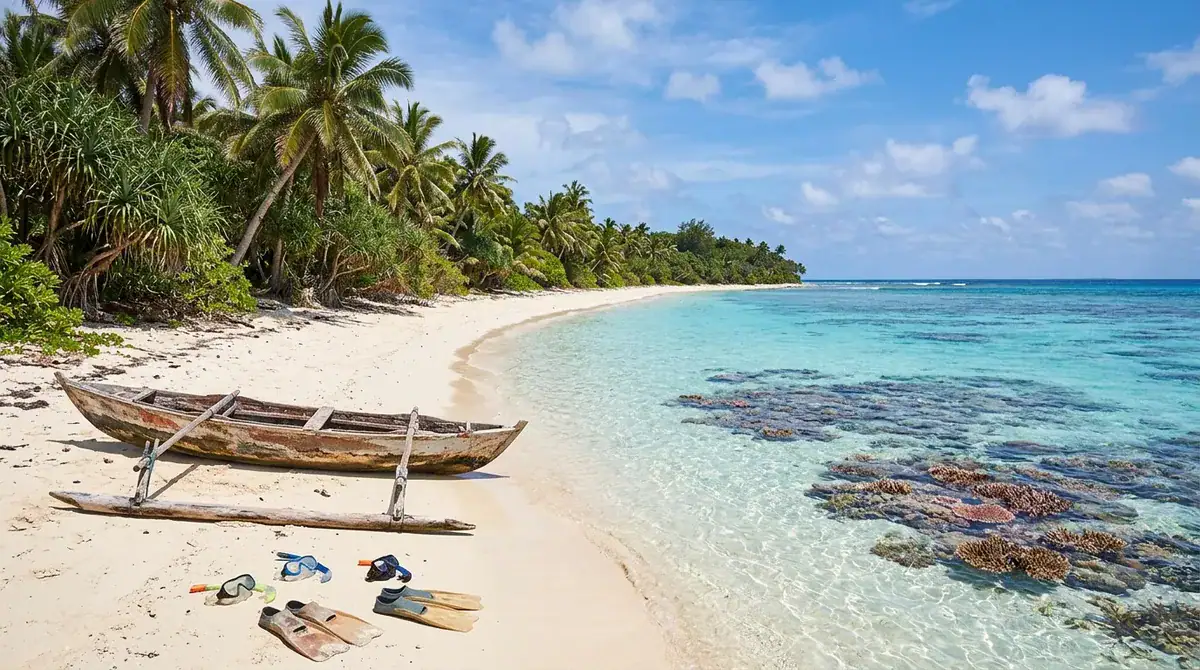
Atata is a small island off Tongatapu, known for its beaches and the reefs that surround it. Boat excursions from Nukuʻalofa have been promoted for snorkeling, diving and fishing rather than caves or shopping. Deep Blue Diving lists ‘Atatā among its island day trips, with a meeting point at Fāua Wharf in Nukuʻalofa.
A half-day guided reef-snorkeling trip is the easiest way to see the water. A Tonga Pocket Guide listing describes a boat ride of about 15 to 20 minutes from Fāua Wharf, with stops at several reefs around ‘Atata. Snorkeling gear, snacks and lunch are included in the Deep Blue tour described there. Other boats may differ, so ask what is covered, and allow for dates to shift to a better-weather day, as Deep Blue suggests.
The waters here carry conservation weight. Tonga’s Ministry of Fisheries identifies ‘Atata as a community Special Management Area with a fish habitat reserve, set up for fisheries management and habitat restoration. The island’s story has also changed. The Royal Sunset Island Resort has ceased operations, and ABC News reported in January 2024 that the island remained deserted after the 2022 tsunami, with former residents evacuated to Tongatapu.
Name the island clearly when you book. Ask whether the boat lands on the island or only visits the nearby reefs. This trip suits snorkelers, photographers and slow travelers who want a half-day on the water close to the capital.
At a glance
- Best for: snorkelers, divers and anglers seeking reef time close to Nukuʻalofa
- Time Needed: a half-day guided reef-snorkeling trip
- Getting There: by boat from Fāua Wharf in Nukuʻalofa, about 15 to 20 minutes on the water
Vava’u: Island Group of Sailing and Whales
Vavaʻu is Tonga’s northern island group, with 61 islands built around Neiafu, the main base for visitors. The town’s harbor is the Port of Refuge, which the 2025/2026 Tonga Stopover Handbook describes as protected from wind and waves. From there you can island-hop by boat, sail between anchorages, or paddle a kayak through sheltered channels. Snorkel over coral gardens and into sea caves such as Swallows Cave and Mariner’s Cave.
Tourism here stays low-key, with small lodges, family guesthouses and a handful of island resorts. Book only with licensed whale operators, since whale-season demand is highest in August and September.
Beyond the water, Vavaʻu rewards slow days. Hilltop viewpoints look out over the islands, quiet villages invite a walk, and visitors can join a Tongan feast. Renting a kayak or paddleboard lets you explore at your own pace.
At a glance
- Best for: snorkelers, sailors, wildlife watchers and photographers who want protected channels and clear water
- Hours or Season: whale-season demand is highest in August and September
- Time Needed: four or five days in whale season, or about a week to add sailing, kayaking or an outer-island stay
- Getting There: domestic flight from Tongatapu taking about an hour, or an inter-island ferry via Haʻapai
Mt. Talau: Hike to Views Over Neiafu
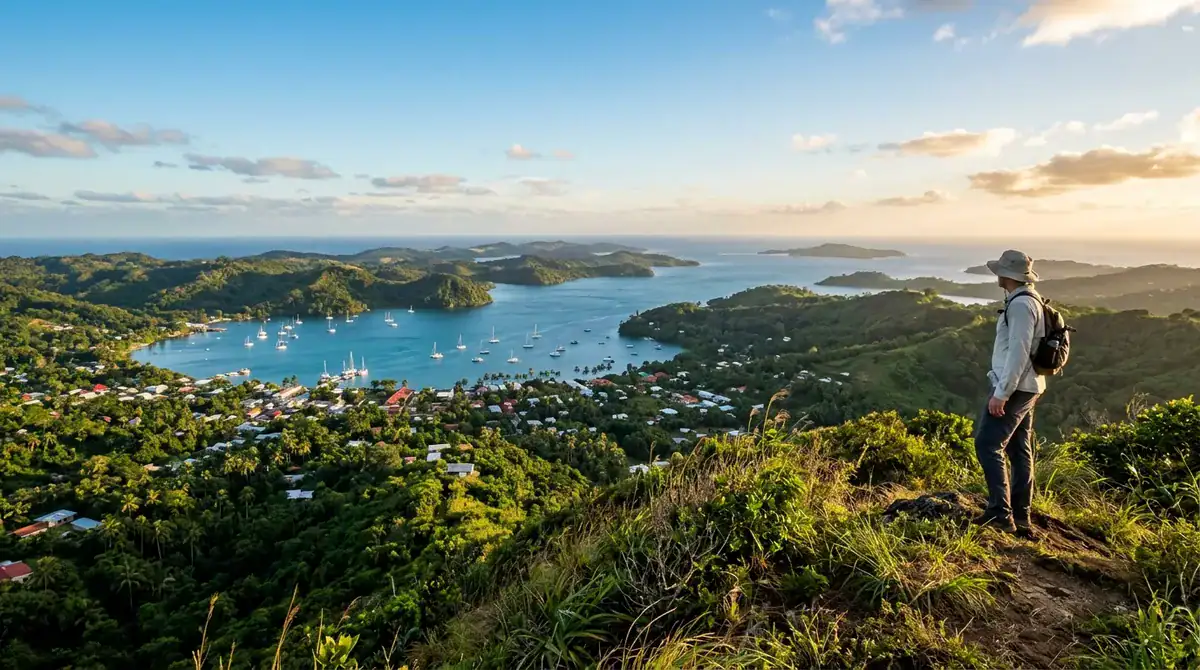
Mt. Talau is a prominent natural landmark and protected park just outside Neiafu, about two kilometres from town. The climb is short but steep, rising through forest for roughly 10 to 20 minutes to two viewing decks. You can walk from town or take a short taxi ride to the start, then follow the trail on your own.
From the lookouts, the view opens over Neiafu, the Port of Refuge and the islands beyond. Allow plenty of time for the return hike, and take extra care after heavy rain, when the route can be slippery underfoot. Go slowly on the descent, since the steepest sections are where a misstep is most likely.
The park protects its native forest. Established in 1995 and covering eight hectares, it shelters endemic plants, birds and reptiles, including the Tongan whistler, which you may hear as you climb.
Mt. Talau suits slow travelers who want a brief nature walk, photographers looking for broad harbor views, and anyone curious about local legend. Because it sits so close to town, it also makes a good first morning on Vavaʻu.
At a glance
- Best for: brief nature walks, harbor views and photo opportunities
- Hours or Season: closed on Sundays; see the official site for current details
- Cost: free
- Time Needed: a 10 to 20 minute climb to the viewing decks
- Getting There: about 2 km from Neiafu, reached on foot or by short taxi ride
Ene’io Botanical Garden: Tonga’s First Botanical Garden
Ene’io Botanical Garden protects native plant species and brings together a wide collection of plants near Neiafu. The core visit is the guided garden walk, which takes 90 minutes and covers more than 550 species, including ake, a plant the operator describes as endemic to Vavaʻu. It makes a relaxed morning, with a listed price of NZ$110 per person.
Longer cultural tours go deeper. The four-hour Polynesian Cultural Tour explains how plants were used, then moves into demonstrations of tapa making and weaving, plus a kava tasting and lunch. The garden also works to protect native plant species and to pass on traditional plant knowledge, and the vanilla processing demonstration shows how one crop moves from plant to kitchen.
The tour includes free time at Ene’io Beach, where you can swim or snorkel. Hotel pickup in Neiafu is included, or you can meet the operator at the garden. The adult price is NZ$295 per person, and the tour starts Tuesday through Saturday at 10:00, so booking ahead is wise.
Nature lovers, culture-minded travelers, families and photographers will all find something here. Plants, craft and a beach make a full morning that fits easily into a Vavaʻu stay.
At a glance
- Best for: nature lovers, culture-minded travelers, families and photographers
- Hours or Season: Polynesian Cultural Tour starts Tuesday through Saturday at 10:00
- Cost: 90-minute garden walk NZ$110 per person; Polynesian Cultural Tour NZ$295 per adult (listed prices)
- Time Needed: 90 minutes for the garden walk; four hours for the cultural tour
- Getting There: hotel pickup in Neiafu is included on the cultural tour, or you can meet the operator at the garden
Ha’apai: Quiet Islands, Lagoons and Whale Season
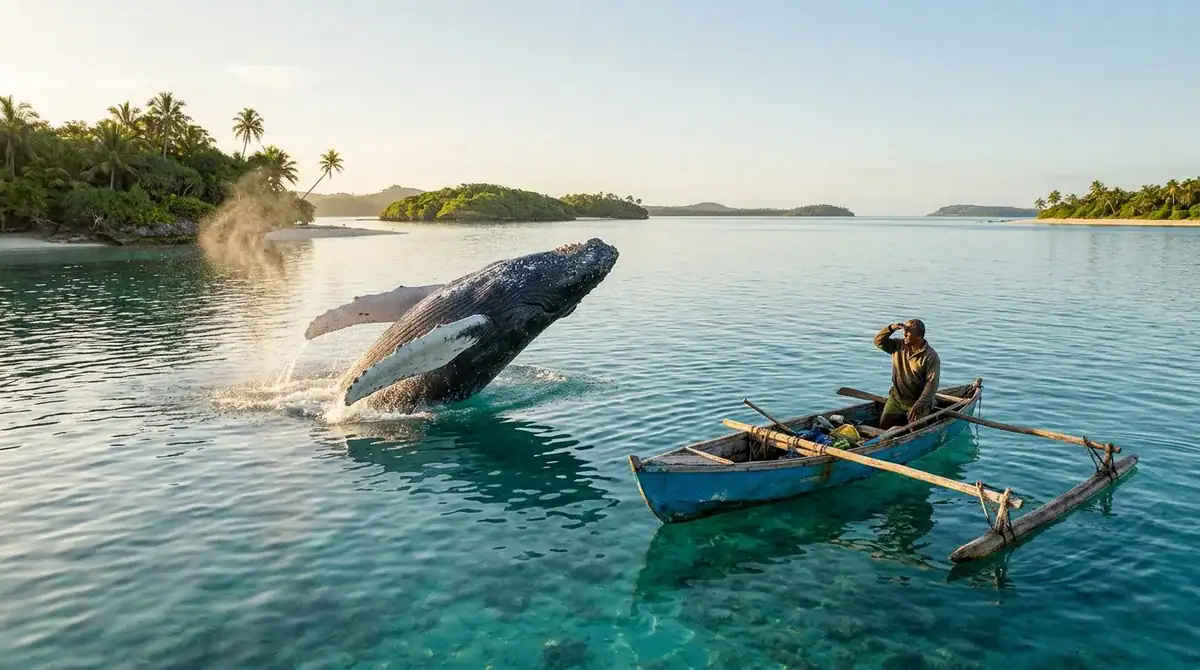
Ha’apai is a remote group in central Tonga, made up of 62 scattered islands, atolls, reefs and shoals, with Pangai on Lifuka as its administrative center. Tonga Tourism describes it as a place of white-sand beaches, lagoons and reefs, and the days here follow the water. Swim, snorkel, kayak, paddleboard or beachcomb, then hop between islands by boat to find a quieter stretch of sand.
History runs alongside the lagoons. The group is linked to Captain Cook’s visit and to the Mutiny on the Bounty, which is dated to April 28, 1789, between Lifuka and Tofua. Velata Mound Fortress and the ancient burial grounds on Uiha give you places to explore on foot. From July to October, humpback whales draw visitors, and a guided tour offers the chance to watch them. With a licensed operator, you can also swim with them.
Expect a small-scale arrival with simple facilities and beaches that are often empty. Weather can change your plans, and flights and ferries are limited on Sundays, so build your schedule around that day. A travel guide recommends at least four nights, ideally about a week, which leaves room for transport and weather changes.
Ha’apai suits snorkelers, whale-watchers, history-minded visitors and slow travelers who are happy with simple facilities and flexible plans.
At a glance
- Best for: snorkelers, whale-watchers, history-minded visitors and slow travelers
- Hours or Season: guided humpback whale watching during the migration from July to October
- Time Needed: at least four nights, ideally about a week
- Getting There: a domestic flight from Tongatapu to Lifuka takes about 45 minutes, or a ferry from Nuku’alofa takes 8 to 12 hours
Luahoko Robinson Island: A Castaway-Style Island Stay
Luahoko is a tiny, uninhabited island in Haʻapai, and it appeals to travelers who want a true castaway feeling. Its white-sand beaces and palm and coconut trees make it a place for slow walks along the shore, watching birds and photographing the scenery. Its beaches and surrounding waters are part of important sea-turtle nesting areas, so the shoreline has a wild, unspoiled character. Visitors also describe tree-climbing hermit crabs scuttling across the sand.
Getting there takes some planning. Travelers arrange their own international arrival in Tonga, fly from Tongatapu to Haʻapai, and transfer to Sandy Beach Resort, then continue by boat to the island. The resort’s Robinson Crusoe itinerary includes two resort nights and preparation, a boat transfer on day three, ten nights in a Tongan fale, and a return to the resort for seven more nights. Some Haʻapai guides also list day trips from nearby islands. Because Luahoko is an exposed outer island, a Haʻapai cruising guide suggests visiting on a settled weather window.
The island also holds history. A 2020 report on Haʻapai archaeology records a small rock-art site on Luahoko, with glyphs similar to those found on Foa. Access to the site is not clearly described, so ask the operator before you plan your days around it.
Luahoko suits slow travelers, nature lovers, photographers and history-minded visitors who want solitude more than shops or a conventional guided attraction.
At a glance
- Best for: slow travelers, nature lovers, photographers and anyone wanting a quiet beach break
- Cost: the 20-night resort package is listed at €3,320 per person on a shared-twin basis, including domestic flights, transfers and food (see the official site for current details)
- Time Needed: the resort’s Robinson Crusoe package runs 20 nights, including ten nights on the island
- Getting There: domestic flight from Tongatapu to Haʻapai, then a resort transfer and boat to Luahoko
‘Eua: Rainforest Trails and Quiet Coastline
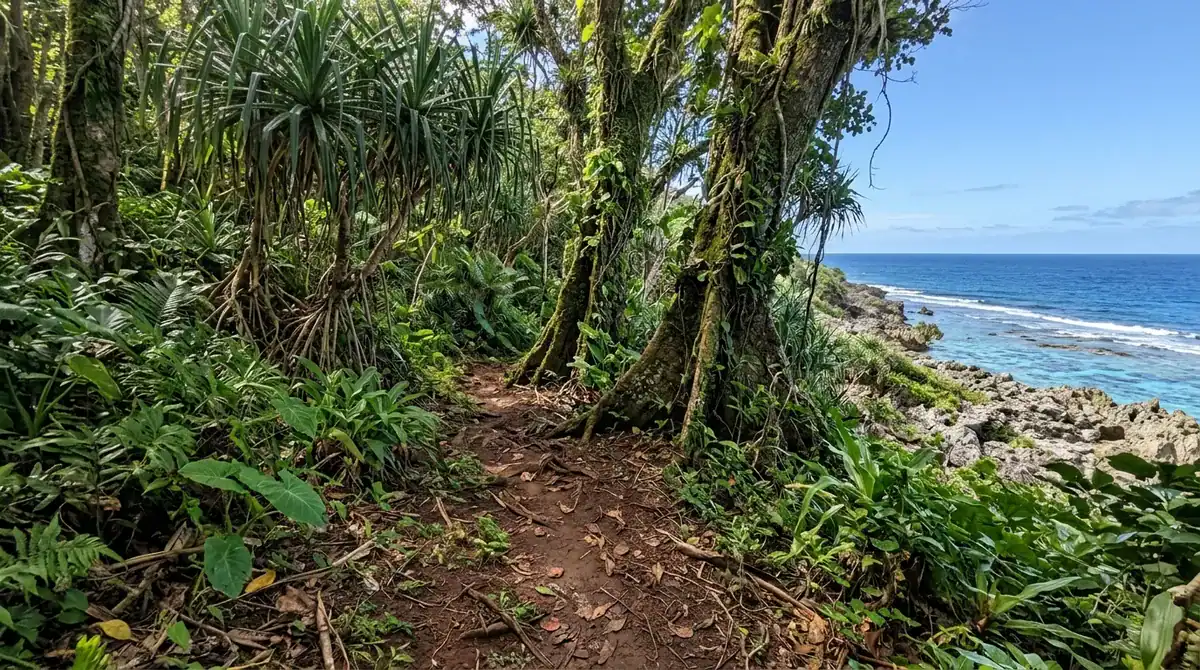
‘Eua is the kingdom’s oldest island geologically, and it feels that way. Dramatic cliffs, caves, sinkholes and lush rainforest rise above a quiet coastline with few crowds and none of the resort-style busyness you may find elsewhere in Tonga. Trails through the national park lead to the Lakufa’anga Cliffs and Rock Garden, a walk of about two hours, and to the Hafu Pool and Big ‘Ovava Tree, a walk of about three.
Start early, carry water, snacks and sun protection, and leave room in the day for detours. Some routes suit independent hikers, but the Fangatave caves hike and the national park hike to Lokupo Beach have poorly formed paths, so a local guide is the better choice. Along the way you can visit the Li’angahuo ‘a Maui natural stone bridge, explore caves, and swim at Ha’aluma Beach. Transport from Tongatapu can shift with the weather, so keep a loose schedule.
Keep your binoculars handy. Tonga Tourism says visitors can look for the rare red-breasted shining parrot, or koki, a native bird that makes the forest walks feel like a real nature outing. Humpback whales also visit from June to November, so if your dates fall in that window, ask about whale-season timing before you commit to a route.
‘Eua suits hikers, birders, photographers and travelers who prefer an unhurried pace. Plan at least two to three days, or five to seven if you want to take in the caves, the cliffs and a few long walks.
At a glance
- Best for: hikers, birders, photographers and travelers who like quiet, unhurried places
- Hours or Season: humpback whales visit from June to November
- Time Needed: at least two to three days; five to seven days for a longer visit
- Getting There: a seven-minute flight or a short ferry ride from Tongatapu
Practical Tips for Tonga Visitors
Money is the first practical detail to sort out. Tonga’s currency is the Tongan paʻanga (TOP), so carry some cash for markets, small stalls and village purchases, where cash is the easiest way to pay.
Most travelers will find communication easy, because Tongan and English are both widely used. A few Tongan greetings still go a long way in villages and at market stalls, and people usually respond with warmth when you make the effort.
Tonga is well ahead of the United States and Europe on the clock. Before you book flights, lodges or boat trips by email or phone, check which time zone the operator is using, and allow for the gap when you plan calls.
Tropical cyclone season usually runs from November through May. A trip that starts in November runs straight into it, so choose flexible dates and check whether your bookings can move if the weather turns.
- Check entry requirements and passport validity well before you fly, not at the airport.
- Buy a local SIM card on arrival if you need mobile data.
- Carry small amounts of paʻanga for markets and roadside stalls.
Dress modestly when you visit villages, churches and tombs. Covering your shoulders and knees is a simple sign of respect, and it suits the quiet pace of these places. Ask before you photograph anyone, and wait for a clear yes before you raise the camera.
Eat local food at markets and at village-style meals, where the island’s flavors are often the highlight of the day. Before any meal, tell your hosts about food allergies, so they can adjust what they serve before the food reaches the table.
Choosing Your Tonga Route and Next Steps
Start with your dates, because they shape the rest of the route. If you can travel between July and October, build your Vavaʻu stay around one licensed whale outing and keep Tongatapu to about three days so the pace stays unhurried. If your window falls between November and May, keep your marine plans loose and avoid booking a whale trip for a fixed day.
Next, choose your operator before you book your flights. Ask for the licence number and the guide’s certification in writing, then request a clear list of what the trip includes, especially how many hours you will spend in the water. Set that against the day-trip and three-day prices so you know what each option gives you.
Then sketch your first week on paper. Put the Nukuʻalofa market on a weekday morning, since Sunday is a rest day and your transfers should avoid it. Leave a buffer day between your last Tongatapu outing and your domestic flight to Vavaʻu, so a delayed flight doesn’t cost you a booked excursion.
Finally, pick one question to answer before you go. Email your chosen operator and ask what happens if weather cancels the trip and whether you can move the booking to another day. Their answer will tell you whether the plan can bend, and it will help you decide whether to lock in your Vavaʻu dates now or wait until the forecast is clearer.