
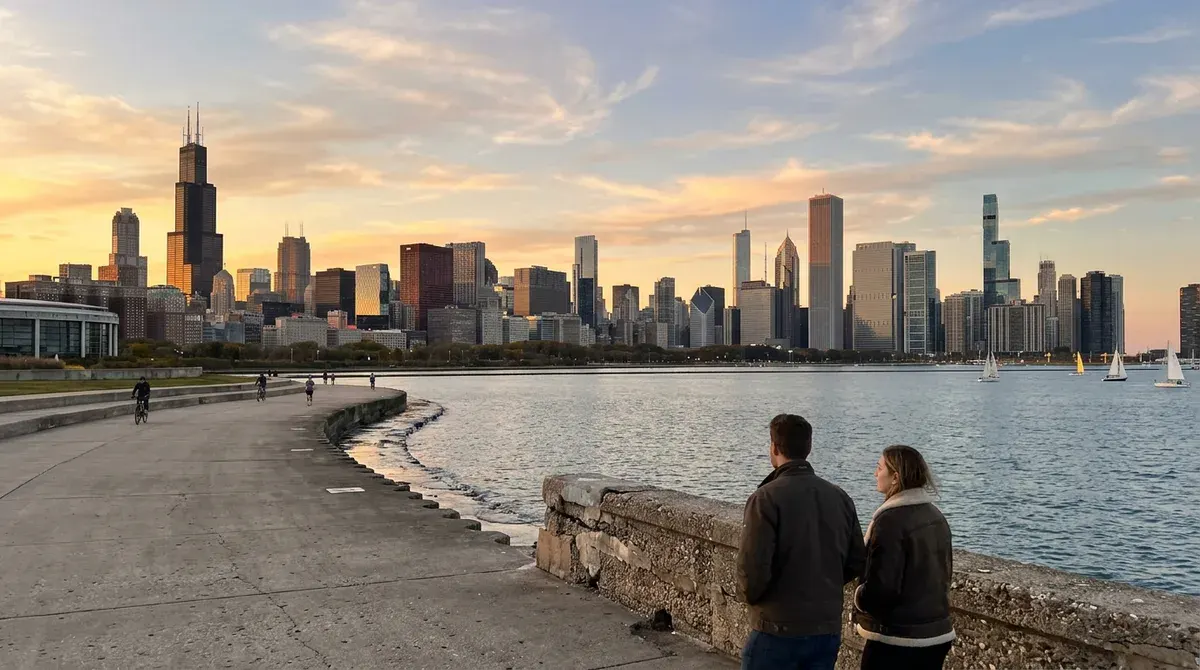
A Chicago weekend works best when you split it into two clusters: downtown architecture on day one, and lakefront walks plus a major museum on day two. Start with the Chicago Architecture Center’s First Lady river cruise, which lasts 90 minutes, covers more than 50 buildings, and has tickets starting at $57. Weekend sailings fill up, so book ahead and arrive at least 30 minutes before departure. Afterward, follow the Chicago Riverwalk on foot. The bridges, boat docks, and skyline views keep the whole first day within easy walking distance of the Loop.
Save Sunday for the lake. The Lakefront Trail stretches from Ardmore Avenue to 71st Street, and the Chicago Park District reported that repair work would begin in fall 2026, so check trail conditions before you set out. Walk the pedestrian path, since bicycles are not allowed there. Plan your museum visit around opening days: the Art Institute of Chicago is closed on Tuesdays, while the Field Museum offers free Wednesday admission to Illinois residents. End the trip the Chicago way with an Italian beef, a French roll stuffed with thinly sliced beef and peppers, ideally dipped in its own jus.
Key Takeaways
- Split your Chicago weekend into two clusters, with downtown architecture on day one and lakefront walks plus a major museum on day two.
- The Chicago Architecture Center’s First Lady river cruise lasts 90 minutes, passes more than 50 buildings, starts at $57 per ticket, and fills up on weekends, so reserve a seat early.
- The Art Institute of Chicago is closed on Tuesdays and opens at 11 a.m. on Saturday, so schedule your museum visit around those hours.
- A single CTA rail ride costs $2.75, and a 1-Day CTA/Pace Pass for $6 only makes sense once you ride more than twice in a day.
Two Days in Chicago: A Walkable Weekend Route
Two days in Chicago feel unhurried when you stay inside one neighborhood at a time. Day one belongs to the Loop and the river, and day two belongs to the lakefront and the museum campus. Saturday and Sunday both suit this plan, since the Art Institute is closed on Tuesdays and weekend days keep the rest of the schedule flexible.
Short hops between clusters are easy on the CTA. A single rail ride costs $2.75, and a 1-Day CTA/Pace Pass costs $6, which makes more sense once you ride more than twice in a day.
Each step below keeps you within one cluster, so most of your time goes to looking rather than riding.
- After the cruise, walk the Riverwalk west toward the Loop bridges, stopping at the boat docks for skyline photos.
- Cross into Millennium Park for the free gardens, then walk the short distance to the Art Institute, which is open 11 a.m. to 5 p.m. on Saturday.
- Head north up the Magnificent Mile, where shops and historic facades line Michigan Avenue.
- Leave the late afternoon open for one unplanned stop, such as a gallery or café you spot along the way.
- Take a short CTA ride to Old Town for an evening show at The Second City, then have dinner nearby.
- On Sunday, start at the Field Museum on the museum campus, then follow the lakefront path to the Shedd Aquarium and the Adler Planetarium.
- Catch a bus north to North Avenue Beach or Lincoln Park for a final lakeside walk before you head to the airport or station.
Getting Around Chicago: Transit Fares and Walking Routes
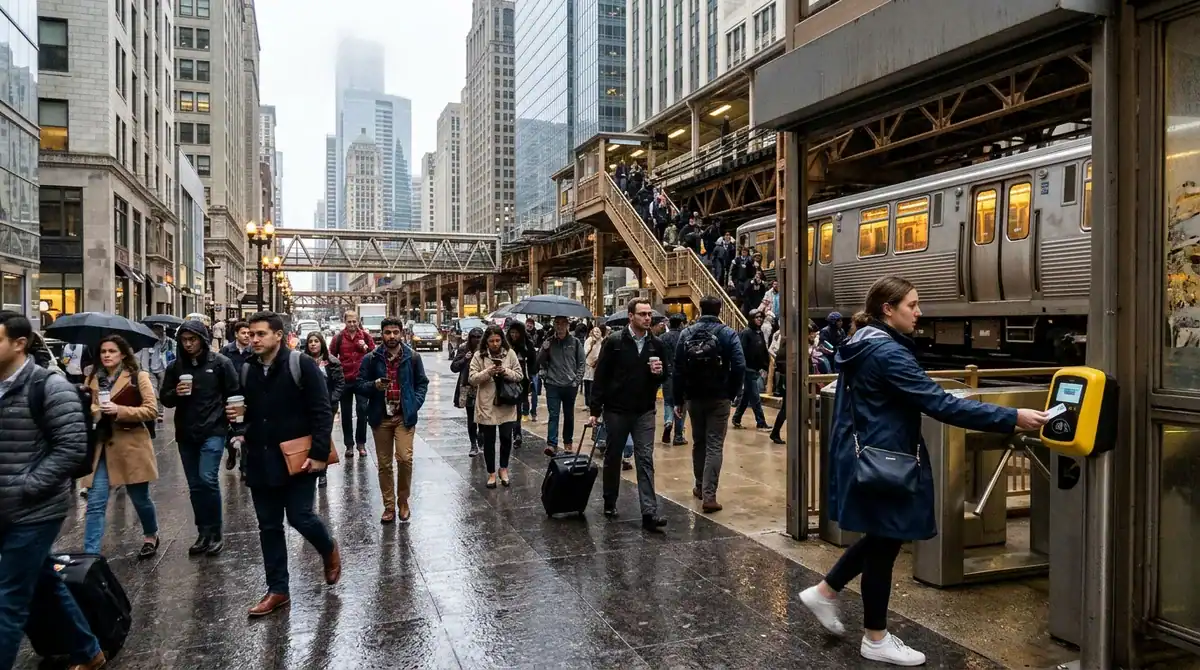
Walking covers most of this weekend, so you’ll only need transit for the longer gaps. The CTA’s full bus fare is $2.50 and its full rail fare is $2.75, both for the fare year that took effect February 1, 2026. A 1-Day CTA/Pace Pass costs $6, so it’s worth buying only if your Saturday or Sunday includes several separate rides.
Downtown is compact. Michigan Avenue, Millennium Park, and the Riverwalk sit within easy walking distance of one another, so you can move between them on foot in good weather without swiping a card. Pack comfortable shoes, because the sidewalks around the Loop add up quickly.
The Lakefront Trail offers plenty of room to stretch your legs. Its pedestrian path runs about 18.5 miles, while the separate bike trail covers roughly 18 miles, and bicycles stay in their own lane. The Park District reported on September 14, 2026, that repairs would begin in the following weeks and continue for several months as weather allows, so check conditions before committing to a long stretch.
Rideshare makes more sense than the train or bus for late nights and for trips to Pilsen or Garfield Park, where transit connections take longer. Fares rise during busy periods, so check the estimate in the app before you book.
Where to Stay, Eat, and Book Ahead
Stay downtown or in River North if you want the shortest walks to Millennium Park, the Riverwalk, and the Art Institute. From either neighborhood, you can start each morning on foot and skip the transit fare entirely. Lincoln Park and Andersonville make a calmer alternative for a slower Sunday. Lincoln Park has the zoo, the conservatory, and quiet lakeshore paths, while Andersonville is known for its Swedish heritage and independent shops, so it suits a relaxed midday browse.
For a classic dinner, go for deep-dish pizza at a sit-down restaurant. It’s thick, slow to bake, and worth lingering over. Balance that heavy meal with a lighter lunch. A Chicago-style hot dog, served on a poppy seed bun with yellow mustard, neon green relish, a pickle spear, sport peppers, and tomato, makes a quick, satisfying stop between museums.
Some evenings need more planning than others. Reserve a table at Cindy’s Rooftop for its park views, and book tickets for The Second City in Old Town before you arrive, since both tend to fill up on weekends. The Field Museum offers free admission to Illinois residents on Wednesdays, and advance online reservations are recommended, so reserve a time slot early if your visit falls on that day.
Millennium Park: Free Gardens, Art, and Concerts
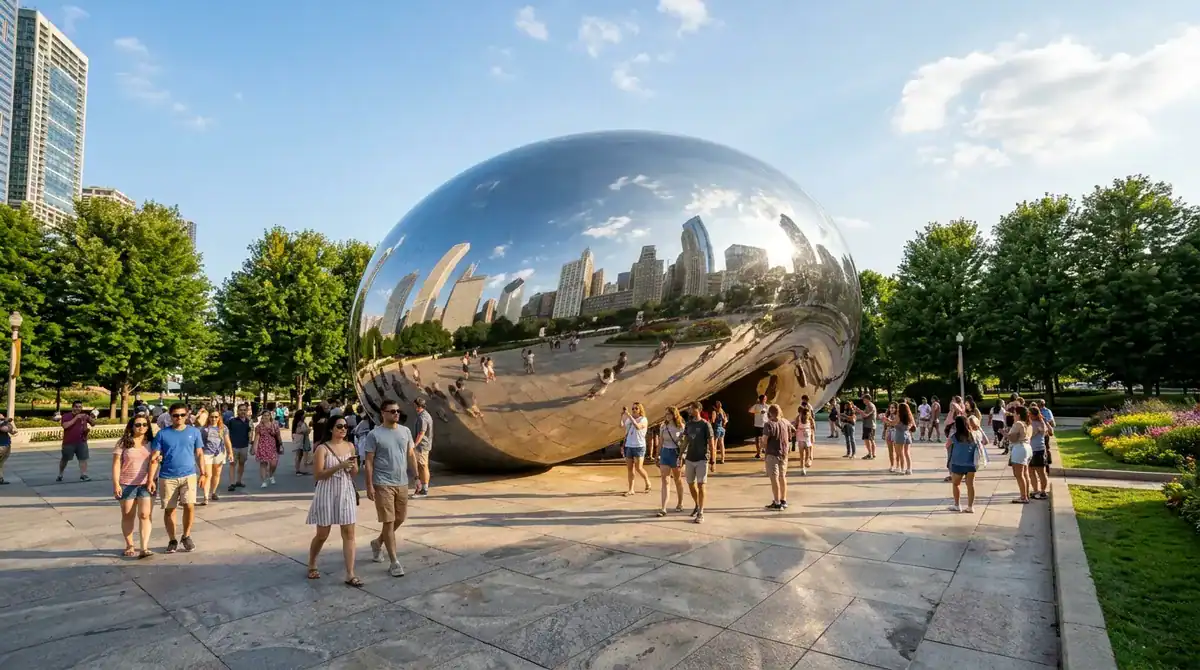
Cloud Gate, the polished stainless-steel sculpture everyone calls The Bean, is the first thing most visitors come to see. Its curved surface reflects the Chicago skyline, and you can walk beneath its arch to watch your own reflection stretch across the metal. Nearby, the interactive Crown Fountain has glass towers that project changing faces, and kids love splashing through its shallow pools on warm days. Lurie Garden fills the rest of the park with landscaped beds that look their best in the warmer months.
Crowds gather around The Bean, so arrive early if you want photos without a line of strangers in the frame. Lonely Planet suggests setting aside up to two hours for the main sights and visiting early in the morning or late in the evening for fewer crowds.
Admission is free, though some special events may require tickets. The Jay Pritzker Pavilion, designed by Frank Gehry, hosts free concerts, films, and fitness classes during the summer, so check its calendar when you plan your visit. A footbridge called the BP Pedestrian Bridge carries you to Maggie Daley Park, which gives families a second place to run around. Nichols Bridgeway links the park to the Art Institute’s Modern Wing, so you can easily pair the two on a single walk.
At a glance
- Best for: Families, art and architecture fans, and outdoor lovers
- Hours or Season: Daily 6 a.m. to 11 p.m., per the City of Chicago’s park listing
- Cost: Free to enter; some events are ticketed
- Time Needed: Up to two hours for the main sights
- Getting There: 201 E. Randolph Street, near multiple CTA train stations and bus stops
Cloud Gate (The Bean): Iconic Reflections for First-Time Visitors
Cloud Gate, known to everyone as “The Bean,” is Anish Kapoor’s mirror-polished sculpture in Millennium Park. The fun is in walking around it and beneath its 12-foot arch, where the curved steel reflects the Chicago skyline, the sky, and you. The piece weighs 110 tons and measures 66 feet long by 33 feet high. A visit to walk around it and take photos is estimated at 20 to 30 minutes.
Crowds are the main trade-off. The Chicago Cubs’ photo guide recommends going before 9 a.m. or in the late afternoon, when the light is softer and fewer people crowd the surface. A weekday morning is your best bet for an uncluttered shot of the arch, especially on a busy weekend.
What sets it apart is that the sculpture makes everything around it part of the view. Every photo includes the buildings, the clouds, and the other visitors bending and stretching in the reflection, so no two pictures look alike. Photographers should try low angles under the arch and close-ups of the warped skyline.
Cloud Gate is free, and you don’t need a ticket to see it. It suits first-time visitors, families, and anyone hunting for unusual angles. A Chicago visitor guide describes it as free and suitable for kids of all ages, and the nearby Maggie Daley Park makes a good follow-up for children who need room to run. Pair the visit with Crown Fountain in Millennium Park, and the Art Institute is a short walk away.
At a glance
- Best for: First-time visitors, families, and photographers looking for unusual angles
- Cost: Free, no ticket needed
- Hours: Millennium Park is open daily from 6 a.m. to 11 p.m.
- Time Needed: About 20 to 30 minutes to walk around and take photos
- Best Time to Visit: Before 9 a.m. or in the late afternoon
- Getting There: 201 E. Randolph Street, Millennium Park
Art Institute of Chicago: Masterpieces for a Rainy Afternoon
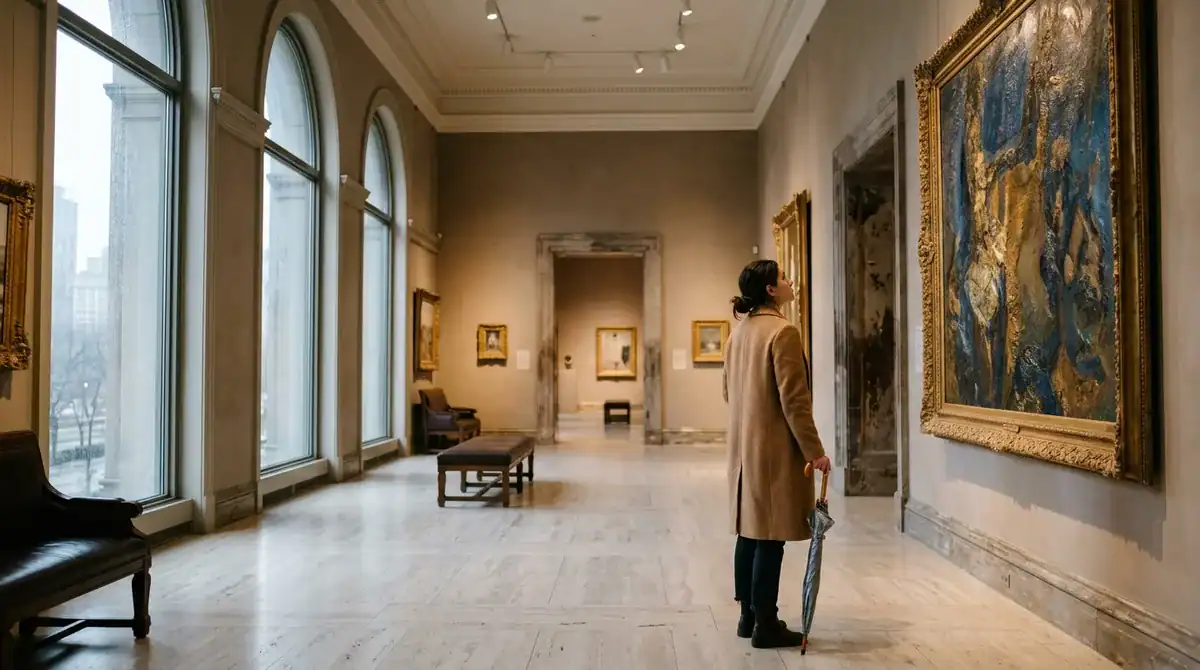
The Art Institute of Chicago is where a rainy afternoon becomes the highlight of the weekend. Its galleries span ancient artifacts, global art, and modern works, and its Impressionist and Post-Impressionist collection is among the finest anywhere. Stand in front of Seurat’s A Sunday on La Grande Jatte, then find Hopper’s Nighthawks and Grant Wood’s American Gothic. Galleries of Asian and African art give your eyes a welcome change of pace.
Weekends and special exhibitions draw the biggest crowds, so aim for a weekday morning if you can. General entry begins at 11 a.m., because 10 to 11 a.m. is reserved for members. Expect some gathering around the most famous paintings, though the rooms generally leave space to move. Thursday is the late night, open until 8 p.m. Highlights take about two hours, and art enthusiasts may want to stay longer, since the walking between galleries adds up quickly.
What sets the museum apart is the mix. Masterpieces hang alongside ancient, global, and contemporary collections, and the Modern Wing at 159 E. Monroe St. adds another layer. The main entrance sits at 111 S. Michigan Ave., with the Adams/Wabash CTA station about one block away. Cafés and shops are on site, so you can stop for lunch without leaving.
Art lovers and history fans will find the most to linger over, but families benefit too, since children 13 and under enter free. General admission is ticketed, and some special exhibitions require separate tickets.
At a glance
- Best for: Art lovers, history fans, and a strong rainy-day option
- Hours or Season: Monday and Wednesday 11 a.m. to 5 p.m., Thursday 11 a.m. to 8 p.m., Friday through Sunday 11 a.m. to 5 p.m., closed Tuesday
- Cost: Ticketed general admission; free for children 13 and under
- Time Needed: About two hours for highlights, longer for enthusiasts
- Best Time to Visit: A weekday morning, after 11 a.m.
- Getting There: Adams/Wabash CTA station about one block away
Magnificent Mile: Shopping, Architecture, and Landmark Walks
The Magnificent Mile is the stretch of North Michigan Avenue that runs from the Chicago River to Oak Street. It’s where you can browse luxury boutiques, sit down for a meal, and look up at landmarks like the Wrigley Building and the Chicago Water Tower. Inside the Water Tower, the free City Gallery makes a quick stop. Nearby, Lookingglass Theatre and the interactive Chicago Sports Museum give families something to do between shops.
Expect the sidewalks to fill up on weekend afternoons and throughout the holiday shopping season. Weekday visits, or early and late hours, offer more room to stroll. Walking the district costs nothing, while shopping and dining costs depend entirely on what you choose. Plan on about three hours of considerable walking, so bring comfortable shoes.
What sets the Mile apart is that it’s both a lively retail district and a landmark-rich city walk. At its southern end, it links to Millennium Park, and the Chicago Riverwalk is close by if you want to board an architecture cruise or water taxi. Shoppers, architecture fans, and families who want easy strolling will all find it rewarding.
At a glance
- Best for: Shoppers, architecture fans, and families who want easy strolling
- Cost: Walking is free; shopping and dining costs vary widely
- Time Needed: About three hours
- Best Time to Visit: Weekdays, or early or later in the day, to avoid crowds
- Getting There: From the CTA Red Line’s Grand or Chicago stop, walk about two blocks east to Michigan Avenue
Chicago Riverwalk: Architecture Along the Water
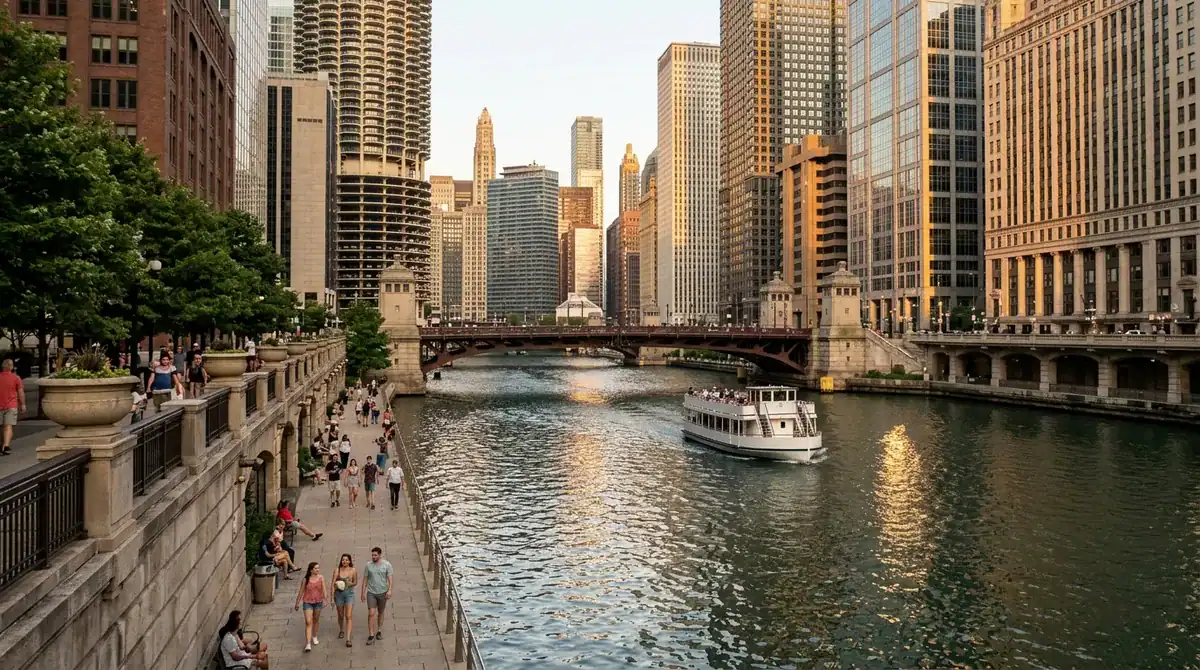
The Chicago Riverwalk is a free, 1.25-mile public promenade along the south bank of the Chicago River, running from Lake Street to the lakefront in four districts. You can stroll beside the water, watch boats pass beneath the movable bridges, and stop for coffee, a meal, or a kayak rental. Public art and monuments line the route, and the McCormick Bridgehouse & Chicago River Museum lets you see the bridge gears up close.
The architecture is the real draw. Board the First Lady river cruise from the Chicago Architecture Center, which lasts 90 minutes, passes more than 50 buildings, and has tickets starting at $57. Then walk the same route to see those towers from ground level. Photographers should head to the stretch between Wells and Franklin Streets, where ART on THE MART projections run Thursday through Sunday on listed seasonal dates.
Late spring through early fall is the liveliest stretch, when patios fill and evenings bring happy hour and live music. Early mornings are quieter, though some businesses may still be closed, which suits anyone chasing empty railings for photos. A brisk walk of the full route takes 30 to 45 minutes, but with stops for food or a boat tour, plan on several hours. Reserve a weekend cruise seat early and reach the dock at least 30 minutes before departure.
The path is relatively flat and has ADA-compliant ramps, so it works well for strollers and wheelchairs. Couples and families who want a calmer walk than the busier Loop streets will find it easy to enjoy.
At a glance
- Best for: Architecture fans, photographers, and couples or families who want a quieter walk
- Hours or Season: Open daily from 6 a.m. to 11 p.m. (2026 listing)
- Cost: Walking the path is free; food, drinks, and tours cost extra
- Time Needed: 30 to 45 minutes for a brisk walk of the full route, or several hours with stops
- Getting There: CTA stops and bus routes, Union Station, Ogilvie Transportation Center, and water taxis
Willis Tower Skydeck: Glass Ledge Views Over the City
Skydeck sits on the 103rd floor of Willis Tower, where the Skydeck combines an interactive museum about Chicago with panoramic views. On a clear day, you can see up to 50 miles across Illinois, Indiana, Wisconsin, and Michigan. The real showstopper is The Ledge, a set of glass balconies that extend 4.3 feet beyond the building, where you can step out and look straight down at the street.
Tickets are reserved in half-hour windows, and popular slots can sell out, so book ahead. Lines build at midday and on weekends. Early morning usually means shorter waits, and the deck recommends arriving at least 30 minutes before sunset if you want skyline views at dusk. Most visits take 45 to 60 minutes. The official visit page listed general admission from $32 for ages 12 and up, $22 for ages 3 to 11, and free entry for children under 3.
Plenty of Chicago buildings offer a view, but few combine that height with a glass floor. The Ledge gives the deck its character, and it makes the Skydeck especially good for first-time visitors, photographers hunting for dramatic shots, and anyone who enjoys a little thrill.
Willis Tower is reachable by CTA trains and buses and Metra Electric. The entrance is on the south side of the building along Jackson Boulevard, and the deck has ramps and elevators, including wheelchair access to The Ledge. Before you go up, walk around the base on Jackson Boulevard and look up at the tower from the street for a different sense of its height.
At a glance
- Best for: First-time visitors, photographers, and anyone who enjoys a thrill
- Hours or Season: Winter hours are 9 a.m. to 8 p.m. daily, with Saturday closing at 9 p.m. and last entry 30 minutes before closing
- Cost: General admission from $32 for ages 12 and up, listed on the official page
- Time Needed: 45 to 60 minutes
- Getting There: 233 S. Wacker Drive, with the entrance on the south side along Jackson Boulevard
Navy Pier: Lakefront Attractions and the Centennial Wheel
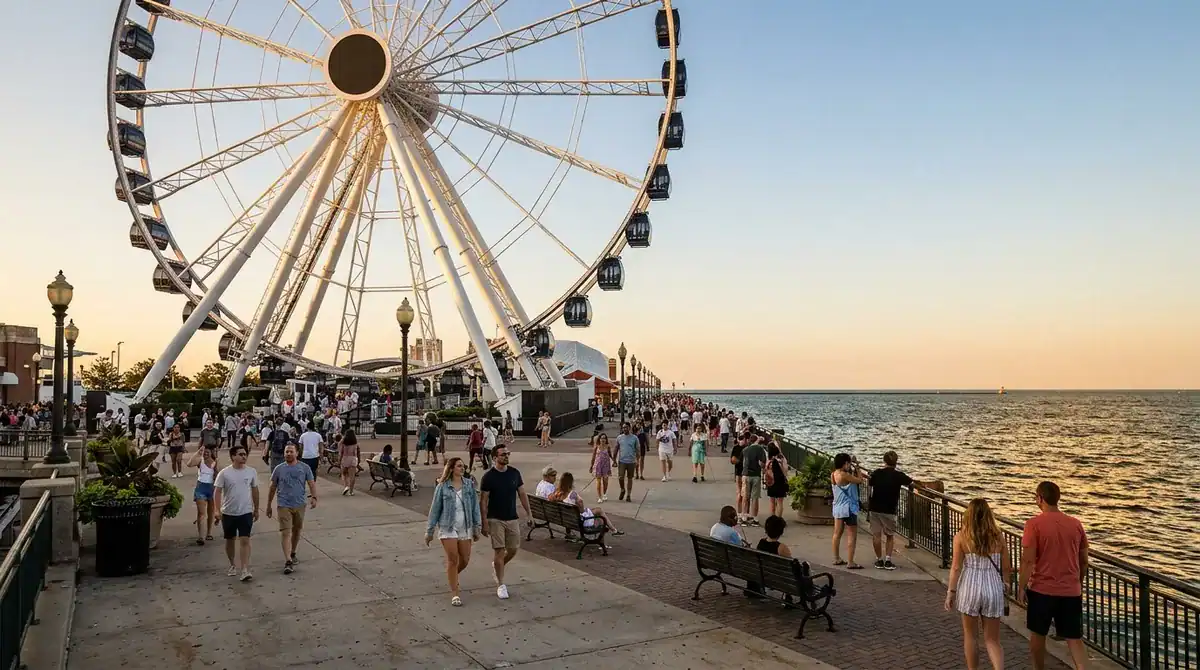
Navy Pier opened in 1916 as Municipal Pier, and today it stretches more than 3,000 feet into Lake Michigan. You can stroll for skyline and lake views, ride the Centennial Wheel, which operates year-round, or join a boat tour. Seasonal Pier Park rides generally run from late spring through early fall, weather permitting, and free summer fireworks light up the lakefront on Wednesdays and Saturdays from Memorial Day through Labor Day.
Crowds peak on summer weekends and fireworks nights, when the pier feels lively and distinctly touristy. A weekday morning is calmer, and a Chicago visitor guide suggests allowing two to four hours for a casual visit. Walking the pier costs nothing because there is no general admission fee, but individual attractions and performances charge separately. From September 8 through December 31, 2026, Navy Pier’s posted hours run 11 a.m. to 8 p.m. Sunday through Thursday and 11 a.m. to 10 p.m. Friday and Saturday.
What sets the pier apart is the mix. Public waterfront space, Chicago history, theaters, dining, and rides share more than 50 acres of parks, gardens, and shops, so a single stop covers several kinds of outing. Families, theatergoers, and boat-tour fans will find plenty to do. Quieter walkers may prefer the river.
Time a late-afternoon visit so you can watch the lakefront light change over the water, then linger for the fireworks if your visit falls on a summer Wednesday or Saturday.
At a glance
- Best for: Families, theatergoers, and boat-tour fans
- Hours or Season: September 8 through December 31, 2026: 11 a.m. to 8 p.m. Sunday through Thursday, 11 a.m. to 10 p.m. Friday and Saturday; closed Thanksgiving and Christmas
- Cost: Walking the pier is free; individual attractions are paid
- Time Needed: Two to four hours
- Getting There: CTA buses #29, #65, #66, and #124 serve the pier daily; 600 E. Grand Avenue
Grant Park: Chicago’s Front Yard Along the Lake
Grant Park, the city’s “Front Yard,” spreads across 312.98 acres between the Loop and Lake Michigan. You can stroll past monuments and gardens, walk or bike the Lakefront Trail, or head to the museum campus next door. Buckingham Fountain anchors the park, and its water displays run for 20 minutes every hour from early May to mid-October, with light and music shows beginning at dusk.
Crowds depend on the calendar. Weekday mornings feel calm, but big events such as Taste of Chicago, the Grant Park Music Festival, Lollapalooza, and the Chicago Marathon bring large crowds and possible changes to fountain timing on event days. Families will appreciate Maggie Daley Park at the northwest corner, which has a large playground, a climbing wall, and a skating ribbon that hosts ice skating in winter and roller skating or scooters in summer.
What sets Grant Park apart is how much it packs into one lakefront setting: civic history, formal gardens, public art, and open views of the water. The park is generally flat, but its scale means a quick fountain-and-monument visit takes far less effort than combining the trail, recreation areas, and museums in one outing. Lakefront Trail repairs slated for fall 2026 may cause detours along this stretch, so plan your route with that in mind.
At a glance
- Best for: Outdoor fans, families, photographers, and festivalgoers
- Hours or Season: Open daily from 6 a.m. to 11 p.m.; Buckingham Fountain runs early May to mid-October
- Cost: Free to enter the grounds
- Best Time to Visit: Weekday mornings for fewer people
- Getting There: CTA stations at Washington/Wabash, Monroe, and Washington, plus bus routes
Buckingham Fountain: Lakefront Water Show With a Skyline Backdrop
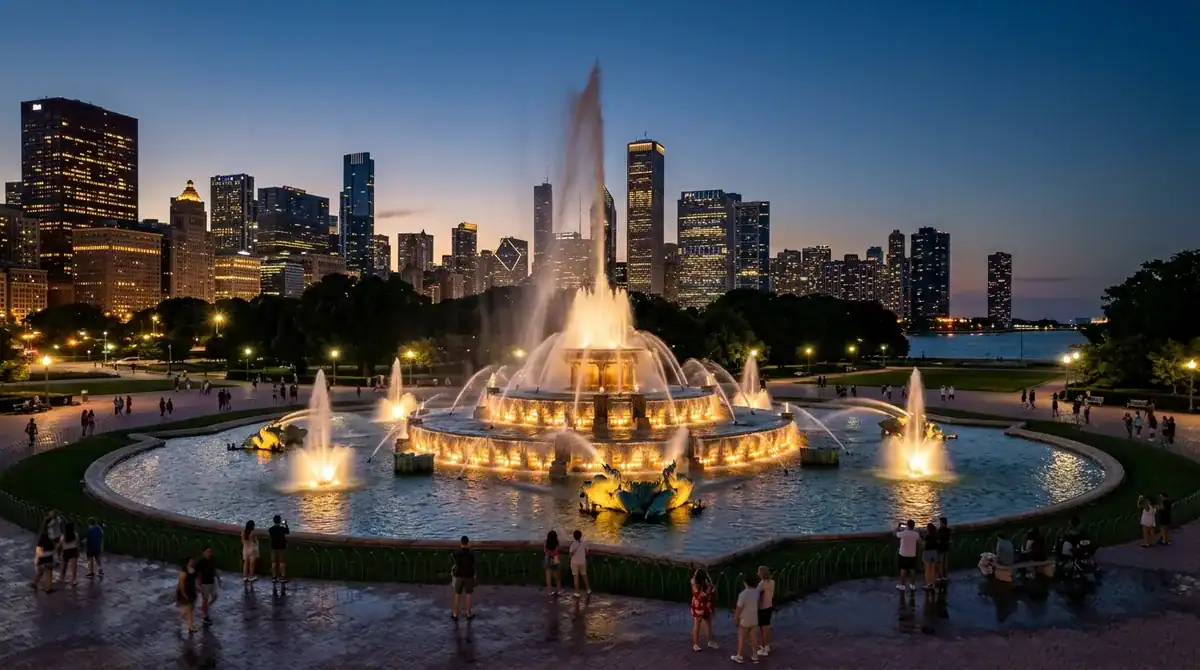
Buckingham Fountain sits at 301 S. Columbus Drive, and its plaza is the place to slow down. Walk the rim, admire the sculptures, and study the four bronze seahorse groups, which represent the four states bordering Lake Michigan. The pink Georgia marble glows in warm light, and the Loop skyline rises behind the basin, a backdrop few other Chicago stops can match.
When the water is running, the major display lasts 20 minutes and starts hourly at 9 a.m. The central jet reaches 150 feet. After dusk, the show adds music and lights, so an evening visit delivers the most drama. Dedicated in 1927 as a memorial to Clarence Buckingham and funded by his sister Kate, the fountain drew inspiration from the Latona Basin at Versailles.
Admission is free, and you can enjoy the setting in as little as one display’s worth of time. The fountain is typically open daily from 8 a.m. to 11 p.m. during its season, roughly early May to mid-October, weather permitting. In a September 3, 2026 update, the park district said the hourly major display would not operate for the rest of that season while a pump was repaired for 2027.
Architecture and history fans will appreciate the Versailles connection and the memorial story. Families looking for a low-effort stop can settle onto a bench and let the kids watch the water. Pair the visit with a walk through Grant Park, or stroll to Millennium Park for The Bean.
At a glance
- Best for: Architecture and history fans, and families looking for a low-effort stop
- Hours or Season: Typically daily 8 a.m. to 11 p.m., early May to mid-October, weather permitting
- Cost: Free to visit
- Time Needed: As little as one 20-minute display
- Getting There: 301 S. Columbus Drive; CTA stops at Harrison and Library, plus several bus routes
Cindy’s Rooftop: Brunch, Dinner, and Park Views
Cindy’s Rooftop sits on the 13th floor of the Chicago Athletic Association building, where a glass-atrium dining room keeps you comfortable in every season. Come for brunch, lunch, or dinner, order from the seasonal menu and cocktail list, then step out onto the terrace for views of Millennium Park, Lake Michigan, and the city skyline.
Time Out describes the restaurant as popular and lively, and says peak-hour visits can mean a wait of up to an hour. Reserve a table before you go. Time Out places the restaurant in its three-out-of-four-dollar-sign price category, so your bill depends on how many courses and drinks you order.
What sets the place apart is that it works year-round. The dining tables stay inside the glass atrium, while terrace seating or an outdoor bar opens when the weather allows in warmer months. It sits across from Millennium Park, which makes it an easy pause between the Art Institute of Chicago and the Magnificent Mile. Take the hotel’s Express Elevator up to the 13th floor.
Families are welcome, since guests of all ages can dine here. High chairs and a limited children’s menu are available on request. Couples and cocktail lovers will also appreciate a scenic seat for an evening drink above the park.
At a glance
- Best for: Scenic meals or cocktails with a view, including families
- Hours or Season: Monday through Thursday 11 a.m. to 11 p.m., Friday 11 a.m. to midnight, Saturday 10 a.m. to midnight, Sunday 10 a.m. to 11 p.m.; open year-round
- Cost: Time Out’s three-out-of-four-dollar-sign price category; no admission fee, since you pay for your meal and drinks
- Ages: All ages welcome; high chairs and a limited children’s menu on request
- Getting There: 12 S. Michigan Avenue, across from Millennium Park; use the hotel’s Express Elevator to the 13th floor
Portillo’s: Chicago Hot Dogs and Italian Beef

Portillo’s at 100 W. Ontario is a River North fast-casual restaurant, so think of it as a meal stop rather than a ticketed attraction. Order a Chicago-style hot dog or an Italian beef, then finish with chocolate cake or a cake shake. A classic Italian beef is thinly sliced beef on a French bread roll with peppers, and you can ask for it dipped, which means the whole roll is soaked in au jus. The hot peppers are giardiniera, a tangy mix of pickled vegetables.
The dining room is big and busy, with a 1930s and 1940s Prohibition theme. Décor includes pieces from the old Chicago Stadium, including a 1938 Blackhawks Stanley Cup banner. Expect multiple ordering lines and a noisy crowd at peak mealtimes. The Infatuation suggests finding the Portillo’s Hot Dogs line rather than the Barnelli’s line for the chain’s signature food.
Time Out placed the restaurant in its lowest price category, 1 of 4. It stays open late, and Time Out lists the Chicago and Grand Red Line stops as transit options. Because there is no fixed visit length, you can fit a meal in between downtown sights.
Families and foodies will feel at home here, and quick-lunch travelers will appreciate how fast the line moves when you know where to stand.
At a glance
- Best for: Families, foodies, and quick-lunch travelers
- Hours or Season: Daily 10 a.m. to 1 a.m.; holiday hours may differ
- Lowest price category (1 of 4) in Time Out’s listing
- Time Needed: Flexible, with no fixed visit length
- Getting There: 100 W. Ontario Street in River North; Red Line at Chicago or Grand
The Second City: Improv Comedy in Old Town
The Second City, the longtime comedy theater in Old Town, fills several stages with sketch, improv, stand-up, guest performances, and student shows, so you can choose the lineup that suits your mood. Its signature revues mix rehearsed sketches and songs with unscripted improv, so no two performances are ever the same.
The theater opened in Chicago in December 1959, drawing on the improvisational games developed by Viola Spolin. Over the decades it has helped launch generations of performers, including Tina Fey and Steve Carell. That history gives an evening here a distinctly Chicago character, unlike a standard sightseeing stop.
Plan the logistics before you go. Most visits run one to two and a half hours. Seating is general admission, and marquee nights can pack the house, so arrive early. Children under 13 are not admitted, and guests aged 13 to 17 must be accompanied by an adult. Parking is limited to metered street spots and the attached Piper’s Alley garage, which does not offer validation.
Comedy fans and night owls will get the most out of it. Shows can be hit or miss, so a lively crowd makes a real difference. Eat dinner nearby in Old Town before the curtain, and let the night unfold from there.
At a glance
- Best for: Comedy fans and night owls who enjoy unscripted surprises
- Cost: Ticketed; Chicago shows listed from $11 to $71.95 on the official ticket calendar
- Time Needed: About 1 to 2.5 hours
- Ages: Children under 13 not admitted; ages 13 to 17 must be accompanied by an adult
- Getting There: North Avenue and Wells Street in Old Town, with metered street parking and the Piper’s Alley garage
Field Museum: Dinosaurs, Fossils, and Ancient Egypt
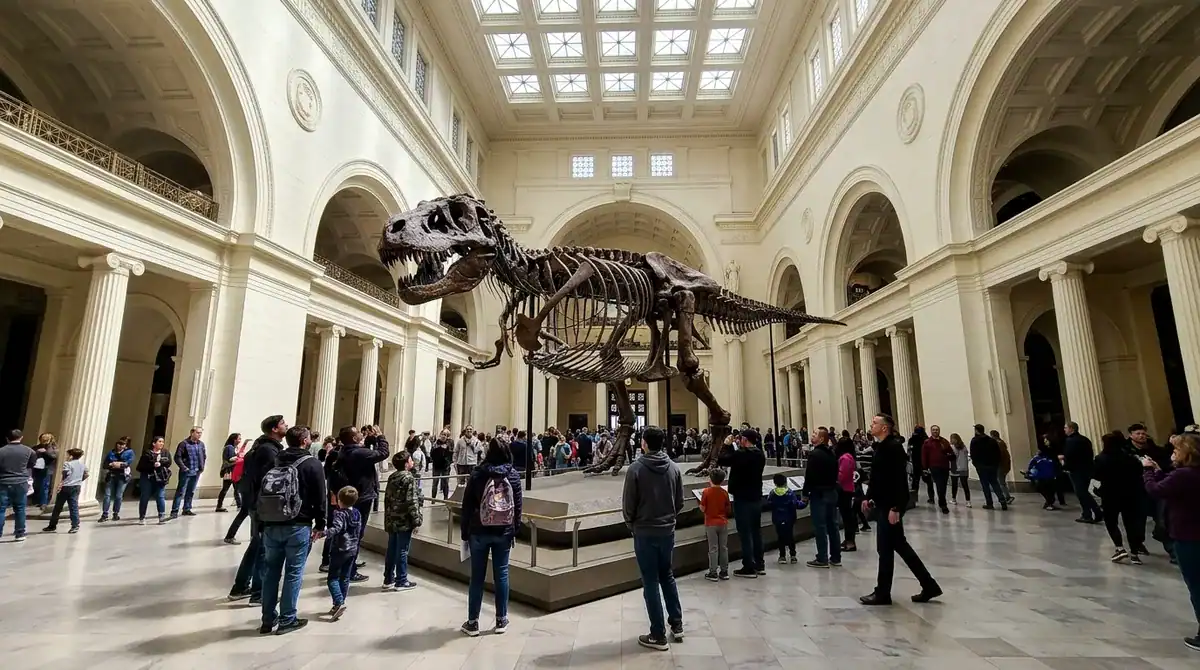
The Field Museum, a natural history museum on Chicago’s Museum Campus, is built around dinosaurs, fossils, and ancient cultures. SUE the T. rex is the headliner, shown in a Late Cretaceous setting with animations, sensory stations, and a light show that points out details on her bones. Máximo the Titanosaur stands alongside the Ancient Egypt exhibits and a collection of gems that round out the visit.
General admission tickets start at $30, and the museum recommends buying in advance to save time. Illinois residents get free admission on Wednesdays, and advance online reservations are recommended for that day. For fewer crowds, aim for a weekday and arrive by 10 a.m. or after 2 p.m. Plan two to four hours, since the museum is open daily from 9 a.m. to 5 p.m. with last entry at 4 p.m. Current pricing and hours are listed on the official website.
What sets the Field Museum apart is its mix of natural science and human history. Fossils sit alongside ancient cultures, so the experience feels different from the art galleries elsewhere in the city. Families with children ages two to six will want the Crown Family PlayLab, a hands-on space with activities on world cultures, art, and dinosaur bones.
History fans, science lovers, and families with young kids will get the most out of a visit. Take the CTA Red, Orange, or Green line to Roosevelt, or catch CTA bus 146, which connects Roosevelt with the Museum Campus. From there, you can walk to the Shedd Aquarium and the Adler Planetarium on the same campus.
At a glance
- Best for: Families with young children, history fans, and science lovers
- Hours or Season: Daily 9 a.m. to 5 p.m., last entry at 4 p.m.; closed Thanksgiving and Christmas Day
- Cost: General admission from $30; free for Illinois residents on Wednesdays
- Allow two to four hours
- Getting There: Roosevelt CTA stop on the Red, Orange, and Green lines, or CTA bus 146
Shedd Aquarium: Belugas, Penguins, and Lakefront Views
Shedd Aquarium puts you face to face with aquatic life from the Great Lakes and the Amazon to coral reefs and Arctic waters. Watch belugas, dolphins, sharks, penguins, sea otters, and sea turtles move through their habitats, then join one of the free animal chats or 10-minute Animal Spotlights offered daily. Behind-the-scenes tours and animal encounters are available as paid add-ons.
Plan on more than an hour, and arrive early. A Condé Nast Traveler review says the aquarium can’t be done justice in an hour, and summer lines can stretch outside into Museum Campus. Weekends and school holidays bring the biggest crowds, so a weekday visit gives you more room at the glass.
The setting is what makes it stand out. Global exhibits fill a historic rotunda, and Lake Michigan sits just beyond the doors, so you can step outside for a lakeside breather between tanks. Few other Chicago stops pair this kind of wildlife with a waterfront view.
On Day 2, Shedd works well as the daytime anchor alongside the Field Museum, since both sit on the Museum Campus. Families with young children and animal lovers will get the most out of it, though anyone curious about marine life will enjoy the trip.
At a glance
- Best for: Families with young children and animal lovers
- Hours or Season: Fall/Winter 2026: 9 a.m. to 5 p.m., varying by day
- Cost: Chicago resident admission was listed at $19.95 for adults and $14.95 for children, with prices varying by date and advance purchase. Current details are on the official site.
- Time Needed: More than an hour
- Getting There: 1200 S. DuSable Lake Shore Drive; the CTA 146 bus serves Museum Campus
Adler Planetarium: Sky Shows and Space Exhibits
Adler Planetarium sits on Chicago’s Museum Campus, and it is the place to trade the city streets for outer space. Its interactive exhibits explore the Apollo-era story of the Moon and other worlds, while historic astronomical instruments show how people once mapped the sky by hand. The immersive dome shows are the highlight for many visitors.
Families with young children can head to the Community Playlab, designed for kids ages 0 to 6, though its open hours vary with staff availability.
General admission currently starts at $25 for adults and $13 for children, and dome shows cost extra. Public hours vary by day: Friday through Monday 9 a.m. to 4 p.m., Wednesday 4 to 10 p.m., and Tuesday and Thursday 11 a.m. to 4 p.m. Plan on two and a half to three hours, and take CTA bus 146 or ride the Red, Orange, or Green lines to Roosevelt and connect by bus. Dome shows run on their own schedules, so plan around them before you book.
What sets Adler apart is that it opened in 1930 as the first planetarium in the Western Hemisphere. Few Chicago stops pair a space museum with a Lake Michigan setting and skyline views this well. Space enthusiasts, families, and night-sky fans will find the most to enjoy here.
At a glance
- Best for: Space enthusiasts, families, and night-sky fans
- Hours or Season: Friday through Monday 9 a.m. to 4 p.m., Wednesday 4 to 10 p.m., Tuesday and Thursday 11 a.m. to 4 p.m.; last admission one hour before closing
- Cost: General admission from $25 for adults and $13 for children; dome shows extra
- Time Needed: Two and a half to three hours
- Getting There: CTA bus 146, or the Roosevelt station on the Red, Orange, or Green lines
North Avenue Beach: Lakeside Sun and Beach House Architecture
North Avenue Beach, at 1601 N. Jean-Baptiste Pointe DuSable Lake Shore Drive in Lincoln Park, offers far more than a place to dip your toes. In season, you can swim in designated areas, play a game of volleyball, grab a bite at the concessions, or rent a bike, kayak, paddleboard, or jet ski. The beach house is the landmark: a 22,000-square-foot, ocean-liner-inspired building, with upper decks that look out over Lake Michigan and the lakefront trail.
Expect a busy scene. It is one of Chicago’s busiest beaches, and summer weekends fill the sand quickly, so Time Out advises arriving early to claim a spot. Swimming is allowed only from the Friday before Memorial Day through Labor Day, when lifeguards are on duty from 11 a.m. to 7 p.m. Parking is paid and limited, so the Park District encourages visitors to take public transportation.
What sets the beach apart is the mix. You get sand, swimming, skyline views, and a striking building in one stop, which makes it livelier than a simple shore walk. Families will appreciate the accessible path to the shoreline and the beach wheelchair you can borrow for free with valid ID from the beach-house lifeguard office. Active visitors can rent a bike and pedal the lakefront, or make the beach one stop in a full day in Lincoln Park.
At a glance
- Best for: Families and active visitors
- Hours or Season: Open 6 a.m. to 11 p.m.; swimming from the Friday before Memorial Day through Labor Day, with lifeguards on duty 11 a.m. to 7 p.m.
- Cost: Volleyball court rental is $15 per hour; parking is paid. Current details are listed by the Park District.
- Getting There: 1601 N. Jean-Baptiste Pointe DuSable Lake Shore Drive, Lincoln Park; public transportation is encouraged
Lincoln Park: Zoo, Conservatory, and Lakeshore Trails
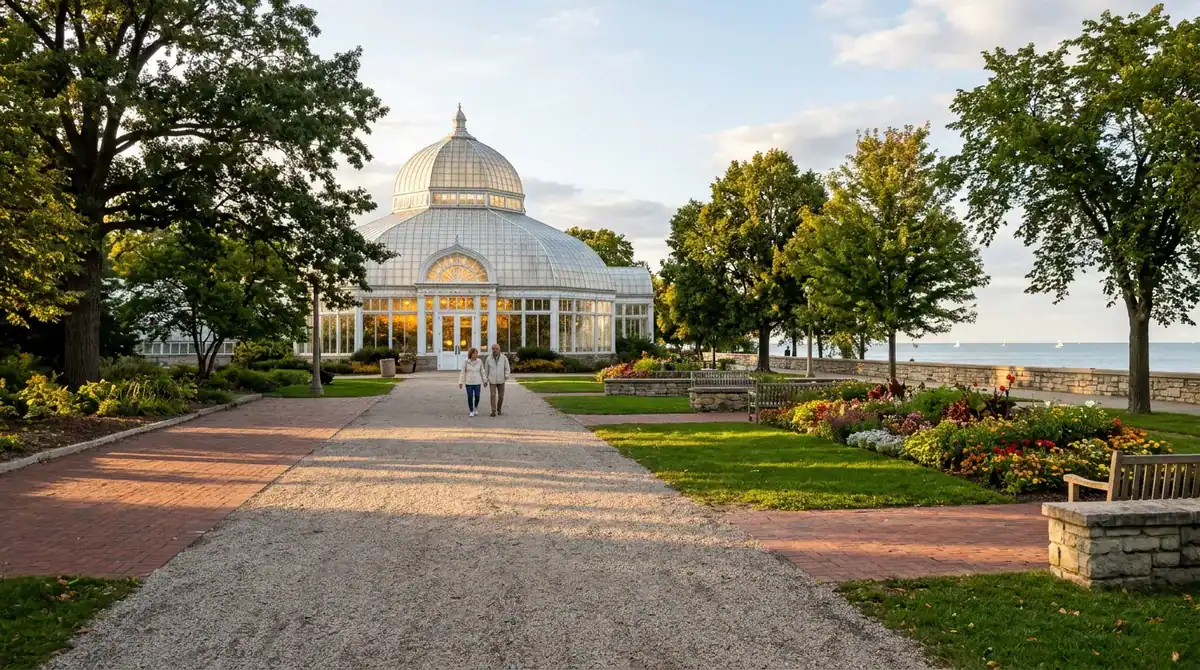
Lincoln Park covers 1,188.62 acres of lakefront, running from Ohio Street Beach north to Ardmore Avenue. You can stroll or bike the paths, relax by the water, or spend an afternoon at the Lincoln Park Zoo, the conservatory, or the Chicago History Museum. Gardens such as the Alfred Caldwell Lily Pool and the North Pond Nature Sanctuary give nature lovers quieter places to wander.
The park itself is free, and the zoo and conservatory cost nothing to enter, though some attractions charge admission. Weekday mornings are the calmest time to visit, while the zoo fills up on weekends. Because the park is so large, choose one section or a few nearby stops rather than trying to see everything in a single visit.
Few Chicago stops combine a seven-mile stretch of Lake Michigan shoreline with gardens, playgrounds, and museums in one place. The lakefront gives the park a distinct break from the towers of the Loop.
Lincoln Park sits about two miles from downtown, so a short ride on the ‘L’, a bus, or a rideshare will get you there. Paid parking is available in area lots. Families, outdoor lovers, and nature fans will find the most to enjoy, and the park pairs well with a stop at North Avenue Beach.
At a glance
- Best for: Families, outdoor lovers, and nature fans
- Hours or Season: Daily 6 a.m. to 11 p.m., per the Park District listing
- Cost: Free to enter the park; the zoo and conservatory are free, and some attractions charge admission
- Getting There: About two miles from downtown, with several ‘L’ stations, bus routes, and the Lakefront Trail
Wrigley Field: Cubs Games and Ballpark Tours
Wrigley Field, built in 1914, is the second-oldest ballpark in Major League Baseball, and the Chicago Cubs have played there since 1916. You can catch a game or sign up for a guided tour of the ballpark. Tours take about 75 to 90 minutes, include outdoor stops, and run rain or shine, so dress for the weather and expect some walking. The route covers the seating bowl, the bleachers, and the outfield ivy, and on non-game days it can also take you through the press box, the visitors’ clubhouse, and the dugout.
Game days bring a different energy. Gates on most game days open 90 minutes before first pitch, and the ballpark fills quickly after that. Many fans arrive early for a pregame meal nearby. Game-day tours follow a more limited route, so the tour and the game offer two different ways to see the park. Check the Cubs’ schedule before you plan, since game days change both the crowd and the transit options.
Wrigley Field has a century-old ballpark character that few modern stadiums can match, and the City of Chicago has designated it a landmark. Choose Chicago lists the tours as family-friendly and seasonal, running March through November. Children aged two and under enter a public tour for free, and the Cubs recommend arriving 10 to 15 minutes before the scheduled start. The CTA Red Line’s Addison station provides direct service to the ballpark.
At a glance
- Best for: Baseball fans, history fans, and families
- Hours or Season: Tours run March through November, per Choose Chicago
- Time Needed: About 75 to 90 minutes for a public tour
- Cost: Private tours for groups of up to 50 are listed at $2,000 plus tax, and weekday educational tours for groups of 30 or more at $15 per person plus tax
- Getting There: CTA Red Line to Addison station, with direct service to the ballpark
Andersonville: Swedish Heritage and Independent Shops

Andersonville is a North Side neighborhood built around Clark Street, and the best way to explore it is on foot. Stroll the main street past independent boutiques and bookstores, stop for coffee or a bakery treat, and browse the antiques shops that Choose Chicago highlights. When the sun goes down, add a dinner on Clark Street before you head home.
Weekday afternoons feel relaxed, with room to linger in shop doorways and cafés. Weekends bring more browsers, so arrive earlier if you want an easy walk. Visit the Swedish American Museum on a weekday, since its free second Tuesdays can be very busy. The museum is open Tuesday through Friday from 10 a.m. to 4 p.m. and Saturday and Sunday from 11 a.m. to 4 p.m., and it is closed Mondays. Listed admission was $6 for adults and $15 for a family. You can reach the neighborhood by the Clark Street No. 22 bus, the Foster Avenue No. 92 bus, or the Red Line’s Berwyn stop.
Andersonville stands out for its Swedish roots, which show up in the bakeries, the museum, and the summer Midsommarfest celebration. The neighborhood’s historic architecture gives the streets a calmer, older feel than the Loop, and its LGBTQ+ community is an active part of local life. Shoppers, food lovers, and slow travelers will appreciate how much there is to see without needing a ticket to every stop.
This is a good half-day outing that pairs well with Lincoln Park. Spend the morning browsing and eating on Clark Street, then head to the park for its lakeshore paths and open spaces.
At a glance
- Best for: Shoppers, food lovers, and slow travelers
- Hours or Season: No neighborhood-wide hours; the Swedish American Museum is open Tuesday through Friday 10 a.m. to 4 p.m. and Saturday and Sunday 11 a.m. to 4 p.m., closed Mondays
- Cost: Walking the neighborhood is free; listed museum admission was $6 for adults and $15 for a family
- Time Needed: About a half day
- Getting There: Red Line Berwyn stop, Clark Street No. 22 bus, or Foster Avenue No. 92 bus
Wicker Park: Independent Shops and a Neighborhood Park
Wicker Park is both a small city park and the name of the surrounding neighborhood, so you can easily spend a morning in each. The park covers 4.74 acres at 1425 N. Damen Avenue in West Town. Stroll the ornamental gardens, relax by the historic fountain, then wander the nearby streets for independent and vintage shops.
The park also has plenty of room for play. A children’s playground features an interactive water-spray feature, and sports courts include baseball and basketball facilities along with an athletic field. A dog-friendly area gives pet owners space to let their companions run. Weekend afternoons are lively, with families, players, and shoppers sharing the grounds.
What sets Wicker Park apart is its care and its scale. Volunteers affiliated with the Wicker Park Garden Club maintain 10,000 square feet of ornamental gardens, and the compact layout keeps the feel local. The park also hosts Movies in the Park, seasonal farmers-market concerts, and plant sales.
Shoppers, families with children, and pet owners will get the most out of a visit. Plan an evening after your walk, since the neighborhood’s restaurants, bars, galleries, theaters, and music venues are all close by, and The 606 trail is nearby for a stroll before dinner.
At a glance
- Best for: Shoppers, families with children, and pet owners
- Hours or Season: Daily 6 a.m. to 11 p.m., per the Park District’s park listing, which lists current details
- Getting There: CTA Blue Line at Division, Damen, and Western stations, plus several bus routes
West Loop: Restaurant Row and Fulton Market Dining

West Loop is a neighborhood rather than a ticketed attraction, so your evening takes shape one stop at a time. Start with a meal along Randolph Street’s Restaurant Row, then wander into Fulton Market, the historic meatpacking district at the heart of the area, and cross to Greektown for another round. Between courses, add a gallery, the interactive WNDR Museum, or a live show at Epiphany Center for the Arts.
Old warehouses and loading docks still line these streets, and sleek new dining rooms sit right beside them. Weekend evenings are the busiest time, and the most popular kitchens fill fast. Au Cheval, for example, can have a wait of at least an hour and often closer to two, so reserve your dinner table early and use the gap for a gallery visit or a drink.
What sets West Loop apart is how often its scene changes, with new restaurants opening regularly. Food lovers, art fans, and anyone craving an evening out will find plenty to keep them busy.
At a glance
- Best for: Food lovers, art fans, and anyone seeking an evening out
- Cost: No admission fee for the neighborhood; dining and event costs vary by venue
- Hours or Season: No area-wide hours or season; each business sets its own schedule
- Getting There: CTA Morgan station on the Green and Pink lines, at 958 W Lake St, which is accessible
Pilsen: Murals, Galleries, and Mexican Culture
Pilsen is the neighborhood to visit for Mexican heritage and public art. Walk 16th Street, where about 50 murals cover a two-mile railroad embankment from Halsted Street west to Western Avenue. Then turn onto 18th Street to browse galleries and independent shops, stop at a local café for lunch, and save an evening for a show at Thalia Hall.
Neighborhood life fills the sidewalks, with shoppers, families, and diners sharing the streets. The crowds are far lighter than downtown’s, so a daytime walk lets you photograph the murals without jostling for space. Nightlife picks up later, which makes Pilsen a good choice if you want music or comedy after a relaxed afternoon.
Pilsen offers a distinct alternative to the Loop’s skyscrapers and tourist corridors. Its murals are large-scale and bold, and its galleries and restaurants reflect a living community rather than a visitor district built for sightseeing.
Rideshare is often the easiest way to reach Pilsen from downtown, since it avoids transfers. If you prefer the CTA, the accessible 18th Pink Line station at 1710 W. 18th St. connects with bus 18. Art lovers, food fans, and travelers looking beyond the core will get the most out of a visit, and it fits neatly into a half-day plan.
At a glance
- Best for: Art lovers, food fans, and travelers looking beyond downtown
- Time Needed: Roughly half a day, including a mural walk
- Best Time to Visit: Daytime, for the murals and open cafés
- Getting There: Rideshare from downtown, or the 18th Pink Line station at 1710 W. 18th St. with bus 18
National Museum of Mexican Art: Free Exhibits in Harrison Park
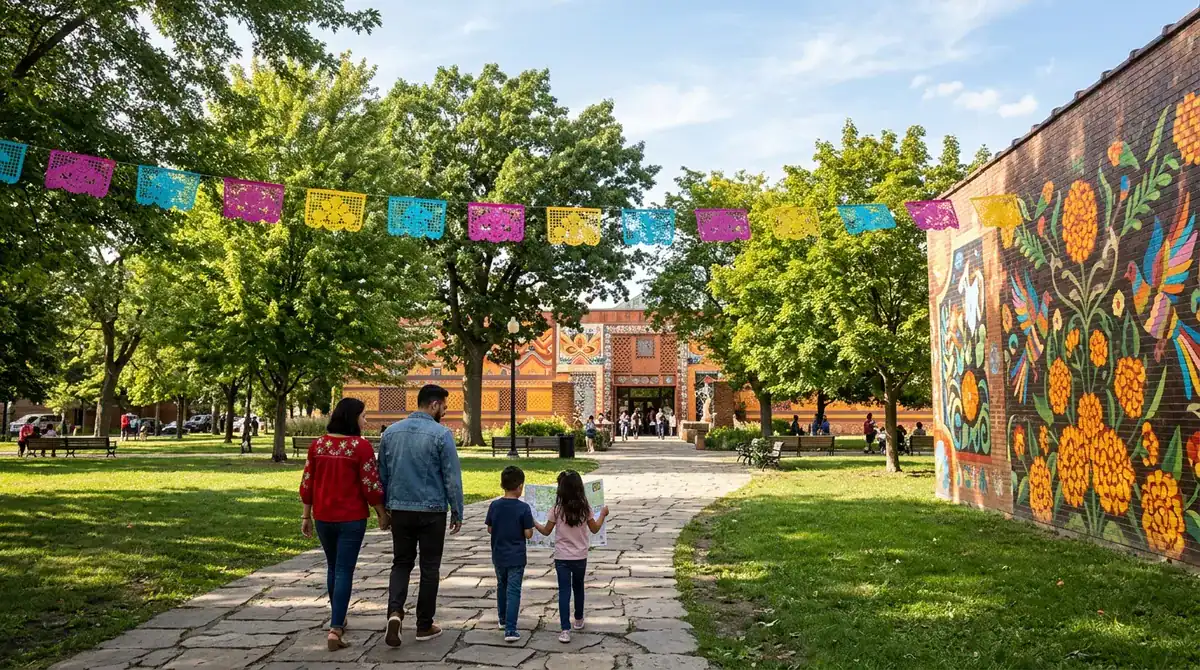
The National Museum of Mexican Art sits in Pilsen’s Harrison Park, and it presents Mexican art and culture from the community’s own point of view. Its permanent and rotating exhibitions span ancient to contemporary work. Explore the four galleries at your own pace, or join a docent-led tour designed for all ages. Afterward, browse the gift shop for Mexican crafts, books, toys, and jewelry selected from regions across Mexico.
Admission is always free, and the museum suggests allowing at least an hour to see all four galleries. Regular hours run Tuesday through Sunday from 10 a.m. to 5 p.m., with the first Wednesday of each month open until 8 p.m. The galleries and shop sit on the wheelchair-accessible main floor, so you can move between rooms without stairs. School groups sometimes visit, so expect a livelier room at midday.
Compared with Chicago’s downtown museums, this one offers an easy change of pace. Its single floor and relaxed scale make it simple to circulate through without feeling rushed. Afterward, follow the Pilsen mural walk, using the museum’s mural guides, and stop for a meal or a pastry at the neighborhood’s restaurants and bakeries. Take the Pink Line to Damen or 18th Street, the No. 50 Damen bus to 19th Street, or the No. 9 Ashland bus to 18th Street.
Families, art lovers, and anyone who wants a quiet cultural stop will find plenty to enjoy here.
At a glance
- Best for: Families, art lovers, and visitors who want a quiet cultural stop
- Hours or Season: Tuesday through Sunday, 10 a.m. to 5 p.m.; first Wednesday of each month until 8 p.m.
- Cost: Free admission
- Time Needed: At least an hour
- Ages: Docent-led tours suited to all ages
- Getting There: Pink Line to Damen or 18th Street
Garfield Park Conservatory: Tropical Plant Rooms Under Glass
Garfield Park Conservatory, a historic botanical garden on Chicago’s West Side, opened in 1908 and was designed by landscape architect Jens Jensen. Inside, you can wander about two acres of indoor gardens across eight rooms, from tropical palms to the historic Fern Room and a varied cactus and succulent collection. Look for Dale Chihuly’s 16 yellow glass lily pads in the Aroid House, then head outside to the City Garden and Artist’s Garden, which are open year-round, weather permitting.
Weekends are typically the busiest days, and the Garfield Park Conservatory recommends advance reservations, since visitors may wait to enter during busy periods. Allow time for both the indoor rooms and the outdoor gardens. Chicago residents are admitted free, while nonresidents pay $10 for adults ages 18 to 64, $5 for seniors 65 and older, children ages 7 to 17, and students with valid ID.
Few Chicago stops pair a large glasshouse with outdoor gardens. The conservatory works as a year-round indoor refuge when the weather turns cold or rainy, and special programs and seasonal events add more to do. Families, nature lovers, and photographers will find plenty of striking greenery to frame. Take the CTA Green Line to the Conservatory stop, or drive and use the free visitor parking lot south of the main entrance. Rideshare works well too, and the visit fits easily alongside other stops beyond downtown.
At a glance
- Best for: Families, nature lovers, and photographers
- Hours or Season: Wednesday 10 a.m. to 8 p.m., Thursday through Sunday 10 a.m. to 5 p.m.; closed Monday and Tuesday; open year-round
- Cost: Free for Chicago residents; nonresident admission is $10 for adults ages 18 to 64 and $5 for seniors 65 and older
- Time Needed: Varies, with time for the indoor rooms and outdoor gardens
- Getting There: CTA Green Line to the Conservatory stop, or the free visitor lot south of the main entrance
Headquarters Beercade: Retro Arcade Games and Cocktails

Step into Headquarters Beercade on a River North evening and the room fills with the bleeps and chimes of more than 70 vintage arcade games and pinball machines. Classics like Donkey Kong, NBA Jam, Rampage, and Frogger line the room, and you can pair a round with the food menu, signature cocktails, or craft and draft beer.
The games are free to play, so your budget goes toward food and drinks. Weekend nights are the busiest, and the cabinets you want most can have a crowd around them. The bar is open daily from 4 p.m. to 2 a.m., so you can start early or stay late.
What makes the place stand out is the mix of retro play and nightlife. Instead of a quiet pint at the bar, you get pinball, arcade cabinets, and friends trying to beat each other’s high scores. It works well as a late-night stop after dinner in River North.
This is a spot for adults. It suits groups of friends, couples, and night owls, but it is not a good fit for families with children.
At a glance
- Best for: Adults, groups, and night owls
- Hours or Season: Daily 4 p.m. to 2 a.m.
- Cost: Games are free to play; food and drinks are extra
- Ages: 21 and older
- Getting There: 213 W. Institute Place in River North
Lock In Your Chicago Weekend Plans
Start by choosing your dates, because the order of the plan depends on which days you have. Book the First Lady cruise first, since weekend sailings fill up. If you land on a Friday or Saturday, the Chicago Architecture Center at 111 E. Wacker Drive stays open until 7 p.m., so you can check in for an afternoon cruise without rushing. Sunday and Monday work well for the lakefront and the museum campus.
Once your dates are set, check trail conditions before you plan the Sunday walk. Repairs on the Lakefront Trail may cause detours, so keep a backup route along Grant Park or Lincoln Park in mind.
Next, reserve your evening plans. Book a table at Cindy’s Rooftop for a sunset view over Millennium Park, and buy tickets for The Second City early, especially if you want a Saturday show. Save the Field Museum for a weekday morning, and reserve a time slot in advance if your visit falls on a Wednesday.
Finally, write your plan on paper or in a notes app with one cluster per day. Put the cruise, the Art Institute, and dinner on Saturday, and the lakefront, the museum campus, and your Italian beef on Sunday. Leave one hour unscheduled on each day for the unexpected stop that often becomes the best memory of the trip.