
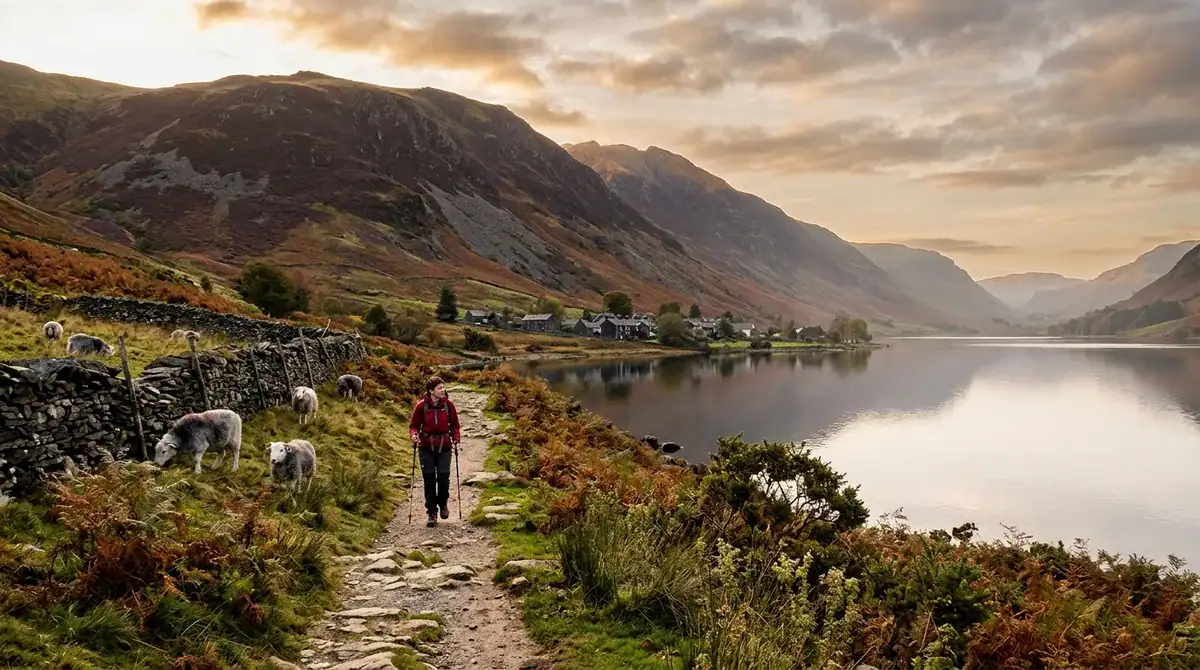
A practical Lake District itinerary follows the central Lakes bus corridor, linking Windermere, Bowness, Ambleside, Grasmere and Keswick over three days without needing a car for every move. The Stagecoach 555 runs about every 60 minutes for most of the day, and the average journey from Windermere to Keswick takes 40 minutes. Single bus journeys on Stagecoach services are capped at £3 while the company takes part in the fare-cap scheme, and its North West Explorer ticket costs £12.50 for one adult for a day.
Start in Windermere with Orrest Head, a one-hour, 1.74-kilometre climb with 120 metres of ascent to a 238-metre summit and 360-degree views over the lake and the central fells. On the second day, walk or ride between Ambleside and Grasmere, then give the third day to Keswick as your northern base for Derwentwater and Castlerigg Stone Circle. Fit walkers can add Buttermere, but the National Park Authority warns that its lakeshore path is rough in places, so save it for a dry day. Timetables change with the seasons, so check the current 555 schedule before you set out, and leave room for slow mornings, because the Lakes reward unhurried days as much as summit ones.
Key Takeaways
- Our three-day Lake District itinerary follows the central Lakes bus corridor linking Windermere, Bowness, Ambleside, Grasmere and Keswick, with the Stagecoach 555 running about every 60 minutes for most of the day.
- Start your Lake District trip with Orrest Head, a one-hour, 1.74-kilometre climb with 120 metres of ascent that rewards you with a 360-degree panorama from its 238-metre summit.
- Give Day 2 to the walk or ride between Ambleside and Grasmere, then spend Day 3 in Keswick, where Derwentwater and Castlerigg Stone Circle are within easy reach of your northern base.
- Check the Stagecoach 555 timetable before you set out, since winter services began on 2 November 2026 and summer timetables are due back on 22 March 2027.
Three-Day Lake District Route Built Around the Bus Corridor
Your base shapes the whole trip. Ambleside and Bowness put you within easy reach of the lake and offer the widest choice of places to eat in the evening. Grasmere suits travelers who want a quiet literary village, while Keswick is the pick for the northern lakes and a town full of cafés.
A day trip can cover Windermere and Bowness comfortably. Two days let you add Grasmere and Keswick without rushing, and three or more days leave room for fell walks and a drive over Honister Pass.
The 555 bus links Windermere railway station with the villages and attractions along the corridor, running about every 60 minutes for most of the day. Timetables change, though. Winter services began on 2 November 2026, and summer timetables are due back on 22 March 2027, so check the dates if you travel in between. Use the bus for the village legs and keep the car parked at your base on busy days. If you arrive by train at Kendal, the ride to Keswick takes about one hour.
Match walks to your legs. The Grasmere Riverside Miles Without Stiles route is 1.75 kilometres and takes an hour, which suits families with children. Prepared hillwalkers can tackle the steep fells, while anyone pushing a buggy or using a wheelchair should stick to the riverside paths. The Ullswater Way is a 20-mile route around Ullswater that you can walk in one go or split into sections, linked by boat or bus.
The Lake District welcomed 17.45 million tourists in 2025, who spent 29.55 million tourist days in the park. Book beds early, and aim to reach popular trailheads before mid-morning, when car parks and buses fill up.
Lake Windermere: England’s Largest Lake for Cruises and Shore Walks
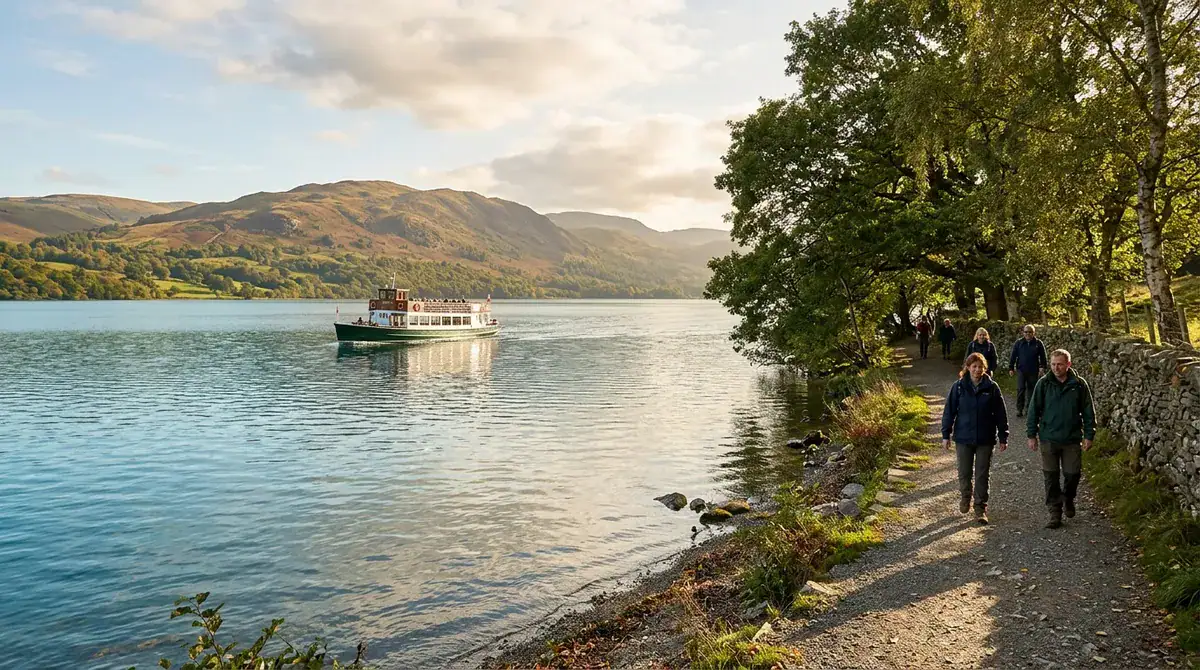
Lake Windermere is England’s largest lake, stretching 10.5 miles and reaching 64 metres deep, with 18 islands scattered across its water. Most visitors start with a sightseeing cruise, where you can hop off at stops along the shore. You can also hire a canoe, kayak, paddleboard or motor boat, try fishing, or pair a boat trip with a walk along the lakeshore.
Expect the Bowness and Ambleside ends to be busy from mid-morning until mid-afternoon, especially in summer. The 45-minute Bowness circular and the 75-minute Bowness to Ambleside cruise are the easiest introductions. Lakeside has a cruise pier car park with 300 spaces, pay-and-display parking and toilets. Walks range from accessible lakeside paths suitable for pushchairs and some wheelchair users to steep fell hikes, so you can match the day to your legs.
What makes the lake special is its size and the way its islands break up the views from every angle. Boats link Bowness, Brockhole, Ambleside and Lakeside, so you can see several villages from the water in one day. Families enjoy the easy cruises and flat paths, walkers can plan a shore route between stops, and slower-paced travelers can simply drift on the water. For current cruise times and fares, check the operator’s timetable before you travel.
At a glance
- Best for: Families, walkers and slower-paced travelers who want lake cruises and shore walks
- Hours or Season: Cruises run daily except Christmas Day, with more sailings and self-drive boats from Easter to October
- Cost: The 75-minute Bowness to Ambleside cruise was advertised from £19.20 in the 2026 season, and electric motorboat hire from £46
- Time Needed: 45 minutes for the Bowness circular, 75 minutes for the Bowness to Ambleside cruise
- Parking: Lakeside car park with 300 spaces, pay and display, and toilets
- Booking: Cruise tickets can be booked online through Windermere Lake Cruises
Bowness-on-Windermere: Lakeside Town for Boats and Gentle Walks
Bowness-on-Windermere is a lakeside holiday town where the water is the main event. Steamer trips and wooden rowing boats leave from the shore, shops and cafés line the waterfront, and the World of Beatrix Potter attraction draws visitors into town. From the promenade you get views across England’s largest lake to the mountains around it, which is what sets this spot apart. Windermere Lake Cruises runs a 45-minute circular Islands Cruise from Bowness, and its Bowness–Ambleside Red Cruise takes 75 minutes return if you want to arrive in Ambleside by boat.
Expect a bustling waterfront, with the biggest crowds on sunny weekends and school holidays. The town centre tends to be busy from mid-morning until mid-afternoon, so arriving early gives you more room to browse. Glebe Road Car Park has 136 spaces and public toilets, and its pay-and-display hours run from 9 a.m. to 6 p.m., including bank holidays.
Bowness suits families with young children, pet owners who want lakeside paths, and foodies who like browsing between boat trips. For a gentle outing, the Bowness-to-Cockshott Point walk is about 2 km, stile-free and graded suitable for all. Those who want a longer day can take the Windermere Ferry across the lake, where a single pedestrian fare is £1.50, paid by card on board.
At a glance
- Best for: Families with young children, pet owners who want lakeside paths, foodies and slow travelers
- Time Needed: About 45 minutes for the circular Islands Cruise
- Cost: Bowness–Ambleside Red Cruise adult return costs £19.20 for fares valid from 2 November 2026 to 23 March 2027
- Parking: Glebe Road Car Park, 136 spaces, pay-and-display 9 a.m. to 6 p.m. including bank holidays
- Hours or Season: Busiest on sunny weekends and school holidays
Waterhead: Northern Windermere Pier for Boat Hire and Jenkins Crag
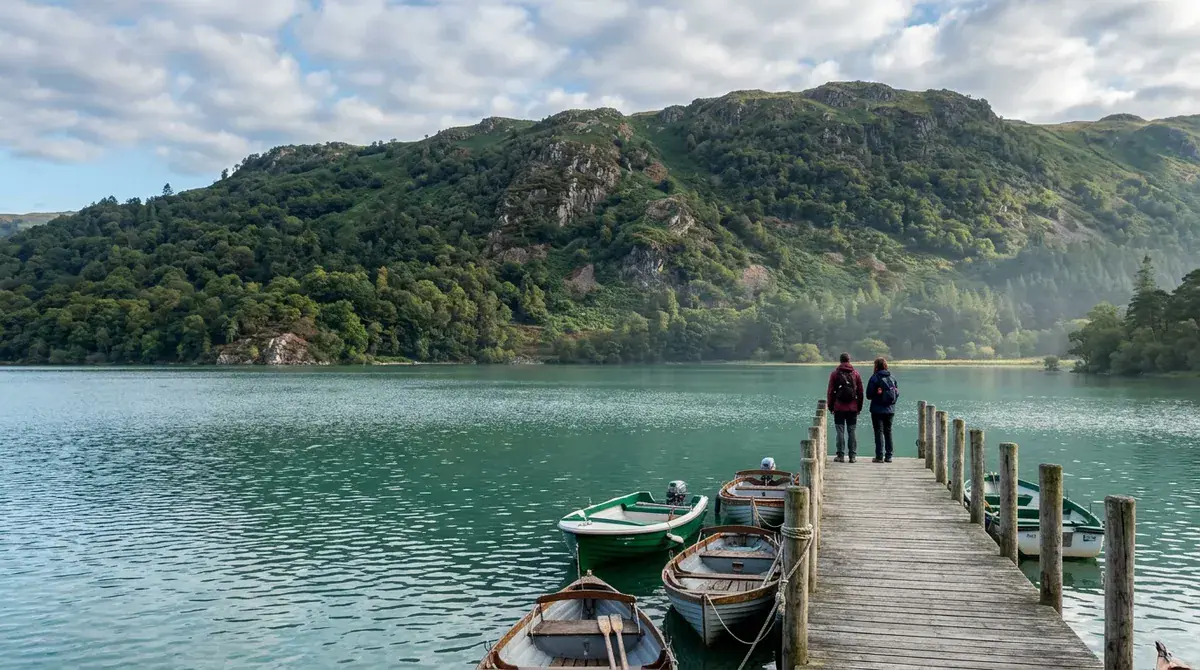
Waterhead sits about one mile south of Ambleside on Windermere’s northern shore. It is less a single attraction than a lakeside stop built around a pier, where you can take a lake cruise, hire a self-drive boat in season, launch a kayak, or stroll the shore before settling into a café or bar.
The boat links are the main draw. From the pier you can cruise to Bowness and Brockhole, and the listed adult single fare to Bowness is £14.40. Cruises need no advance booking, but the cruise operator recommends booking self-drive boats ahead because they often sell out.
Parking fills fast. The operator’s small pier car park has 21 spaces and costs £6 for the day, and it fills quickly on sunny days. A public pay-and-display car park nearby has 200 spaces, accepts coins, cards or RingGo, and has accessible toilets and EV chargers.
For a longer outing, the National Trust’s Waterhead walk runs 1 to 3 miles and takes 1 to 2 hours. It starts beside a busy road, then climbs through Skelghyll Woods to Jenkins Crag, where the path is steep, bumpy and sometimes slippery. The reward is a view over Windermere from the trees.
At a glance
- Best for: boat-trip visitors, families and walkers wanting a relaxed lakeside stop
- Season: self-drive boat hire runs in season
- Cost: £14.40 adult single to Bowness; £6 a day at the 21-space pier car park
- Time Needed: 1 to 2 hours for the Jenkins Crag walk
- Booking: book self-drive boats ahead; cruises do not need advance booking
Orrest Head: Short Wainwright Walk With a Lake View
Orrest Head is a small fell rising above Windermere, and the climb begins in Elleray Wood. Gravelled paths wind up through the trees, with steep sections near the start that will test your legs before the reward arrives. The official route page describes a one-hour, 1.74-kilometre walk with 120 metres of ascent to a 238-metre summit, where a 360-degree panorama stretches over Windermere, the central fells and parts of the Kentmere Horseshoe.
At the top, compass benches are aligned to bearings, so you can match the peaks and villages around you to the directions on the dial. Take your time up there. An alternative wildlife-sculpture trail also leads toward the summit, but it has steps, steep slopes and soft ground, so choose it only if you are comfortable on rougher going. Walkers wanting a short outing with a view will enjoy the route, and families with older children usually manage the climb well. The steep opening stretch can feel hard for very young walkers.
Orrest Head holds a special place in the story of the Lakes. The Wainwright Society says that Alfred Wainwright first visited the fell in 1930, and the view from the top inspired his lasting connection to the region. Few summits offer such a clear reason to start a lifelong love affair with the fells.
At a glance
- Best for: walkers and families looking for a short outing with a view
- Time Needed: about one hour for the walk
- Parking: available in Windermere village, including at Broad Street
Ambleside: Lively Market Town for Food, Shops and Local History

Ambleside is a market town at the northern end of Windermere, ringed by fells and built mostly from grey slate in the Victorian period. Its streets are made for wandering, with independent shops, outdoor gear stores, bookshops, cafés, restaurants and a cinema. The Visit Lake District guide to Ambleside describes the town as a starting or finishing point for many Lakeland walks.
Culture and history are close at hand. The Armitt is a museum, art gallery and reference library covering Lake District history and arts, which makes it a good stop on a damp afternoon. Nearby, the Roman fort is free to explore and open daily all year, though the ground is uneven and livestock may be grazing nearby. For something more playful, the Bridge House Mystery escape-box game lasts 90 minutes and suits teams of two to four people aged eight and over. You book it through The Armitt.
Expect busy pavements and parking around the middle of the day, especially in summer, so set out early if you want space to browse. Waterhead is a short walk or an electric shuttle ride away, and it is the easiest way to reach lake cruises, boat hire and watersports. Several walking routes also begin around the pier.
Ambleside suits walkers who want fells on every side, food-minded visitors who like to eat and browse, and travelers who want a central base with lake access. Slow travelers can happily spend a whole afternoon in the bookshops and cafés.
At a glance
- Best for: Walkers, food-minded visitors and travelers wanting a central base
- Hours or Season: The Roman fort is open daily all year
- Time Needed: 90 minutes for the Bridge House Mystery
- Booking: Bridge House Mystery is booked through The Armitt
- Parking: Busy around the middle of the day, especially in summer
Grasmere: Village Beside the Lake With Wordsworth Heritage
Grasmere is a village that rewards unhurried wandering. Its pebbledash cottages, slate roofs and Victorian villas sit at the foot of the fells beside the lake, and the National Park Authority describes the area as popular all year. William and Dorothy Wordsworth lived here for 14 years at Dove Cottage, and their graves lie in St Oswald’s Churchyard. Afterwards, try the village’s famous gingerbread, then hire a rowing boat in summer, since motor boats are not allowed on the lake.
Expect a compact village that fills up around the middle of the day, when day-trippers arrive in numbers. Parking is limited. The pay-and-display car parks at Thirteen Valleys, Stock Lane, Broadgate Meadow and Red Bank Road take coins, cards or RingGo, and Stock Lane has coach parking, EV charging and accessible toilets. When Stock Lane is full, Broadgate Meadow is the usual alternative.
What sets Grasmere apart is the way literary heritage sits alongside traditional Lakeland village life. You can read about the poets in the morning and then sit by the water in the afternoon, with the fells rising behind you. Walkers have good choices here. The Grasmere Riverside Miles Without Stiles route covers 1.75 kilometres and takes one hour. For a longer day, the Grasmere Trail is an easy 8.68-kilometre one-way walk to Ambleside along the shores of Rydal Water and Grasmere, which takes about three hours.
At a glance
- Best for: literature lovers, slow travelers and walkers
- Hours or Season: Accessible all year, with rowing-boat hire in summer
- Time Needed: About one hour for the Riverside Miles Without Stiles route
- Parking: Pay-and-display car parks at Thirteen Valleys, Stock Lane, Broadgate Meadow and Red Bank Road
William Wordsworth’s Grave: Churchyard at St Oswald’s in Grasmere
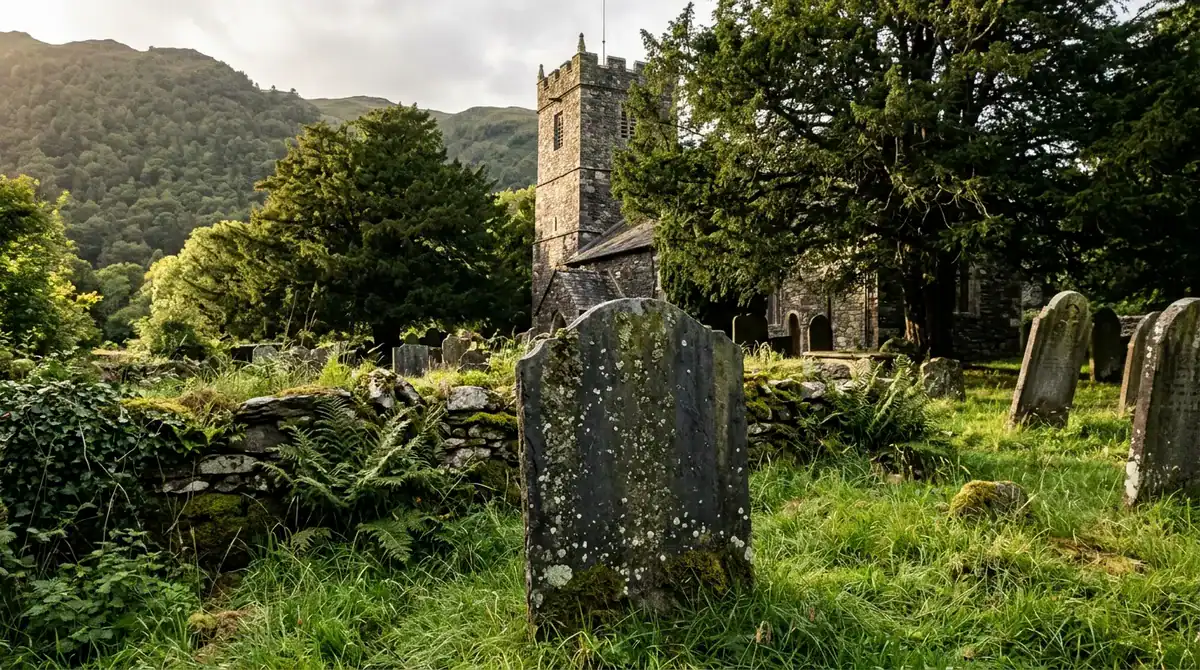
William Wordsworth rests in the churchyard of St Oswald’s Church in the centre of Grasmere, alongside his wife Mary, his sister Dorothy and other family members. The family grave group sits in the south-east corner of the churchyard, 12 Wordsworth and Quillinan graves enclosed by iron railings, and the Grade II* listing recognises it as a protected group. Wordsworth chose to be buried in the village he wrote about so often, and standing by those railings makes that connection easy to feel.
Step inside the medieval church, then wander to the Daffodil Garden beside the River Rothay, a riverside spot for quiet reflection between the churchyard and the water. Allow about half an hour for a visit that combines the grave, church and garden. The churchyard is small and visitors come and go steadily, so keep your voice low and stay respectful if a service is taking place.
The stop is easy to reach. The main areas of the church have level access, accessible toilets are nearby, and a café sits within 500 metres. Stock Lane Car Park is about 300 metres away, and Routes 555 and 599 serve Grasmere, with a bus stop within 100 metres of the church. Grasmere is very busy in summer and during August festivals, so aim for a quieter morning.
At a glance
- Best for: literature and history enthusiasts, slow travelers and easy village walkers
- Hours or Season: open daily, usually 9 a.m. to 4 p.m. in winter and until 5 p.m. in summer; see the official site for current details
- Cost: free visit
- Time Needed: about half an hour
- Parking: Stock Lane Car Park, about 300 metres away, with disabled parking; payable daily from 8 a.m. to 8 p.m., including bank holidays
Grasmere Gingerbread Bakery: Gingerbread in Historic Church Cottage
Grasmere Gingerbread is a small shop in Church Cottage, where you can buy freshly baked gingerbread and other ginger treats. The gingerbread is a spicy-sweet cross between a biscuit and a cake. Spread a slice with rum butter, or pick up ginger-themed foods and gifts to take home.
The building has a long schooling history. Church Cottage was built as Grasmere’s village school in 1630, and Victorian cook Sarah Nelson’s gingerbread has been made there since 1854.
Expect a compact space. The shop is small, so it fills quickly at busy times and a queue can form, which makes an early start in the day the best choice. Wheelchair access is possible only when the shop is not exceptionally busy, and the operator advises removing rucksacks because there is little room to pass. About four free parking spaces sit outside the shop, but waiting times are limited, so pay-and-display parking on nearby Red Bank Road is a useful fallback.
Food lovers, families and walkers all fit in well here. A gingerbread stop works nicely after a riverside stroll, and families can turn it into a short history break. Groups can ask about arrangements in advance, including pre-booked visits with a history talk, tea or coffee, and gingerbread for up to 30 people.
At a glance
- Best for: Food lovers, families and walkers wanting a compact food-and-heritage stop
- Hours or Season: Open daily 9:15 a.m. to 5:30 p.m., with winter hours of 9:15 a.m. to 5 p.m. from 2 November 2026 to 3 January 2027; closed on Good Friday, Christmas Eve, Christmas Day and Boxing Day. Current times are on the official site.
- Cost: Visiting the shop during trading hours is free; pre-booked group visits cost £3.50 per adult and £2.50 per child
- Parking: About four free spaces outside the shop, with pay-and-display parking on Red Bank Road nearby
- Booking: Groups of up to 30 people can pre-book a visit with a talk, gingerbread and tea or coffee
Keswick: Market Town at the North End of Derwentwater
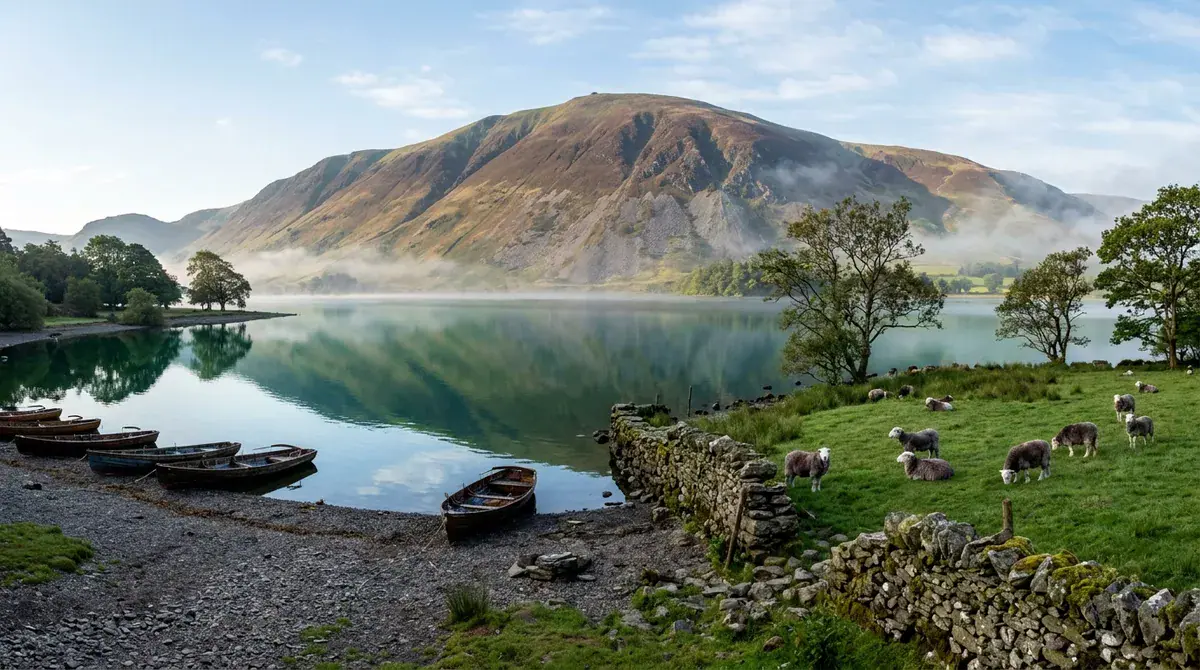
Keswick is a market town at the northern end of Derwentwater, with the lake and Theatre by the Lake a short walk south of the centre. You can browse outdoor-equipment shops, boutiques and cafés, visit a museum or the theatre, or take a boat onto the water. Lakeside paths and fell walks start close to town, so you can choose between a gentle stroll and a steeper climb.
Expect a busy town in summer, with shops and cafés close together along the streets. The Lake District National Park warns that parking areas between Great Wood and Kettlewell fill quickly on busy days. Keswick has four Cumberland Council car parks, including long-stay Central, Lakeside and Otley Road, plus short-stay Bell Close. Public toilets are at Bell Close and at the Lakeside car park beside Theatre by the Lake and the boat landing stages.
What makes Keswick special is how quickly everything connects. You can move from a café table to the lake shore in minutes, and from there reach the northern fells and onward routes into the northern Lakes. The average journey from Windermere takes about 40 minutes, so Keswick works well as a northern base. Check the 555 timetable before you travel, since services change with the seasons.
Walkers will enjoy the choice between an easy lakeside circuit and a climb above town. Families get boats, café stops and open lakeside space, while food-focused visitors can spend a long lunch browsing the market. Slower-paced travelers will find plenty to linger over. Since Visit Keswick lists separate attractions and activity providers, opening times and booking needs depend on what you choose.
At a glance
- Best for: Walkers, families, food-focused visitors and slower-paced travelers
- Hours or Season: Popular year-round
- Parking: Four Cumberland Council car parks, with charges daily from 7am to 7pm
- Booking: Depends on the attractions and activities you select
Roly’s Fudge Pantry: Watch Fudge Made in Keswick
Derwentwater: Lake Near Keswick for Cruises and Shore Walks
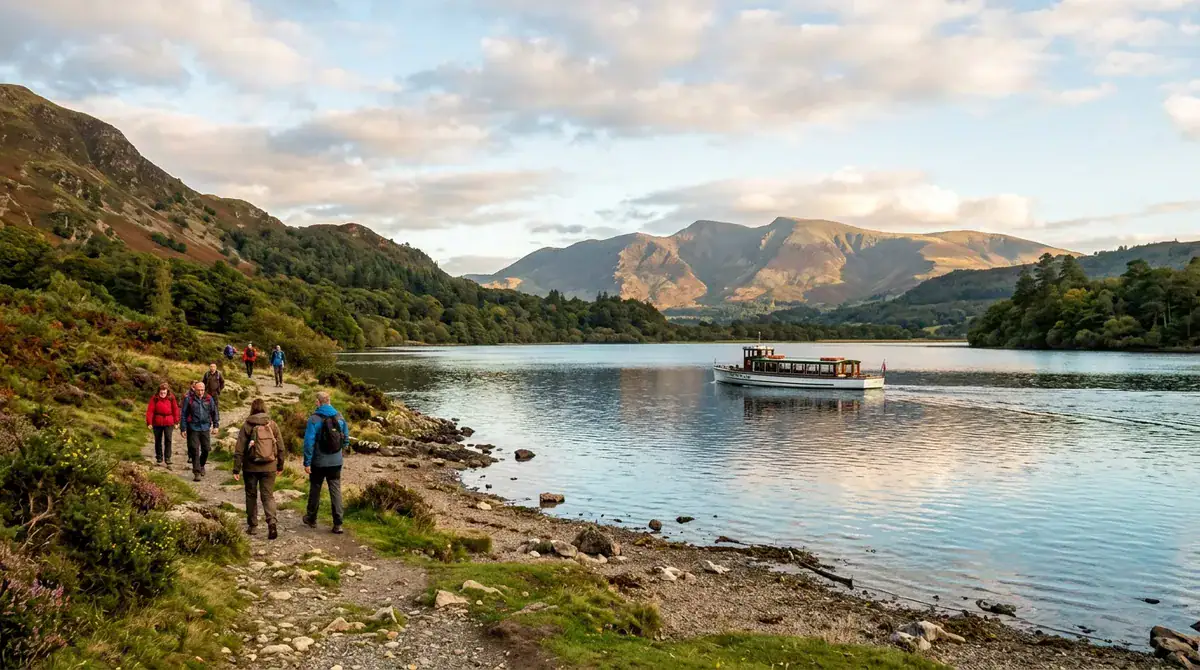
Derwentwater lies right beside Keswick, and you can spend a day on it in several ways. Take a launch cruise with Keswick Launch, whose 50-minute lake circuit can also be joined at lake jetties, or hire a boat, go for a swim, or walk the wooded shoreline. The 10-mile circular walk follows flat paths through woodland and along the shore, with picnic spots and cafés on the way. When your legs need a rest, you can cut the route short by boat.
Expect a level walk rather than a climb, and shorter accessible routes are also available. Launch sailings follow a timetable, with summer cruises running from 21 March to 8 November 2026 and winter times from 9 November 2026 to 19 March 2027. Adult round-trip launch fares are listed at £16 and child fares at £9 for ages 5 to 15, with under-fives travelling free. For current prices, see the official Derwentwater and Keswick guide. Great Wood and Kettlewell car parks fill quickly on busy days, and the Park and Sail option from Keswick Rugby Club costs £4 all day.
What sets the lake apart is how much sits in one setting. Its islands, the ancient Atlantic oak woodland of Great Wood and the surrounding fells all sit close together, and the National Trust notes that the lake supports vendace, a rare freshwater fish found in only one other lake in England.
Families and slow travelers get the most from Derwentwater, because the boats, flat paths and nearby town all move at a gentle pace. Walkers wanting a longer circuit can complete the full loop and still finish with a coffee in Keswick.
At a glance
- Best for: Families, slow travelers and walkers wanting a longer circuit
- Hours or Season: Summer cruises 21 March to 8 November 2026; winter times 9 November 2026 to 19 March 2027
- Cost: Adult round-trip launch fare £16; child fare £9 for ages 5 to 15; under-fives free
- Time Needed: 50 minutes for the launch circuit; 10 miles for the full circular walk
- Parking: Great Wood and Kettlewell pay-and-display car parks, which fill quickly on busy days
Castlerigg Stone Circle: Neolithic Stones With Fell Views
Castlerigg is a ring of 38 standing stones near Keswick, and English Heritage says it was probably built around 4,500 years ago. Wander among the stones, take in the sweeping views over the Lake District fells, and try to work out how the circle was used. English Heritage notes that it was most likely linked to the midwinter sunrise, which gives you something to puzzle over as you walk the ring.
The ground is grassy and can be uneven, muddy or slippery, and sheep graze in the field, so sturdy shoes are a good idea. Keep dogs on leads. There is no official car park, public toilet or visitor reception. Parking is limited to a roadside layby about 75 metres downhill, and walking from central Keswick takes around 30 minutes. If you have more time, a published 4-mile walk starts at the circle and takes two to three hours, though its farm tracks can be boggy after rain.
The hilltop setting gives the stones a prehistoric atmosphere that feels quieter and older than the lakeside villages elsewhere on this route. History-minded visitors, families and slow travelers will all find something to enjoy here. Entry is free during daylight hours, so you can stop on the drive into Keswick without changing your plans. For current opening details, see English Heritage’s visitor page for Castlerigg.
At a glance
- Best for: History-minded visitors, families and slow travelers wanting a short stop with fell views
- Hours or Season: Open during daylight hours
- Cost: Free entry
- Parking: Limited roadside layby, about 75 metres downhill from the circle; no official car park
Thirlmere: Reservoir Shore for Photo Stops and Quiet Walks
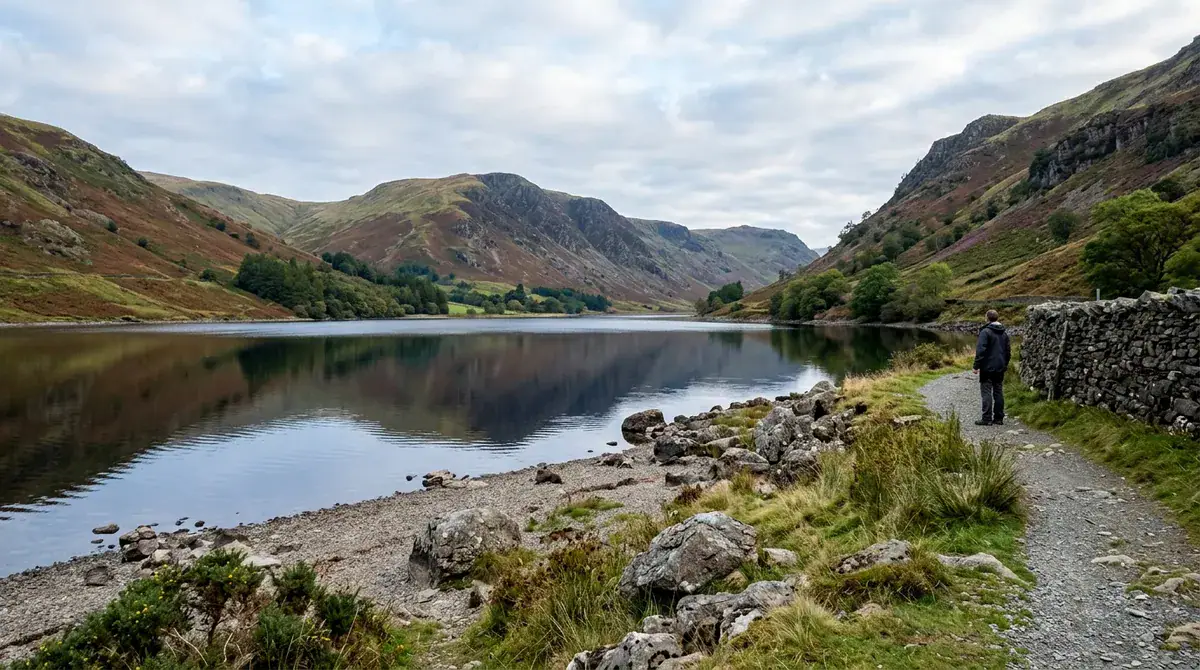
Thirlmere sits beneath the Helvellyn fells, a long reservoir beside the road between Windermere and Keswick that makes a natural pause on the drive. Come for lakeside and woodland walks, picnic stops and views from the shore. There is no staffed attraction or watersports here, and swimming, paddleboarding and unauthorised boating are not allowed because of safety hazards. The [United Utilities](https://www.unitedutilities.com/my-local-area/parks-and-reservoirs/acres-of-nature/Thirlmere/) site describes the reservoir’s walking routes, including accessible paths with viewing platforms, bridleways and trails suitable for cycling.
The reservoir supplies water to Manchester and was created over two small lakes and a hamlet, which gives the shore a quiet, slightly wistful history. The western minor road is the quieter side of the water, so choose it when the main road feels busy. Photographers will find the fell reflections most striking in the early morning, before the light flattens.
Families can follow a five-mile route from Legburthwaite that passes waterfalls before reaching the shore. Expect two to three hours with children, and rocky, occasionally steep sections. For a shorter visit, park and walk a stretch of shore, or take the longer circuit if you want the full day.
Parking is limited. Swirls, Armboth and Legburthwaite are pay-and-display car parks, and Swirls has toilets open year-round while Legburthwaite toilets are seasonal. Facilities stop at car parks, toilets and picnic areas, so bring food and water.
At a glance
- Best for: walkers, slow travelers and photographers wanting shore views beneath the Helvellyn fells
- Hours or Season: open all day, every day, per the official site for current details
- Time Needed: two to three hours for the waterfall route with children
- Parking: pay-and-display car parks at Swirls, Armboth and Legburthwaite
Honister Pass: Steep Mountain Road Between Borrowdale and Buttermere
Honister Pass climbs steeply between the head of Borrowdale and the head of Buttermere, and the Lake District National Park advises driving it with care. The car park at the summit sits 350 metres above sea level, and it is a starting point for walks toward nearby summits. The summit is also home to Honister Slate Mine, which describes itself as England’s last working slate mine. Its guided tour lasts about 1.5 hours and takes you through dim passageways, up steep steps, past mining-history storytelling and illuminations, and ends with a mock explosion.
The road is steep and narrow in places, so take extra care on the bends and slow down when another vehicle approaches. In bad weather, check conditions before you set out. Inside the mine, the terrain is rough and uneven, with about 50 steps and a handrail, and the tour is not wheelchair-accessible. The visitor site is open seven days a week from 8:30 a.m. to 5:00 p.m., with a café, toilets and baby-changing facilities.
The views down into Borrowdale and across toward Buttermere make the drive memorable. Walkers can combine the drive with a fell walk from the summit, while families get an underground outing that few other Lakeland stops offer. Thrill-seekers can also book more demanding activities at the summit, including via ferrata and underground climbing.
Autumn or winter brings fewer crowds, and the operator recommends booking mine tours ahead in peak seasons. Check the [official Honister site](https://honister.com/) for current prices.
At a glance
- Best for: scenic-drive visitors, walkers and families comfortable with steep roads
- Hours or Season: open seven days a week, 8:30 a.m. to 5:00 p.m.; autumn and winter suit visitors seeking fewer crowds
- Cost: mine tours listed from £25 per person; day parking £5 per vehicle, free with two or more different activities
- Time Needed: about 1.5 hours for the guided mine tour
- Booking: advance booking recommended for mine tours, especially in peak seasons
Honister Slate Mine: Underground Tours and Mining Heritage
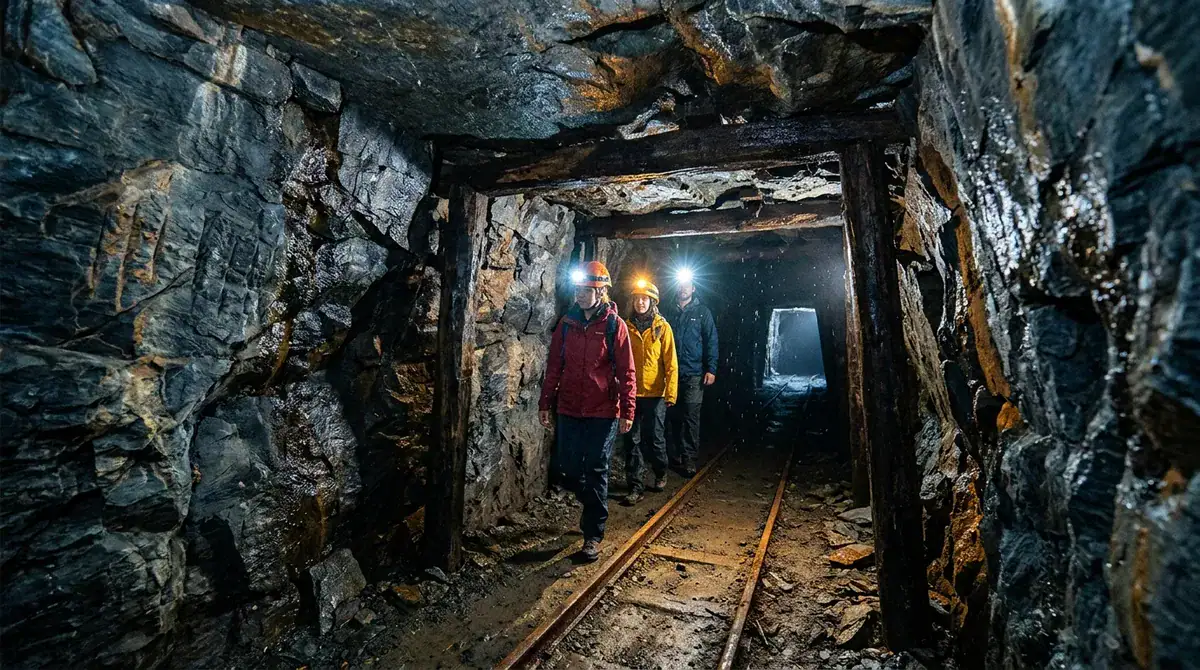
Honister Slate Mine sits at the top of Honister Pass, between Borrowdale and Buttermere, and it still produces green slate from underground workings that have been mined since the 1700s. The classic experience is a guided tour of those workings, which takes about 1.5 hours with a guide and headlamp through dim passages and large chambers. Bolder visitors can book mine climbing, a via ferrata or the Infinity Bridge, and the site also has a small museum and a slate shop.
Expect a busy summit in peak season, when the narrow pass roads and parking fill up. Book guided tours and adventure activities in advance through [Honister Slate Mine](https://honister.com/), since advance booking is recommended in busy periods even though on-site purchases are allowed. The mine tour route is rough and uneven, with about 50 steps, and it is not wheelchair-accessible. The Bait Cabin café, toilets and baby-changing facilities sit at the visitor centre, and autumn or winter brings fewer crowds.
What makes the mine special is its setting. The European Route of Industrial Heritage identifies it as England’s only slate mine, and you can learn about that heritage in a dramatic mountain landscape where slate is still produced.
Families tend to choose the gentler guided tour, while adventure seekers head for the climbing experiences, which have age and physical requirements that vary by activity. Anyone curious about mining history will enjoy the museum. The mine also makes a good way to end a day in the high country.
At a glance
- Best for: Families, adventure seekers and anyone curious about mining history
- Hours or Season: Open 8:30 a.m. to 5:00 p.m. seven days a week, year-round
- Cost: Guided mine tour listed from £25 per person
- Time Needed: About 1.5 hours for the guided tour
- Parking: Free for the first hour, then £5 per vehicle
Buttermere: Lake Valley Walk With a Rough Stretch
Buttermere is a small village and lake in a dramatic valley, much of which is cared for by the National Trust. Together with Crummock Water and Loweswater, it forms the valley’s three lakes. The classic visit is a lakeshore circuit with mountain views, woodland, the Sourmilk Gill waterfall and a short 19th-century rock tunnel.
The Buttermere Lakeshore route covers 3.75 kilometres and takes about 1.5 hours. The walk is relatively level, but it includes a short road section and a rocky step that may need your hands. The route page warns that washout has left rough sections that currently make the path challenging, particularly for wheelchairs and pushchairs. For children, walking anticlockwise is the easier choice, because it passes through woodland before reaching the tunnel.
The village has a 32-space pay-and-display car park with toilets and baby-changing facilities. The Bridge Hotel and Fish Inn serve pub food, and cafés sell snacks and locally made ice cream. Boating permits on Buttermere and Crummock Water are currently suspended, though fishing requires a permit. National Trust car parking costs £7 for up to two hours, £8 for up to four hours or £9.50 all day, and members park free. Check the official visitor site for current details.
Walkers and families comfortable with the distance and uneven ground will get the most from the circuit. The valley is busiest in spring, summer and on bank holidays, when parking and paths fill up.
At a glance
- Best for: Walkers and families comfortable with uneven ground and a longer distance
- Time Needed: About 1.5 hours for the 3.75-kilometre lakeshore section
- Cost: National Trust parking is £7 for up to two hours, £8 for up to four hours or £9.50 all day
- Parking: 32-space pay-and-display car park in the village, with toilets and baby-changing facilities
- Hours or Season: Busiest in spring, summer and on bank holidays
Dale Head: Steep Fell Walk With Wide Valley Views
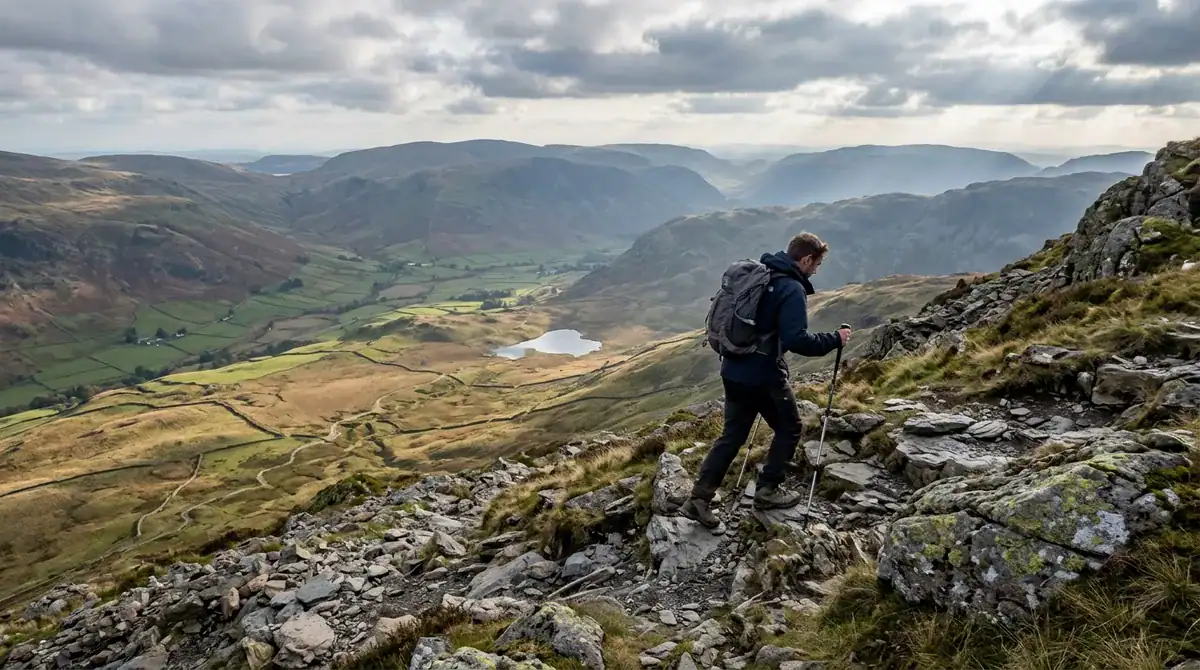
Dale Head is a 753-metre Wainwright fell in the North Western Fells, and the most direct way up starts at Honister Pass. The route climbs steeply over grass, stones and slate for about 389 metres of ascent to a large cairn near the summit. The out-and-back walk covers roughly 4 kilometres.
The final stretch runs close to a steep northern edge above Newlands Valley, so the footing needs care, especially in wind or wet weather. Once you leave the Honister site, there are no facilities at all. Use the café and toilets at the visitor centre before you set off, and plan a day that starts and ends at the summit.
The reward is a wide panorama. From the cairn you look over Newlands Valley, Skiddaw, Blencathra and the Helvellyn range, which is a lot of Lakeland for a single short climb. It is one of the few Wainwright fells where the views justify the effort in such a compact outing.
Dale Head suits prepared hillwalkers who want a short but strenuous mountain day. It is not a casual family stroll. Pack water, food and warm layers, because conditions on the higher fells can change quickly, so check the forecast before you leave the car.
At a glance
- Best for: prepared hillwalkers wanting a short but strenuous outing with far-reaching views
- Time Needed: about 1 hour 27 minutes of walking for the out-and-back route from Honister Pass
- Parking: the Honister Pass car park, which sits 350 metres above sea level
Skiddaw: Northern Fell Above Keswick With Broad Summit Views
Skiddaw rises to 931 metres above Keswick, making it the fourth-highest mountain in England, and its summit rewards the climb with broad views over Derwentwater, Bassenthwaite and the surrounding fells. The most popular route starts in town on the Jenkin Hill path, a 10-mile walk that takes five to six hours. The Keswick Tourism Association route guide recommends carrying Ordnance Survey map OL4.
The path is clear and stony, but it is steep and exposed, and the top can be cold and windy even when Keswick feels mild. Conditions change quickly and visibility can drop, so check the forecast and daylight hours before you set off. There is no public vehicle access to Skiddaw Forest, so start from the Gale Road (Latrigg) or Blencathra Centre car parks, since the reserve has no designated parking.
What sets Skiddaw apart is the contrast between its busy Keswick path and a quieter side of the mountain. A 13-mile circuit of the northern slopes passes the Skiddaw House area on a well-graded bridleway through high moors, and takes six to seven hours. The northern and eastern slopes feel lonely, while the boggy Back o’ Skidda route is remote, so it suits walkers who are comfortable with rough, wet ground.
Skiddaw suits prepared walkers who can read a map and handle exposed ground in changing weather, rather than casual family outings. Plan a full day for the summit and pack warm layers. Cumbria Wildlife Trust, which cares for the forest, asks visitors for donations.
At a glance
- Best for: prepared walkers wanting summit views and quieter moorland
- Hours or Season: open all year
- Cost: donations requested by Cumbria Wildlife Trust
- Time Needed: 5 to 6 hours for the 10-mile Jenkin Hill route; 6 to 7 hours for the 13-mile northern circuit
- Parking: no designated parking at the reserve; start from Gale Road (Latrigg) or Blencathra Centre car parks
Ullswater Steamer: Heritage Boat Cruises on Ullswater
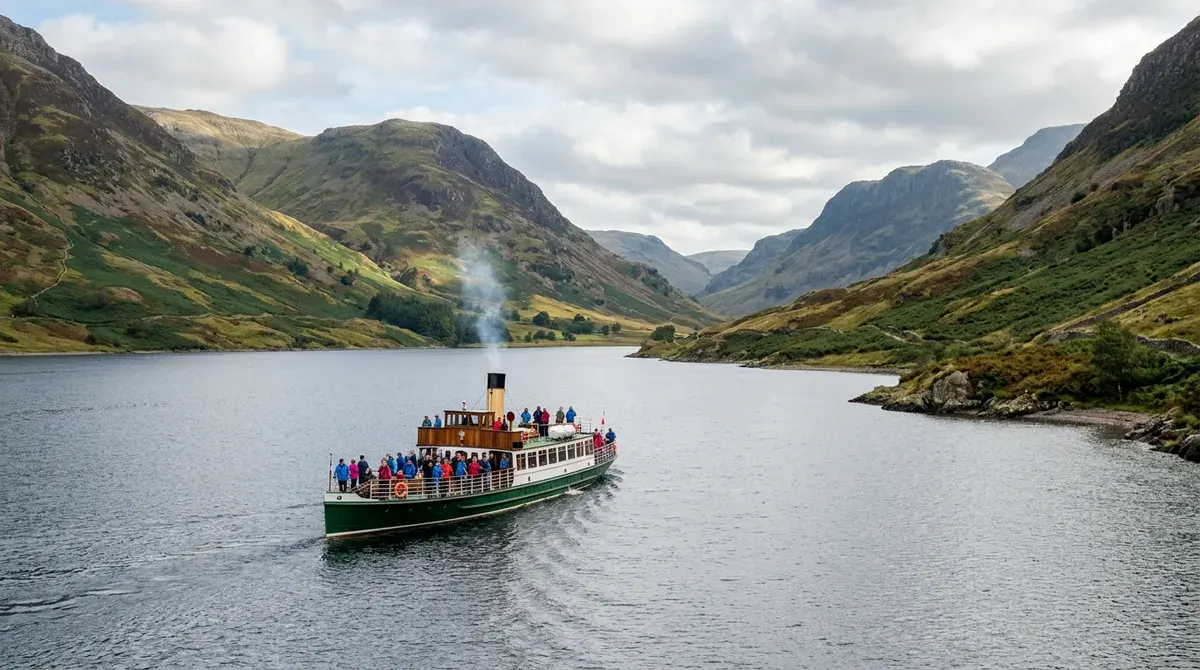
Ullswater Steamers runs heritage steamboats across Ullswater, carrying passengers between the piers at Glenridding, Howtown and Pooley Bridge. The service has operated on the lake for over 160 years, so you can settle into a wooden saloon while the fells slide past the windows. Hop off at Howtown for a walk of roughly seven miles back along the Ullswater Way, or stay aboard for the full lake.
Boats have open and sheltered seating, indoor saloons, toilets and licensed bars, though facilities vary by vessel. A full-lake sailing between Glenridding and Pooley Bridge takes about an hour, and the Glenridding to Howtown crossing takes about 35 minutes. Glenridding has pay-and-display parking, Howtown has none, and Pooley Bridge’s village car parks are about a ten-minute walk from the pier. Aira Force sailings are not running until further notice, and the operator expects them to reopen in 2027.
What sets the steamers apart is the pace. A heritage fleet on a long, narrow lake gives you a slow, sociable way to see the Ullswater Valley, with mountain views at every turn and no steep climbing required. Families get an easy outing with plenty to look at, while older travellers and slow travellers can enjoy a low-effort day on the water.
Adult full-lake tickets were £26 and child tickets for ages 5 to 17 were £16 in 2026, and you can buy tickets online, at the pier houses or aboard. The operator recommends arriving at least 15 minutes before departure. For current fares, see the official Ullswater ‘Steamers’ site.
At a glance
- Best for: Families, older travelers and slow travelers wanting a low-effort day on the water
- Time Needed: About one hour for the full-lake sailing between Glenridding and Pooley Bridge
- Cost: Adult full-lake cruise £26 and child (ages 5 to 17) £16 in 2026
- Parking: Pay-and-display at Glenridding; no parking at Howtown
- Booking: Tickets online, at the pier houses or aboard the boats
Helvellyn: Classic Ridge Walk With Striding Edge
Helvellyn is one of the Lake District’s best-known mountains, and its famous Striding Edge ridge on the eastern side draws walkers from across the country. The classic circular walk from Glenridding crosses Striding Edge and Swirral Edge, covering 14.1 kilometres with 900 metres of ascent and a minimum walking time of 4 hours 19 minutes. The mountain’s name is usually traced to Norse roots, part of the Norse place-name layer found across the northern fells.
Expect steep, rocky and exposed ground. Striding Edge has rocky ridges and a steep rock face near the summit, and the guide recommends it for adults with good fitness. The Glenridding-side ridges can be very busy in peak periods, so set off early if you want room on the crest. Walkers who prefer to avoid scrambling can take the Thirlmere approach instead, a mainly grassy hike that still involves a sustained climb.
The summit rewards the effort with wide views across the fells and toward Ullswater, and on a clear day you can also see the Pennines and Scotland. Looking down the long lines of ridges gives you a clear sense of how the Lakes fit together from above. The exposed crest is the highlight of the day, and it is what makes Helvellyn stand out from the valley walks elsewhere on this route.
Glenridding is the usual starting point, and its pay-and-display car park has public toilets, including accessible ones, with shops, cafés and pubs nearby. In winter, the National Park’s Helvellyn Weatherline provides a daily conditions report from December to April, recorded by Fell Top Assessors, which is worth reading before you climb. Helvellyn suits fit, experienced hillwalkers looking for a challenging day, while walkers who want to avoid the ridges can choose the Thirlmere route.
At a glance
- Best for: fit, experienced hillwalkers seeking a challenging day, or walkers who prefer the grassy Thirlmere approach
- Time Needed: minimum 4 hours 19 minutes for the 14.1-kilometre circular walk from Glenridding
- Parking: pay-and-display car park at Glenridding, with public toilets including accessible ones
- Hours or Season: Helvellyn Weatherline winter conditions report runs daily from December to April
Scafell Pike: England’s Highest Mountain and a Serious Walk
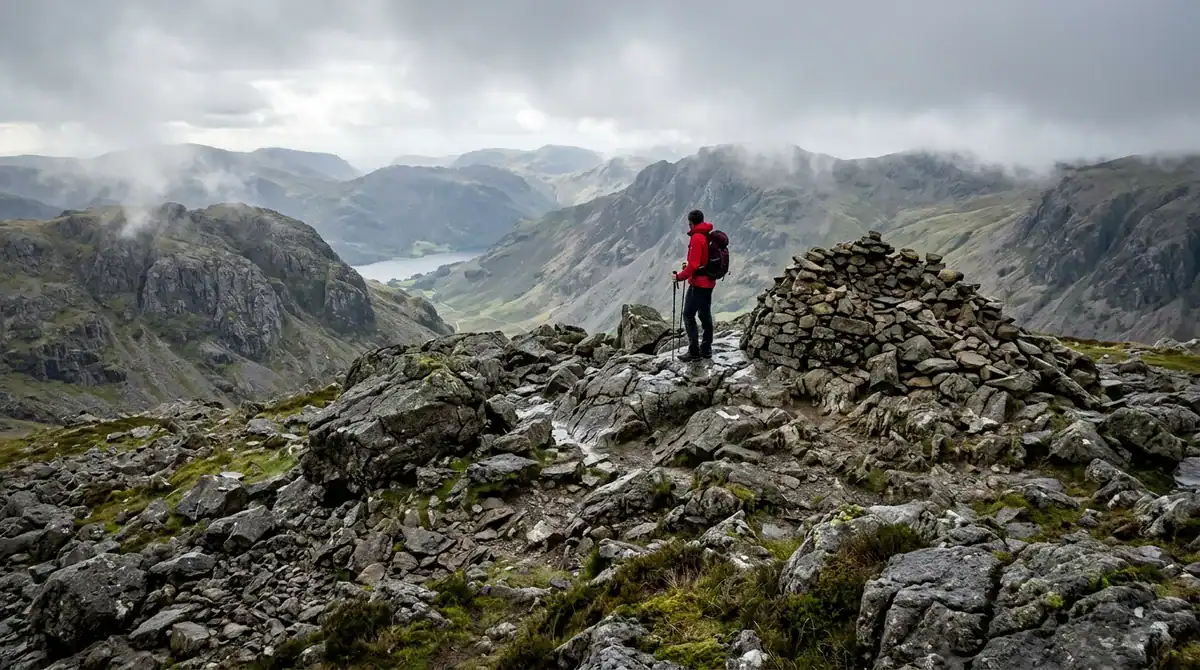
Scafell Pike stands 978 metres tall, making it England’s highest mountain. It is also a war memorial, and that quiet weight adds to the climb. You reach the summit on foot by routes that start from several valleys, and on a clear day the top opens onto the Lake District fells and well beyond them.
The ground is steep, rough and rocky, and parts of the route may need scrambling. The National Trust warns that high winds, rain, snow, extreme cold or poor visibility can arrive without much notice. Around 250,000 people climb Scafell Pike each year, so expect plenty of company on the path. The valley road leading to the trailheads is narrow and often busy. The Hollow Stones route starts at Lake Head car park, is rated challenging, covers 3.5 miles and takes about five hours. Temporary toilets operate at Lake Head, and the Wasdale Head Inn is a nearby pub.
This is a serious mountain walk for fit, prepared hillwalkers, not a casual family outing. Choose a route that matches your ability, and carry map and compass skills, since navigation can be demanding. The National Park advises walkers to assess their skills, check the weather and carry appropriate gear before setting out.
At a glance
- Best for: Fit, prepared hillwalkers seeking a demanding mountain day
- Time Needed: About five hours for the 3.5-mile Hollow Stones route
- Parking: Lake Head car park, open 24 hours with pay-and-display parking, free for National Trust members; see the official site for current details
Langdales: Valleys, Pikes and Slate Heritage
The Langdales are two parallel valleys. Great Langdale runs from Elterwater into the fells, while Little Langdale lies south of Lingmoor Fell. Here you can walk or cycle, choosing gentle routes beside Elterwater or Blea Tarn or tackling demanding fell walks. The easy, well-made Blea Tarn trail covers 1.8 miles, the Mickleden Valley trail is a longer 3.8-mile option, and the challenging Stickle Tarn trail runs 1.9 miles.
Expect the Langdale Pikes to dominate the views, with mountain tarns and quiet lanes and paths shaping the rest of the scenery. The valley usually gets busy, so arrive early. Parking at Stickle Ghyll, Elterwater and Old Dungeon Ghyll is pay and display, and it is free for National Trust members. Toilets are available at Stickle Ghyll car park. If you prefer the bus, route 516 runs daily from Ambleside to Dungeon Ghyll, stopping at Elterwater. Two stile-free Miles Without Stiles routes suit wheelchair users, pushchair users and young children.
What makes the valleys special is their history. Volcanic rock, quarrying and Neolithic axe-making have all shaped the landscape, and you can explore the remains of historic slate workings, including Cathedral Quarry. Few other Lakeland valleys let you read so much of the region’s story in the stones underfoot.
Walkers, cyclists and photographers will get the most from the Langdales. Cyclists can enjoy the quieter lanes, walkers can pick a short lakeside loop or a longer fell route, and photographers will find the Pikes and tarns a striking frame. Opening hours follow the countryside pattern of dawn to dusk, and the current parking charges are listed on the official site.
At a glance
- Best for: walkers, cyclists and photographers wanting a valley of fells, tarns and slate heritage
- Hours or Season: countryside open dawn to dusk
- Parking: pay and display at Stickle Ghyll, Elterwater and Old Dungeon Ghyll; free for National Trust members
- Booking: coach parking at Stickle Ghyll must be booked by email, and it is unavailable there during summer school holidays
Grizedale Sculpture Park: Art Trails Through Grizedale Forest
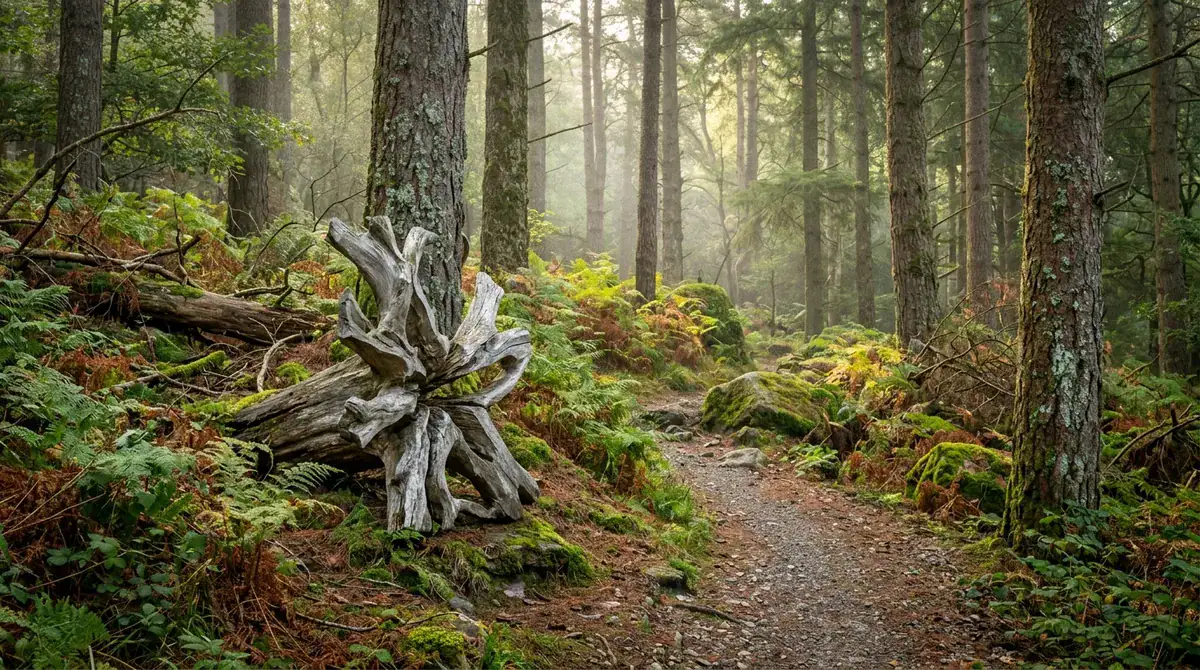
Grizedale Sculpture Park is the art collection inside Grizedale Forest, a large woodland in the South Lakes. There is no gallery with rooms and labels here. Instead, you walk or cycle forest trails and come across sculptures set among the trees, some of which invite you to take part. The Millwood route is a 1.75-kilometre low-level walk past sculptures and old trees, and it takes about an hour. Grizedale is described as the UK’s first forest for sculpture, with a collection built up over more than 40 years.
Trails range from flat, short routes for younger visitors to longer, hillier ones. The Grizedale Tarn Trail is a moderate 7-kilometre route with varied terrain that climbs past the remains of Grizedale Hall to the tarn, while the 18-kilometre Silurian Way is graded hard and is an all-day walk. A visitor centre, café, play area, toilets and bike hire are on site. The forest car park and trails are open daily unless severe weather closes them, and the visitor centre and shop open 10am to 4pm. Parking at the main and Kennels car parks is free for stays under 20 minutes, then costs £2.90 for the first hour and £0.70 per additional 15 minutes, up to £14 a day, paid on exit. The [official Forestry England Grizedale page](https://www.forestryengland.uk/grizedale) has current details. The forest is not served by public transport, so plan on driving.
The appeal lies in finding art in a wooded setting rather than in a fixed loop. Families and children enjoy the short routes and play area, and cyclists can cover more ground between sculptures. A half day suits the Millwood loop with a café stop, while a full day gives you time for the Tarn Trail or a longer walk.
At a glance
- Best for: Families with children, cyclists and walkers who enjoy art in a forest setting
- Hours or Season: Forest car park, trails and toilets open daily unless severe weather closes them; visitor centre and shop 10am to 4pm, café 10am to 5pm
- Cost: Parking free for stays under 20 minutes, then £2.90 for the first hour and £0.70 per additional 15 minutes, up to £14 a day at the main and Kennels car parks
- Time Needed: About one hour for the Millwood route; a half or full day for the longer trails
- Parking: Nine car parks, including the main car park by the visitor centre
Kendal: Historic Market Town on the Southern Gateway
Kendal is a historic market town on the southern edge of the Lake District, and it feels very different from the lakeside villages further north. Its yards and streets grew around the wool trade, and the town’s motto, “Pannus mihi panis,” means “wool is my bread.” Short self-guided heritage and nature trails take you past that story, and each can be finished in under an hour or stretched out at your own pace.
Walk beside the River Kent, then climb to Kendal Castle, a ruin on a hill east of town where surviving stonework frames views over the rooftops. Serpentine Woods has muddy sections, so pack sturdy shoes. Between walks, browse the shops and galleries, then settle into one of the town’s cafés or restaurants, where the food culture is a big part of the appeal.
Kendal is a working town rather than a single attraction, so expect people going about their day alongside visitors. Pay-and-display parking covers the town centre, and the station and bus station connect you onward into the Lakes. The Courtesy Toilet Scheme lists participating venues, some with wheelchair access and baby-changing facilities. Windermere’s shore is 8 miles away, and Kendal to Keswick takes about one hour on average, which makes it a practical base for exploring nearby areas.
Food lovers, history fans and anyone arriving by train will get the most from a day here. If you enjoy a guided outing, Kendal Civic Society’s public town walks last about 1½ to 2 hours at a steady pace, with rest stops, and need to be booked in advance.
At a glance
- Best for: Food lovers, history fans and anyone arriving by train
- Time Needed: Under an hour for each self-guided trail; about 1½ to 2 hours for a guided town walk
- Cost: Kendal Civic Society guided walks were £5 for adults in 2026, with accompanied children under 16 free
- Parking: Pay-and-display town-centre parking
- Booking: Civic Society guided walks require booking to guarantee a place
Getting There, Parking and Road Rules in the Lakes
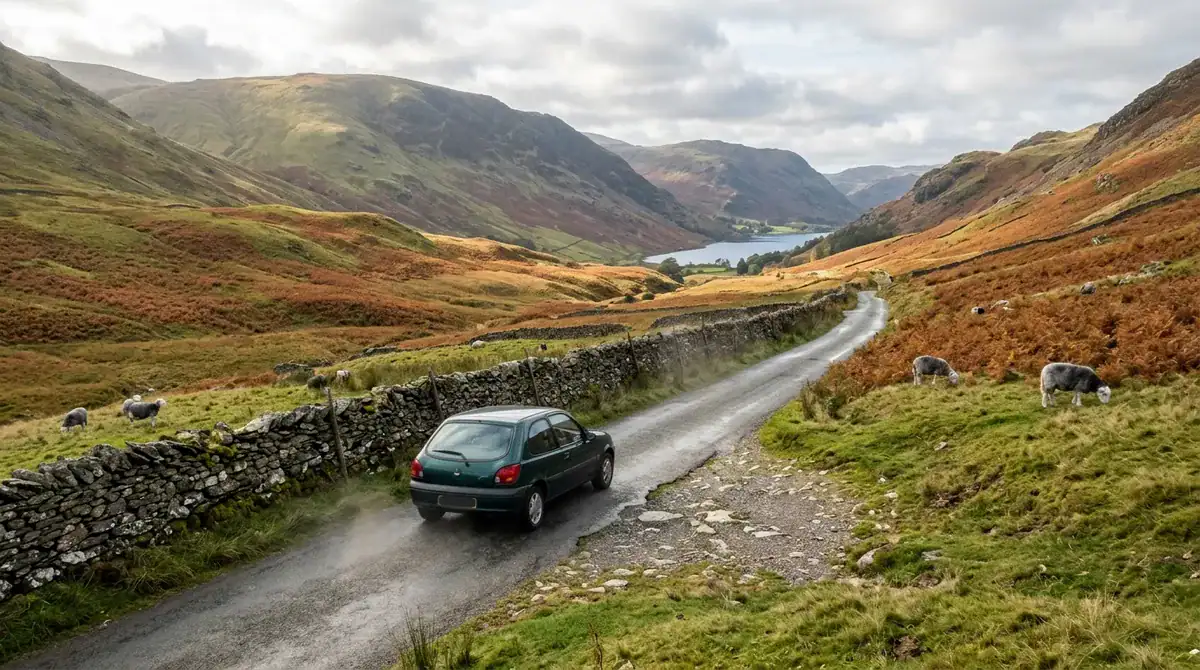
Many travelers reach the Lakes by train, arriving at Windermere railway station and picking up the 555 bus from there. Stagecoach sells a North West Explorer day ticket for £9 for a child or concession passenger and £34 for a group of up to five people, which makes it good value for families. Single bus journeys are capped at £3 while the company takes part in the fare-cap scheme.
Check the timetable before you set out. Winter services began on 2 November 2026, and summer timetables are due back on 22 March 2027, so a trip in between may follow a different pattern. Look up the schedule the week you travel and leave a buffer for connections.
Parking is the bigger planning task. Costs and availability vary from village to village, so budget for car parks in Bowness, Ambleside and Keswick, and carry coins or a card for pay-and-display machines. In summer, arrive early, since the busiest villages fill up by mid-morning.
Dogs are welcome, but the rules on access land are firm. Under [section 2 of the Countryside and Rights of Way Act 2000](https://www.legislation.gov.uk/ukpga/2000/37), a dog on access land must be on a short lead in the vicinity of livestock. Keep yours close when you pass sheep on the fell paths.
Spring and early autumn are the sweet spot, with quieter roads and clearer views across the fells. Summer brings the longest days but also the biggest crowds. Winter means shorter daylight hours and weather that can turn quickly on the higher ground.
Food, Evenings and Booking Ahead in the Lake District
Ambleside and Keswick offer the most choice for eating out. Ambleside’s streets hold cafés, pubs and restaurants, including international menus, while Keswick’s market-town centre has plenty of places for a long lunch.
For a budget meal, grab-and-go cafés and bakeries keep costs down and make it easy to pack a picnic before a fell walk. Save a long dinner for a special evening, and book a table ahead on summer weekends and bank holidays, when the popular restaurants fill quickly.
Clear nights are the best time to look up. Once you leave the town lights of Windermere or Keswick behind and reach open ground, the sky can reveal far more stars. Weather in the fells can turn quickly, so pack warm layers and a torch, and check the forecast before you head out.
Families have plenty to fill a day. Boat trips on Windermere and Ullswater, the sculpture trails at Grizedale Forest and the World of Beatrix Potter in Bowness all suit younger children. The stile-free Grasmere Riverside route is a good choice for pushchairs.
Book ahead for the activities that fill up. Reserve guided tours at Honister Slate Mine in advance, especially for a summer weekend, and book adventure activities such as via ferrata before you travel. Popular cruises fill up on sunny days, so buy tickets online ahead of time.
Shopping rounds off the day. Pick up gingerbread in Grasmere, fudge from Keswick’s shops, and outdoor gear from the equipment stores in Ambleside and Keswick, where walking boots, waterproofs and maps are easy to find.
Start Planning Your Own Lakes Escape
Start with your dates. Pick a window, then check the Stagecoach 555 timetable for those exact days. Winter services began on 2 November 2026, and summer timetables are due back on 22 March 2027, so a late-March trip may fall across the change.
Next, choose your base by travel style. Families with young children will find Bowness easiest for boats and flat lakeside paths. Early risers who want fell walks on their doorstep should book in Ambleside, and quiet-minded travelers may prefer Grasmere. Reserve beds early, because summer weekends and bank holidays fill fast.
The 555 has its own story to enjoy along the way. The Lancaster to Keswick service, a 90-mile route, launched in 1925 and marked its 100th anniversary in September 2025, so riding it north feels like part of the trip.
Sketch your first morning now. Arrive at Windermere railway station, take the 555 or walk into Windermere village, and climb Orrest Head before the car parks and buses fill up. Save a dry day for the Buttermere Lakeshore, and leave one afternoon with no plans at all.
When your dates and base are set, you have a route you can trust. Write it down, pack warm layers and a torch for clear evenings, and start planning the walk to the top of Orrest Head.