
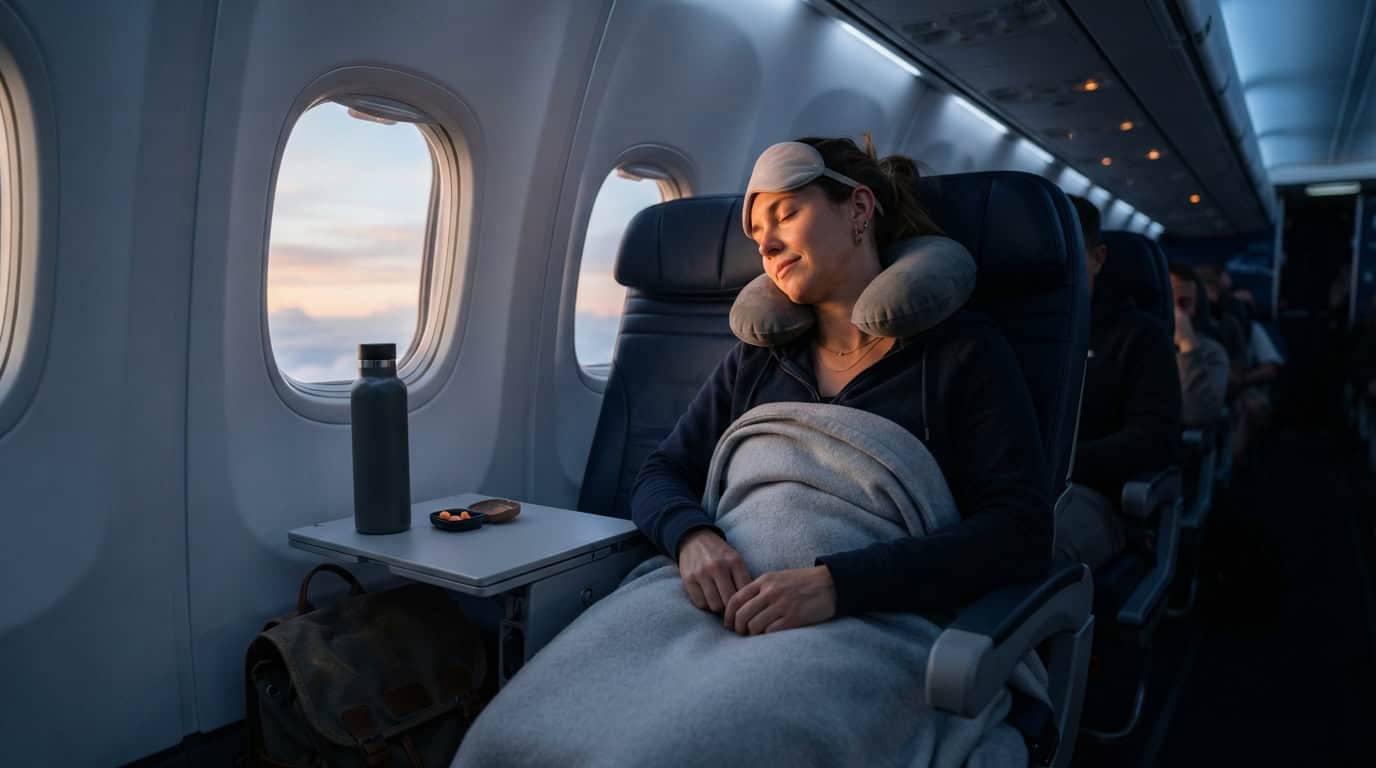
Red-eye flight tips work best when you shift your sleep toward your destination by about an hour a day for 2–3 days before departure, as the CDC Yellow Book recommends. The goal isn’t a perfect night in a narrow seat. It’s to improve your chances of resting and make your first morning gentler. Set your watch to local time, protect a realistic window for sleep, and leave room to ease into the day instead of rushing into a packed itinerary.
A difficult overnight flight isn’t automatically jet lag. Jet lag disorder is sleep disturbance associated with crossing at least two time zones. After landing, follow local time for meals and daylight. If you need a reset, keep a daytime nap to 20–30 minutes so it’s less likely to interfere with sleep that night. A gentle first-day plan leaves more energy for the streets, shoreline, or café you came to discover.
Key Takeaways
- We recommend shifting bedtime and wake time toward your destination by about an hour a day for 2–3 days before departure, then timing your in-flight sleep, meals, and light around the destination’s local clock.
- A realistic red-eye sleep routine starts before bedtime: limit backlit screens for about 1.5 hours when practical and avoid alcohol for 2–3 hours beforehand, following NIOSH sleep guidance. Use an eye mask and earplugs to reduce light and noise.
- After landing, follow local time for meals, sleep, and daylight, keep any daytime nap to 20–30 minutes, and leave the first day flexible for a gentle activity such as a short walk or relaxed meal.
- Travelers who feel drowsy after a red-eye should choose a ride or public transportation instead of driving; a safe 15–20-minute nap may help, and caffeine takes about 30 minutes to begin working but is not a replacement for adequate sleep, according to NIOSH guidance.
How Can You Prepare for a Red-Eye Flight?
Prepare for a red-eye by gradually shifting your sleep toward your destination’s schedule, planning a realistic sleep window for the flight, and leaving breathing room in your first day. An overnight flight can cost you sleep even if you stay in the same time zone. Jet lag is different: jet lag disorder is sleep disturbance associated with crossing at least two time zones.
For the two to three days before departure, consider shifting your sleep by about an hour per day toward the local time at your destination. Small, steady adjustments are easier to fit around work, meals, and other plans than a dramatic change the night before you leave. If your trip crosses several time zones, you may not be able to match the new schedule before takeoff. The goal is to start moving in the right direction.
Before boarding, check your scheduled arrival time and convert it to the destination’s local time. Then decide which part of the flight will be your sleep window. For example, if you land in the destination’s morning, try to reserve a stretch of the flight for rest rather than treating the whole journey like an ordinary evening. Plan meals and light exposure around that same local clock, too. Timing sleep, meals, and light during the flight to the destination time zone gives your body a clearer cue about the day ahead.
Finally, sketch out a first-day plan with room to breathe. Choose one easy arrival activity, such as a relaxed meal or a short walk near where you’re staying, and save more demanding sightseeing for later. Avoid building a full itinerary around the assumption that you’ll feel rested after an overnight journey. A little flexibility can help your trip begin on a calmer note.
What Helps You Sleep on a Red-Eye Flight?
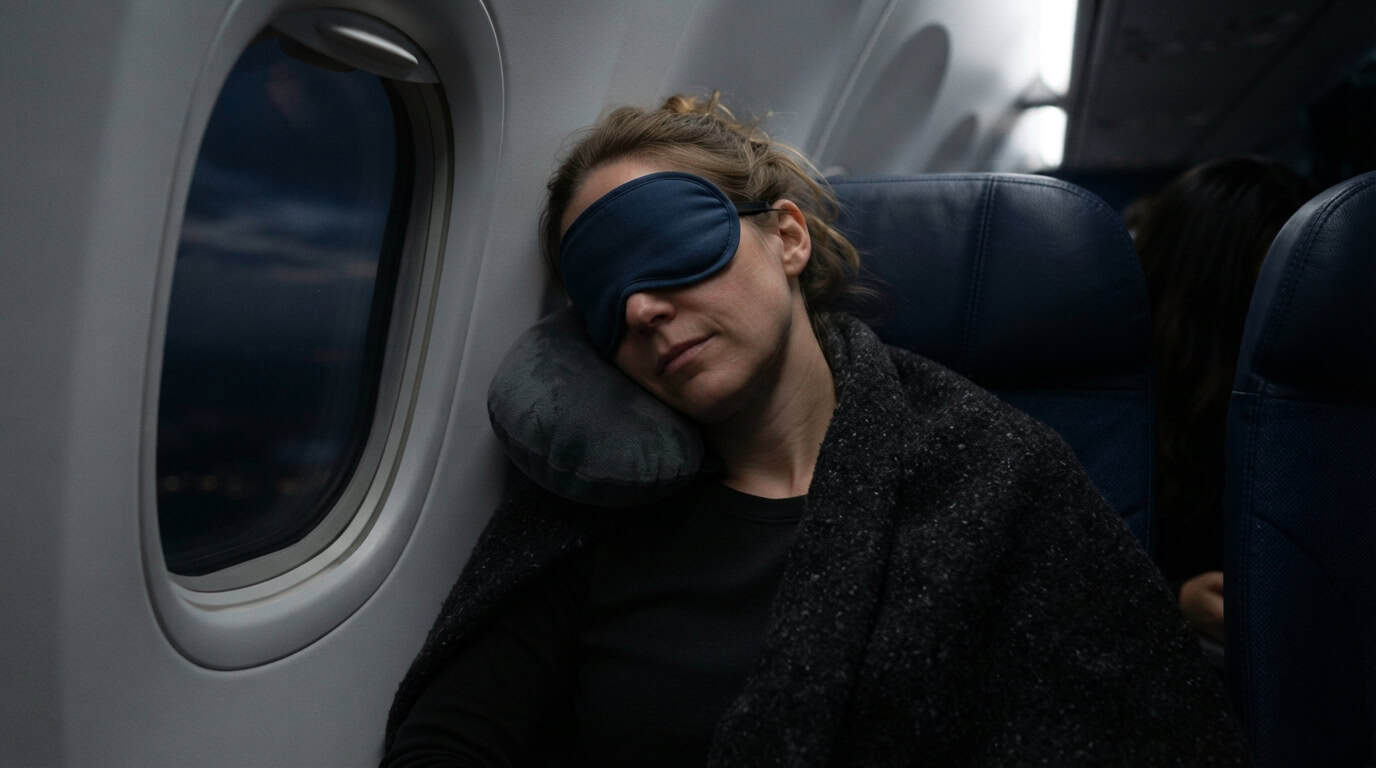
A calm, repeatable wind-down routine, with less light, noise, and avoidable cabin activity, gives you a practical chance to sleep on a red-eye. Start winding down before your intended sleep time, so you’re not still scrolling, looking for headphones, or deciding where everything goes when you’re ready to settle in.
- Choose a bedtime for the flight and begin winding down beforehand, rather than waiting until you feel exhausted.
- Avoid backlit screens for about 1.5 hours before bedtime when practical. NIOSH recommends limiting screen exposure during that period.
- Before settling in, use the lavatory, silence device notifications, and keep anything you may need within reach to reduce avoidable interruptions.
- Put on an eye mask and earplugs to block light and reduce noise, as recommended by the National Institute for Occupational Safety and Health.
- Avoid alcohol for two to three hours before bedtime. NIOSH includes this in its sleep guidance.
Seat choice is personal, and no seat guarantees sleep. A window seat may give you a wall to lean against and keep you away from people passing through the row. An aisle seat makes it easier to get up without disturbing a seatmate. A spot near a galley or lavatory may put you closer to cabin activity. Weigh the support you want for leaning against your preference for aisle access and distance from foot traffic. The CDC also advises travelers to avoid excess alcohol and sedatives with long half-lives, which can linger and affect alertness during travel. If you’re considering melatonin for a circadian shift, the CDC says 0.5–1 mg is often sufficient and discourages doses above 5 mg. Melatonin products may contain a different amount from what the label states, so consider your health needs and any medications you take before using it.
What Should You Wear and Pack?
Wear comfortable layers you can add or remove, and pack a small comfort kit where you can reach it from your seat. Cabin temperatures can feel different over the course of a flight, so bring a light outer layer instead of counting on an airline blanket being available. Soft, non-restrictive clothes make it easier to settle in. Keep sleep and personal comfort essentials together in an easy-to-reach pouch, not buried in the overhead bin. A simple kit might include:
- An eye mask and earplugs to reduce light and noise
- Any personal sleep essentials you already use
- Comfort items you may want during the flight, such as lip balm or eye drops
Cabin humidity is usually 10–20%, which can dry the eyes and the mucous membranes in the upper airway, according to the CDC Yellow Book. Consider what helps you stay comfortable in dry air, and keep those essentials accessible. If you pack liquids or creams, check the carry-on screening rules before leaving for the airport. For U.S. departures, the TSA 3-1-1 rule allows liquids, gels, aerosols, creams, and pastes in carry-ons only in containers of 3.4 ounces or less, packed in one quart-size clear bag per passenger. Medically necessary liquids, medications, and creams may exceed that amount, but must be screened separately, according to the Transportation Security Administration. Keep any larger medically necessary items easy to remove for screening.
How Do You Handle Jet Lag After Landing?
Handle jet lag after landing by following the destination’s clock for sleep, meals, and light, keeping any nap brief, and making the first day deliberately easy. Eat at local mealtimes, aim for a bedtime that fits the local night, and get daylight at a time that supports the destination schedule. Timing sleep, meals, and light exposure to the destination time zone can help your body adjust.
Give your body time to catch up instead of expecting to feel normal after one night. Average circadian adaptation is about 1.5 hours per day after westward travel and about 1 hour per day after eastward travel, so eastward trips often take longer to adjust to. These are averages, not a countdown. The number of time zones crossed and your own sleep patterns can affect how the shift feels.
If you need a nap on the destination day, set an alarm for 20–30 minutes. A short nap may help you stay alert, while a longer daytime sleep can make it harder to fall asleep at the local bedtime. If you feel sluggish, try a gentle walk outside or a relaxed meal in daylight instead of turning the afternoon into a long recovery sleep.
Keep the first day low-pressure: unpack, find a nearby café, stroll through a park, or explore a few streets close to where you’re staying. Daylight and simple activities can help you ease into the local rhythm without using your limited energy on an ambitious sightseeing schedule. An overnight flight can leave you tired from lost sleep even if you haven’t crossed the at-least-two time zones associated with jet lag disorder.
Should You Drive After a Red-Eye Flight?
Drive only if you feel alert enough to do so safely. If you expect to be too tired after landing, arrange a ride, take public transportation, or plan a safe place to stop and rest. An overnight flight can leave you fatigued even without crossing time zones, so don’t assume that reaching the airport means you’re ready for the road. If you become drowsy behind the wheel, pull over somewhere safe instead of trying to push through. A safe 15–20-minute nap may help, caffeine takes about 30 minutes to begin working, and caffeine is only a temporary aid, not a replacement for adequate sleep. If you still feel drowsy afterward, don’t continue driving. Make your onward-transport plan before departure, especially if the airport is far from your final destination. Check whether public transportation will be running when you land, how you’ll get from a stop to your lodging, and where a pickup can safely meet you. If a friend or family member is driving, agree on the pickup details in advance so you don’t have to make decisions while tired. For a long journey from the airport, consider splitting the trip with a planned rest stop or staying near the airport before continuing. Keep the plan flexible: if you arrive more exhausted than expected, choose a ride or transit instead of driving yourself. A little planning can help you save energy for exploring once you reach your destination.
How Can You Make the Flight Work for You?
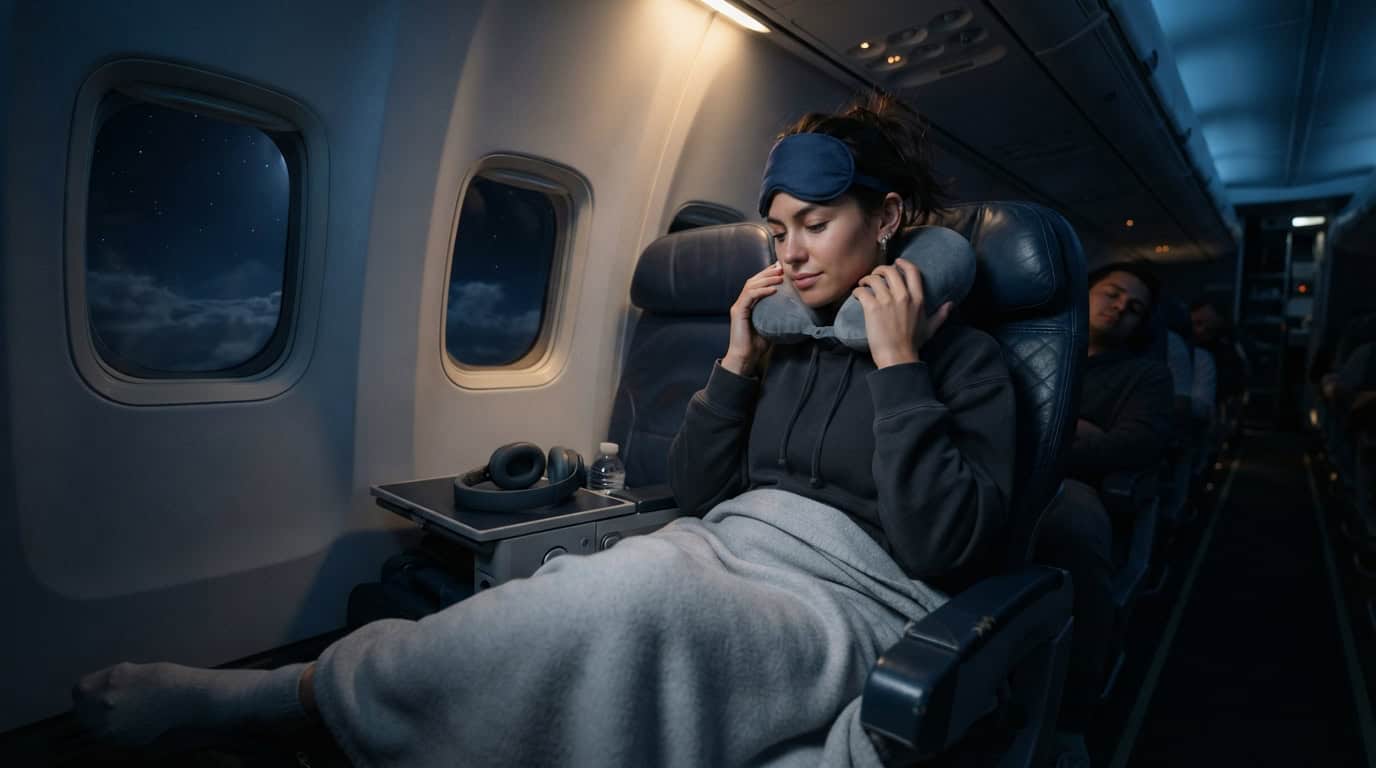
A red-eye is a good fit when its arrival time and connections leave you enough room to rest before your plans begin. Compare it with a daytime flight by looking at the whole travel day, not just the departure time. Use this decision framework:
- Compare the arrival windows. Choose the overnight option only if landing at that time gives you a practical start. Consider a daytime flight if it better matches when you need to be rested and ready.
- Check every connection. Weigh the number and timing of connections, including whether a change leaves you enough breathing room to manage the airport while tired.
- Match the flight to your first-day plans. If you have an early transfer, a work commitment, or active sightseeing planned soon after arrival, consider whether you can manage it on limited sleep or would be better off with more time to recover.
- Set your watch and devices to the destination’s local time, then use that clock to guide sleep and meals. The CDC recommends timing sleep and other activities to the destination time zone.
Treat sleep as a goal, not a guarantee. If you arrive low on energy, be ready to postpone demanding plans and keep the first part of the day simple instead of forcing yourself through a packed schedule. Comfort and health needs matter, too. Consider how you usually sleep in unfamiliar settings and whether an overnight flight is a reasonable choice for you. Follow advice from your healthcare professional about your health or medications, and avoid trying unfamiliar sedatives while traveling.
Plan a Softer Landing
Before you book another activity, open your itinerary and mark your arrival time in the destination’s local time. Then identify the first thing you must do after landing, such as meeting a transfer or reaching your lodging, and leave the rest of the day flexible. Time sleep, meals, and light exposure to the destination time zone.
Choose one gentle activity you’ll be glad to stay awake for, perhaps a nearby café or a short walk through a neighborhood you’re excited to see. Schedule it after your essential arrival tasks, not between the airport and a tight reservation. If you’re crossing time zones, plan daylight around the destination’s schedule instead of squeezing in sightseeing simply because you’ve arrived.
Now make one edit to your first-day plan: move any strenuous tour, long drive, or fixed commitment that can wait. If something can’t move, decide in advance what you’ll drop if you arrive more tired than expected. Add your onward-transport option beside your flight details, too, so you can choose a ride or transit instead of driving if you feel drowsy. Your next step is simple: revise the first day until it has one clear priority and room to change.