
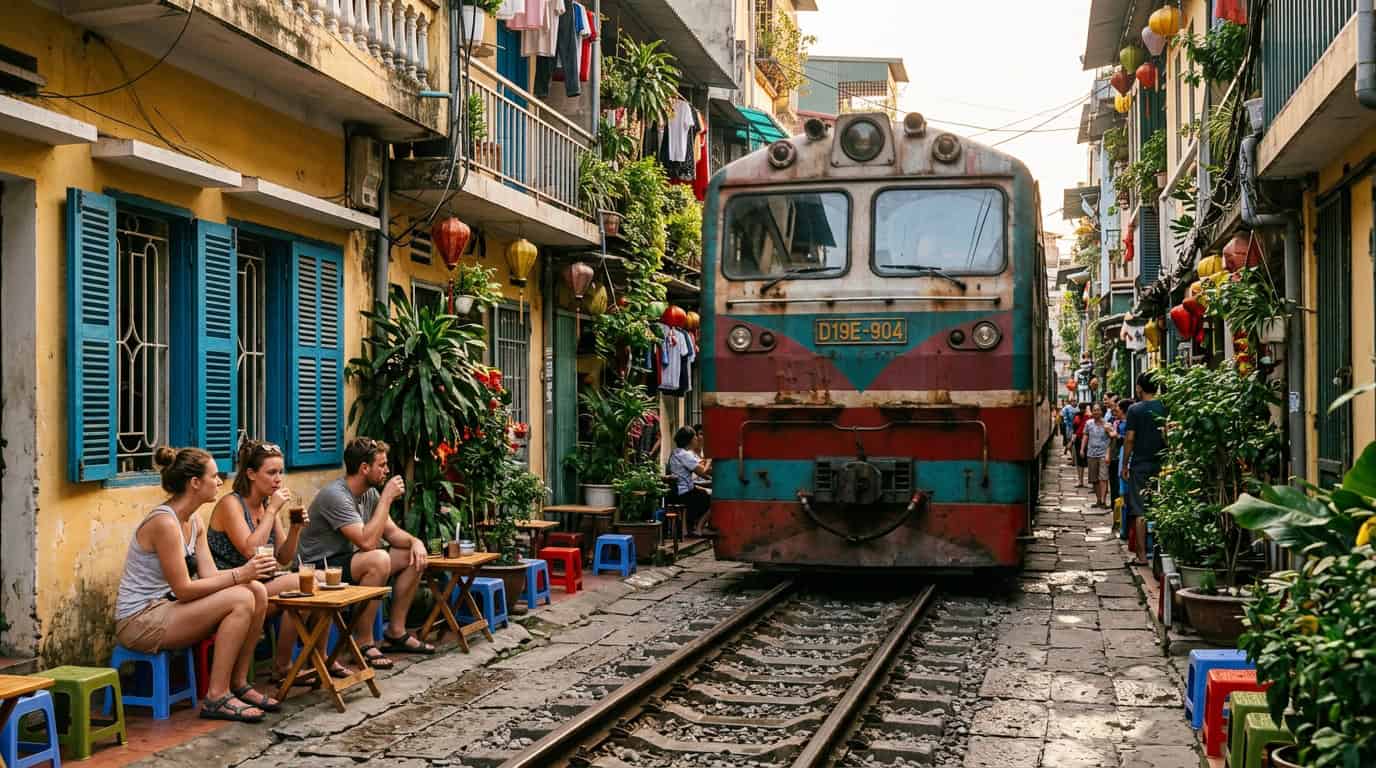
There is a specific kind of magic found in the narrow corridors of Hanoi, where the scent of bold Vietnamese coffee mingles with the rumble of approaching locomotives. Navigating this legendary stretch has become a bit of a puzzle lately, which is why I’ve put together this updated hanoi train street guide to help you experience the thrill safely and respectfully. Even with stricter regulations and local guards stationed at the entrances, that bucket-list moment of watching a massive train brush past your cafe table is still possible with a little insider knowledge.
The secret to getting past the metal barriers lies in the local hospitality that makes this city so special. To witness the Old Quarter section today, you’ll need to wait for a friendly cafe owner to escort you to their balcony, turning a simple drink order into your golden ticket behind the scenes. Standing just inches from the tracks as the steel wheels screech by is an adrenaline rush like no other, reminding every traveler why we seek out these vibrant, living pieces of history.
Key Takeaways
- Access the restricted Phung Hung section by coordinating with local cafe owners who act as escorts and safety marshals to lead you past security barriers.
- Visit the Ngô 224 Lê Duẩn section for a more authentic, less commercialized experience where you can observe local residents living directly alongside the active tracks.
- Prioritize safety by arriving 30 minutes early, staying behind designated safety lines, and following all instructions from cafe staff as the train is wider than the tracks themselves.
- Plan your visit around the train schedule, noting that weekends offer more frequent daytime passages compared to the primarily late-evening schedule on weekdays.
Navigating Current Entry Rules At Phung Hung
Walking up to the Phung Hung section of Train Street, you will likely be greeted by heavy metal barriers and local guards keeping a watchful eye on the entrance. While the tracks are technically closed to independent explorers, the vibrant café culture along the line has created a unique system for visitors to gain entry. I found that the best strategy is to linger near the barrier and make eye contact with the local café owners who are often standing nearby. They act as your personal guides, and once you agree to visit their establishment for a coffee or a cold beer, they will lead you past the security checkpoints. It is a seamless process that turns a restricted area into an inviting, hidden world filled with the aroma of Vietnamese coffee.
Once you are inside, the atmosphere shifts from a bustling city street to an intimate community where life revolves around the iron rails. I loved sitting on a tiny plastic stool, sipping a creamy egg coffee while the café owner shared stories about the daily train schedule and their family history on the tracks. These locals are not just business owners but also safety marshals who ensure everyone is tucked away safely when the massive engine eventually thunders past. Supporting these small businesses is the only way to experience this iconic location responsibly while it still exists in its current form. Be sure to have your camera ready for the incredible perspective shots, but always follow your host’s instructions when the whistle blows.
Navigating these entry rules requires a bit of patience and a friendly smile, but the reward is a front-row seat to one of the most atmospheric spots in Southeast Asia. I recommend arriving at least thirty minutes before a scheduled train to secure a good vantage point and settle into the local rhythm. The experience of watching the train squeeze through the narrow gap between colorful buildings is a sensory overload that you simply cannot miss. By coordinating with the café staff, you are not just bypassing a barrier, you are becoming a temporary part of a resilient neighborhood that celebrates its unique place in Hanoi’s history. It is a beautiful example of how local ingenuity keeps tourism alive even amidst changing regulations.
Exploring The Authentic Ngõ 224 Lê Duẩn Section
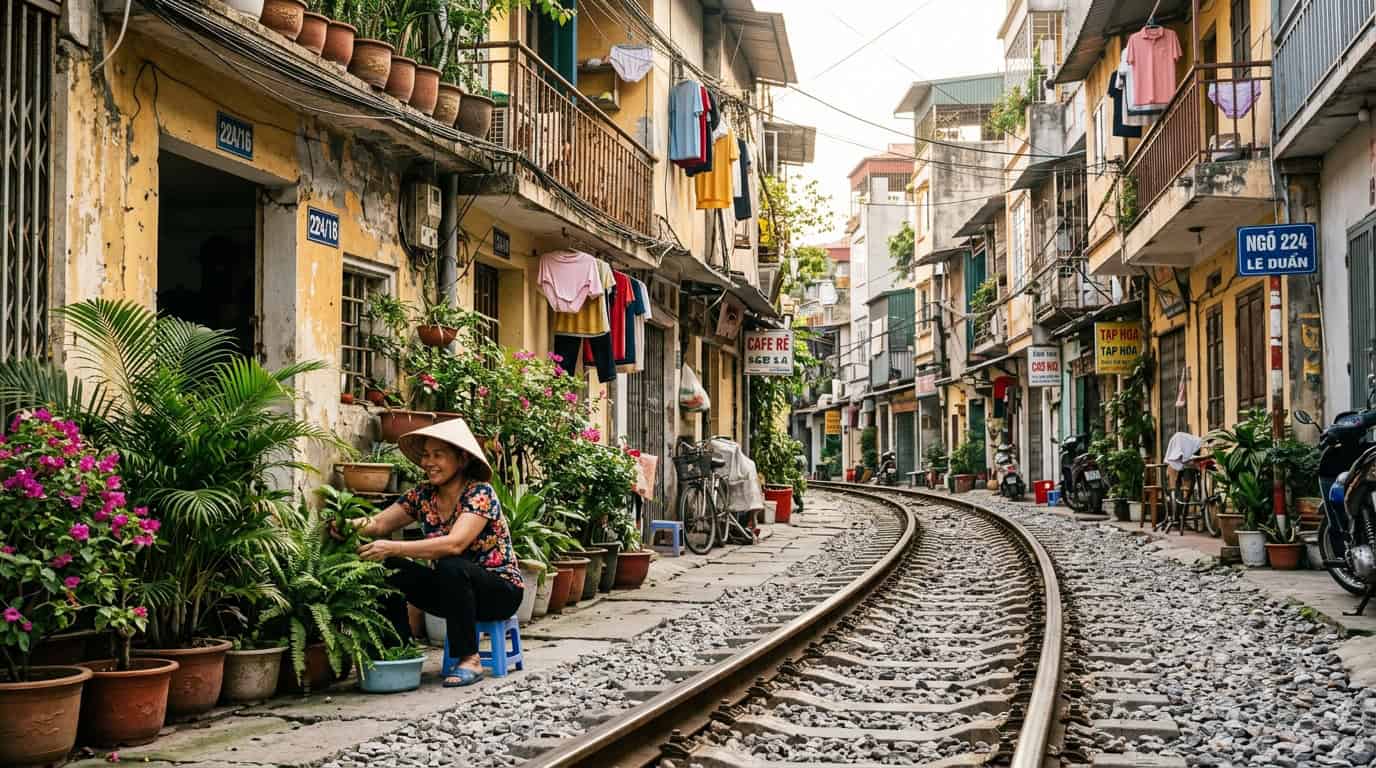
While the northern sections of Train Street are often crowded with guards and barriers, wandering down to the Ngô 224 Lê Duẩn section feels like stepping into a hidden side of Hanoi. Here, the atmosphere shifts from a high-pressure tourist attraction to a genuine local neighborhood where life revolves around the tracks. You will notice children playing near the rails and residents hanging laundry or prepping vegetables just inches from the iron path. This southern stretch offers a more relaxed pace, allowing you to soak in the authentic rhythm of the city without being constantly ushered along by security. It is the perfect spot for those who want to capture the raw, gritty beauty of the tracks while respecting the daily routines of the families who live there.
Walking this section requires a bit more mindfulness since you will not find the same organized cafe escorts or safety barriers found elsewhere. I remember sitting on a low plastic stool, sipping a strong Vietnamese coffee, when the distant rumble of the train began to vibrate through the ground. Because the space is so narrow, you truly feel the power of the locomotive as it brushes past, creating a rush of wind that stirs everything in its wake. It is vital to keep your back pressed firmly against the wall and ensure your camera gear is tucked in close as the cars roar by. This experience is exhilarating and provides a deep appreciation for how the Hanoian spirit adapts to even the most unconventional living conditions.
To make the most of your visit to this authentic corridor, I recommend arriving about thirty minutes before the scheduled train time to find a safe vantage point. Since this area is less commercialized, you can engage in small talk with the locals who are often happy to share a smile or point out the best spot to stand. Be sure to check the latest weekend schedules, as trains pass through more frequently on Saturdays and Sundays, offering more opportunities for that perfect shot. Always remember to leave no trace and be mindful of people’s front doors, as you are essentially a guest in their communal backyard. This section of the tracks remains a highlight for any traveler seeking a blend of adrenaline and cultural immersion.
Essential Safety Tips For Photography Enthusiasts
Capturing the perfect shot at Hanoi Train Street requires a delicate balance between artistic vision and unwavering alertness. As you frame your shot of the vibrant yellow buildings and hanging lanterns, remember that the train is wider than the tracks themselves, leaving very little room for error. I always recommend scouting your position at least fifteen minutes before the scheduled arrival to ensure you have a secure spot within a cafe seating area. Never attempt to stand on the tracks for a last second selfie, as the local guards and cafe owners take safety very seriously and will quickly intervene. By staying behind the designated safety lines, you can focus on adjusting your shutter speed to freeze the motion of the locomotive as it rumbles just inches from your table.
Respecting the local regulations is not just about safety, it is also about preserving the unique lifestyle of the residents who call this narrow corridor home. Since access to the most photogenic sections is currently restricted, you should wait near the barriers until a friendly cafe owner invites you into their establishment. These locals act as your unofficial safety marshals, guiding you to the best vantage points while keeping a watchful eye on the tracks. I found that engaging with the residents and ordering a signature egg coffee creates a much more meaningful experience than squeezing through alleys simply to snap a quick photo and leave. This cooperative approach ensures that tourists can still enjoy the magic of the train street while the city manages the complex logistics of this active transit zone.
To get those professional quality images without risking your gear or your well-being, I suggest using a mid range zoom lens rather than a bulky tripod. The space is incredibly tight, and a tripod can become a tripping hazard for you and the people around you in the rush of the train’s passing. I love focusing on the smaller details, like the way the light hits the tracks or the blurred colors of the train cars against the stationary cafe decor. Always keep your camera strap securely around your neck and avoid leaning out into the path of the train for a better angle. By following these simple guidelines, you will walk away with an incredible gallery of photos that capture the adrenaline and charm of one of the world’s most unique urban settings.
Planning Your Visit Around The Train Schedule
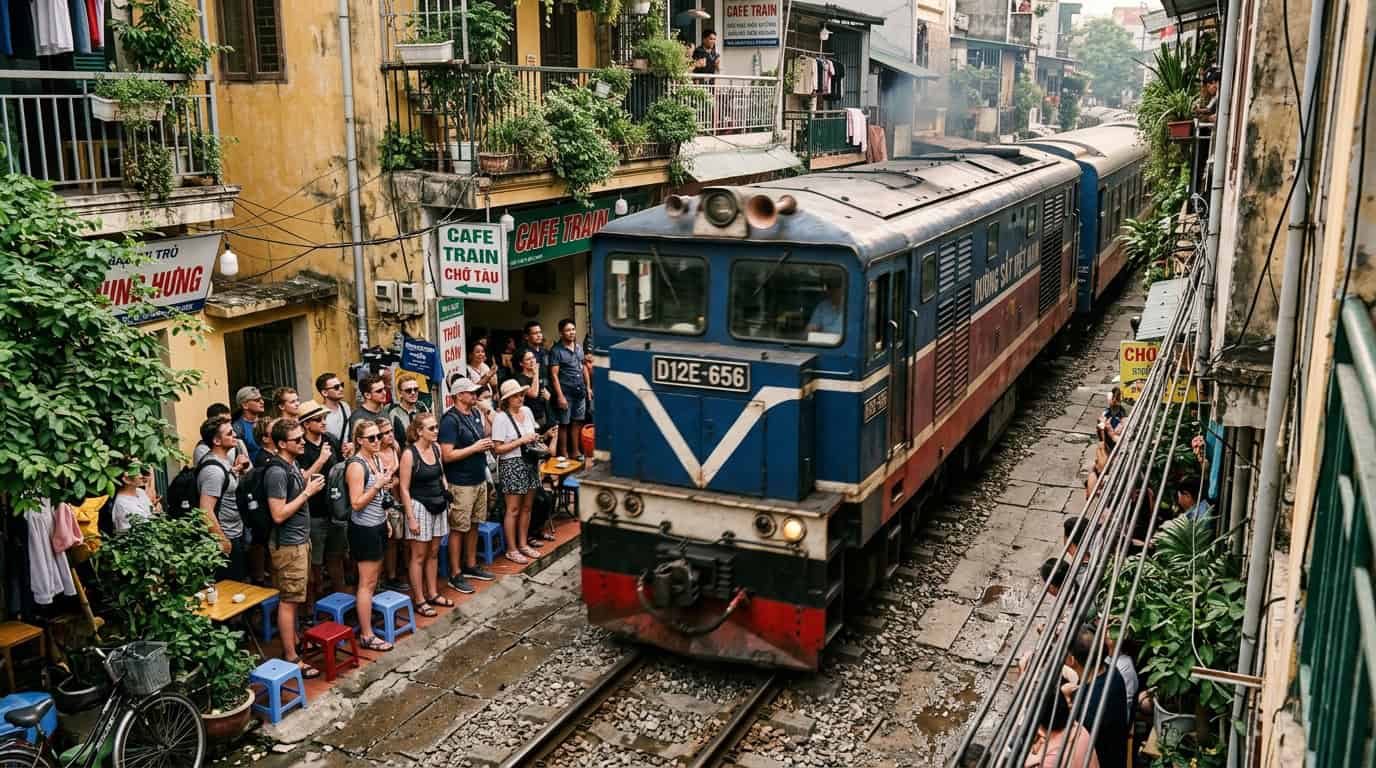
To catch the train in all its glory, timing is everything because the train schedule varies significantly between weekdays and weekends. During the week, the trains typically rumble through in the late evening, usually starting around 7:00 PM, which creates a moody and atmospheric setting under the glow of paper lanterns. On Saturdays and Sundays, the tracks come alive with much more frequency, offering multiple daytime slots that are perfect for those vibrant, sun-drenched photos. I always recommend arriving at least thirty minutes before the scheduled passing to ensure you have plenty of time to meet a local cafe owner and secure a front row seat. These few minutes of anticipation are part of the magic, as you watch the locals quickly clear away small stools and tables to make a clear path for the iron giant.
Once you are settled in with a chilled egg coffee or a fresh fruit juice, the real excitement begins as the distant whistle signals the train’s approach. On a typical weekend, you might see the train pass at 3:15 PM, 5:30 PM, or later in the evening, but it is wise to double check with your cafe host since slight delays are common. The sheer power of the locomotive as it brushes past just inches from your table is a sensory experience unlike any other in Southeast Asia. You will feel the rush of wind and the vibration of the ground beneath your feet while the locomotive’s headlight illuminates the narrow alleyway. It is a brief but breathtaking spectacle that perfectly captures the resilient and vibrant spirit of life in the heart of Hanoi.
Embracing the Magic of Hanoi’s Tracks
Hanoi Train Street is more than just a famous photo opportunity, it is a living testament to the resilience and vibrancy of Vietnamese culture. As I sat on a tiny plastic stool sipping my egg coffee, I realized that the magic of this place lies in the seamless blend of daily life and high stakes adventure. While the future of the tracks remains uncertain with plans to eventually reroute the trains, the current atmosphere is thick with a sense of temporary wonder that you simply cannot find anywhere else. Witnessing the way locals expertly clear their porches for the passing steel giant is a lesson in adaptability that has stayed with me long after leaving the city.
The strict regulations and guided access might seem daunting at first, but they actually preserve the intimate and safe experience that makes this destination so special. Supporting the local cafe owners ensures that this unique community continues to thrive even as the city evolves around them. I truly believe that standing inches away from a moving locomotive while the scent of street food wafts through the air is a bucket list experience that defines the spirit of Hanoi. If you have the chance to visit before the tracks fall silent, take the opportunity to immerse yourself in this beautiful, clattering chaos.
Planning your visit now is essential because the environment of Train Street is shifting toward a more modern and structured future. You should prioritize the Phung Hung section for that classic narrow alley feel, but remember to arrive early to secure a prime spot at a balcony cafe. This destination serves as a powerful reminder that travel is about finding beauty in the most unexpected and narrow of places. My final piece of advice is to put the camera down for a moment when the train finally roars past, allowing yourself to fully feel the rumble of history beneath your feet. For those looking to transition from the city’s bustle to the sea, finding the perfect voyage is the next logical step in a northern Vietnam itinerary.
Frequently Asked Questions
1. Is Hanoi Train Street currently open to tourists?
While the tracks are technically closed to independent explorers and guarded by metal barriers, you can still enter by visiting a local cafe. A cafe owner will meet you at the checkpoint and escort you to their establishment, turning your drink order into a personal pass to experience the street safely.
2. How do I get past the security guards and barriers?
The secret is to make eye contact with the friendly cafe owners standing near the Phung Hung entrance. Once you agree to buy a coffee or beer at their shop, they will lead you past the guards and into the vibrant world behind the barriers. It is a seamless process based on local hospitality that ensures everyone stays safe while supporting the community.
3. Where is the best place to watch the train pass?
The Phung Hung section in the Old Quarter offers the most iconic atmosphere, where the tracks are lined with multi-story cafes and colorful lanterns. I recommend heading to a second-story balcony for an incredible bird’s-eye view of the locomotive as it brushes past the buildings. It provides a unique perspective of the train’s massive scale against the narrow corridor.
4. What should I do when the train is actually approaching?
Safety is the top priority, so you must follow your cafe owner’s instructions and move behind the designated safety lines immediately. Stand flat against the wall or stay tucked inside the cafe seating area as the steel wheels screech by just inches away. Never attempt to step onto the tracks for a photo once the warning signal has sounded.
5. What is the best time of day to visit Train Street?
You should plan your visit around the official train schedule, which typically features more frequent passages during weekend evenings. Arrive at least thirty minutes early to secure a good seat at a cafe and enjoy a bold Vietnamese coffee before the adrenaline rush begins. The evening sessions are particularly magical as the lanterns light up the narrow alleyway.
6. Do I need to pay an entrance fee to access the tracks?
There is no official entrance fee to visit the street, but you are expected to purchase a drink or snack from the cafe owner who escorts you inside. This small investment supports the local families living along the line and grants you a front-row seat to one of the most thrilling sights in Southeast Asia. For those continuing their journey north, the ultimate Ha Giang Loop guide offers even more ways to explore the rugged beauty of the region. After exploring the city, many travelers head to the mountains using the ultimate Sapa trekking guide to find the best mountain trails. It is a fair trade for such an intimate and unforgettable travel experience.