
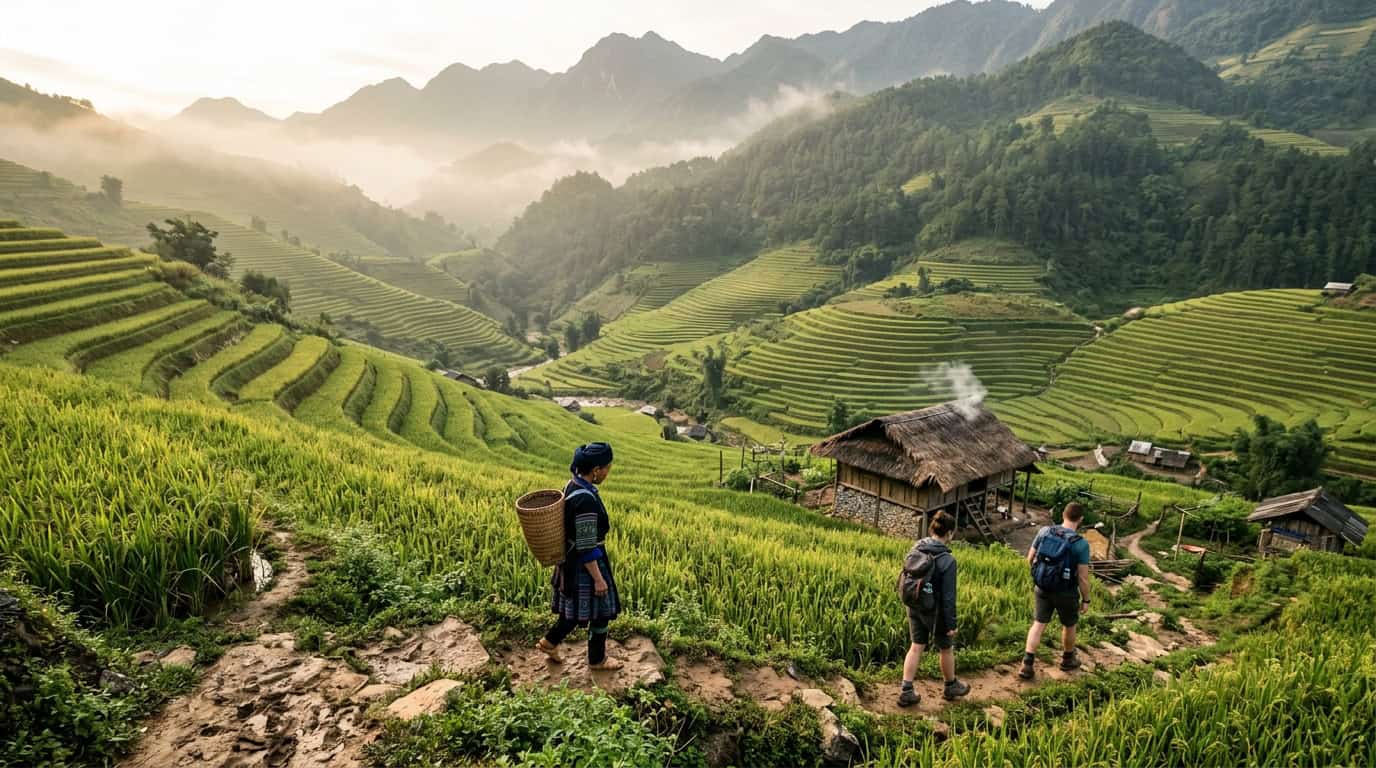
There is a specific kind of magic that happens when the morning mist peels back to reveal Sapa’s emerald-green terraced rice fields cascading down the Muong Hoa Valley. I still remember the rhythmic sound of my boots hitting the mountain trails as local Hmong and Red Dao women shared stories of their ancestral heritage, turning a simple hike into a profound cultural connection. Whether you are chasing the summit of Fansipan or wandering through the query beauty of Ta Phin, this sapa trekking guide is designed to help you navigate the region’s evolving community-led tourism.
Today, the trails offer more than just breathtaking views; they provide a direct way to support the ethnic minority groups who have curated these landscapes for centuries. From navigating the 15-kilometer descent into the valley to choosing the perfect homestay under a starlit sky, planning your journey requires a balance of physical preparation and cultural respect. You’ll find that the true heart of Northern Vietnam isn’t found in the town center, but in the steep climbs and warm tea shared with new friends in the villages below.
Key Takeaways
- Prioritize community-led trekking tours and homestays to ensure tourism revenue directly supports the Hmong, Red Dao, and Giay ethnic minority groups who maintain the landscape.
- Prepare for unpredictable mountain weather and slippery terraced terrain by packing high-quality waterproof hiking boots, versatile layers, and a lightweight rain shell.
- Engage in slow, intentional travel by staying overnight in traditional village stilt houses to experience authentic cultural rituals like Red Dao herbal baths and communal family dinners.
- Plan your visit between May and September for vibrant emerald-green rice terraces, or late September for the golden harvest season.
Navigating The Iconic Muong Hoa Valley Trails
Descending into the Muong Hoa Valley feels like stepping into a living watercolor painting where the emerald terraces seem more vibrant than ever. As I walked the winding paths through Y Linh Ho, I was struck by the rhythmic sound of the Muong Hoa River rushing alongside the trail. The descent is moderately challenging, but the reward is a front row seat to the intricate irrigation systems that have sustained the Hmong people for generations. I found that slowing my pace allowed me to truly appreciate the craftsmanship of the stone walls and the delicate balance of the hillside ecosystems. It is a place where time feels secondary to the natural beauty of the cascading landscape.
Walking into Ta Van village, the atmosphere shifts from the rugged solitude of the mountains to the warm, communal energy of the Giay people. During my last visit, I spent an afternoon at a local homestay where the scent of woodsmoke and steamed rice filled the air, offering a glimpse into a lifestyle rooted in tradition. The community led tourism model here ensures that your presence directly supports local artisans and families, making every interaction feel meaningful and authentic. I highly recommend taking a moment to sit by the river with a local guide to hear stories about the valley’s history. These personal connections are what transform a simple hike into a deeply immersive cultural journey.
To make the most of this iconic route, I suggest starting your trek early in the morning to catch the mist clinging to the peaks before the midday sun hits the valley floor. The path between Y Linh Ho and Ta Van covers about 12 kilometers, so wearing sturdy boots with good grip is essential for the muddy sections. I always pack a light raincoat and plenty of water, as the unpredictable mountain weather in the Hoang Lien National Park can change in an instant. Most importantly, remember to bring small bills for the village entry fees, which contribute to the ongoing development of these heritage sites. Planning for a two day trek with an overnight stay allows you to witness the valley in the soft light of dawn, a sight you will never forget.
Immersive Homestays And Red Dao Cultural Traditions
To truly understand the rhythm of life in the Sapa valley, you must leave the bustling town behind and spend a night in a traditional stilt house. As I trekked along the Ta Phin Loop, the mist cleared to reveal the vibrant red headscarves of the Red Dao women who lead the way with incredible grace. Arriving at a local family home feels less like a transaction and more like an invitation into a centuries old way of life. We spent the afternoon preparing vegetables from the garden and learning about the intricate embroidery that defines their cultural identity. There is something deeply grounding about sitting on a low wooden stool, surrounded by the scent of woodsmoke and the sound of distant mountain streams.
Dinner is the heart of the homestay experience, where the communal table becomes a bridge between different worlds. I fondly remember passing around bowls of steaming mountain rice and locally sourced greens while our hosts shared stories of their ancestors through a translator. The atmosphere is always lively, often punctuated by the traditional offering of corn wine, which the locals playfully call happy water. These shared meals are where the most profound connections happen, turning a simple hiking trip into a meaningful cultural exchange. By the time the lanterns are dimmed, you feel like a guest of the family rather than just another traveler passing through the terraced hills.
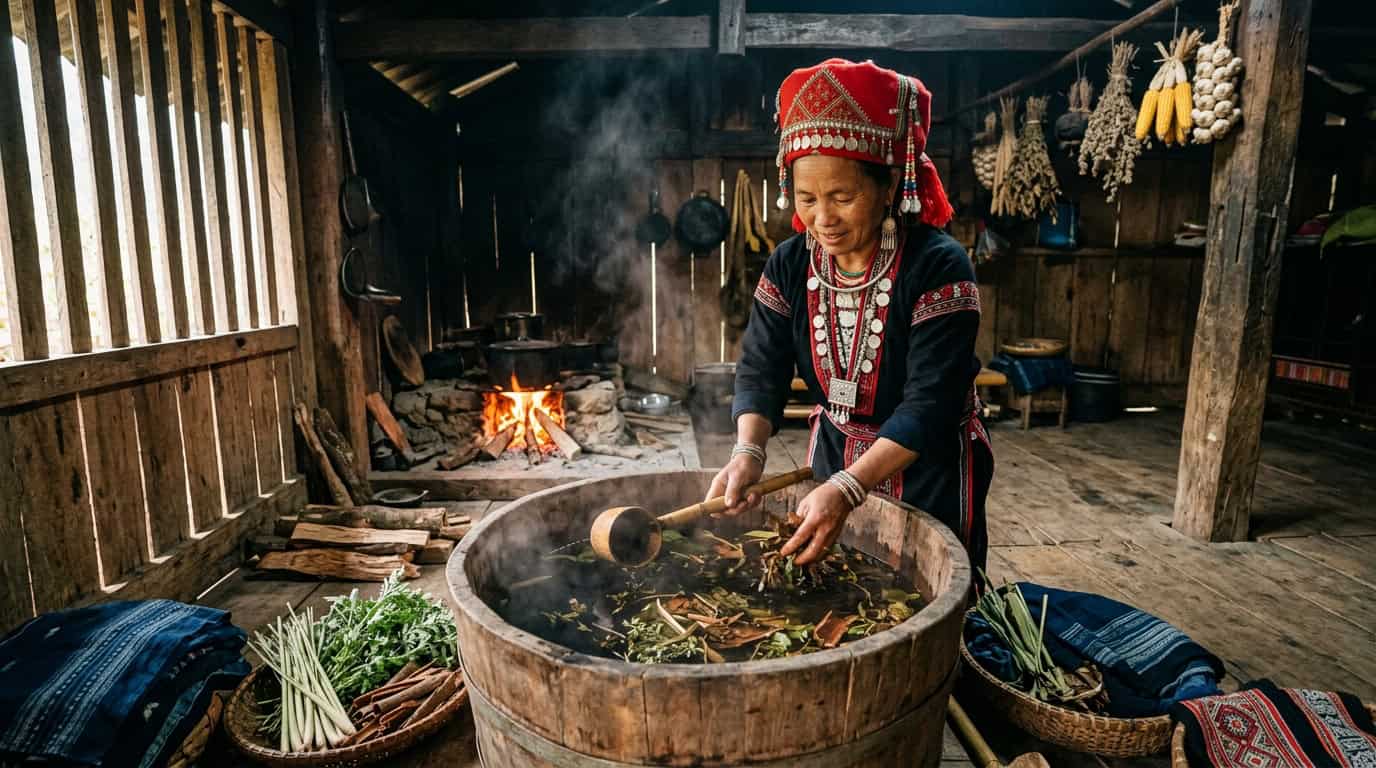
Before heading to bed, there is no better ritual than soaking in a traditional Red Dao herbal baths. I watched as my host boiled a massive cauldron of forest leaves, bark, and medicinal herbs, creating a fragrant, wine colored brew that filled the room with steam. Stepping into the deep wooden tub, the warmth immediately soothed my aching muscles after a long day of walking the steep rice terraces. It is a sensory experience that feels both ancient and deeply restorative, perfectly capping off a day of immersive travel. Waking up the next morning to the sound of roosters and the sight of clouds rolling through the valley, I realized that these quiet moments are the true soul of Northern Vietnam.
Essential Gear And Ethical Trekking Logistics
Preparing for the muddy slopes of Sapa requires a balance of practical gear and a mindset geared toward slow, intentional travel. I always recommend packing high quality waterproof hiking boots with deep lugs, as the terraced trails can become incredibly slick after a mountain mist. Layering is your best friend in this high altitude climate because the temperature often swings from chilly mornings to humid afternoons in a matter of minutes. Don’t forget to bring a lightweight rain shell and reusable dry bags to protect your camera and electronics from unexpected downpours. Carrying a reusable water bottle and biodegradable toiletries ensures you leave a minimal footprint while staying at local homestays.
Navigating the logistics of village entry fees is a small but vital part of supporting the local economy. You will find that fees for popular spots like Cat Cat Village or the Hoang Lien National Park are quite modest, typically ranging from three to seven dollars. These contributions are essential for community development and maintaining the very paths we walk upon. I found that the most rewarding experiences come from hiring community led guides who belong to the ethnic minority groups. These local experts offer a deep cultural perspective that you simply cannot get from a map, sharing stories of their ancestors while guiding you through the secret corners of the valley.
Choosing an ethical trekking model means prioritizing authentic connections over quick photo opportunities. When I stayed in a traditional Giay homestay, the small fee I paid felt like a meaningful investment in the family’s future rather than just a transaction. It is important to book through cooperatives that ensure a fair wage goes directly to the guides and their villages. This approach transforms your journey from a simple hike into a shared experience that respects the heritage of the northern highlands. By planning ahead and packing thoughtfully, you can focus on the breathtaking beauty of the rice fields and the incredible warmth of the people who call them home.
A Three Day Sapa Trekking Itinerary
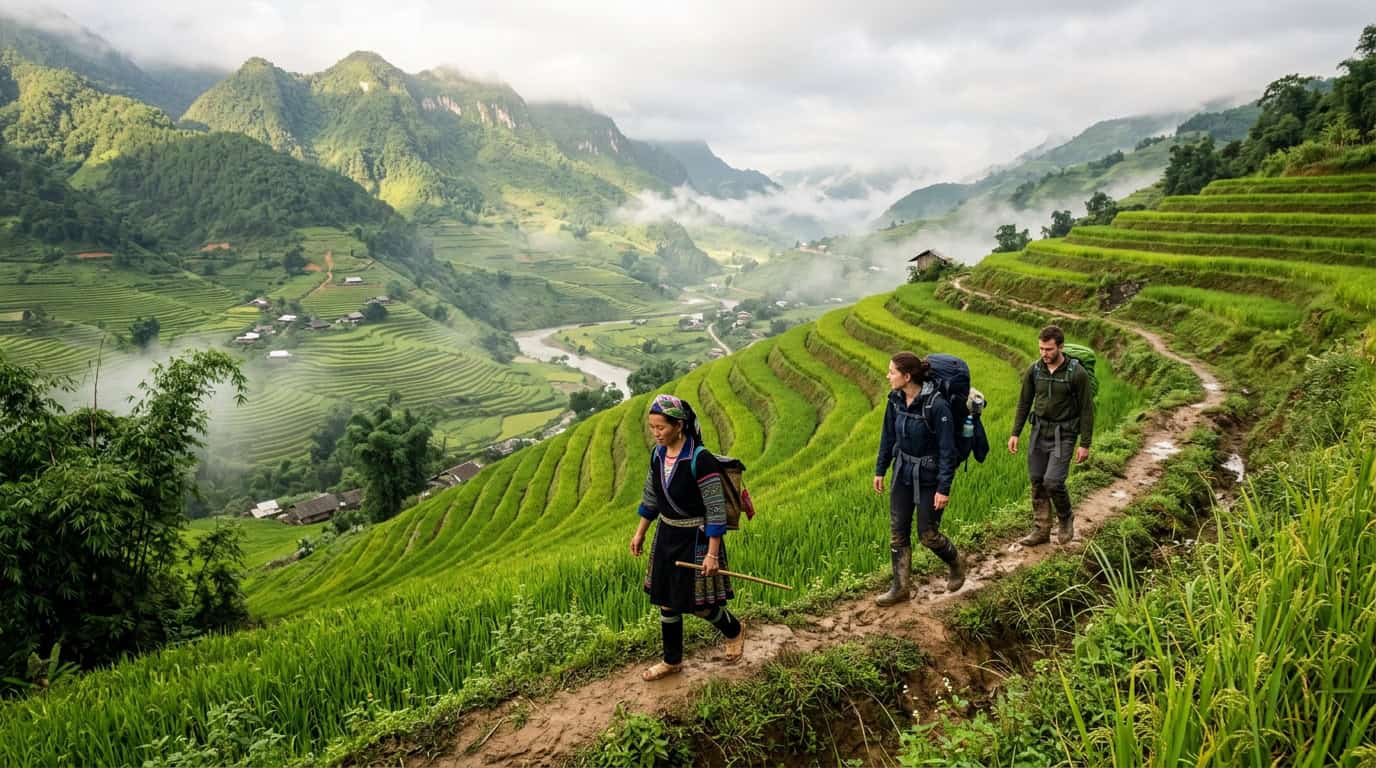
Your three day journey begins with a descent into the lush Muong Hoa Valley, starting with the misty waterfalls of Cat Cat village before pushing deeper into the terraced heartland. On day one, you will walk the winding paths to Y Linh Ho and Lao Chai, where the Black Hmong community maintains their traditional way of life amidst emerald fields. I recommend spending your first night in a local homestay in Ta Van to experience the genuine hospitality of the Giay people. Sitting around a communal table for a family dinner is the perfect way to transition into the slow pace of mountain life.
The second day takes you further off the beaten path as you trek toward the Red Dao village of Giang Ta Chai and eventually into the quieter Nam Tong area. This stretch of the trail offers some of the most breathtaking views of the Hoang Lien Son range, far away from the day-tripping crowds of the town center. You will cross bamboo forests and suspension bridges, eventually arriving in the remote valley of Ban Ho for your second night. This area is famous for its natural hot springs and refreshing swimming spots, which are a godsend for tired muscles after a long day of hiking.
On your final day, wake up to the sound of the river and enjoy a slow breakfast before exploring the hidden waterfalls near the village. The Ban Ho route is special because it showcases a much more tropical side of Sapa, with lush vegetation and warmer temperatures than the higher elevations. After a final dip in the cool mountain water, you will begin the steady climb back toward the transport links that return you to Sapa town. This itinerary ensures you see the iconic landmarks while also finding the solitude that makes a trekking adventure so transformative.
The true magic of Sapa is not found in the speed of the hike, but in the quiet moments shared with your hosts and the rhythmic beauty of the surroundings. Embracing slow travel allows you to see the intricate details of the rice terraces and understand the deep connection the local communities have with their land. As you prepare for your own mountain adventure, remember to pack an open heart alongside your hiking boots. The mountains have a way of changing your perspective if you are willing to listen to their stories and walk their ancient paths.
Embrace the Heart of Sapa’s Highlands
Trekking through the misty valleys of Sapa is more than just a physical challenge, as it offers a profound connection to the rhythmic heartbeat of the northern highlands. I still remember the warmth of the fire during my first homestay in a Giay village, where the scent of woodsmoke and shared laughter made the miles of steep climbing feel entirely worth it. By choosing community-led paths, you are not just seeing the famous terraced rice fields but actively supporting the cultural heritage of the Hmong and Red Dao people. These immersive experiences transform a simple hike into a lifelong memory of slow travel and genuine human connection.
To make the most of your journey, remember that the true magic lies in the details of the trail and the hospitality of your local hosts. Whether you are navigating the 15 kilometer trek through Hoang Lien National Park or sharing a traditional meal in a stilt house, being prepared with sturdy boots and an open heart is essential. Much like exploring the best Laos trekking routes, the small entry fees you pay at villages like Cat Cat or Ta Phin contribute directly to local development, ensuring these stunning landscapes remain vibrant for years to come. After your mountain trek, you might consider heading to the coast for a perfect Ha Long Bay cruise to experience Vietnam’s diverse natural beauty from a different perspective. As you plan your Luzon highland itinerary, prioritize the quiet moments between the peaks to truly appreciate the soul of this incredible region.
Frequently Asked Questions
1. When is the best time to see the emerald green rice terraces in Sapa?
To witness the valley at its most vibrant, plan your trek between May and September when the rice is growing and the terraces are a brilliant green. If you prefer the golden harvest hues, visit in late September or early October before the fields are cleared for the season.
2. How difficult is the descent into the Muong Hoa Valley?
The 15 kilometer trek through Y Linh Ho and Ta Van is moderately challenging with some steep, winding paths that can become slippery after rain. I recommend wearing sturdy hiking boots with good grip to safely navigate the rocky terrain and muddy slopes.
3. Why should I choose a community led trekking tour?
Booking a local Hmong or Red Dao guide ensures your tourism dollars directly support the ethnic minority groups who have maintained these landscapes for centuries. These guides offer a profound cultural connection by sharing ancestral stories and personal heritage that you simply won’t find on a solo hike.
4. What should I expect when staying in a village homestay?
Expect a warm, authentic experience that includes sharing tea and home cooked meals with local families under a starlit sky. While the accommodations are often simple, the opportunity to build friendships and learn about village life away from the town center is the true heart of the journey.
5. Is it possible to trek to the summit of Fansipan?
Yes, you can challenge yourself with a guided climb to the peak of Fansipan, which is the highest mountain in Indochina. It is a physically demanding ascent that requires good fitness, but the breathtaking views from the top make every steep climb worth the effort.
6. What essentials should I pack for a multi day Sapa trek?
Pack lightweight layers to handle the shifting mountain mists and a reliable waterproof jacket for sudden rain showers. Do not forget to bring reusable water bottles and a small first aid kit to stay hydrated and prepared while exploring the remote trails of Ta Phin.