

Standing at the base of these towering sandstone pillars, the sheer scale of the surroundings makes me feel like I have stepped into a forgotten world. While most visitors view the summits from the window of a tour bus, I have found that meteora monastery hiking is the only way to truly feel the spiritual pulse of this ancient site. There is a profound sense of peace that comes from treading on the same 40 km of winding monastic trails that monks have used for centuries, far away from the hum of engines and the chatter of crowds.
As I walk the stone-carved paths, the scent of wild herbs fills the air and hidden hermitages reveal themselves in the cliffside shadows. You will need a bit of stamina for the final ascent, as some monasteries require climbing over 300 stone steps, but the panoramic views of the Pindus Mountains are worth every drop of sweat. With entrance fees now at €5 per site, planning your route is more important than ever to ensure you catch the best light and the quietest moments at these UNESCO-protected wonders.
Key Takeaways
- Hiking the 40 kilometers of ancient monastic trails is the only way to escape the crowds and experience the true spiritual atmosphere and hidden hermitages of Meteora.
- Visitors must prepare for physical challenges, including steep ascents of up to 300 stone steps and a 500-meter elevation gain to reach the most iconic summits.
- Entry to each of the six active monasteries requires a 5 Euro cash-only fee and strict adherence to a modest dress code covering shoulders and legs.
- Essential gear for the rugged Greek terrain includes sturdy hiking boots with excellent grip, at least two liters of water, and offline maps to navigate the dense forest paths.
Scaling The Rock Forest From Kalambaka To Holy Trinity
Stepping out from the northern edge of Kalambaka, the paved streets quickly give way to the rugged, ancient paths that have guided monks for centuries. This specific trail toward the Holy Trinity monastery is a physical testament to the region’s spiritual history, offering an active alternative to the crowded tour buses. As I ascend through the dense forest of towering conglomerate rocks, the silence is broken only by the crunch of gravel beneath my boots. The incline is steady but manageable for anyone with a moderate level of fitness, providing a sense of solitude that you simply cannot find from a car window. It is a transformative experience to witness these geological giants up close, feeling the sheer scale of the stone pillars as they block out the sun.
The real challenge begins at the base of the pinnacle, where you must conquer the famous 140 stone steps carved directly into the rock face. While your legs might burn during the steep climb, the adrenaline of the ascent keeps you moving toward the summit. Reaching the top feels like entering a different realm, as the Holy Trinity monastery reveals itself against a backdrop of endless blue sky. Looking back down toward the valley, the red roofs of Kalambaka look like miniature toys nestled at the feet of the giants you just scaled. The panoramic views from this vantage point are perhaps the most iconic in all of Meteora, rewarding your physical effort with a perfect photographic composition.
Before you enter the sacred grounds, remember to have your five euro entrance fee ready in cash and ensure your attire follows the traditional modesty requirements. Standing on the edge of the monastery cliffs, you can see the intricate network of trails winding through the valley below, connecting the hidden hermitages of the past. It is worth spending a few quiet moments here to appreciate the architectural marvel of a structure built in such an inaccessible location. This trek is not just about the destination, but about the profound connection you feel to the earth and history with every step. After soaking in the spiritual atmosphere and the sweeping vistas, the descent back to town offers a fresh perspective on the rock forest you have just mastered.
Hidden Cave Hermitages And The Secret Ypapanti Trail

To truly escape the hum of tour buses and the sea of crowds, you have to venture deep into the forest where the ancient paths belong only to hikers and history. I remember stepping off the paved road and feeling the immediate shift in atmosphere as the towering sandstone pillars began to swallow the sound of the modern world. This specific trek leads you toward the northern side of the rocks, revealing a side of Meteora that most travelers never witness from a car window. You will find yourself surrounded by lush greenery and jagged cliffs, following a trail that feels as though it was carved by the monks themselves centuries ago. It is the perfect blend of physical challenge and spiritual stillness that makes this region so unique.
The highlight of this hidden route is undoubtedly the Ypapanti Monastery, a stunning structure built directly into a massive cliffside cavern that seems to defy gravity. Unlike the six main monasteries, this site is often closed to the interior but remains a masterpiece of Byzantine architecture to admire from the exterior. Standing at the base of these vertical walls, I felt incredibly small against the backdrop of the dark stone and the white facade of the hermitage. These secluded spots offer some of the most dramatic photography opportunities in all of Greece, especially since you rarely have to share the view with anyone else. It is a powerful reminder of the extreme lengths the early hermits went to in their search for solitude and divine connection.
Navigating the Secret Ypapanti Trail requires a bit of focus, as the path winds through dense woods and rocky clearings that can occasionally feel like a labyrinth. I recommend starting your journey from the village of Kastraki and heading north, keeping an eye out for the small trail markers that lead away from the Great Meteoron. The elevation gain is manageable for anyone with moderate fitness, but you should definitely wear sturdy boots to handle the uneven terrain and loose stones. Make sure to pack plenty of water and a few snacks, as there are no kiosks or cafes once you commit to this rugged section of the park. Reaching these hidden cave hermitages is a rewarding experience that turns a standard sightseeing trip into a true mountain adventure.
Essential Gear And Practical Tips For Monastic Trails
Before you lace up your boots to conquer the ancient stone paths, remember that these trails are more than just a workout; they are a bridge to a deeply spiritual world. To respect the monks and nuns who call these cliffs home, you must adhere to a modest dress code that requires covered shoulders and long skirts or trousers. I always recommend packing a lightweight wrap or zip-off pants in your daypack so you can transition from a sweaty hike to a respectful visitor in seconds. Most monasteries offer wrap-around skirts at the entrance, but having your own gear ensures you are always prepared for an impromptu visit to a hidden hermitage.
The logistical side of your trek requires a bit of foresight, especially with the recent fee adjustments. Each of the six active monasteries now charges a 5 Euro entrance fee, and unlike the modern shops in Kalambaka, these sacred sites remain strictly cash-only environments. I found that carrying a dedicated pouch with small bills and coins saved me a lot of stress when reaching the top of a grueling 300-step ascent. Since a full circuit can easily cost 30 Euro in entry fees alone, double-checking your wallet before leaving your hotel is the most important step of your morning routine.
Beyond your wallet, your gear should prioritize stability and sun protection to handle the unique Greek terrain. The trails are a mix of soft forest floors and jagged conglomerate rock, so sturdy hiking shoes with excellent grip are essential for navigating the steeper sections safely. I also suggest carrying at least two liters of water and a high-quality camera to capture the perspective-shifting views that tour bus passengers never get to see. While the 40 kilometers of trails are well-marked, downloading an offline map will give you the confidence to explore the quieter, shadowed paths where the true magic of the pillars resides.
A Sunset Scramble To The Great Saint Summit
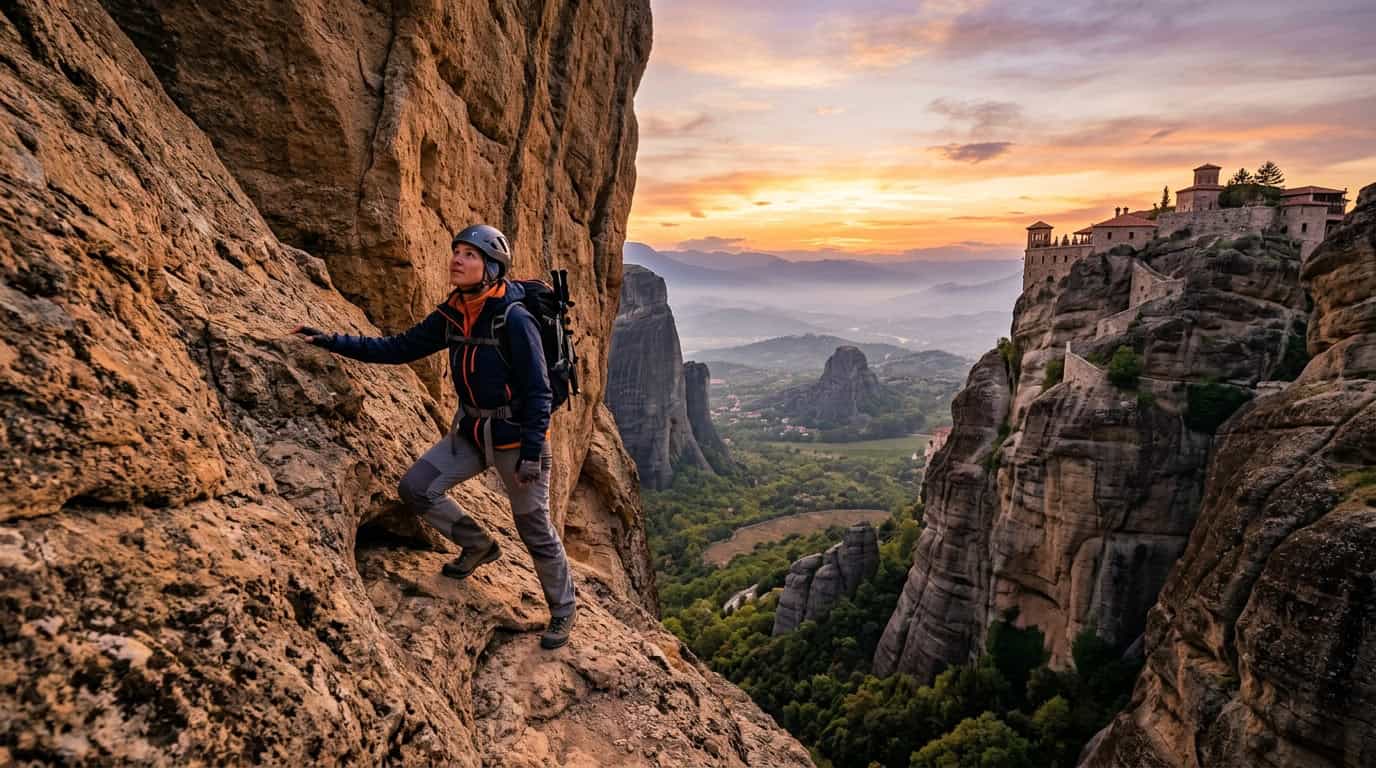
For those seeking the ultimate bird’s eye view of this geological marvel, the scramble to the Great Saint summit is an absolute must. Standing at 630 meters, this is the highest point in the entire Meteora complex and offers a perspective that most tourists never see from their bus windows. The trail begins near the old town of Kalambaka and quickly transitions from a gentle path into a more rugged, vertical ascent. You will feel your heart rate climb as you navigate the ancient rock, but the sense of isolation from the crowds makes every step worth the effort. It is a physical challenge that rewards you with a profound connection to the spiritual landscape.
Timing your arrival for the golden hour is the secret to capturing the most breathtaking photography of your trip. As the sun begins to dip toward the horizon, the sandstone pillars glow with a deep orange hue that seems almost otherworldly. From this vantage point, you can see several monasteries perched precariously on their cliffs, silhouetted against the fading light. I recommend bringing a lightweight tripod and a warm layer, as the wind picks up once the sun disappears. There is a quiet magic in watching the shadows stretch across the valley while the distant bells of the monasteries echo below.
To make the most of this itinerary, plan to start your ascent roughly ninety minutes before the official sunset time. This allows you to navigate the steeper sections of the scramble while you still have full visibility and gives you plenty of time to find the perfect ledge for your camera gear. While the path is manageable for those with reasonable fitness, be sure to wear sturdy hiking boots with excellent grip for the rocky sections. Once the sky turns to shades of violet and crimson, you will understand why this specific summit is considered the crown jewel of the region. It is the perfect way to conclude a day of exploration before heading back down to the village for a well earned Greek dinner.
Walking the Path of the Monks
Stepping onto these ancient monastic trails offers a profound sense of connection that simply cannot be replicated from the window of a tour bus. As I navigated the winding paths between the towering sandstone pillars, the physical challenge of the 500 meter elevation gain quickly faded into the background, replaced by a deep sense of awe. Reaching the Holy Trinity monastery after a steady climb felt like a true pilgrimage, especially as I tackled those final stone steps. There is a specific kind of magic in the silence of the woods that makes the spiritual history of this UNESCO site feel alive. You will find that the rhythmic pace of your own footsteps provides the perfect backdrop for quiet contemplation before you reach the vibrant frescoes waiting at the top.
While the Greek islands often steal the spotlight, the rugged beauty of the mainland offers an entirely different kind of adventure for those willing to lace up their boots. Hiking The Sky Pillars of Meteora allows you to discover hidden hermitages and dramatic viewpoints that remain tucked away from the typical tourist track. Remember to carry cash for the five euro entrance fees and dress respectfully for your visits to these sacred spaces. This journey is about more than just checking a destination off your bucket list, it is about the rewarding blend of physical exertion and visual wonder. I encourage you to take the leap and experience this geological masterpiece on foot, where every turn reveals a new perspective on Greece’s incredible heritage. If you enjoy these rugged limestone peaks, you will find that the vertical world of Meteora offers a similarly breathtaking experience.
Frequently Asked Questions
1. Is hiking to the monasteries better than taking a tour bus?
Hiking is the only way to truly feel the spiritual pulse of this ancient landscape. By treading the 40 km of monastic trails, you escape the hum of engines and discover hidden hermitages that remain invisible from the road.
2. How much does it cost to enter the monasteries?
Each monastery currently requires an entrance fee of 5 Euro per person. I recommend planning your route carefully to ensure you visit your priority sites during the best light and avoid unnecessary costs.
3. What is the difficulty level of the trail from Kalambaka to Holy Trinity?
The incline is steady and manageable for anyone with a moderate level of fitness. While the forest path is peaceful, the real challenge is the final ascent of 140 stone steps carved directly into the cliff face.
4. What should I pack for a day of hiking in Meteora?
Sturdy hiking boots are essential for navigating the gravel paths and stone-carved stairs. You should also bring plenty of water and a camera to capture the panoramic views of the Pindus Mountains from the summits.
5. Are the hiking trails well-marked and easy to follow?
The ancient paths follow the same routes used by monks for centuries and are generally easy to navigate. Starting from the northern edge of Kalambaka, the paved streets transition into rugged trails that guide you directly toward the rock pillars.
6. Can I see more than one monastery in a single hiking trip?
Yes, you can connect several sites by following the winding network of trails through the rock forest. Just be sure to check the opening hours for each specific monastery, as they vary throughout the week.