
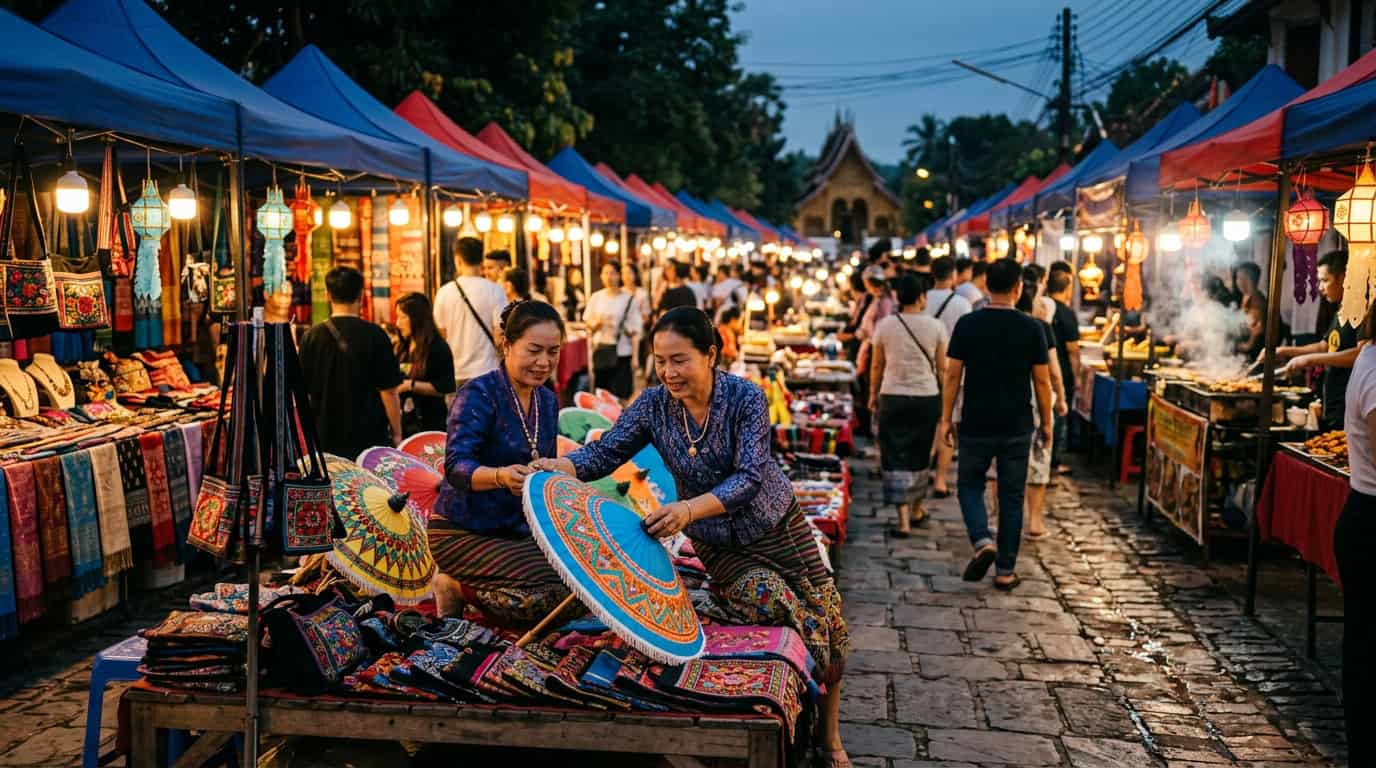
As the sun dips behind the golden spires of the ancient temples, Sisavangvong Road transforms into a sea of glowing red and blue silk tents known as the luang prabang night market. I remember the first time I stepped onto this street; the air was thick with the scent of lemongrass and grilled spices, immediately pulling me into a world of vibrant color and local craftsmanship. Now, with the town seeing a historic resurgence in energy, the market feels more alive than ever, offering a soulful connection to the heart of Lao culture.
You’ll find yourself wandering past hundreds of local artisans who spread out intricate indigo-dyed fabrics and hand-carved silver jewelry that tell stories of the Hmong and Lao Loum traditions. It’s the perfect place to lose track of time, whether you’re hunting for recycled bomb metal cutlery or ducking into the hidden food alleys for a bowl of steaming khao piak sen. To make the most of your evening, arrive around 5:00 PM just as the road closes to traffic, giving you the best chance to chat with the vendors before the peak crowds arrive.
Key Takeaways
- The Luang Prabang Night Market is a premier destination for authentic Hmong and Lao Loum craftsmanship, featuring traditional indigo-dyed textiles, hand-carved silver, and jewelry upcycled from recycled bomb metal.
- Arrive at the market by 5:00 PM to engage with artisans and browse the stalls before the peak crowds arrive at 7:00 PM, ensuring a more peaceful and culturally immersive experience.
- The market’s dedicated food alleys offer essential culinary experiences, such as traditional khao piak sen noodle soup and communal vegetarian buffets that showcase authentic Lao flavors.
- Approach commerce with cultural respect by using a gentle smile and fair bartering techniques, as these handmade goods represent significant labor and the livelihoods of local hill tribe communities.
Handcrafted Treasures From Hmong And Lao Artisans
As the sun dips below the horizon and the street lights flicker to life along Sisavangvong Road, the night market transforms into a sea of red and blue tents filled with extraordinary artistry. I found myself immediately drawn to the deep, earthy scent of indigo-dyed fabrics, where Hmong artisans proudly display intricate embroidery and hand-woven patterns. Each piece tells a story of heritage, with geometric designs passed down through generations that feel both ancient and remarkably modern. It is a sensory delight to run your hands over the textured hemp and silk, knowing that these vibrant textiles were crafted using traditional techniques right in the surrounding hills.
One of the most moving experiences I had while browsing was discovering the unique cutlery and jewelry forged from recycled bomb metal. It is truly inspiring to see how local craftsmen have reclaimed tragic remnants of the past, transforming scrap metal from the Secret War into beautiful spoons, bracelets, and ornaments. Holding a polished silver ring or a rustic bottle opener in your hand serves as a powerful reminder of the resilience and creativity of the Lao people. These items are more than just souvenirs, as they represent a commitment to peace and a clever way to support the local economy through sustainable upcycling.
Walking through the heart of this UNESCO World Heritage town, you can feel the pulse of the community in every handmade bamboo basket and delicate silver chain. I recommend taking your time to chat with the vendors, as many are the very same people who spent weeks meticulously crafting the items on their stalls. Whether you are looking for a statement piece of jewelry or a cozy hand-stitched blanket, the quality of work here far surpasses typical tourist trinkets. It is a place where you can truly connect with the cultural heart of Luang Prabang while finding a one of a kind treasure to take home.
Savory Secrets Of The Luang Prabang Food Alley
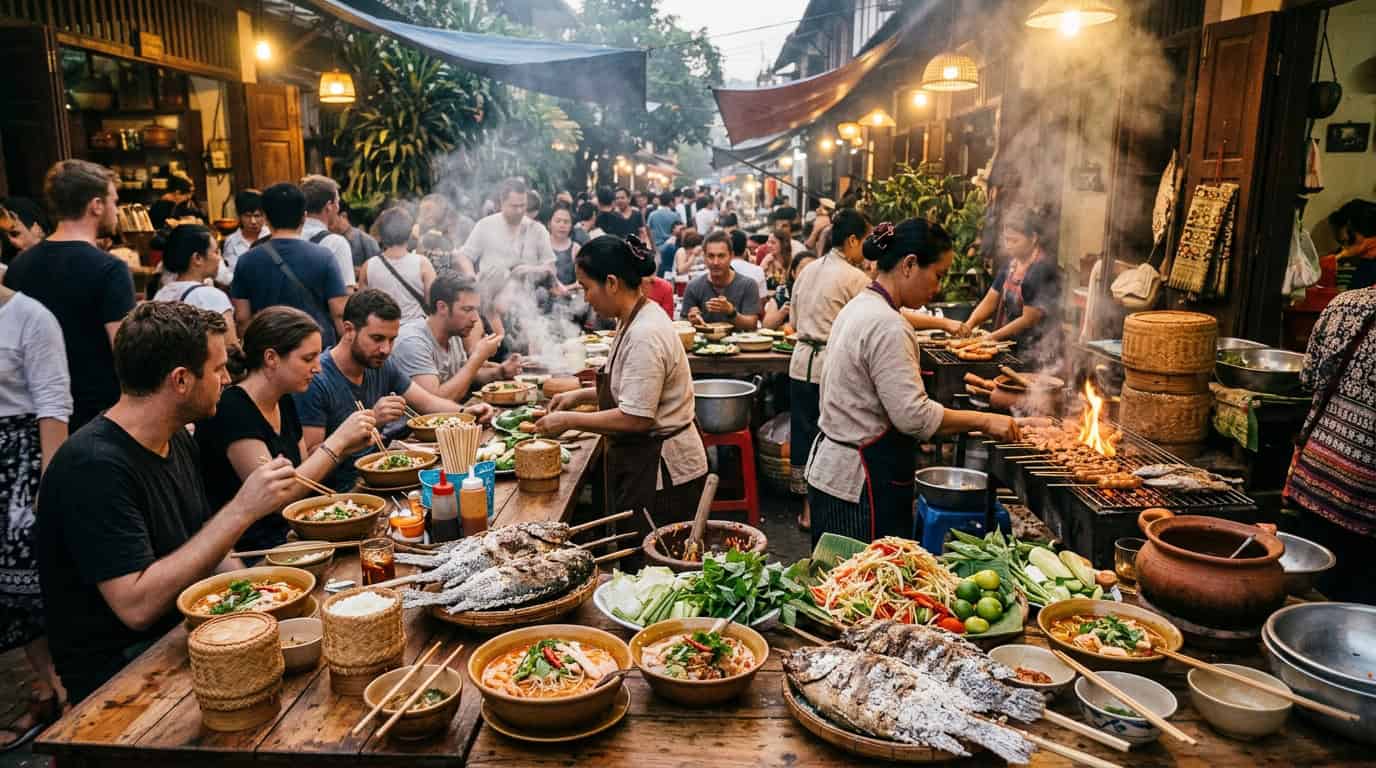
As the sun dips below the horizon and the indigo stalls begin to glow, the air near the Royal Palace fills with the irresistible scent of lemongrass and charcoal. I always find myself drawn away from the textiles and into the narrow, bustling food alley where the true culinary heart of Luang Prabang beats. Here, rows of salt-crusted Mekong fish sizzle over open flames, their smoky aroma mixing with the fragrant steam rising from massive pots of Khao Piak Sen. This chewy tapioca noodle soup is a local treasure, served in a rich broth that warms you from the inside out after a day of exploring. I love watching the vendors expertly assemble bowls with fresh herbs and crispy shallots, offering a taste of authentic Lao comfort that you simply cannot find in a formal restaurant.
The legendary vegetarian buffets remain a highlight for any hungry traveler, offering a colorful mountain of local flavors for just a few dollars. You can pile your plate high with stir fried morning glory, spicy eggplant dips, and ginger infused tofu while chatting with fellow travelers on communal wooden benches. I highly recommend trying the crispy river weed topped with sesame seeds, which provides a perfect salty crunch alongside a heap of purple sticky rice. For a sweet finish, look for the small stalls making coconut rice pancakes, known as Khanom Krok, which are cooked in dimpled cast iron pans until they are golden and gooey. Exploring this vibrant alley is more than just a meal, it is an immersive sensory journey that captures the generous spirit of Laos in every bite.
Navigating The Market Like A Local Insider
To truly master the night market experience, I recommend arriving around 5:30 PM just as the vendors finish laying out their vibrant indigo textiles and hand-stitched quilts. While the peak crowds descend after 7:00 PM, this early window allows you to chat with the Hmong and Lao Loum artisans while the evening air is still cool and the paths are easy to walk. You will find that the atmosphere is much more serene, giving you the space to appreciate the intricate details of silver jewelry and bamboo crafts without feeling rushed. Remember that this is a place of quiet commerce, so a gentle smile goes much further than aggressive haggling when you are looking for that perfect souvenir.
When it comes to bartering, think of it as a friendly conversation rather than a high-stakes negotiation. I always start by asking the price and then offering a slightly lower, fair counter-offer, keeping in mind that these handmade goods represent hours of meticulous labor. It is culturally respectful to aim for a price that feels good for both parties, as a few extra kip can make a significant difference to a local family’s livelihood. If a price does not work for you, simply offer a polite thank you and move on to the next stall. This respectful approach ensures the market remains a welcoming space for everyone as Luang Prabang becomes an increasingly popular destination.
Once you have secured your treasures, follow the enticing scents of lemongrass and ginger to the dedicated food alley tucked away near the main entrance. With the recent increase in visitors, these communal seating areas fill up fast, so grabbing a spot early is the best way to enjoy a bowl of steaming khao piak sen or local grilled meats. I love sitting at the shared wooden tables because it is the perfect opportunity to swap travel stories with fellow explorers from around the world. Balancing your time between the quiet craft stalls and the bustling energy of the food section provides a complete sensory picture of Lao culture. This blend of mindful shopping and social dining is exactly what makes the night market the beating heart of the city.
Cultural Connections Under The Red Canopies
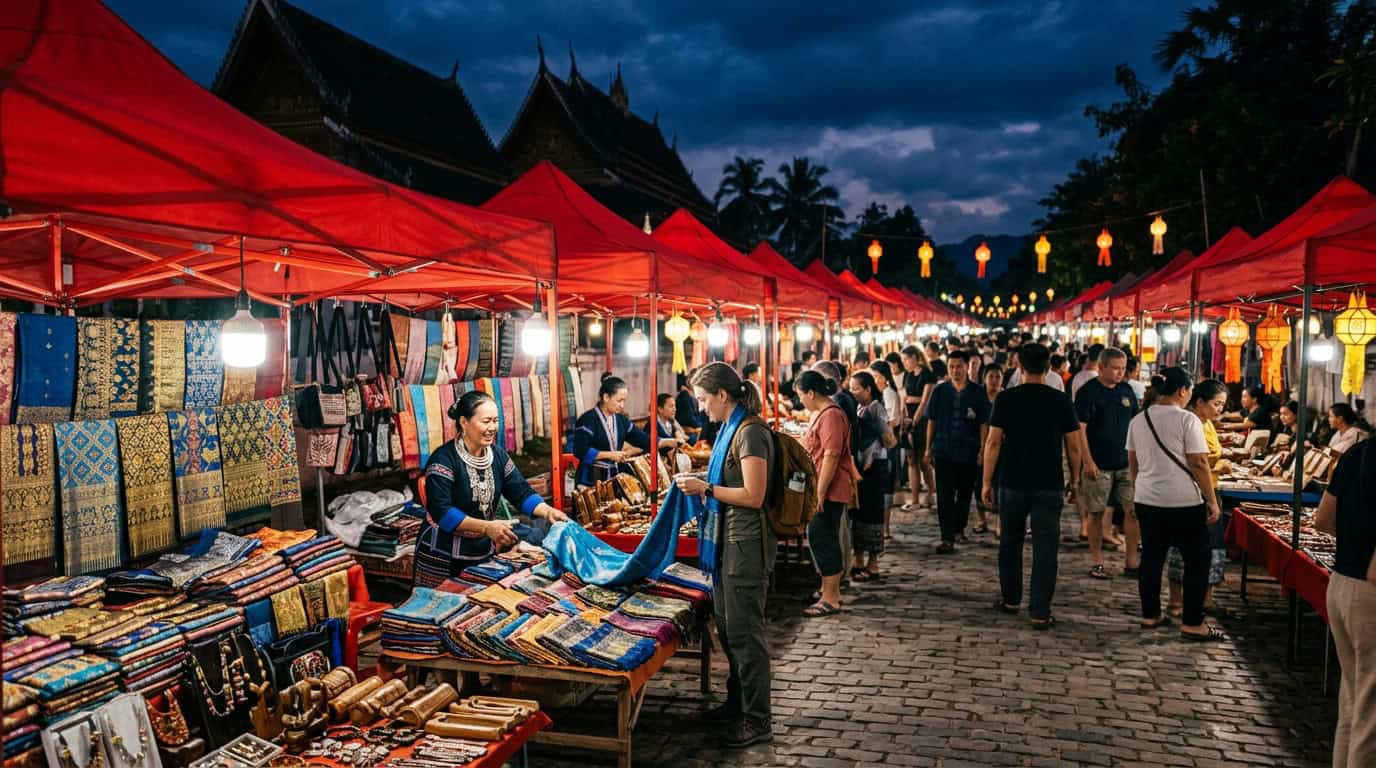
As the sun dips behind the Phousi Hill temples, Sisavangvong Road transforms into a sea of glowing red canopies that stretch as far as the eye can see. Walking through the stalls, I was immediately struck by the quiet, respectful hum of commerce that defines this UNESCO World Heritage site. I spent an hour chatting with a Hmong weaver named Souk, who explained how her intricate indigo patterns tell the story of her village’s history. These textiles are not just souvenirs, they are living pieces of Laotian heritage that help keep ancient weaving techniques alive. Supporting these local artisans ensures that the cultural fabric of Luang Prabang remains vibrant and authentic for generations to come.
The sensory experience deepens as you move toward the food alleys where the aroma of lemongrass and grilled khao jee fills the air. I found myself sitting at a communal wooden table, sharing a bowl of spicy khao piak sen with travelers and locals alike. One vendor told me that her family has been preparing these traditional recipes for decades, using ingredients sourced directly from the surrounding Mekong riverbanks. This market serves as a vital culinary sanctuary, preserving traditional flavors that might otherwise be lost. Every bite of sticky rice and every hand-carved bamboo bowl purchased here directly contributes to the sustainable livelihoods of the hill tribe communities.
To make the most of your visit, I recommend arriving around 5:30 PM just as the vendors finish laying out their hand-painted mulberry paper umbrellas and recycled bomb metal cutlery. This early hour allows you to have more meaningful conversations with the makers before the peak crowds arrive later in the evening. Be sure to look for the Handmade in Luang Prabang signs which guarantee you are purchasing authentic local crafts rather than mass-produced imports. Bringing a reusable bag and small denominations of Lao Kip will make your transactions smoother and more eco-friendly. Taking the time to learn a few basic Lao phrases like khop chai for thank you will open doors to even deeper connections under those iconic red tents.
A Sunset Stroll Through Lao Artistry
As the sun sets and the lanterns begin to glow, the Luang Prabang Night Market transforms Sisavangvong Road into a sensory masterpiece that captures the very soul of Laos. Walking through the rows of indigo-dyed fabrics and intricate Hmong embroidery, I always feel a profound connection to the local artisans who pour their heritage into every handmade piece. It is more than just a place to shop, it is a quiet, rhythmic celebration of Lao culture where the soft murmurs of bargaining blend with the aromatic steam rising from the nearby food stalls. You can truly feel the heartbeat of the city here, tucked between the shadowy silhouettes of ancient temples and the vibrant energy of the evening crowd.
No trip to this UNESCO World Heritage town is complete without losing yourself in the colorful maze of silk scarves and recycled silver jewelry. I found that the true magic lies in the balance between the bustling food alleys, packed with spicy papaya salad and grilled Mekong fish, and the peaceful grace of the vendors themselves. Whether you are hunting for the perfect souvenir or simply soaking in the golden glow of the streetlights, this market remains the ultimate cultural crossroads for every traveler. It serves as the perfect final chapter to a magical three day escape spent exploring the Mekong, offering a warm and welcoming atmosphere that stays with you long after you have left the country.
Frequently Asked Questions
1. What time does the Luang Prabang Night Market open?
The market begins to come alive around 5:00 PM when Sisavangvong Road closes to vehicle traffic. Arriving early allows you to enjoy a peaceful stroll and chat with artisans before the evening crowds arrive.
2. What kind of unique souvenirs can I find at the market?
You will discover incredible handcrafted treasures like indigo dyed fabrics, Hmong embroidery, and hand carved silver jewelry. I highly recommend looking for the unique cutlery and jewelry forged from recycled bomb metal, which serves as a powerful symbol of resilience.
3. Is there food available at the night market?
Yes, you must wander into the hidden food alleys tucked away from the main stalls. It is the perfect place to sit down for a steaming bowl of khao piak sen or enjoy the aromatic scents of lemongrass and grilled spices. Much like Taipei night markets, the street food here is a major draw for culinary enthusiasts.
4. Who are the artisans selling these goods?
The market is a vibrant showcase for Hmong and Lao Loum traditions. Most of the textiles and crafts are handmade by local villagers who use ancient techniques passed down through many generations. Many travelers arrive here after riding the Mekong from the Thai border, bringing a sense of adventure to their shopping experience.
5. How can I best support the local culture while shopping?
Engage with the vendors to learn the stories behind their geometric patterns and traditional weaving methods. Purchasing these authentic, hand woven pieces directly supports the livelihoods of the artisans living in the surrounding hills.
6. What is the best way to navigate the market?
Start at one end of Sisavangvong Road and let your curiosity lead you through the sea of glowing red and blue tents. Take your time to feel the textures of the hemp and silk while keeping an eye out for the small details that make Lao craftsmanship so special.