
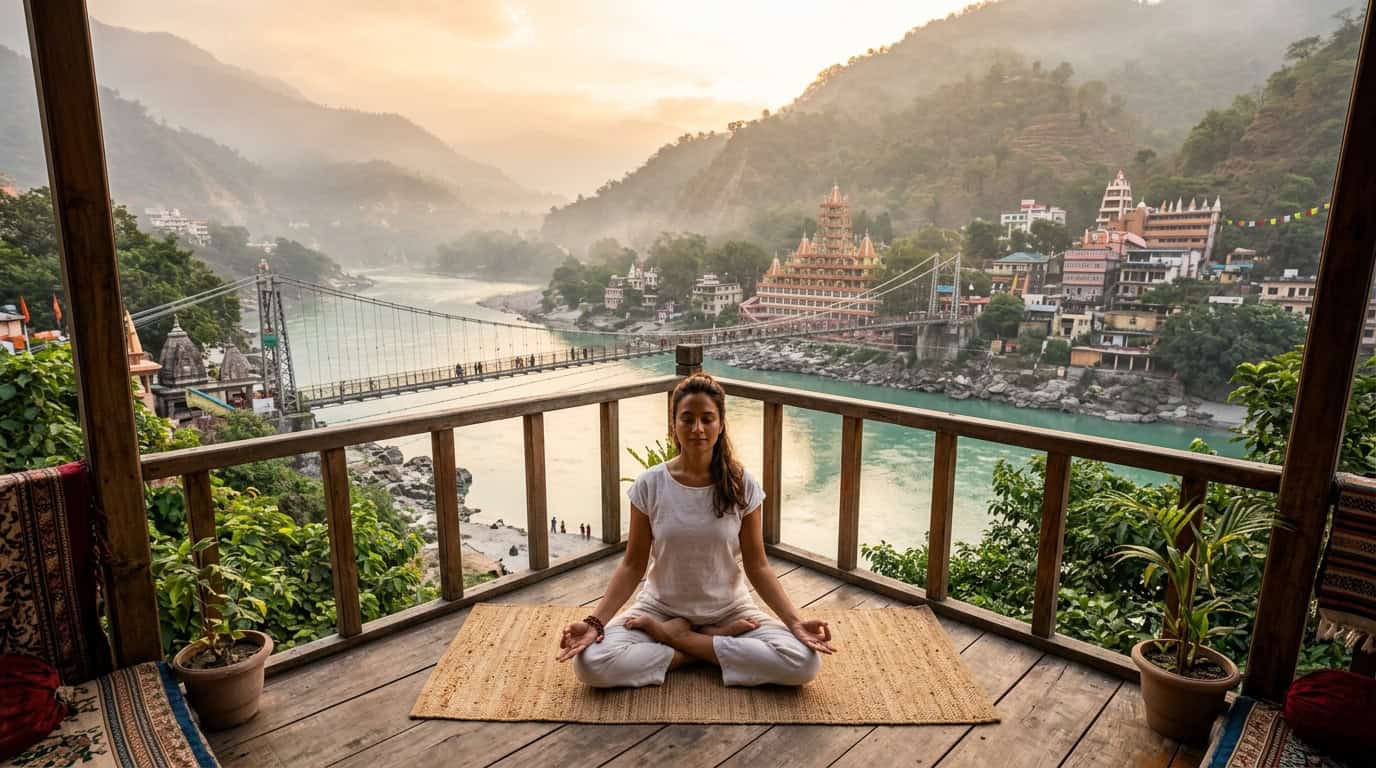
The moment I step onto the glass-bottomed Bajrang Setu bridge, with the turquoise Ganges rushing beneath my feet, I realize that a Rishikesh yoga retreat in 2026 is a breathtaking blend of ancient soul and modern innovation. Walking from the vibrant energy of Tapovan toward the quiet, bell-chiming serenity of the Swarg Ashram district, the air feels lighter and the city’s new zero-plastic commitment makes the mountain breeze smell remarkably crisp. Whether I am seeking the disciplined silence of a traditional stone ashram or a sun-drenched terrace overlooking the Himalayas, this sacred valley has evolved into a sustainable sanctuary that honors its roots while embracing every traveler.
Planning my journey is now easier than ever thanks to the streamlined E-Ayush visa, which has transformed this legendary pilgrimage site into a seamless global wellness hub. I remember my first morning meditation here, listening to the distant chants while the solar-powered water heaters hummed quietly in the background, signaling a new era of eco-conscious spirituality. From sipping organic tea in a plastic-free garden to practicing sun salutations as the mist rises off the water, this guide will help you find the best hidden spots and practical logistics for your own transformative escape.
Key Takeaways
- The E-Ayush visa has streamlined the entry process for international travelers, requiring only proof of enrollment in a recognized yoga center to access India’s dedicated wellness infrastructure.
- Rishikesh has transitioned into a sustainable sanctuary through its Zero-Plastic Pilgrimage initiative and the widespread adoption of solar-powered facilities and high-tech water filtration.
- The newly completed Bajrang Setu glass-bottomed bridge serves as a vital link between the modern, cafe-filled Tapovan district and the traditional, meditative atmosphere of Swarg Ashram.
- Modern retreats in 2026 offer a diverse spectrum of experiences, ranging from disciplined, traditional ashram living to luxury Ayurvedic resorts that blend ancient wisdom with high-end amenities.
Navigating The Tapovan And Swarg Ashram Divide
When I first arrive in Rishikesh for a yoga retreat, I quickly notice the distinct energy shift between the two primary districts. Tapovan serves as the vibrant, modern heartbeat of the city, where the streets are lined with trendy organic cafes, boutique wellness centers, and a bustling international crowd. This area is perfect if I enjoy a lively atmosphere and want easy access to diverse vegan dining options after a rigorous morning asana practice. I find that Tapovan offers a great sense of community for solo travelers, making it easy to meet fellow seekers while grabbing a cold-press juice or browsing local crystal shops. It represents the contemporary evolution of the Yoga Capital, blending ancient wisdom with high-tech, sustainable infrastructure.
Across the river, the atmosphere shifts dramatically as I enter the hallowed grounds of Swarg Ashram and the traditional spiritual heart of the region. This side of the Ganges is characterized by a profound, quiet stillness where the scent of incense hangs heavy in the air and the sound of temple bells replaces the hum of the city. Here, I find the historic stone ashrams and austere meditation halls that have hosted spiritual seekers for centuries. It is the ideal place to experience a more traditional way of life, participating in the evening Ganga Aarti or practicing silent contemplation by the riverbanks. The district adheres strictly to the city’s new zero-plastic commitment, encouraging a mindful and eco-friendly pilgrimage experience that feels deeply rooted in Vedic heritage.
Navigating between these two worlds has never been more breathtaking thanks to the newly completed Bajrang Setu, a stunning glass-bottomed suspension bridge. Walking across this high-tech marvel allows me to peer directly down at the turquoise waters of the Ganges flowing beneath my feet, offering a perspective of the river that is truly unparalleled. I recommend using the bridge as a daily transition point, perhaps starting with a modern workshop in Tapovan before crossing over for a traditional sunset meditation in Swarg Ashram. This physical link makes it incredibly easy to balance the luxury of a modern retreat with the raw, spiritual authenticity of the old world. It is a practical and inspiring way to ensure a wellness journey encompasses every facet of what makes Rishikesh so special today.
Choosing Your Ideal Ashram Or Luxury Retreat
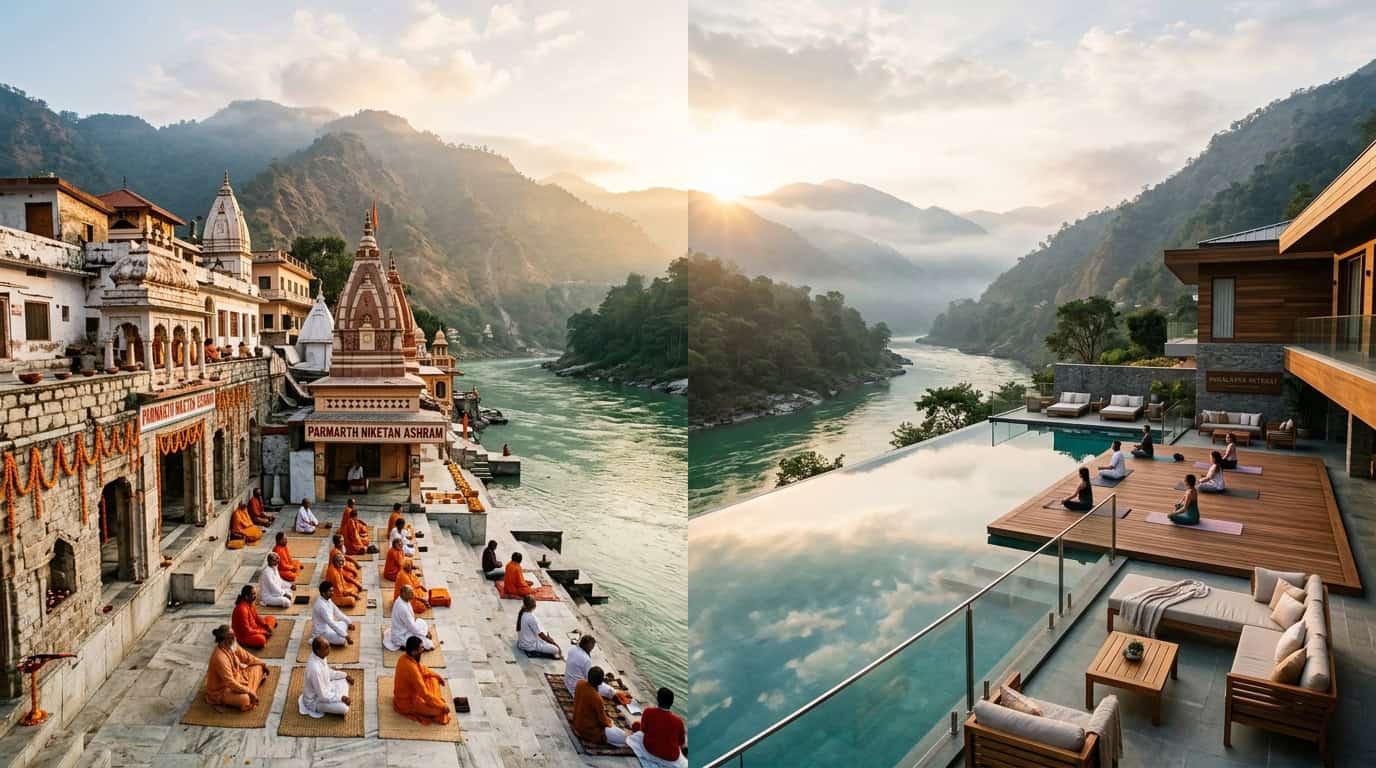
Deciding between a traditional ashram and a modern luxury retreat is really about how I want to connect with my inner self. When I first stepped into a sustainable sanctuary near Swarg Ashram, I was immediately struck by the simplified lifestyle and the commitment to a zero-plastic pilgrimage. These spaces follow a disciplined schedule where I wake up before dawn for meditation and share communal organic meals prepared with solar-powered energy. While the rooms are basic, the spiritual energy is palpable, making it the perfect choice for an authentic and focused yogic journey. I find that the lack of distractions helps me tune into the rhythmic sounds of the Ganges flowing just outside my window.
If my vision of wellness includes high-end comfort and personalized pampering, the new wave of luxury retreats in the Tapovan district offers a sophisticated alternative. These resorts blend ancient Ayurvedic wisdom with five-star amenities, such as infinity pools overlooking the mountains and private glass-walled yoga shalas. I love how these properties have integrated the E-Ayush visa requirements into their wellness packages, making it incredibly easy for international travelers to plan extended healing stays. I can spend my mornings in a rigorous vinyasa flow and my afternoons receiving a customized massage using oils sourced from local Himalayan herbs. It is a more indulgent way to experience the Yoga Capital of the World without sacrificing the depth of the practice.
Regardless of which path I choose, navigating between these two worlds has never been easier thanks to recent infrastructure upgrades like the Bajrang Setu. I highly recommend spending a few days in each setting to truly appreciate the diversity of the yoga scene. I might start with the quiet contemplation of a solar-powered ashram to ground my energy before moving to a luxury resort for deep physical restoration. This balanced approach allows me to experience the full spectrum of Rishikesh, from the rustic charm of traditional pilgrimage life to the cutting edge of global wellness tourism. I always pack a reusable water bottle to support the local green initiatives while exploring both sides of the river.
Daily Rhythms Of A Rishikesh Yoga Practitioner
Life in a Rishikesh ashram begins long before the sun crests the Himalayan peaks, usually with the resonant sound of a morning bell. I found that the 5:30 AM wake-up call feels surprisingly natural when the air is this crisp and the sound of the turquoise Ganges provides a constant, rhythmic backdrop. We gather in the yoga shala for a sunrise asana practice, focusing on traditional Hatha movements that stretch the body and quiet the mind. These sessions are often followed by pranayama and meditation, where the goal is to align my internal energy with the peaceful stillness of the surrounding mountains. It is a profound way to start the day, feeling physically revitalized and spiritually grounded before the rest of the world even stirs.
Nourishment at a retreat is treated as a form of medicine, with communal meals designed according to Ayurvedic principles to balance the three doshas. I quickly learned to appreciate the simplicity of a freshly prepared kitchari or a vibrant vegetable curry, all made with organic ingredients sourced from local farms. Since the city began its zero-plastic pilgrimage commitment, I noticed that high-tech filtration systems have replaced plastic bottles, making it easy to stay hydrated sustainably. Between meals, there is ample time to explore the quiet corners of Swarg Ashram or walk across the new glass-bottomed Bajrang Setu bridge. This modern marvel offers a thrilling view of the rushing river beneath my feet as I transition from the quiet traditional districts to the more vibrant cafes of Tapovan.
As the daylight begins to fade, the entire community gravitates toward the riverbanks for the sunset Ganga Aarti ceremony. This nightly ritual is a sensory masterpiece involving rhythmic chanting, ringing bells, and the warm glow of hundreds of oil lamps being waved in unison. I sat on the stone steps amongst pilgrims and fellow travelers, watching as small flower offerings were released into the dark water. The atmosphere is electric yet deeply peaceful, providing a sense of connection to a tradition that has endured for centuries. It is the perfect conclusion to a day of introspection, leaving me ready to retreat to my room for a restful sleep powered by the cool mountain breeze.
Planning Your Spiritual Journey To The Himalayas
Securing entry into India has never been easier thanks to the specialized E-Ayush visa, which is designed specifically for those seeking wellness and spiritual healing. I found the application process remarkably straightforward, allowing me to focus more on my intentions for the trip rather than getting bogged down in complex paperwork. I simply need to provide proof of enrollment in a recognized yoga center or ashram to unlock this dedicated travel category. This visa not only simplifies arrival but also signifies a commitment to supporting a journey toward holistic health. It serves as a perfect first step for anyone looking to immerse themselves in the transformative energy of the Ganges.
As I pack my bags, it is essential to embrace the city’s new Zero-Plastic Pilgrimage commitment to preserve the pristine beauty of the Himalayas. Most traditional ashrams and modern retreats in Rishikesh have now banned single-use plastic bottles in favor of sustainable alternatives. I highly recommend bringing a high-quality reusable water bottle and a set of bamboo utensils to visit local cafes and spiritual centers responsibly. Many sites now offer solar-filtered water stations and organic composting facilities to ensure my footprint remains minimal. By following these green initiatives, I contribute to a cleaner environment while honoring the sacred land that hosts my spiritual growth.
Navigating the physical environment of Rishikesh is an adventure in itself, especially with the stunning new Bajrang Setu glass-bottomed bridge. This high-tech suspension link makes it incredibly easy to transition between the quiet, traditional vibes of Swarg Ashram and the vibrant energy of the Tapovan district. I spent many afternoons walking across this bridge, watching the turquoise waters of the river flow directly beneath my feet. It is a beautiful metaphor for the balance found here between ancient wisdom and modern convenience. Planning movements around these landmarks ensures a seamless travel experience while exploring everything from sunrise meditation to evening fire ceremonies.
Your Journey Home to the Heart of Yoga
Choosing to embark on a yoga retreat in Rishikesh is more than just a vacation, it is an invitation to witness inner transformation. Standing on the glass floor of the new Bajrang Setu bridge, I felt the powerful contrast between the vibrant energy of Tapovan and the ancient silence of the Swarg Ashram district. This city has evolved into a sophisticated wellness hub that honors its heritage while embracing modern sustainability through the Zero-Plastic Pilgrimage initiatives. Whether I am meditating in a traditional solar-powered ashram or practicing asana overlooking the emerald Ganges, the spiritual resonance of this land is undeniable. I find that the rhythm of the river stays with me long after I have rolled up my mat for the last time.
The logistical journey to India has never been more accessible thanks to the streamlined E-Ayush Visa specifically designed for wellness seekers. I encourage you to take that first step toward the foothills of the Himalayas, where the air is crisp and the community is deeply welcoming. I spend my mornings in guided pranayama sessions and my afternoons exploring organic markets that prioritize the environment. I do not let the fear of the unknown hold me back from experiencing the world capital of yoga during this exciting era of green tourism. Pack your bags with an open heart and prepare for a long haul flight that will likely redefine your perspective on health and happiness.
Frequently Asked Questions
1. What is the best time of year to plan a yoga retreat in Rishikesh?
I recommend visiting during the spring or autumn months when the mountain air is crisp and the Himalayan mist creates a magical backdrop for practice. The 2026 season is particularly special as the city has fully embraced its zero-plastic commitment, making the natural beauty feel more vibrant than ever.
2. How do I handle the visa process for a long-term yoga stay?
The streamlined E-Ayush visa has made it incredibly simple to enter India for wellness purposes. It transforms the pilgrimage into a seamless experience, allowing me to focus on my spiritual journey rather than paperwork.
3. Should I stay in Tapovan or the Swarg Ashram district?
If I crave a lively community with organic cafes and a bustling international vibe, Tapovan is my go-to spot. For those seeking quiet reflection and the chime of temple bells, the serene Swarg Ashram district offers a more traditional, meditative atmosphere.
4. Is Rishikesh an eco-friendly destination for travelers?
Rishikesh has evolved into a leading sustainable sanctuary with solar-powered facilities and a strict zero-plastic policy. I can enjoy my organic tea in plastic-free gardens knowing that my retreat supports a cleaner, greener mountain environment.
5. What is the best way to cross the Ganges between districts?
Walking across the new glass-bottomed Bajrang Setu bridge is an absolute must-do experience. It offers a breathtaking view of the turquoise water rushing beneath my feet while connecting the vibrant energy of the city’s two main sides.
6. What should I expect from the local food scene during my retreat?
I find a delicious abundance of vegan dining options and cold-press juices, especially in the trendy areas of Tapovan. Most retreats focus on organic, sattvic meals that nourish the body and complement the physical discipline of daily asana practice. As the city becomes one of the top digital nomad destinations, the variety of healthy, high-quality food continues to grow.