
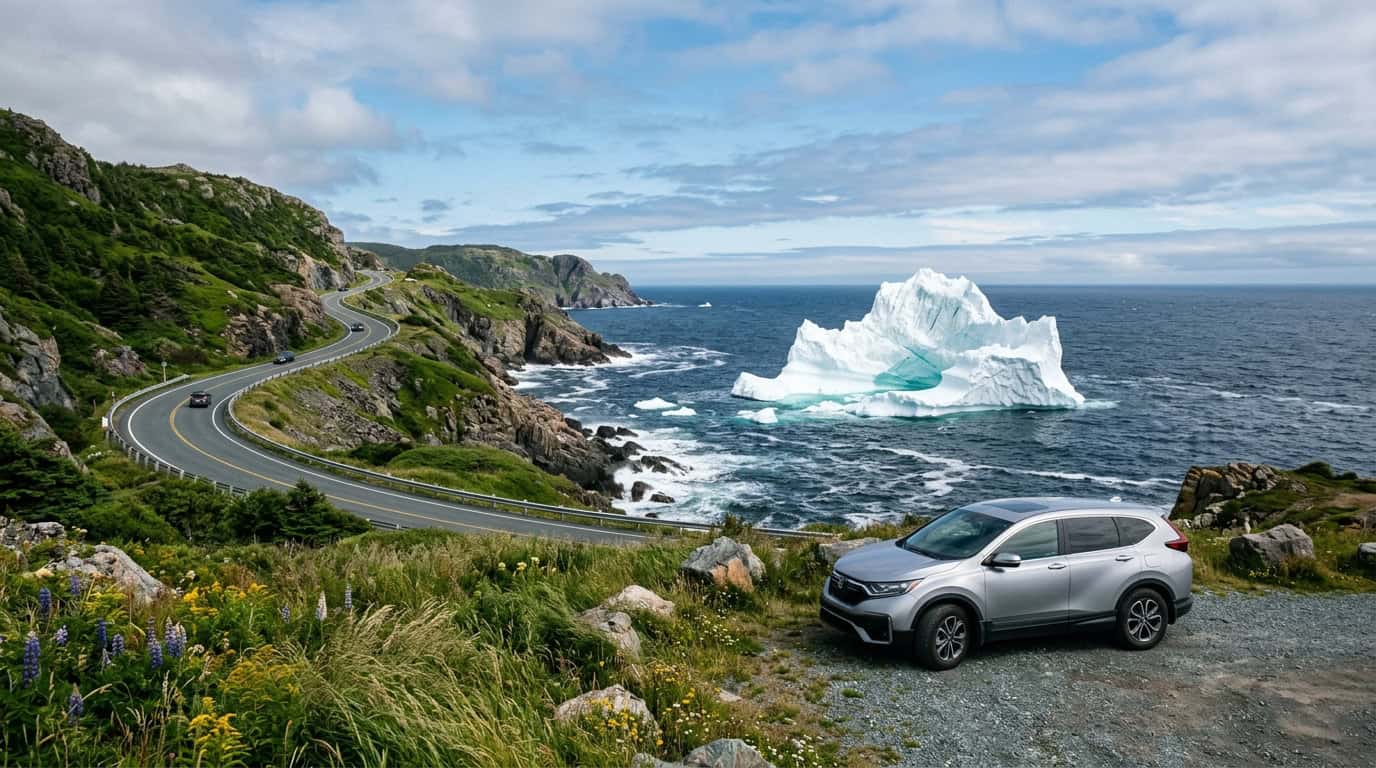
There is a raw, salt-sprayed magic that takes hold of you the moment you begin a Newfoundland coastal drive, where 29,000 kilometers of jagged shoreline meet the relentless North Atlantic. I remember standing on the edge of a glacier-carved fjord in Gros Morne, feeling incredibly small against the ancient stone and wondering how a place could feel so untouched. Whether you are chasing the mist along the Viking Trail or watching puffins dance above the Irish Loop, these roads offer a rare sense of freedom.
Under the province’s new Vision 2026 strategy, your journey does more than just fill a scrapbook; it supports a regenerative way of travel that protects these fragile fishing villages and UNESCO sites for years to come. You’ll find yourself traveling from the historic timber of L’Anse aux Meadows to the vibrant, fog-swept cliffs of the Avalon Peninsula. Every turn reveals a new geological wonder or a hidden cove where the locals treat you like an old friend returning home.
Key Takeaways
- Newfoundland’s Vision 2026 strategy prioritizes regenerative travel, encouraging visitors to support local economies and preserve fragile UNESCO sites by slowing down and focusing on specific regional routes.
- The Viking Trail and Gros Morne National Park offer a unique intersection of human history and rare geology, where travelers can explore 1,000-year-old Norse settlements and walk on the Earth’s exposed mantle.
- The Irish Loop and Bonavista Peninsula provide world-class wildlife viewing, specifically the ‘clowns of the sea’ puffin colonies and humpback whales breaching near historic lighthouses.
- Optimal travel timing occurs between late June and early July, the rare window where visitors can witness massive glacial icebergs drifting through ‘Iceberg Alley’ while whales return to the coast.
Viking Trails And Ancient Fjords Of The Great Northern Peninsula
Setting out on the Viking Trail along Route 430 feels like stepping into a living history book where the land itself tells a story millions of years old. As you drive north toward the Great Northern Peninsula, the rugged coastline opens up to reveal colorful fishing villages tucked into rocky coves where locals always have a warm story to share. You will want to keep your camera ready for the frequent whale sightings, as humpbacks often breach just offshore near the crashing waves. The journey is a beautiful blend of maritime culture and raw wilderness that makes every kilometer feel like a new discovery.
My absolute favorite stop along this route is the Tablelands in Gros Morne National Park, a place that looks more like Mars than Canada. This orange, barren landscape is one of the few places on Earth where you can actually walk on the planet’s exposed mantle. I highly recommend taking the guided hike to learn about the unique geology, but make sure to bring a windbreaker even in the summer because the gusts coming off the Gulf of St. Lawrence are no joke. Standing on that ancient rock while looking out at the deep blue fjords is a humbling experience that reminds you just how powerful nature can be.
Once you reach the northern tip of the island, the legendary L’Anse aux Meadows awaits with its sod-covered longhouses and Viking history. Walking through this UNESCO World Heritage site allows you to stand exactly where Norse explorers landed over a thousand years ago. I suggest visiting early in the morning to enjoy the misty atmosphere that makes the history feel even more tangible. It is the perfect conclusion to a coastal drive that connects the deep geological past with the adventurous spirit of the North Atlantic.
Puffin Colonies And Fossil Hunting On The Irish Loop
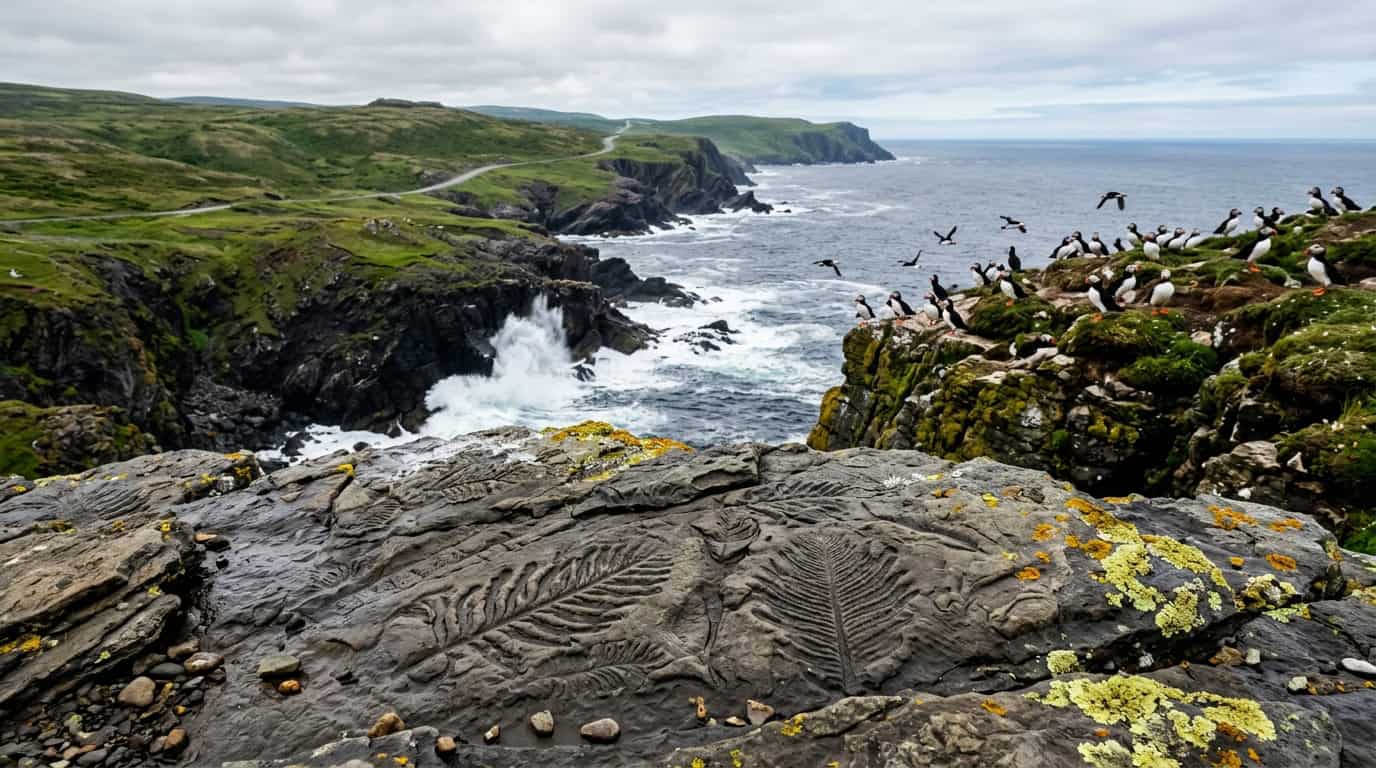
Cruising down the Irish Loop feels like a warm embrace from the Atlantic, where every turn of the road reveals a new splash of color from the local fishing villages. My favorite stop has to be the Witless Bay Ecological Reserve, where the ocean practically teems with life during the summer months. You can hop on a boat to witness thousands of Atlantic puffin colonies with their bright orange beaks fluttering around the rocky cliffs. It is an incredibly joyful sight to see these “clowns of the sea” diving into the waves while humpback whales breach in the distance. This stretch of coastline perfectly captures the rugged beauty and friendly spirit that makes Newfoundland so special to visit.
Continuing south toward the tip of the Avalon Peninsula, the landscape shifts into something much more ancient and mysterious. At Mistaken Point, a UNESCO World Heritage Site, you can walk across jagged coastal rocks that hold some of the oldest complex life forms on Earth. These fossils date back over 500 million years, preserved in volcanic ash as if frozen in time. I highly recommend booking a guided tour in advance because walking on these prehistoric surfaces requires special care to protect the delicate impressions. It is a humbling experience to stand where life first began to flourish while the salty wind whips off the North Atlantic.
To make the most of your journey along this scenic route, I suggest starting your drive early in the morning from St. John’s to catch the best light. Pack a sturdy pair of hiking boots and a warm windbreaker, as the weather on the peninsula can change from sunny to foggy in a matter of minutes. Stop for a picnic at the Ferryland Lighthouse where you can enjoy fresh sandwiches on the grass while watching for icebergs or whales offshore. This itinerary balances the thrill of wildlife encounters with the quiet awe of geological history. Your trip through the Irish Loop will leave you with a deep appreciation for the dramatic scale of Canada’s eastern edge.
Chasing Icebergs And History Through Bonavista And Twillingate
Cruising along the rugged edge of Iceberg Alley feels like stepping into a living postcard where the North Atlantic puts on its most dramatic show. In Twillingate, I found myself perched on a rocky cliffside, squinting at the horizon until a massive, brilliant blue shape materialized against the deep navy water. These glacial giants often drift so close to the shore that you can hear the sharp crack and groan of the ice melting in the sun. It is a humbling experience to watch a ten thousand year old mountain of ice float silently past a tiny, colorful fishing village. I highly recommend grabbing a coffee from a local shop and heading to Long Point Lighthouse for the best vantage point to spot these majestic wanderers.
The journey continues south to the Bonavista Peninsula, where the history is as vibrant as the freshly painted saltbox houses lining the streets of Trinity. Walking through this town feels like a gentle step back in time, with its perfectly preserved wooden architecture and narrow lanes that smell of salt air and blooming wildflowers. I spent an afternoon wandering toward the Cape Bonavista Lighthouse, where the wind whips off the ocean and puffins burrow into the grassy hillsides nearby. Make sure to keep your eyes on the waves, as humpback whales frequently breach just offshore, providing a spectacular natural soundtrack to your coastal drive. This region perfectly captures the spirit of Newfoundland, blending rugged cliffs with the warmest hospitality you will ever encounter.
Planning Your Regenerative Journey Along The Edge Of The Atlantic
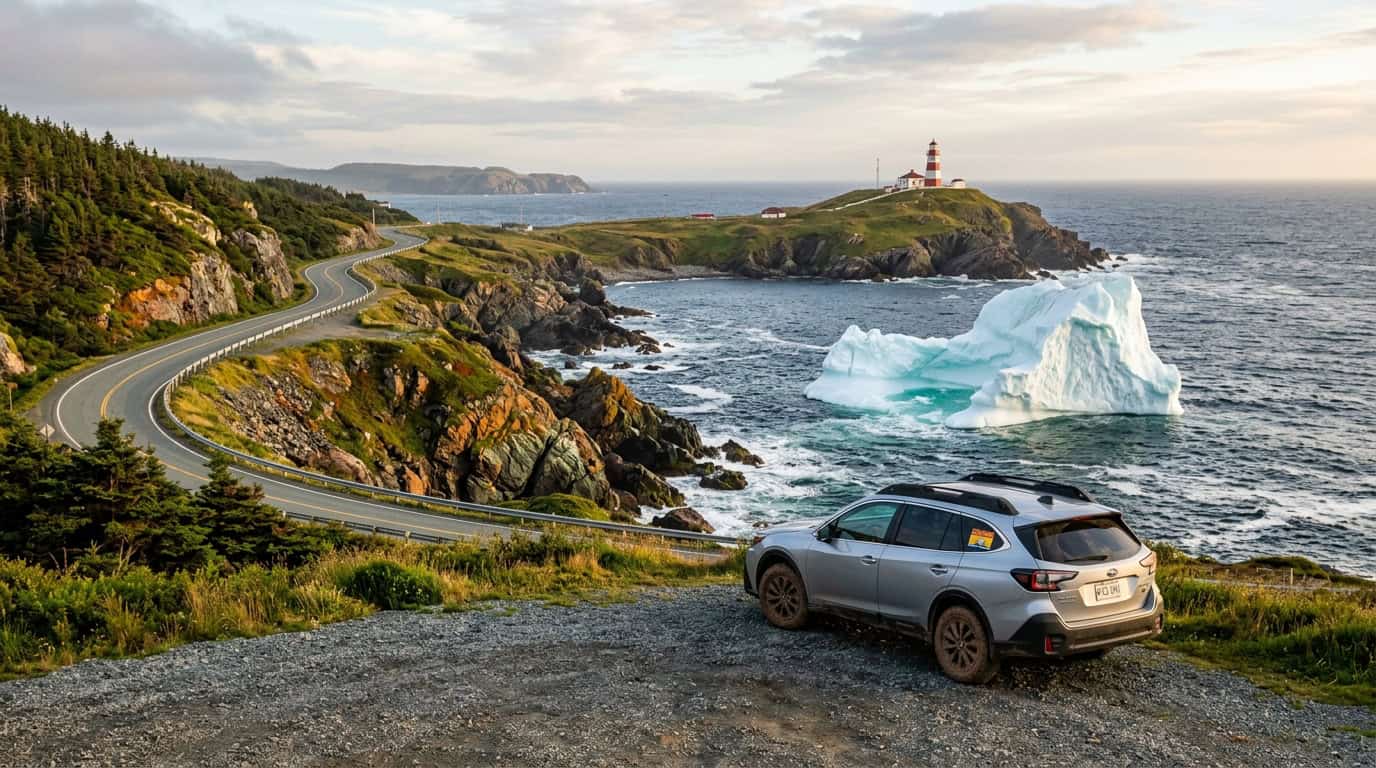
Navigating the edge of the Atlantic along Newfoundland’s 29,000 kilometers of coastline is an experience that demands you slow down and breathe in the salt air. To truly embrace the Vision 2026 spirit of regenerative travel, I recommend focusing on one or two specific routes rather than trying to rush across the entire island. The Viking Trail up Route 430 is a personal favorite, offering a breathtaking journey from the glacier-carved fjords of Gros Morne National Park to the ancient Norse settlement at L’Anse aux Meadows. By staying in locally owned instincts and choosing smaller coastal detours, you ensure your visit supports the preservation of these historic fishing villages. You will find that the best way to travel sustainably here is to simply follow the pace of the locals and respect the rugged, pristine environment.
As you wind through the colorful outports of the Irish Loop, keep your eyes on the horizon for the telltale spray of a humpback whale or the bobbing heads of puffins. These dramatic landscapes are best enjoyed with a spirit of curiosity, especially when you pull over in a small harbor for a feed of fresh fish and chips. There is nothing quite like sitting on a wooden wharf with a hot meal, listening to the rhythmic lap of the tide against the pilings. You will likely find yourself in a long conversation with a resident fisherman before your meal is even finished, as the people here are famously welcoming to those who take the time to visit. These spontaneous moments of connection are what transform a simple road trip into a meaningful journey that stays with you long after you have returned home.
Where the Salt Air Lingers
There is something truly transformative about the salt air in Newfoundland that stays with you long after the car is unpacked and the engine has cooled. As you wind along the rugged edges of the Viking Trail or navigate the colorful bends of the Irish Loop, the mist from the North Atlantic seems to wash away the noise of everyday life. You will find that the rhythm of the tides and the warmth of the locals in every tiny fishing village create a sense of belonging that is hard to find anywhere else. It is a place where the dramatic landscapes of Gros Morne and the breaching whales off the coast remind you of the raw beauty of the natural world. By the time you reach the end of your journey, you realize this drive was never just about the miles covered or the photos taken.
I encourage you to pack your bags and set your sights on these winding coastal roads for a trip that feels less like a typical vacation and more like a long awaited homecoming. Much like The Ultimate Vancouver Island Road Trip, the province invites you to slow down and breathe deeply. The 29,000 kilometers of coastline offer endless opportunities for discovery, from ancient Viking history to the quiet magic of a hidden cove. This is your invitation to experience a regenerative journey that balances adventure with a profound sense of peace. If you are looking for a different kind of Canadian escape, you might also enjoy a Vancouver city break to see where the mountains meet the sea. You do not just visit Newfoundland, you let it become a part of who you are, and I promise you will be planning your return before you even leave.
Frequently Asked Questions
1. What is the best time of year to experience a Newfoundland coastal drive?
The ideal window is between late June and early September when the weather is mild and the coastal roads are clear. This timeframe gives you the best chance to see puffins nesting on the cliffs and whales breaching in the North Atlantic waters.
2. Is it possible to see icebergs and whales during the same trip?
Yes, if you plan your journey for late June or early July, you can often witness the spectacular sight of massive icebergs drifting south. This overlap is a magical time when humpbacks return to the coast just as the last of the glacial giants pass through.
3. How much time should I set aside for the Viking Trail?
You should dedicate at least three to five days to truly soak in the wonders of the Great Northern Peninsula. This allows you plenty of time to hike the Martian-like Tablelands and explore the historic timber dwellings at L’Anse aux Meadows without feeling rushed.
4. What makes the Tablelands in Gros Morne National Park so special?
The Tablelands is one of the rare spots on Earth where the planet’s mantle is exposed, creating a striking orange landscape that feels like another world. I always suggest taking a guided tour to learn the fascinating geological secrets hidden in this ancient stone.
5. What should I know about the Vision 2026 strategy before I visit?
Vision 2026 is a commitment to regenerative travel that ensures your visit helps protect the fragile fishing villages and UNESCO sites you love. By choosing local operators and respecting the natural landscape, you are playing a direct role in preserving this wild beauty for the future.
6. Are the coastal roads difficult to navigate for first-time visitors?
The drives are incredibly rewarding, though you should be prepared for winding paths and occasional fog that adds to the maritime mystery. The locals are exceptionally friendly, so never hesitate to ask for directions or a story if you find yourself tucked away in a hidden cove.
7. What are the must-see spots on the Avalon Peninsula?
You cannot miss the vibrant, fog-swept cliffs and the iconic lighthouses that guard the rugged shoreline of the Irish Loop. It is a place where you can watch puffins dance above the waves and feel the raw energy of the Atlantic crashing against the jagged rocks.