
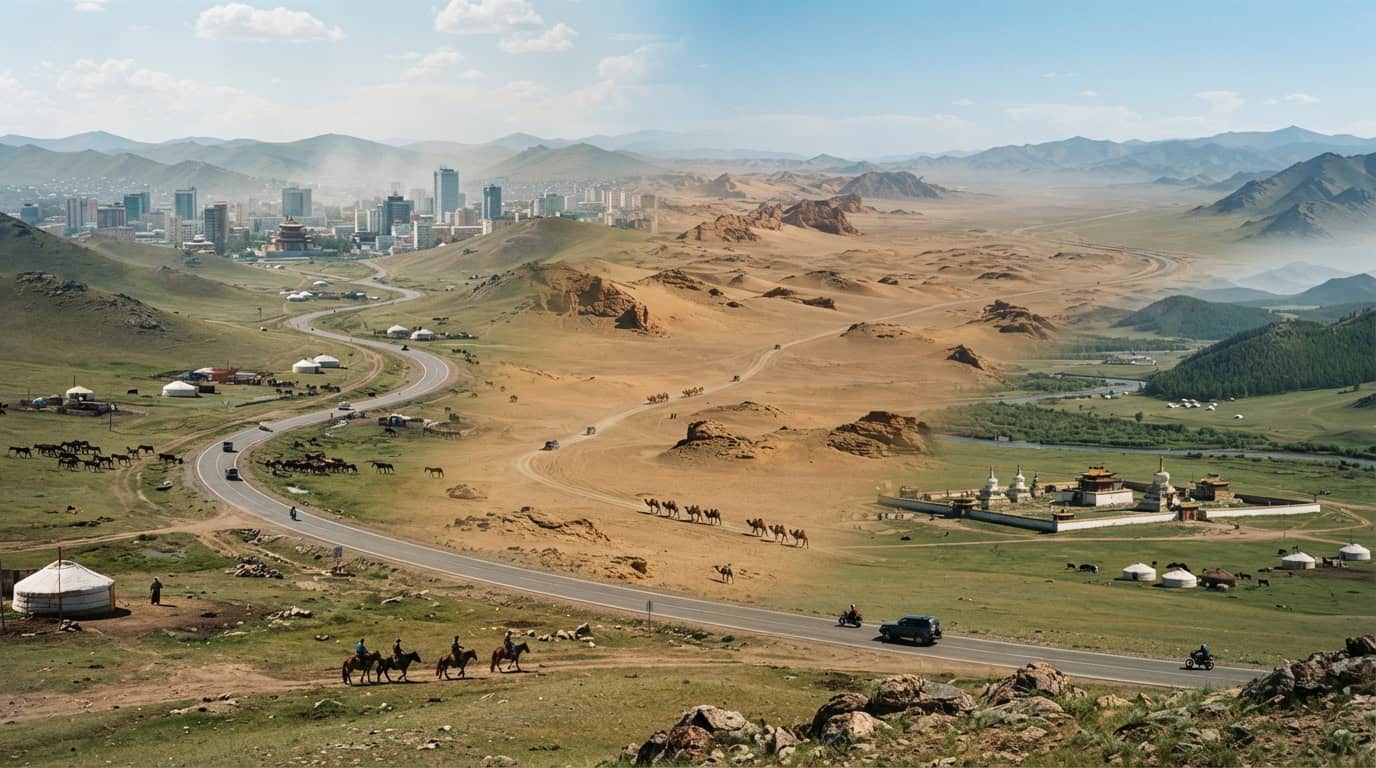
A well-planned Mongolia travel itinerary turns vast distances into unforgettable moments: sunrise over the Gobi’s Khongoryn Els, tea with a nomadic family, and quiet evenings beneath a sky crowded with stars. I’d begin in Ulaanbaatar, then travel south to the Flaming Cliffs and singing dunes before heading north toward Karakorum and the Orkhon Valley. The route is ambitious, but every long drive reveals a new landscape.
Mongolia rewards travelers who plan around road conditions, seasonal weather, and available time, not just a list of attractions. I’d allow extra days for rough overland journeys, carry Mongolian tögrög for remote stops, and choose between the summer energy of Naadam and the quieter beauty of June or September. At the right pace, the country’s immense scale becomes part of the adventure rather than an obstacle.
Key Takeaways
- Build your route around Mongolia’s enormous distances and rough road conditions, not just the number of attractions. Allow extra travel days, limit major stops on driving days, and keep your schedule flexible for weather and delays.
- For a 7-day trip, focus on Ulaanbaatar and the Gobi Desert; with 10–14 days, add Karakorum and the Orkhon Valley for a broader mix of desert landscapes, imperial history, and countryside.
- Travel between May and September for the most accessible overland conditions. Choose June or September for fewer crowds and milder temperatures, or July for Naadam’s cultural celebrations and increased demand for transport and accommodation.
- Prepare for remote travel by hiring a reliable local driver or joining a small group, carrying Mongolian tögrög in cash, packing warm layers and essential supplies, and staying in ger camps or with nomadic families for a deeper cultural experience.
Introduction To A Mongolia Travel Itinerary
A well-planned Mongolia travel itinerary can begin in bustling Ulaanbaatar before leading into the silence of the steppe and desert. I would spend two days exploring Gandan Monastery, the National Museum, and lively food markets, then travel to Gorkhi-Terelj National Park for granite valleys, horseback riding, and a night with a nomadic family. From there, I’d continue south to the Gobi Desert, where camel rides, singing sand dunes, the Flaming Cliffs, and star-filled ger camps bring Mongolia’s vast landscapes to life. This route balances urban culture, outdoor adventure, and meaningful encounters with local traditions.
For a 10- to 14-day journey, I recommend allowing four days in the Gobi, followed by two days around Karakorum, Mongolia’s ancient capital. In Karakorum, I’d visit Erdene Zuu Monastery and the nearby ruins of the old imperial city, then slow down for a family-hosted meal or a day learning how nomadic families care for horses, goats, or camels. Depending on road conditions and your budget, you can reach the Gobi by domestic flight to Dalanzadgad or travel overland for a more immersive, though slower, experience. Returning to Ulaanbaatar by road or air gives the itinerary a satisfying final stop for souvenirs, museums, and one last taste of buuz dumplings.
Mongolia rewards travelers who plan around distance rather than simply counting attractions. A journey that looks short on a map can take most of a day because gravel tracks are rough, road signs are limited, and weather can quickly change travel times. I would build in flexible days, carry cash in Mongolian tögrög outside the capital, and confirm transport arrangements before leaving Ulaanbaatar. Traveling between May and September generally offers the easiest conditions for overland routes, while July brings the excitement of Naadam along with larger crowds and greater demand for accommodation.
Ulaanbaatar And Terelj National Park
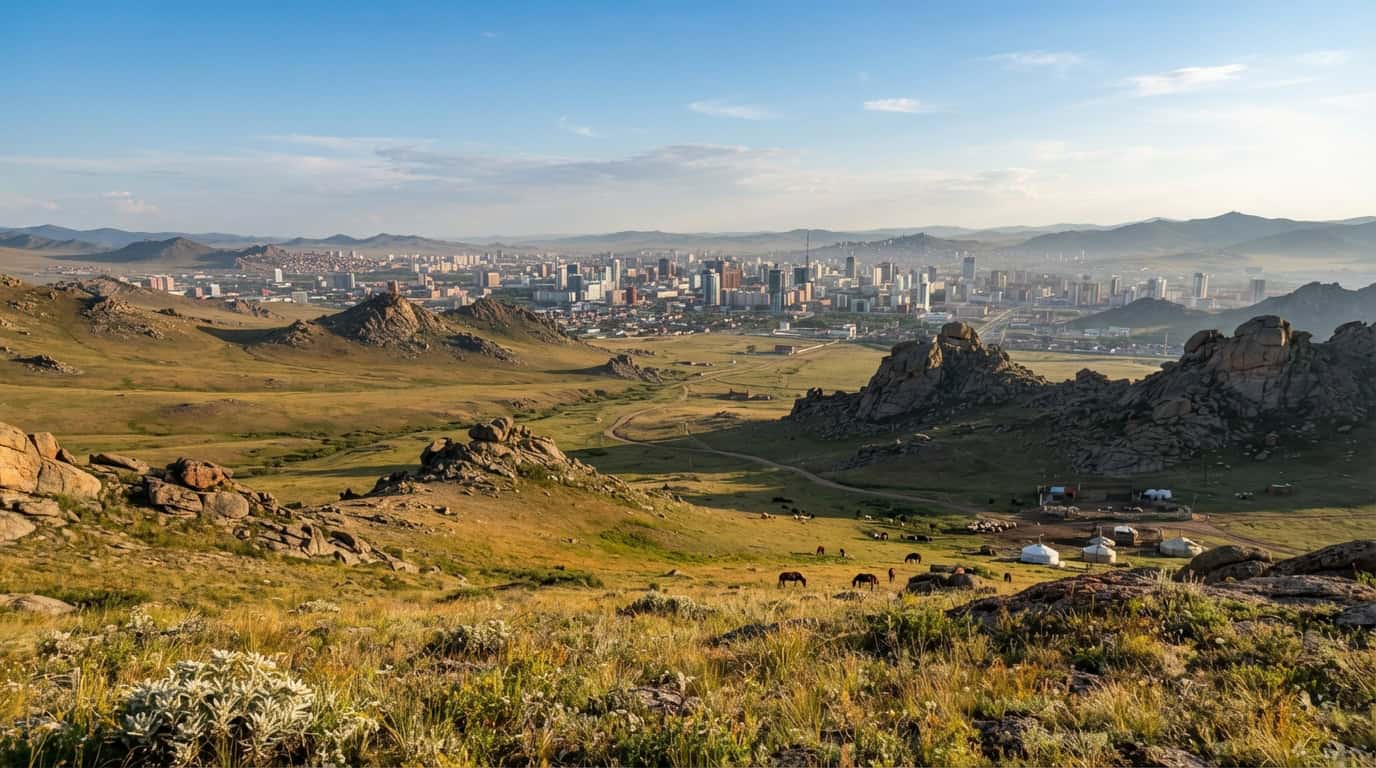
I begin this Mongolia travel itinerary in Ulaanbaatar with a gentle introduction to the capital’s spiritual and civic landmarks. On day one, I visit Gandantegchinlen Monastery early in the morning, when the prayer halls feel especially peaceful, then continue to Sükhbaatar Square for a look at the city’s grand central meeting place. The National Museum is a worthwhile afternoon stop, offering helpful context on Mongolia’s nomadic empires, Buddhist traditions, and modern history. I leave time for a relaxed dinner and an evening walk, since Ulaanbaatar’s energy is best appreciated without rushing between sights.
On day two, I explore more of the capital or use the morning to catch up on rest before heading beyond the city. A third day can begin with the drive east to the Chinggis Khaan statue complex, where the enormous steel statue rises above the surrounding steppe and offers sweeping views from its observation deck. From there, I continue toward Terelj National Park, one of the easiest places near Ulaanbaatar to experience Mongolia’s open landscapes and rugged granite formations. The journey takes time, so I treat the transfer itself as part of the adventure, watching apartment blocks give way to grassland, rocky hills, and grazing herds.
By afternoon in Terelj, I settle into a traditional ger camp and trade city streets for fresh air, quiet valleys, and the soft sounds of nearby horses. I usually plan a short hike around the park’s dramatic rock formations before enjoying a horseback ride across the open steppe, with local guides helping first-time riders feel comfortable. Spending the night in a ger makes this itinerary feel more immersive, especially when the evening sky fills with stars far from Ulaanbaatar’s lights. Pack warm layers and comfortable shoes, because temperatures can drop quickly after sunset even during the summer travel season.
Gobi Desert Highlights
I like to allow five or six days for a Gobi Desert loop from Ulaanbaatar, beginning with the granite landscapes of Baga Gazriin Chuluu before heading south toward the desert. I’d spend the first night in a ger camp near the rock formations, then continue to Yolyn Am Valley, where narrow canyon walls can shelter ice well into summer and short hikes reveal a surprising pocket of greenery. From there, travel onward to Khongoryn Els, the Gobi’s immense singing dunes, and set aside time for a camel ride across the rippled sands. The final stop, Bayanzag’s Flaming Cliffs, is especially atmospheric at sunset, when the red earth glows and the surrounding silence feels almost otherworldly.
The long drives are an essential part of this Mongolia travel itinerary, so I plan no more than one major attraction on most travel days and keep water, snacks, sun protection, and downloaded maps close at hand. Roads can be rough and navigation signs limited, making a reliable local driver and a sturdy four-wheel-drive vehicle valuable for reaching remote valleys and desert camps. Ger camps usually provide simple beds, shared facilities, and hearty meals, but I always pack a warm layer because desert nights can turn cold even after a hot afternoon. At Khongoryn Els, camel rides are gentlest in the cooler morning or late afternoon. I recommend following local guidance on mounting, pacing, and keeping a respectful distance from the animals.
For the most comfortable combination of open skies and manageable temperatures, I would choose June or September rather than the peak heat and crowds of midsummer. June brings longer days and fresh color to valleys such as Yolyn Am, while September often offers crisp air, golden light, and quieter camps after the busiest season. Build in flexibility for weather or slow road conditions, since a delayed departure can easily change a day’s schedule across this vast region. Even with the extra time spent traveling between landmarks, watching camels cross the horizon and sharing tea with a nomadic family makes the Gobi feel less like a route to complete and more like a journey to experience.
Karakorum And Orkhon Valley
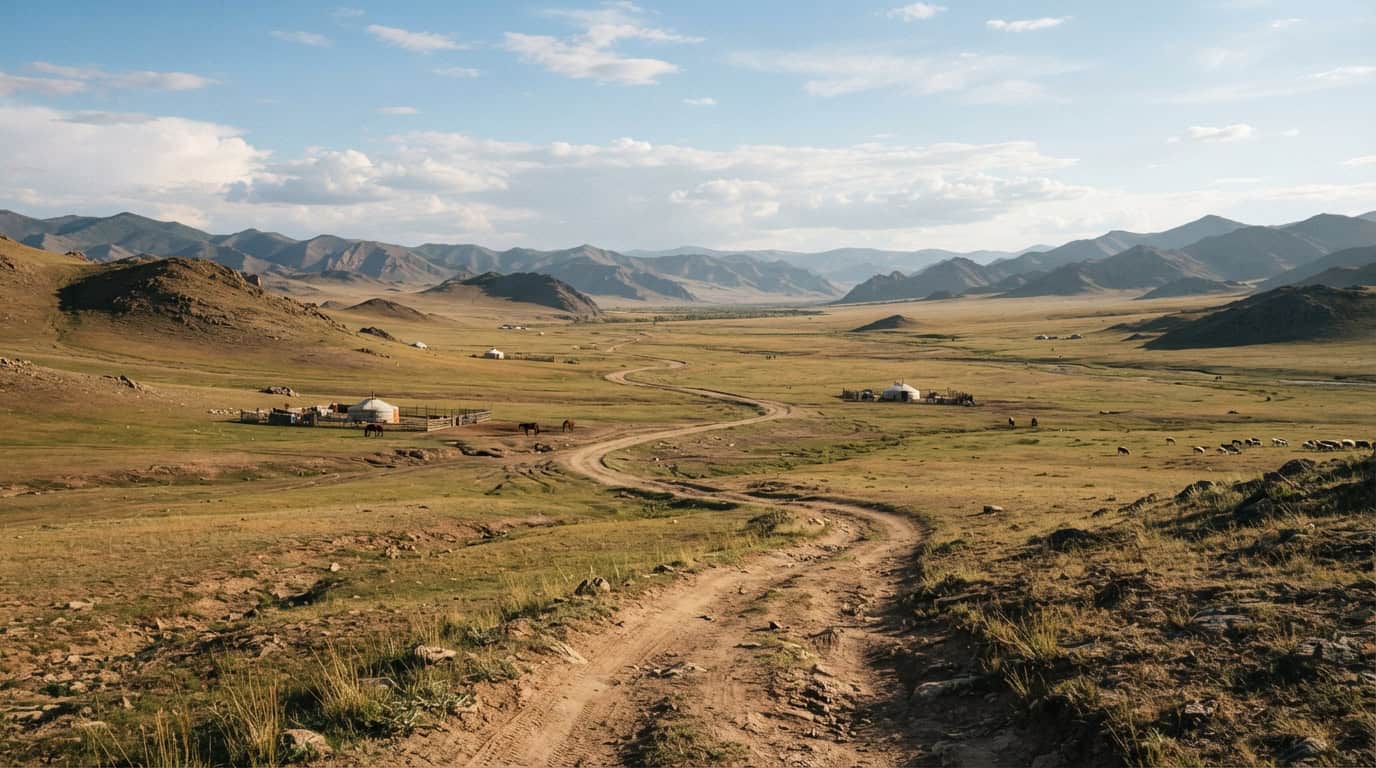
I begin this stage of my Mongolia travel itinerary with the westward journey from Ulaanbaatar to Karakorum, usually a full day by road depending on conditions. Once the capital of the Mongol Empire, Karakorum offers a fascinating change of pace, with broad grasslands replacing city streets and history woven into the surrounding landscape. I spend the afternoon exploring Erdene Zuu Monastery, one of Mongolia’s most important Buddhist sites, then visit the Karakorum Museum to see artifacts and exhibits that bring the empire’s past to life. Staying overnight nearby gives me time to enjoy the quiet atmosphere rather than rushing through this important stop.
From Karakorum, I continue into the Orkhon Valley, a UNESCO-listed cultural landscape where rivers, meadows, and rolling hills create some of the most memorable scenery on the route. I make time for Orkhon Waterfall, then follow the river through open countryside where horses graze and yurts appear on the horizon. The rough roads can make this a slow journey, but that is part of the experience, so I plan extra time and avoid packing too many stops into one day. A local nomadic homestay lets me share meals, learn about daily life, and experience Mongolia’s hospitality beyond the main tourist sights.
After a night or two in the valley, I begin the return journey to Ulaanbaatar, using the final stretch to appreciate the slower rhythm of the countryside. I recommend allowing at least three days for Karakorum and the Orkhon Valley, with four days offering more flexibility for walks, horseback riding, and unplanned village or riverside stops. Cash, warm layers, snacks, and offline maps are useful because services become limited once I leave the main roads. This part of the itinerary is especially rewarding for travelers who want Mongolia’s history and nomadic culture to unfold gradually, surrounded by wide-open landscapes.
Mongolia Route Planning Tips
A practical seven-day Mongolia travel itinerary should focus on one region rather than trying to cross the entire country. I would begin in Ulaanbaatar, then travel south to the Gobi Desert for Yolyn Am, the Flaming Cliffs of Bayanzag, and the dunes of Khongoryn Els before returning to the capital. This route offers a memorable mix of dramatic landscapes, camel rides, and ger camp stays, but the schedule is still demanding because rough road conditions can turn a short distance into a full day of travel. I always build in a spare day or keep the final night near Ulaanbaatar in case weather or road conditions cause delays.
With ten to fourteen days, I would add Karakorum and Erdene Zuu Monastery to create a richer loop through Mongolia’s history and countryside. A longer route might run from Ulaanbaatar to Karakorum, across the central steppe, then south through Bayanzag, Khongoryn Els, and Yolyn Am before returning north. Since independent navigation can be difficult beyond the capital, I recommend arranging a trusted local driver or joining a small-group tour that can handle route changes and vehicle repairs. The extra time makes it easier to linger at a nomadic family’s ger, ride horses across open grassland, or wait for sunset instead of rushing between stops.
Mongolia’s main overland travel season is May through September. June and September often offer a quieter balance of accessible roads and comfortable conditions, while July brings the excitement and crowds of Naadam. I carry Mongolian tögrög in cash for fuel stops, local meals, tips, and small purchases, since card payments become unreliable outside Ulaanbaatar. Changing temperatures call for layers, sun protection, rain gear, sturdy shoes, and warm clothing even in summer. In remote camps, a headlamp, reusable water bottle, power bank, and basic toiletries are especially useful. I also leave room in my bag for a sleeping liner and personal snacks, because comfort and preparation matter when the nearest shop may be many hours away.
Conclusion To A Mongolia Travel Itinerary
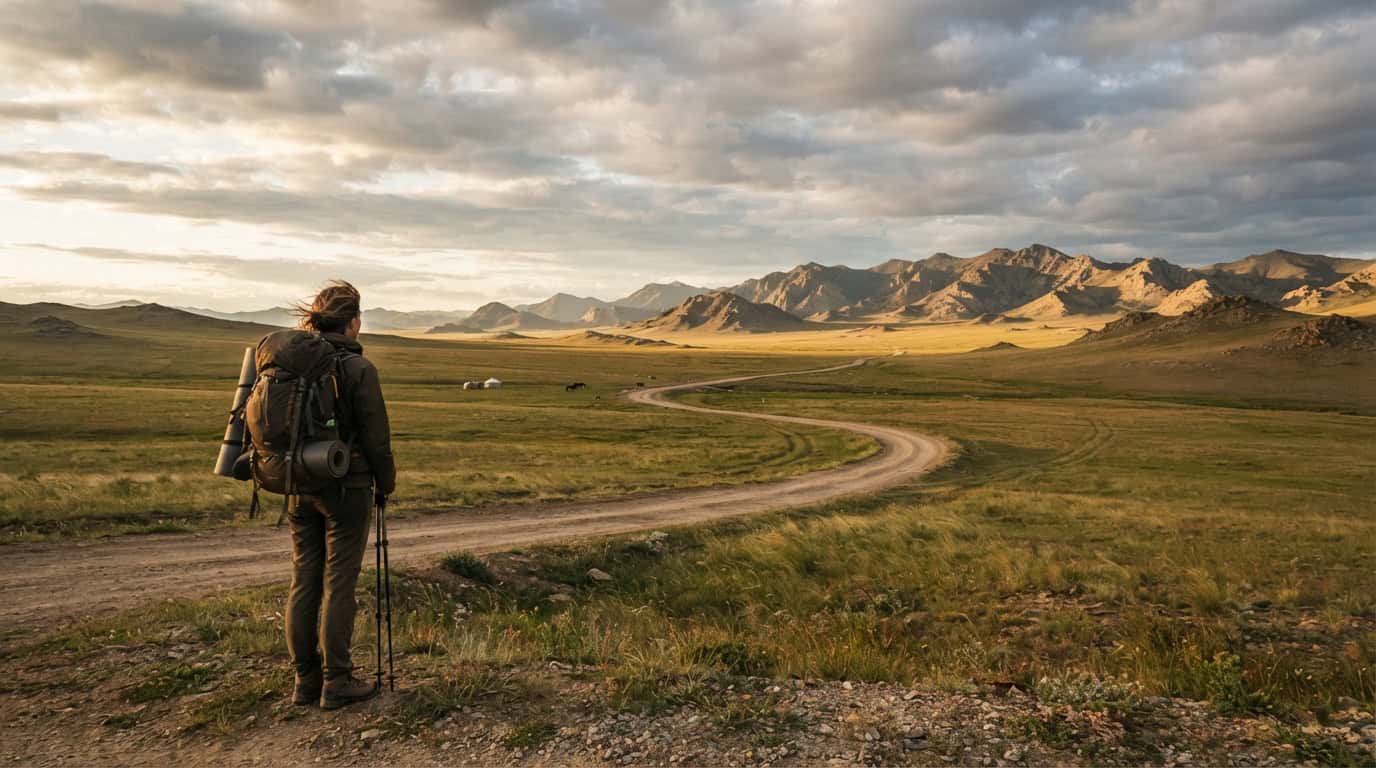
A well-planned Mongolia travel itinerary balances urban culture with the vast landscapes beyond Ulaanbaatar. I would begin in the capital, exploring the National Museum, Gandan Monastery, and lively local markets before traveling south to the Gobi Desert for towering dunes, camel rides, the Flaming Cliffs, and starlit nights in a ger. From there, the route can continue north toward Karakorum, where Erdene Zuu Monastery and the surrounding Orkhon Valley reveal Mongolia’s Buddhist and imperial history. This progression combines city highlights, desert adventure, historic sites, and meaningful encounters with families who continue to live close to the land.
Even with a carefully planned route, I would leave a little space in the schedule for Mongolia’s surprises. A roadside view of distant mountains, an invitation for tea inside a nomadic family’s ger, or a quiet pause beside a herd of horses can become the most memorable part of the journey. Because distances are enormous and road conditions can make travel slow, flexible days also make the itinerary more comfortable and realistic. The greatest reward is often found beyond the planned stops, in the silence, changing light, and quiet magic of Mongolia’s open steppe.
Craft a Realistic Mongolia Itinerary
A well-planned Mongolia travel itinerary balances iconic landscapes with realistic travel times. I would begin in Ulaanbaatar, using two days to explore Gandan Monastery, the National Museum, and the city’s lively markets before heading south toward the Gobi Desert. In the Gobi, the Flaming Cliffs, Khongoryn Els sand dunes, and Yolyn Am Valley offer unforgettable contrasts, from glowing red rock to sweeping dunes and icy mountain gorges. Allow extra time for rough roads, changing weather, and scenic stops, since even short distances can take most of a day.
From the Gobi, I would travel north toward Karakorum to visit Erdene Zuu Monastery and learn about the former capital of the Mongol Empire. A stay in a traditional ger camp or with a nomadic family adds a personal connection to Mongolia, especially when you share tea, sample local food, or ride horses across the steppe. May through September is generally the best period for overland travel, while July brings the excitement of Naadam along with larger crowds and higher demand. Booking key transport and camps ahead of time is wise, but leaving some flexibility makes it easier to enjoy unexpected encounters and weather delays.
Mongolia rewards travelers who embrace spacious days, limited road signs, and the freedom of remote travel. I recommend carrying Mongolian tögrög in cash outside Ulaanbaatar, packing layers for dramatic temperature changes, and choosing a route that leaves room to pause rather than rushing between attractions. Whether your journey lasts one week or two, connecting Ulaanbaatar, the Gobi Desert, and Karakorum creates a memorable introduction to Mongolia’s landscapes, history, and nomadic culture. With practical preparation and an adventurous outlook, the long roads become part of the experience rather than an obstacle.