
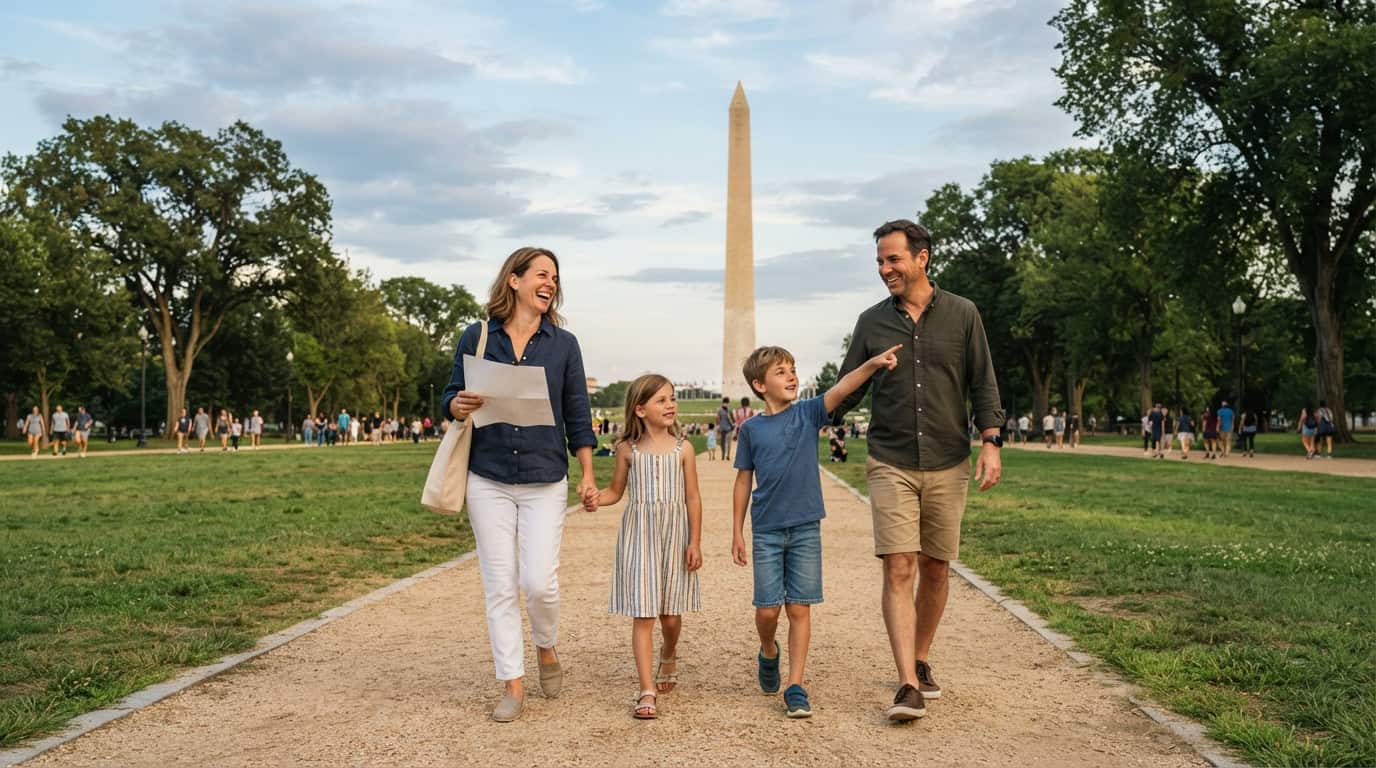
A memorable family itinerary balances big-city highlights with the snack breaks that keep little travelers happy. In New York City, I’d start the morning at the American Museum of Natural History, then trade the dinosaur halls for a picnic and playtime in Central Park.
On day two, take the ferry to see the Statue of Liberty, then wind down beneath the bright lights of Times Square. I always leave breathing room between major stops, so the day feels like an adventure rather than a race.
Key Takeaways
- Plan one main outing each morning, then leave time for meals, rest, and optional afternoon activities to prevent kids from becoming overwhelmed.
- Choose a few meaningful sights instead of trying to cover everything, and allow realistic time for walking, transit, breaks, and station transfers.
- Adapt the itinerary to your children’s ages, interests, energy, budget, and the weather; keep indoor backups and free activities in mind.
- Check opening hours, entry requirements, tour availability, and timed-entry reservations before visiting major museums and attractions.
Set A Kid Friendly DC Pace
A kid-friendly DC itinerary works best when I plan one main activity for the morning and leave time for lunch and a reset. We might explore the National Air and Space Museum or walk among the monuments on the National Mall, rather than trying to fit both into a rushed morning. Afterward, we can enjoy an unhurried lunch near the Mall, giving everyone time to eat, recharge, and share a favorite discovery. I learned how much this pace matters on a family trip when we skipped our usual rest break. By midafternoon, even the most exciting exhibit felt like too much for tired kids.
I like choosing a centrally located hotel so it’s easy to return for some quiet time before heading out again. After a nap, a swim, or an hour with books, an afternoon visit to the National Zoo or a short stroll around the Tidal Basin can feel like a fresh adventure. Use the Metro for longer trips between neighborhoods, and consider a short ride when little legs are worn out. Allow extra time for station walks and transfers, too. Keeping the afternoon optional helps the day feel like a vacation, not a checklist.
Four Days Across Washington DC
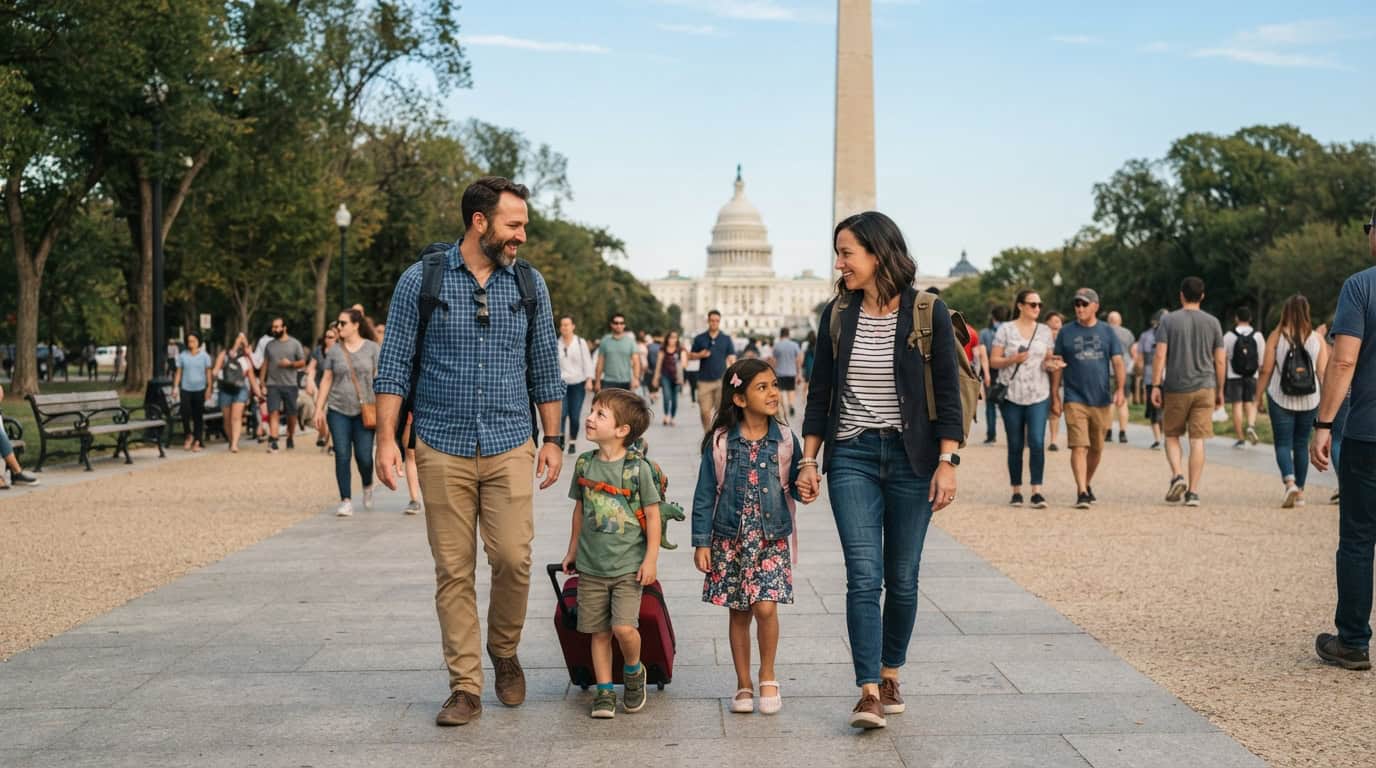
I’d begin Day 1 at the National Museum of Natural History, arriving in the morning so the kids can see the dinosaur fossils and gems before museum fatigue sets in. After lunch and a break, head to the National Mall for a few memorials. Choose a short route instead of trying to see them all. The open lawns make it easy to slow down, have a snack, and give little legs a rest. On Day 2, visit the National Air and Space Museum in the morning. Check ahead for entry requirements and reserve a timed slot if needed. Leave room for lunch before strolling through the U.S. Botanic Garden, where the lush conservatory offers a calmer finish to a busy day.
Day 3 is a good time to visit the National Zoo early, when animals are often more active and the paths may be less crowded. Keep the morning flexible, then return to the hotel for a proper rest before heading to Georgetown’s waterfront for dinner and an easy evening walk. On Day 4, tour the Library of Congress and explore the Capitol grounds. Confirm tour availability and entry requirements before setting out. Afterward, browse Union Market for a relaxed meal or a treat, especially if everyone is ready to choose their own lunch. I’d check transit times between stops each morning and allow extra time for breaks. A manageable pace can make the whole itinerary more enjoyable for the family.
Adjust The Itinerary For Your Family
I plan family days around one main outing, with plenty of breathing room. For example, start at 9 a.m. at a neighborhood playground, visit a nearby museum from 10:30 a.m. to noon, and focus on one or two exhibits if attention starts to wander. After lunch, return to your lodging for quiet time, then take an easy late-afternoon stroll along a waterfront path or through a botanical garden. With toddlers, I might swap the museum for a longer play stop. Older kids may enjoy choosing a hands-on exhibit or a favorite walking route.
I also tailor each day to our energy and budget by mixing free activities with one paid outing. Booking lodging with a kitchen makes breakfast and a simple dinner easier, while packed snacks and refillable water bottles help prevent hungry, thirsty detours. If rain rolls in, I keep an indoor option ready, such as a public library, a covered market, or craft time back at our lodging. A flexible plan leaves room for changing weather, slow meals, and unexpected delays, so the day can still feel like a vacation when the schedule shifts.
Explore DC at Your Family’s Pace
A family trip to Washington, DC feels more rewarding when big sights are balanced with time to eat, recharge, and travel between stops without rushing. Start the day at the National Mall, choose one or two Smithsonian museums that suit your kids, then pause for lunch and downtime before heading to the Lincoln Memorial. I’ve found that a shorter list of meaningful stops leaves room for unexpected moments, like watching ducks by the Reflecting Pool or lingering over a favorite exhibit. Allow realistic time for walking and transit, since even nearby landmarks can feel far apart on little legs.
Use this itinerary as a flexible starting point, not a schedule your family has to follow to the minute. If everyone has energy, add another monument. If the day calls for a slower pace, enjoy a longer meal or return to your hotel for a rest. Check opening hours and travel details before you go, and let your children’s ages, interests, and energy shape the final plan. The best DC memories often come from leaving enough space to explore together.