
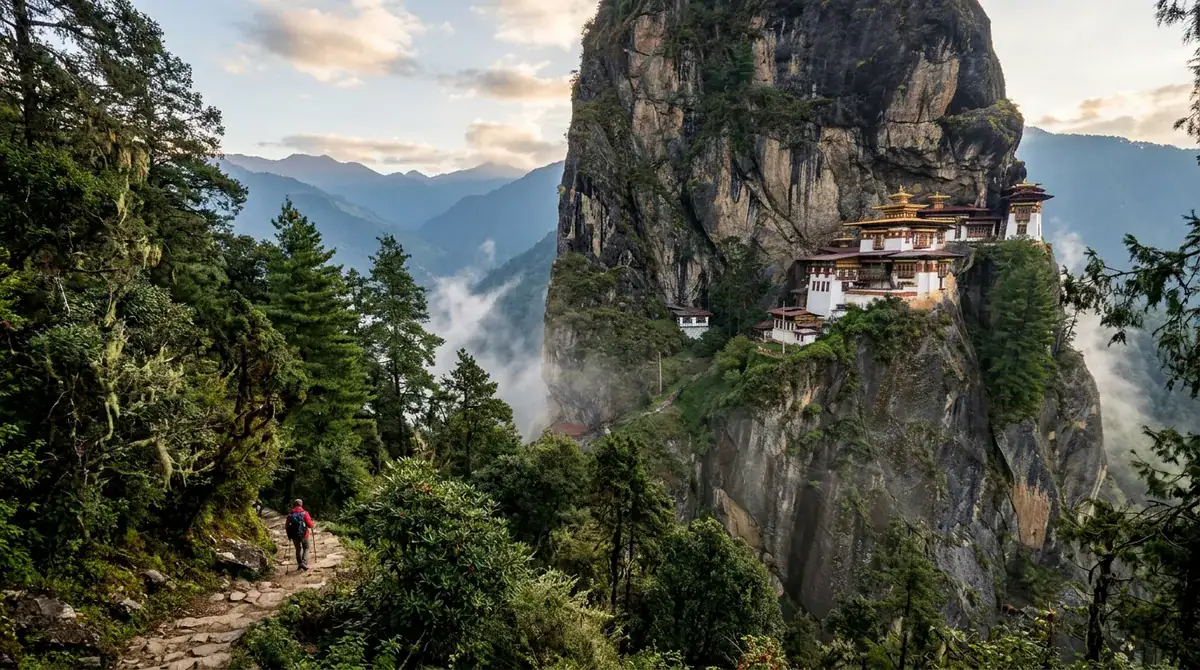
The Bhutan Tiger’s Nest hike typically takes five to six hours of steady climbing to reach Paro Taktsang, the cliffside monastery that sits at 3,120 metres. The trail covers about 4 kilometres each way and climbs roughly 900 metres above the Paro valley floor, so it is a demanding walk rather than a casual stroll. Bhutan’s Department of Tourism describes it as a demanding cultural hike, and that label fits. You will need stamina, sturdy boots, and a plan for the thinner air near the top. Take the climb in stages, and the reward is worth every switchback.
The trail is also a place of worship, so the experience goes well beyond the views. Recent numbers show how busy it has become. Bhutan Broadcasting Service reported more than 108,000 visitors to Taktsang in 2025, up from more than 70,000 the year before. That growth is a big reason many travelers choose an early start, when the path is quieter and the valley is still waking up. Pack for changing weather, dress with respect for a sacred site, and give yourself time to pause at the viewpoints. In the sections that follow, we walk through each stage of the climb, the rules to know before you go, and how to plan your own trip to Paro Taktsang.
Key Takeaways
- Hikers on the Tiger’s Nest trail should give the descent a generous time margin, because going down often takes longer than expected.
- Keep the Tiger’s Nest pace slow enough to hold a short conversation, because the thinner air at 3,120 metres makes every step harder.
- Guests who want a horse on the Taktsang trail must pre-book through the Taktsang Services Management Group, as required since April 2023.
- Travelers entering the monastery halls need a guide, so arrange one before the climb begins.
- Visitors from countries other than India should budget for the Sustainable Development Fee, which is USD 200 per night at the standard rate.
How Long Does the Tiger’s Nest Hike Take?
Plan on five to six hours for the hike itself, which is the official estimate, and add extra time on top for the monastery visit. The round trip is roughly 8 kilometres, but distance matters less than the climb, which is steady and unbroken rather than gentle.
The first stage is the lower forest path. The trail winds through cool, shaded woodland, and the ground can be damp and crossed with roots. Use this section to find your rhythm and let your breathing settle before the real effort starts.
The middle climb is where the switchbacks tighten and the uphill sections grow longer with fewer flat spots. Expect your legs to feel the work here. Treat each bend as a natural place to stop, drink some water, and look back at the valley opening up below you.
The final approach brings you to the cliff edge, where the path narrows and the monastery comes into full view. Keep your pace slow in this stretch, and keep your stops brief so you do not block people behind you on the narrow path.
The walk back down is where many hikers feel the day most. Downhill steps press hard on the knees, and tired legs are more likely to slip on loose stones. Going down often takes longer than people expect, so do not treat it as the easy part.
To keep the day manageable, build it around a few simple habits:
- Set off early so you reach the top while the path is still quiet and the air is cool.
- Pause at each viewpoint and bend along the way rather than pushing straight through.
- Save extra time at the top for the visit inside, since it has its own unhurried pace.
- Give yourself a generous margin for the descent, and take each downhill step with soft, bent knees.
Is the Tiger’s Nest Hike Difficult at Altitude?
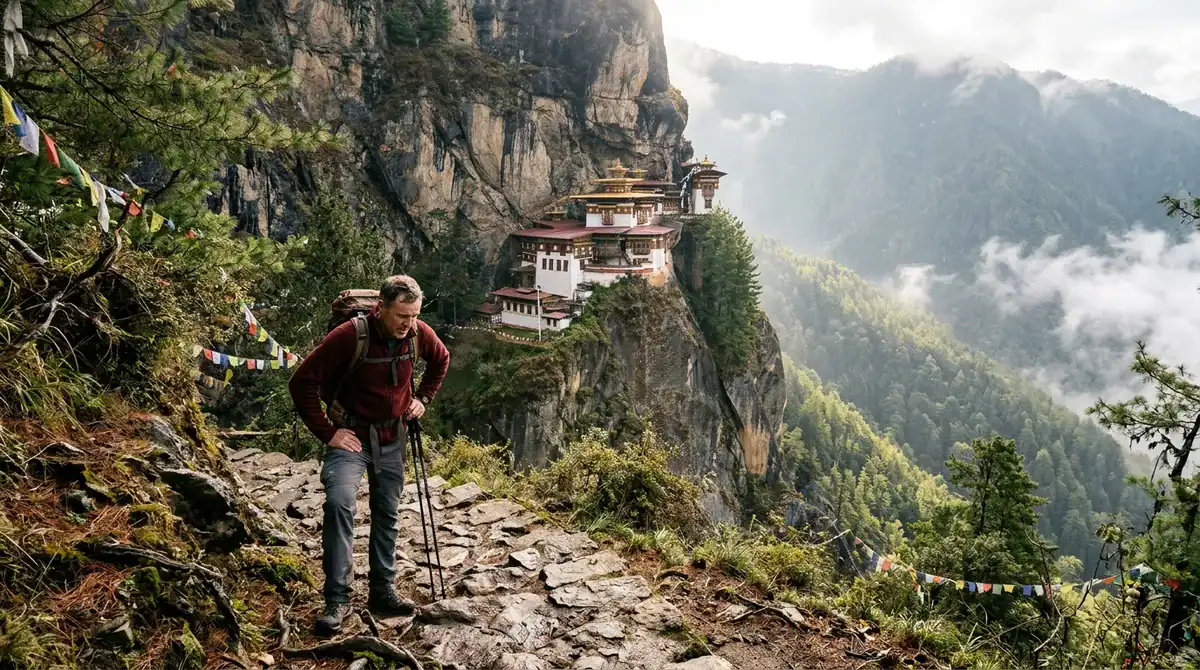
Yes, the Tiger’s Nest hike is hard, but most healthy adults can manage it with a steady pace and regular breaks. The challenge comes from two things working together. The monastery sits at about 3,120 metres, and the path must climb roughly 900 metres above the valley floor with few easy stretches. That makes the climb steep and sustained rather than a series of short hills.
Altitude changes the effort of every step. Each breath carries less oxygen, so your heart and lungs work harder for the same movement, and a climb that feels comfortable at home can leave you gasping halfway up. Fitness helps, but pace matters more than speed. Walk at a rhythm where you could still hold a short conversation. If you cannot speak in full sentences, slow down or stop.
Plan your breaks before you feel you need them. Stop at the bends, sip water, and let your breathing settle before moving on. Use the switchbacks as checkpoints, and count your steps in small sets if that helps you keep a steady rhythm. Many hikers rush the lower forest path because the first hour feels easy, but that early push is often what makes the upper sections so tiring.
Some travelers should take extra care. Older visitors, families with young children, and anyone with a heart or breathing condition should plan longer rest breaks and talk with a doctor before booking the hike. Children tire in unpredictable ways, so agree on a turnaround point in advance and be ready to carry a small child on the steepest sections. If you notice a severe headache, dizziness, or unusual breathlessness, stop and head down rather than pushing on toward the top.
How Do I Get to Tiger’s Nest and Should I Ride a Pony?
The Tiger’s Nest trailhead sits a drive from Paro town, and the walk begins at the car park, so the transfer is the first real decision of your day. Plan it backward from the time you want to start walking. Ask your hotel to arrange a driver the evening before, and agree on a pickup time that gets you to the car park with boots laced while the path is still quiet. Build in a buffer for traffic, a slow breakfast, or a forgotten water bottle, since a rushed start makes the early climb harder than it needs to be. Pack your daypack the night before so you are not searching for layers in the dark.
Horse rides on the Taktsang trail are a separate decision, and they need planning ahead. Since April 2023, guests seeking a horse must pre-book through the Taktsang Services Management Group, following a requirement set by Paro Dzongkhag, as described in an official announcement from Bhutan’s tourism authority. Guests who arrive without an advance booking may have to wait for a turn, and that wait can eat into the morning you planned around. If a pony is part of your plan, book it before you travel rather than hoping for a space on the day.
Ponies suit visitors who want to save energy for the monastery itself, especially after a long night of travel or if the steep climb worries you. A ride can take some of the strain out of the trail, leaving you fresher for the cliffside visit. Walkers, however, still climb the steep final sections on their own feet, so the pony is a way to spend your energy wisely rather than a promise of an easy finish. Whichever route you take, carry water, keep a steady pace, and leave time at the top to sit quietly and take in the view.
The Legend of Guru Rinpoche and the Monastery’s Story
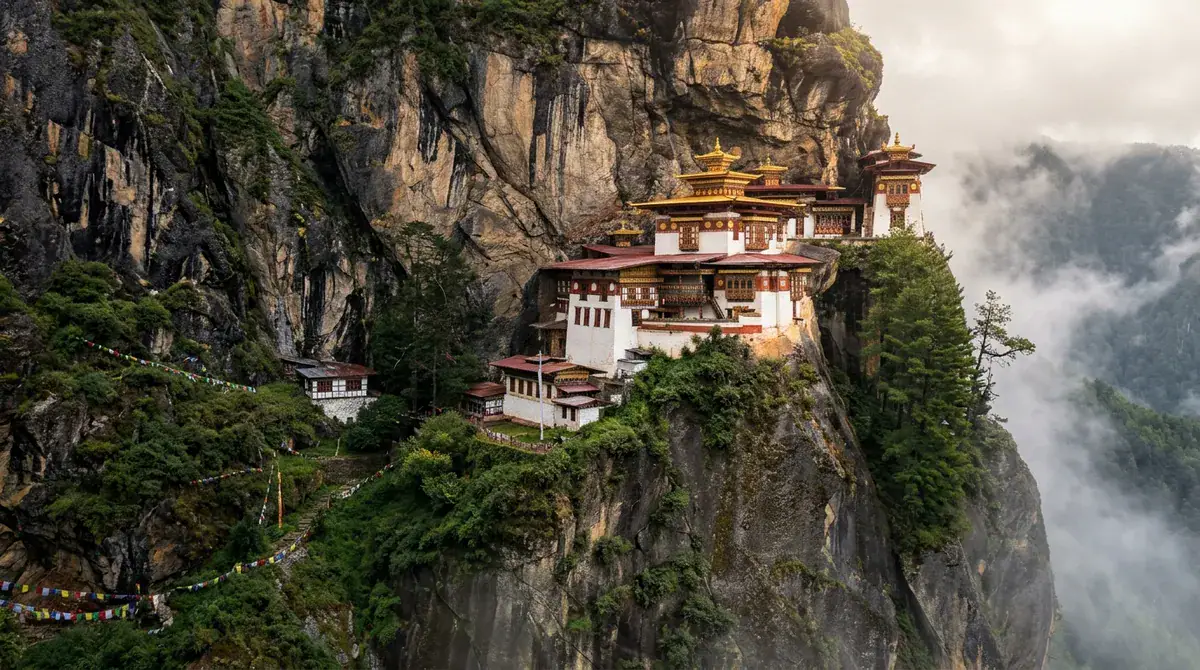
Bhutanese tradition tells the story of Guru Rinpoche, the Buddhist master who is widely credited with spreading the faith across the Himalayas. According to the legend, he flew to this cliff on the back of a tigress and then meditated in a cave in the rock. That flight gave the monastery its name, Tiger’s Nest, and it is the reason the site matters so deeply to Bhutanese Buddhists.
The monastery complex was built into the cliff face above the Paro valley, with halls and shrines seemingly grown out of the stone. For generations, pilgrims have made the climb as an act of devotion. The path you walk today follows that same long tradition, even if your reasons for going are quite different.
The complex has not always been spared. A fire damaged the buildings in the past, and restoration followed. That history explains why the temples and paintings are cared for so carefully today. The restored halls are not just old buildings. They hold sacred art that has taught and comforted worshippers for centuries, and protecting it is part of what keeps the place alive.
Knowing this story changes the walk. Each switchback becomes a stage in a journey rather than a box to tick on a list. When you stop at a bend to catch your breath, you can think about the people who climbed this same path long before the viewpoints became busy with visitors. We think the view is the reward, but the meaning behind the monastery is what gives the climb its purpose.
What to Wear and Bring on the Trail
Pack for two settings on the same day. The trail is a working hike, but the monastery is a sacred place. Bhutan’s official visitor guidance asks temple visitors to wear long sleeves and cover their legs, so bring a long-sleeved top and trousers or a long skirt that you can wear from the first step on the path.
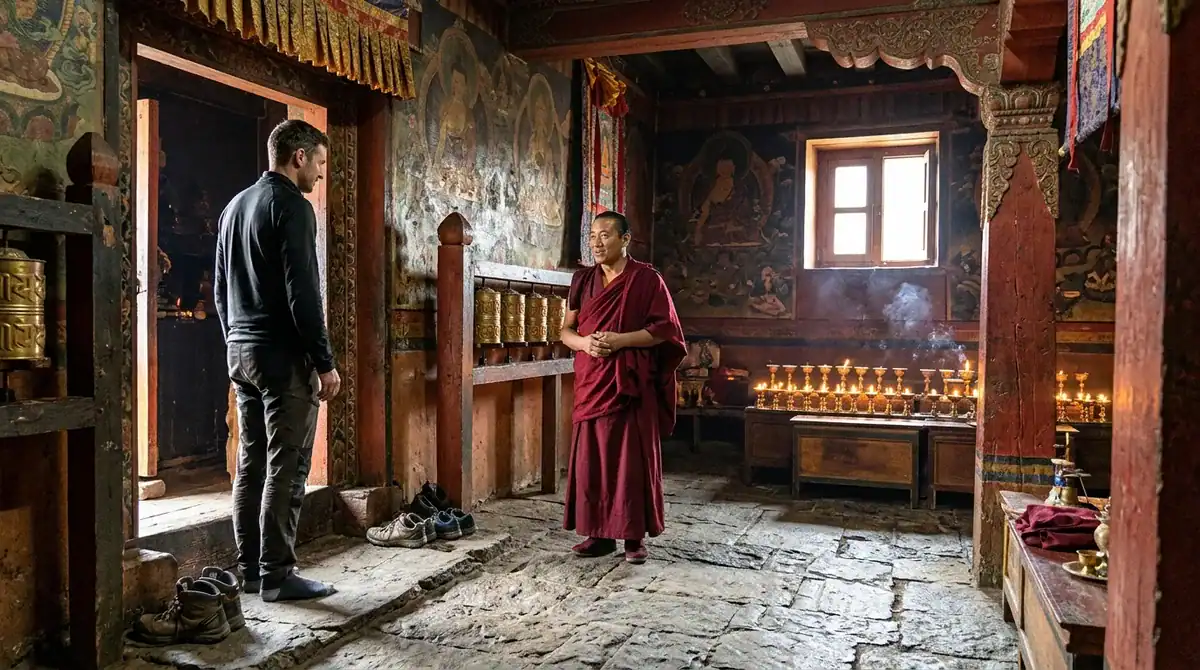
Shoes need thought too. You will take them off before entering the temples, so choose footwear that slips on and off easily. Your hiking boots can still carry you up the trail, but loosen the laces enough to step out of them quickly at the door. Thick, clean socks are worth packing, since the halls can feel cool underfoot.
The climb warms up fast, and the cliff area can turn cold and windy once you stop moving. Dress in layers you can add or remove at each bend. A light fleece tied around your waist is easy to manage on the steep sections, and a windproof top will be welcome at the viewpoints.
Most hikers find these items worth carrying in a small daypack:
- Water, enough for the full round trip
- Snacks with steady energy, such as nuts, dried fruit, or biscuits
- Sunscreen, a hat, and sunglasses for the open sections
- A light rain layer, since weather in the valley can change quickly
Bring cash for the entry fee, which the monument fee list sets at Nu 1,000 for adults. Keep some smaller notes as well for water, snacks, or other small purchases along the route.
What to Know Before Going Inside the Temples
Before you reach the temple doors, sort out three things: your guide, your entry fee, and your manners. The adult entry fee for the monument is Nu 1,000, so have cash ready at the gate rather than digging through your daypack while people queue behind you.
A guide is required to enter monuments, so arrange one before you start climbing. Bhutan’s official tourism FAQ says the same for dzongs, and it adds that treks must be undertaken with an accredited tour operator or guide. Confirm the arrangement well ahead of your climb, and agree on where and when you will meet your guide so the visit does not stall at the entrance.
Inside, the mood changes. The halls are sacred, so keep your voice low and stay quiet as you move through them. Do not touch religious items, and resist the urge to run your hand along a painted wall or a carved railing. Even a light touch adds wear to art that has been cared for for centuries.
Photography inside sacred sites is something to avoid, so put the camera away at the door. Once you step across the threshold, leave your phone in your pocket too. You will notice the butter lamps, the painted murals, and the quiet altars more clearly when you are looking with your own eyes rather than through a screen.
Take your time inside rather than rushing through to the viewpoint. It is tempting to treat the temple as a corridor on the way to the view, especially after a long climb, but the halls deserve your slowest pace. Stand quietly near the altars, study the details on the walls, and let your breathing slow. The temple visit is the heart of the day, so give it the attention it asks for, and save the view for afterward.
When Should You Start the Hike?
Start as early as you can, ideally before the mid-morning crowds arrive. Visitor numbers have climbed quickly, with more than 70,000 people reaching the monastery in 2024 and more than 108,000 in 2025. More than 38,000 visitors were recorded in the first four months of 2026 alone, so the trail is busier than many travelers expect.
As the numbers grow, the path and the temple halls tend to fill up during mid-morning, when day visitors and guided groups arrive at the same time. Crowds slow the steep sections, and they turn the narrow final approach into a line of people waiting for a turn to pass. Getting there earlier means you can climb at your own pace.
An early start also brings cooler air. The climb warms up quickly once the sun reaches the valley, and a slow ascent in the heat can leave you drained before you reach the cliff. Morning temperatures make the switchbacks far more comfortable, and you will have more energy left for the temple visit.
The light is often better in the morning too. Soft early sun falls across the cliff face and the valley below, giving the monastery a warm glow that is easier to appreciate with your own eyes. Midday light can flatten the scene and cast harsh shadows, so the early hours suit anyone who loves the view from the outside.
Before you set off, check the latest opening and entry timing. Access rules can change, and a change can reshape your whole morning, so confirm the details with your guide or tour operator the day before you climb.
What Else Is There to Do Near Paro?
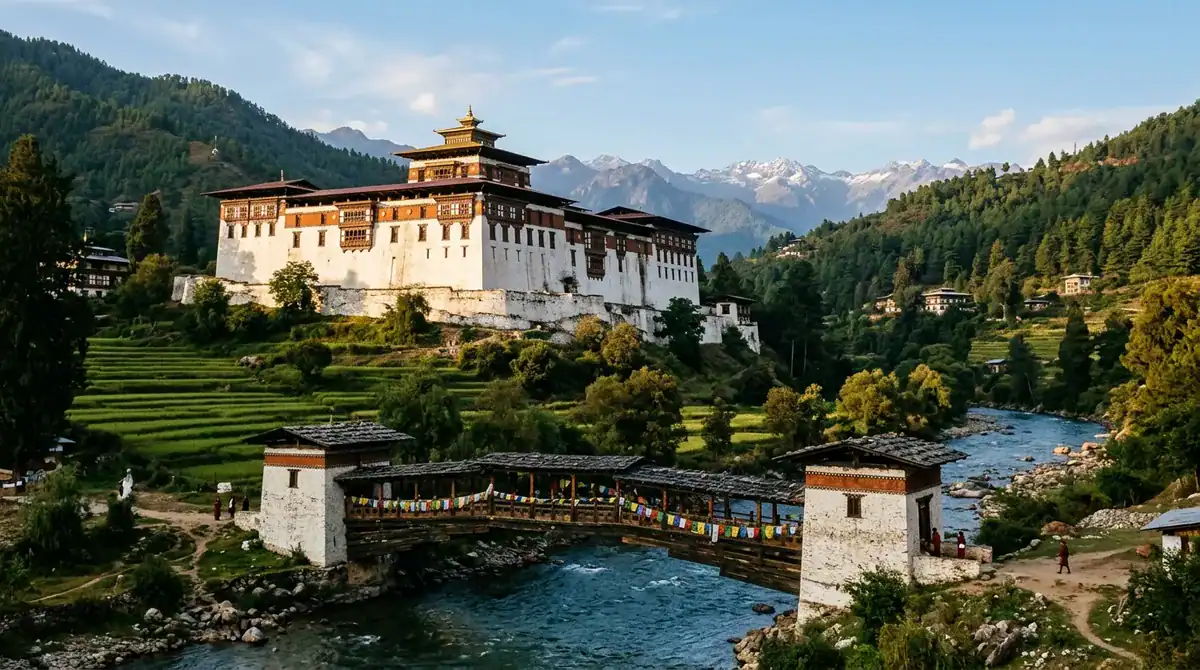
Yes. Paro is an excellent base for the hike, and the valley has plenty to see before or after your climb. Paro Dzong, a fortress-monastery beside the town, is a good first stop, and the lanes around it show local life at its most ordinary: farmers heading to market, monks in maroon robes, and prayer wheels turning outside small shrines. Give yourself an afternoon for the farmhouses and rice fields, which glow in the evening light.
Thimphu, the capital, is a short drive from Paro and offers a sharp change of pace. After a morning of silent forest and open sky, its busy streets and modern shops feel like a different country. Visit the National Memorial Chorten, where locals walk slowly around the white stupa, and then head up to the great Buddha Dordenma statue on the hillside above the city.
Punakha, farther east, suits a fuller itinerary. Its river valleys and terraced fields feel softer and greener than Paro, and Punakha Dzong, set where two rivers meet, is one of the most striking historic fortresses in the country. Walks along the riverbank are an easy way to slow the pace after the mountain trail.
Because treks in Bhutan must be arranged with an accredited tour operator or guide, many travelers plan the Tiger’s Nest visit as part of a guided trip from the start. A good operator handles the permits, arranges transport between Paro, Thimphu and Punakha, and sets the timing of each visit, which is a real help on a first trip. Tell your operator early which day you want to climb, and ask them to plan the drives so the early start for Taktsang does not clash with a long journey the day before.
Planning Your Own Climb to Paro Taktsang
Start by choosing your climbing day, and give yourself a spare morning in case rain or a tired body pushes the walk back. Then check the costs that apply to your nights in Bhutan. Visitors from countries other than India pay a Sustainable Development Fee of USD 200 per night at the standard rate, and the current discounted rate is USD 100 per night under a waiver that runs through December 31, 2029. Indian nationals with a valid Indian passport or voter ID pay Nu 1,200 per person per night, so budget for the fee that matches your passport before you book flights or hotels.
Next, contact your tour operator with your climbing date, your fitness level, and whether you want a pony. Ask them to confirm your guide for the monastery visit and to plan your pickup from Paro town so you reach the car park while the path is quiet. If you plan to ride, book that spot before you travel.
In the weeks before you leave, train on stairs and hills with a daypack that holds the water and layers you will carry. Build up to one long walk that takes close to the five to six hours the hike typically needs, and practice walking downhill with soft knees, since the descent tests many people the most.
Finally, write a one-page plan with your date, your guide’s name, your meeting point, your turnaround time, and your emergency contact. Keep a copy on your phone and another with your hotel. Then you can arrive at the trailhead with nothing left to decide except your next step.