
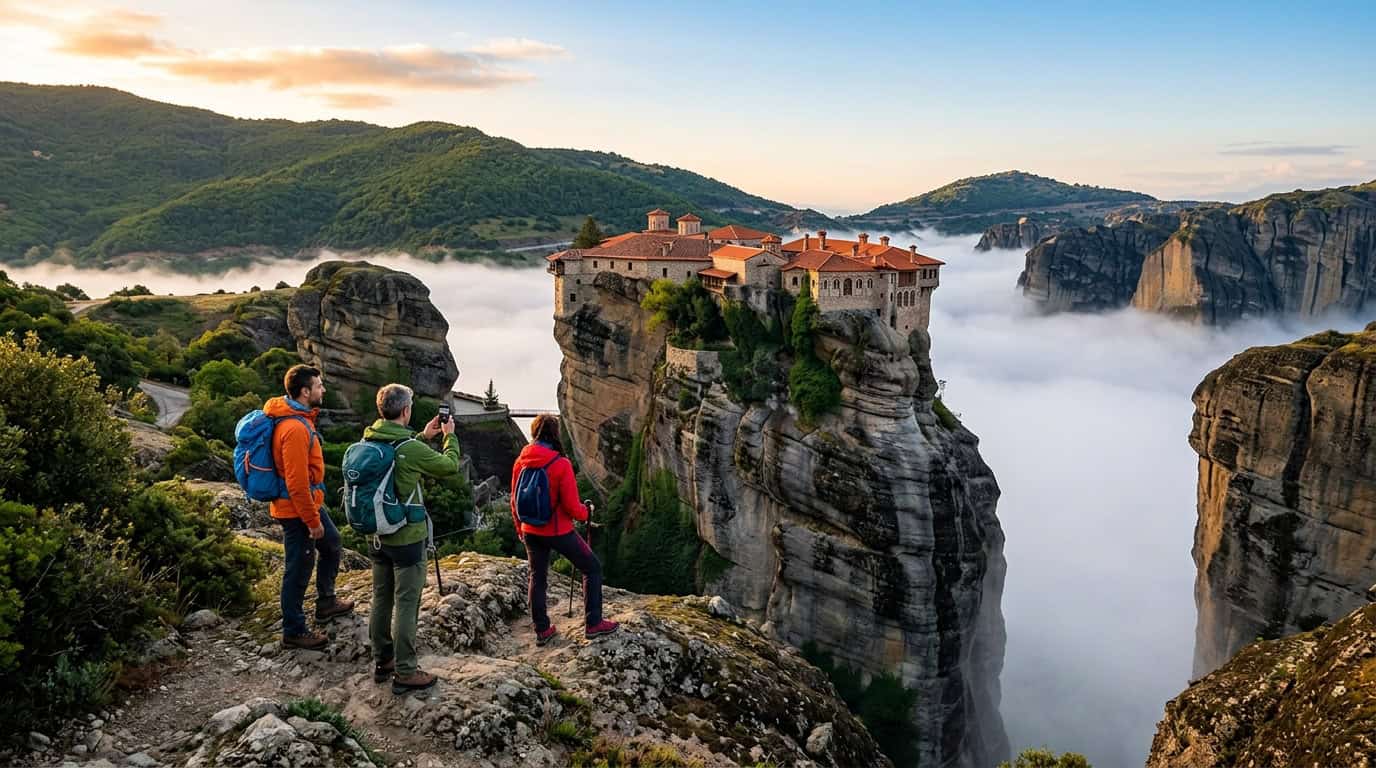
Perched atop towering limestone pillars that seem to defy gravity, the ancient retreats of central Greece offer a spiritual experience unlike any other on earth. Embarking on a monastery tour feels like stepping into a dream where 14th-century history meets breathtaking geological wonder. As I stood on the cliffs of Kalambaka, watching the mist swirl around the Great Meteoron, I realized why travelers are drawn to these columns of the sky every year.
With six active monasteries still welcoming visitors today, planning your ascent requires a bit of practical magic and a pocket full of Euros. While the views are priceless, remember that most sites charge a small €5 entry fee and strictly prefer cash over cards. Whether you are navigating the steep stone stairs of the Holy Trinity or admiring the frescoes at St. Stephen’s, these sacred heights promise a profound connection to the past.
Key Takeaways
- Carry at least €5 in cash per person for each monastery entrance, as digital payments are generally not accepted at these traditional sites.
- Adhere to a strict modest dress code by covering shoulders and knees, or utilize the wrap-around skirts often provided at the monastery entrances.
- Navigate the six active monasteries by hiking ancient monk trails from Kalambaka or Kastraki to experience the spiritual silence and geological scale inaccessible by tour bus.
- Plan your itinerary around rotating schedules and closing days, ensuring you arrive early to beat midday crowds or stay for the golden hour sunset over the Pindus Mountains.
Hiking Ancient Paths Between The Six Active Monasteries
Stepping onto the ancient stone paths that wind through the towering conglomerate pillars feels like a journey back to the 14th century. While most visitors are confined to the windows of tour buses, trekking the hidden monk trails allows you to experience the true spiritual silence of central Greece. I found that the air feels cooler and the perspective more intimate when you are walking beneath the massive shadows of the rocks rather than looking down from a parking lot. These historic routes connect the six remaining active monasteries, offering a sense of discovery that you simply cannot get from the main road. The physical connection to the earth here is profound, especially as you navigate the same inclines that monks used for centuries to transport solitude.
The trek toward Great Meteoron and Varlaam is particularly rewarding because it reveals views of the landscape that remain hidden from the standard driving route. As you ascend, the geological drama of the region unfolds with every step, revealing the precarious way these holy sites cling to the vertical cliffs. I highly recommend starting your hike early in the morning from Kastraki to beat the midday heat and the peak crowds. Make sure to carry plenty of water and keep a small stash of Euro coins ready for the entry fees at the top. To help you plan your trekking route between these architectural wonders, keep these practical details in mind for your journey:
- Active Monasteries: You can visit Great Meteoron, Varlaam, Rousanou, St. Nicholas Anapafsas, Holy Trinity, and St. Stephen.
- Entrance Fees: Expect to pay a standard fee of 5 Euro per person at each monastery, and remember that they only accept cash.
- Dress Code: Both men and women must dress modestly with shoulders and knees covered, though most sites provide wrap-around skirts at the entrance.
- Timing: Most monasteries close for a few hours in the afternoon or on specific weekdays, so check the rotating schedule before setting out.
Reaching the summit of the Holy Trinity monastery after a vigorous climb is a moment of pure magic that makes every bead of sweat worth it. Standing on the edge of the terrace, you can hear the faint sound of bells echoing across the valley while the town of Kalambaka looks like a miniature toy set far below. The sense of peace in these high altitude sanctuaries is palpable, offering a stark contrast to the modern world left behind at the trailhead. I spent nearly an hour just sitting on a stone wall at Varlaam, watching the light shift across the stone pillars and feeling a deep appreciation for the monks who built these columns of the sky. It is an inspirational landscape that demands you slow down and breathe in the ancient history surrounding you.
Chasing The Golden Hour On A Meteora Sunset Tour
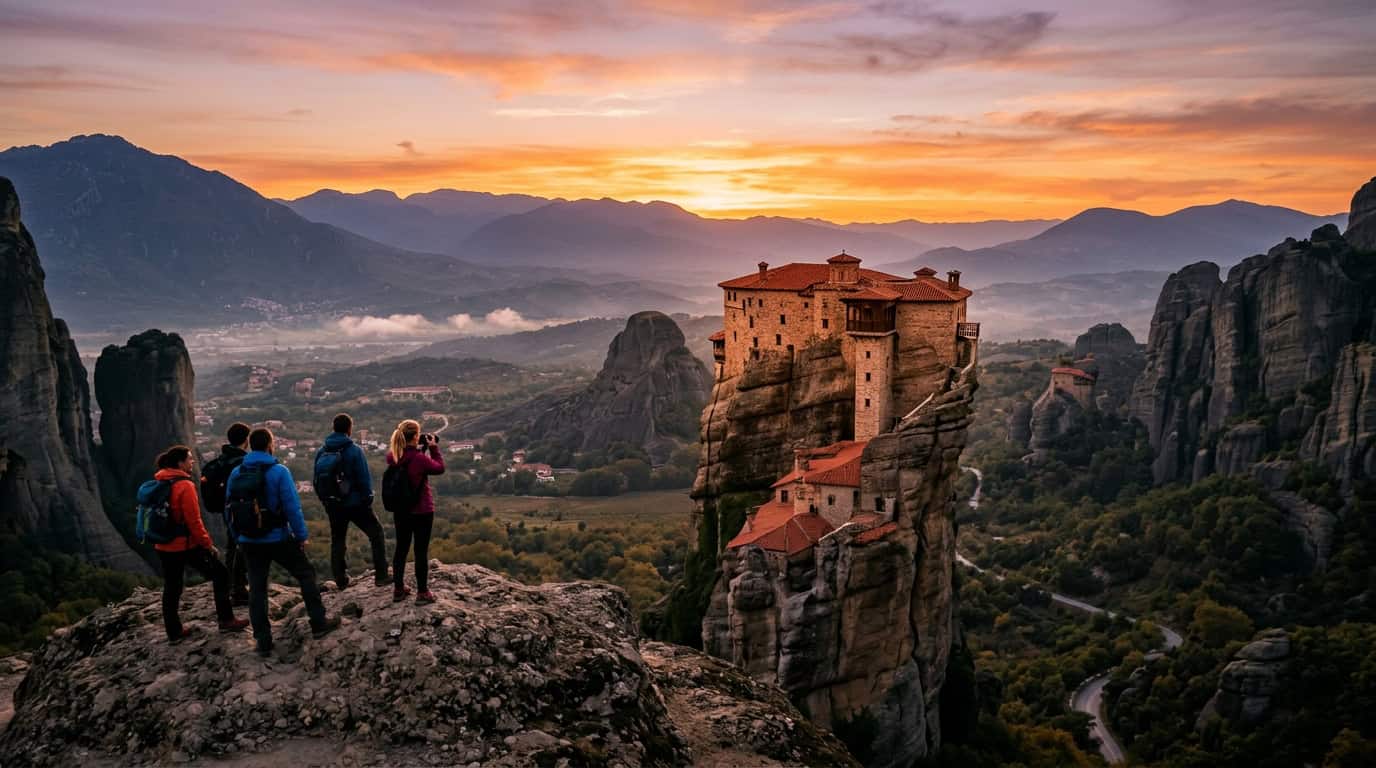
As the afternoon sun begins its slow descent over the Pindus Mountains, the towering sandstone pillars of Meteora transform into a landscape that feels entirely otherworldly. I found that the best way to experience this spiritual heart of central Greece is to find a quiet perch on the rocks just as the light turns to gold. The dramatic shadows stretch across the valley, illuminating the ancient stone walls of the six active monasteries and highlighting the sheer verticality that once protected the monks from the world below. There is a profound silence that settles over the cliffs during this hour, making it the perfect time to reflect on the incredible feat of 14th century engineering required to build these columns of the sky.
To make the most of your evening, I recommend arriving at the panoramic viewpoints early to secure a spot away from the main road. While the interiors of the monasteries usually close by late afternoon, the exterior views are arguably more breathtaking when bathed in the warm, orange glow of dusk. Be sure to bring a light jacket, as the temperature can drop quickly once the sun dips behind the peaks, and remember to keep your camera ready for the moment the sky turns a deep violet.
- Bring at least 5 Euros in cash per person if you plan to catch the final entry times for monasteries like Holy Trinity or Varlaam.
- Wear sturdy hiking boots or shoes with good grip, as the smooth rock surfaces at the viewpoints can be surprisingly slippery.
- Respect the spiritual nature of the site by keeping noise to a minimum while enjoying the sunset near the monastic enclosures.
- Plan your route from Kalambaka or Kastraki in advance to ensure you reach the higher elevations before the golden hour peaks.
Walking between these giants of stone offers a sense of scale that you simply cannot get from a car window. I spent my final hour in the area hiking the monasteries near the Rousanou Monastery, watching the light dance off the terracotta roof tiles and the sheer cliff faces. It is a deeply moving experience that captures the essence of Greece far beyond the typical island beaches. This quiet, spiritual atmosphere is exactly what makes the mainland such a necessary stop for anyone looking to connect with the history and soul of the Mediterranean.
Navigating The Steep Steps Of Holy Trinity And St Stephen
Choosing between the monasteries of Meteora often comes down to a choice between a rewarding physical challenge and a peaceful, accessible stroll. If you are looking for that iconic, cinematic experience of climbing to the sky, the Holy Trinity monastery is your ultimate destination. To reach the top, you must first descend into a deep ravine before tackling a vertical staircase of 140 stone steps carved directly into the cliff face. It is a heart-pumping ascent that truly makes you feel the isolation and devotion of the monks who once used ropes and nets to reach these heights. The view from the summit is your reward, offering a dramaic 360 degree panorama of the Pinios River and the surrounding stone forest.
In stark contrast, St. Stephen’s monastery provides a much gentler experience that is perfect for those who want to focus on the spiritual atmosphere without the heavy cardio. This is the most accessible site in the region because it is reached via a flat, stable bridge rather than a grueling climb. Once inside, you can wander through the beautifully preserved gardens and admire the frescoes in the main cathedral. It is an ideal choice for travelers with limited mobility or those who simply want a calm moment of reflection after a long day of hiking.
To help you plan your route through these majestic peaks, keep these practical visiting tips in mind:
- Carry at least 5 Euros in cash per person for the entrance fee at each monastery, as digital payments are rarely accepted.
- Dress respectfully by ensuring shoulders are covered, and remember that women are required to wear long skirts, which are often provided at the entrance.
- Start your journey as early as possible to beat the midday crowds and the heat of the Greek sun.
- Check the specific opening days for each site, as Holy Trinity and St. Stephen have different closing days during the week.
While the physical demands of these two sites are worlds apart, they both capture the ethereal beauty that makes central Greece so unique. Standing on the edge of a cliff at Holy Trinity feels like an adventurous conquering of the landscape, while the quiet halls of St. Stephen offer a more intimate look at monastic life. Whichever path you choose, the spiritual energy of these columns of the sky is sure to leave you breathless. Make sure to bring plenty of water and a camera to capture the mist rolling over the valley floor below your feet.
Essential Planning Tips For Your Kalambaka Basecamp
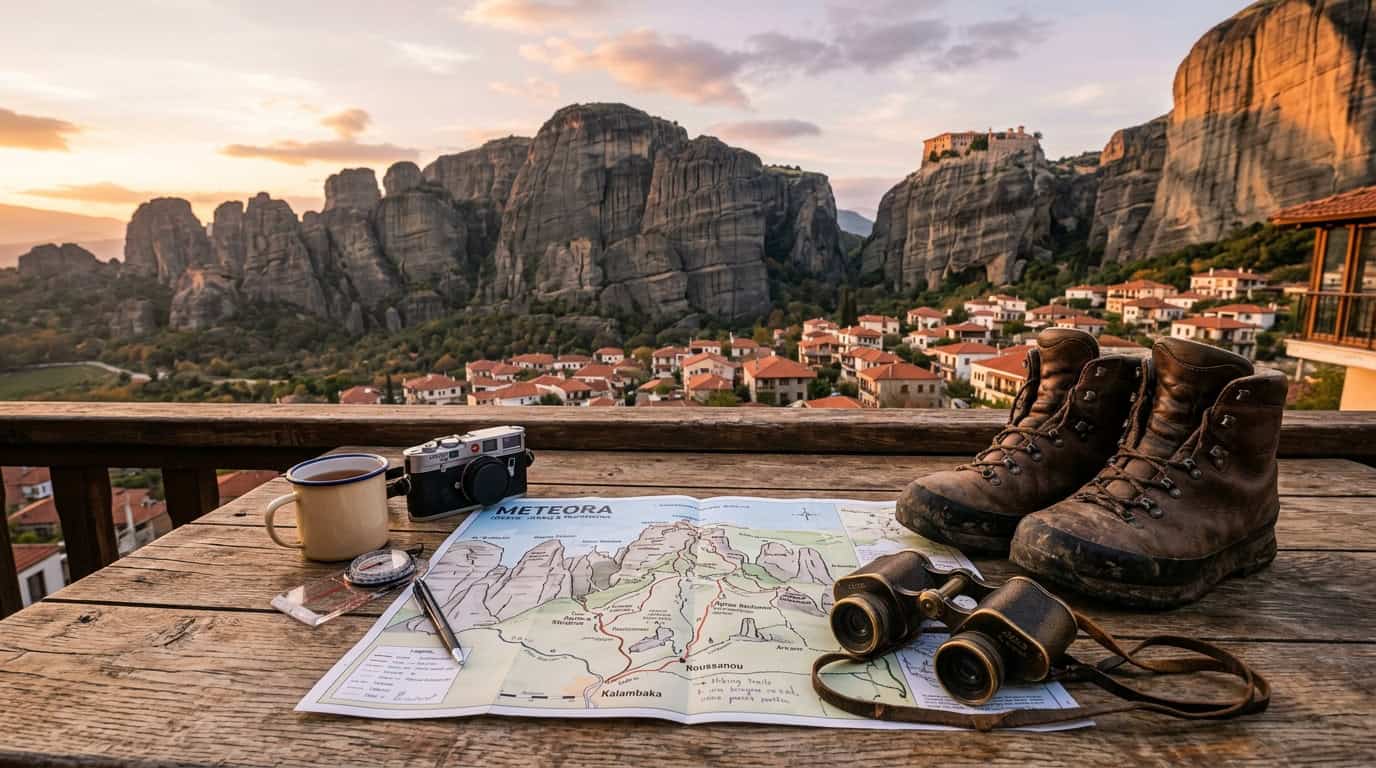
Setting up your basecamp in the charming town of Kalambaka is the smartest way to immerse yourself in the spiritual energy of this dramatic landscape. Nestled right at the foot of the towering sandstone pillars, this town offers a front-row seat to the changing light as it dances across the cliffside monasteries. I found that staying here allowed me to beat the crowds arriving from Athens, giving me a peaceful head start on the monastery hiking trails that wind through the valley. It is the perfect spot to refuel with local Greek cuisine after a long day of climbing stone steps and exploring ancient frescoes.
Preparing for your ascent requires a bit of practical foresight to ensure your experience remains focused on the breathtaking views rather than logistical hiccups. While the world is increasingly digital, the monasteries remain traditional, meaning you must carry physical currency for your journey. Each site requires a small entry fee, and since they generally do not accept cards, having a pocket full of Euro coins and small bills is essential. You should also be mindful of the modest dress code that honor the sacred nature of these active religious sites.
- Carry at least €5 in cash per person for each monastery you plan to visit.
- Wear clothing that covers your shoulders and knees, or be prepared to borrow a wrap at the entrance.
- Check the rotating schedules for each monastery, as they are not all open every day of the week.
- Pack plenty of water and sturdy hiking shoes if you plan to walk the scenic paths between the cliffs.
Watching the sunset from the rocks above Kalambaka was the highlight of my trip, as the sky turned a deep violet behind the silhouettes of the Holy Trinity. The sheer scale of the geological formations makes you feel small in the best way possible, connecting you to the monks who sought solitude here centuries ago. By handling your planning details ahead of time, you can let go of the mundane and truly soak in the mystical atmosphere of central Greece. It is an experience that stays with you long after you have descended back to the valley floor.
Finding Spiritual Solitude Above the Clouds
Standing atop these ancient sandstone pillars, the chaotic rush of modern life feels like a distant memory. As I looked out over the mist-shrouded valley from the Holy Trinity Monastery, a profound sense of peace settled over me that I have rarely found elsewhere in my travels. The spiritual energy of Meteora is palpable, woven into the very stone by the monks who sought solitude here centuries ago. Gazing at the horizon where the cliffs meet the sky, you realize that this mainland pilgrimage offers a depth of reflection that the bustling islands simply cannot match. It is a place that demands you slow your pace, breathe deeply, and appreciate the silent majesty of the natural world.
While the geological formations are breathtaking on their own, the true magic of a monastery tour lies in the journey between the summits. Hiking the sky pillars of Meteora allows you to experience the landscape just as the original ascetics did. You will find yourself surrounded by lush greenery and the rhythmic sound of your own footsteps on the earth. Whether you are exploring the grand halls of Great Meteoron or the intimate courtyards of St. Nicholas Anapafsas, the blend of history and nature is intoxicating. I encourage you to make this dramatic corner of central Greece your next adventure, as it is a destination that promises to nourish your soul and ignite your sense of wonder.