
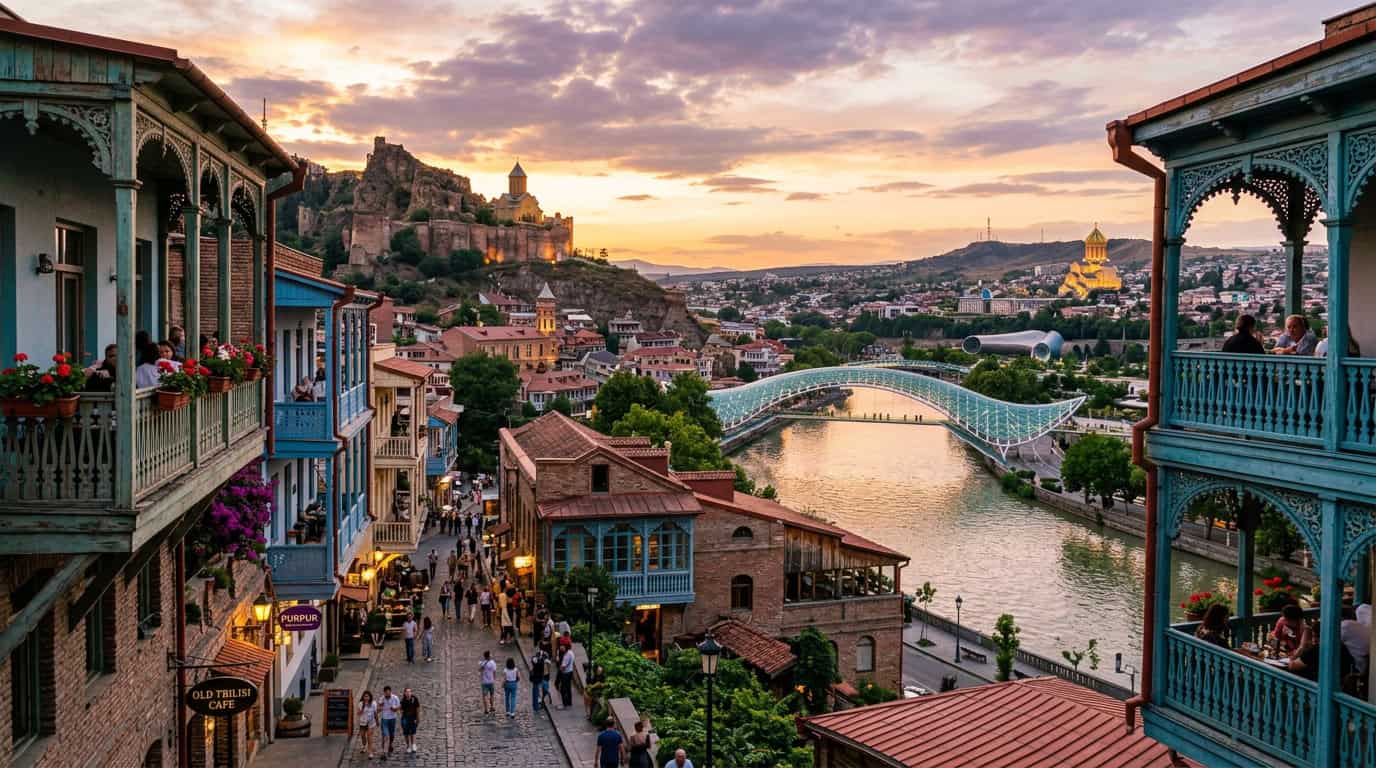
Tbilisi has officially stepped out of the shadows to become 2026’s must-visit destination, recently ranked as the world’s second-most trending city for a reason. Whether you are drawn to the scent of fresh shoti bread wafting through Old Town or the neon glow of a converted Soviet-era factory, a tbilisi city break offers a sensory explosion unlike anywhere else in Europe. I recently found myself wandering between 8,000-year-old wine cellars and ultra-modern glass bridges, struck by how effortlessly the City of Soul balances its ancient roots with a high-energy, industrial-chic pulse.
With international visitor numbers hitting record highs this year, the secret is out, yet the city remains an incredible value for those seeking luxury on a mid-range budget. Most travelers are now extending their stays to nearly a week, using the capital’s cobblestone streets as a vibrant base to explore the soaring Caucasus Mountains. From the sulfur baths’ turquoise tiles to the hidden courtyard cafes, every corner tells a story of resilience and hospitality. You will find that while the prices have nudged up with the influx of remote workers, the wealth of culture, flavor, and history remains peerless.
Key Takeaways
- Tbilisi is the world’s second-most trending destination for 2026, offering a unique blend of 8,000-year-old wine traditions and a high-energy, industrial-chic creative scene.
- Travelers should plan for a stay of nearly a week to balance exploring the city’s hidden courtyards and Soviet-era creative hubs with day trips to the Caucasus Mountains.
- A mid-range daily budget of $70 to $120 allows for a high-end experience, including luxury dining and world-class amber wines fermented in traditional clay qvevris.
- New 2026 travel regulations require all international visitors to hold valid travel insurance and prepare for busy Q1 travel surges by booking airport transfers and dinner reservations in advance.
Navigating Old Town Charms And Soviet Chic
Stepping into the heart of Old Tbilisi feels like walking through a living storybook where the architecture tells tales of a thousand years. My favorite starting point is the leaning Clock Tower of Gabriadze, a whimsical structure that looks like it was plucked straight from a fairy tale. Every hour, a small angel emerges to strike the bell, drawing a crowd of travelers who are all looking for that perfect, quirky photo. Just a few steps away from the main tourist paths, I love ducking into the hidden Italian courtyards that define the city’s residential soul. These spaces are filled with hanging laundry, winding wooden staircases, and the scent of home-cooked meals, offering a raw and beautiful glimpse into local life that most people miss.
To see the city’s modern evolution, you have to cross the river and head toward the industrial-cool vibes of the Vera and Marjanishvili neighborhoods. Fabrika is the crown jewel of this movement, a former Soviet sewing factory that has been transformed into a buzzing creative hub. It is the perfect place to grab a coffee, browse local designer boutiques, or simply soak in the energy of the city’s youth culture. The contrast between the peeling pastel plaster of the old town and the stark, graffiti-covered concrete of these repurposed spaces is exactly what makes Tbilisi so magnetic in 2026. This blend of grit and grace is why the city has become such a trending alternative to traditional European capitals.
If you are hunting for the best photography spots, I recommend focusing on the intricate carvings of the turquoise balconies near the sulfur baths before heading to the metallic structures of Rike Park. The city is remarkably walkable, but do not be afraid to get lost in the steep, cobblestone side streets where the best hidden gems are tucked away. You will likely find a friendly local offering you a glass of amber wine or a stray cat posing perfectly against a backdrop of ancient brickwork. With a daily budget of around one hundred dollars, you can eat like royalty and explore these contrasting worlds without breaking the bank. Tbilisi is a place that rewards the curious traveler who is not afraid to look behind an unmarked door.
Savoring 8,000 Years Of Georgian Wine Culture
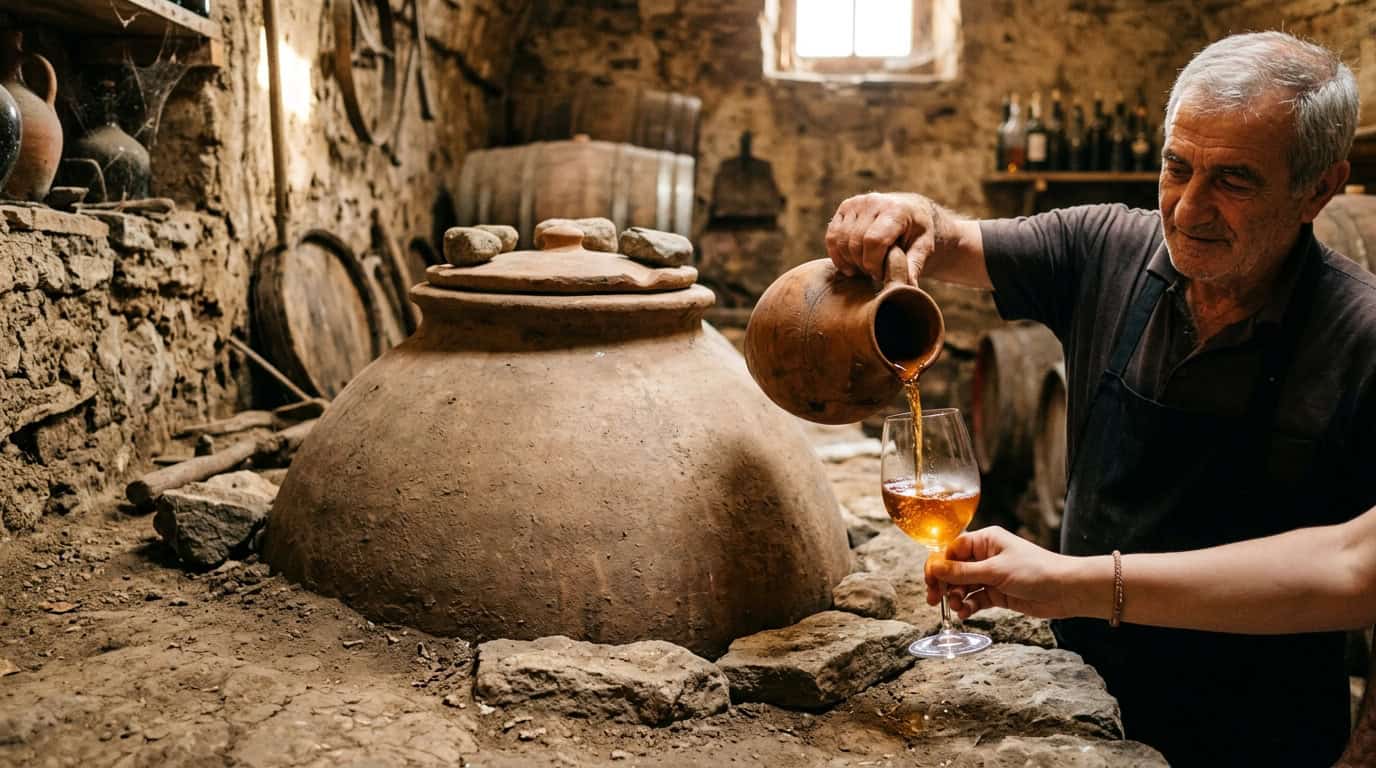
You cannot truly understand Tbilisi without acknowledging that you are walking through the oldest wine region on Earth. While many European capitals boast impressive cellars, Georgia’s 8,000-year-old wine history is rooted in the qvevri, a massive clay vessel buried underground where grapes ferment naturally with their skins and stems. This ancient technique produces a distinct amber wine that offers a complex, tannic profile unlike anything you will find in a standard bottle of Chardonnay. During my first night in the city, I was struck by how this deep cultural pride is woven into every conversation and dinner toast. It is a living tradition that makes the city feel both incredibly ancient and refreshingly authentic compared to more commercialized wine destinations.
Finding a world class glass of wine for just a few dollars is surprisingly easy if you know where to look in the city’s historic districts. I recommend heading to the Sololaki neighborhood, where unassuming doorways often lead down into vaulted brick cellars that have served as gathering spots for centuries. These underground wine bars offer a cozy, candlelit escape from the bustling streets above and provide the perfect setting to sample rare varietals like Saperavi or Kisi. Many of these spots are run by passionate locals who are happy to explain the nuances of different micro regions while pouring generous tasters. For a few dollars, you can enjoy a full flight of natural wines accompanied by a plate of local cheeses and fresh bread.
As the city continues to trend as a top global destination in 2026, these wine spaces have become the heart of Tbilisi’s social scene. Even as prices in the city have risen slightly with the influx of remote workers, the wine culture remains remarkably accessible for travelers on a mid range budget. You should aim to visit at least one specialized wine shop that offers tastings directly from the barrel to get a sense of the sheer variety available. Whether you are a casual drinker or a dedicated connoisseur, the experience of sipping an amber wine in a centuries old basement is a quintessential part of the Georgian experience. These moments of connection over a shared glass are what make a city break here feel so much more intimate than a standard sightseeing tour.
Essential Three Day Tbilisi Itinerary And Logistics
To make the most of your three day Tbilisi city break, I recommend starting your first morning in the heart of the Old Town. You can begin by riding the cable car up to the Narikala Fortress for a panoramic view of the city’s red roofs and the winding Mtkvari River. Afterward, wander down the cobblestone paths to the Abanotubani district to soak in the famous sulfur baths, which are housed in beautiful brick domes. This area perfectly captures the city’s 8,000 year wine history and unique architecture, blending ancient Persian influences with traditional Georgian balconies. For your second and third days, balance the industrial chic of the Vera neighborhood with the ultra-modern Peace Bridge and the leaning clock tower of the Gabriadze Theater.
Planning your logistics for 2026 requires a bit more preparation than in previous years due to new travel regulations. It is now mandatory for all international visitors to hold travel insurance for the duration of their stay, so be sure to have your digital policy ready upon arrival. While the city remains a fantastic affordable alternative to Western Europe, expect to spend between $70 and $120 per day for a comfortable mid-range experience. New direct flight routes have made the city more accessible than ever, but I suggest booking your airport transfer in advance to navigate the busy Q1 travel surges. Much like a krakow city break, the city is buzzing with energy, so making dinner reservations for popular wine bars is a must.
If you have extra time on your final day, consider using the capital as a base for a quick regional excursion to the nearby mountains or vineyards. Many travelers are now extending their stays to nearly six nights to fully appreciate the blend of medieval history and Soviet era grit and contemporary luxury. You will find that the local transport apps are the most efficient way to get around, though walking through the hidden courtyards of Sololaki offers the best personal stories and photo opportunities. Tbilisi has truly solidified its reputation as a premier destination for those seeking cultural depth without the massive crowds of other European capitals. Whether you are sipping amber wine in a basement cellar or exploring a repurposed printing house, the city’s charm is absolutely infectious.
Why Tbilisi Belongs on Your Radar
Tbilisi is currently sitting in that perfect sweet spot where 8,000 year old wine traditions meet a gritty, industrial chic energy that you just cannot find anywhere else in Europe. While it was recently ranked as the second-most trending city, the city still maintains its soulful authenticity and affordable edge. You can spend your morning getting lost in the leaning clock towers and hidden courtyards of the Old Town, then finish your night at a techno club housed in a former Soviet sewing factory. It is a place where the air feels heavy with history, yet the creative energy of the youth culture is pulsing through every street corner.
With international visitor numbers climbing every year, now is the absolute best time to book your flight before the secret is completely out. Whether you are pulled in by the promise of world class orange wine or the stunning contrast of ultra modern glass bridges against ancient stone fortresses, Tbilisi delivers an experience that is both high end and refreshingly raw. Most travelers are now extending their stays to nearly a week, using the city as a vibrant home base to explore the nearby Caucasus mountains. Do not wait for the crowds to catch up to what is easily one of the top digital nomad destinations in the region right now.
Frequently Asked Questions
1. Is Tbilisi a budget-friendly destination for a city break?
Tbilisi remains an incredible value for travelers seeking luxury on a mid-range budget. While prices have nudged up slightly with the influx of remote workers, you will still find that your money goes much further here than in other European capitals.
2. How many days should I plan for my Tbilisi trip?
While you can see the main sights in a weekend, most travelers are now extending their stays to nearly a week. This allows you to soak up the city’s energy and use the capital as a vibrant base for day trips into the soaring Caucasus Mountains.
3. What makes the Old Town area so special?
Old Tbilisi feels like a living storybook filled with whimsical architecture like the leaning Clock Tower and hidden Italian courtyards. I love wandering through these residential spaces where winding wooden staircases and hanging laundry offer a raw, beautiful glimpse into the city’s soul.
4. What is the best way to experience the local culture?
You should immerse yourself in the sensory explosion of the city, from the scent of fresh shoti bread to the turquoise tiles of the ancient sulfur baths. Spend your afternoons ducking into hidden courtyard cafes and exploring 8,000-year-old wine cellars to truly feel the city’s heartbeat.
5. Is Tbilisi safe and welcoming for international visitors?
Tbilisi is known as the City of Soul for a reason, and the local hospitality is truly peerless. Despite its recent rise as a trending global destination, the city maintains a resilient and welcoming spirit that makes every visitor feel at home.
6. What is the vibe of the city’s modern scene?
The city perfectly balances its ancient roots with a high-energy, industrial-chic pulse. You can spend your morning in a medieval church and your evening under the neon glow of a converted Soviet-era factory, experiencing the best of both worlds.