
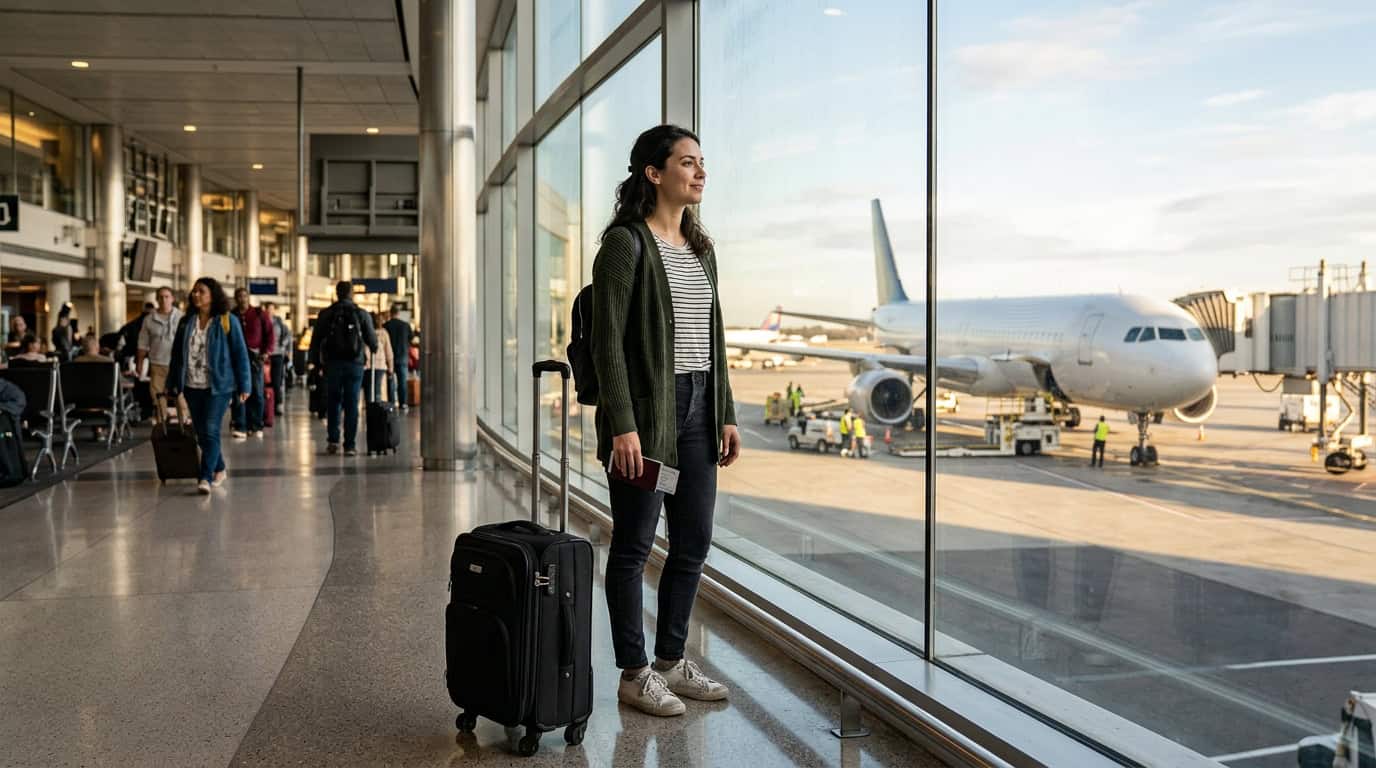
My first international trip began with equal parts excitement and uncertainty: a passport in hand, a half-packed suitcase, and a long list of questions. If you’re planning your first international trip, start with the essentials. Most U.S. travelers need a passport book for international flights, and entry rules can vary by citizenship. Checking those requirements early gives you more time to focus on the fun, from choosing a route to imagining your first meal abroad and planning the moments you’ll remember for years.
A little preparation can turn airport nerves into anticipation. Apply for or renew your passport well before departure, allow extra time for mailing, and confirm whether your destination requires a visa, proof of onward travel, or specific health documentation. Once those details are handled, you can travel with confidence while leaving room for the unexpected discoveries that make an overseas adventure unforgettable.
Key Takeaways
- Verify passport validity, visa or authorization requirements, transit rules, health documents, and customs regulations through official government sources well before booking or departure. Allow extra time for passport processing, mailing, and destination-specific approvals.
- Prepare systematically for the airport and arrival: arrive about three hours early, keep essential documents accessible, carry printed and digital backups, and pack medications, valuables, chargers, and a change of clothes in your carry-on.
- Plan practical essentials before leaving, including travel insurance, phone connectivity, offline maps, local currency, backup payment methods, transportation, and destination-specific health precautions.
- Research local etiquette and useful phrases, then keep your itinerary flexible so you can handle unfamiliar situations calmly and leave room for spontaneous discoveries.
First International Trip Introduction
My first international trip felt thrilling and intimidating at the same time, especially when I imagined navigating a busy airport and stepping into a city I had only seen in photos. The uncertainty became manageable once I replaced vague worries with a simple preparation plan. Before booking, I check that my U.S. passport book will remain valid for the destination’s required period, since a passport card generally cannot be used for international air travel. I also review the destination’s visa, entry, health, and customs rules through official government resources. Then I apply for or renew my passport early to allow time for processing and mailing. That small amount of planning gives me more freedom to focus on the excitement of boarding the flight and seeing a new skyline for the first time.
The airport experience feels much smoother when I know what to expect before arriving. I usually reach the airport about three hours before an international departure, keep my passport and boarding details easy to access, and follow signs for check-in, security, and passport control. I save copies of important documents securely, confirm my baggage allowance, and pack a small supply of essentials in my carry-on in case checked luggage is delayed. After arriving, I pay attention to customs instructions and keep my answers clear and truthful. These steps may seem ordinary, but they turn an unfamiliar process into a series of manageable moments.
Beyond the airport, I prepare for the practical details that help me feel comfortable in a new culture. I research local greetings, dress expectations, tipping customs, and a few polite phrases, because showing respect often opens the door to warmer interactions. I also arrange an international phone plan or eSIM, download offline maps, and carry a backup payment method along with a small amount of local currency. I expect a few surprises, such as unfamiliar transit systems or different meal times, and remind myself that flexibility is part of the adventure. With thoughtful preparation, a first international trip becomes less about avoiding every mistake and more about confidently discovering what lies beyond home.
Passport Visa And Entry Planning
Before I book my first international trip, I make sure I have a valid U.S. passport book, since it is generally required for international air travel. A passport card is usually not enough for flying abroad because it is primarily intended for land or sea travel to Canada, Mexico, Bermuda, and certain Caribbean destinations. I check the expiration date and confirm whether my destination requires six months of remaining validity, since that rule varies by country. Taking care of this early makes the rest of trip planning feel more exciting and much less stressful.
I verify visa, electronic travel authorization, transit, and entry requirements through official government websites before purchasing a ticket. I pay special attention to layovers because a country I am only passing through may still require a transit visa or impose separate passport rules. Requirements depend on my citizenship, destination, itinerary, and trip purpose, and they can change. I save the official guidance and check it again shortly before departure. That small research habit gives me confidence that I will arrive ready to explore instead of sorting out paperwork at the airport.
Passport timing deserves its own place on my pretrip checklist, especially if this is my first journey overseas. As of April 16, 2026, routine U.S. passport processing is listed as 4 to 6 weeks, while expedited processing is listed as 2 to 3 weeks. Neither estimate includes mailing time, which can add up to two weeks each way. I build in extra time for destination-specific visas or authorizations, unexpected delays, and the possibility that my application needs additional documents. Once my passport and entry approval are safely in hand, I can shift my attention to the joyful details, such as planning my first sunset, local meal, and unforgettable walk abroad.
First Trip Booking And Packing
For a first international trip, I recommend choosing a destination with straightforward entry rules, reliable public transportation, and enough familiar comforts to keep the experience exciting rather than stressful. Before booking, I check that my passport book will be valid for the destination’s required period, since a passport card is not valid for international flights. I also confirm whether I need a visa, entry form, or proof of onward travel. When comparing flights, I look beyond the lowest fare and consider total travel time, airport changes, and layover length. I aim for enough time to clear security or immigration without sprinting to the next gate. A nonstop route can be worth the extra cost on a first journey, while a well-planned layover can offer a gentle introduction to international airports. I also purchase travel insurance that fits my plans, paying attention to medical coverage, trip interruption, baggage protection, and exclusions for activities I expect to enjoy.
I organize every important detail before departure so one misplaced email does not become a travel emergency. I save digital copies of my passport, visa or entry approval, insurance policy, flight details, hotel reservations, emergency contacts, and prescriptions. I also keep printed copies in a separate part of my carry-on. Four to six weeks before leaving, I schedule any recommended health appointments, check routine vaccinations, refill medications, and ask about destination-specific health precautions. Medication should remain in its original labeled packaging and stay in a carry-on, with enough supply for the trip plus a little extra in case of delays. I also download offline maps, confirm how I will use my phone abroad, and learn basic payment customs, airport procedures, and a few respectful local phrases.
Packing becomes much easier when I plan around the forecast, my itinerary, and the practical details of daily life instead of preparing for every possibility. I bring weather-appropriate layers, comfortable walking shoes, a compact day bag, necessary toiletries, and a universal power adapter, remembering that electrical outlets and voltage may differ from home. My carry-on holds medications, documents, valuables, a change of clothes, chargers, and essentials I would need if checked luggage arrived late. I leave room for a small souvenir and avoid overpacking because navigating trains, cobblestone streets, and hotel stairs is far more enjoyable with a manageable bag. With those preparations complete, I can focus on the thrill of seeing a new skyline, tasting unfamiliar food, and beginning the adventure with confidence.
International Airport Arrival And Jet Lag

I arrive at the U.S. airport about three hours before an international flight, with my passport book, boarding details, and destination entry documents easy to reach. At check-in, the airline verifies my passport, visa or electronic travel authorization if required, and any onward travel information before issuing my boarding pass. Departures from the United States usually involve airline document checks and TSA security rather than a separate exit immigration line, so I keep electronics and liquids ready for screening. At the gate, I listen for boarding groups and document checks, especially if the airline needs to confirm my passport again. For a connection, I check whether I need to change terminals, collect a bag, or meet transit requirements before leaving the first airport.
Landing feels much easier when I expect immigration to take time, particularly at a busy international airport. I follow signs for passport control, answer questions about my trip clearly, and keep my hotel address, return ticket, and any required customs or health declarations available. After collecting checked luggage, I pass through customs and declare food, plants, gifts, or other restricted items according to the destination’s rules, even when I am unsure. On a return flight to the United States, I generally complete immigration, collect my bags, and clear customs at my first U.S. airport before continuing to a domestic connection. Checking the destination’s official entry rules and the airline’s current instructions before departure removes much of the guesswork.
My simplest arrival strategy is to arrange reliable transportation before landing, go straight to the hotel, and treat the first afternoon as a gentle introduction rather than a test of stamina. I drink water during the flight and after arrival, eat something light, and set my watch to local time as soon as I board. If check-in is not ready, I ask the hotel to store my luggage, then take a short walk in daylight to help my body adjust without exhausting myself. I try to stay awake until a reasonable local bedtime, use a brief nap only if necessary, and keep the first day open for an easy neighborhood meal or one nearby sight. That approach lets me recover from jet lag while still catching my first glimpse of the new city, whether it is sunset over a European square or warm evening air outside a coastal terminal.
Money Etiquette And Connectivity Abroad
I use a credit card for most larger purchases abroad, but I always carry a small amount of local currency for markets, transit kiosks, tips, or places that do not accept cards. Before leaving, I check whether my card charges foreign transaction fees and notify my bank of my travel dates if required. When a payment terminal asks whether I want to pay in U.S. dollars or the local currency, I usually choose the local currency to avoid unfavorable conversion rates. I keep one card in my wallet and a backup card secured separately. I also store emergency contact numbers and card details in a safe place. These simple habits make paying for a morning coffee in a crowded square feel much less stressful.
Staying connected also gives me confidence when I am finding my way through an unfamiliar city. I compare an international phone plan with an eSIM before departure, confirm that my phone is unlocked if needed, and download offline maps, hotel details, and translation tools while I still have reliable Wi-Fi. I also save important addresses, reservation confirmations, and emergency information so I can reach them without service. Learning a few local phrases, such as “hello,” “please,” “thank you,” and “where is the bathroom?” often leads to warmer interactions, even when my pronunciation is imperfect. I have found that a little preparation leaves more room to enjoy the view instead of searching for a signal.
Respecting local customs is one of the most rewarding parts of a first international trip, especially when expectations differ from home. I research basics such as appropriate clothing, tipping practices, photography rules, dining etiquette, and whether shoes should be removed before entering certain places. When an unfamiliar moment catches me off guard, I try to observe first, ask politely, and stay open-minded rather than assuming my way is the only way. A thoughtful attitude can turn a confusing train platform or unfamiliar meal into a memorable story. Traveling with curiosity and patience helps the world feel welcoming, even when everything is new.
First International Trip Conclusion
My first international trip felt far less overwhelming once I treated preparation as part of the adventure. Before booking, I checked that my passport book would remain valid for the destination’s required period, then reviewed visa, entry authorization, health, and customs rules through official government resources. I also saved digital and paper copies of my passport, reservations, travel insurance details, and emergency contacts. These small steps gave me confidence that I could focus on the experience instead of worrying about a missing document.
A thoughtful plan makes the journey smoother without taking away its excitement. I allowed extra time for check-in, security, passport control, and baggage procedures while keeping medications, chargers, a change of clothes, and important documents in my carry-on. I also prepared a payment backup, checked how I would access mobile data or Wi-Fi, and learned a few local customs and useful phrases before departure. At the same time, I avoided filling every hour because a flexible schedule leaves room for a slower morning, an unexpected detour, or advice from someone I meet along the way.
The best part of a first international trip is often the moment that never appeared in the itinerary. It might be a spontaneous café stop, a conversation that changes my plans, or the first view of a landmark I had previously seen only in photographs. By verifying my documents, understanding entry rules, planning the route, preparing for the airport, and leaving space for discovery, I can travel with both care and curiosity. The goal is not to make every detail perfect, but to feel prepared enough to welcome the small surprises that turn a trip into a lasting memory.
Prepare Confidently for Your First International Trip
My first international trip felt far less overwhelming once I handled the essentials early. I made sure I had a valid passport book, checked my destination’s entry requirements, and allowed extra time for passport processing and mailing. I also saved digital and printed copies of my passport, reservations, travel insurance details, and emergency contacts. Knowing what to expect at check-in, security, customs, and immigration helped me move through the airport with much more confidence.
The small preparations made the biggest difference once I arrived. I arranged a reliable way to access maps and messages, learned how local payments worked, and carried a backup card along with a little local currency. I also researched basic cultural etiquette, including appropriate clothing, tipping customs, and a few polite phrases, which made everyday interactions feel more natural. With a flexible itinerary and an open mind, I discovered that a first international trip is not about knowing everything. It is about preparing thoughtfully and welcoming the adventure.