
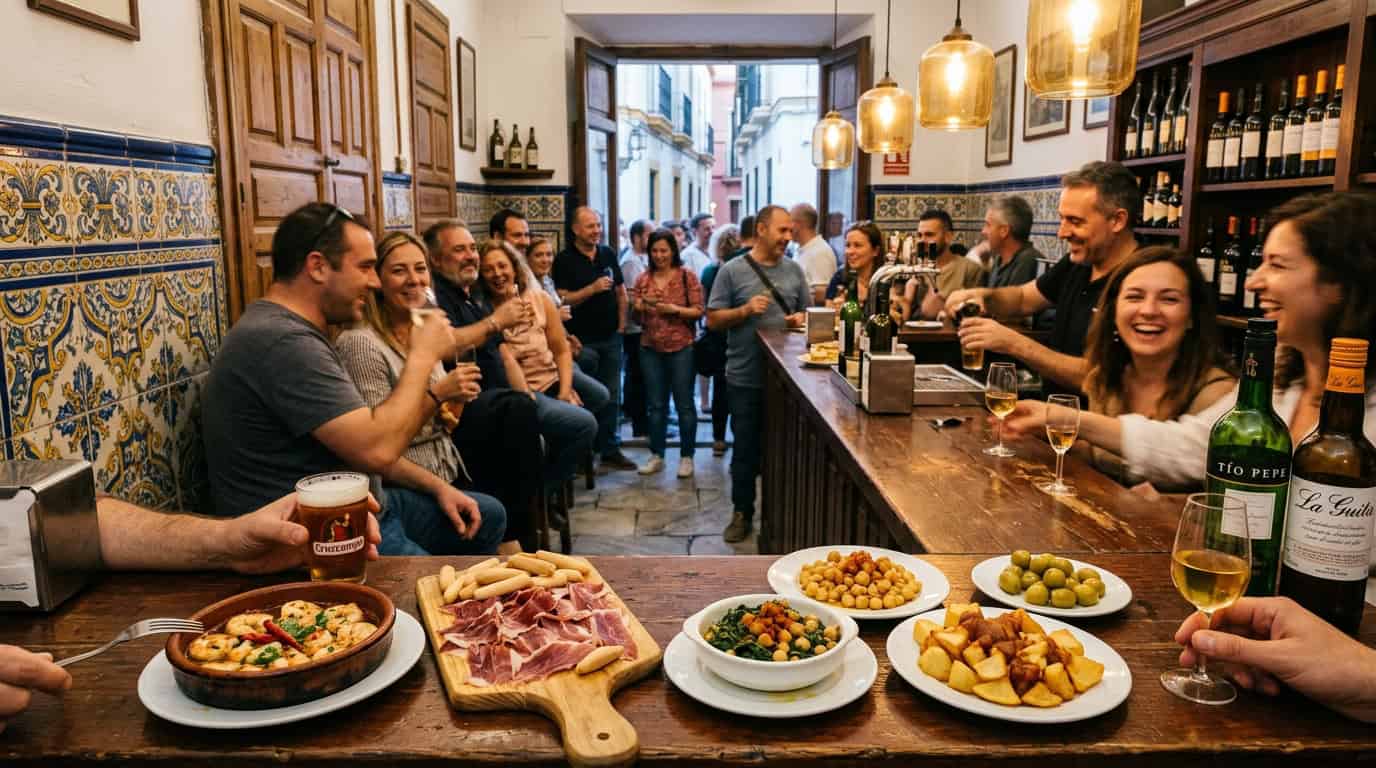
The golden sun dips behind the Giralda, and the narrow alleys of Santa Cruz suddenly pulse with a rhythmic, clinking energy that can only mean one thing: it’s time to tapear. Embarking on a sevilla tapas crawl is less about a single meal and more about a dynamic social ritual where the city’s 3,000 bars become your living room. I still remember my first night standing shoulder to shoulder with locals, watching a bartender at a centuries-old tavern scrawl my running tab in white chalk directly onto the dark wooden bar.
To master this art, you have to embrace the movement of the crowd, ordering a single tapa and a crisp glass of manzanilla before drifting to the next hidden doorway. Whether you’re sharing a media ración of melt-in-your-mouth jamón or a full ración of slow-cooked bull’s tail, the magic lies in the variety and the vibrant, standing-room-only atmosphere. It is a sensory journey that rewards the curious, turning a simple evening of grazing into an unforgettable immersion into the heart of Andalusian culture.
Key Takeaways
- Master the art of ‘tapear’ by ordering only one drink and one tapa per location before moving to the next bar to experience the city’s diverse culinary landscape.
- Prioritize standing at the bar or around wine barrels rather than sitting at tables to remain immersed in the social energy and facilitate easy movement between taverns.
- Respect the local tradition of the chalk-scribed bar tab by never leaning on or wiping away the bartender’s marks until the bill is settled.
- Navigate portion sizes strategically by starting with individual tapas and upgrading to shared ‘media raciones’ only when a dish is particularly exceptional.
Essential Rules For Tapear Like A Local
To truly master the art of the Seville tapas crawl, you must embrace the local philosophy that tapear is a verb, not just a meal. The golden rule is simple: one drink and one tapa per stop before moving on to the next vibrant locale. This keeps the energy high and allows you to sample the diverse specialties of multiple kitchens in a single evening. If you are traveling with a companion, consider ordering a media ración to share, but avoid the temptation to settle into a chair for the night. Standing at the bar or around a tall wine barrel is where the real magic happens, as it keeps you in the heart of the social whirlwind.
When you find yourself in a legendary spot, keep a close eye on the wooden counter in front of you. The bartender will likely use a piece of white chalk to scribble your running total directly onto the dark wood. This charming tradition is a point of pride for Sevillanos, so you must never wipe the marks away or lean your sleeve over them. It is an unspoken pact of trust between the server and the guest that remains a cornerstone of the city’s dining culture. Once you request the bill and settle up, the bartender will whisk the marks away with a damp cloth, signaling you are ready for your next adventure.
Ordering your drinks is just as important as selecting your snacks to ensure you blend in with the local crowd. Start your evening with a refreshing manzanilla sherry or a crisp caña of local beer to awaken your palate. If you prefer something slightly sweeter, a tinto de verano is the perfect choice for a warm Andalusian night. Remember that the goal of the crawl is to explore as many neighborhoods as possible, from the narrow alleys of Santa Cruz to the lively streets of Triana. By following these simple social nuances, you will transform from a mere visitor into a seasoned participant in Seville’s most delicious ritual.
Navigating The Historic Taverns Of Barrio Santa Cruz
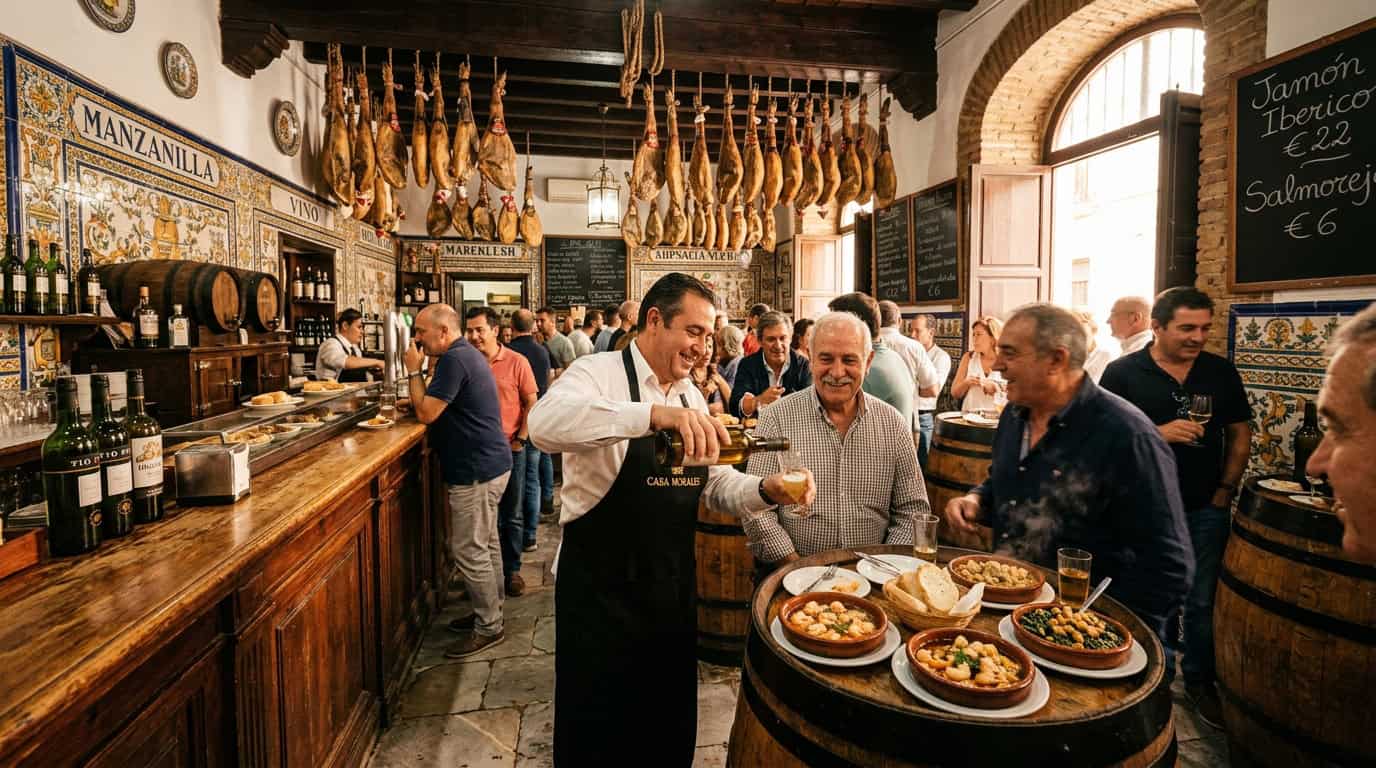
Stepping into the winding, sun-drenched alleys of Barrio Santa Cruz is like traveling back in time to the heart of Seville’s most storied traditions. To truly master the art of the tapas crawl, you must embrace the local rhythm of moving from one historic tavern to the next rather than settling in for a single heavy meal. I recommend starting your evening at a centuries-old tavern where the ceiling is draped with aging legs of world-class jamón Ibérico and the walls are covered in vintage bullfighting posters. Order a tapa of the acorn-fed ham and a chilled glass of manzanilla sherry, making sure to stand at the bar to soak in the bustling, authentic energy. This neighborhood is the perfect place to practice your etiquette, so remember that a tapa is meant for just a few bites before you move on to the next hidden gem.
Your next stop should be a lively spot located just a stone’s throw from the towering cathedral. This is the place to try famous pringá sliders, which are small sandwiches filled with a savory blend of slow-cooked meats that melt in your mouth. You will notice the bartenders working with incredible speed, often scribbling your running tab in chalk directly onto the dark wood of the bar. It is a charming ritual that keeps the service moving, but be sure not to accidentally lean on or wipe away those white marks before you settle the bill. The atmosphere here is intentionally crowded and social, encouraging you to strike up a conversation with your neighbor while balancing a plate on a narrow ledge or wine barrel.
To round out your itinerary, wander deeper into the Jewish Quarter to find the smaller, family-run taverns that specialize in spinach with chickpeas or honey-drizzled fried eggplant. If you are traveling with a companion, consider ordering a media ración, which is a half-portion that allows you to share and sample more variety without getting too full too quickly. As you navigate these narrow streets, look for the spots where locals are spilling out onto the sidewalk with drinks in hand, as that is always the surest sign of quality. The magic of a Sevilla tapas crawl lies in this effortless flow between history and flavor, where every corner turned reveals a new house specialty to discover. Whether you are sipping a crisp local beer or a sweet Pedro Ximénez, the social ritual of the crawl will quickly become your favorite part of the Spanish lifestyle.
Crossing The Bridge To Authentic Triana Flavors
Crossing the iconic Puente de Isabel II feels like entering a different world where the pace slows down and the atmosphere thickens with local pride. Triana was historically the neighborhood of sailors and ceramic tile makers, and today it remains the soulful heart of Seville’s culinary traditions. Walking down the vibrant Calle San Jacinto, you will notice that the crowds are thinner on tourists but bursting with locals engaging in the lively art of the tapear. This is the perfect place to practice your social skills, as the bars here prioritize standing-room-only interaction and quick, flavorful bites over formal dining. I always recommend starting your evening early to secure a spot at the counter where you can watch the bartenders work their magic.
Our first stop in this neighborhood focuses on the incredible seafood that arrives fresh from the nearby coast. You should look for traditional spots where the menus are handwritten on chalkboards and the floors are dusted with sawdust. Order a tapa of adobo, which is succulent fish marinated in vinegar and spices before being lightly fried to perfection. If you are feeling adventurous, try the pavía de bacalao, a crispy cod fritter that is a staple of the Triana diet. Remember that it is common practice to order just one or two small plates before moving on to the next establishment. This keeps the energy high and allows you to sample a wide variety of flavors in a single night.
As the night progresses, the energy along the riverbank becomes truly infectious with the sound of laughter and clinking glasses. You might notice bartenders marking your tab in chalk directly on the wooden bar top, a historic ritual that still thrives in these traditional spaces. It is important to leave these markings untouched until you are ready to settle the bill and move to your next destination. For a perfect pairing, order a glass of crisp manzanilla sherry or a cold caña of local beer to cut through the richness of the fried delicacies. Navigating these social nuances makes you feel less like a visitor and more like a true Sevillano enjoying the timeless rhythm of the city.
Decoding The Menu From Cañas To Raciones
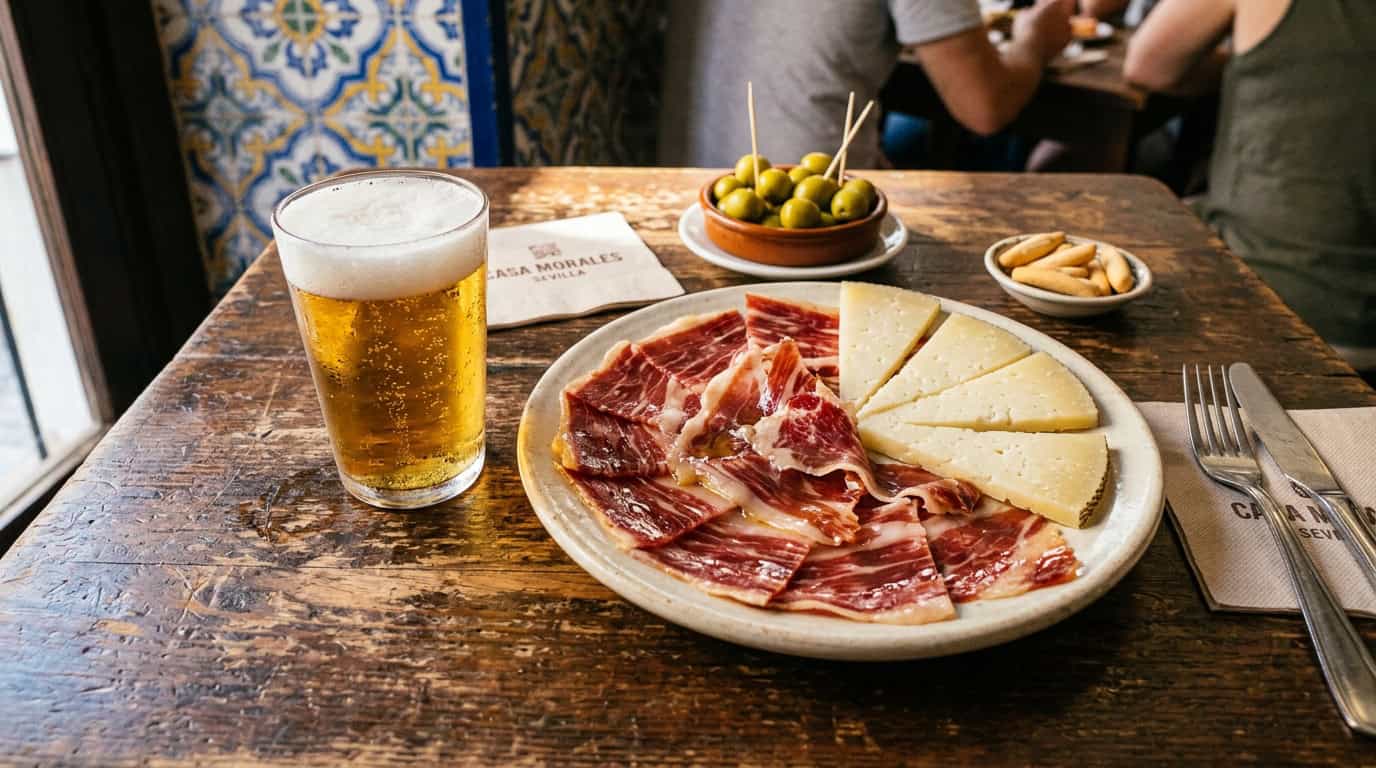
Navigating a Sevillano menu for the first time can feel like learning a delicious new language, but mastering the portion sizes is the key to a successful crawl. I always suggest starting with a tapa, which is a small individual plate perfect for two or three bites of something new. If you find a dish you absolutely love or you are sharing with a friend, you can upgrade to a media ración for a half-portion or a full ración for a large plate. This flexibility allows us to sample a wide variety of flavors across multiple bars without getting too full at our very first stop. Part of the magic is moving from place to place, so keeping your orders small ensures you have plenty of room for the next hidden gem around the corner.
To drink like a local, you should start your afternoon with a crisp caña, which is a small, chilled glass of local beer designed to stay cold in the Andalusian heat. If you prefer something slightly sweeter and incredibly refreshing, order a tinto de verano, a mix of red wine and lemon soda that is far more common among locals than sangria. For those wanting to learn more about the regional culture, a glass of dry Manzanilla or Fino sherry is the traditional pairing for salty Iberian ham or fresh seafood. I love watching the bartenders at historic spots mark your running tab in chalk directly on the wooden bar top. Just remember to leave those chalk marks alone until you are ready to settle up and head to the next destination on your itinerary.
The Heart of Seville
Embracing the standing-room-only energy of a Seville tapas crawl is the quickest way to feel like a true local rather than just another visitor. While it might feel intimidating at first to squeeze into a crowded corner of a historic tavern, the lively chaos is where the magic of the city truly happens. Don’t be afraid to lean into the bar, place your order with confidence, and let the bartender scribble your tab in chalk on the dark wood. The best experiences come when you stop worrying about finding a chair and start focusing on the vibrant conversation and the clinking of glasses around you.
The most rewarding itineraries are rarely the ones planned down to the minute, so I encourage you to follow your nose and the sound of the local crowds. If you see a bar overflowing onto the sidewalk with people laughing over plates of jamón and manzanilla sherry, that is your sign to join in. These spontaneous detours often lead to the most memorable bites, whether it is a perfectly spiced spinach and chickpea stew or a tender piece of Carrillada. Trust your instincts and the recommendations of the people around you, because in a city with over 3,000 bars, the next great discovery is always just a few steps away.
Ultimately, the ritual of tapear is about movement, variety, and the joy of shared moments in one of the world’s greatest culinary capitals. Transitioning from a small tapa to a shared media ración as you move between neighborhoods allows you to taste the full spectrum of Andalusian flavors in a single evening. Keep your eyes open for those hidden gems tucked away in the winding alleys of Santa Cruz or the white villages of Andalusia. By the time you pay your final bill and step back out into the warm Seville night, you will realize that the crawl itself was the destination all along. Much like finding my soul on the streets of other historic Spanish cities, this journey through Seville’s flavors leaves a lasting mark on the heart.
Frequently Asked Questions
1. What is the best way to start a tapas crawl in Seville?
The key is to embrace the movement and avoid staying in one place for too long. Order a single tapa and a drink, such as a crisp manzanilla sherry, at the bar, then move on to the next hidden gem to keep the energy high.
2. Should I try to find a table or stand at the bar?
To truly experience the local pulse, you should stand at the bar or around a tall wine barrel. This keeps you in the heart of the social whirlwind and makes it much easier to drift to your next destination when you are ready.
3. What is the difference between a tapa and a ración?
A tapa is a small individual snack, while a media ración is a half plate and a ración is a full platter meant for sharing. If you are exploring with a friend, sharing a media ración is a fantastic way to sample more variety without getting full too quickly.
4. How do I keep track of my bill at traditional bars?
In legendary taverns, keep an eye on the dark wooden counter where the bartender will scrawl your running tab in white chalk. This charming tradition is a hallmark of Seville and makes settling up at the end of your visit a breeze.
5. What are some must-try dishes on a Seville tapas crawl?
You cannot leave without tasting the melt in your mouth jamón ibérico or a hearty ración of slow cooked bull’s tail. These classic flavors are the soul of Andalusian cuisine and are perfected in the small kitchens tucked away in Santa Cruz.
6. Is it okay to visit just one bar for dinner?
While you can certainly stay in one spot, the real magic of Seville lies in the variety found across its 3,000 bars. Treating the entire city as your dining room allows you to immerse yourself in the local culture and discover the unique specialties of each tavern.