
A New York City itinerary works best when you group sights by neighborhood and leave time for the subway between clusters, rather than treating Manhattan as one walkable block. In 2026 the base fare on subway and local buses is $3, and with OMNY’s weekly cap you stop paying once you have spent $35 on eligible rides within seven days, so every ride after that is free for the rest of the period. The city drew nearly 65 million visitors in 2024, so popular stops are crowded, and scheduling the busiest ones for early morning or late afternoon helps. If you plan to drive, the Manhattan Congestion Relief Zone charges $9 per passenger vehicle during peak hours, which is one more reason a car is rarely the easiest way to move between neighborhoods.
Your route should also make room for the harbor. The Statue of Liberty can be reached only by ferry, so treat Liberty and Ellis Islands as a half-day commitment, with boat tickets from Battery Park typically running around $26 for adults. Lower Manhattan pairs naturally with that morning: the 9/11 Memorial is free and open daily from 8 a.m. to 8 p.m., while the museum requires a timed ticket booked in advance. Give Upper Manhattan, with Central Park and the Met, its own day, and save an evening for Broadway or a stroll through Times Square.
Key Takeaways
- New York City itineraries work best when you group sights by neighborhood and leave time for subway rides between clusters, since Manhattan is not one walkable block.
- The OMNY weekly cap of $35 in eligible subway and local bus fares within seven days makes every later ride in that period free, as long as you tap the same card or device for each trip.
- The Statue of Liberty ferry from Battery Park, with adult general-admission tickets typically around $26, needs an early start because the last entrance into the Statue is at 4 p.m. and the crown requires an advance reservation.
- The 9/11 Memorial is free and open daily from 8 a.m. to 8 p.m., while the 9/11 Museum requires a timed ticket that can be booked up to six months ahead.
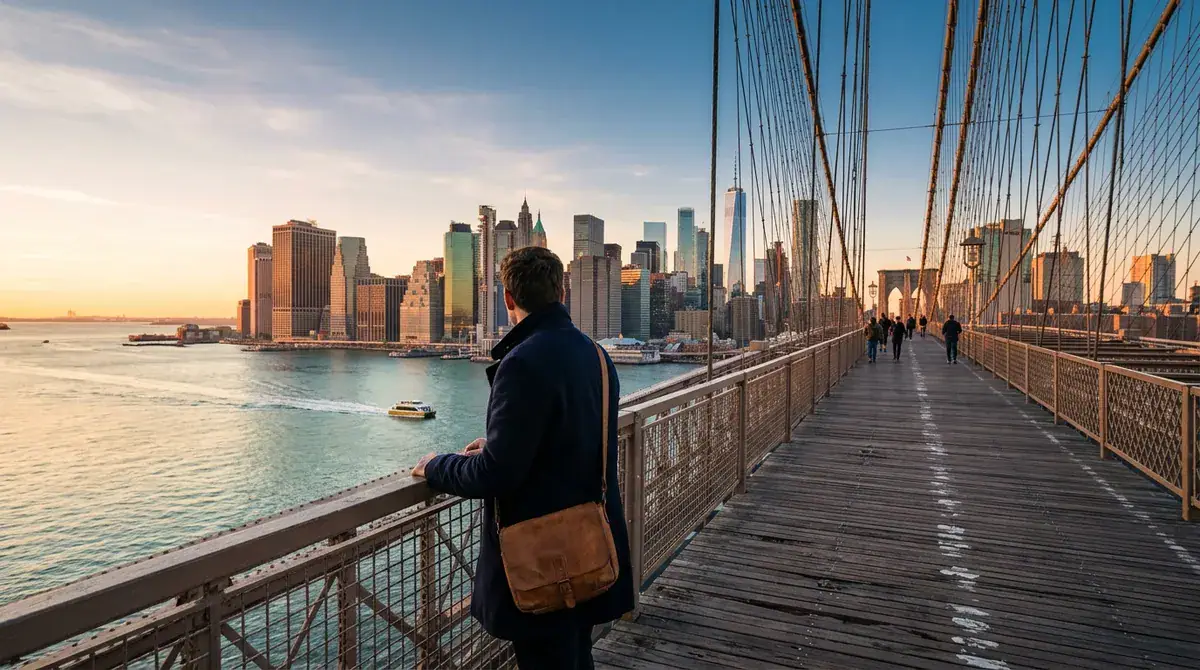
- The Brooklyn Bridge walk is free, takes 30 to 45 minutes one way, and is best started from Manhattan in the late afternoon so you reach Brooklyn as the light fades.
Four Days in New York City, Mapped by Neighborhood
Day one starts at Battery Park, where the ferry to Liberty and Ellis Islands departs. The National Park Service lists core park hours of 8:30 a.m. to 5:30 p.m., and the last entrance into the Statue is at 4 p.m., so an early boat leaves time for the crown reservation and its stair climb. Plan the ferry as a half-day commitment, and return to Manhattan with the afternoon still open.
Back on the mainland, walk Wall Street, take a quick photo at Charging Bull, and visit the 9/11 Memorial, which is free from 8 a.m. to 8 p.m. The museum is a separate visit. Its timed tickets can be bought up to six months ahead, and last admission is 60 minutes before closing. End the day with dinner in Chinatown, then walk a few blocks to Little Italy, which keeps the evening in one compact area.
Day two belongs to the bridge. Start walking across the Brooklyn Bridge from Manhattan in the late afternoon so you reach the Brooklyn side as the light fades. Spend the evening in Brooklyn Bridge Park, where the waterfront views of the skyline are at their best, then wander the cobblestone streets of DUMBO beneath the bridge. Give yourself extra time to return by subway, since the walk and the park always take longer than expected.
Day three covers Midtown and Hudson Yards. Begin with Times Square in the morning, when the crowds are thinner, then continue to Rockefeller Center. Choose your sunset spot in advance. The Empire State Building suits a Midtown day, while the Edge in Hudson Yards is a better fit if you want to finish farther west, and it is worth checking current sunset times for the date you visit. Reserve an evening Broadway performance or Hadestown, since theater tickets for popular shows sell out early.
Day four covers the West Side and Upper Manhattan. Walk the High Line, the elevated park on old railway tracks, and continue to Chelsea Market for a long lunch indoors. In the afternoon, choose either the Metropolitan Museum of Art or the Guggenheim, then give Central Park a flexible half-day. If the museum runs long, shorten the park visit. If you have energy left, the park rewards a slow walk at the end of the trip.
Subway Fares, Fare Caps and Costs for Your Trip
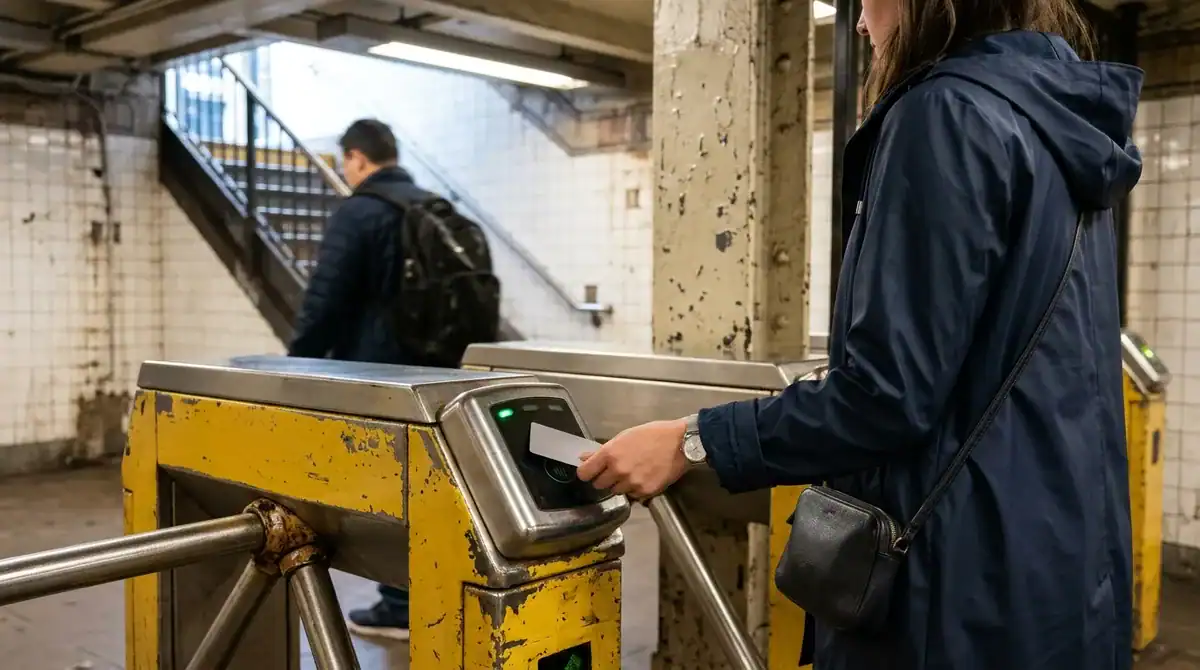
Paying for the subway is simpler than it used to be. In 2026 the base fare on subway and local buses is $3, and you can pay with a contactless card, phone, or smartwatch at any turnstile or bus farebox that accepts OMNY, the city’s tap-to-pay system. Use the same card or device for every ride, because the cap only counts fares paid with one payment method.
The weekly cap is the real budget tool. The MTA’s fare-change materials from September 2025 set an OMNY weekly cap of $35 and replaced the $34 seven-day MetroCard pass. Once you have paid $35 in eligible fares within seven days, the remaining rides in that period are free. If you tap a card on Monday and a phone on Tuesday, those fares do not add up together, so the savings disappear.
Driving adds a separate cost. The Manhattan Congestion Relief Zone covers local streets and avenues south of and including 60th Street, and passenger vehicles with E-ZPass pay $9 during peak periods or $2.25 overnight. The toll runs 24/7, and peak hours are 5 a.m. to 9 p.m. on weekdays and 9 a.m. to 9 p.m. on weekends, so a Saturday afternoon drive into Midtown pays the higher rate. Plan your driving around those hours, or park outside the zone and take the subway in.
Airport transfers vary more than most visitors expect. The time and cost depend on how far your hotel is from Midtown or Lower Manhattan, how heavy traffic is at the hour you travel, how much luggage you carry, and how many people are sharing the ride. A solo traveler with one carry-on has the most options, while a family with several large suitcases usually benefits from a pre-booked car, even though it costs more.
Many of the best anchors cost nothing. Central Park, the Brooklyn Bridge, Charging Bull, the Rockefeller Center plaza, and Brooklyn Bridge Park are all free to visit. The Staten Island Ferry is also free, and its commuter boat gives you a close look at the harbor and the Statue of Liberty without a ticket.
Spend selectively on the paid stops. The ferry to Liberty and Ellis Islands, the 9/11 Museum, and observation decks are where costs add up quickly. The museum’s expert-led tours run 60 minutes and cost $48 to $60 including admission, which can be worth it if you want context rather than a self-guided walk. Prices for bus and helicopter tours vary with route length, season, group size, and whether commentary or stops are included, so compare what each tour covers before you book.
Where to Stay, Eat and Plan for Rain or Winter
A base near a subway line that connects to your main clusters saves time every day. Midtown suits theater nights, since you can walk to many Broadway houses and take the train home afterward. Lower Manhattan works better if you plan early ferry departures from Battery Park. A West Side or Chelsea base puts the High Line and the Chelsea Market day within easy reach.
Match your food stops to each cluster. Chelsea Market is the obvious indoor lunch after the High Line, and Los Tacos No. 1 inside the same building is a budget taco stop. Little Italy offers an Italian lunch a short walk from Chinatown, where you can eat and shop in the same stretch of streets. After Brooklyn Bridge Park, the cafés in DUMBO make a good place to warm up.
Food allergies need extra care in busy places. Food halls and small restaurants can change recipes without much notice, so ask staff about ingredients at each counter before you order, rather than relying on an older menu or review. Plan a backup meal near each cluster, such as a counter you already know well, so a missed lunch does not leave you searching for food in a crowd.
When the weather turns, the Met, the Guggenheim, the Intrepid Museum, the Edge, Chelsea Market and the indoor areas of Rockefeller Center all offer shelter. In cold months, the Rockefeller Center ice rink can turn a grey afternoon into a highlight. Choose a rainy-day swap in the same cluster as the outdoor stop it replaces, so you avoid a long ride across town.
Families can keep children engaged between bigger stops. Central Park playgrounds give small children room to run, while the Intrepid Museum’s kid-friendly decks let older children explore aircraft and a submarine in the open air. The Staten Island Ferry’s open-air views are a restful break, and the ride costs nothing.
Stops within one cluster can usually be walked, but moving between clusters takes subway or ferry time. Keep each day to one or two clusters, and leave buffer time for train waits and for lines at popular doors.
Central Park: The Green Heart of Your Itinerary
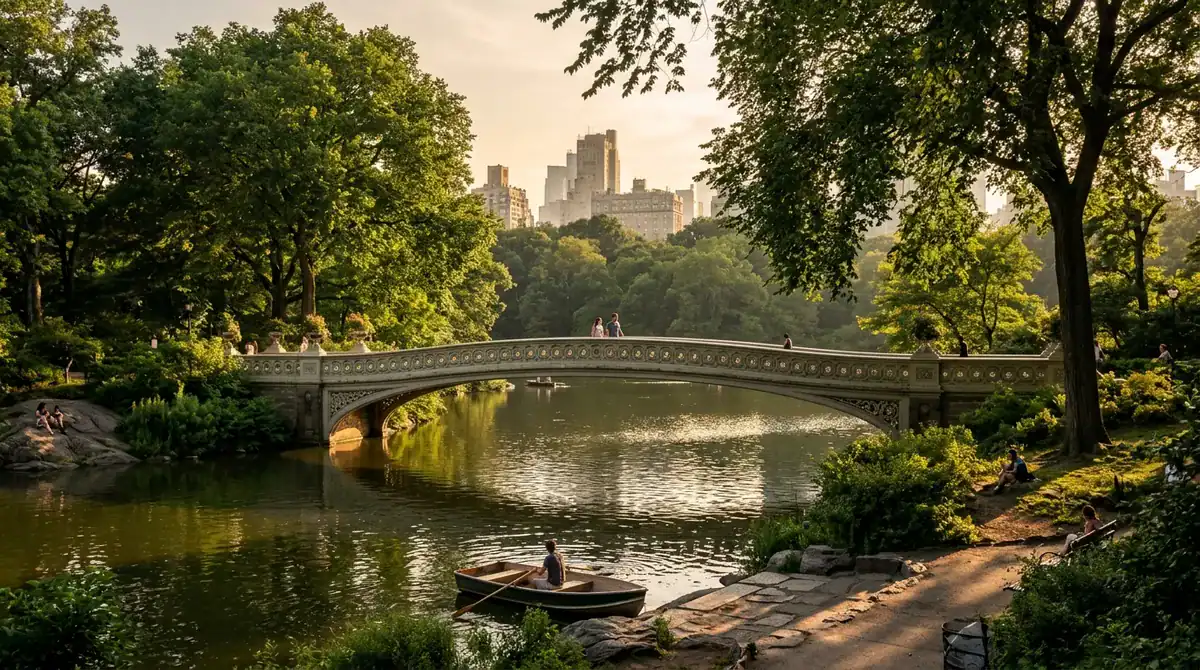
Central Park is an 843-acre public park in Manhattan, designed by Frederick Law Olmsted and Calvert Vaux as a green respite from the city’s grid. Its winding paths pass lawns, woodlands, streams and lakes, and along the way you can picnic, rent a boat, let children loose on the playgrounds, visit the zoo or spot the landmarks. Many visitors prefer a guided walk, such as the Conservancy’s Heart of the Park tour, which covers 0.7 miles in 60 minutes and takes in Strawberry Fields, Bethesda Terrace, the Bow Bridge outlook and the Alice in Wonderland statue.
Plan at least half a day, because the park is too large to see in one hurried visit. The Conservancy notes that Bethesda Terrace, the Imagine mosaic and Alice in Wonderland can get crowded, and the south end draws visitors all year. Arriving early gives you more room for photos on Bow Bridge. From the eastern edge, the Met on Fifth Avenue and the Guggenheim are both within reach, so a park walk pairs easily with a museum afternoon.
Repeat visitors have plenty of reasons to return. Choose a different neighborhood of the park each time, and notice how the lawns and lakes change with the seasons. Designed in the 19th century, the park is a National Historic Landmark and a New York City Scenic Landmark, which makes it rewarding for history lovers. Families, slow walkers and photographers will find it an easy fit, and most of it is free to enjoy, though some activities are ticketed.
At a glance
- Best for: Families with children, slow travelers, photographers and history lovers
- Hours or Season: Open daily from 6 a.m. to 1 a.m., 365 days a year
- Cost: Most of the park is free, though some activities are ticketed
- Time Needed: At least a half-day
- Getting There: A 19-minute walk from Grand Central Station, or the M1, M2 or M3 buses on Madison Avenue along the east side
Statue of Liberty: Ferry, Crown and Harbor Views
The Statue of Liberty can be reached only by ferry, so the boat from Battery Park is your plan. Once you land on Liberty Island, you can wander the grounds, look up at the monument from close range, and visit the Statue of Liberty Museum, which displays the statue’s original torch. Security screening and boarding can take an hour or more on summer weekends and holidays, so book your ticket ahead.
The round-trip ticket also stops at Ellis Island, where the National Museum of Immigration tells the story of the people who arrived through the harbor. Admission to both museums is included, along with self-guided audio tours, and the ferry gives you skyline views of Lower Manhattan on the way. Plan several hours for Liberty Island alone, and a longer stretch if you add Ellis Island.
The crown is the biggest decision. It requires an advance reservation and a stair climb, so it suits visitors who are comfortable on stairs. Core park hours run from 8:30 a.m. to 5:30 p.m., and the last entrance into the statue is at 4 p.m., so an early boat leaves time for the climb.
Families and history lovers tend to get the most from this outing. Food is available on the islands, but the sites and their history are the real draw.
At a glance
- Best for: History lovers, families with older children, and first-time visitors
- Hours or Season: Core park hours 8:30 a.m. to 5:30 p.m. daily, last entrance into the Statue at 4 p.m.
- Cost: Adult general-admission ferry tickets typically run around $26, including round-trip service to Liberty and Ellis Islands
- Time Needed: Several hours on Liberty Island, most of a day with Ellis Island
- Tickets or Booking: Book ahead, and reserve a crown visit in advance; see the official site for current details
- Getting There: Ferries depart from Battery Park in Manhattan, which several subway lines serve
Times Square: Lights, Crowds and a Show Starter

Times Square is a busy Midtown district, not a ticketed attraction, so there is no entrance to buy. The Times Square Alliance describes a district that covers most of the area from 40th to 53rd Streets, between Sixth and Eighth Avenues. Broadway is closed to vehicles between 42nd and 47th Streets, which creates the main pedestrian plaza. Walk through, take in the bright digital billboards and street life, and sit on the red steps at Duffy Square.
Plan about 30 to 45 minutes for a first walk, or closer to an hour if you stop often for photos. The plazas cost nothing to enter, and the city’s self-guided walking tour covers 17 landmarks in about 90 minutes if you want the history. Crowds can slow movement through the area, so leave room in your schedule for the sidewalks.
For a first visit, this is the classic New York image, and families will find plenty of options, from family-style dining to interactive attractions. Repeat visitors can focus on the theater and architectural history instead. On day three, the TKTS booth at Duffy Square sells same-day discounted Broadway and Off-Broadway tickets, though inventory changes during the day. Finish with dinner on Restaurant Row, West 46th Street between Eighth and Ninth Avenues, then catch a show.
At a glance
- Best for: First-time visitors and families who want the classic New York image, plus repeat visitors interested in theater and architecture
- Cost: The plazas and street walk are free, while shows, shops, meals and paid nearby attractions are separate expenses
- Time Needed: About 30 to 45 minutes for a first walk, or around an hour with photos
- Tickets or Booking: The TKTS booth at Duffy Square sells same-day discounted tickets
- Getting There: Times Square–42nd Street, Port Authority–42nd Street and 49th Street subway stations
Brooklyn Bridge: The Walk Worth Doing at Dusk
The Brooklyn Bridge is a working East River crossing, not a museum piece. Its elevated pedestrian promenade runs between Lower Manhattan and Brooklyn Heights, alongside a protected bicycle path, so you walk above the traffic with cyclists passing close by. Completed in 1883, it was the first bridge to join Manhattan and Brooklyn across the river, and its neo-Gothic stone towers and pointed arches are just as striking from the lawns below. You can read more on the city’s official bridge page.
Walking across is free and needs no ticket, though guided tours are available if you want the engineering history in more depth. A one-way crossing usually takes 30 to 45 minutes, so allow about an hour once you add photo stops. Start from Manhattan and walk toward Brooklyn at dusk, when the skyline glows behind you. Sunset is the most photogenic window but also the busiest, and summer weekend middays are crowded too, so arrive before about 9 a.m. if you want more room at the railings.
The Brooklyn end drops you near DUMBO and the waterfront park, which makes a natural next stop for dinner or a long look at the water. For the trip back, the nearest subway stops are High Street on the A or C, Clark Street on the 2 or 3, and York Street on the F. The walk is flat and stroller-friendly, so families with young children can join in, while photographers and couples often find it the most rewarding walk in the city.
At a glance
- Best for: first-time visitors seeking an iconic walk, photographers, couples, families and architecture or history fans
- Hours or Season: quieter before about 9 a.m.; sunset is photogenic but busier; summer weekend midday is especially crowded
- Cost: free, with no ticket required; paid guided tours are optional
- Time Needed: 30 to 45 minutes one way, or an hour or more with photo stops
- Getting There: High Street (A or C), Clark Street (2 or 3) or York Street (F) on the Brooklyn side
Broadway: Theater Night in the Theater District
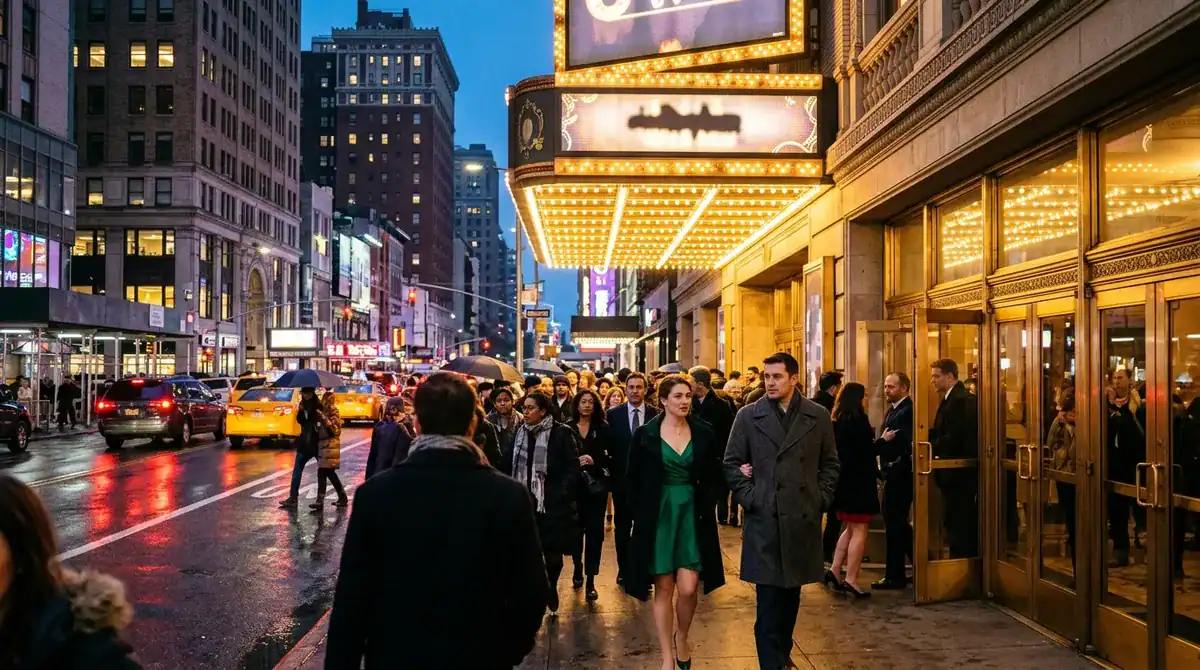
Broadway is not a single attraction but a collection of professional theaters in Midtown Manhattan, most of them in the Theatre District around Times Square. Each one stages plays, musicals and special events. A visit means choosing a production, walking to its theater and spending the performance in the audience.
Shows differ in style, content and length. A performance typically runs 90 minutes to three hours, sometimes with a 15- or 20-minute intermission, so plan dinner and the ride home around that. Age guidance is set by each production, so families should look at the specific show before booking. Regular-price tickets generally range from $20 to $145, depending on seat and demand, and many shows sell out, so book ahead. For current prices and availability, the Broadway League’s website is the place to look.
For a first-time visitor, Broadway is the classic New York evening. Start with an early walk through Times Square while the screens are bright, have dinner in the theater district, then take your seat before the curtain rises. Repeat visitors can pick from a changing mix of productions. It suits theater fans, couples and families, and budget-conscious travelers who choose their seats carefully. Most theaters sit within a short walk of a subway or bus stop, so the evening finishes a Midtown day without a long journey.
At a glance
- Best for: Theater fans, couples, families and budget-conscious travelers
- Cost: Regular-price tickets generally range from $20 to $145, varying by seat and demand
- Time Needed: Typically 90 minutes to three hours, sometimes with a 15- or 20-minute intermission
- Tickets or Booking: Book ahead, since many shows sell out
- Getting There: Most theaters are in the Theatre District around Times Square, within a short walk of subway or bus stops
Empire State Building: Sunset from the 86th Floor
The Empire State Building is a 102-story Art Deco landmark in Midtown Manhattan that opened on May 1, 1931, and still works as an office building and visitor attraction at the Empire State Building’s official site. The entrance is at 20 West 34th Street, about five minutes on foot from the 34th Street–Herald Square or 34th Street–Penn Station subway stations. Your visit starts with galleries on the building’s history and culture, then opens onto the open-air 86th-floor deck.
Arrive before dusk to watch the city shift from daylight to evening. The building is busiest during the first two hours after opening and the hour after sunset, so a visit from 12 p.m. to 2 p.m. offers fewer crowds, though you will lose the sunset light. Timed reservations are required, and the site estimates at least an hour for the 86th floor and 1.5 to 2 hours for both observatories, with extra time for lines and elevators.
History lovers and photographers will find plenty here, and first-time visitors get the classic skyline view. Repeat visitors have reasons to return too, since the exhibits stay the same while the city views change with the seasons and the weather. The enclosed 102nd-floor deck offers more skyline views with eligible tickets.
Families are well served. Strollers are allowed but must be folded on the observation decks, the building is wheelchair accessible, and children under 6 enter free while discounted tickets are available for ages 6 to 12.
At a glance
- Best for: First-time visitors, history lovers, photographers and families
- Hours or Season: Open daily year-round, with hours that change by season
- Cost: When checked, the official exhibits page listed tickets from $46 for the 86th floor and from $81 for combined 86th- and 102nd-floor access
- Time Needed: At least one hour for the 86th floor, or 1.5 to 2 hours for both observatories
- Tickets or Booking: Timed tickets, booked online in advance, with some tickets sold at the building subject to availability
- Getting There: 20 West 34th Street, about five minutes from the 34th Street–Herald Square or 34th Street–Penn Station subway stations
Little Italy: Lunch and a Mulberry Street Stroll
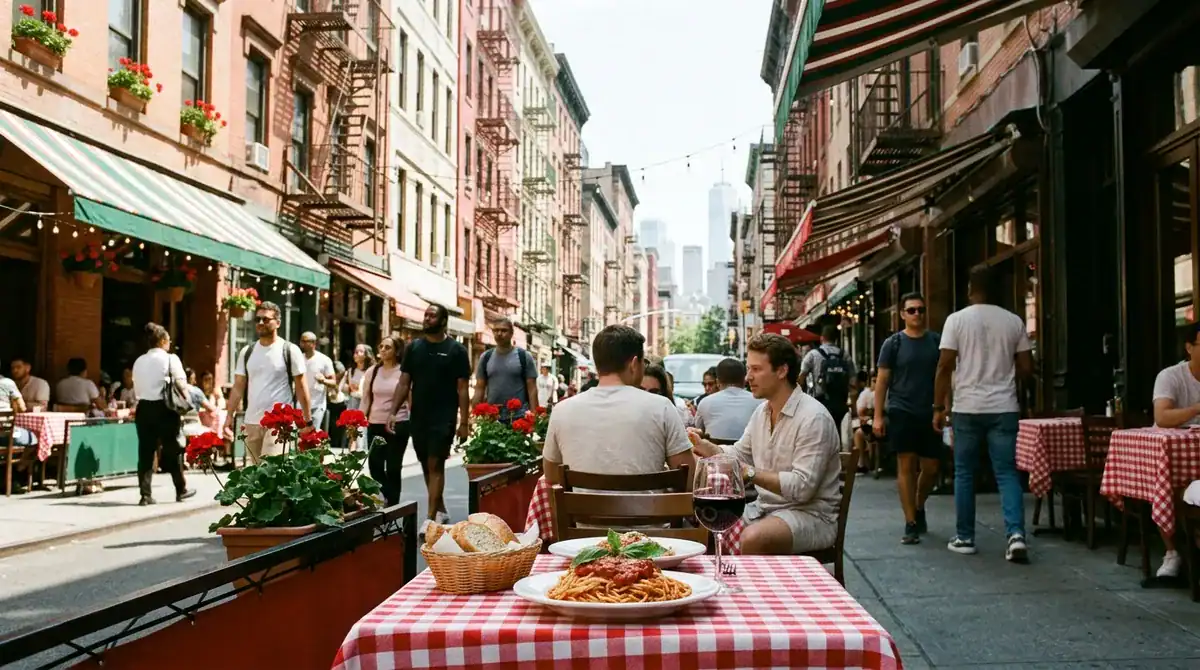
Little Italy is a compact stretch of Lower Manhattan, and its remaining core is centered on Mulberry Street, where restaurants, cafés and bakeries line the sidewalks. Think of it as a slow walk with lunch at its heart rather than a ticketed attraction. The Little Italy Merchants Association presents the neighborhood as a destination for Italian food, and a pastry stop fits neatly into the stroll.
The neighborhood sits close to Chinatown and Nolita, so you can walk between all three in a single afternoon. Begin with lunch on Mulberry Street, wander into Chinatown for its shops, then drift into Nolita for coffee. If you want history, the Italian American Museum at 151 Mulberry Street presents Italian-American history and culture through exhibitions and educational programs.
Expect small restaurants, tight tables and a mix of tourists and neighborhood regulars. Look over each menu for allergy information before you sit down, since small kitchens may not list every ingredient. The Feast of San Gennaro, which Italian immigrants began in 1926 as a one-day block party, brings a livelier and far more crowded festival, so a regular weekday suits a relaxed lunch better.
At a glance
- Best for: Foodies, history lovers and families looking for a relaxed lunch
- Hours or Season: The Italian American Museum is open to the public Monday and Thursday through Saturday, noon to 5 p.m., by appointment on Tuesday and Wednesday, and closed to the public on Sunday
- Cost: Walking Mulberry Street is free, while meals and any museum visit are separate expenses
- Time Needed: A short stop or an afternoon, rather than a full day
- Getting There: Canal Street is the nearest subway station
Chinatown: Streets, Markets and Everyday Life
Chinatown is a living Lower Manhattan neighborhood, not a ticketed attraction, so there is no entrance to buy and no reservation to make. Its streets hold homes, restaurants, produce and fish markets, and shops, and you explore them on foot, moving from food stands to storefronts. Browse the shops along Canal Street, step onto Doyers Street, and let the produce displays and neon signs guide you from block to block.
A visit can center on food and shopping, or it can stretch longer. Add Columbus Park for a bench break, or go indoors to the Museum of Chinese in America. The neighborhood began taking shape around Mott Street in the 1870s, and that history sits right beside the everyday rhythm of the streets. Expect crowds, street vendors and lively sidewalks, especially at midday. An hour is enough for a food stop, but a half-day gives you room for a meal, the museum and a slow walk.
Chinatown suits food lovers, history-minded visitors and budget travelers, since the street walk costs nothing. Pair it with Little Italy and Washington Square Park on the same day, so one compact stretch of Lower Manhattan covers two cuisines, two atmospheres and a park.
At a glance
- Best for: Food lovers, history-minded visitors and budget travelers
- Cost: The street walk has no admission charge, while meals, shopping and indoor attractions have their own costs
- Time Needed: An hour for a food stop, or a half-day with a meal and indoor visits
- Tickets or Booking: No reservation is required for the neighborhood walk
- Getting There: Canal Street station (N, Q, R, W, J, Z, 6), Grand Street (B, D) or East Broadway (F)
Edge: Hudson Yards Skyline and Glass Floor
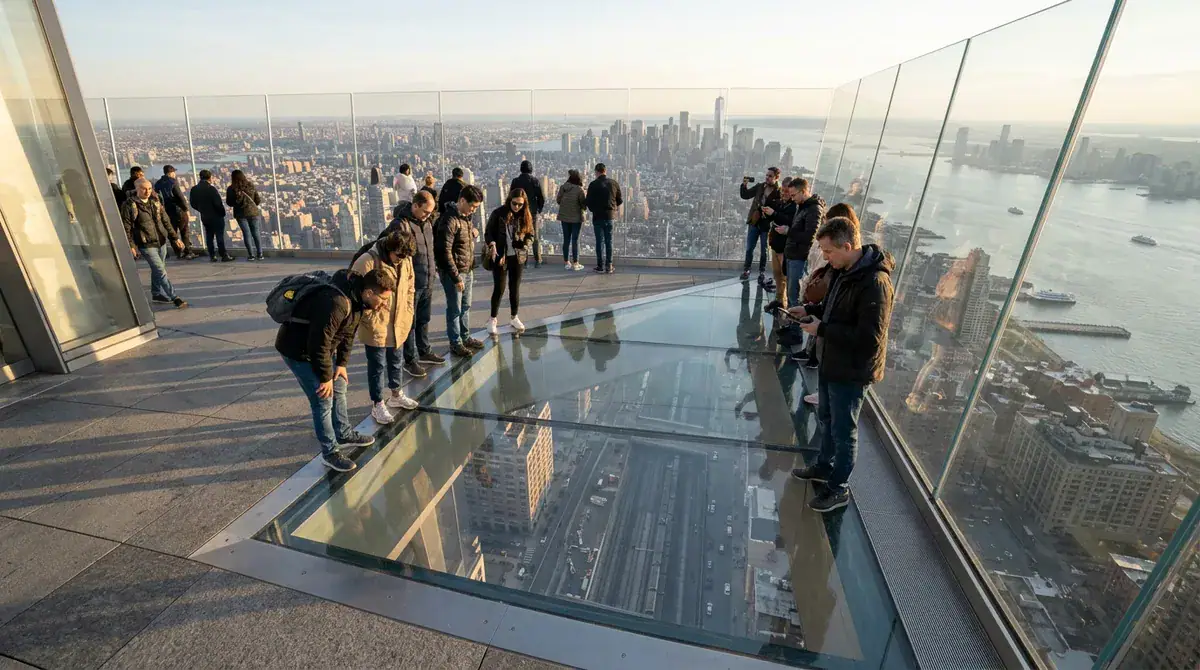
Edge is an indoor-outdoor observation deck at Hudson Yards, and the visit unfolds in stages. Seven interactive indoor installations come first, and then you step onto the outdoor deck on Level 100, more than 1,100 feet above Manhattan. Visitors can stand on the glass floor and the angled glass walls, and the sky-high café sells food and drinks if you want to linger over the view.
Plan a timed visit, because Edge recommends booking ahead for preferred entry times, especially on weekends, holidays and at sunset. Tickets are dated and timed. General admission is listed from $42, or from $34 on an advance-saver ticket booked at least 14 days ahead, plus a $2 processing fee. The official site has current prices. Edge estimates 60 to 90 minutes for the whole visit, with 30 to 60 minutes for the installations, so leave that time free rather than rushing to the deck.
Sunset is the strongest window, when the open-air deck catches the last light before the towers switch on. Crowds peak then, and weekday mornings are usually quieter, though booking ahead does not guarantee a line-free visit. Take the No. 7 train to Hudson Yards, walk to The Shops & Restaurants, and ride the elevator to the Edge entrance on Level 4.
Families are well served, since children aged five and under visit free. Architecture and photography fans will enjoy the steel and glass views, and the installations give repeat visitors a reason to come back. The glass floor looks straight down to streets about 1,100 feet below, which can feel thrilling but may not suit anyone uneasy with heights. Pair the visit with a High Line walk and an afternoon of shopping at Hudson Yards.
At a glance
- Best for: Families, architecture and photography fans, and repeat visitors
- Hours or Season: Daily 9 a.m. to 10 p.m., with last entry one hour before closing
- Cost: General admission from $42, or an advance-saver ticket from $34 booked at least 14 days ahead, plus a $2 processing fee
- Time Needed: 60 to 90 minutes, including 30 to 60 minutes for the installations
- Tickets or Booking: Required, with dated and timed entry; book ahead for weekends, holidays and sunset
- Getting There: No. 7 train to Hudson Yards, then walk to The Shops & Restaurants and take the elevator to Level 4
Ellis Island: The Immigrant Story in the Harbor
Ellis Island is a historic island in New York Harbor, and its restored immigration station now houses the Ellis Island National Museum of Immigration. Start in the Great Hall, where newcomers once waited for inspection, then walk through the Baggage Room, where immigrants’ luggage was once stored. The Records Discovery Center supports family-history research, and the audio tours include family-friendly options. Outside, the American Immigrant Wall of Honor lists names, and remnants of Fort Gibson sit behind the museum.
The ferry from Battery Park stops at both Ellis and Liberty Islands, so plan the two as one timed visit. Your ticket covers round-trip transport and access to both museums, and there is no separate island entrance fee. Allow at least an hour on Ellis Island itself, and expect most of a half-day once you add Liberty Island. Security and boarding waits can reach an hour or more on summer days, weekends and holidays, so an early boat keeps your afternoon open.
Ellis Island suits history lovers and families. Children can follow the story on the family audio tour, while adults can trace relatives in the records. For a first visit, it gives the Statue of Liberty a human face, since so many arrivals passed through here before reaching the city. The museum is fascinating, and it is not one to skip.
At a glance
- Best for: History lovers, families and first-time visitors who want the immigrant story
- Hours or Season: Open daily except Thanksgiving and December 25
- Cost: No island entrance fee; a ferry ticket from an authorized ferry operator is required
- Time Needed: At least an hour on Ellis Island, or most of a half-day with Liberty Island
- Tickets or Booking: Advance booking is recommended; see the official site for current schedules
- Getting There: Ferry from Battery Park in Manhattan or Liberty State Park in Jersey City
The High Line: An Elevated Walk on Old Railway Tracks

The High Line is a 1.45-mile public park on Manhattan’s West Side, built on an elevated, disused railway spur. You climb up to it and stroll planted paths, pass public art, and pause at seating and overlooks where the streets below look unusually quiet. It is a walk rather than a museum or a single viewpoint, and it is free to enter with no admission ticket required.
Start near Chelsea Market and walk north, so the route ends at the park’s northern end. A straight-through walk takes about 30 to 45 minutes, but stopping for photos, art and views can stretch the visit to roughly 90 minutes or two hours. The route is popular and can get crowded, so a weekday morning is the better choice if you want a quieter stroll.
What sets the park apart is the mix of railway history, landscape design, art and city scenery. Repeat visitors will spot something new, because the plantings change and the artworks rotate. Photographers, slow travelers and first-time visitors all find it an easy fit, and the park has access points and restrooms and is described as fully accessible.
Pair the walk with a long lunch at Chelsea Market before you climb up, then finish at the Edge at Hudson Yards for a wider view over the city. The rest of the afternoon fits naturally in Chelsea, whose galleries and streets sit right beside the park.
At a glance
- Best for: First-time visitors, photographers, slow travelers and budget-conscious travelers
- Cost: Free, with no admission ticket required
- Time Needed: About 30 to 45 minutes for a straight walk, or roughly 90 minutes to two hours with stops
- Hours or Season: Quieter on weekday mornings
The Metropolitan Museum of Art: Choose Your Collections
The Met Fifth Avenue sits at 1000 Fifth Avenue on the Upper East Side, bordering Central Park, and presents more than 5,000 years of art from cultures around the world. You can wander its galleries and special exhibitions at your own pace. A focused highlights visit takes a few hours, while seeing more can fill a full day. Lonely Planet’s one-, three-, and eight-hour plans show how much a visit can vary in length, and the Met’s official site lists the current galleries and exhibitions.
Arrive first thing in the morning if you can. Condé Nast Traveler describes the museum as often crowded, especially around temporary exhibitions, and suggests avoiding weekends when possible. The museum is open 10 a.m. to 5 p.m. Sunday through Thursday, except Wednesday, when it is closed, and 10 a.m. to 9 p.m. on Friday and Saturday. From the East Side, take the 4, 5, or 6 train to 86th Street and walk about half a mile, or catch the M1, M2, M3, or M4 bus.
Advance tickets are not required, and general admission is $30 for adults. Tickets include the exhibitions and same-day entry to both Met locations, so the Cloisters, the museum’s branch in Fort Tryon Park, is a separate outing you can add on another day. The rooftop offers views over Central Park, a pleasant break between galleries. Families will find special guides and events, plus a children’s play space at the Met’s 81st Street Studio.
At a glance
- Best for: History lovers, art fans, foodies, families and repeat visitors who want different collections
- Hours or Season: 10 a.m. to 5 p.m. Sunday through Thursday except Wednesday (closed); 10 a.m. to 9 p.m. Friday and Saturday
- Cost: General admission $30 for adults, $22 for seniors, $17 for students, free for children 12 and under
- Time Needed: A few hours for a highlights visit, or most of a day to see more
- Getting There: 4, 5, or 6 train to 86th Street plus about a half-mile walk, or the M1, M2, M3, or M4 bus
Chelsea Market: Indoor Food Hall at the End of the High Line

Chelsea Market is an indoor food hall and shopping arcade in the Meatpacking District, housed in the former National Biscuit Company factory. Its brick architecture still reflects that industrial past, so you can browse international food stalls, bakeries, specialty shops and restaurants while looking up at the old factory details.
This is a casual market rather than a museum, and it fills up at lunch. Popular counters can have long lines, and tables are hard to find during the midday rush, so arrive a little before noon or be ready to share a table. Allow 45 minutes to an hour to wander and eat, and more time if you pair the stop with a walk on the High Line.
It is an easy rainy-day lunch stop that suits foodies, families and travelers with food allergies, who can ask about ingredients at each stall before they order. The market itself costs nothing to enter, so you pay only for what you eat or buy. Take the A, C, E or L train to 14th Street at Eighth Avenue, then walk west to 75 Ninth Avenue, between West 15th and 16th Streets.
At a glance
- Best for: Foodies, families, travelers with food allergies and rainy-day lunch seekers
- Hours or Season: Concourse open daily from 7 a.m. to 10 p.m., though individual vendors may keep different holiday hours; see the official site for current details
- Cost: No entry fee; you pay only for the food and goods you choose
- Time Needed: 45 minutes to an hour, or more if you add a High Line walk
- Getting There: A, C, E or L train to 14th Street at Eighth Avenue, then a walk west to 75 Ninth Avenue
Rockefeller Center: Plazas, Art Deco and Top of the Rock
Rockefeller Center is a Midtown landmark of plazas, gardens, public art and Art Deco buildings, planned from 1931 to 1939 with architecture, art and landscaping designed together. The plaza is open 24 hours a day, 365 days a year, so you can wander past sculptures, murals and carved details without buying anything. The Rink operates in fall and winter, and skating has its own admission, separate from Top of the Rock.
Top of the Rock spans the 67th, 69th and 70th floors, with three open-air observation levels and 360-degree views that include Central Park and the Empire State Building. It is open daily from 8 a.m. to midnight, with last entry at 11:10 p.m. Plan at least 45 minutes for the decks, or 90 minutes to two hours if you add SKYLIFT or The Beam. The official site lists admission from $42, and timed tickets for sunset and weekend slots can sell out.
The complex suits first-time visitors who want the postcard skyline and budget travelers who can enjoy the free plaza and still choose one paid deck. St. Patrick’s Cathedral is a short walk away, so the two make an easy pairing. Crowds gather around sunset and during the holiday season, when the plaza can feel busy, so arrive early or treat it as a short stop. Visit in the cold months to see the Christmas tree and skate on the Rink.
At a glance
- Best for: First-time visitors, budget travelers and anyone who wants art and architecture on a free plaza
- Hours or Season: Plaza open 24/7; Top of the Rock open daily 8 a.m. to midnight; Rink seasonal in fall and winter
- Cost: Plaza free; Top of the Rock admission from $42
- Time Needed: A short plaza stop, or at least 45 minutes for Top of the Rock
- Tickets or Booking: Timed Top of the Rock tickets, bought online or at the 50th Street box office
- Getting There: 47–50th Streets/Rockefeller Center subway stop (B, D, F, M)
Los Tacos No. 1: Budget Tacos in Chelsea Market

Los Tacos No. 1 began in 2013 as a single stand inside Chelsea Market, founded by friends from Tijuana, Mexico, and Brawley, California. At the counter you can order asada, pollo, adobada or nopal tacos on hand-pressed tortillas, grilled to order, then add salsas and pick a horchata, jamaica or tamarindo drink. There is no seating, so plan to eat standing nearby or take your food away.
Expect a busy, informal meal. Chelsea Market draws a steady crowd, but a recent Infatuation guide says the line moves fast. The stand makes an easy stop before or after a walk on the High Line, which is only a short stroll from the market.
For a first visit, it is a simple way to try a popular New York taco spot without booking a table. Repeat visitors can order a different filling each time and compare the adobada with the nopal. It suits foodies and budget travelers, since it sits in the lowest price band of local restaurant guides. If you have food allergies, ask staff about ingredients before ordering, because salsas and fillings can differ from what a menu or review describes.
At a glance
- Best for: Foodies, budget travelers and first-time visitors who want a quick taco lunch
- Hours or Season: Daily 11 a.m. to 10 p.m. at 75 9th Avenue; see the official site for current details
- Cost: Lowest price band among local restaurant guides
- Time Needed: A quick meal, with a busy counter and no seating
- Getting There: A, C or E train to 14th Street, or the L train to Eighth Avenue
Wall Street: Financial District Walk and Federal Hall
Wall Street is an eight-block street in Lower Manhattan’s Financial District, and it is best seen as a short walk. Along the way you pass the New York Stock Exchange’s famous exterior, Federal Hall, Trinity Church, and the Fearless Girl statue, with Charging Bull nearby. Take your photos from the sidewalk, because the NYSE trading floor is not a general walk-in attraction.
Federal Hall is free to visit and is open Wednesday through Sunday, 10 a.m. to 4 p.m., with Monday and Tuesday closed. Its permanent history exhibitions take about 30 minutes on your own, while a ranger-led tour runs one to two hours. Children can join the Junior Ranger program, and the rear entrance on Pine Street has a ramp and elevator. For current hours, see the official Wall Street guide.
Arrive before 9 a.m. for a quieter Charging Bull photo stop, since the street is livelier on weekday mornings than on weekends. Then pair the walk with the 9/11 Memorial a short distance away, which you can walk through for free.
Wall Street suits history lovers and budget travelers, and it fits neatly into a Lower Manhattan day. The street is where the city’s financial and political history sits in one close-up stretch.
At a glance
- Best for: History lovers, budget travelers and anyone building a Lower Manhattan day
- Hours or Season: Federal Hall open Wednesday through Sunday, 10 a.m. to 4 p.m.; closed Monday and Tuesday
- Cost: The walk and Federal Hall are free
- Time Needed: About an hour for the walk, plus 30 minutes for exhibitions or one to two hours for a ranger-led tour
- Ages or Suitability: Junior Ranger program for children; wheelchair-accessible entrance on Pine Street
Bethesda Fountain: The Angel of the Waters in Central Park
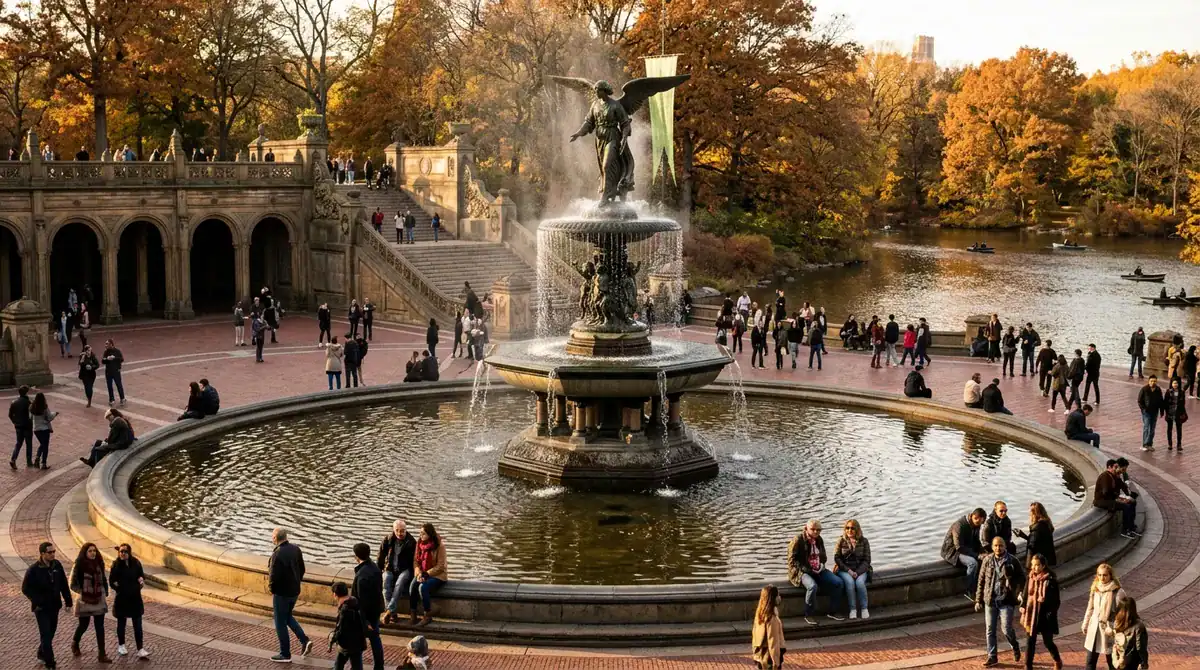
Bethesda Fountain sits at the center of Bethesda Terrace in Mid-Park, near 72nd Street, where the terrace looks out over the Lake. Its Angel of the Waters, sculpted by Emma Stebbins, commemorates the Croton Aqueduct, which first brought fresh water to New York City in 1842.
Explore the terrace’s two levels and its arcade, admire the stonework, or sit and watch the crowds drift past. The fountain also makes a natural finish to the Conservancy’s self-guided walk through the heart of Central Park, a roughly one-mile route that takes about 60 minutes and includes some inclines and stairs.
The fountain itself is turned off for a comprehensive restoration that began in early August 2026 and is expected to last about a year, while the terrace remains open. The Conservancy posts current details about the restoration on its website.
History lovers will appreciate how the terrace ties the park to the aqueduct that supplied the city. Photographers will find the arcade and the sculpture a striking frame, and families can use the open terrace as a welcome break on a long park day.
At a glance
- Best for: History lovers, photographers and families
- Hours or Season: Central Park is open daily from 6 a.m. to 1 a.m. year-round; terrace restrooms are open daily from 6:30 a.m. to 9 p.m. from late March through early November
- Cost: Free to visit
- Time Needed: Can be added to the roughly 60-minute Heart of the Park walk
- Getting There: Enter Central Park at 72nd Street from Central Park West or Fifth Avenue
Brooklyn Bridge Park: Waterfront Views Beside the Bridge
Brooklyn Bridge Park is a free, 85-acre waterfront park that stretches 1.3 miles along the East River, from DUMBO to Brooklyn Heights. Its piers were once industrial, and today they hold lawns, gardens, rolling hills and riverfront promenades. Stroll out to the water, spread a blanket for a picnic, or look for the public art scattered along the way.
Families will find playgrounds and sports areas here, so the park gives children room to run after a morning of museums. Free seasonal docent-led walks cover the Brooklyn waterfront’s history and the park’s sustainable design, and self-guided audio tours are available too. In summer, free public kayaking launches from the Pier 2 dock. Advance registration is recommended, and anyone under 18 needs an adult guardian present.
Plan at least three to four hours, which leaves time for a meal. The park is open daily from 6 a.m. to 1 a.m., and the A/C, 2/3, 4/5, F and R subway lines all serve it, while ferries stop at Fulton Ferry Landing and Pier 6. Cafés and restaurants in DUMBO are a short walk away, so you can eat before or after your stroll.
At a glance
- Best for: Families, picnickers, photographers and anyone who wants a relaxed contrast to Manhattan sightseeing
- Hours or Season: Open daily from 6 a.m. to 1 a.m.; individual areas have separate hours, and seasonal activities such as kayaking vary through the year. See the official site for current details
- Cost: Free entry
- Time Needed: Three to four hours
- Getting There: A/C, 2/3, 4/5, F or R subway, or ferry to Fulton Ferry Landing or Pier 6
Staten Island Ferry: Free Harbor Views on a Working Commuter Boat
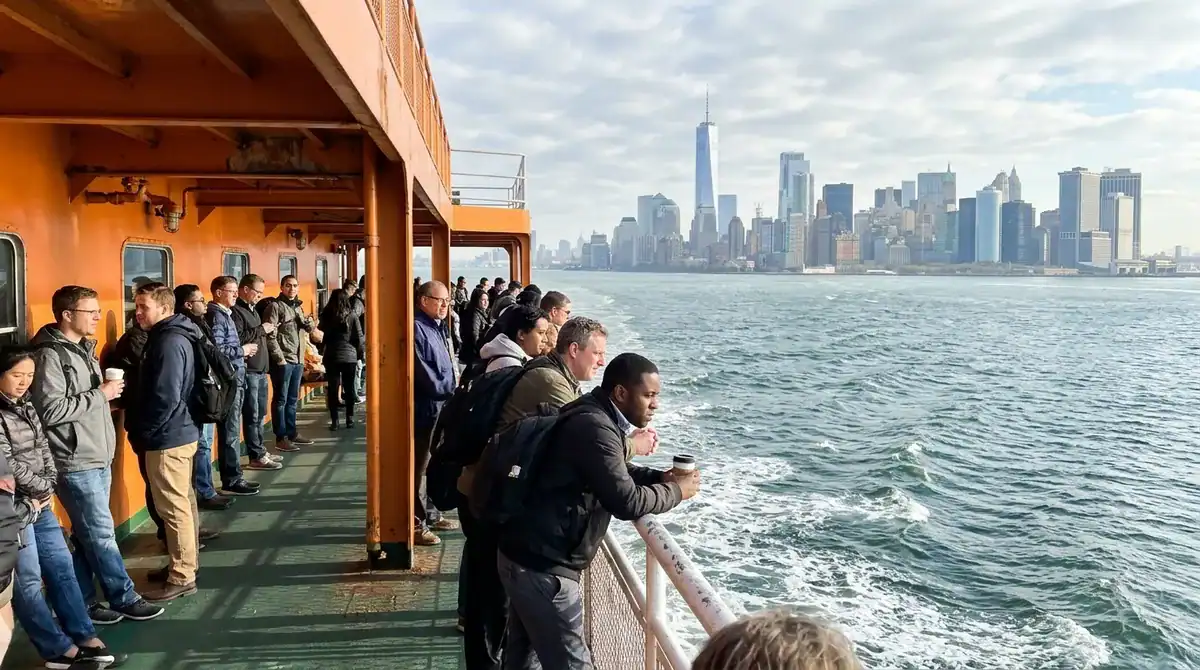
The Staten Island Ferry is a free, year-round city ferry that links Lower Manhattan with St. George on Staten Island, and it runs every day of the year. Each crossing takes about 25 minutes, and from the rail you can see the Statue of Liberty, the harbor and the Manhattan skyline. It is a working commuter boat rather than a sightseeing tour, so you share the deck with people heading to work. The ferry passes the Statue but does not stop at Liberty or Ellis Island.
Plan for more time than the sailing itself. A round trip usually takes about an hour or more once you add the wait and the change of boats, because you must get off at St. George and reboard for the return. Departures run about every 30 minutes for much of the day, with more frequent service at weekday rush hour. The terminals have elevators and escalators, and wheelchair users board on the lower level.
Schedule the ride near sunset for the most dramatic skyline views, when the towers catch the last light. The crossing suits budget travelers, families with children and photographers, and first-time visitors get the harbor panorama at no cost.
At a glance
- Best for: Budget travelers, families and photographers
- Hours or Season: Daily, year-round, with departures about every 30 minutes for much of the schedule
- Cost: Free
- Time Needed: About an hour or more for a round trip
- Getting There: Whitehall Terminal at 1 Whitehall Street in Lower Manhattan, or St. George Ferry Terminal at 1 Bay Street on Staten Island
Guggenheim Museum: Spiral Ramp and Modern Art
The Solomon R. Guggenheim Museum sits at 1071 Fifth Avenue, at 88th Street, and its main draw is Frank Lloyd Wright’s spiral building. Visitors follow the curving ramp around the central rotunda while looking at modern and contemporary art, so the architecture is part of the visit rather than a backdrop. Take your time looking up at the rotunda as you descend.
Go in the morning if you want fewer people around you. The museum is open daily from 10:30 a.m. to 5:30 p.m., and a comfortable visit for many adults and children lasts 30 to 90 minutes. Between galleries, the café has views of Central Park, which makes it a good place to slow down. Changing exhibitions give repeat visitors a reason to come back, since what is on view shifts over time.
The museum suits art and architecture fans, and it is an easy choice for families, since children under 12 enter free and the museum offers kid-friendly activities and programs. Pay What You Wish admission runs on Tuesdays and Sundays from 4 to 5:30 p.m. Pair the visit with Central Park and the Met on the same day, for a museum-and-park afternoon on the Upper East Side.
At a glance
- Best for: Art and architecture fans, families with children under 12, and repeat visitors
- Hours or Season: Daily 10:30 a.m. to 5:30 p.m.
- Cost: General admission $30, children under 12 free, Pay What You Wish Tuesdays and Sundays 4 to 5:30 p.m.
- Time Needed: 30 to 90 minutes for many visitors
- Tickets or Booking: Reserve online in advance, or buy tickets at the museum
- Getting There: Subway 4, 5, 6 or Q, or the M1, M2, M3 or M4 bus
Hadestown: The Greek Myth Musical in the Theater District
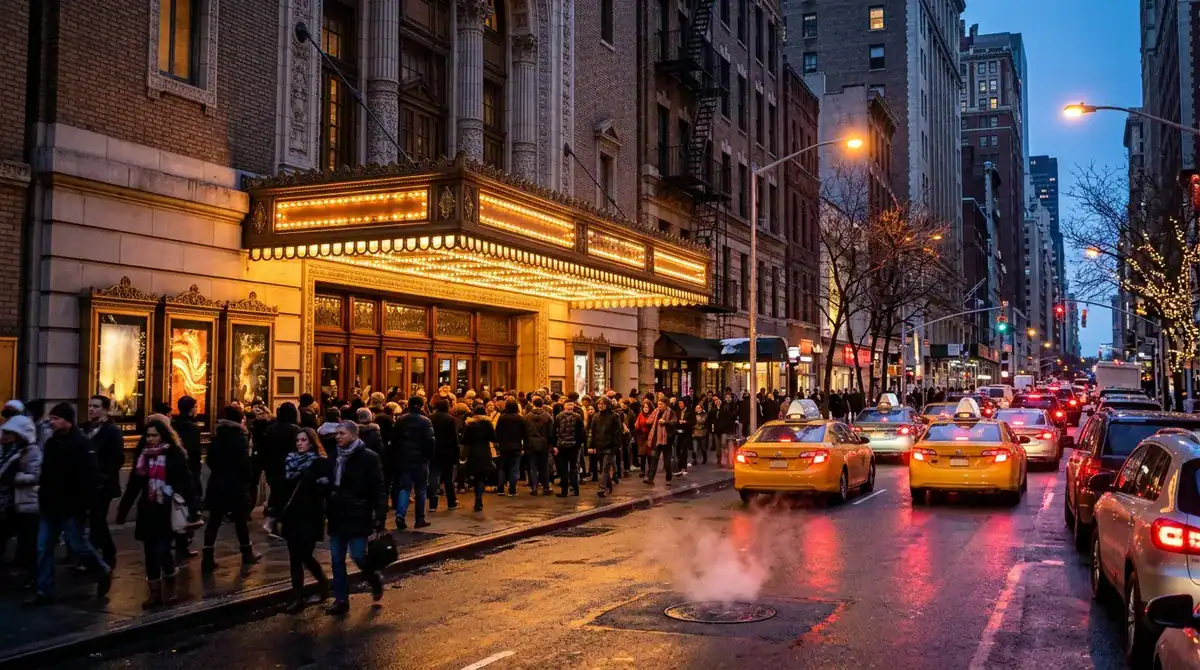
Hadestown is a Broadway musical at the Walter Kerr Theatre, at 219 West 48th Street between Broadway and Eighth Avenue. It retells the Greek myths of Orpheus and Eurydice and of Hades and Persephone through live singing, acting, dancing and music, following a journey to the underworld.
The score blends folk, pop, Dixieland and blues influences, and an onstage band plays throughout, so the music feels close at hand. The show runs about two and a half hours including a 15-minute intermission, which fits neatly into an evening after a Midtown afternoon. The A, C or E train reaches 42nd Street–Port Authority, the C, E or 1 reaches 50th Street, and the N, Q or R stops at 49th Street.
It suits first-time Broadway visitors, musical fans, and returning New York visitors who want something different from the usual shows. Families should note that the recommended age is 8 and up, children under 5 are not admitted, and the production uses strobe-like effects. Budget travelers can try the digital ticket lottery at $49 or the $39 standing-room tickets sold at the box office on sold-out days, and the official site has current details.
Book ahead, then eat early at a restaurant in the blocks around the theater so you arrive relaxed before the curtain rises.
At a glance
- Best for: First-time Broadway visitors, musical fans and returning New York visitors
- Cost: Digital ticket lottery at $49, or standing-room tickets at $39 on sold-out days
- Time Needed: About two and a half hours including a 15-minute intermission
- Tickets or Booking: Book ahead, with a digital ticket lottery and day-of standing-room option
- Getting There: A, C or E to 42nd Street–Port Authority, C, E or 1 to 50th Street, or N, Q or R to 49th Street
- Ages or Suitability: Recommended for ages 8 and up; children under 5 are not admitted
Washington Square Park: Arch, Chess and Village Life
Washington Square Park is a 9.75-acre public park at the base of Fifth Avenue, between MacDougal Street and University Place. Its marble arch and central fountain anchor the square, and students, residents, musicians and chess players fill the benches and paths around them. Families will find playgrounds here, and dog owners can use the park’s dog-friendly areas.
Plan a relaxed stroll rather than a sightseeing checklist. A quick circuit can take less than 15 minutes, but the music, the chess games and the people-watching invite you to sit longer. Parking is not available inside the park, so walk over or take the subway, and the visit costs nothing beyond what you spend on the way.
For a first-time visitor, the arch and fountain offer a classic taste of Village life. Repeat visitors can choose a different bench, chess game or path each time. Condé Nast Traveler describes the park as entirely accessible to visitors with disabilities. Photographers and street life fans will find plenty to shoot.
Pair the park with Chinatown and Little Italy on a Lower Manhattan day, using it as a calm pause after the food and shopping. It also works as the start of a Village walk or a ghost tour through the surrounding streets.
At a glance
- Best for: Street life lovers, families with children, photographers and slow travelers
- Hours or Season: General New York City park hours are 6 a.m. to 1 a.m., unless different hours are posted at the park
- Cost: Free to enter, with no ticket required
- Time Needed: Less than 15 minutes for a quick circuit, or longer if you linger
- Getting There: Walk or use public transit, since parking is not available in the park
Charging Bull: A Quick Photo Stop by Bowling Green
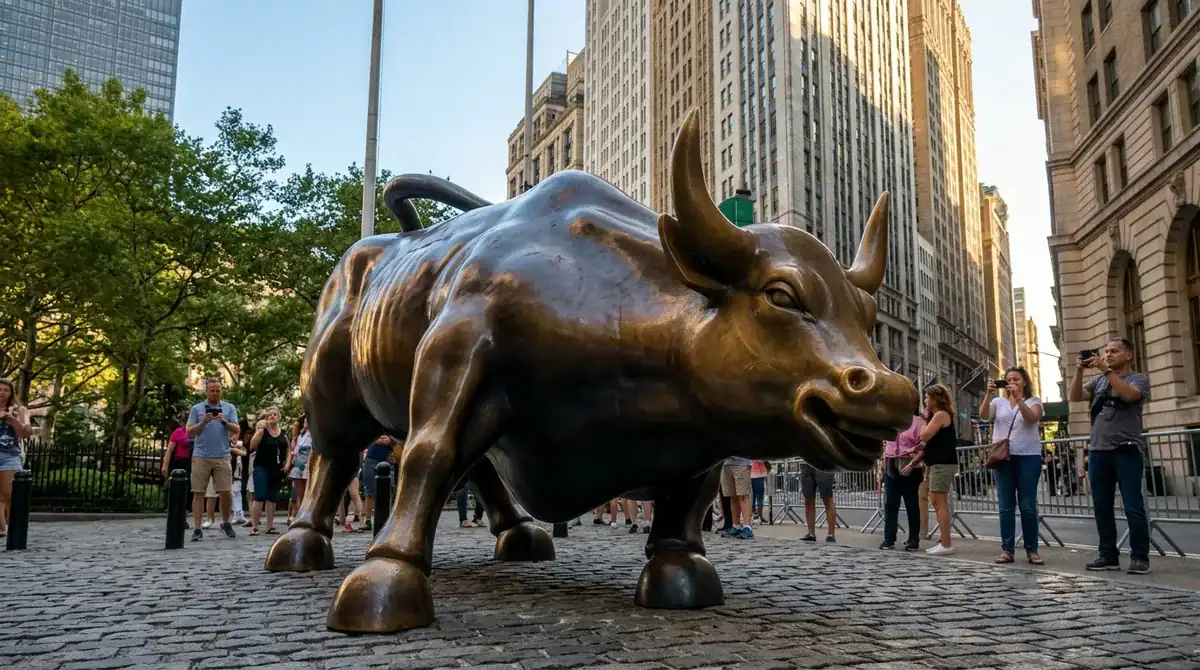
Charging Bull is a large bronze sculpture by Arturo Di Modica at Bowling Green in Lower Manhattan, on Broadway between Morris and Beaver Streets. It is not a museum or a tour attraction. You walk up, admire the dramatic pose, take your photos, and move on.
Di Modica created the bull as a symbol of economic strength, and it was first installed in front of the New York Stock Exchange. It proved so popular that it was later moved to Bowling Green, where it still draws a steady stream of photographers. Allow about 15 minutes for the stop. The nearest subway is the Bowling Green station on the 4 and 5 trains, and the sculpture is outdoors with no set visiting hours.
Pair the bull with the rest of your Financial District walk. Wall Street and Federal Hall sit a few minutes away, Battery Park lies to the south, and the 9/11 Memorial is to the north. Families, budget travelers and photographers can all fit it in at no cost, and for first-time visitors it is one of the city’s most recognizable images.
At a glance
- Best for: Families, budget travelers, photographers and first-time visitors
- Hours or Season: Outdoors with no set visiting hours
- Cost: Free, with no admission ticket needed
- Time Needed: About 15 minutes
- Getting There: Bowling Green station on the 4 and 5 trains
Intrepid Museum: Aircraft, Space and a Submarine on the Hudson
The Intrepid Museum is built around the WWII aircraft carrier USS Intrepid, a National Historic Landmark moored at Pier 86 on Manhattan’s Hudson River waterfront. You can walk the ship’s decks, see dozens of military aircraft, and stand beside the Space Shuttle Enterprise. Children often want to enter the submarine Growler, but its line can close before the museum does, so head there early.
Plan two to three hours. From October through March the museum opens daily from 10 a.m. to 5 p.m. From April through September it runs 10 a.m. to 5 p.m. on weekdays and 10 a.m. to 6 p.m. on weekends and holidays, with last entry one hour before closing. A visitor guide recommends weekday mornings for milder temperatures and fewer crowds, and notes that summer waits are longer. Food is available on site, so you can break up the visit between outdoor decks and indoor exhibits without leaving.
For a Midtown morning, arrive at opening, spend the first hours on the carrier, then take a bus or taxi to Times Square for the afternoon. The M42 or M50 bus can bring you to the waterfront near the entrance. Adult general admission is $38 for ages 13 to 64, $36 for seniors and college students with valid ID, and $28 for children ages 5 to 12, while children 4 and under enter free. Children under 16 must be accompanied by an adult.
The museum suits families, history lovers and aviation fans, and it works well on a rainy day because so much of the collection sits under cover. The museum also offers a sensory guide and visual planning materials for life aboard Intrepid, aviation, space travel and submarines.
At a glance
- Best for: Families with children, history lovers and aviation fans
- Hours or Season: October through March, daily 10 a.m. to 5 p.m.; April through September, 10 a.m. to 5 p.m. weekdays and 10 a.m. to 6 p.m. weekends and holidays
- Cost: Adults $38 (ages 13 to 64), seniors and college students $36, children 5 to 12 $28, children 4 and under free
- Time Needed: Two to three hours
- Getting There: Pier 86 at West 46th Street and 12th Avenue, with the M42 or M50 bus nearby
Cathedral of St. John the Divine: Gothic Scale in Morningside Heights
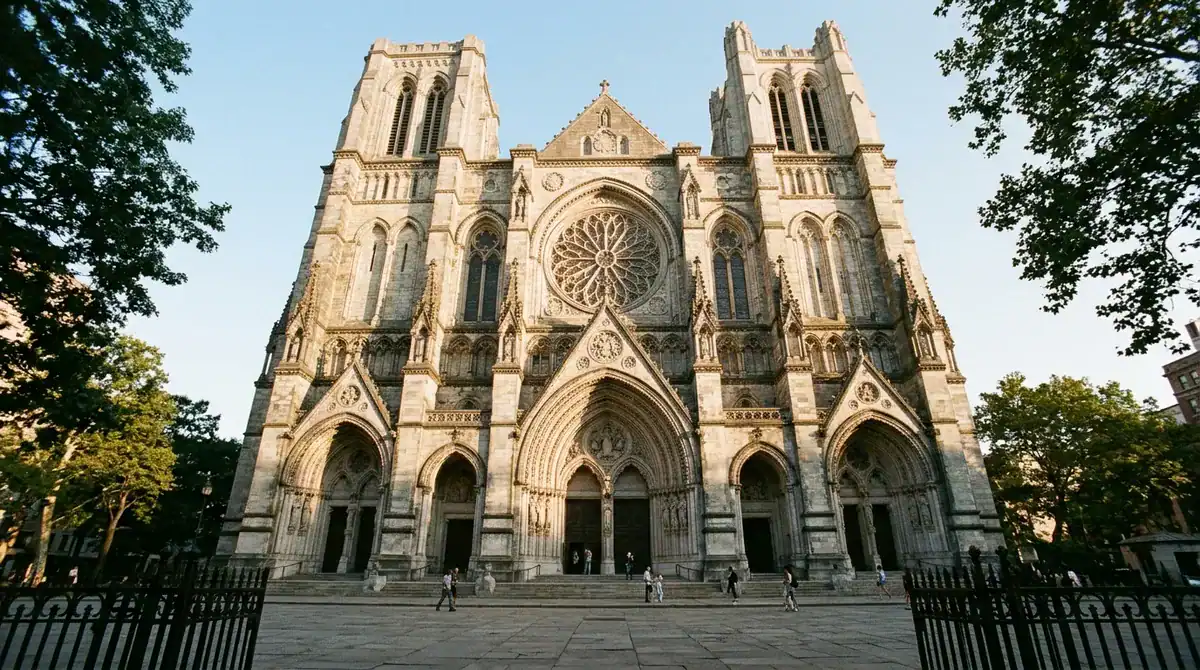
The Cathedral of St. John the Divine is an active Episcopal church and the seat of the Bishop of the Diocese of New York, so you will share its vast nave with worshippers. Construction began in 1892, and the building is still unfinished, which gives its Gothic scale an unusual, open-ended character. It sits in Morningside Heights, a short walk from the northwest corner of Central Park.
You can explore on your own with a brochure in several languages from the Visitor Center, or use the cathedral’s digital guide. Adult group programs last 60 minutes and focus on history, architecture and art, and some tours climb into the upper reaches. Look for the stained-glass windows, the 17th-century tapestries, the Keith Haring altarpiece and the 9/11 memorial sculpture. Group programs need reservations at least two weeks ahead.
Sightseeing admission is $15 for adults and $12 for seniors and students, while prayer and meditation visits are free. Sightseeing runs Monday through Saturday from 9:30 a.m. to 5 p.m. and Sunday from noon to 5 p.m. Tour times vary by day, so check the official site before you plan. Take the 1, B or C train to 110th Street/Cathedral Parkway, and give the visit a morning before your Central Park walk.
At a glance
- Best for: History lovers, architecture fans and anyone who wants a quiet, large-scale stop
- Hours or Season: Monday to Saturday 9:30 a.m. to 5 p.m.; Sunday noon to 5 p.m.
- Cost: $15 for adults, $12 for seniors and students; prayer and meditation visits are free
- Tickets or Booking: Timed tickets recommended in advance; group programs need reservations at least two weeks ahead
- Getting There: 1047 Amsterdam Avenue at 112th Street; 1, B or C train to 110th Street/Cathedral Parkway
Building Your Own Four-Day New York City Route
Start with your dates. Count the days you have, then assign each one a single cluster from this guide: Lower Manhattan, Brooklyn, Midtown or the West Side. Write the plan in order in a notes app, and leave a gap for each subway ride between clusters.
Next, book the fixed stops before anything else. If the 9/11 Museum is on your list, buy its timed ticket as soon as your dates are firm, since tickets can be bought up to six months ahead. Do the same for a Broadway seat and for the Statue of Liberty crown, which needs its own reservation and a stair climb. Those three bookings will shape the rest of your week.
Then fill the gaps with free stops. Charging Bull, the High Line, Washington Square Park and the Staten Island Ferry cost nothing and slot easily between timed visits. They also make good buffers when a museum runs long.
Before you go to bed on your first night, check the next morning’s plan. Confirm that the first ferry from Battery Park leaves in time for your crown slot, and that the card or phone you will tap for every ride is charged and ready. Then set your alarm and head for the harbor.